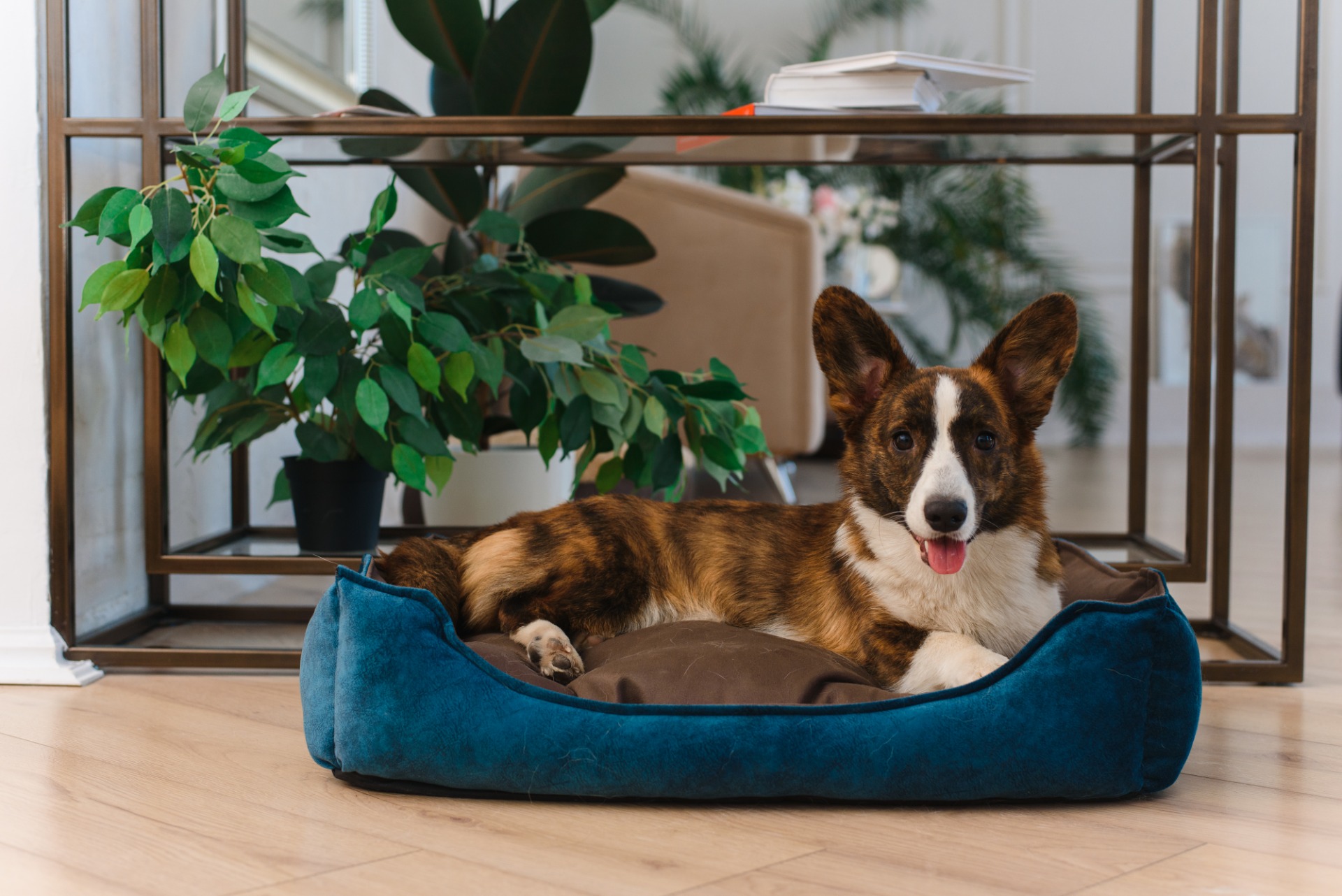

A DIY dog couch bed is a low sofa-shaped bed with a firm seat and raised sides or a back, built so a dog can step in easily and rest a head or hip against a bolster. The useful versions are a simple wood frame with a foam cushion, a no-sew foam sofa for smaller dogs, or a section cut from an old couch. Flat floor cushions fail for many dogs because they offer no edge to lean on and sit at the same level as cold flooring. A couch shape copies the place most dogs already try to claim.
Why a couch shape gets used when a flat bed does not
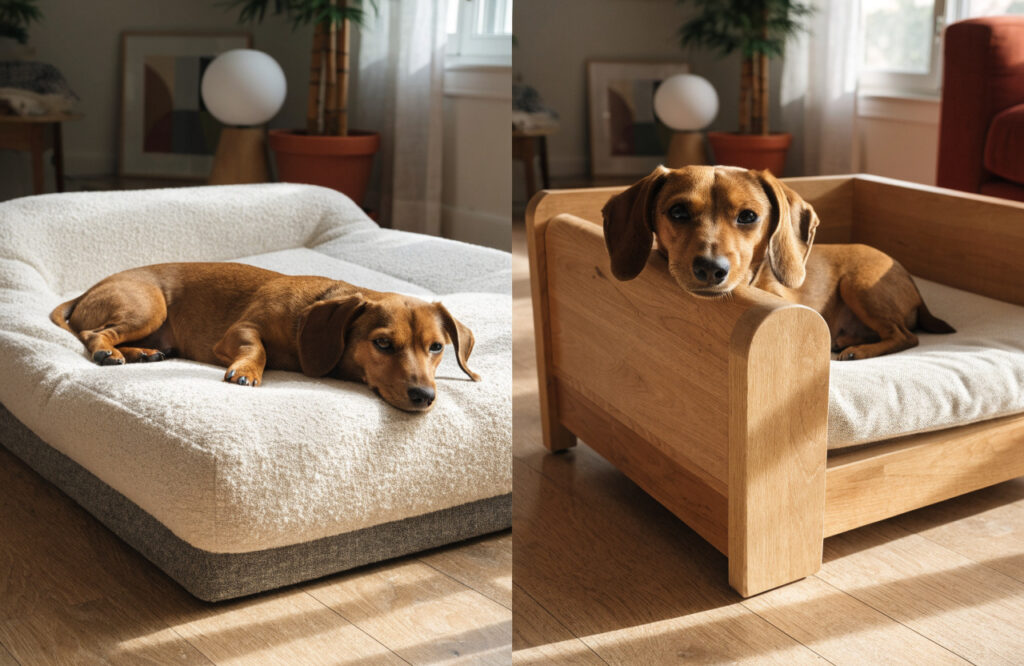
Dogs that sleep on human sofas are usually chasing three things: a slight lift off the floor, a firm surface that does not collapse under a hip, and a vertical edge for the head or back. A DIY dog couch bed can supply those without giving up the living-room sofa.
Raised edges matter more than decorative arms. A back bolster lets a dog curl and brace. Side bolsters stop a sprawling sleeper from rolling off. The front should stay low or open. Senior dogs, short-legged breeds, and dogs with sore joints often refuse a bed they have to climb into. A front rail higher than a few inches turns the bed into an obstacle.
This is furniture for a dog, not a miniature replica of a human sofa. Scale the seat to the dog’s stretched length, keep the entry easy, and choose materials that survive nails, drool, and washing. Looks come after that.
Pick the version that fits the dog, not the photo
Three builds cover most homes. Cardboard and foam-board “mini couches” only suit tiny pets that do not chew, and they collapse once a dog puts real weight on an arm.
| Build | Best for | Rough cost | Time | Main limit |
|---|---|---|---|---|
| Low wood frame with loose cushion | Medium to large dogs, chewers, dogs that need a stable edge | Often $40–120, less with scrap lumber | Half a day if you can cut and screw wood | Needs a saw, drill, and sanding |
| No-sew foam sofa | Small to medium dogs, renters, no tools | Often $25–60 | 1–2 hours | Arms and fleece fail if the dog digs or chews |
| Cut-down old couch | Large dogs, one-off upcycle | Low if the couch is free | Several hours of cutting and sealing | Hidden staples, smells, and mold; hard to wash |
Choose the wood frame if the dog is over about 40 pounds, chews fabric, or has already destroyed soft beds. Choose the no-sew version if you want a weekend project and can keep it away from a determined chewer. Cut down a couch only when the frame is solid, dry, and free of pests.
Measure the sleeping dog, then add room to sprawl

Measure while the dog is stretched out asleep, not sitting. Length is nose to the base of the tail. Width is the widest point across the shoulders or hips, whichever is larger. Add 6 to 12 inches to both numbers so the dog can turn and shift. Dogs that sleep on their side need the extra width more than dogs that curl.
A practical starting range:
| Dog | Typical weight | Seat size to aim for | Seat foam thickness |
|---|---|---|---|
| Small | Under 25 lb | About 24 x 18 in | 3 in |
| Medium | 25–50 lb | About 32–36 x 24 in | 3–4 in |
| Large | 50–90 lb | About 42–46 x 30–36 in | 4–5 in |
| Giant | Over 90 lb | 48 x 36 in or larger | 5 in or more, preferably layered |
Bolsters of about 4 to 6 inches high and 4 to 6 inches thick work for most dogs. Taller backs look more like a couch and give head support, but they also make the bed harder to enter if the front is enclosed. Leave the front open, or keep a front rail no higher than the seat cushion.
If two dogs will share it, size for both stretched side by side, not for one dog plus a little extra. Shared beds that are slightly too small become a fight over the corner.
Build a low wooden dog couch bed
This is the version most people mean by a DIY dog couch bed: a shallow box with a back and two arms, a plywood or slat floor, and a separate cushion that can be washed.
Materials
- Pine or similar boards for the rails, often 1×4 or 1×6
- Plywood or evenly spaced slats for the seat base
- Wood screws, wood glue, and sandpaper (120 then 180 grit)
- High-density upholstery foam or a firm slab for the seat
- Narrow foam pieces for the back and arms, or a ready-made bolster
- Durable cover fabric: canvas, denim, or outdoor fabric
- Optional short legs or furniture pads to lift the frame off damp floors
- A waterproof mattress pad or crib sheet under the cover
Avoid pallet wood unless you know it was heat-treated and not chemically treated. Dogs chew edges. Pressure-treated lumber is a poor choice for a bed.
Cut and sand before you assemble
Decide the inside seat size from the table above. Cut two side rails, a back rail, and a low front rail or leave the front open. Sand every edge the dog can touch, including the underside of the front lip. Splinters are the most common reason a new bed gets abandoned after one nap.
Pre-drill screw holes so the pine does not split. Glue and screw the corners. A simple butt joint is enough if each corner has at least two screws and the glue has cured. Check that the frame does not rack when you push a corner. If it twists, add a plywood seat panel, which also squares the box.
Set the seat height for the dog’s joints
A floor-level frame is fine for young, agile dogs. For seniors, a seat height of roughly the dog’s elbow, including foam, is easier to step onto than a deep pit and easier to get out of than a tall human sofa. Short legs of 2 to 4 inches plus a 4-inch cushion often land in a usable range. Felt pads stop the frame from scratching floors and reduce sliding.
Add foam as a loose cushion, not a glued-in slab
Cut the seat foam to the inside of the frame so it sits snugly but can be lifted out. Glueing foam permanently to the wood makes washing and replacement miserable. A solid slab supports better than loose polyester fill, which shifts into the corners within weeks under a heavy dog.
For larger dogs, a firmer base layer with a softer top layer resists bottoming out better than one thick piece of soft foam. Egg-crate foam looks supportive, but the thin valleys compress and leave pressure points. Craft foam from a party aisle is too soft for anything but a toy-sized pet.
Wrap the foam in a waterproof layer before the decorative cover. Accidents and drool reach the foam long before the cover looks dirty. A zipper on at least two sides makes the cover realistic to wash. Staple fabric only to the wood frame, never through a cushion the dog sleeps on, and keep staples on the outside back where nails cannot find them.
Finish only with something that can fully cure
Bare, sanded pine is acceptable. If you paint or stain, use a water-based product labeled for indoor use and let it cure completely before the dog has access. “Dry to the touch” is not the same as cured. Skip essential oils, strong scents, and any finish you would not want chewed.
Make a no-sew sofa bed if you do not want tools
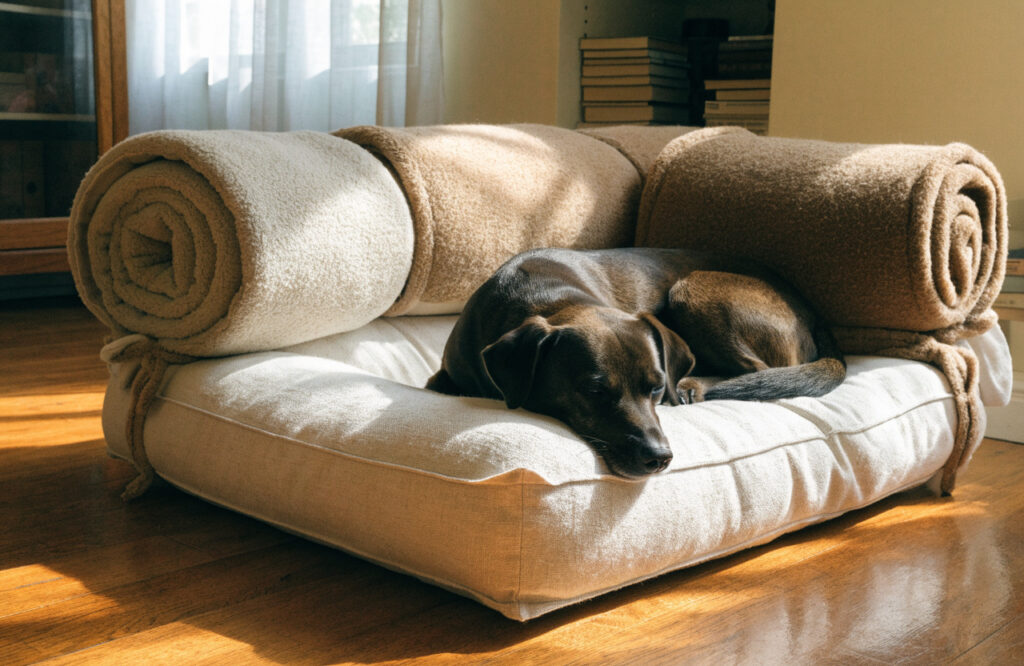
For a small or medium dog, three foam pieces can mimic a couch: one seat slab and two long bolsters for the back and sides, or one long back and two short arms.
- Cut the seat to the measured size. A bread knife or electric carving knife cuts foam cleaner than scissors.
- Cut bolsters about 4 inches square in cross-section, long enough to run the back and both sides.
- Join the bolsters to the seat with fabric ties, or set them inside a boxed cover so they cannot walk away. Spray adhesive works until the first wash, then fails.
- Cover with two layers of fleece or a duvet cover. Tie-style closures (fringe cut and double-knotted) avoid sewing. Leave one side open until the foam is inside, then close it.
- Put a waterproof layer between foam and cover.
Double-knot every tie. Single knots loosen, and the bed opens at the corner the dog pushes against. This build will not survive a dog that unstuffs toys. If that is your dog, use the wood frame and a canvas cover instead.
Turn an old couch into a dog bed
An old sofa becomes a dog bed only after you remove the parts a dog should not reach.
Find the cushion or foam first, then cut the frame to match it. Cutting first and hunting for a mattress afterward leads to odd gaps. A reciprocating saw handles most couch frames. Expect staples, nails, and zigzag springs. Pull or grind every sharp point on the surfaces the dog will touch. Sand and paint the exposed wood, then let it cure.
Do not reuse foam that smells musty, shows mold, or came from a couch stored in a damp garage. Old foam also holds fleas and odor that a cover will not fix. New foam on a cleaned frame is safer than “free” foam that has to be thrown out in a month.
Raise the cut section on short legs if the original base sits in a way that traps hair and moisture underneath. Block open springs with a plywood panel so paws cannot slip through.
Foam, covers, and the parts that fail first
The frame rarely fails. The cushion and the cover do.
- Soft fill collapses. Polyester stuffing and shredded foam move away from hips. A solid slab stays flatter.
- Thin cotton tears. Canvas, denim, and outdoor fabric tolerate nails better. Fleece is comfortable and cheap, and it pills and shreds if the dog digs.
- Fixed covers get abandoned. If you cannot remove the cover, the bed becomes a smell problem and then trash. Zippers with a fabric guard behind the teeth snag less fur.
- Memory foam holds heat. Double-coated dogs may leave a memory-foam seat in warm rooms. A firmer high-density foam top, or a breathable cover, is easier to live on in summer.
- Edges get chewed. Round or well-sanded wood edges, and bolsters set inside the frame rather than stuck on the outside, give teeth less to grab.
Replace the foam when the dog’s hip sinks to the board. Thick foam that has gone soft is not supportive just because it still looks deep.
Mistakes that make dogs ignore the new bed
A new DIY dog couch bed loses to the human sofa when the entry is awkward, the surface is unsteady, or the smell is wrong.
- Front wall too high. The dog jumps onto the couch instead. Open the front.
- Bed too small. Measuring a sitting dog under-sizes the seat. A dog that cannot stretch will not stay.
- Wobbly frame. If the box shifts when the dog turns around, they stop using it. Add a plywood base or another screw at each corner.
- Placed as a rival to the sofa. Put the bed where the dog already rests, not in a spare room. A blanket that already smells like the dog, moved from the couch to the new bed, helps the switch.
- No rule about the human couch. If the sofa stays available, many dogs treat the new bed as optional. Consistency matters more than the build.
Give the bed a few days. Some dogs investigate and leave, then adopt it once it smells familiar. Forcing a dog into it does not speed that up.
Frequently asked questions
Can a DIY dog couch bed replace a bought orthopedic bed?
It can, if the cushion is a solid slab thick enough for the dog’s weight and the cover comes off for washing. A pretty frame with a thin pillow inside is not an orthopedic bed. Dogs with arthritis need the foam more than the sofa shape. Ask a vet before using a very soft bed for a dog that struggles to stand.
How high should the arms be?
High enough to lean on, low enough to step over. About 4 to 6 inches above the seat cushion suits most dogs. Giant breeds can use a taller back. Keep the front lower than the sides.
Is pallet wood safe?
Only if it is clean, dry, and marked heat-treated rather than chemically treated, and only after sanding. Unknown pallets are a poor material for something a dog may lick or chew. New pine is simpler.
What if my dog chews the bed?
Switch to a wood frame, a canvas cover, and foam fully enclosed so teeth cannot reach a loose edge. Remove the bed when you cannot supervise a determined chewer. No fabric bed is chew-proof.
Can I put this bed on the human couch?
A foam sofa cushion sized to one seat can mark a dog’s spot on a couch you are willing to share. It will not stop a dog from taking the other cushions unless that is trained separately. Use a waterproof layer so the sofa underneath stays dry.