
The best puppy training treats are small, soft, and easy to swallow in a second or two. A piece about the size of a pea is enough for most puppies, and even smaller for toy breeds. What matters is how fast the reward arrives and how often you can repeat it, not how large each piece is. The American Kennel Club notes that dogs respond to the rate of reinforcement, and small treats are what make a high rate possible without filling the puppy up. Treats of every kind should stay around 10 percent of daily calories, a limit used in veterinary nutrition guidance from groups such as the World Small Animal Veterinary Association, with the rest coming from a complete puppy food.
A biscuit that takes ten seconds to chew is a snack. A training treat is a signal. If the puppy is still working on the last piece when you ask for the next sit, the lesson has already slowed down.
What a training treat has to do
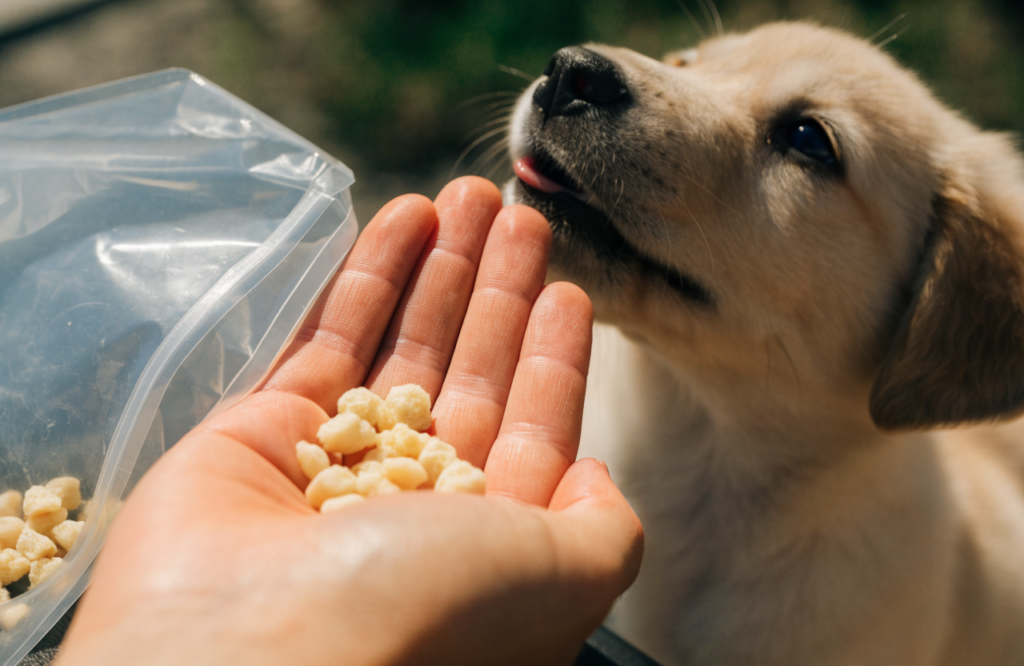
Three traits decide whether a treat helps a session or stalls it: size, texture, and smell. Brand and flavor matter less than those three.
Small enough to swallow, not chew
Puppies count how often a reward appears, not how big it is. A whole biscuit and a crumb of the same biscuit teach the same sit if both arrive right after the behavior. The biscuit just costs more time and more calories.
Cut commercial treats before the session starts. Pea-sized is a useful default for medium and large-breed puppies. For a Chihuahua or Yorkie puppy, aim closer to a kernel of corn. Pre-cut pieces so you are not fumbling with a knife while the puppy is offering the behavior you wanted.
Soft enough to finish in one bite
Soft treats disappear. Crunchy biscuits do not. The AKC’s training guidance favors treats a dog can eat quickly so the next repetition can start right away. Soft commercial training bites, freeze-dried meat broken into bits, and plain cooked chicken all fit. Hard biscuits, dental chews, and long-lasting chews belong outside the training session. They are fine as separate enrichment. They are a poor reward when you need twenty sits in three minutes.
Smelly enough to compete with the room
A puppy in the kitchen will often work for ordinary kibble. The same puppy at a park is choosing between you and moving dogs, other people’s food, and the ground. Smell is what makes a treat win that contest. Freeze-dried liver, plain cooked meat, and a small bit of cheese are typical high-value options because the puppy can smell them before they land in the mouth. If you can barely smell the treat, it is unlikely to hold attention outdoors.
Match the treat to the difficulty of the skill
Using the best treat for every repetition is a common way to run out of motivation. Save the food the puppy likes most for the moments that are actually hard.
| Value | Examples | Use it for |
|---|---|---|
| Low | The puppy’s own kibble, plain cereal pieces if the vet has cleared them | Name, sit, down, and known cues at home with few distractions |
| Medium | Soft commercial training bites, broken into pea-sized pieces | New cues, leash walking, short sessions in the yard |
| High | Freeze-dried liver, plain boiled chicken, tiny cheese bits, meat-roll slices | Recall, leave-it around real food, vet handling, busy sidewalks |
A practical split is to reserve about 70 percent of training rewards for kibble or medium treats, and keep the high-value food for the skills that fail when life gets noisy. If the puppy ignores kibble at home, the food may simply not be interesting enough yet, or the puppy may not be hungry. Training before a meal, not after a full bowl, usually fixes that.
Rotate two or three smells across the week. A puppy that gets the same liver bit for every cue will often slow down once that smell becomes ordinary. Novelty is part of the reward.
How many puppy training treats fit in a day
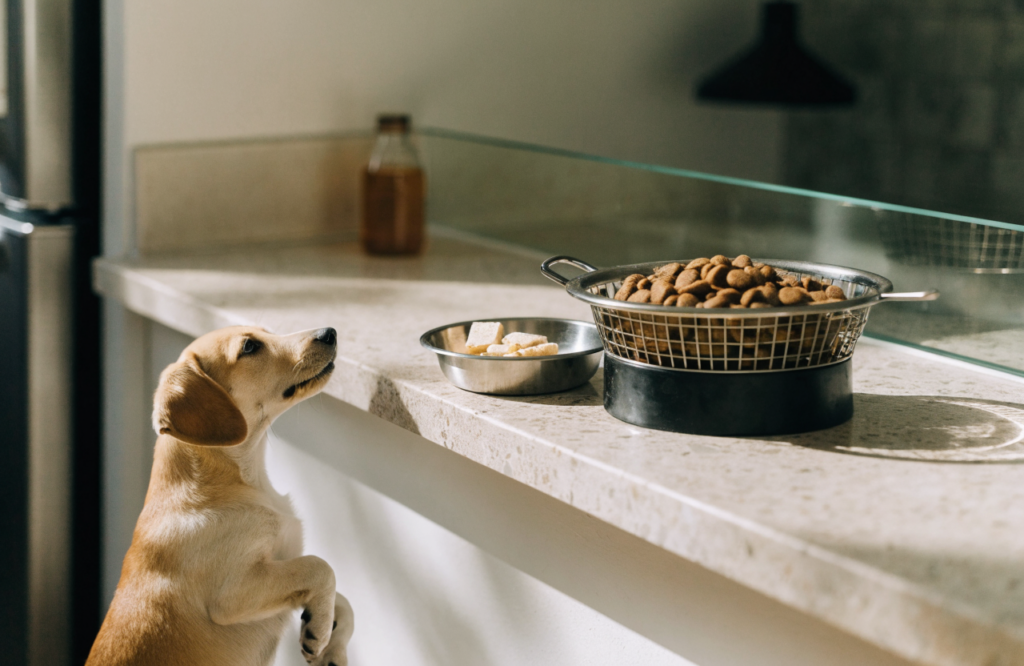
A growing puppy needs most of its calories from a complete puppy diet. Treats, chews, and food used in puzzles all count toward the same budget. The standard guideline is to keep that share at about 10 percent of daily calories so the main food is not diluted.
Daily needs vary by age, expected adult size, and the calorie density of the food on the bag. A useful way to stay inside the limit without a calculator:
- Check the feeding guide on the puppy food for the current weight and age.
- On heavy training days, measure that day’s food first, then remove a portion to use as training rewards.
- If you add real treats on top of a full meal, cut the next meal by roughly the amount you handed out.
A session of 20 to 40 repetitions is normal for a short practice. At 2 to 4 calories per pea-sized piece, that is already a meaningful share of a small puppy’s day, and a smaller share for a large-breed puppy. Tiny pieces are what make that repetition count possible. If the puppy is leaving food in the bowl or looking rounder week to week, the treat budget is too high, even if each piece felt small.
Puppies under about four months are growing fast and eat more per pound than adults, but their stomachs are still small. Several short sessions beat one long one. Three to five minutes, a few times a day, keeps the reward rate high without a calorie pile-up.
Kibble, store-bought bites, and plain food
Each option solves a different problem. Most households end up using all three.
Kibble is the default for easy work. Scoop part of breakfast or dinner into a pouch and train with it. Calories stay exact because you are moving food, not adding it. Food-motivated breeds often work for kibble indoors. Kibble fails when the environment is more interesting than the food, which is a cue to raise the value, not to hand out bigger pieces.
Soft commercial training treats are the portable middle. Products sold as training bites are usually already small, soft, and in the range of a few calories each. Read the calorie line on the bag, because “training” on the label does not guarantee a low count. Break anything larger than a pea. These travel well and do not need refrigeration, which makes them the practical choice for walks and classes.
Plain cooked food is the high-value tool. Boiled chicken breast with no salt, oil, or seasoning is the usual homemade option. Tiny cubes of plain turkey, a pinch of freeze-dried single-ingredient meat, or a sliver of cheese work the same way. Cheese and hot-dog pieces are motivating, but they are salty and rich. Use them rarely, in very small bits, and skip them if the puppy has a sensitive stomach. Cooked meat should be plain. Seasoning blends often hide onion or garlic powder.
Store the smelly food in a sealed container in the fridge and only pack what you will use that day. A treat pouch full of warm chicken is a mess and a bacteria risk by the end of a long outing.
How to deliver the treat so the lesson sticks
The treat only teaches the behavior it follows. Timing is the part most people get wrong.
- Ask for the behavior, or wait for the puppy to offer it. Do not show the food first.
- Mark the exact moment the puppy does it. A short word such as “yes,” said once, is enough. The mark tells the puppy which action earned the food.
- Deliver the treat within a second or two of the mark. Soft and small makes that possible.
- Reset and repeat. If the puppy is still chewing, you waited too long or the piece was too big.
Showing the treat before the cue is a lure, and lures are useful for the first few tries of a new skill such as down. If the food stays visible on every repetition, the puppy learns to wait for the bribe. Fade the lure by asking first, then producing the treat from a pocket or pouch.
Keep the pouch on a belt or in a pocket, not in the hand the puppy is staring at. Reach in after the mark. For recall, the treat should appear when the puppy arrives at you, not while the puppy is still deciding whether to come.
Once a cue works about nine times out of ten at home, you do not need a treat for every success. Reward most repetitions of a new skill, then move to an unpredictable pattern: sometimes food, sometimes praise, sometimes the chance to go sniff. Keep food in the mix for anything you still need to be reliable around distractions. Play, access to a toy, and freedom to greet a person are real rewards too, but food is the clearest one for a young puppy.
Foods that do not belong in a training pouch
Some foods are a poor training tool. Others are unsafe.
Skip anything the puppy has to gnaw. Bully sticks, pig ears, and hard biscuits interrupt the session and add calories that are hard to count. Skip greasy table scraps and heavily seasoned meat. Rich food is a common cause of loose stool in puppies, and a puppy with an upset stomach is a poor training partner the next day.
Never use foods that are toxic to dogs, even in small pieces. The highest-risk items that show up in homemade treats and human snacks are:
- Xylitol, a sweetener in some peanut butters, sugar-free gum, and baked goods
- Grapes and raisins
- Onion, garlic, chives, and powders made from them
- Chocolate and cocoa
- Macadamia nuts
Plain peanut butter is fine for many dogs only if the label has no xylitol. If a puppy eats any of the foods above, contact a veterinarian or a pet poison hotline rather than waiting for symptoms. Puppies are at higher risk per bite because toxicity depends on dose for body weight.
For a puppy on a veterinary elimination diet, use only the treats the clinic has approved. A “single ingredient” liver treat is still a second protein.
Mistakes that slow training down
Pieces that are too big. The puppy fills up after a handful of repetitions and spends the session chewing. Cut smaller before you start.
One treat for every situation. Kitchen kibble will not buy a recall away from another dog. Park-level chicken for every sit at home spends the high-value food before you need it.
Training after a full meal. A satisfied puppy is harder to pay. Use part of the meal as the reward, or train before feeding.
Wet food in a mixed pouch. Squeezable tubes and meat paste are useful for nail trims and vet visits. They make a mess if you mix them with dry treats for a walk. Keep them separate.
Ignoring the stool and the waist. Soft, frequent treats can loosen stool if they are rich or if the puppy is not used to them. Introduce a new food in small amounts. If weight is climbing faster than the breed’s expected growth, or ribs disappear under a thick layer of fat, reduce treats and check portions with your vet. Growth charts on the food bag are a starting point, not a promise.
Stopping food too early on hard skills. Phasing out treats is right for a sit that already happens in the living room. It is early for a recall that still fails at the park. Drop the rate only after the behavior is reliable in the place you need it.
Questions owners ask next
Can I train a puppy with only kibble? Yes, for easy skills at home, if you set part of the daily ration aside and the puppy will work for it. Add a higher-value food when distractions win.
Are freeze-dried treats better than soft baked ones? Neither is automatically better. Freeze-dried meat is usually higher value and easy to break. Soft baked training bites are often lower calorie and less messy. Use both according to the job.
How long should a session last? Stop while the puppy is still succeeding, often after a few minutes. Several short sessions beat one long one, both for attention and for the calorie budget.
What if my puppy will not take treats outside? Lower the difficulty before you change the food. Practice closer to home, on a shorter walk, or after a light meal. If the puppy still refuses food it normally likes, the environment may be too overwhelming for training that day. Management, such as distance from triggers, comes before more repetitions.
Do training treats replace puppy food? No. They are a small share of the day. The balanced diet is the food formulated for growth. Treats fill the training role and should stay inside the calorie limit so that diet stays intact.