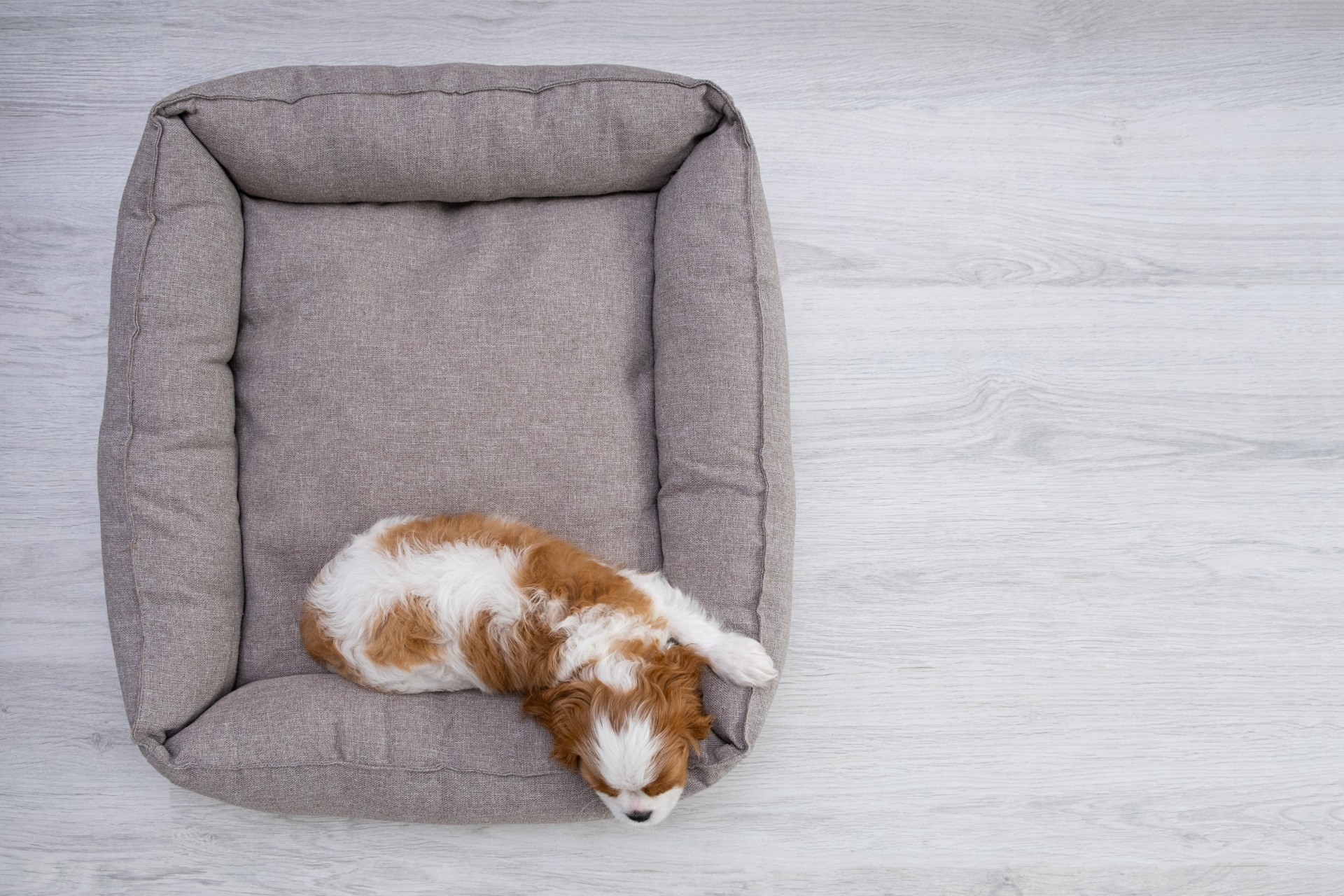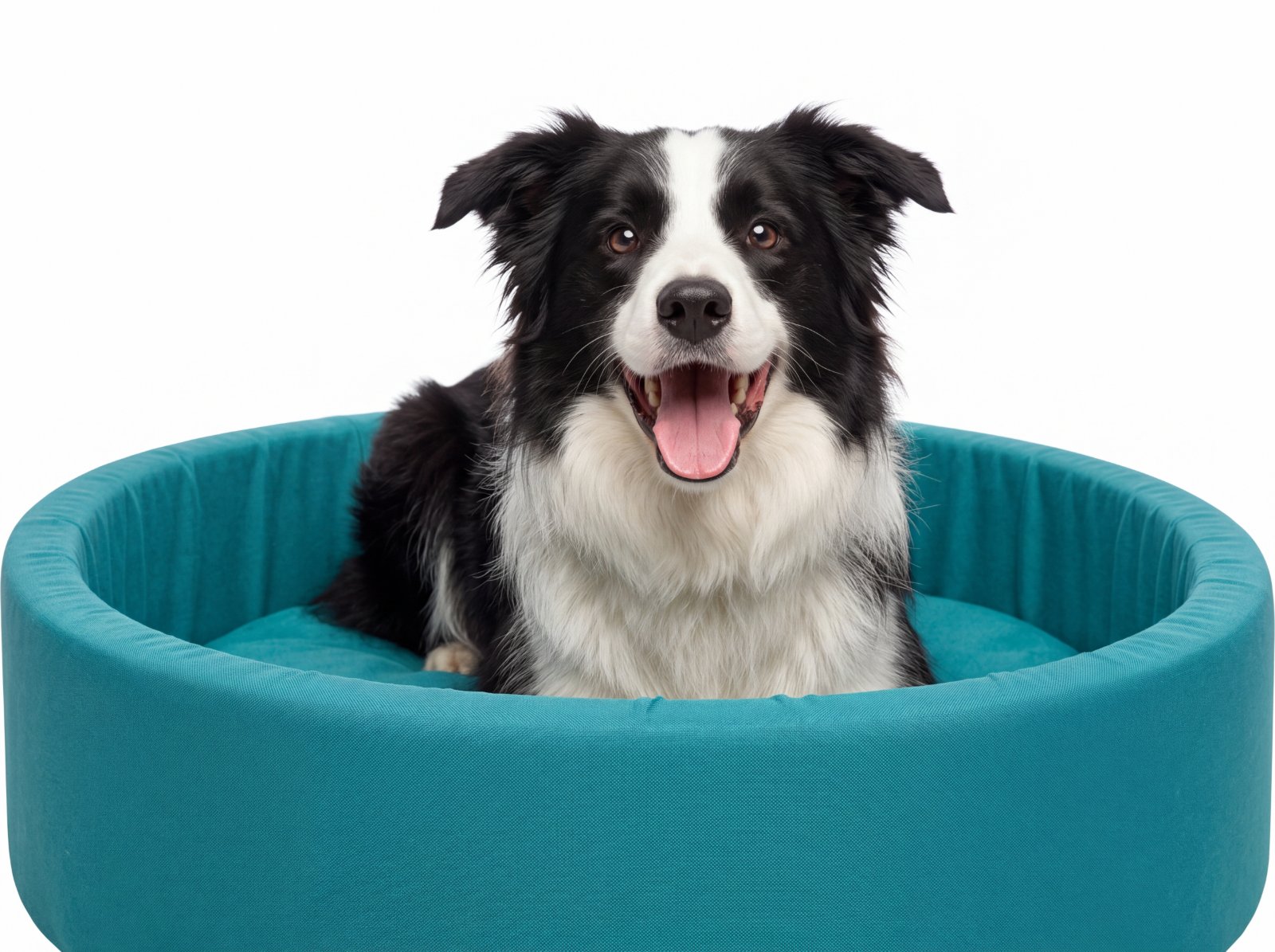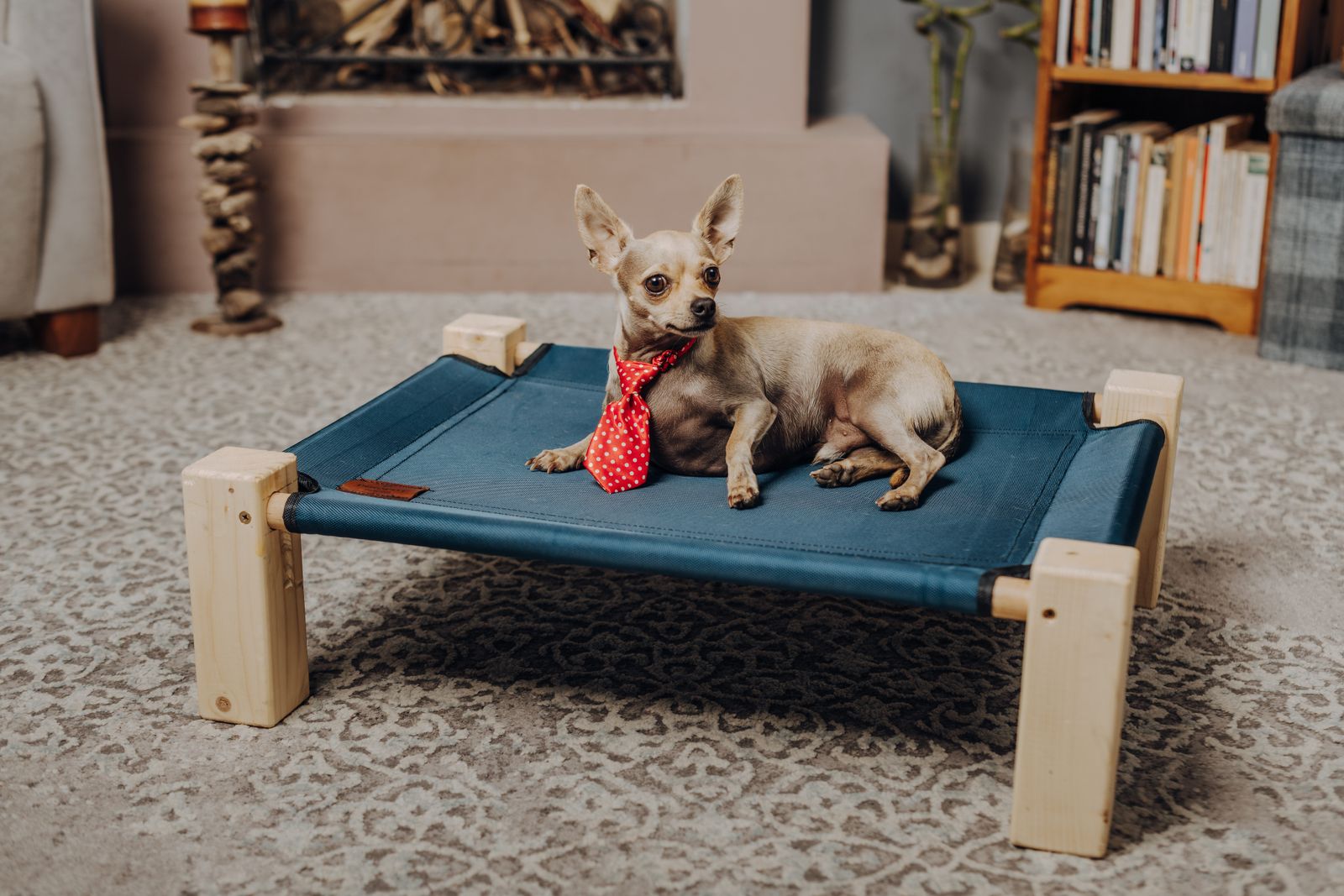

A DIY dog bed frame is a simple raised box sized around a cushion your dog already likes, built so the sleeping surface sits a few inches off the floor. Most people build one because store frames cost more than the lumber, do not match the cushion they already own, or look wrong in the room. A basic wood frame for a medium dog can be cut and assembled in an afternoon with a saw, drill, screws, and glue. The part that decides whether the dog actually uses it is the fit, not the joinery.
Size the frame to the dog, not a store label

Measure the dog lying on its side, nose to the base of the tail, then add 6 to 12 inches. Curlers can sit closer to the low end of that range. Dogs that sleep stretched out need the extra length, or they hang off the edge and abandon the bed.
Weight is only a starting point:
| Dog weight | Useful sleeping surface | Typical frame interior |
|---|---|---|
| Under 25 lb | about 24 × 30 in | slightly larger than the cushion |
| 25–50 lb | about 30 × 36 in | slightly larger than the cushion |
| 50–75 lb | about 36 × 42 in | slightly larger than the cushion |
| Over 75 lb | 42 × 48 in or more | measure the dog, then add stretch room |
Buy or choose the cushion first, then build the frame around it. A frame that is tight on all four sides traps the cushion; a gap of about half an inch to an inch on each side lets you lift the cushion out to wash the cover. Bolster-style beds need a deeper side rail so the cushion does not walk forward when the dog turns.
Leg height is a separate decision. Four to six inches clears cold floors and makes cleaning easier. Taller frames, around 8 to 12 inches, can help a large dog stand up, but they are harder for short-legged or stiff dogs to climb. If the dog is older, keep the step-up low and add a short ramp only if the dog already uses steps.
Wood frame or PVC frame
A wood frame holds a standard foam or orthopedic cushion and reads as furniture. Pine 2x2s and 1x4s are the usual materials because they are cheap, light, and easy to screw. Plywood or slats form the base. This is the better choice indoors, for heavy dogs, and when you want the bed to match other pieces in the room.
A PVC frame uses schedule 40 pipe, three-way elbow fittings, and outdoor mesh or canvas stretched across the top. It is lighter, sheds water, and needs no stain. It is the better choice for a porch or yard, and for dogs that overheat on thick foam. Mesh sags if the span is long and the fabric is thin, so large dogs need a center support pipe or a heavier fabric.
Skip particle board and unfinished MDF. Both swell if the dog has an accident, and the cut edges are easy to chew. Solid pine or plywood with a cured finish holds up better.
Materials for a simple wooden frame
For a medium bed with an interior near 30 by 40 inches and legs about 6 inches tall, a typical shopping list looks like this:
- Two 8-foot 2×2 boards for the legs and lower rails
- Three 8-foot 1×4 boards for the side rails
- One half-sheet of 1/2-inch or 3/4-inch plywood for the base, or extra 1x4s if you prefer slats
- 1 1/4-inch and 2 1/2-inch wood screws
- Wood glue
- 120-grit sandpaper
- Felt pads or rubber feet
Tools are a tape measure, square, saw, drill with a countersink bit, and clamps if you have them. Pocket-hole joinery is optional. Glue plus screws through the face of the rail into the leg is enough for a dog bed if you pre-drill so the pine does not split.
Check the boards at the store. A twisted 2×2 makes the whole frame rock. Plywood should be flat; a bowed sheet will lift one corner of the cushion.
Build the frame
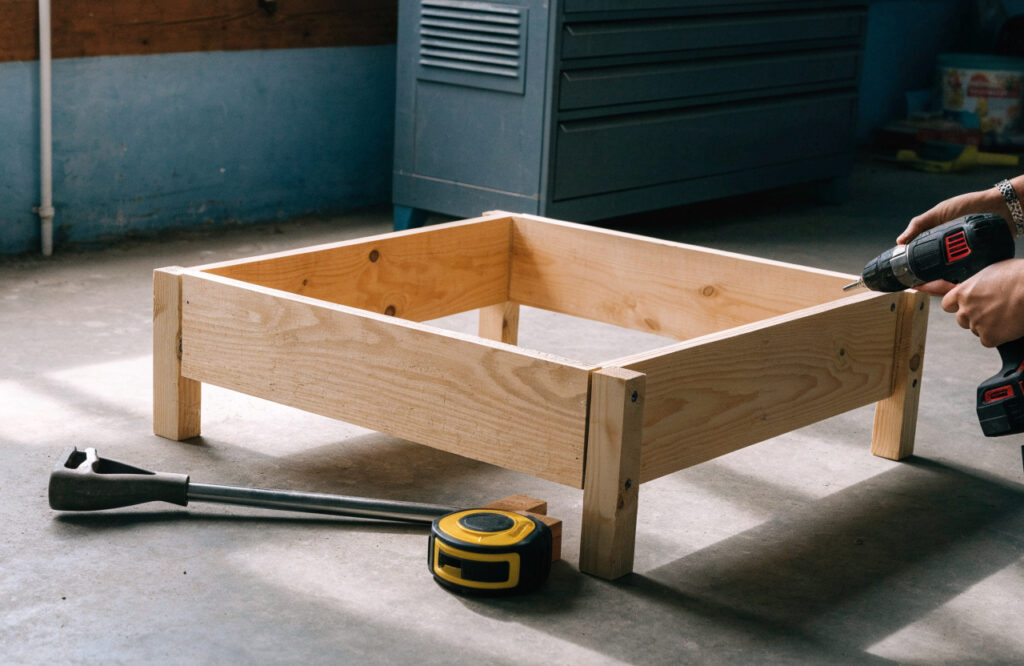
Work in this order so the box stays square.
- Cut four legs to the same length. Cut two long rails and two short rails for the bottom rectangle, and a matching set for the top if you want a raised rim. For a 30 by 40 inch interior, the outside length of the long rails is the interior length plus the thickness of the two short rails.
- Dry-fit the bottom rectangle on a flat floor. Measure both diagonals. They should match within about 1/8 inch. If they do not, the frame is a parallelogram and the plywood will not drop in.
- Glue and screw the rails to the legs. Keep the bottom of the lower rails a couple of inches above the floor so the legs, not the rails, take the load. Countersink the screws.
- Add a center support rail under the plywood if the span is longer than about 30 inches or the dog weighs more than about 50 pounds. One 2×2 across the middle stops the base from flexing.
- Cut the plywood about 1/4 inch smaller than the interior opening so it sits on the lower rails or on cleats screwed inside the frame. Notch the corners if the legs sit inside the rails. Screw the plywood down, or leave it loose if you want to remove it for cleaning.
- Sand edges, especially any place a paw or the cushion cover will rub. Attach felt pads so the frame does not scratch the floor.
A low front rail, or no front rail at all, makes it easier for the dog to step in. A full box with four high sides looks more finished but can feel like a crate to some dogs.
Finish it so the dog can use it
Bare pine stains and absorbs urine. A water-based polyurethane or polycrylic is the practical indoor finish: it dries faster and has lower odor than oil-based polyurethane once cured. Apply thin coats, sand lightly between them, and wait until the product is fully cured before the dog sleeps on it. Manufacturer cure times are often longer than the “dry to the touch” time printed on the can. Outdoor frames need an exterior finish, and PVC needs none.
Do not use the bed while the finish still smells. Dogs lie with their noses against the wood. If the dog chews, no film finish will survive the corners; plan on replacing chewed rails rather than relying on a coating.
Mistakes that make the frame fail
- Building first, then hunting for a cushion. The cushion dimensions should drive every cut.
- Screws only into end grain, with no glue. End grain does not hold screws well. Glue the joint and screw into the face or edge of the mating piece.
- No center support on a long span. A 3/4-inch plywood base will still bow under a heavy dog if it is only supported at the edges.
- Legs that are different lengths. The frame rocks, the dog avoids it, and the screws work loose.
- A step-up that is too high for an older or short-legged dog. The bed gets used as a lookout, not a bed.
- Assembling in a basement, then discovering the finished frame does not fit through the doorway. Dry-fit and check the path to the room before the last screws go in.
Frequently asked questions
Can the frame sit directly on the floor? Yes. Skip the legs and build a low box if the dog has trouble stepping up. You lose the airflow under the bed, so use a cushion with a waterproof liner if the floor is concrete or tile.
Is a pallet a good shortcut? Only if you know the pallet is heat-treated rather than chemically treated, and you sand every splinter and close every gap a paw could catch. A new 2×2 frame is usually less work than making a pallet safe.
How do I stop the cushion from sliding? A plywood base with a slight lip, or short cleats at the front edge, holds a flat cushion. Velcro on the underside of the cover and on the plywood also works if you do not mind sewing a strip onto the cover.
What if I have two dogs? Build two frames, or one long frame with a center divider only if both dogs already share a bed. A shared frame without a divider often becomes one dog’s bed.