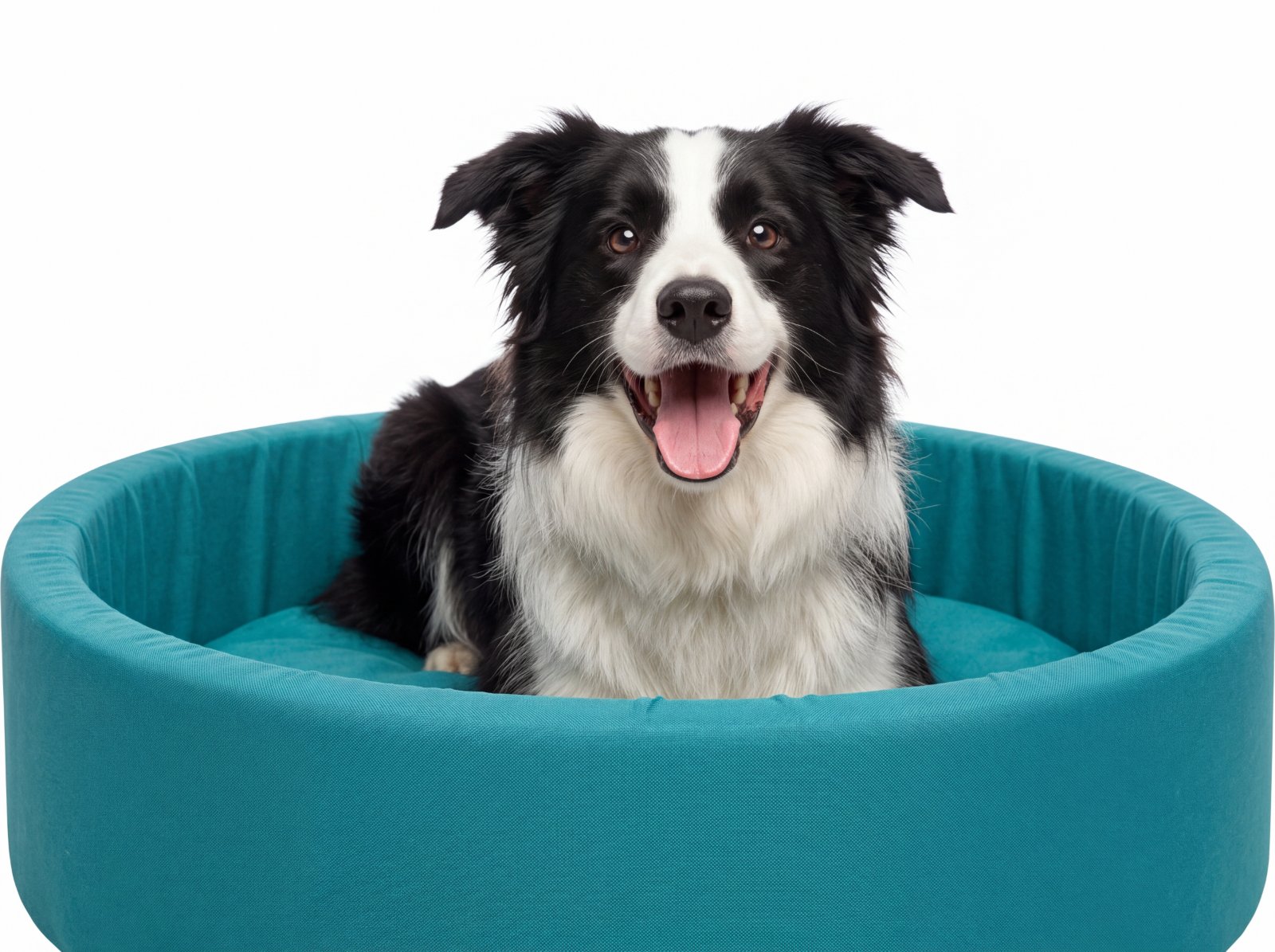
A raised wooden dog bed is a wood frame that holds the sleeping surface off the floor. The surface may be tensioned fabric, slats, or a cushion sitting inside a low furniture frame. The lift is the useful part: air can move underneath, cold or damp flooring stays out of direct contact, and hair and crumbs collect where you can reach them. None of that matters if the dog hesitates at the front edge, the frame rocks when weight shifts forward, or the wood is unfinished in a spot a chewer can work on. Match the style, the usable interior, and the step height to the dog in front of you.
Three products share the name
Search results and product pages mix three different beds. They solve different problems.
A wooden cot uses a solid wood or wood-and-resin frame with fabric or mesh pulled tight across it. There is no mattress. Support comes from the tension of the surface. These are the usual choice for warm rooms, covered porches, and dogs that shred stuffed beds, because there are fewer loose edges to grip. Kuranda-style birch frames with a vinyl-coated weave are the familiar version of this design. The surface can still tear if a determined chewer finds a seam or a loose bolt, and shelter staff often report that chewed plastic corners and hardware that works loose are the failure points, not the wood itself.
A platform bed is a wood rectangle on short legs, sometimes with slats, sometimes with a solid panel. A separate cushion or crib-style mattress sits on top. This is the design most people build. Comfort depends on the pad, not the frame. The wood’s job is to stay square, keep the pad from sliding, and leave a gap under the bed for air and a broom.
A furniture-style frame looks like a low sofa or daybed: raised sides, a wooden outer shell, and a thick cushion inside. It fits a living room better than a cot does. It also runs warmer, because the sides block some airflow, and the cushion is the part that flattens or gets chewed. Check the interior dimensions, not the outer silhouette. A thick rail can steal several inches of sleeping width.
If the dog overheats or destroys stuffing, start with a cot. If the dog wants a soft place to sprawl and the room is climate-controlled, a platform or furniture frame with a replaceable pad is the better fit.
When the lift helps, and when it does not
A raised bed earns its place in a few specific situations.
Hard floors pull heat from a dog lying in full contact, and they put pressure on elbows and hips. A surface off the floor breaks that contact. On a porch or in a garage, the gap also keeps the dog off damp concrete and gives water somewhere to drain instead of pooling in the bedding. Dogs that run warm often settle on a cot faster than on a foam bed, because air moves under the body as well as over it. Cleaning is simpler: wipe or hose a mesh surface, or pull a cushion and vacuum under the frame.
The same height is a problem for other dogs. Very small dogs, young puppies, and dogs with poor balance, reduced vision, or painful joints can miss the edge on the way down. A dog that pauses before the first paw, circles instead of lying down, or sleeps on the floor beside the bed is telling you the step or the wobble is wrong. For those dogs, a low floor mattress is the safer bed until movement improves. An elevated surface is not automatically better for arthritis. A firm, even pad can spread pressure, but a sagging mesh or a step the dog has to climb can add strain. If mobility is already limited, ask a veterinarian whether a raised surface is appropriate before buying one.
| Dog | Better starting point | Why |
|---|---|---|
| Healthy adult that sleeps hot | Cot or low platform | Airflow without a tall step |
| Large breed on tile or wood | Stable platform or heavy cot, sized long | Weight shift at the front edge exposes weak frames |
| Destructive chewer | Tensioned cot, hardware checked often | Fewer stuffed edges; not chew-proof |
| Puppy, toy breed, or unsteady senior | Floor bed | Fall risk outweighs airflow |
| Dog that refuses anything raised | Floor bed | An unused frame does not help |
Size the sleeping surface, not the catalog photo

Measure the dog stretched out, from nose to the base of the tail, then add roughly 6 to 12 inches. Measure across the body while the dog is lying on its side, from shoulder to hip, and add a similar margin. A dog that curls can live with a slightly shorter bed. A dog that sprawls cannot. Legs hanging off the side cancel the point of a supportive surface.
Use the interior size. On a furniture frame, the cushion is smaller than the outside measurement. On a cot, the usable fabric stops inside the rails. If you are between two sizes, take the larger one, provided it still fits the room and the dog can get onto it.
Weight rating is separate from footprint. A 40-pound dog that jumps on from a short run loads the front rail harder than the same dog stepping on. Look for a stated capacity above the dog’s weight, and treat a light folding cot with thin legs as a poor match for a heavy breed. Large dogs also show sag sooner. A loosely tensioned fabric bed hammocks in the middle and stops supporting the spine. A pad on a platform has to be thick enough that the dog does not bottom out on the wood. Heavy dogs generally need a deeper cushion than toy breeds on the same style of bed.
Set the height from the step, not from the photo
Airflow and access pull in opposite directions. More clearance under the bed moves more air and makes cleaning easier. A higher front edge is harder to step onto and easier to misjudge on the way down.
For a cot used for cooling, about 6 inches of clearance is the practical minimum. Much less and the bed behaves like a floor cushion, with little air movement and water that can sit under the frame. Many commercial cots sit in the 5- to 9-inch range. For a senior or a short-legged dog, lower is better: a step near elbow height, or below it, so the dog walks on instead of climbing. A furniture frame at sofa height looks intentional in a room and is a poor choice for a dog that already struggles with the couch.
Watch the first week. Hesitation at the front edge, a bed that shifts when the dog loads one corner, or repeated jumps off the side are signs to drop the height, add a ramp or broad step, or switch to a floor bed. Non-slip feet matter as much as the measurement. On tile and hardwood, a tall frame that skates is worse than a lower frame that stays put.
Wood and finish: what is reasonable, and what to keep out of a chewer’s mouth
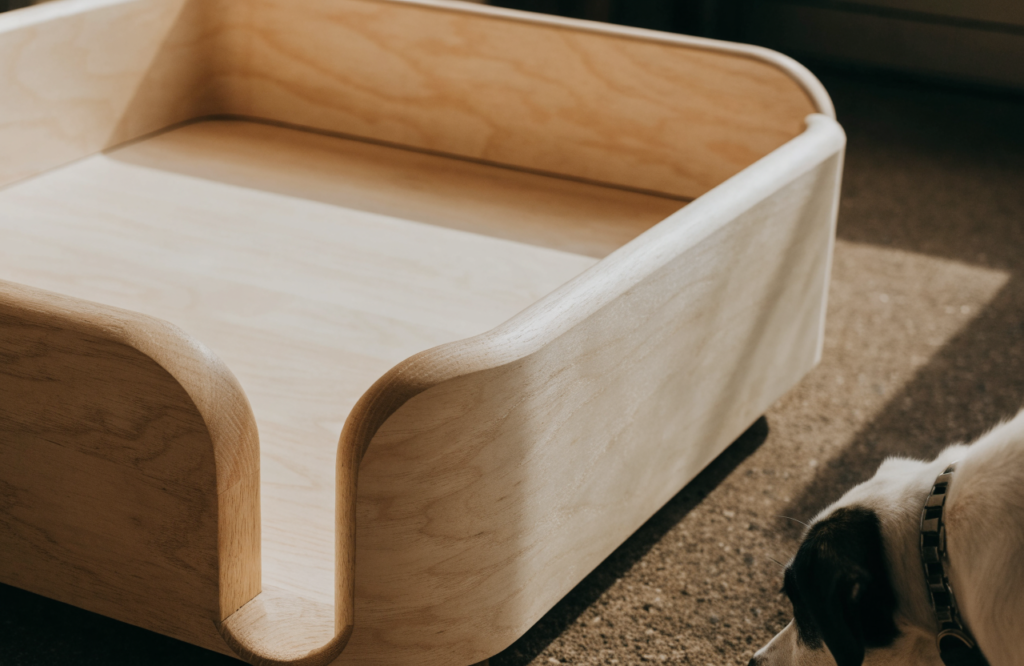
Indoor frames are usually pine, poplar, birch, or a hardwood such as oak or maple, sometimes with plywood panels. Pine and poplar are easy to work and light. They dent under claws and show chew marks quickly. Birch holds up well in commercial cot frames. Oak and maple resist dents better and cost more. For a bed that stays inside, any of these is fine if the surface is sanded smooth and the finish is fully cured before the dog uses it.
Skip a strong aromatic cedar box for an enclosed bed. Eastern and western red cedar contain phenolic compounds that irritate airways and skin in dust, shavings, and concentrated oils. The risk is highest with bedding shavings and poor ventilation, not with a sealed outdoor board, but there is no benefit to building a sleeping box from strongly scented cedar when pine, poplar, or birch will do. Do not add cedar oil, pine oil, or other essential oils to the finish. Several of those oils are toxic to dogs in concentrated form.
Outdoor frames need rot resistance. Cedar and redwood handle weather without a chemical preservative, at a higher price. Untreated pine and fir rot once they stay damp. Modern residential pressure-treated lumber in the United States, sold after the end of 2003, uses copper-based preservatives such as ACQ or copper azole rather than the older arsenic-based CCA treatment. That change removed the arsenic concern for ordinary contact. It did not make the wood a safe chew toy. Copper preservatives, splinters, and old CCA lumber from pre-2004 decks are all reasons to keep treated wood away from a dog that mouths the frame. Unknown salvaged lumber, railroad ties, and creosote-treated timber do not belong in a dog bed.
Use a finish meant for the location, applied and cured as the label says, and keep chewable edges smooth. Food-contact mineral oil or a cured hardwax oil is a common indoor choice on bare wood. Outdoor pieces need a finish rated for exterior use, recoated when water stops beading. Fasteners on copper-treated lumber should be hot-dip galvanized or stainless, because the treatment corrodes ordinary screws.
Strength, joints, and floors
The frame fails at the joints and the feet, not in the middle of a board. Pocket screws and glue are enough for a light indoor platform if the joints are tight. A heavy dog needs rails that cannot rack: corner blocks, a stretcher between the legs, or a lower shelf that braces the rectangle. Legs screwed into metal plates are easier to replace than legs that are only glued.
On hard floors, bare wood feet slide. Stick-on pads, rubber cups, or a thin rug under the front legs stop the skid that makes cautious dogs refuse the bed. Leave enough open space under a cot that the fabric cannot touch the floor when the dog lies in the middle. If it bottoms out, the bed is too low, the fabric is too loose, or the span is too wide for the dog’s weight.
Check bolts after the first few weeks. Chewing and repeated jumping back fasteners out even on well-made cots.
Indoor rooms and covered outdoor spots
Inside, the priorities are looks, noise, and cleaning. A platform with a washable cover disappears in a living room. A cot is easier to sanitize and cooler in summer. Either should sit where the dog already sleeps, not in a draft from a door the dog avoids.
Outside, only covered use is realistic for most wooden beds. Direct rain swells joints and rots end grain even on cedar. A porch cot should have at least that 6-inch gap, feet that do not sit in a puddle, and a surface that drains. Bring cushions in. Foam left outside holds water and mildew. In hot weather the airflow is the feature. In cold weather a raised mesh bed can be too cool, and a pad or a move indoors makes more sense.
Problems that show up after the first week
The dog will not get on. Lower the bed, stabilize the feet, or put a familiar blanket on the surface. Some dogs never accept a raised bed. Forcing the height does not fix that.
The bed walks across the floor. Add grip under the feet and stop the dog from jumping on from a running start until the frame is braced.
Chewing starts at corners, bolts, and any loose fabric. A cot removes stuffing but not the urge. Bitter sprays wash off and are not a plan. If the dog is actively dismantling the frame, remove it and use a bed with no detachable hardware until the chewing phase passes. Swallowed wood, screws, or treated splinters are a veterinary problem, not a training inconvenience.
The cushion slides or bottoms out. A lip on the platform, a non-slip mat under the pad, or a thicker replacement cushion fixes this. Do not keep adding soft toppers to a sagging cot. Retension or replace the surface.
Odor in the wood. An uncured finish or damp foam is the usual cause. Air the frame until the smell is gone, and wash the cover. Do not “fix” it with scented oils.
Buying and building
Buy when you want a tested fabric tension, a stated weight limit, and replacement covers. Read the interior size and the clearance, and confirm the wood species if cedar smell is a concern. A cheap cot with thin legs and no weight rating is a false saving for a large dog.
Build when you want a specific height and a cushion you already own. A simple indoor platform is a beginner project: four rails, four short legs, a brace, sanded edges, and a cured finish. Size the inner opening to the cushion, not the other way around. Keep the step low, round every edge the dog will contact, and do not use unknown treated lumber. Outdoor builds belong under cover, with joinery that can dry and feet that are not buried in soil.
Questions people ask after they measure the dog
Is a raised wooden bed better than a floor bed? Only if the dog can use it easily. Airflow, drier contact, and easier floor cleaning are real advantages. Fall risk, refusal, and a sagging surface erase them.
Will it stop a chewer? It removes stuffed edges, which is why many chewers leave a tight cot alone. It will not stop a dog that unscrews bolts or splits corners. Inspect hardware, and do not treat any bed as indestructible.
How high is too high? Above an easy step for that dog. Elbow height is a fair ceiling for seniors and short legs. Extra clearance helps cooling and is wasted if the dog stops using the bed.
Can it go in the yard? Under a roof, off wet ground, with no loose cushion left in the rain. Full exposure is a short life for a wooden frame.
What if the dog is older and stiff? Prefer a low platform with a thick, even pad, or stay on the floor. Add a broad step rather than asking the dog to hop. Height is the wrong feature to maximize.