
A plush dog bed is the right buy when your dog wants a soft, warm nest and does not need a firm surface under the hips. It is the wrong buy when the dog is heavy, stiff, destructive, or runs hot, because the same pile and loose fill that feel cozy also flatten, trap heat, and shred easily.
Most shopping pages treat “plush” as a style label. In practice it describes the cover and the give of the bed: a high-pile surface such as faux fur, sherpa, or microplush, usually over polyester fiberfill, shredded foam, or a thin foam pad. That construction is what makes the bed inviting. It is also what makes a cheap one useless after a few weeks of real sleep.
What “plush” changes about the bed
The pile is the part the dog feels. Sherpa and faux fur hold warmth and give short-coated dogs something to burrow into. A shorter microplush or fleece top is easier to de-hair and less likely to mat, but it does not feel as nest-like.
The fill decides whether that softness lasts. Loose polyester fiberfill is light, cheap, and fully washable on many smaller beds. It also migrates. Dogs who circle and dig push the stuffing to the edges, then sleep on a thin center. Shredded foam has the same shift problem. A solid foam slab under a plush cover keeps the surface soft without letting a medium or large dog sink to the floor.
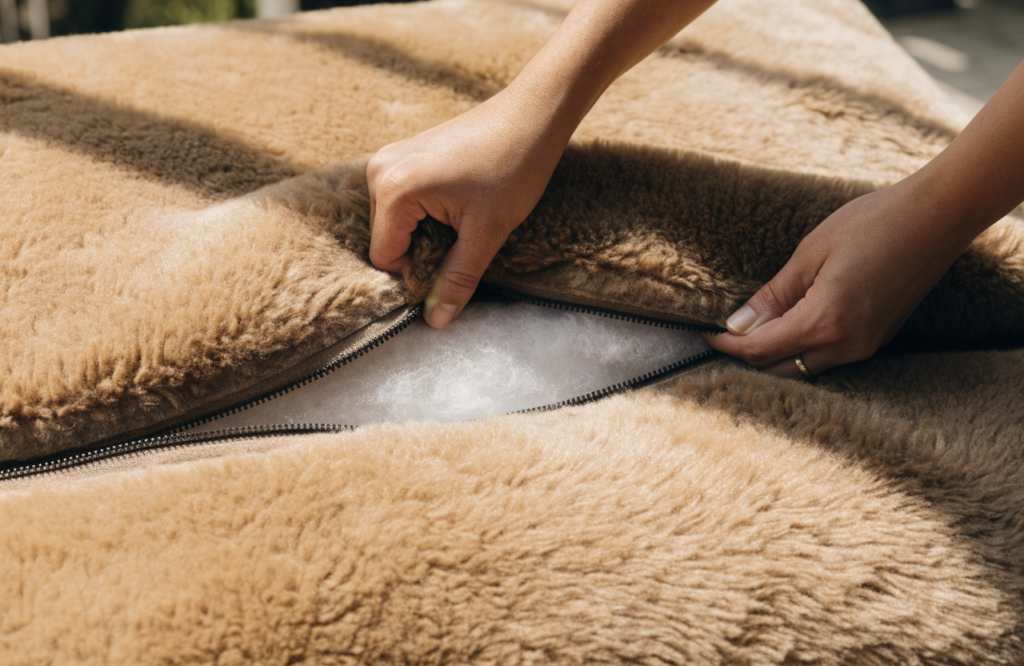
A removable cover matters more than the color. Hair, saliva, and the occasional accident sit in the pile. If the cover does not unzip, the bed becomes a cleaning problem instead of a sleep spot.
Which dogs a plush dog bed actually suits
Plush works best as a primary bed for healthy small and many medium dogs that curl, lean, or paw a nest. It also works as a second bed in a cooler room, a crate liner for a dog that already has a supportive mattress, or a travel cushion you can wash often.
It is a weak primary bed in four common cases:
- Senior dogs and dogs with joint pain. Veterinary guidance on bedding for arthritis focuses on a surface the dog can get onto easily that supports the body and avoids pressure points at elbows and hips. A collapsed fiberfill cushion does not do that. A plush cover over a thick, solid foam base can.
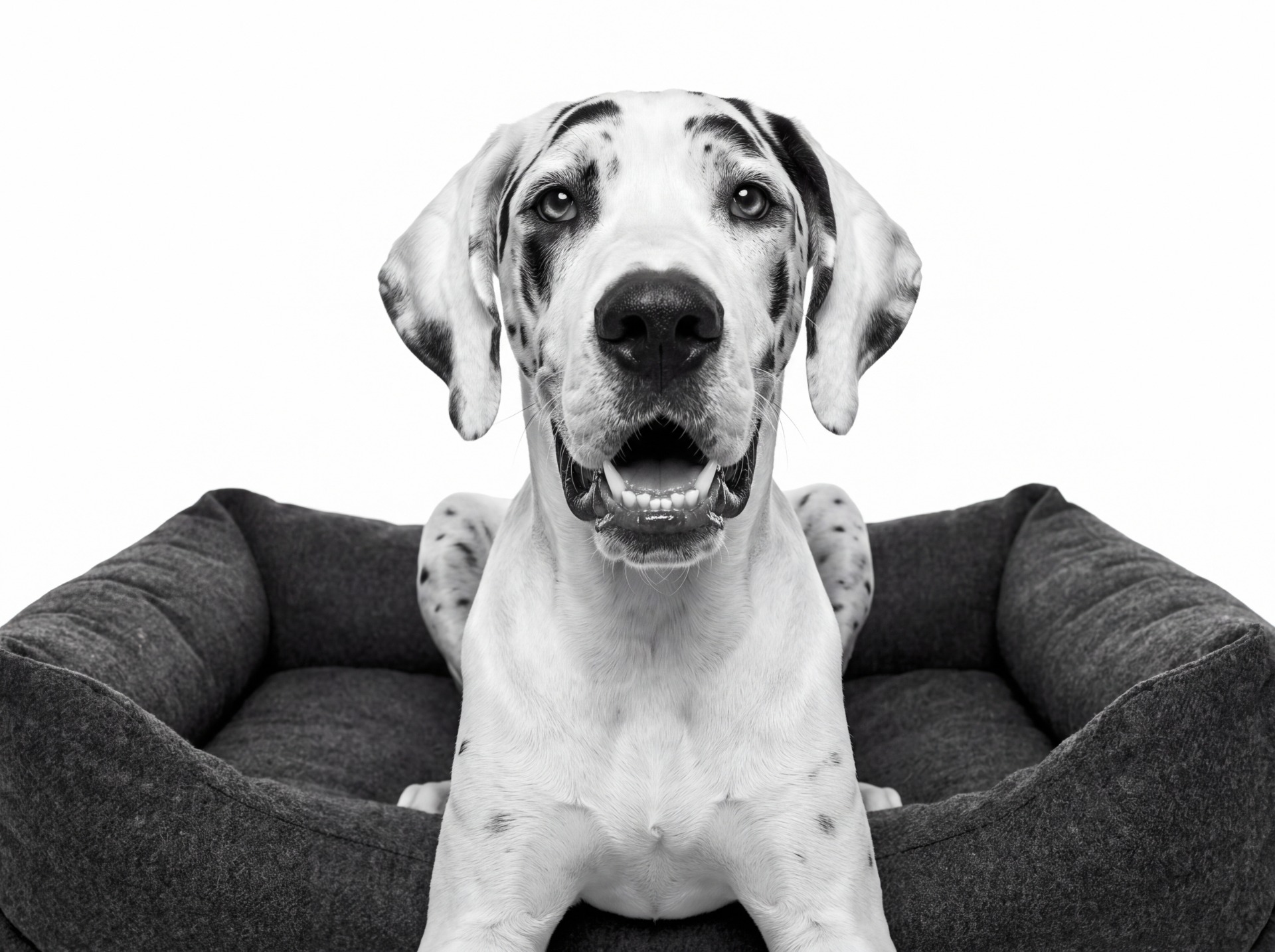
- Large and giant breeds. Body weight compresses loose fill. If you can feel the floor through the center when you press with your hand, the dog will bottom out faster.
- Determined chewers. Plush seams and loose fill are easy to open. Swallowed stuffing is a reason to call a vet, not a reason to buy a fluffier replacement.
- Dogs that pant at night or live in warm homes. Pile traps heat. A short-coated dog in a cold apartment may love it. A double-coated dog in summer often abandons it for tile.
Puppies can use a plush bed if the cover is washable and the fill is enclosed well enough that curious chewing does not empty the bed. A waterproof layer under the cover is more useful than extra pile while house training is unfinished.
Match the shape to the way the dog already sleeps
Watch the dog for a few nights before you shop. The pose they return to is a better guide than the breed stereotype.
Flat plush mats and pillow beds
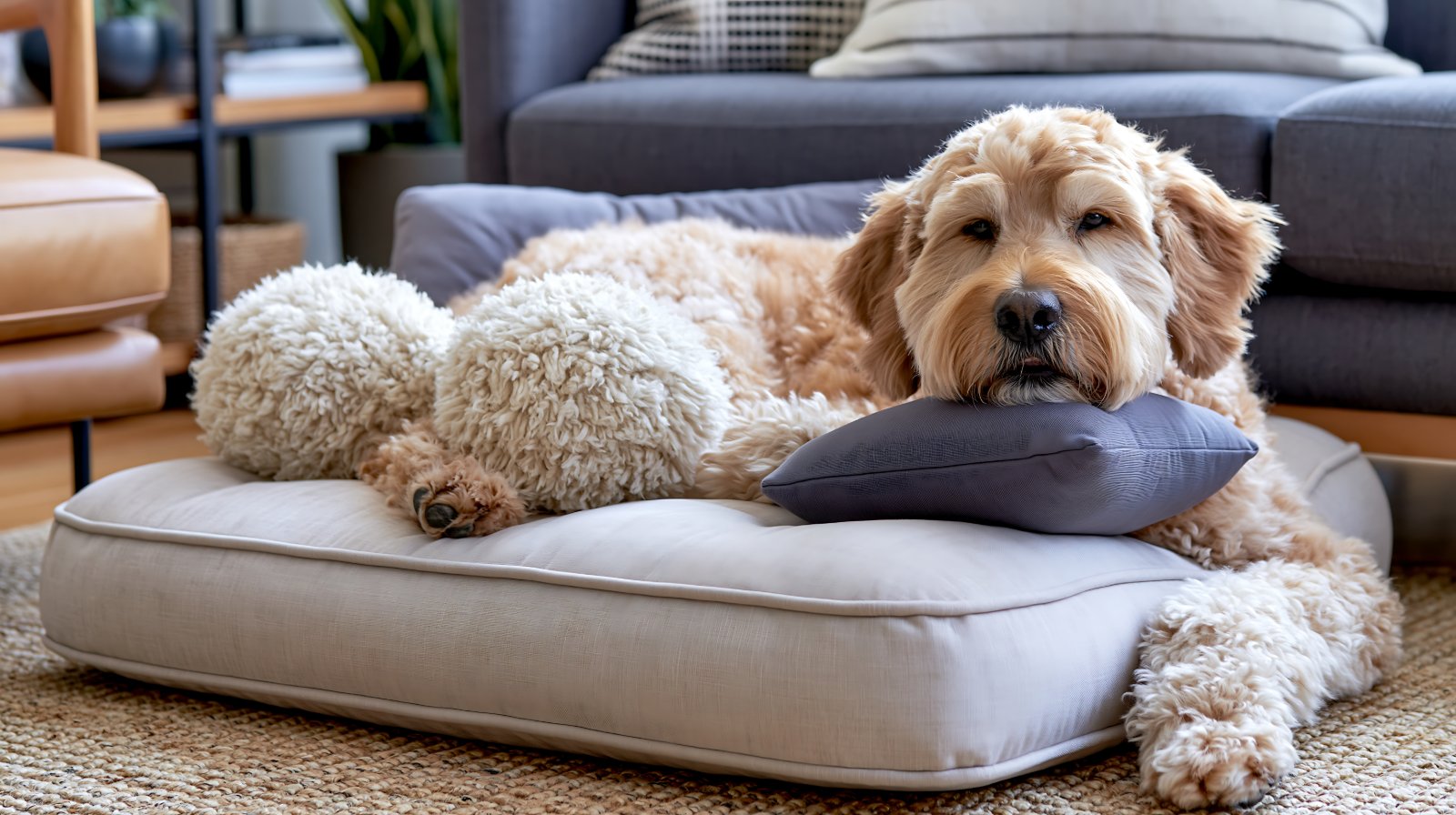
These are open rectangles or ovals with little or no raised edge. Sprawlers and side sleepers can extend their legs. They also work as crate pads and sofa covers. The tradeoff is no headrest and no sense of a boundary, so anxious curlers often ignore them.
Bolster and sofa-style beds
Raised edges give leaners a place for the head and give some dogs a wall to press against. Three-sided bolsters leave one end open for stretching. Four-sided bolsters feel more enclosed and suit dogs that stay tucked.
The sizing trap is the bolster itself. A bed listed as 36 inches may only offer 28 to 30 inches of flat interior once the raised sides are counted. Shop the interior sleeping area, and size up one step from the flat-mat size if the listing does not publish interior dimensions.
Low bolsters, roughly 3 to 4 inches, are easier for small dogs, puppies, and stiff seniors to step over. High walls feel secure to a confident curler and annoying to a dog that has to climb.
Donut and cuddler beds
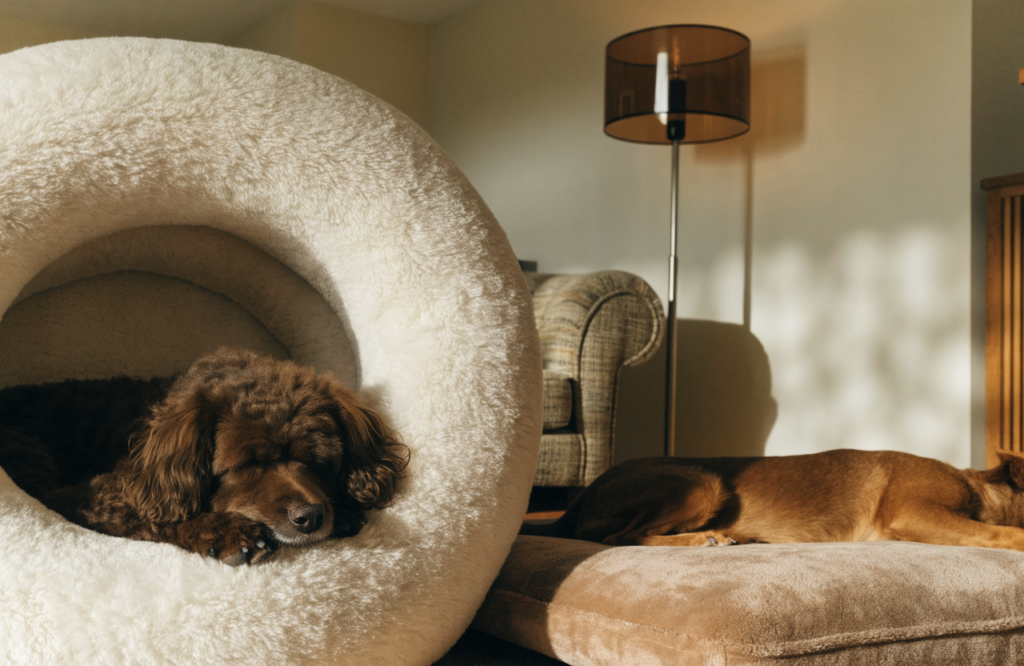
Round beds with a continuous raised rim suit small dogs that sleep in a ball. The rim only works if the inner diameter fits the curled body with a little spare room. Too large, and the rim stops acting as a boundary. Too small, and the dog sleeps on the rim or leaves.
Cave and burrow beds
Hooded and sack-style beds match dogs that push under blankets. They are usually limited to small dogs, run warm, and are harder to inspect and wash. Skip them for any dog that panics in tight spaces or chews fabric when bored.
Plush top over a foam base
This is the useful middle option. The dog gets the soft surface; the foam keeps the spine and hips off the floor. It costs more, the foam usually cannot go in the washer, and the cover has to come off cleanly. For a healthy medium dog that likes softness, this hybrid outlasts an all-fiberfill cushion.
| Sleep habit | Better plush shape | Skip if |
|---|---|---|
| Curls into a ball | Donut or four-sided bolster | Interior is smaller than the curled body |
| Stretches on the side | Flat mat or three-sided bolster | Bolsters block the legs |
| Rests chin on an edge | Sofa or bolster bed | Entry is too high for a stiff dog |
| Paws and burrows | Deep-fill bed or cave, small dogs only | Dog chews or overheats |
| Switches poses all night | Large flat plush mat | Bed is sized only for the curled pose |
Size from the sleeping surface, not the size label
Brand labels are inconsistent. Measure the dog lying down, from the tip of the nose to the base of the tail, not the tail tip. Add about 6 inches for a dog that stays curled, and 10 to 12 inches for a dog that flings the legs out. If you are unsure, add 8 inches and round up.
Weight charts are only a backup. A long, light sighthound needs more length than a compact dog of the same weight. A French bulldog needs more width than a terrier with the same nose-to-tail number.
Check three numbers on the product page:
- Interior length and width, not the outer footprint.
- Bolster height, if the dog has to step over it.
- Fill or foam thickness. A plush look can hide a one-inch pad.
Two dogs sharing one bed need enough width for both bodies plus turning room, or they will push each other off. A growing puppy should be sized for the expected adult length if you want the bed to last past the first growth spurt. Until then, a washable flat mat is the cheaper bridge.
What to check before you pay for the pile
Softness on a product photo does not predict the third month. Use this order.
Cover. Look for a zipper that runs most of the way around, a flap or guard over the zipper pull, and double stitching on the seams the dog lies on. Faux fur looks richest and holds the most hair. Sherpa is warm and slightly easier to live with. Short microplush and fleece shed less lint into the wash and dry faster.
Fill. Fiberfill is fine for light dogs and beds you will replace or refill. If the center goes flat, some covers can be refilled; many cannot. A solid foam core of several inches, with a plush cover on top, is the version that still supports a heavier dog. “Orthopedic” on a hangtag is not a specification. What matters is whether a solid base keeps the dog from hitting the floor.
Base. A non-slip underside keeps the bed from skating on hardwood when the dog turns. A waterproof liner between cover and fill saves the stuffing from one accident. The liner should not be the only surface the dog feels, or the bed will feel clammy.
Wash path. The cover should be machine washable. Foam cores are spot-cleaned and air-dried, not put through a cycle. If the whole bed is “machine washable,” confirm that means the cover, and that it fits in your machine. A large bolster bed often does not.
Edges. Loose piping and long fibers are invitations to a dog that mouths bedding. For a light chewer, a shorter pile and tight binding are safer than shaggy faux fur. For a dog that destroys beds, plush is the wrong category. A chew-resistant cot or canvas bed is the practical substitute.
When softness is not the feature you need
A plush dog bed and a supportive foam bed solve different problems.
Plush wins on warmth, nest feel, price, and washability. Many small all-fill beds can be washed more completely than a foam mattress. They are reasonable for puppies, toy breeds, anxious curlers, and spare rooms.
Foam wins on shape retention and pressure distribution. Dogs with arthritis, hip disease, or trouble rising need a low entry and a surface that does not collapse under the chest and pelvis. A plush throw on top of that foam bed gives them the texture without giving up the base. A plush-only bed does not.
Heat is the other split. Pile and fiberfill insulate. That helps a small, short-coated dog in a cold house and works against a northern breed that already sleeps warm. In warm months, a flat mat with a short cover, or no bed at all on a cool floor, is often what the dog chooses. Keep the plush bed for winter rather than treating rejection as a training failure.
How to keep the bed from flattening and smelling
Wash the cover before the first use if the label allows it. Factory pile holds lint and a chemical smell some dogs avoid.
Shake the bed and pull the fill back to the center every few days. Circling pushes stuffing outward. Ten seconds of redistribution delays the lump-and-thin-center pattern.
Wash covers on a gentle cycle in cold water and dry on low or air dry. High heat melts some synthetic pile and sets hair. A rubber brush or pet rake lifts hair before the wash. For odor between washes, air the bed fully rather than masking it.
Do not soak a foam core. Blot spills, use a pet-safe cleaner on the cover, and keep a waterproof layer in place if the dog is older or not fully house trained. Replace the bed when the center stays compressed after fluffing, the zipper fails, or the pile mats into a hard shell. Those are wear-out points, not cleaning failures.
Problems that show up after the first week
The dog will not lie on it. Smell is a common reason. Wash the cover and place the bed where the dog already naps, not in a new corner. Some dogs also reject high bolsters because they cannot see the room.
The middle is flat. The fill has migrated or compressed. Fluff and rotate. If the cover has no refill opening and the center is already thin, the bed was underfilled for that dog’s weight.
The bed slides. Hardwood and laminate need a non-slip base or a separate grip mat. A sliding bed is uncomfortable enough that many dogs stop using it.
Hair and dander collect in the pile. This is normal for faux fur and sherpa. Short-pile covers and a weekly brush-out are the practical fix. A plush bed is a poor choice if someone in the house is trying to reduce pet hair.
Chewing starts at the seam. Stop using that bed. Loose fill is not a safe toy. Offer a chew-proof alternative and supervise until the habit breaks.
Frequently asked questions
Is a plush dog bed the same as an orthopedic bed? No. Plush describes the soft surface and, usually, a yielding fill. Support comes from a solid foam base that does not bottom out. A bed can be both only when a plush cover is zipped over that kind of base.
Can a plush bed go in the washing machine? Often only the cover. Check the label. Fiberfill beds for small dogs are sometimes fully washable. Foam cores should be spot-cleaned so they do not stay damp inside.
Are plush beds safe for puppies? They are safe when the puppy is not opening seams. During teething, a tougher washable mat is usually the lower-risk option. Any swallowed stuffing needs a vet’s advice.
Do dogs sleep better on plush? They sleep better on the surface they will actually stay on. A warm, nest-like bed helps many curlers. A dog that overheats or needs joint support sleeps better on a cooler or firmer bed, even if it looks less cozy.
What size plush dog bed should I buy? Measure nose to tail base in the dog’s usual sleep pose, add 6 to 12 inches, and use the interior dimensions. Size up for bolsters, sprawlers, and dogs that share.