

A chew-proof dog bed DIY only works if the design removes the parts dogs actually destroy. Soft bolsters, loose fabric edges, and accessible stuffing fail first. An elevated frame with a taut, heavy surface—and no edge a dog can grip—lasts far longer than a reinforced pillow.
Commercial beds sold as chew-proof, including aluminum-frame cots from brands such as Kuranda and K9 Ballistics, rely on that idea: metal or rigid PVC hides the fabric edge, and the sleeping surface is pulled tight so there is nothing to grab. A home build can copy the principle without copying the price, as long as the build matches how the dog chews.
Nothing made of fabric or foam is truly indestructible. A determined dog with time and no supervision can damage almost any bed. The practical goal is a bed that is hard to start, unrewarding once started, and cheap or simple enough to repair.
Why ordinary beds fail in the first week
Dogs rarely chew through the middle of a flat panel first. They find a starting point.
- Piping, welting, and bolster seams give teeth a ridge to work.
- Zipper pulls and exposed zipper tape are easy to grab and often lead straight to the fill.
- Fiberfill and shredded foam are the reward. Once a dog learns stuffing comes out, the bed becomes a toy.
- Fleece, microsuede, and thin cotton pillow fabric tear once a single hole is made.
- Loose covers and wrinkled mats bunch up, which is easier to mouth than a tight surface.
Elevated cots used in shelters last because they remove most of those targets. The fabric sits in a channel or sleeve, the frame is rigid, and there is no fill to gut.
Match the build to the damage
| What the dog does | Better DIY | Why |
|---|---|---|
| Chews corners, piping, or zipper, then guts the fill | Elevated PVC cot with a taut sling | No stuffing and no loose edge |
| Scratches and digs, but does not bite through fabric | Heavy canvas or denim cover over dense foam | Tough weave, still cushioned |
| Destroys beds only when left alone in a crate | Cot or flat mat, plus shorter unsupervised time | Confinement chewing is often boredom or stress, not a fabric problem |
| Shreds ballistic nylon, vinyl, and metal-edge beds | Stop the DIY and use a commercial aluminum-frame cot, or no soft bed when unsupervised | Some dogs will defeat any home sewing project |
A Lab that noses a seam open needs a different bed from a dog that punctures 1000-denier fabric for sport. Build for the failure you already see.
Materials that hold up, and materials that do not
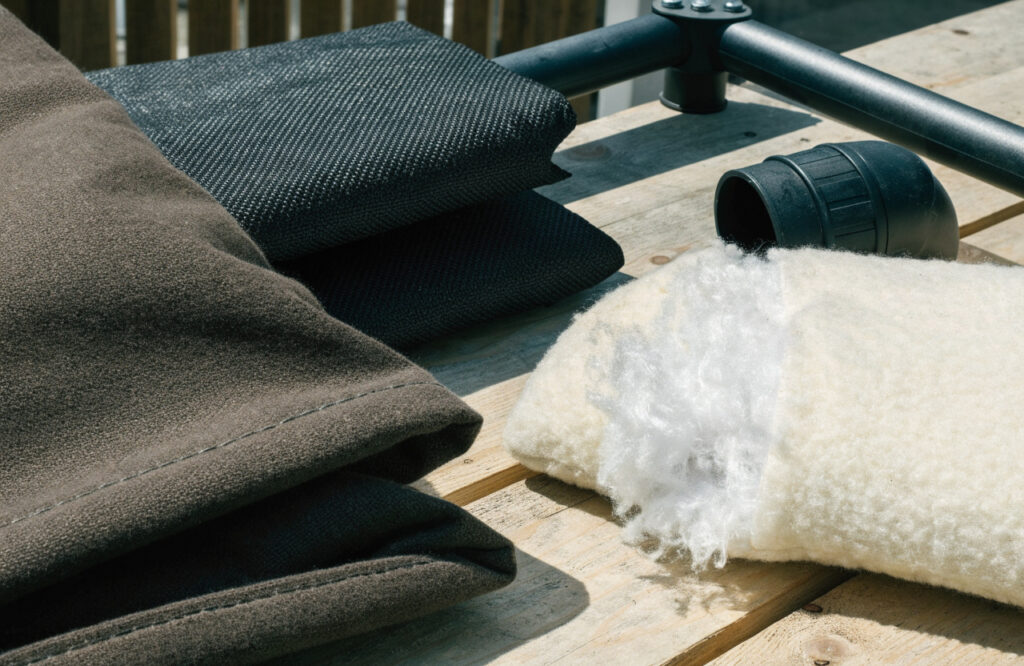
Frame. Schedule 40 PVC is the realistic DIY frame. It is thicker than thin-wall pipe and available at hardware stores in 1-inch or 1-1/4-inch sizes, with side-outlet or three-way elbows. Furniture-grade PVC is optional. Aluminum tube is stronger and less tempting to chew than plastic, but it is harder to cut and join at home. Avoid thin irrigation pipe.
Sleeping surface. For a cot, use outdoor sling fabric, vinyl-coated polyester, or Phifertex-style mesh. These materials support weight, clean easily, and do not unravel the way cotton does. Sailrite’s PVC pet-cot method uses Sunbrella sling or Phifertex Plus with heavy polyester thread (Tex 70 or Tex 90) for that reason.
For a cushion cover, use heavy cotton canvas (about 10 oz or heavier), denim from unworn jeans, or 1000-denier Cordura-style nylon. Ballistic nylon, the dense weave used on armored commercial beds, resists puncture better than ordinary nylon, but it is stiff, noisy, and harder to sew. Ripstop helps a tear stop at the next grid line. It does not stop the first bite.
Fill, if you use any. High-density foam is harder to shred than loose fiberfill. Old towels and sheets stuffed into a tough cover are a reasonable substitute: if the dog opens the cover, the fill is less dangerous and less fun than foam crumbs. Skip cedar shavings in a bed a dog might chew open. Ingested wood chips are not worth the smell.
Thread and closures. Polyester thread, double-stitched. A covered or underside zipper, or no zipper at all. Metal snaps and Velcro become chew toys. Rubber or vinyl caps on PVC feet protect floors.
Skip fleece tops, decorative piping, exposed tags, and lightweight quilt batting. Those are the parts that fail first.
Build an elevated PVC cot
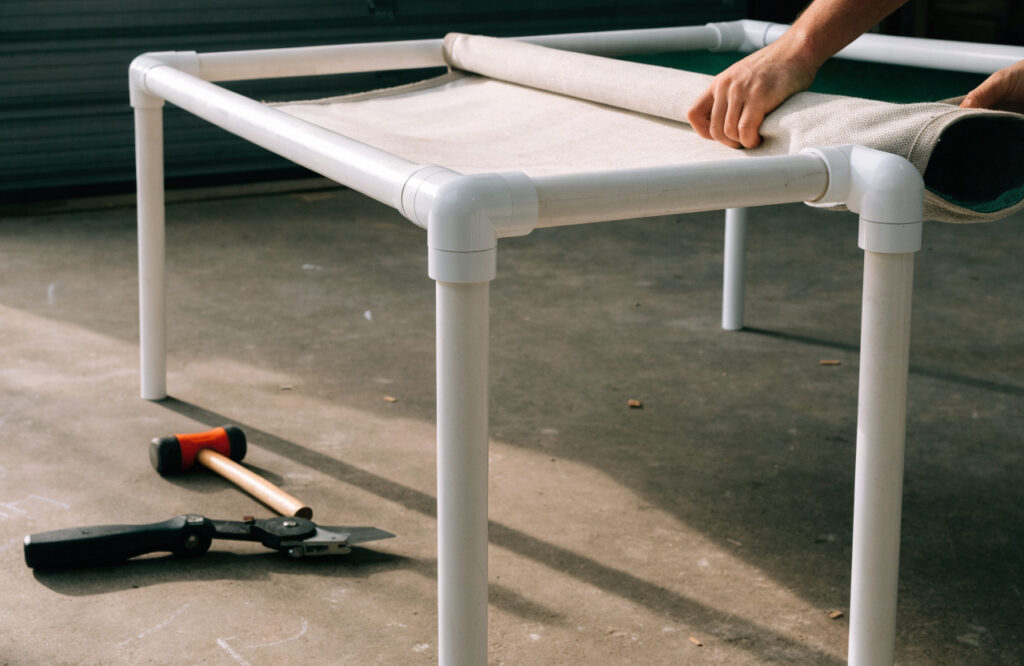
This is the better project for a dog that guts beds. The sleeping surface is a sling, not a pillow. Expect a firmer bed. Many dogs accept that, especially in warm rooms, because air moves underneath.
You need schedule 40 PVC, four matching elbows, a hacksaw or PVC cutter, heavy sling fabric, heavy polyester thread, a sewing machine that can handle thick material, and optional rubber feet. A rubber mallet helps seat pipes.
- Size the bed to the dog lying on its side, plus a few inches. A medium dog often lands near 30 by 36 inches outside the frame. Measure your elbows before cutting: pipe length plus the fittings must equal the finished size.
- Cut two long rails and two short rails. Add four short leg pieces if you want it raised. Four to six inches of clearance is enough. Dry-fit the rectangle and check that it sits flat.
- Cut the fabric several inches larger than the opening so you can form sleeves. The finished sling must be tight. A loose panel sags and gives the dog a fold to bite.
- Sew a sleeve along each edge wide enough for the pipe. Bind corners so raw edges are not exposed. One sleeve can be left open or fitted with a heavy zipper so the last pipe can be inserted after the fabric is under tension. Hide that zipper on the underside.
- Insert three pipes, seat them in the elbows, then work the fourth pipe in. Dish soap on the pipe helps vinyl slide. The panel should drum slightly when pressed.
- Cap the feet. File any sharp PVC edges before the dog uses the bed.
The failure point on homemade cots is a fabric lip past the pipe. One Instructables cot build stresses this directly: screw or sew so no loose hem sticks out for teeth to grip. If you use screws, stop as soon as the head is flush so you do not strip the PVC, and keep screw heads at the fabric edge rather than leaving a flap.
Do not leave the dog alone with a new cot until you have watched how it investigates the corners. Some dogs chew the plastic elbows. If that starts, switch the frame plan to aluminum or remove the bed when unsupervised.
Sew a heavy canvas cover for moderate chewers

Use this only if the dog needs cushioning and has not already destroyed tough fabric. A pretty denim pillow will not survive a power chewer.
- Measure the foam, or the stack of folded towels, and add seam allowance. The cover should fit snugly. A loose cover wrinkles and gets chewed.
- Cut two panels from heavy canvas or denim with no thin spots or existing holes. Add a third inner layer of ripstop if you want a liner between the dog and the foam.
- Place right sides together. Sew three sides with two parallel lines of stitching. Box the corners if you want height, and double-stitch those seams too.
- Install the zipper on the bottom panel, under a fabric flap, not on a side the dog can see. Sew the zipper tape down so only the pull is reachable, and tuck the pull under the flap.
- Turn the cover, insert the foam, and close it. If the dog has already learned to hunt zippers, skip the zipper and sew the cover shut. You will cut it open to wash the fill.
- Remove every label. Stitch pocket openings shut if you are using old jeans as the shell.
Old jeans can work as a small bed shell if the denim is heavy and every weak point is closed: fly, pocket mouths, and frayed hems. That is a low-cost fix for a mild chewer, not a plan for a dog that dismantles beds.
Details that matter more than the fabric name
- No exposed edge. Recessed sleeves and underside closures beat “tougher” cloth with piping.
- Tension is protection. A taut panel is hard to bite. A wrinkled one is not.
- Double-stitch every seam. Beds split at thread, not always at cloth.
- Remove the reward. If the dog cannot reach fill, chewing stops being interesting for many dogs.
- Washability matters. A cot sling can be hosed. A sewn-shut canvas cover cannot, so plan an inner liner you can replace.
- Supervision still counts. Even a good build should come out of the crate or room when you cannot watch a known destroyer, until the dog ignores it for several weeks.
Ingested foam, zipper teeth, and fabric scraps are a real risk. If the dog opens a bed, take it away the same day rather than “seeing if the repair holds.”
When the DIY is the wrong project
Home sewing loses to a dog that has already destroyed a commercial ballistic bed. At that point an aluminum-frame cot with the fabric trapped in the rail is the more reliable buy. Those beds cost more than PVC and canvas, and the chew warranties are limited—often measured in months, not a lifetime—because manufacturers also know no fabric is absolute.
A DIY cot is worth it when you want the elevated design for less, you can sew a straight sleeve, and the dog is a seam-and-stuffing chewer rather than a dog that bites metal. It is a poor project if you need deep orthopedic cushioning for a senior dog and also have a power chewer. Those two needs fight each other. Cushion means fill, and fill means a prize.
The bed is only half the problem
Chewing increases when a dog is under-exercised, under-stimulated, teething, or left confined too long. A tougher bed does not fix a dog that is awake and bored for hours. More walking, a real chew (something you chose, not the bed), and a shorter stretch alone usually cut bed damage faster than another layer of canvas.
If the dog chews only in the crate, shorten crate time and make sure the crate is for rest, not all-day storage. If chewing is frantic, self-injurious, or paired with other anxiety signs, a veterinarian or a qualified behavior professional is the next step, not a thicker cover.
Frequently asked questions
Is any DIY dog bed actually chew-proof? No. “Chew-proof” in product marketing means chew-resistant construction: hidden edges, tough cloth, and often no fill. A PVC cot with a tight sling is the closest home version.
What fabric is hardest for a dog to rip? Heavy ballistic or Cordura-style nylon and vinyl-coated sling fabric resist puncture better than cotton. Canvas and denim are the practical sewing options. Design still matters more. A loose canvas edge fails faster than a tight mesh panel set into a pipe.
Can I make a chew-resistant bed with no sewing? Only a weak version. Tied fleece blankets and cardboard bolsters are easy projects and poor matches for a chewer. The no-sew route that sometimes works is a commercial aluminum cot, not a knotted blanket.
Are elevated beds comfortable enough? They are firmer and cooler. Dogs with sharp joint pain may prefer dense foam inside a tough cover, used only while someone is home. A blanket on a cot adds comfort and also adds something to chew, so treat the blanket as disposable.
What size should the cot be? Big enough for the dog to lie on its side without hanging off. Measure the dog, then size the frame. Cut pipe only after you know how much length the elbows consume.