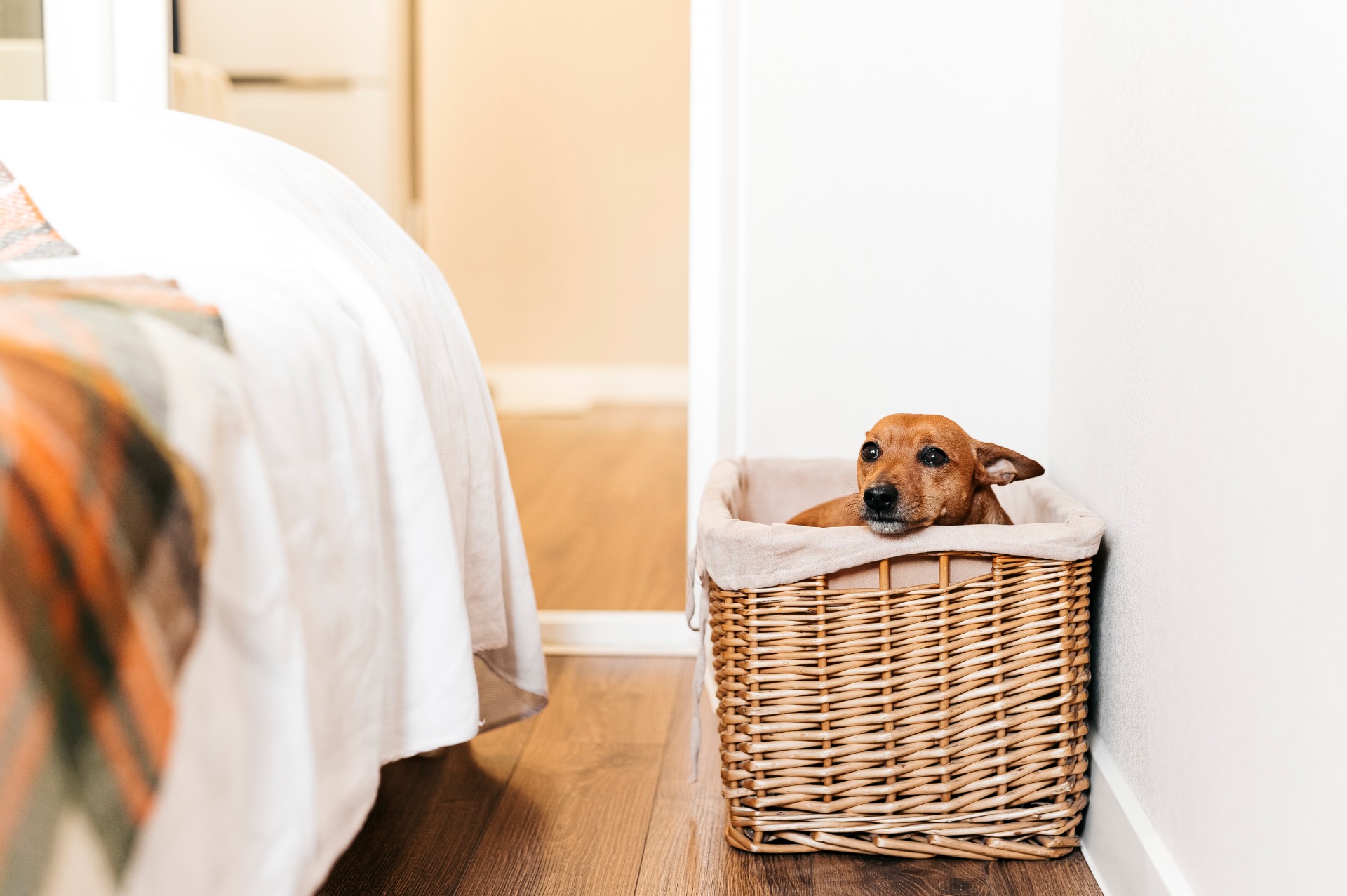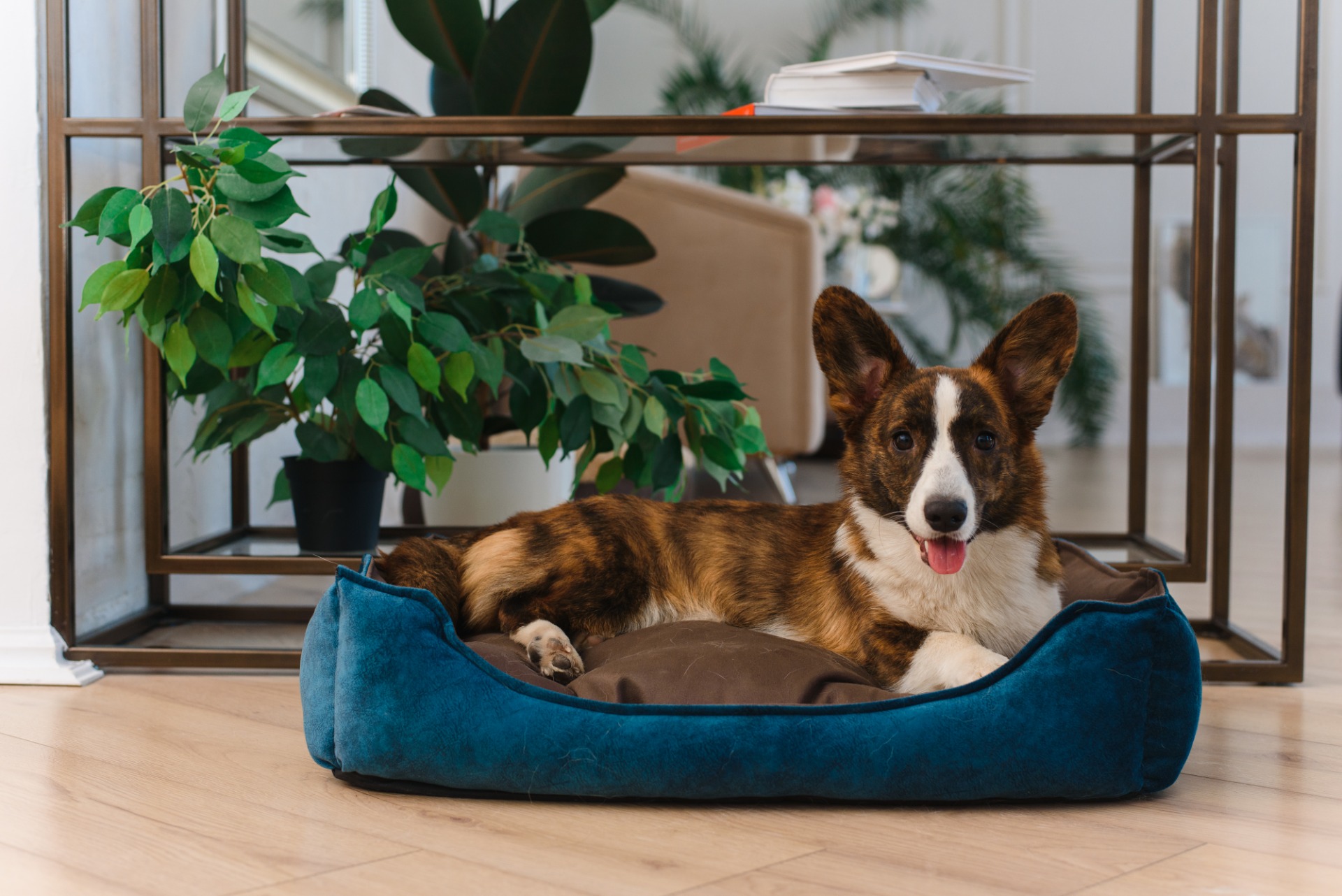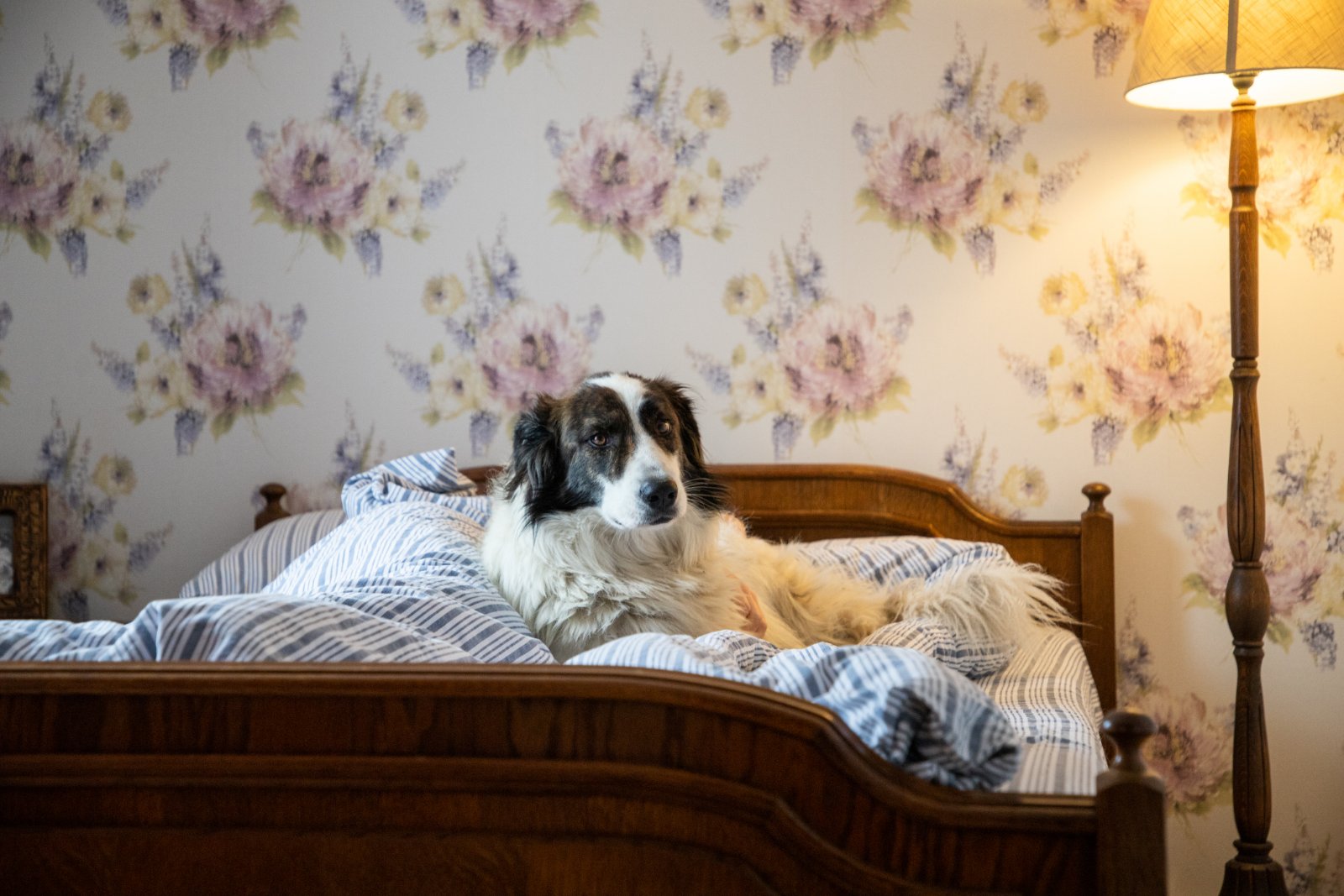

A built-in dog bed in the bedroom works when the opening is sized to the dog, the front stays easy to enter, and the cushion can come out for washing. The useful versions are furniture with a planned sleeping cavity — under a raised bed, inside a nightstand, in a window alcove, or at the base of a wardrobe — not a floor cushion shoved into a gap. The wrong size, a sealed cabinet, or a nook the dog cannot step into turns the project into unused furniture.
The point is proximity without giving up the mattress. Many dogs settle better near the people they sleep with, and a separate bed on the floor is often the first thing that makes a small bedroom feel crowded. A built-in only earns that space back if the dog can stand, turn, and lie down inside it, and if hair and accidents do not become part of the bed frame.
Match the built-in to the dog and the room
Start with where the dog already rests and how large that body is when stretched out. A design that looks tidy in a photo fails if the dog has to duck, climb a lip, or sleep in a draft.
Under the bed
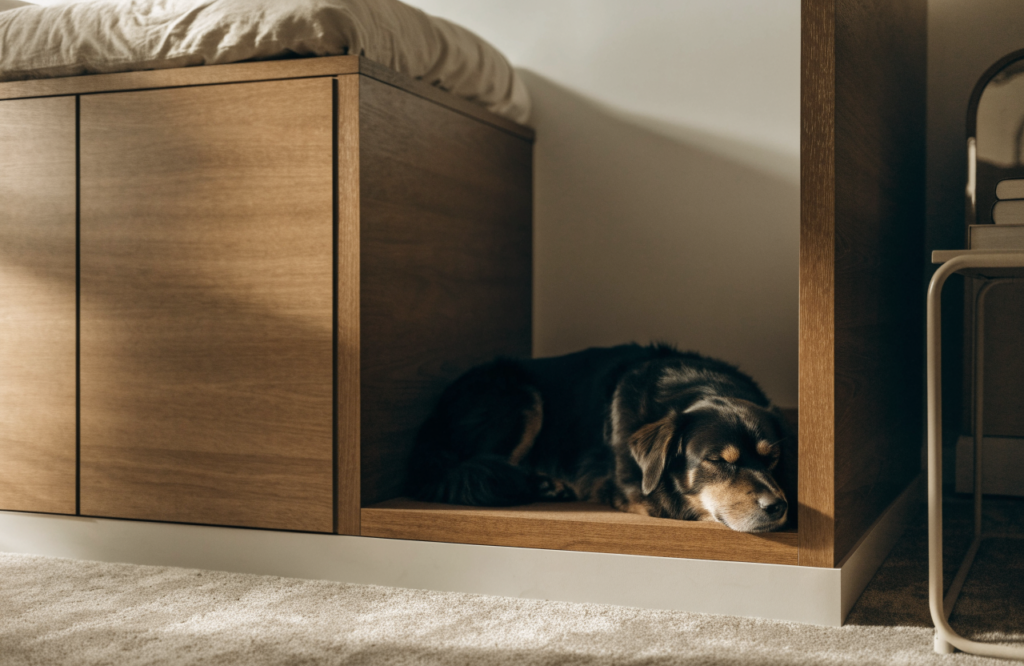
A platform or loft-style frame leaves a cubby beside or under the mattress. This is the most common “built-in dog bed bedroom” search result because it keeps the dog close and clears the floor.
It fits small and medium dogs in tight rooms, and crate-trained dogs if their existing crate slides into the opening. It is a poor fit for giant breeds unless the frame is raised high enough for standing clearance, which also raises the human mattress. Cleaning is the other limit: a recessed wood pod is harder to reach than a bed on the floor, so the cushion and a waterproof liner have to come out completely.
If the frame is DIY, the roof of the pod still has to carry the mattress and the people on it. Cutting a cubby into a stock frame without a center support and legs to the floor is how these projects sag. Hardwood or a properly braced plywood box is the usual structural approach; softwood needs closer supports.
Nightstand or bedside cabinet
An open lower half of a nightstand gives a den next to the pillow. Designers use this when the dog is small enough to curl in a cabinet footprint and the household wants the dog within arm’s reach.
Stretch room is the constraint. A bedside cubby suits a dog that sleeps in a ball. A dog that sprawls on its side will outgrow it even if the opening looks wide in a listing photo. Removable covers matter here too: one interior designer’s version used two custom covers so one could be in the wash while the other stayed in the niche, with the whole cushion lifting out for wiping the paint.
Window alcove or window seat
A recess beside a closet or under a window is often already the dog’s unofficial spot. Framing it with a cabinet, a hinged seat, and a fitted cushion makes that habit look intentional and can add storage beside the bed.
Windows bring light, which makes a nook less cave-like, and they also bring drafts. A bed parked against cold glass or over a floor vent works against older joints. A raised platform helps the dog see out, but only if the step up is low enough to use. Radiator-style vents or an open front keep a lidded seat from trapping heat.
Wardrobe base or closet niche
Removing the bottom door of a built-in wardrobe hides the bed completely. That suits a bedroom meant to look spare. It is the wrong choice if the doors stay shut at night. A closed cabinet cuts airflow, holds odor against the wood, and can feel like confinement rather than a bed. An open front, a mesh panel, or doors left off is the workable version. The same idea appears in mudrooms and kitchens as a cabinet gap with a cushion; in a bedroom the priority is quiet and washability, not feeding bowls.
Foot-of-bed bench
A hollow bench at the foot of the bed gives more length than a nightstand and stays on the floor, so entry is simple. It suits larger dogs that need to stretch and households that do not want a taller mattress. The tradeoff is floor space: the bench occupies the walking path at the end of the bed, so measure the clearance to the door or dresser before building it.
| Form | Best for | Main limit |
|---|---|---|
| Under-bed pod | Small or medium dog, tight floor plan, dog that wants to be near the bed | Human bed gets taller; cleaning and structure need planning |
| Nightstand cubby | Small dog that curls, bedside proximity | Too short for a sprawler |
| Window nook | Existing alcove, dog that already sleeps there | Drafts and sun heat |
| Wardrobe base | Hidden look, small or medium dog | Poor airflow if doors close |
| Foot bench | Larger dog, low entry | Uses floor at the end of the bed |
Size the cavity to the body, not the leftover gap
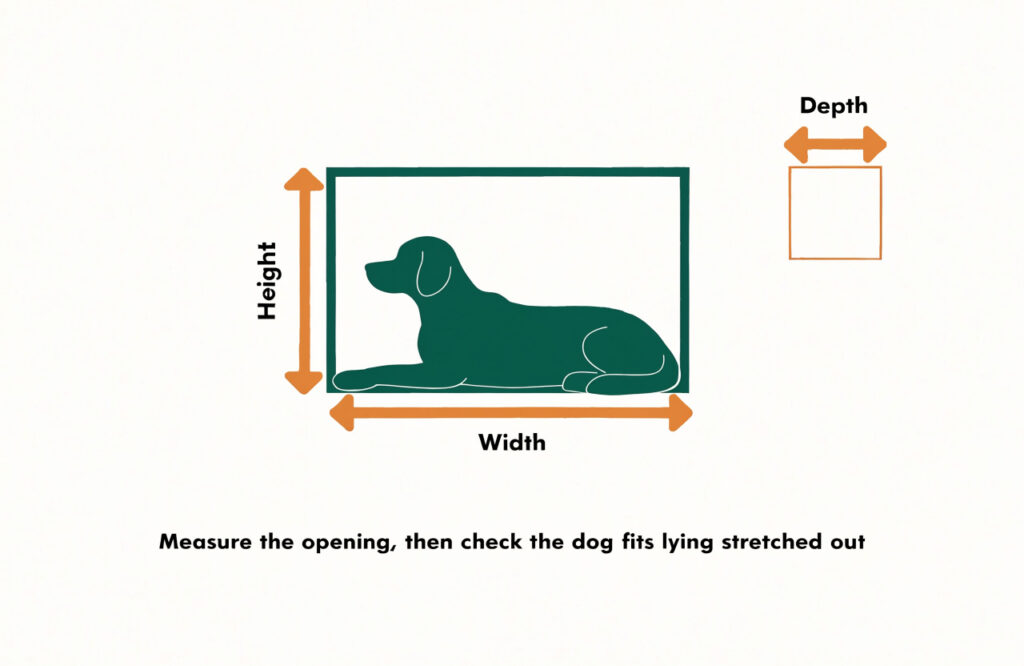
Measure the dog standing on all fours. Length is nose to the base of the tail, not the tail tip. Height is floor to the top of the head, or to the ear tips if the ears stand above the skull. Crate makers and the American Kennel Club’s crate guidance use an added 2 to 4 inches so a dog can stand without crouching, turn around, and lie down. Small dogs are often fine at the low end of that range; taller dogs need the high end, especially for ear clearance.
A bedroom nook is not a house-training crate. A crate is often kept snug so a puppy does not soil one corner and sleep in another. A sleep nook can be wider. Side sleepers need enough depth to stretch a leg; curl sleepers need bolstered sides more than floor area. If the opening is only as wide as the dog’s curled diameter, add several inches so turning does not mean brushing both walls.
Entry height is separate from interior height. A senior or a dog with stiff hips needs a low lip or no lip, and a floor-level opening. A pod that requires a hop onto a platform undoes the point of an orthopedic cushion. Pair any raised perch with a broad step, not a single jump.
Leave the front open in the plan even if you like the look of doors. The dog should be able to leave at night for water or the door without waking someone to unlatch a cabinet.
Build for washing, not for the photo
Hair, drool, and the occasional accident are the reason built-ins get abandoned. The bedroom concentrates that problem: the nook sits next to pillows and clothes.
Use a cushion with a removable, machine-washable cover and a waterproof liner under it. Keep a second cover if the dog sleeps there every night. The shell should be a wipeable finish — painted wood, sealed plywood, or a laminate — not unfinished wood or fixed carpet that holds urine odor. Enzyme cleaner is the right tool for accidents; a scented spray only covers the smell until the next warm night.
Plan a cleaning path. If you cannot pull the cushion out without moving the bed, the nook is too tight. A hinged seat, a tray that slides forward, or a fully removable mattress is the difference between weekly upkeep and a smell that lives in the frame. Vacuum the cavity and the surrounding floor on the same schedule as the rest of the bedroom; hair migrates from an open pod onto the human bed even when the dog never climbs up.
Enclosed pods also need air. An open front is the simplest fix. Slats, a mesh panel, or a stamped vent on the side work when the design is partly closed. A dark, sealed box runs warm and holds odor against the cushion. A small nearby lamp or a dim strip outside the opening makes the space readable at night without turning the bedroom into a kennel.
When a built-in is the wrong project
Skip it if the dog already sleeps on the bed and the household is fine with that. A built-in does not persuade a determined bed-sharer to stay down. It also fails when the only available cavity is smaller than the dog’s stretched length, or when raising the mattress high enough for a large dog makes the bed awkward to get into.
Rentals are a practical stop. A freestanding crate-style nightstand or a cabinet with an open shelf can leave with you. Cutting into a wardrobe or building a window seat into the wall usually cannot. Mobility changes the answer too: a dog that is starting to struggle with steps wants the bed on a non-slip floor, out of drafts, with no raised edge on the entry side.
If anyone in the room is sensitive to dander, an open pod under the mattress puts the source closer to the pillow zone, not farther. A washable setup reduces odor; it does not remove allergens. In that case a dog bed in another room, or a closed door at night, is the clearer fix.
Settle the dog in the finished nook
Put the current bed or a familiar blanket in the opening before the new cushion, so the spot smells known. Feed a chew or a scatter of kibble there in the evening, then leave the dog free to leave. Blocking the exit or shutting a door on a dog that has never used the space teaches avoidance.
For the first week, keep the old bed available nearby if the new one is a big change in height or enclosure. Most dogs that already sleep in that corner transfer quickly. A dog that ignores the nook is giving a measurement or comfort answer — too tight, too dark, too high, or too far from the person — not a training failure. Adjust the opening or move the bed back to the floor rather than insisting on the furniture.
Questions that come up after the layout is chosen
Can this replace a crate? Only if the dog is already past house-training and does not need a closed den for safety when the room is empty. A built-in with an open front is a bed. A dog that chews molding, escapes, or still soils a large area still needs a proper crate, which can sit inside a larger opening.
Will the bedroom smell? It will if the cover cannot be washed and the shell cannot be wiped. Open fronts, a spare cover, and a liner keep a bedroom nook in the same category as any other dog bed. Closed cabinets and raw wood do not.
What if the dog is still growing? Size the cavity for the expected adult length and height, and fill the extra space with a divider or a smaller cushion until the dog fills it. Building to puppy size means rebuilding the opening.
Is a custom frame worth it? It is when the room has an awkward alcove or the dog is too long for stock nightstands. A stock raised frame or a freestanding cabinet with the doors removed is enough when the measurements already fit. Either way, the cushion and the entry matter more than matching the headboard.