
A DIY bed frame with a dog bed underneath only works if the open space is tall enough for the dog to enter without scraping, wide enough to turn around, and clear of the center legs that most queen and king frames need. Measure the dog and the cushion first, then set the platform height from those numbers. A raised platform with one open long side is the simplest build that still holds a mattress.
Most store frames leave 6 to 12 inches of clearance. That fits a flat pad for a small dog. It does not fit a bolster bed or a Lab that wants to sit up. The build below is a lumber platform sized around that constraint, not a kennel bolted to the underside of an existing frame.
Measure clearance from the dog, not from a bed label
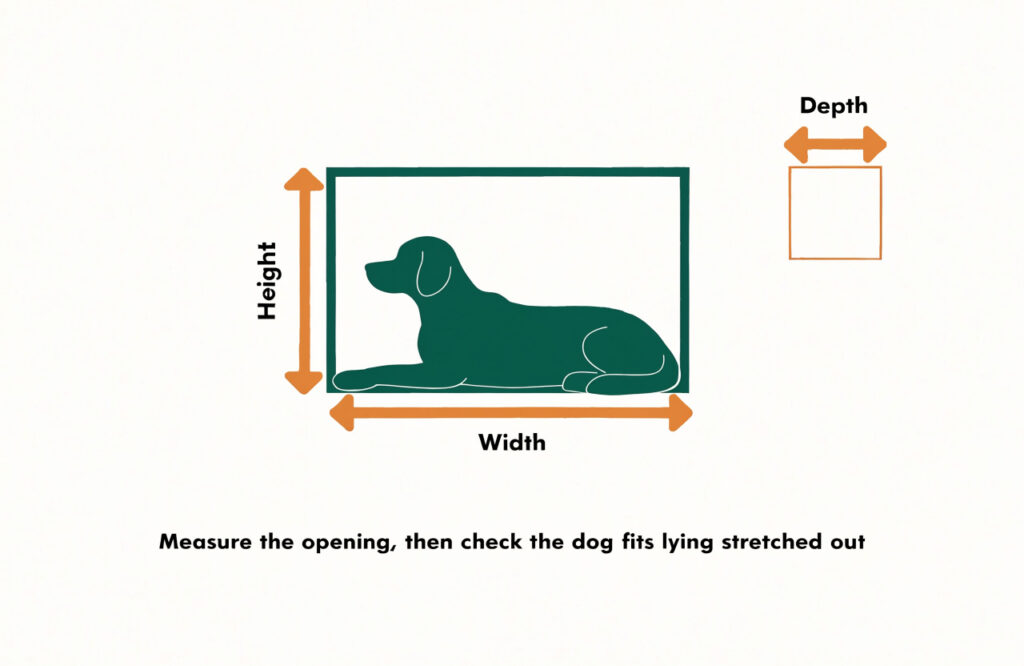
The number that decides the project is the gap between the floor and the underside of the mattress platform. Dog-bed size labels are not a substitute for that measurement.
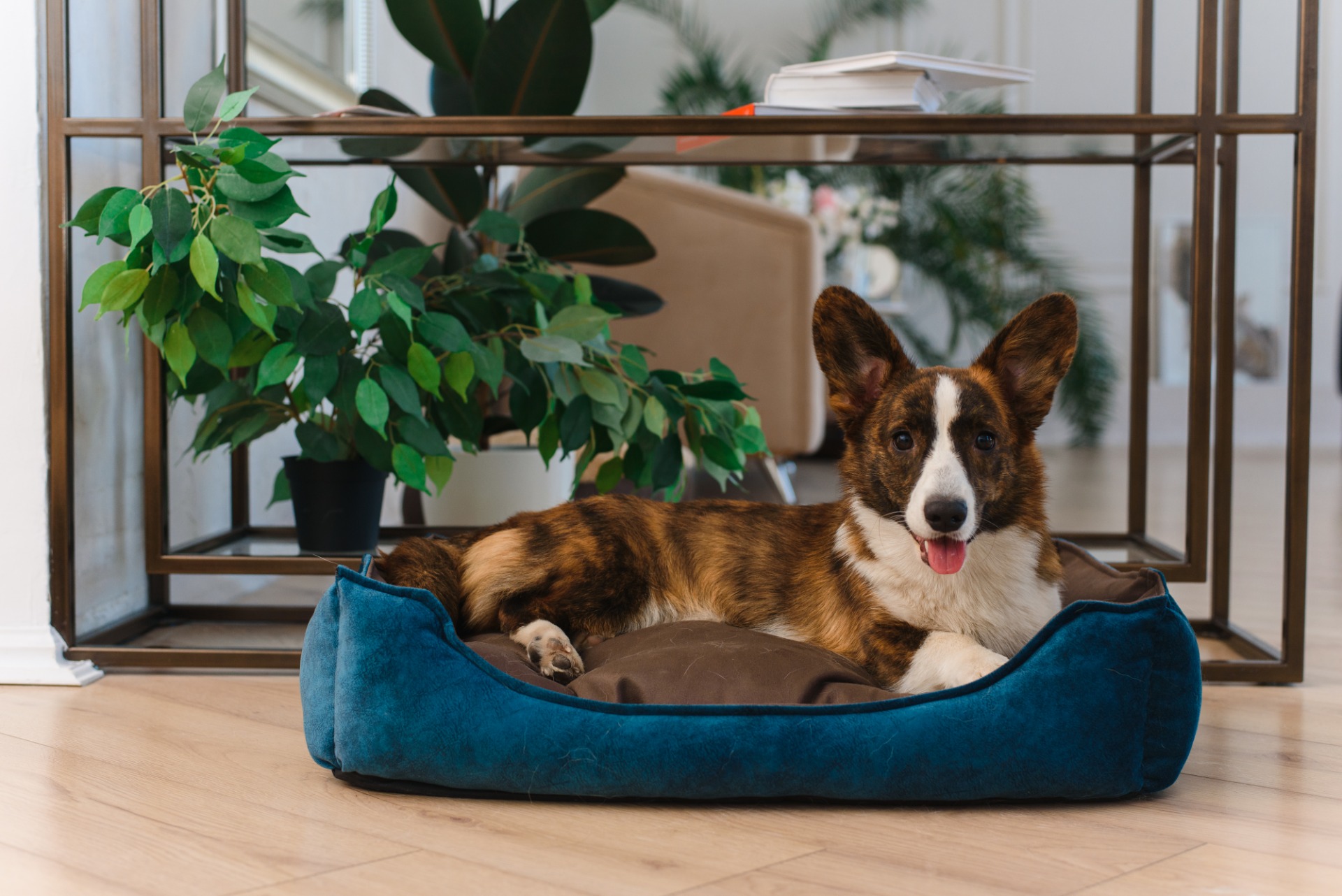
Stretch the dog out and measure from nose to the base of the tail, then add 6 to 12 inches. That is the minimum length of the sleeping pad. A curler can live with less; a sprawler cannot. Typical pads run about 24 by 30 inches for a small dog, 30 by 40 inches for many medium dogs, and 36 by 48 inches or longer for a large sprawler. Bolster beds add several inches of outside width and height that a flat pad does not.
Then measure two heights:
- The dog’s shoulder or head height while sitting or standing in the spot they will use.
- The thickness of the cushion once it is compressed under the dog.
Add those, plus 2 to 4 inches so the back does not brush the platform on the way in. A 4-inch orthopedic pad and a small dog that crawls in can work in about 10 to 12 inches of clearance. A medium dog that sits before lying down usually needs 14 to 18 inches. A large dog that stands under the bed needs something closer to 18 to 24 inches, and only if the pad itself is not a tall bolster. If the dog only sleeps curled at the edge and never stands, you can use the lower end of the range.
| Dog and bed | Practical underside clearance | What usually fails |
|---|---|---|
| Small dog, flat pad | 10–12 in | Nightstands blocking the entry |
| Medium dog, 4–5 in pad | 14–18 in | Center support leg in the middle of the pad |
| Large dog, thick orthopedic pad | 18–24 in | Bed too high to climb into; pad too tall |
| Crate instead of a pad | Crate height plus 1 in | Side rails and center beam |
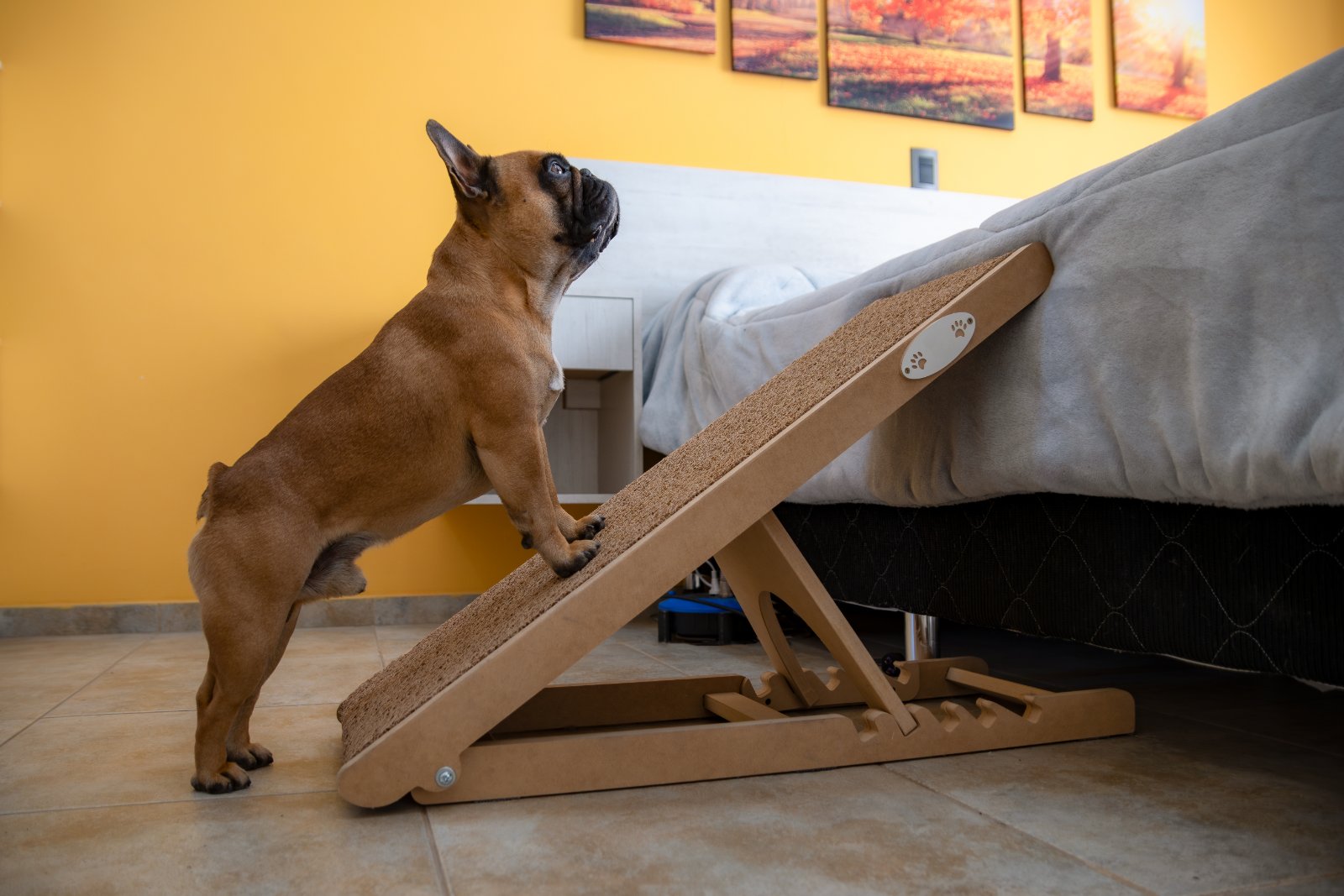
Check the room after you pick the height. A 16-inch platform plus a 10- to 12-inch mattress puts the sleep surface around 26 to 28 inches. Many people are fine with that. Shorter people and anyone with a bad knee often are not, and a step or bench becomes part of the project. Going much above 30 inches to the top of the mattress trades dog space for an awkward climb.
Three layouts, and the one that fails least often
Open platform. Four corner posts, side rails, a center beam only where the dog does not sleep, and slats or a plywood deck. The dog bed slides under one long side. This is the right default. Air moves, you can see the dog, and vacuuming is possible. It also looks like a normal bed if the rails are kept simple.
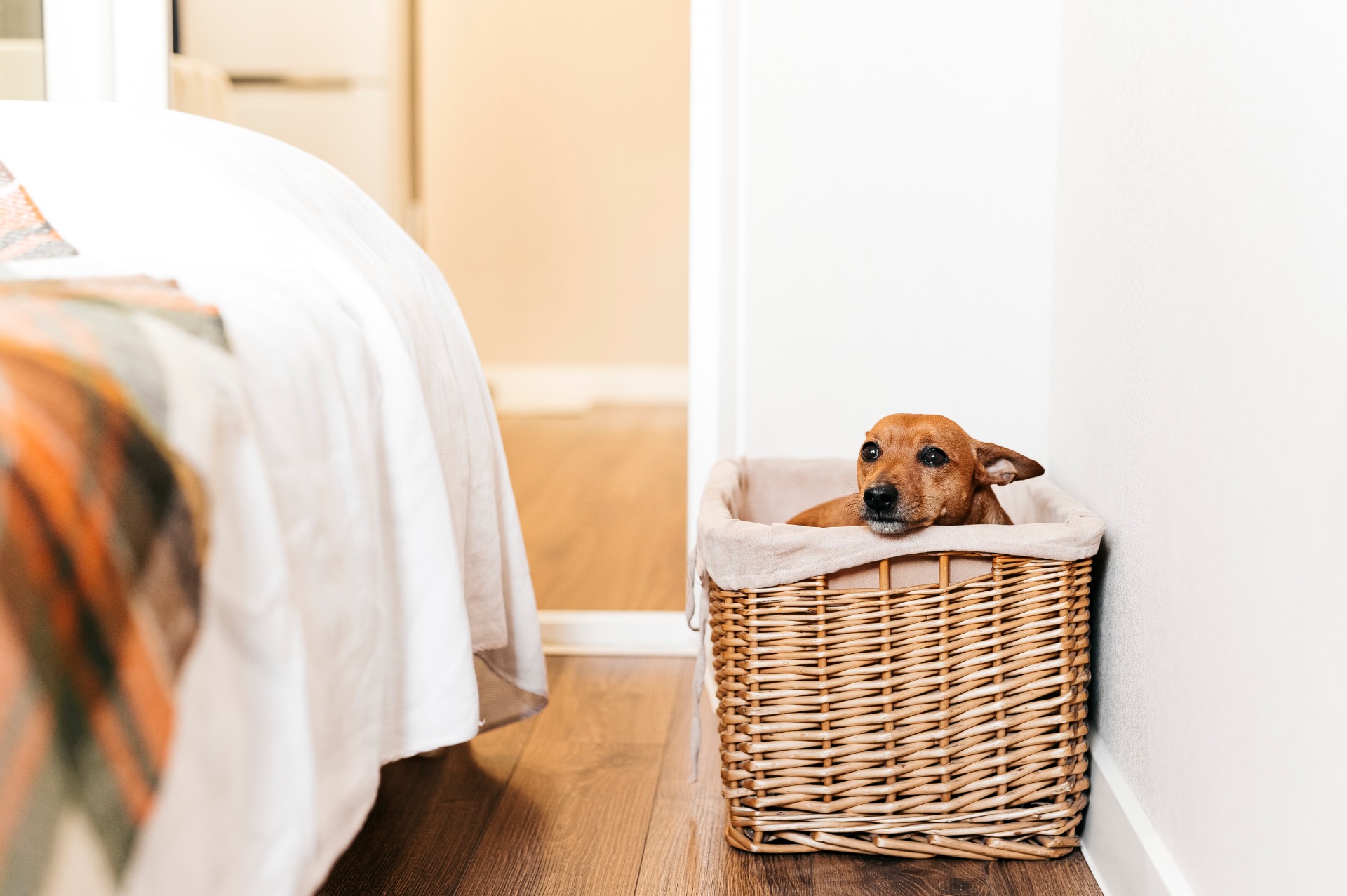
Side nook. The same platform, with a partial apron or low rail on three sides and one open entry. Useful if you want the cushion visually contained. Do not close the fourth side. A fully boxed cavity traps hair, makes the dog harder to check on, and can be blocked by a dropped blanket. An entry roughly three-quarters of the dog’s shoulder height is enough to step through; lower is fine if the dog crawls.
Pull-out tray. A plywood deck on casters or drawer slides, with the cushion strapped down. Best when you need to pull the bed out for cleaning or when the dog is old and should not crawl under a low frame. Slides sized for kitchen drawers are usually too light. Furniture casters on a simple box, with a stop so it cannot roll away, are more forgiving.
A crate under the bed is a fourth option, not a different frame. It needs a clear rectangle the size of the crate, an entry the dog already uses, and no fabric that can fall across the door. It suits a dog that already sleeps in a crate. It is a poor fit for a dog that only wants a soft pad.
Skip designs that screw a plywood box to the underside of a wobbly metal frame and call it a kennel. The frame was not built to carry that extra hanging weight, and the dog still needs the same clearance.
Keep the center support out of the dog’s floor space
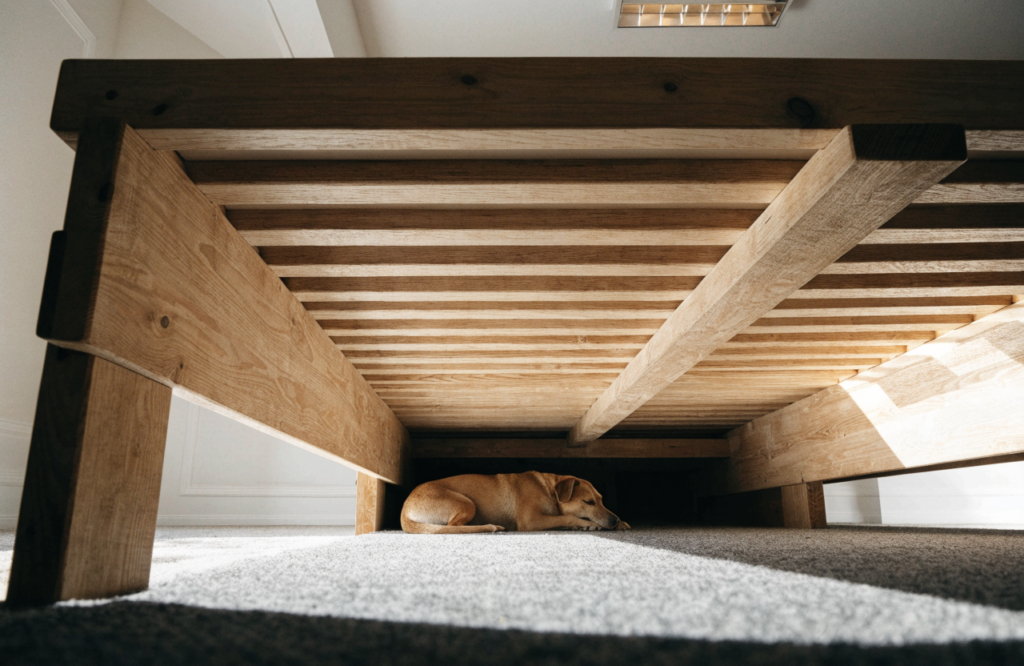
Queen and king platforms sag without a center beam. The mistake is running that beam, and its legs, through the middle of the only place the dog can lie.
Put the dog zone on one side of the bed, not dead center, unless you are willing to raise the whole frame and use a beam that clears the pad. A workable queen layout:
- Outer footprint about 62 to 63 inches wide and 82 to 83 inches long, so a 60 by 80 inch mattress sits inside a lip or on a full deck.
- Dog zone along one long side, at least as deep as the pad plus 2 inches, and as long as the pad.
- Center beam running head to foot, but shifted so it lands at the inner edge of the dog zone or beyond it.
- One or two center legs under that beam, placed outside the pad. On a queen, a single mid-span leg is often enough if the beam is a 2×6 on edge. On a king, plan two.
Side rails can be 2×6 or 2×8 on edge. Legs can be 4×4 posts, or doubled 2x4s, cut to the clearance height minus the thickness of the deck. If the deck is 3/4-inch plywood, a 16-inch clearance needs legs about 16 inches if the plywood sits on top of the rail and the rail is the clearance limit — measure to the lowest wood the dog will pass under, not to the top of the mattress.
Slats should land on the rails and on the center beam, spaced no more than about 3 inches apart for a foam mattress, closer if the mattress is thin. A single sheet of 3/4-inch plywood is simpler and stops small items falling onto the dog. Leave a small gap at the edges or drill a few holes if you want a little airflow through the deck. Do not rely on the mattress alone to stiffen a frame with no center support.
Nightstands, outlet covers, and the path to the door matter as much as the lumber. Leave the entry side clear for the full length of the pad. A 12-inch nightstand overhang will erase an otherwise correct opening.
A straightforward queen platform sequence
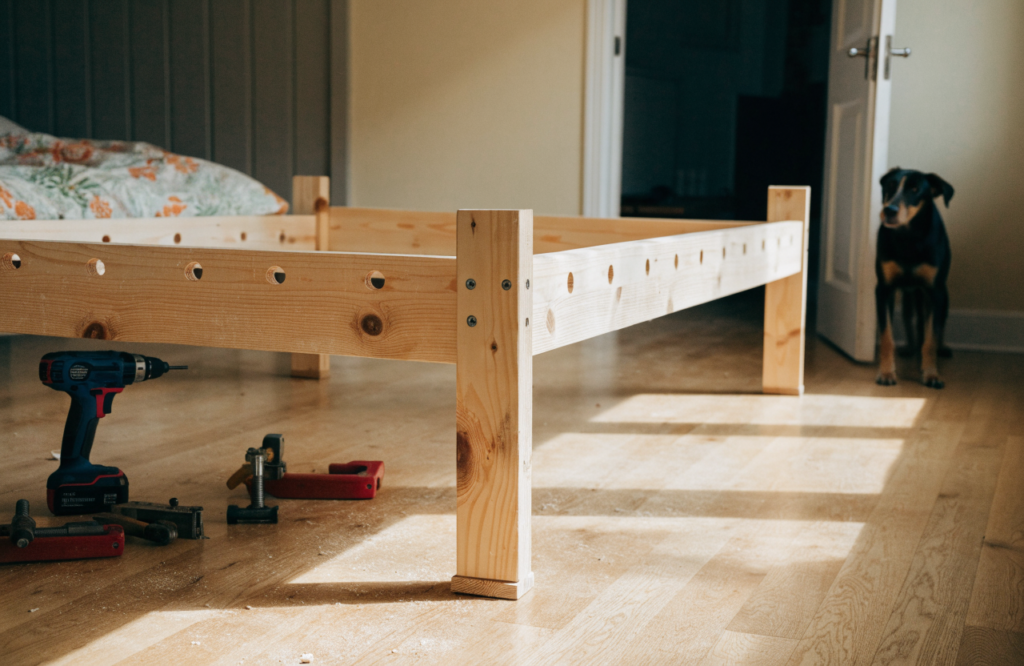
This is a beginner lumber build, not a furniture-grade bed. Adjust every length after you measure the mattress and the pad. Softwood 2x stock from a home center is adequate if the joints are glued and screwed and the center is supported. Hardwood is stronger and heavier than this project needs.
Cut list, starting point for a 60 by 80 mattress and a dog zone on one side
- Two side rails, 2×8, about 82 inches
- One head rail and one foot rail, 2×8, about 63 inches
- One center beam, 2×6, length to fit between head and foot after the outer frame is assembled
- Four corner legs, 4×4, cut to clearance height
- One or two center legs, 4×4, same height
- Deck: 3/4-inch plywood in two pieces if a full sheet will not fit in the car, or 1×4 slats
- 2 1/2- to 3-inch construction screws, wood glue, and metal angle brackets at the center leg
Order of work
- Assemble the rectangle on a flat floor. Butt joints with glue and screws through the head and foot into the side rails will hold if you also add a bracket or pocket screws at each corner. Check diagonals; they should match.
- Set the center beam where it will not cross the pad. Screw it to the head and foot rails, and block the joint.
- Stand the frame on the legs. Screw each corner leg to the inside of the rails with at least two screws per face, after drilling pilot holes so the 4×4 does not split. Plumb the legs before the second screw.
- Add the center leg under the beam, tight to the floor. A bracket keeps it from kicking out sideways.
- Add the deck. If you use plywood, screw it down every 8 to 10 inches along the rails and beam. Sand the entry-side edge so it cannot catch fur or skin.
- Test with the mattress off. Slide the real dog bed under. Have the dog enter, turn, and lie down before you finish the wood. Moving a leg now is cheap. Moving it after stain and a mattress is not.
A twin needs less center structure and is the easier first build. A king needs the same logic with a longer beam and two center legs. Do not scale a twin plan up by guesswork and omit the middle support.
Materials that survive hair, spills, and chewing
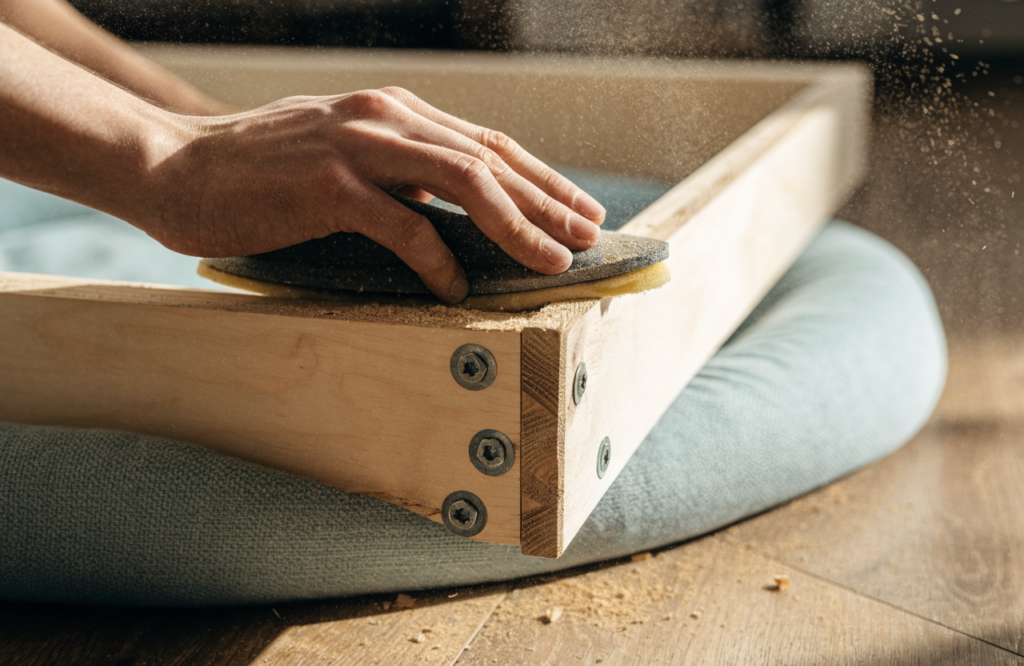
Pine and fir are fine. Sand every edge the dog can touch, especially bolt heads and plywood corners. Skip small decorative trim at dog height; it becomes a chew strip.
Finish only with a product that is fully cured before the dog sleeps against it. A water-based polyurethane or a hardwax oil labeled for interior use is enough to keep spills from soaking into the end grain. Paint is fine on the outside faces. Do not leave sticky oil or fresh stain where a dog will lie.
The pad needs a waterproof layer if the dog drools, sheds mud, or has accidents. A cheap crib mattress cover or a washable liner under the cushion saves the floor. Felt pads or rubber feet on the legs keep the frame from walking on hard floors when someone sits on the edge.
Casters are optional. They make cleaning easier and make a heavy frame more likely to shift. If you add them, use locking casters rated for the loaded bed, not light drawer wheels.
Day-to-day use is mostly about access and cleaning
Dogs that already sleep near the bed usually take the space if they can enter without a struggle and the pad smells like their old bed. Put an unwashed blanket on the new cushion for the first nights. Do not force a dog that has never gone under furniture; feed a meal at the opening and leave the pad half exposed until they choose it.
Plan a weekly pull-out. Hair packs against the center beam and along the wall side you cannot see. A low-profile robot vacuum will not fit, so the pad has to move. If the dog is anxious when the bed is occupied, leave a clear view out rather than a boxed den.
Heat and airflow are the other limit. An open side is enough for a normal bedroom. A closed cavity with a blanket over the entry is not a good sleeping spot, especially for a flat-faced dog or a thick-coated dog in summer. In winter, the same open draft is why some dogs refuse the space; a fleece cover and a pad with a raised edge fixes that more often than adding walls.
Weight is the last check. A queen mattress, two adults, and a lumber frame are a normal residential load if the center is supported and the legs sit flat. The dog bed does not add meaningful load. A waterbed, a very heavy hybrid mattress, or three people on a king is a reason to use thicker rails and an extra leg, not a reason to hang the dog bed from the slats.
Failures that show up after the first week
The dog will not go in. The opening is usually too low, the pad is too tall, or a nightstand blocks the natural path. Lower the pad before you rebuild the frame. A bolster bed under a 12-inch gap is a common mismatch.
The mattress dips toward the middle. The center beam is missing, undersized, or not touching its leg. Slats that only bear on the side rails will sag on a queen.
The frame rocks. Legs are uneven or the floor is not flat. Shim under a leg, then screw the shim so it cannot slide. A rock will loosen every joint.
Screws pull out of the end grain. End grain does not hold screws well. Glue the joint, and put a bracket or a corner block where the rail meets the leg.
The dog chews the rail. Cap the entry edge with a strip of hard plastic or move the pad forward so the favorite chew spot is the cushion, not the wood. Bitter spray washes off and is not a structural fix.
Cleaning is miserable. The pad cannot slide because a center leg lands in the middle. That is a layout error, not a housekeeping problem. Rebuild the support so the pad has a straight exit.
Frequently asked questions
Can you put a dog bed under a platform bed bought from a store? Only if the listed underside clearance is real and there is no center bar through the pad. Measure after the frame is assembled. Product photos hide the support leg.
Does the dog need a fully enclosed den? No. Most dogs that want to be near the bed are fine with an open side. An enclosure helps only if you are containing a cushion or matching a crate routine the dog already accepts.
What if the bedroom has no room for a taller bed? Use a flat pad, accept a lower clearance, and choose a dog that can crawl in. A large standing dog and an 11-inch frame are not compatible. A pull-out tray in the open floor beside the bed is the fallback.
Is plywood or slats better? Plywood is stiffer and keeps dust off the dog. Slats are lighter and easier to carry home. Either works if both are supported at the edges and at the center beam.
Will this bother a light sleeper? A dog turning on a plastic tray is louder than a dog on a rug. A fabric-bottom pad directly on the floor is the quieter setup. Keep water bowls outside the frame so spills are not under the mattress.