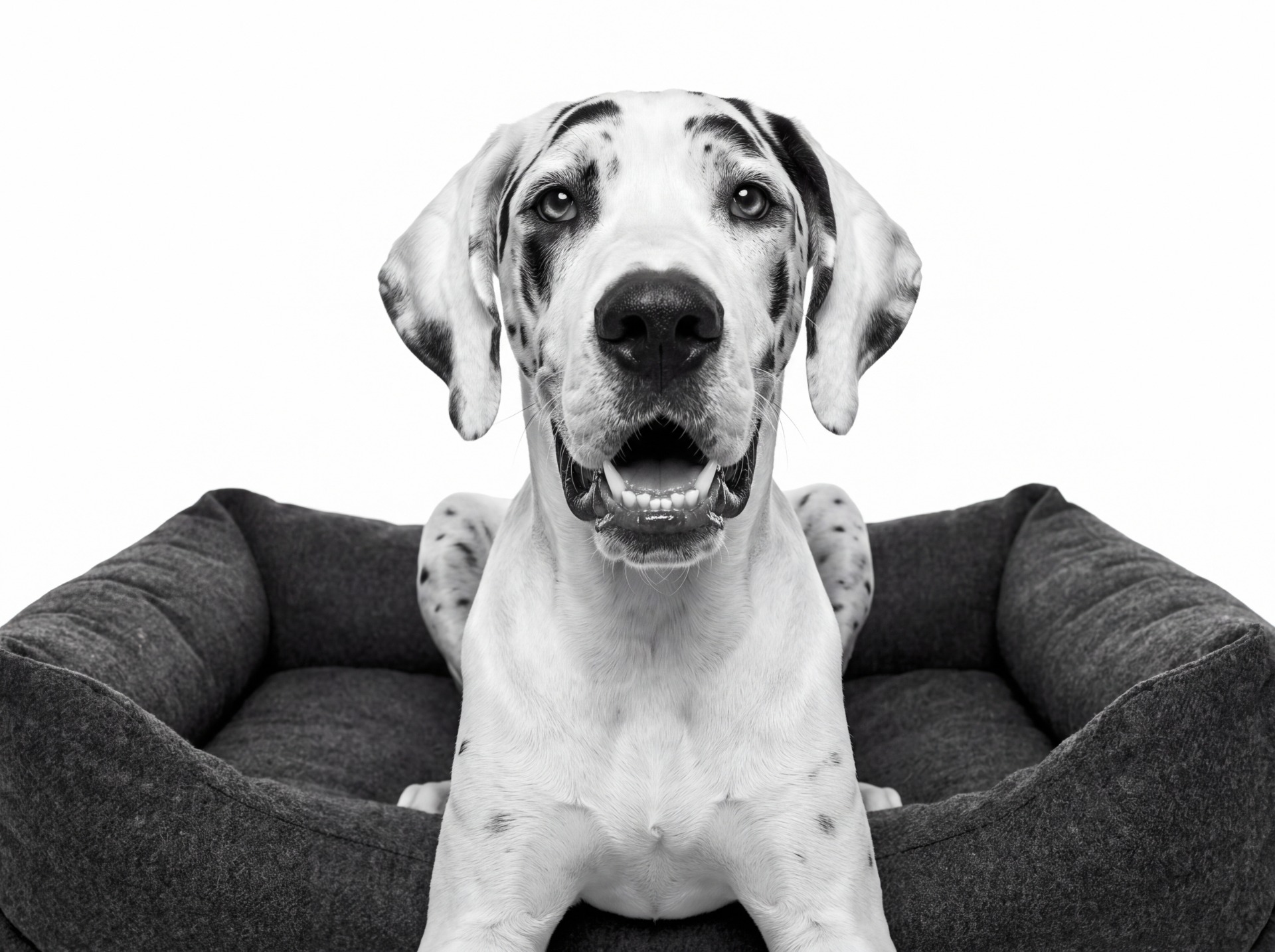
A comfy dog bed is the one a dog can fully settle on without hanging off, bottoming out, overheating, or struggling to get up. Comfort is a match between sleep position, body weight, joint needs, and how the bed handles heat and mess — not how plush it looks in a photo.
Dogs spend a large share of the day lying down, so a thin pad that flattens under the hips, or a nest that is too small to stretch in, shows up as restlessness, floor-sleeping, or stiffness after long naps. The useful buying order is simple: watch how the dog already sleeps, measure the usable surface, then pick support and a cover that will still work after months of hair, slobber, and washing.
Watch the sleep position before you pick a shape
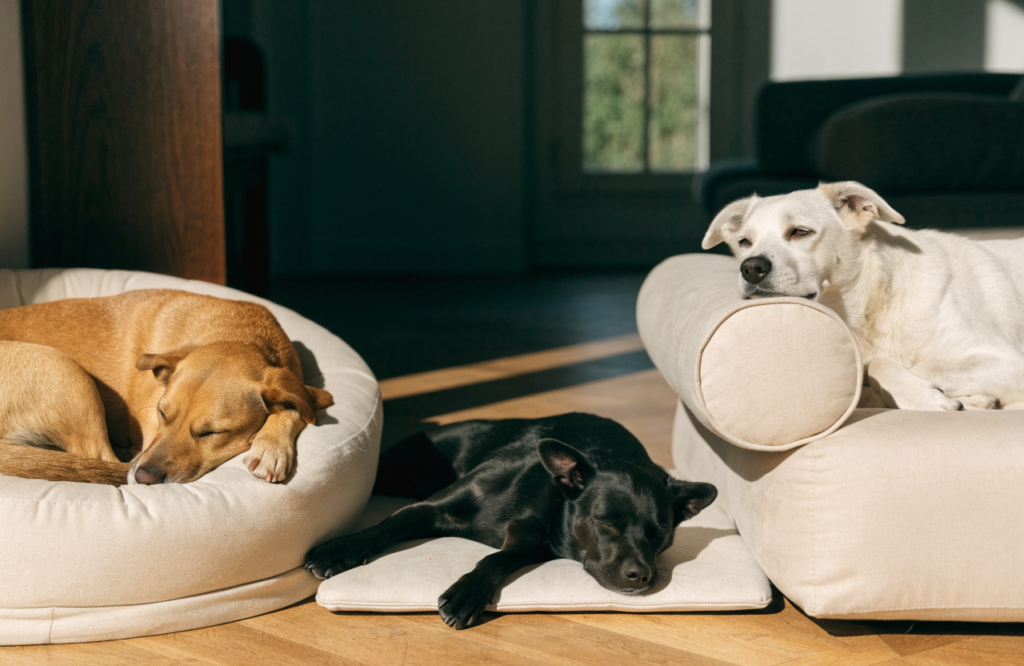
A bed designed against the dog’s usual posture gets ignored, no matter the price. Spend a few nights noting the position they hold longest when undisturbed.
Curlers tuck nose to tail and often rest a chin on a raised edge. They tend to use round donut beds, bolstered rectangles, or nest styles that hold warmth and give a headrest. The raised rim only works if the interior is still large enough to curl without touching both sides at once.
Sprawlers and side sleepers need a flat rectangular mattress with little or no raised edge. Bolsters steal lying area and can block a full stretch. Dogs that sleep on their back with legs up usually want the same open, fairly firm surface.
Burrowers push under blankets or into corners. A cave or hooded bed can suit that instinct, but only if the dog enters and exits freely. Some anxious dogs like the enclosure; others refuse it. A spare blanket on a flat bed is an easier test than committing to a covered style.
Half-on, half-off is usually a size problem, not a personality quirk. The dog is trying to stretch past the usable surface.
Measure the sleeping surface, not the product photo
Lie the dog in the position they use most. For a sprawler, measure from nose to the base of the tail, then add about 8 to 12 inches (roughly 20 to 30 cm). Guides from retailers and breed organizations commonly recommend sizing up rather than buying the bed the dog just fits. For a curler, measure the diameter of the curled body and add a similar margin so the rim still contains them without crowding.
Three sizing traps are easy to miss:
- Outer dimensions include bolsters. A “large” bolster bed can have a medium sleeping well.
- Crate pads must fit the crate floor, not the dog’s ideal stretch. If those conflict, a flat pad in the crate and a larger bed outside is often better than one compromise bed.
- Puppies outgrow beds quickly. A waterproof, washable pad sized for the next few months beats an expensive orthopedic mattress they will chew or outgrow.
If the dog is between listed sizes, go up, provided the bed still fits the room and the dog can step onto it.
Support depends on weight, not on how soft the top feels

Press the center of a bed with your hand. If you hit the floor easily, a heavy dog will too. Once hips, elbows, or shoulders compress through the fill, the dog is resting on the hard surface underneath.
| Fill | How it behaves | Better fit | Limitation |
|---|---|---|---|
| Polyester fiberfill | Soft, light, packs down | Small, light dogs; occasional use | Lumps and flattens under heavier dogs |
| Solid support foam | Firm, resists sinking | Large breeds; dogs that push off to stand | Can feel hard if there is no comfort layer |
| Memory foam | Contours under heat and pressure | Seniors and dogs that settle in one position | Often warmer; cheap slabs bottom out |
| Egg-crate foam | Peaks spread pressure and allow some airflow | Lighter dogs, crates, warmer rooms | Less lasting support for heavy dogs |
| Gel-infused or shredded foam | More airflow than a solid slab | Hot sleepers who still need cushioning | Gel slows heat buildup; it does not stay cold |
| Elevated mesh cot | Air under the body, firm surface | Hot climates, patios, dogs that like firm beds | Little pressure relief for sore joints |
Orthopedic marketing usually means a thicker, denser foam meant to spread weight. It is not a medical device. Veterinary consumer guidance commonly points older dogs and dogs with joint pain toward supportive foam, a low step-in height, and a non-slip base, because long rests concentrate pressure on bony points and stiff dogs struggle to climb. A practical thickness range used by buying guides is at least about 3 to 4 inches for medium dogs and more, often 4 to 7 inches, for large or giant breeds. Density matters as much as thickness: a tall, soft cushion can still collapse.
Look for a single slab or a clearly layered construction rather than loose fill that migrates. CertiPUR-US is a useful foam label when you see it; it indicates the foam was screened for certain harmful chemicals, which matters because dogs lie in direct contact for hours. It does not prove the bed will support your dog’s weight.
Memory foam firms up in a cold room and softens as it warms. Some dogs dislike the slow sink at first. A hybrid — firmer base, thinner contouring top — usually gives easier push-off than a deep, soft memory-foam pit.
Heat, cover, and washing decide whether the bed stays in use
A supportive bed that traps heat gets abandoned for tile. Short-coated and small dogs often want a warmer surface, such as fleece or a bolster that holds body heat. Double coats, flat-faced breeds, and dogs that pant at rest usually do better on a cooler cover, gel-infused foam, or an elevated cot. Traditional memory foam is one of the warmer fills. Shredded foam and mesh move air better.
Cooling claims should be read narrowly. Gel and phase-change layers slow heat buildup at the contact surface; they do not remain cold all night. An elevated cot cools by airflow and is easy to hose, but it will not cushion arthritic hips the way dense foam does. A dog with both joint pain and heat sensitivity is the hardest match: low orthopedic foam with a breathable cover, placed where the room is cooler, beats either a hot plush couch or a bare cooling mat.
Cleaning is part of comfort. Covers should unzip fully, including bolster covers if those exist, because slobber collects on raised edges. A waterproof liner should wrap the mattress, not only the top panel; side seams are where accidents reach the foam. Foam itself is rarely machine-washable. If the listing is vague, assume only the cover goes in the washer. A second cover keeps the bed usable on wash day. For incontinence or puppies, that spare cover matters more than a designer fabric.
Non-slip bottoms help on wood and tile, especially for seniors who push off to stand. Rubberized bases can mark some floors; a mat underneath is the usual fix.
Match the bed to the constraint that will actually break it
Seniors and dogs with joint pain. Prioritize a low entrance, stable foam that does not bottom out, and a surface that is not slick. High bolsters and pillow tops look cozy and can turn the bed into a step the dog stops using. Warmth can ease stiffness for some dogs; thermostat-controlled heated pads are the safer version of that idea. Unregulated heat is a poor fit for thick-coated dogs or warm rooms.
Puppies. They need a low, boring, waterproof bed more than an orthopedic one. Growing joints are not a reason to buy a thick foam slab they can shred. Exposed foam is a swallowing risk. Replace the bed when they stretch off it, not when the cover looks tired.
Chewers and diggers. Plush fiberfill and thin seams fail first. Tougher options use ballistic nylon, canvas, or ripstop, often with a hidden zipper and a covered foam core. An elevated cot is harder to unstuff. No fabric is truly chew-proof if the dog is left with it and determined. Address the chewing; do not expect a warranty to outrun a daily shredder.
Heavy and giant breeds. Check the weight rating and the foam, not the word “XL.” Some extra-large beds are only large. Owners of Danes and similar dogs often find standard “XXL” beds too short and switch to a twin mattress with a waterproof protector and washable cover. That works if the mattress stays covered and the dog is not a chewer.
Anxious dogs. A bolster or donut can act as a visual boundary. It does not treat anxiety. If the dog pants, will not settle, or guards the bed, the bed is the wrong tool.
Mistakes that make a good-looking bed go unused
Buying for the photo. Sherpa reads as comfort and runs warm. A heavy dog on a fiberfill “cloud” is on the floor by month two.
Ignoring entry height. Orthopedic loft helps only if the dog can get on and off without a hop.
Washing the foam. Waterlogged memory foam dries slowly, smells, and breaks down. Only the cover and liner should be routine laundry.
One bed for two conflicting jobs. A crate, a hot patio, and an arthritic night sleeper often need different surfaces. A cot outside and a foam bed indoors is a normal setup, not a failure.
Judging rejection too fast. Move the new bed to where the dog already sleeps, add an unwashed blanket that smells like home, and give it several days. Persistent avoidance after that is information: wrong shape, too hot, too small, or too hard to enter.
A buying check before you order
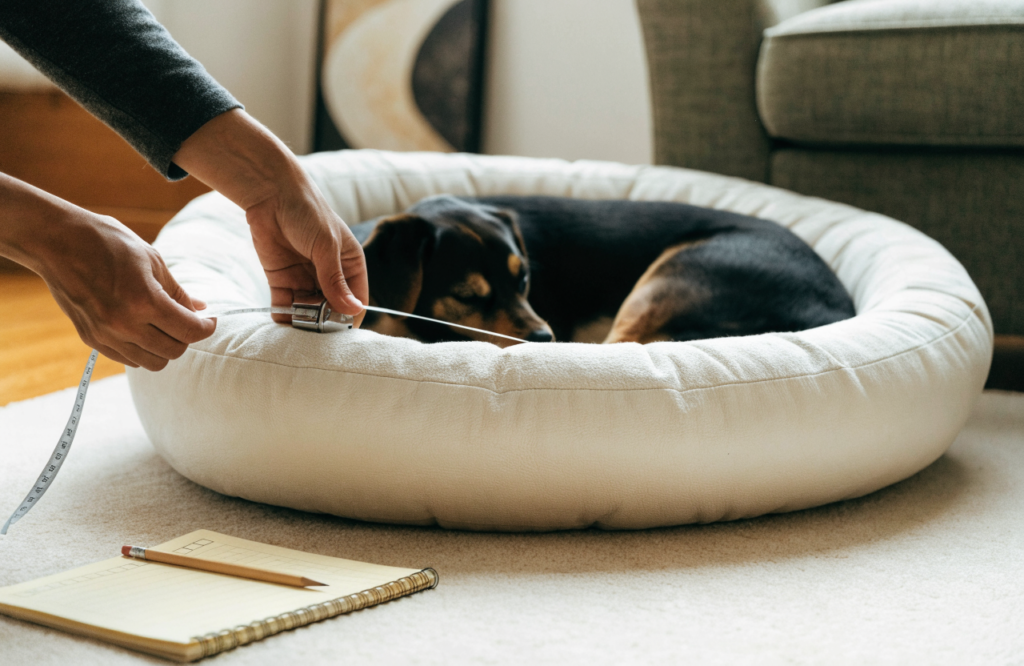
- Note the main sleep position and measure that shape, then add 8 to 12 inches.
- Confirm the listed size is the interior sleeping area if the bed has bolsters.
- Match fill to weight: fiberfill only for light dogs; dense or layered foam if hips would otherwise hit the floor.
- For stiff or senior dogs, require a low step-in and a non-slip base.
- Require a full-wrap waterproof liner and a removable, machine-washable cover.
- If the dog runs hot, skip thick sherpa and solid memory foam as the only surface.
- If the dog chews, do not leave foam exposed, and do not start with a plush donut.
Price tracks foam thickness, cover quality, and warranty length more than comfort itself. A mid-priced bed with a real zipper, a liner, and foam that does not bottom out under your dog’s weight will outperform a premium plush bed that fails those three tests.
Frequently asked questions
How firm should a dog bed be? Firm enough that you cannot easily press through to the floor at the dog’s heaviest point, soft enough that elbows are not on a bare slab. Healthy small dogs tolerate a wider range. Large dogs and dogs with joint pain do better on supportive foam than on a sink-in cushion.
Do orthopedic beds help arthritis? They can make long rests easier by spreading pressure and lowering the effort to stand, which is why vets often suggest them for seniors. They do not replace medication, weight management, or a veterinary plan. Look for thickness, density, and easy entry rather than the word orthopedic alone.
Why does my dog prefer the floor? The bed is often too warm, too small, too soft, or in a noisier spot than the tile. Try a cooler cover or a cot before replacing the whole bed. Some dogs simply prefer a firm surface in warm weather and a cushion at night.
How often should a bed be replaced? When the center stays compressed, the smell survives washing, the waterproof layer has failed, or the dog has outgrown the sleeping area. Quality foam lasts longer than fiberfill, but no fill survives constant soaking or chewing.
Can two dogs share one bed? Only if both can stretch at the same time and neither guards it. Different sizes and sleep styles usually mean two beds, even if they sometimes pile onto one.