
A crochet dog bed works when it is built as a dense cover over a firm pad, or as a small stuffed nest for a light dog that does not chew. The stitch pattern is the least important decision. Size, yarn density, and whether the filling can come out for washing decide whether the bed lasts a season or a few years.
Most free patterns stop at a finished diameter and a yarn list. They rarely say what happens when a 40-pound dog circles, digs, and lies on the same spot every night. That gap is where handmade beds fail: the center compresses, nails catch open stitches, and loose ends become a hazard.
Measure the dog before you buy yarn
Measure from the tip of the nose to the base of the tail, not the tip of the tail. Add about 6 to 12 inches for comfort. Curlers can sit toward the lower end of that range. Dogs that sleep on their side with legs stretched need the higher end, and they need a flat interior rather than a high wall that steals usable space.
Weight is a useful check, not the main number. Common retail ranges look like this:
| Dog weight | Typical bed footprint | Better match for crochet |
|---|---|---|
| Under 25 lb | About 18–24 by 24–30 inches | Round nest or small rectangle |
| 25–50 lb | About 24–30 by 30–36 inches | Foam-filled rectangle |
| 50–75 lb | About 30–36 by 36–42 inches | Cover over a bought pad |
| Over 75 lb | 42 inches and up | Cover only, not a fully stuffed crochet cushion |
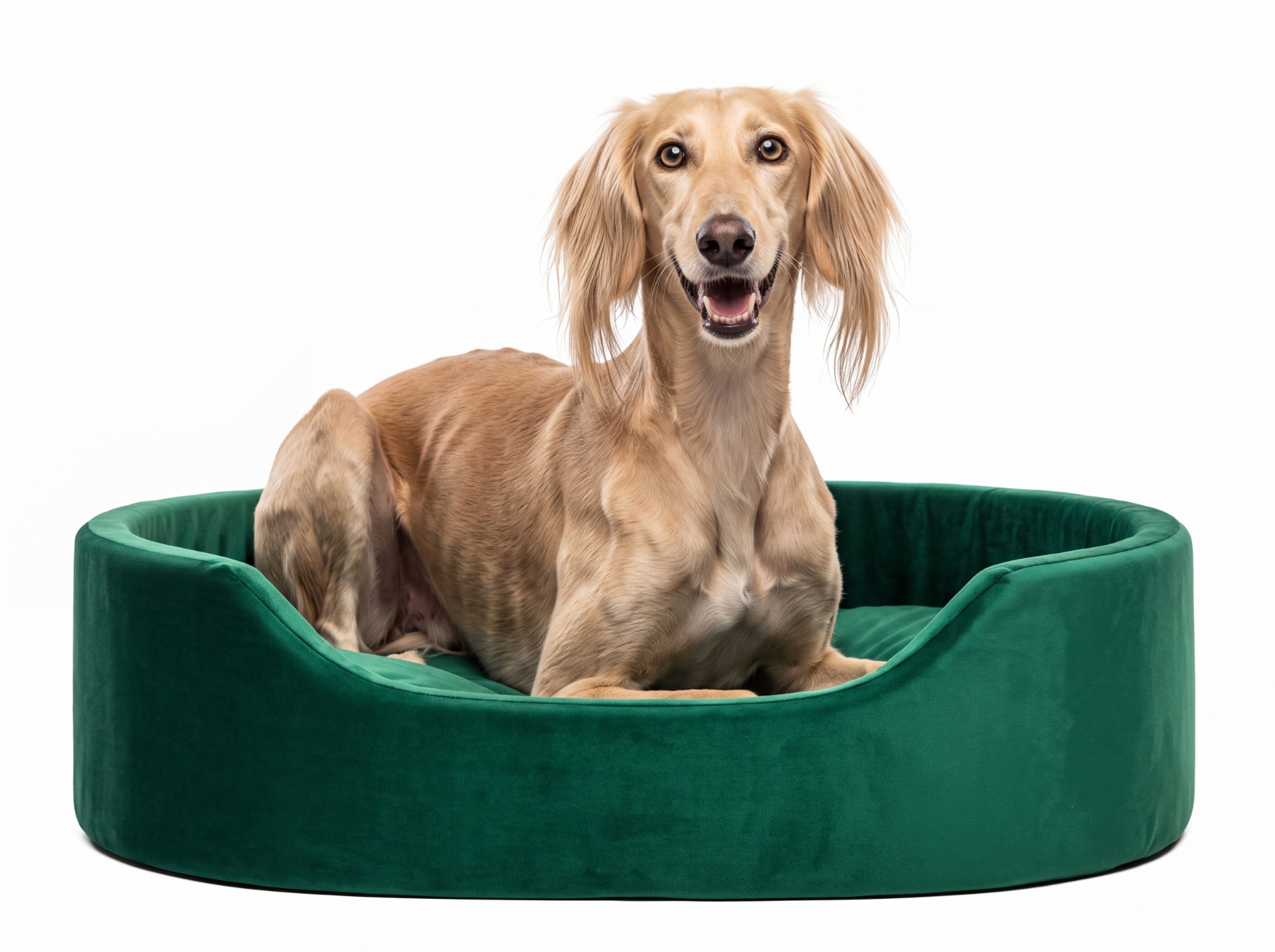
A bolster or donut bed looks larger than the sleeping area inside it. A 36-inch exterior can leave only about 30 inches of flat floor once the stuffed rim is accounted for. If your dog sprawls, measure the interior you are actually building, not the outside edge.
Crochet also has a practical ceiling. A fully stuffed bed for a large dog uses a lot of yarn and dries slowly after washing. For dogs over about 50 pounds, a crochet cover slipped over a foam or store-bought cushion is usually the better project.
Three builds, and which one matches the dog
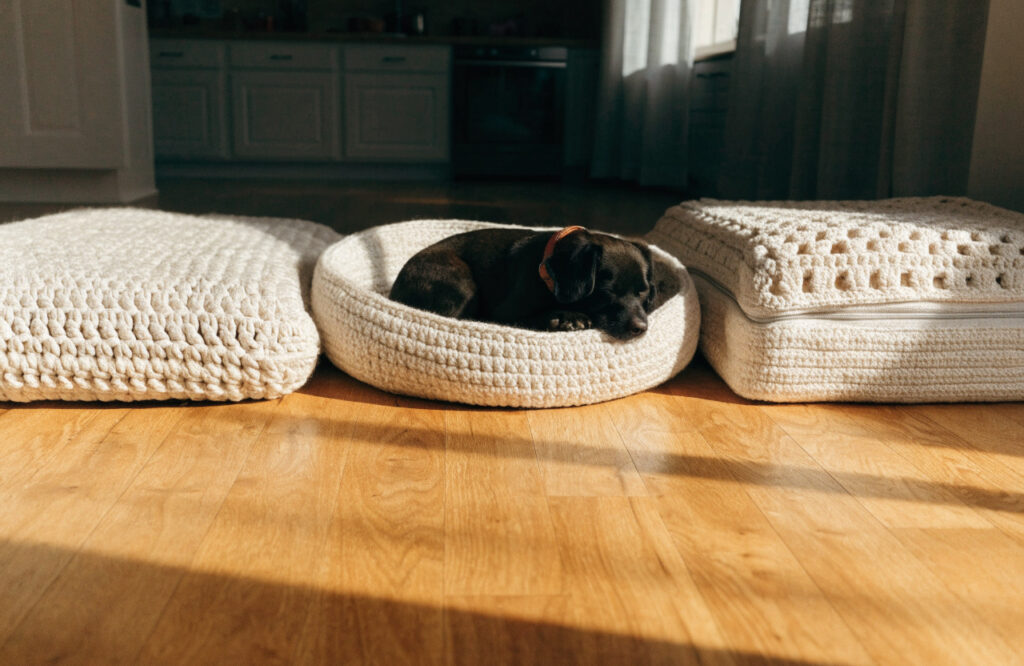
Flat cover over a foam pad. Crochet two rectangles in single crochet, seam three sides, and slide in a foam slab about 3 inches thick. This is the fastest build and the one that holds shape under real weight. A published jumbo-yarn version uses a 25 mm hook and single crochet, with about 195 yards for a 24-by-24-inch bed, 260 yards for 30-by-30, and about 390 yards for 30-by-42. The fabric is meant to stretch slightly over the pad so it does not bag.
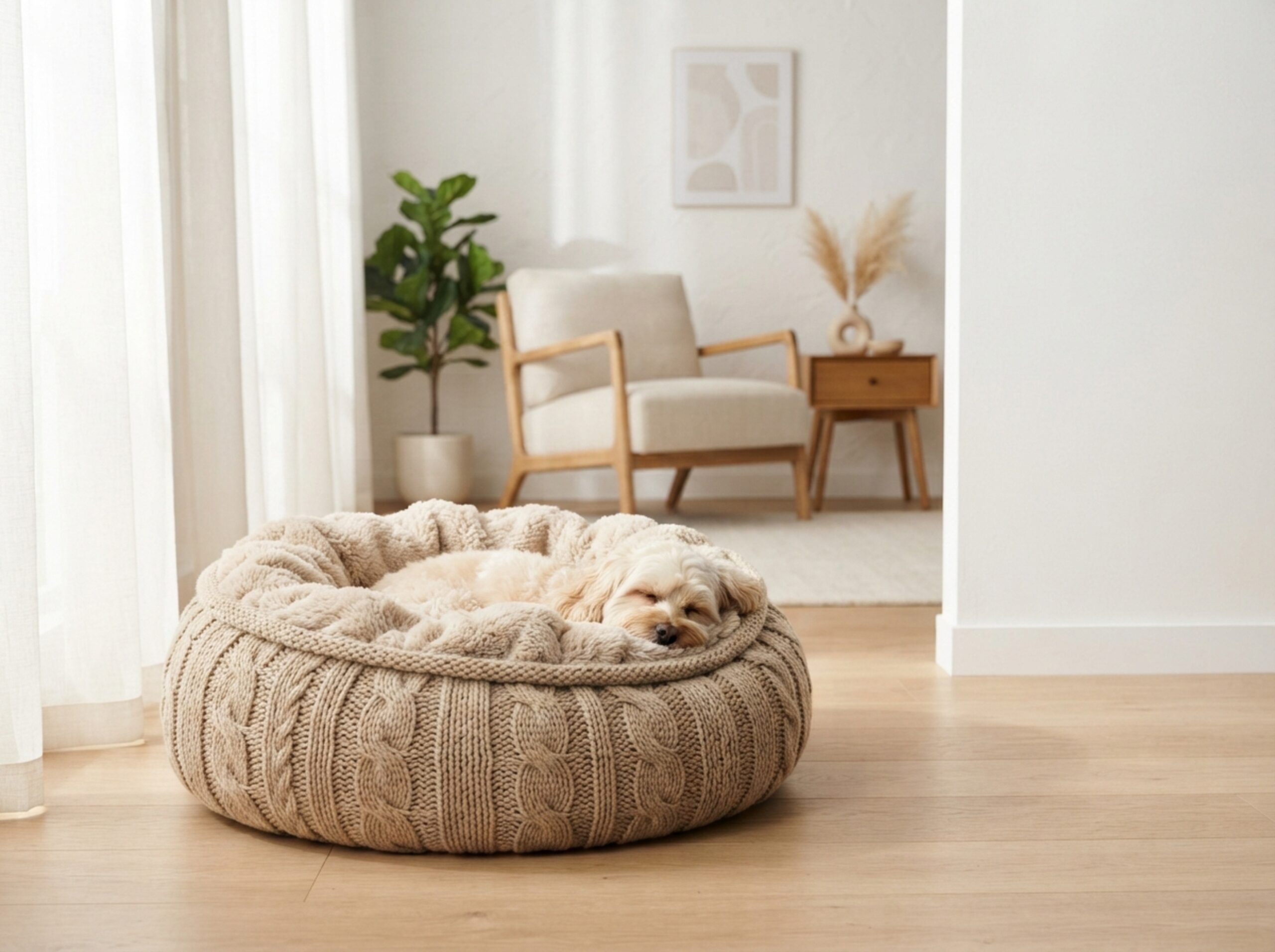
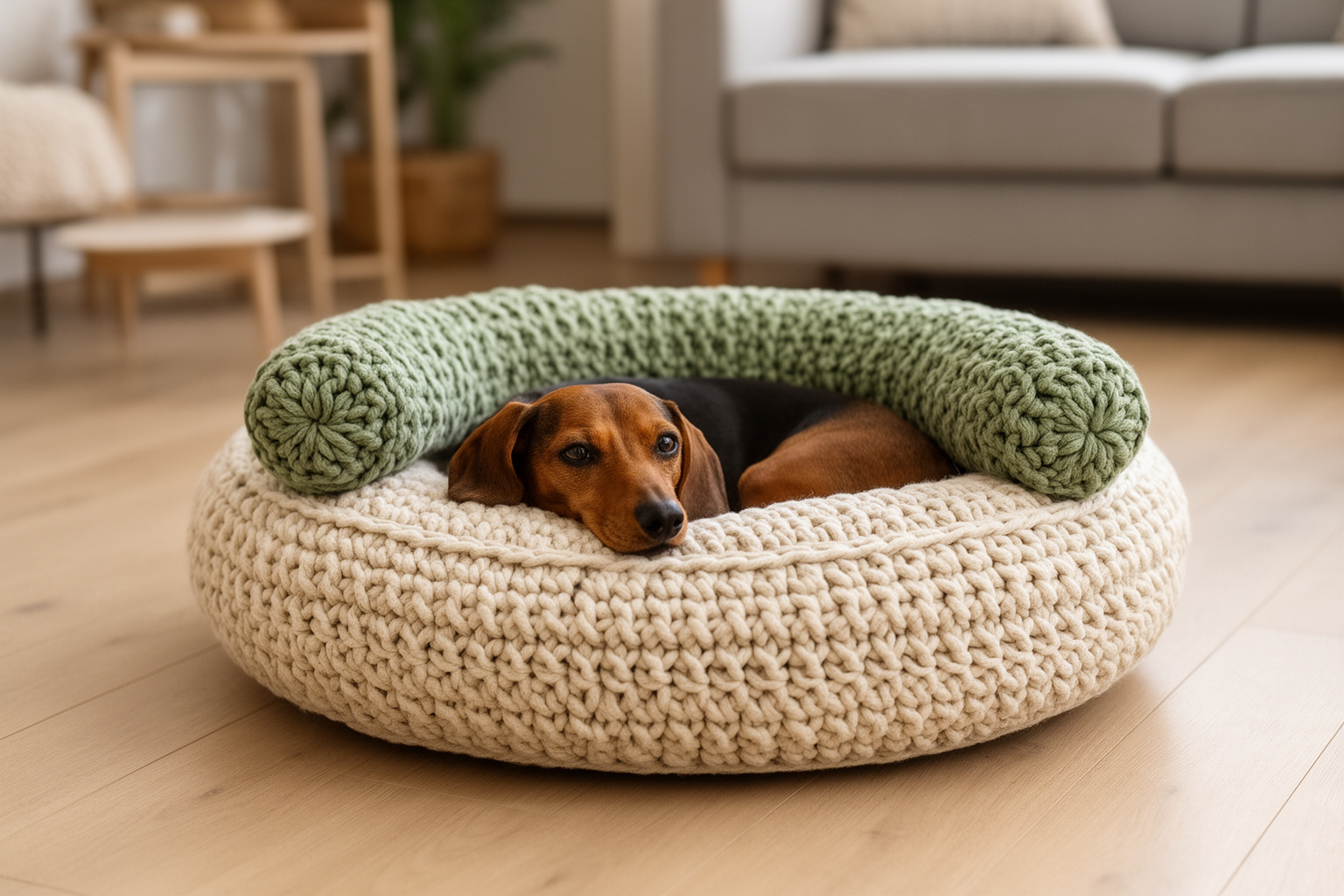
Round base with a stuffed rim. Work a flat circle, then crochet the side wall and stuff only the wall, or stuff a separate bolster and sew it on. Yarnspirations’ Bernat pet bed is in this family: diameters of about 16, 22, 34, and 40 inches, worked with super-bulky yarn held double and quilt batting inside. A smaller worsted-weight version in the same style finishes around 17 inches across and 4 inches tall, which suits a cat or a very small dog. Curlers like the raised edge. Sprawlers do not.
Joined squares. Two large panels form the floor; smaller squares form the sides. This is flexible for color blocking and easy to resize, but every seam is a weak point if the dog digs. Use a dense joining method and weave ends in as you go, not after the bed is assembled.
Skip open lace, mesh, and very tall single-crochet ribs. Dog nails hook those stitches and pull runs. Single crochet or half double crochet, worked a little tighter than the yarn label suggests, is the fabric that survives daily use.
Yarn weight, stitch density, and how much yarn you actually need
Acrylic is the practical default. It washes, dries, and does not felt the way wool can after repeated cleaning. Crocheters who make pet blankets often land on sturdy worsted acrylic such as Red Heart Super Saver, worked tightly, because it holds up to dragging and machine washing. Jumbo chenille or blanket yarn finishes a bed in an afternoon and feels soft, but the stitches are large and easier to snag. It is a good choice for a light dog that nests, and a poor one for a chewer.
Cotton is durable and breathable, and harder on the hands for a project this size. Wool can work if it is a superwash blend and the dog is not a heavy shedder, but it is more work to keep clean.
A rough yarn budget:
- Small round nest in worsted weight: often under 300 grams, plus stuffing.
- Medium rectangle in jumbo yarn: roughly 200 to 400 yards, depending on footprint.
- Super-bulky held double for a large round bed: several 400-gram balls, plus batting.
Buy one extra skein of the main color. Gauge on a dog bed is forgiving for fit and unforgiving for running out mid-seam.
Foam, batting, or fiberfill
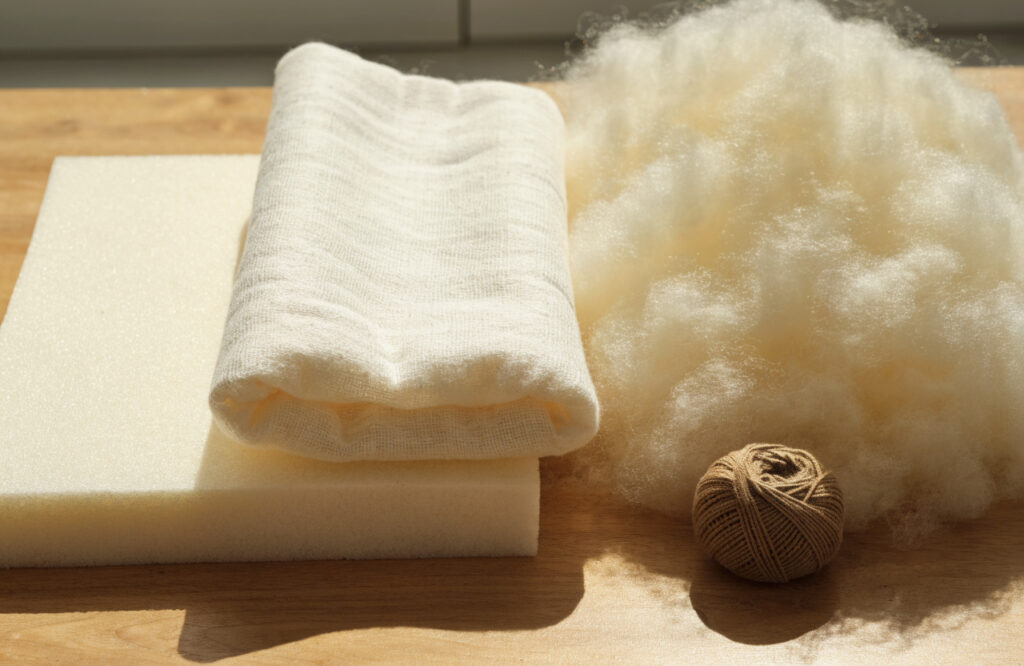
Foam keeps a flat sleeping surface. Look for about 3 inches of firm foam for medium dogs. Thinner craft foam bottoms out under an adult dog’s hips. Cut the pad slightly smaller than the cover so the seam is not under constant tension.
Quilt batting suits a stuffed rim or a lightly padded round bed. It is easier to wash than a solid foam block if you can remove it.
Polyester fiberfill is fine for a small nest and a poor main cushion for a heavy dog. It migrates to the edges, and the center goes flat. If you use it, stuff the rim firmly and keep the floor only lightly filled, or skip floor stuffing and rely on a separate pad.
Whatever you use, plan an opening that closes with buttons, ties, or a short zipper so the filling never goes through the washer. A fully sewn stuffed bed is hard to dry and easy to distort.
Safety details patterns usually skip
Loose yarn is a real emergency risk, especially for cats and for dogs that mouth fabric. Veterinary sources describe linear foreign bodies: string or yarn that catches under the tongue or in the stomach while the intestine pleats along it. That can require surgery. A finished bed is not automatically safe just because it is no longer a skein.
Before the dog uses it:
- Weave in every end. Do not knot and trim flush.
- Work a tight fabric so a claw cannot pull a loop free.
- Check the rim and seams after the first week of use.
- Do not leave a bed in reach of a puppy or a known chewer until you know they ignore the yarn.
If the dog already destroys soft toys, a crochet bed is the wrong project. A washable commercial cover, or a crochet throw they can have under supervision, is the safer gift.
Washing and repair
Acrylic covers can go in a laundry bag on a gentle cycle and low or no heat. High dryer heat can damage synthetic yarn. Foam should stay out of the machine. Air-dry the cover flat so the corners do not stretch.
Expect to reweave a snagged spot. A single pulled loop can be eased back with a smaller hook. A hole needs a patch of the same stitch, not a long strand tied across the gap. Long repair strands recreate the string hazard you just avoided.
Mistakes that make a bed fail in the first month
- Sizing to breed charts instead of the dog in front of you. A curled 30-pound dog and a sprawling 30-pound dog need different interiors.
- Open stitches “so it works up faster.” Speed is why nails ruin the bed.
- Stuffing the whole bed and sewing it shut. The first accident becomes a two-day drying project.
- Jumbo yarn for a chewer. Large loops are easy to grab.
- Ignoring the center. Dogs sleep in one spot. If that spot has no foam, the bed collapses there first.
- Long fringe, tassels, or pom-poms. Decorative ends are the first thing a dog pulls.
Frequently asked questions
Can a beginner make a crochet dog bed? Yes, if the pattern is single crochet rectangles or a simple increasing circle. Joined rounds, color changes, and shaped chevron walls are a step up. The sewing and the filling matter more than fancy stitches.
Is chunky yarn better than worsted? Chunky yarn is faster and softer. Worsted acrylic worked tightly is usually tougher and easier to wash. Match the yarn to the dog’s habits, not to how the bed looks in a photo.
How long does one take? A jumbo-yarn cover in single crochet can be a weekend project. A worsted round bed with a stuffed rim often takes several evenings because the fabric is denser and the yardage is higher.
Will it replace an orthopedic bed? Not for a senior dog or a dog with joint pain. Crochet adds a washable surface. The support has to come from the foam or from a proper pet mattress underneath. A pretty cover on a thin craft pad will not do that job.
What if the dog will not use it? Some dogs prefer a familiar smell. A week with an old blanket on top of the new bed is often enough. If they still avoid it, the interior may be too small, the rim too high, or the surface too slick. A flat foam-filled rectangle is the easiest shape to adjust.