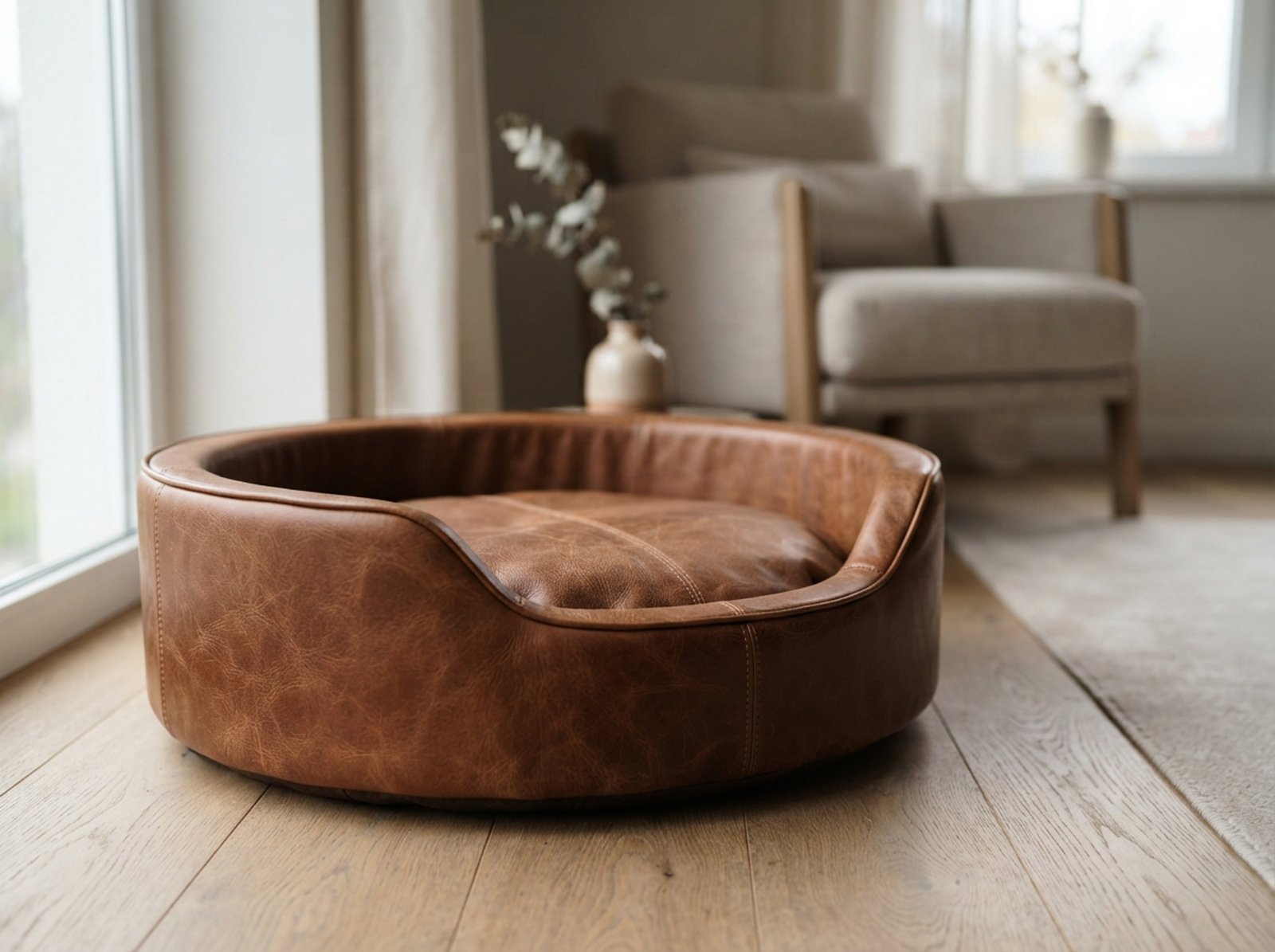

A standard twin mattress is 38 by 75 inches, which is longer than most “XL” dog beds and wide enough for a large dog to stretch on its side. That size only helps if the foam is a solid slab thick enough not to bottom out, and if a full waterproof encasement sits under anything washable. Skip the spare guest mattress with an unknown history: the money you save is easy to lose to odor, urine in the core, or hitchhiking pests.
Who a twin mattress actually fits
Measure the dog lying fully stretched on its side, nose to the base of the tail, then add roughly 6 to 12 inches. A Labrador or German Shepherd often lands inside a twin. A Great Dane or mastiff that sleeps long may still hang paws off a 38-inch width and do better on a twin XL (38 by 80 inches) or a full. Greyhound owners on forums repeatedly describe this problem: commercial beds take half a room and still do not match a sighthound’s sprawl, so a twin in an office or beside the human bed becomes the practical surface.
Two dogs on one twin often fail for a social reason, not a size reason. In greyhound discussions, one dog claims the whole mattress and the other gives up. Separate surfaces, or a larger mattress, solve that better than a thicker pad.
A crib mattress is the better twin alternative for a single medium dog or a household that cannot spare 38 by 75 inches of floor. Owners of large breeds often use crib foam with a water-resistant cover and a waterproof fitted sheet because the footprint is smaller, the height is low, and replacement is cheap. It is not a stretch bed for a Dane.
Commercial “giant” orthopedic beds are usually shorter than a twin. Big Barker lists a large at 48 by 30 inches, an extra large at 52 by 36, and a giant at 60 by 48. The twin wins on length. The giant commercial bed can win on width for a dog that sleeps sideways rather than long.
Foam that supports a heavy dog
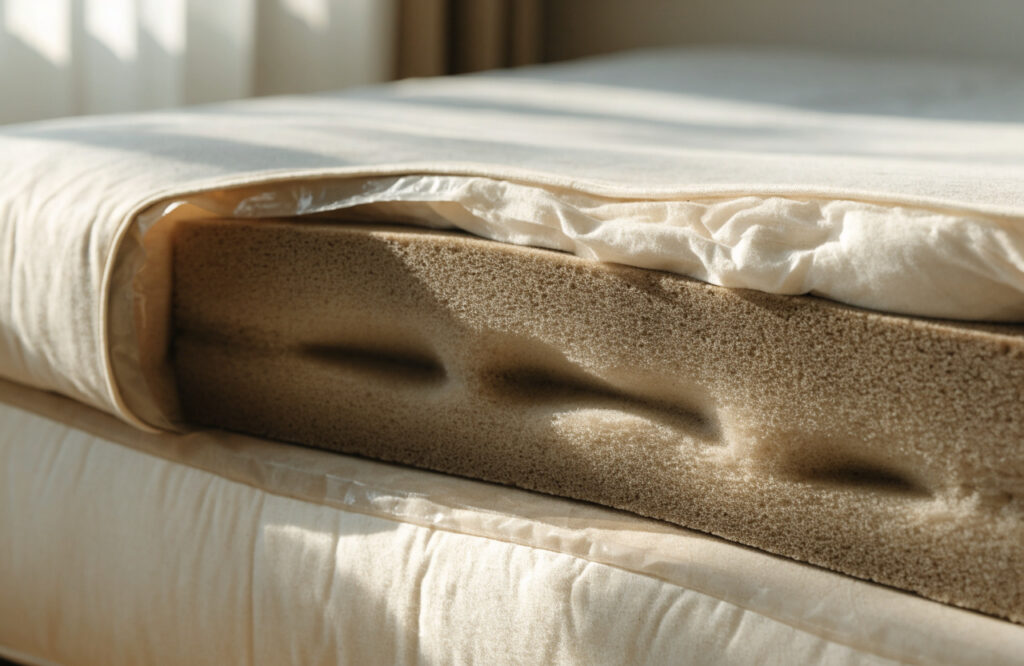
Stuffed polyester beds flatten under a large dog and do not spread pressure evenly. Dr. Joseph J. Wakshlag, a veterinarian and professor of clinical nutrition and sports medicine at Cornell University College of Veterinary Medicine, has made that point in coverage of large-dog beds: typical stuffed beds do not create uniform pressure, so hips, elbows, and shoulders stay sore, and heavier dogs run into that problem more often.
What you want is a solid foam slab, not shredded fill and not a worn innerspring with a sag in the middle. Buyer guides aimed at large breeds commonly recommend at least 4 inches of foam for dogs around 60 to 100 pounds, and closer to 5 to 7 inches for dogs over 100 pounds or dogs with arthritis. Those figures are practical rules of thumb, not a clinical dosing chart. The useful test is simple: press the center hard with your palm. If you feel the floor, a 90-pound dog will too.
A 6-inch gel memory foam twin sold as a mattress-in-a-box is the usual DIY match. Medium-firm is easier for a senior to stand up from than a plush pillow-top that swallows the chest. Very thick beds (around 8 inches and up) can be harder for an arthritic dog to step onto if you also put them on a frame.
CertiPUR-US certification is the clearest foam check available. Certified flexible polyurethane foam is made without formaldehyde, ozone depleters, CPSC-regulated phthalates, and heavy metals such as lead and mercury, and it must stay under 0.5 parts per million in VOC emissions, according to the CertiPUR-US program. A Petco staff veterinarian answering an owner about a CertiPUR-US topper has said that emissions limit is also an acceptable range for a dog sleeping on the foam. Certification covers the foam, not the cover fabric, zippers, or dyes.
The often-cited Big Barker pilot at the University of Pennsylvania is narrower than marketing implies. It was a single-center, open-label study in dogs over 70 pounds with confirmed osteoarthritis. Owners reported less pain and stiffness, and collar monitors suggested quieter nights for a subset of dogs. That supports the idea that a thick therapeutic surface can matter. It does not prove that a $75 twin foam mattress produces the same result.
The cover stack that stops smell and stains
Foam is a sponge. Once urine reaches the core, you will not wash it out. Build two layers.
The inner layer should be a six-sided waterproof encasement with a zipper that closes fully around the mattress. An open-bottom “protector” blocks a spill on the top and does nothing for a dog that circles, digs, and soaks a corner. Zippered waterproof covers are what greyhound and Great Dane owners describe using, often a basic retail encasement, with a washable blanket or fitted sheet on top so the waterproof layer is not the surface the dog lies on all day.
The outer layer is what you actually launder: a fitted sheet, a flat blanket you can swap, or a durable pet cover. Keep two so one is always clean. Drool and damp paws matter as much as accidents. A sheet you wash weekly stays fresher than a thick dog-bed cover you postpone because it does not fit in the machine.
Used mattresses are the expensive mistake. The U.S. Environmental Protection Agency notes that bed bugs travel on furniture and bedding and can survive months without feeding, and it specifically advises checking secondhand beds before bringing them home and using a sturdy encasement that you inspect for holes. A free twin from a curb or a listing is not free if it arrives with bugs, flea eggs, or years of moisture in the foam. Buy new foam, or only accept a used mattress you can fully encase after you have inspected it in daylight.
Where to put it so the dog will use it
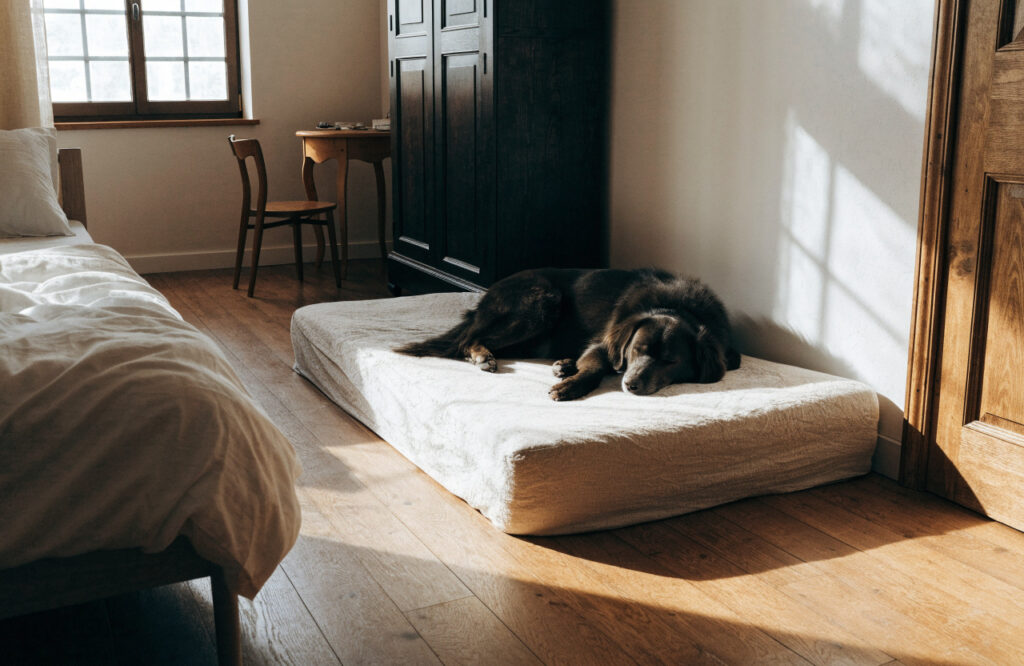
On the floor is usually better than on a bed frame. A low platform or a futon frame can work if the step-up is only a few inches. Seniors with hip pain often refuse a surface they have to hop onto, then sleep on the hard floor beside it. If you want the mattress off a cold floor, a rug underneath is enough.
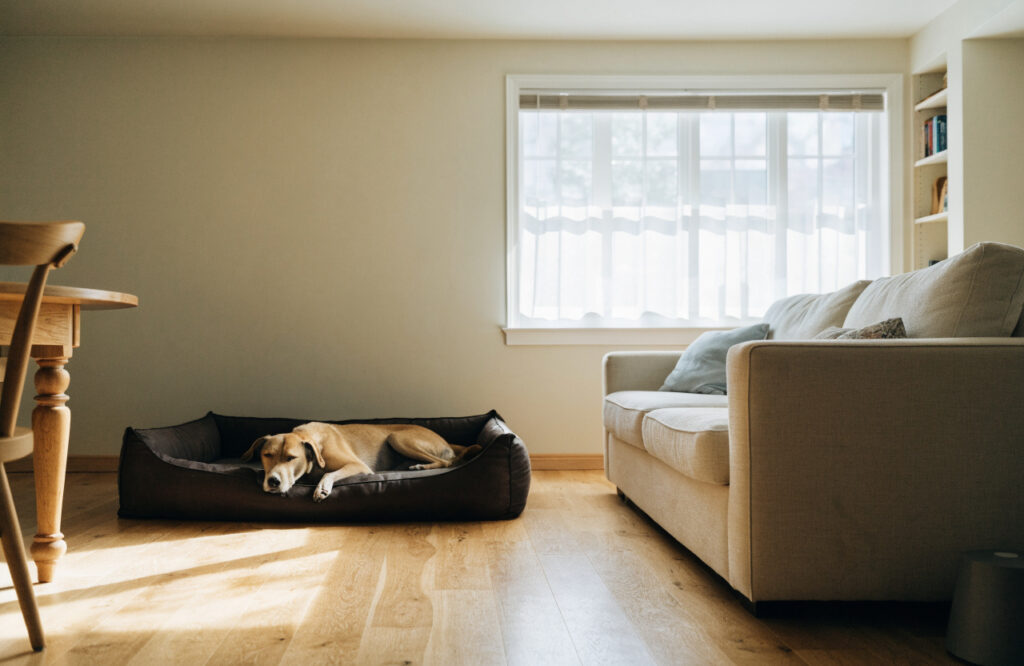
Place it where the dog already rests: a corner with a wall on one side, out of a draft, not in the main traffic path. Dogs settle against an edge. A mattress floating in the middle of a room gets used less than the same mattress against a wall.
Bolster pillows are optional. They make the corner look finished and give a headrest, but they also shrink the usable surface and become chew targets. A washable blanket rolled at the head does the same job and goes in the washer.
If the mattress will sit next to your bed, a low twin keeps the dog off your mattress without a fight. It does not stop a dog that has already learned your bed is the prize. Train the spot first, then add the nicer surface.
What it costs compared with an orthopedic dog bed
Retail listings for a 6-inch CertiPUR-US twin memory foam mattress commonly fall around $60 to $100. A waterproof encasement and two washable covers add a modest amount on top. A Big Barker XL orthopedic bed, listed around 52 by 36 by 7 inches for dogs in the 75-to-120-pound range, has been priced near $340. The twin is larger in length and often a third of the price or less.
The branded bed can still be the better buy. You get a cover designed for pets, a stated warranty, and a foam stack built for heavy bony points rather than a dorm mattress. Replacement cores for cheaper dog beds also change the math: a bed you re-core every couple of years can cost less over time than it looks. The twin wins when you need length, you can wash the outer layer yourself, and the dog is past the stage of shredding whatever it sleeps on.
Do not count a human mattress warranty as pet coverage. Most mattress warranties exclude stains, odors, and pet damage. Treat the twin as a pet surface you will replace when the foam crushes, not as a 10-year household asset.
Setups that fail: chewers, puppies, and shared beds
A twin mattress does not survive a dog that disembowels beds. In a widely shared clip of a Great Dane puppy destroying a joint-support bed, commenters landed on the same workaround people already use: do not buy the expensive bed until the dog is past the destructive phase, and use a twin mattress in the meantime. That only works if the dog is not also chewing the mattress. A waterproof cover is not chew-proof. Zippers, piping, and foam edges are invitations.
Wait on this project if the dog still shreds toys, digs at bedding, or guards soft surfaces. A heavy-duty crate pad or a mattress you can afford to lose is the interim. Once the chewing stops, move to the encased twin.
Shared beds fail when one dog is a sprawler. The second dog ends up on the floor, which defeats the joint-support goal. Two crib mattresses, or one twin and a smaller orthopedic pad, are more honest than insisting they share.
Heat is the other complaint with memory foam. Gel-infused foam and a breathable sheet help. A dog that already seeks cool tile may still abandon a foam twin in summer and return in winter. That is a preference, not a failed bed.
Which setup to choose
Choose a new 5- to 6-inch solid foam twin, CertiPUR-US if you can find it, on the floor or a very low platform, inside a full zipper encasement, with a washable sheet on top, if you have one large dog that stretches longer than about 4 feet and does not chew bedding. Choose a crib mattress the same way if floor space is tight and the dog is medium-sized. Choose a commercial giant orthopedic bed if you want a pet-specific cover, a warranty, and a wider rectangle more than you want twin length. Skip used mattresses unless you can inspect them and encase them completely. If two dogs must share, assume one will take the whole surface and plan a second bed before you buy the first.
Questions people ask before they buy
Is a twin mattress safe for a dog to sleep on?
A new foam mattress with a certified foam core and a sealed waterproof cover is a reasonable sleeping surface. The risks are practical: urine in unprotected foam, chewing, and a used mattress with pests or old stains. Certification such as CertiPUR-US addresses foam content and emissions, not fabric or zippers.
Can I use the guest-room mattress I already own?
Only if you know its history, the foam is not sagging, and you encase it on all six sides before the dog uses it. The EPA’s bed-bug guidance is to inspect secondhand beds and couches before they come into the house. An unknown curb mattress is a poor trade for the price of a new thin foam twin.
Is a twin better than a crib mattress?
A twin is better when the dog’s stretched length exceeds a crib and you have the floor space. A crib mattress is better for medium dogs, multiple rooms, and lower step-on height. Great Dane owners use both; the deciding variable is the dog’s measured stretch, not the label “dog bed.”
Will an arthritic dog get up more easily on a twin?
A medium-firm slab that does not bottom out is easier on hips than a floor or a flattened stuffed bed. A very soft, very tall mattress can make standing harder. If the dog already struggles to rise, keep the surface low and firm enough that the chest does not sink, and ask your vet before treating the bed as a substitute for pain care.