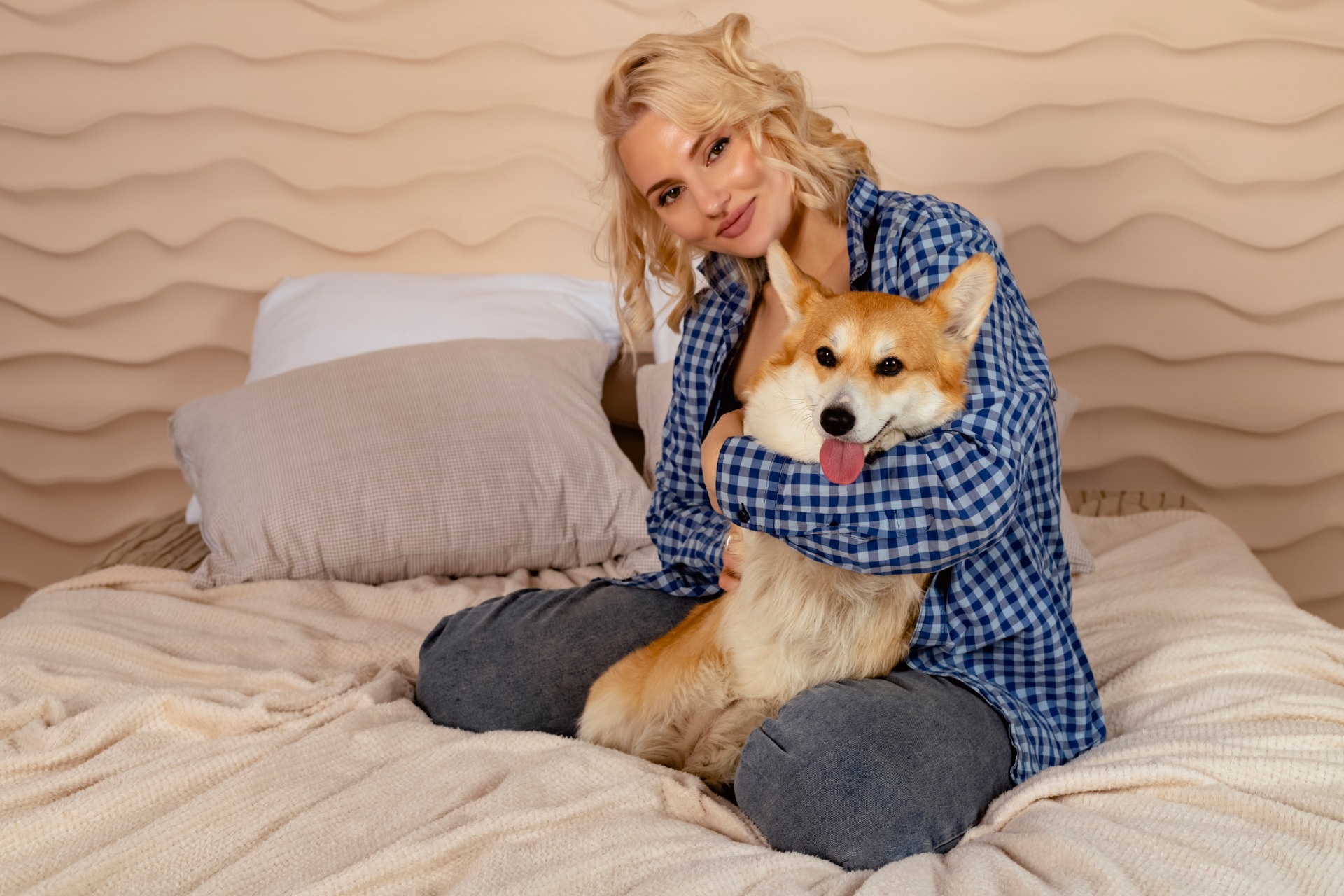
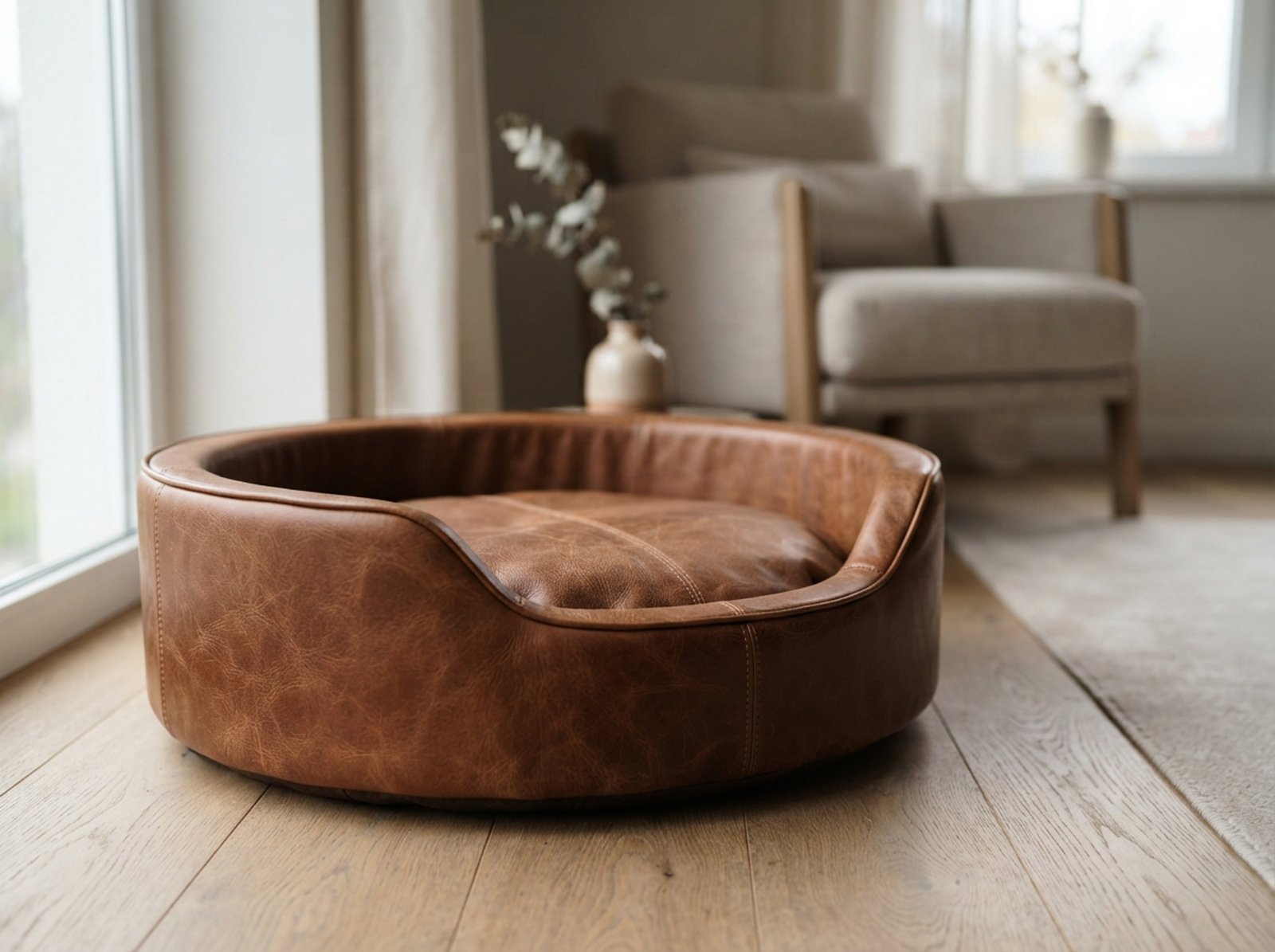
A toddler bed and a dog bed get swapped in both directions, and both swaps can work when the sleeper and the job match. Large bolstered dog beds are often used as low floor loungers for toddlers who have outgrown a crib but are not ready for a twin. Standard toddler beds and crib mattresses are often used as firm, sheet-covered beds for medium and large dogs. Neither product was designed for the other user. A dog bed is not a regulated children’s sleep surface, and a toddler bed frame is not chew-proof or waterproof. The useful decision is which direction you are going, who will actually sleep there, and whether the bed is for supervised naps or overnight sleep.
Two different products get mixed up in this search
The phrase covers three things that are easy to confuse.
A dog bed used for a toddler is usually a large or extra-large bolster bed, often memory foam, placed on the floor. Parents use it as a nap spot, a reading corner, or a low bed next to an adult bed during a move out of co-sleeping. That use was widely discussed after parenting columnist Nicole Cliffe suggested a large-breed memory foam dog bed for this purpose; Lifehacker later reported families using the same setup as a floor bed and play cushion.
A toddler bed used for a dog is usually either a toddler bed frame with a crib mattress, or the crib mattress alone. Large-dog owners, including Great Dane households, often land on this because a standard crib mattress is a broad, relatively firm rectangle that takes a fitted crib sheet.
A dog-themed toddler bed is a third product: a children’s bed printed with puppies or characters, sized for a crib mattress and sold as nursery furniture. It is not a dog bed. If the goal is a place for a child to sleep, that category is the one built to children’s furniture rules. If the goal is a place for a dog, the theme does not matter.
When a large dog bed works as a toddler floor spot
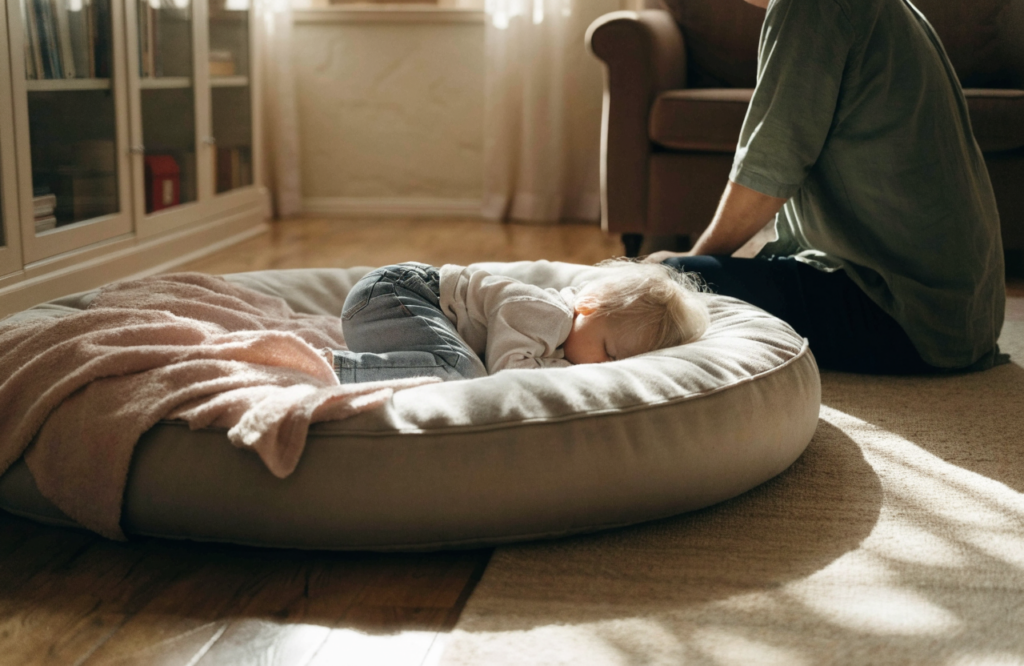
This swap makes the most sense as a supervised floor spot, not as a replacement for a crib.
A useful dog bed for a toddler is low, wide enough to stretch on, and finished with a cover you can remove and wash. Raised bolsters give a small child something to lean against, which is why nest-style and sofa-style dog beds show up in parent discussions more often than flat mats. The height is the real advantage. A bed that sits on the floor removes the fall that comes with a standard bed frame. That is the same reason floor beds appeal during the crib-to-bed transition: the landing, if there is one, is only the thickness of the cushion.
What this setup is good for:
- Daytime naps and quiet time in a childproofed room
- A reading or screen spot the child can climb onto alone
- A temporary bed beside a parent’s bed while overnight independence is still new
- A spare floor cushion that can later go back to the dog
What it is not good for:
- Infant sleep. Soft, padded, bolstered pet beds are the opposite of a firm, bare infant sleep surface.
- Unsupervised overnight sleep for a young toddler unless the whole room is childproofed the way a floor-bed room has to be. Once a child can leave the bed, the room is the safety boundary, not the bed.
- Any home where the dog already treats that bed as a guarded resource. A child climbing into a claimed bed is a common conflict, not a cute one.
Call it a floor bed or a nap nest if the name matters in your house. Families who kept calling it the dog bed later found the label stuck longer than the furniture did.
When a toddler bed or crib mattress works as a dog bed
This direction fits medium, large, and some giant dogs better than it fits toys and terriers.
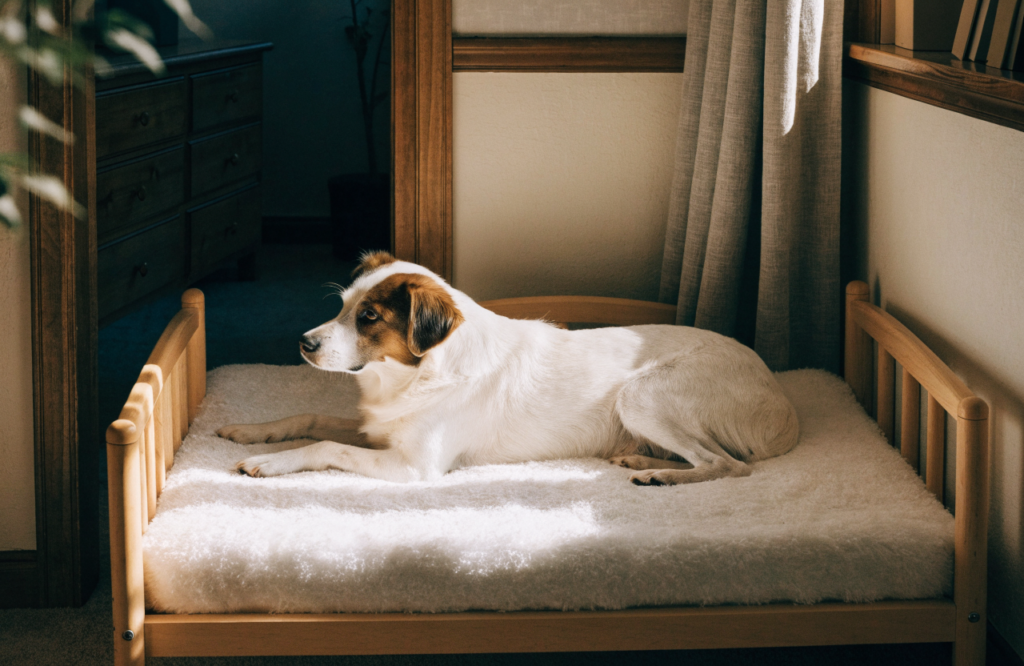
In the United States, a full-size crib mattress has to measure at least 27¼ by 51⅝ inches and no more than 6 inches thick, so it fits the interior of a standard crib, about 28 by 52⅜ inches. The same mattress fits a standard toddler bed. That rectangle is long enough for many dogs in the 40- to 80-pound range to stretch, and wide enough for a curled sleeper with room to spare. Owners of very large breeds sometimes still find it short once the dog is fully grown and lying on its side.
A toddler bed frame adds a low platform and, on many models, short side rails. That can help a dog who likes a defined edge, and it keeps the mattress off a cold or dirty floor. It also adds corners, slats, and plastic caps that a chewer can reach. For a destructive dog, the mattress alone on the floor, inside a crate, or on a simple platform is usually the safer version of this idea. A raised bed with a replaceable sleeping surface is another option if the problem is stuffing rather than structure.
The practical reasons owners choose it:
- Fitted crib sheets are cheap, widely sold, and easy to wash.
- A waterproof crib mattress protector handles the accidents a pet bed cover often fails on.
- The surface is firmer than many stuffed dog beds, which some older dogs prefer.
- The cost is often lower than an orthopedic dog bed in a comparable footprint.
The limits are real. Crib mattresses are built for a child’s weight and for a snug crib fit, not for claws, digging, or a 100-pound dog jumping onto a corner. Foam can compress in the spot the dog always uses. Once a cover is punctured, exposed foam is a swallowing risk. If your dog already destroys beds, a crib mattress does not solve that. Remove it as soon as the ticking is breached, and treat repeated destruction as a behavior and management problem, not only a product problem.
Match the size to the sleeper, not the label
Dog bed size labels are inconsistent. Measure the body instead.
For a dog, measure from nose to the base of the tail while the dog is stretched, then add about 6 inches for a dog who curls and 10 to 12 inches for a dog who sprawls. A crib mattress at roughly 52 by 28 inches covers a lot of large dogs and falls short for many giant breeds lying fully extended.
For a toddler, the question is different. A standard crib mattress in a toddler bed is the size children’s furniture in the US is built around, and manufacturers commonly rate toddler beds from about 15 months, often with a weight limit printed on the frame. A dog bed has no equivalent rating. If a child will sleep on it, look at the actual top surface, not the outer bolster-to-bolster measurement. A 36-by-27-inch pet bed is a nap cushion. Something closer to 48 to 54 inches long is the range parents usually mean when they say the dog bed replaced a toddler bed.
| Setup | Typical footprint | Better for | Weak fit |
|---|---|---|---|
| Standard crib mattress | About 52 x 28 in, up to 6 in thick | Medium and many large dogs; a real toddler bed | Giant sprawlers; heavy chewers |
| Toddler bed frame plus crib mattress | Same mattress, low rails | A dog who likes an edge; a child transitioning from a crib | Chewers; dogs who need a waterproof, claw-proof surface |
| Large bolster dog bed | Often about 36–44 in long | Supervised toddler naps; medium dogs | Overnight child sleep; two occupants |
| Extra-large human-sized pet bed | Often about 48–54 in long | A child and a calm dog resting together, supervised | Resource guarders; unsupervised toddlers |
Interior sleeping area is smaller than the listed size on bolster beds. Read the inner dimensions before assuming a child and a dog can both lie down.
Sharing one bed is a supervision question, not a product question
A wide pet bed can hold a toddler and a dog at the same time. Whether it should is about the dog and the child, not the foam.
Veterinary guidance on dogs sleeping with children is consistent on the hard part: young children should not be left alone with a dog, including during sleep. A calm dog can still startle if it is stepped on, hugged too hard, or woken suddenly. Small children are also easy to bump or pin when a larger dog shifts. A separate dog bed beside the child’s bed keeps the contact without putting both bodies on one soft surface. Preventive Vet specifically suggests that arrangement when a child wants to sleep near the dog, and notes that young children’s rooms are often better kept dog-free.
If they do share a floor bed for a nap, stay in the room. Skip it entirely if the dog guards beds, toys, or food, has a history of snapping when touched while resting, or is new to the household. Size cuts both ways. A very small dog can be injured by a toddler. A very large dog can injure a toddler without meaning to.
Covers, foam, and what actually has to be washable
The cover decides whether either swap survives real use.
For a toddler on a dog bed, the cover should come off without tools and survive a hot wash. Faux fur looks soft and collects spills, crumbs, and whatever was on the dog last. A smoother, tighter weave is easier to keep acceptable for a child’s face. Check for loose piping, exposed zippers, and small decorative pieces. Those are minor on a pet bed and a problem in a toddler’s mouth.
For a dog on a crib mattress, use a waterproof protector under the sheet. Wash the sheet on a normal cycle and the protector according to its label. Dry both fully. A damp mattress in a low-airflow corner is how these setups start to smell. Memory foam and shredded-fill dog beds usually cannot be washed as a whole; only the cover can. That is a reason to prefer a sheeted mattress if the dog has accidents, and a reason to keep a spare cover if you stay with a pet bed.
Foam density matters more for heavy dogs than for toddlers. A thin, soft pet bed that feels plush under a 30-pound child can bottom out under an adult Labrador. If the dog is older or stiff, a thicker mattress or a bed sold as orthopedic is the more relevant feature. A toddler does not need orthopedic foam to nap.
When neither swap is the right purchase
Skip the dog bed if the child still needs a contained sleep space. A toddler bed or crib with a firm mattress, a fitted sheet, and no loose padding is the product built for that job. A pet bed’s bolsters and plush fill are comfort features, not safety features.
Skip the toddler bed if the dog chews frames, eats foam, or soils beds often enough that a protector will not keep up. A chew-resistant raised bed, a crate pad you can replace cheaply, or no bed at all until the chewing phase passes will cost less than a ruined mattress.
Skip a shared bed if you cannot supervise, if either animal or child is a restless sleeper, or if you are using the bed to solve separation anxiety. Proximity can be calming for some dogs. It does not train a dog who panics when left, and it does not make an overtired toddler sleep.
A simple split works in a lot of houses: the child gets a real toddler bed or a floor mattress sized for a crib mattress, and the dog gets a washable bed placed beside it. You keep the low height and the company without asking one product to do two jobs it was not tested for.
Frequently asked questions
Can a toddler sleep overnight on a dog bed?
Some families do this with an older toddler on a firm, low bed in a fully childproofed room. It is still a pet product. It has no guardrail standard, no firmness standard for children, and no weight rating for kids. For overnight sleep, a toddler bed or a floor bed made for children is the cleaner choice. A dog bed is a stronger fit for naps and supervised rest.
Will a crib mattress fit a toddler bed and also work for a dog?
Yes to the first part, in the US system: standard toddler beds are made for a full-size crib mattress. For a dog, the same mattress is a reasonable bed if you add a waterproof protector and a washable sheet, and if the dog is not a determined chewer. Measure the dog stretched out before assuming 52 inches is enough.
Is a dog bed cheaper than a toddler bed?
Often, for a floor lounger, yes. A large pet bed can cost less than a toddler bed frame plus mattress. The savings disappear if you buy a second bed because the dog claims the first one, or if you replace foam the child or the dog ruins. A toddler bed frame is the cheaper long-term piece only if a child will use it for a few years and you already own the crib mattress.
What if the dog keeps stealing the toddler’s bed?
That is the expected outcome if the bed is soft, low, and available. Give the dog a clearly separate bed, reward the dog for using it, and do not leave a child and a guarding dog to sort the bed out alone. Moving the child’s mattress off the floor at night, or closing the door, is a management fix, not a training failure.