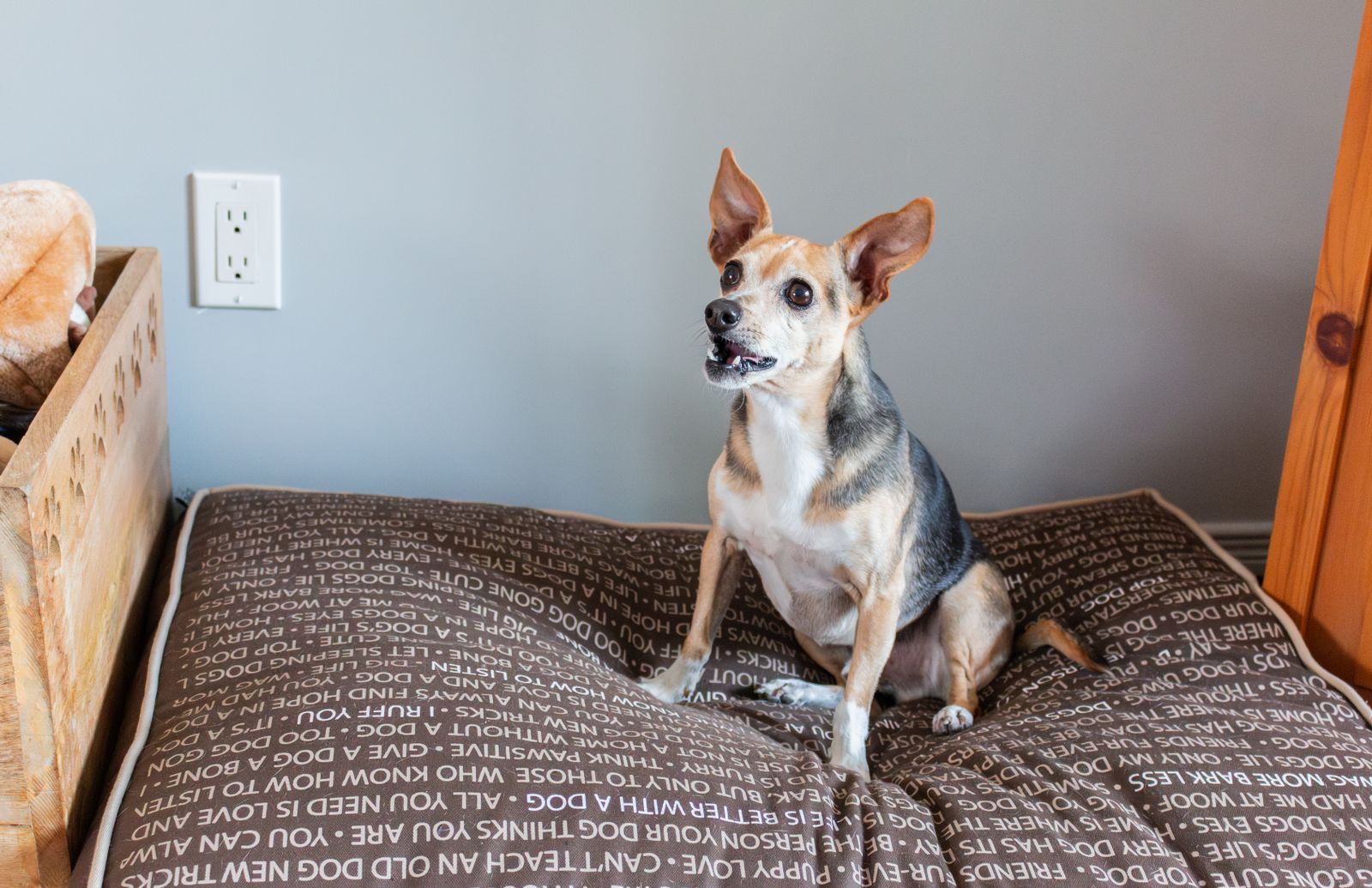

A useful small dog bed is sized to the space your dog actually sleeps in, not to the word “small” on the label. Measure from the nose to the base of the tail in the dog’s real sleeping pose, then buy by the bed’s inner resting area. Raised bolsters shrink that area, and a bed that is only soft is not automatically better than one with a low step-in and a cover you can wash.
Weight charts are a rough starting point. A 12-pound Chihuahua that curls into a tight ball and a 16-pound Dachshund that stretches full length need different floorspace. The bed that gets used is the one that matches sleep style, entry height, and how often the cover has to come off.
Size the bed by the inner sleeping area

Labels such as XS and small are not standardized. One brand’s small is another brand’s medium. The number that matters is the flat interior where the dog can lie, turn, and rest a head.
Measure while the dog is relaxed, not standing:
- Nose to the base of the tail, where the tail meets the body. Do not include the tail tip.
- Width across the shoulders or hips in the usual sleeping pose.
- Add room to turn. About 6 inches is a workable buffer for a tight curler; 8 to 12 inches is safer for a dog that stretches out or flips during the night.
Compare those numbers with the product’s interior dimensions, not the outer footprint. Bolsters, rims, and hoods eat into the usable surface. A bed sold as 24 inches across can leave only about 15 to 18 inches of flat sleep space once the walls are counted. If the listing does not give interior measurements, assume the walls take several inches and size up.
Weight is only a shortcut before you measure:
| Dog | Usual starting interior | Why it still needs a check |
|---|---|---|
| Under about 12 lb, tight curler | Around 12–15 inches of resting area | A round nest can work if the dog can turn inside it |
| About 10–20 lb | Roughly 18 by 15 inches or larger | Sprawlers and long backs need more length |
| About 15–25 lb | Closer to 20 by 16 inches, or a 24 by 18 inch rectangle | Bolster walls can push this dog into the next size up |
| Long-backed small dog (Dachshund, Corgi) | Length of the stretched body plus buffer | A round bed that fits the weight often fails the spine length |
When the dog sits between sizes, the larger usable surface is the safer buy if the room allows it. A slightly large bed can be made cozier with a folded blanket. A too-small bed cannot be fixed.
Match the shape to the sleeping pose
Watch the dog for a few nights before you buy. The pose, not the breed stereotype, decides the shape.
Tight curlers tuck nose toward tail and often lean into an edge. A round donut or nest bed, or a bolster with a low rim, matches that instinct. The interior still has to be large enough to turn around. A decorative cup that only fits a sitting dog will be abandoned.
Sprawlers and side sleepers need an open rectangular mattress. Raised walls on all four sides block legs and push the body off the cushion. If the dog regularly hangs a hip or a hind leg over the edge, the bed is too narrow, not “cozy.”
Chin-resters and leaners use a wall as a pillow. A one- or two-sided bolster, or a bed with one lower entry, gives that support without forcing a climb on every side. Four tall walls are useful only if the dog can step over them easily.
Burrowers want a cave, hood, or a bed with a blanket they can pull over themselves. Those styles hold heat. In a warm room, or for a double-coated small dog, a closed bed can be too warm even if the dog likes the feeling of cover. An easy exit matters as much as the entrance.
A dog that uses two poses needs the larger, more open option, or two beds. Many small dogs curl for naps and stretch at night.
Orthopedic foam is not automatic for a small dog
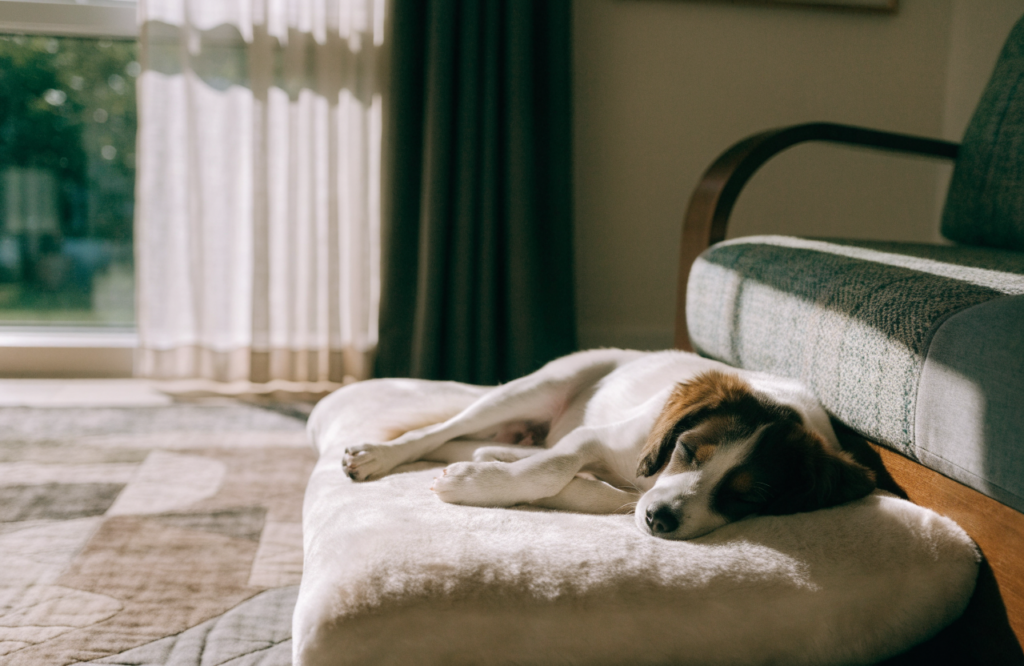
A healthy young dog under about 25 pounds often does not sink far enough into foam engineered for heavier bodies to justify the price. A plush, resilient fill or a modest foam pad can be enough for everyday rest. Softness alone is not support: a bed that collapses to the floor under a hand press will feel hard by morning.
Orthopedic or memory-foam support is worth considering when the dog is older, stiff getting up, reluctant to lie on hard floors, or already being managed for joint or back trouble. Even then, the bed is comfort, not treatment. A change in gait, reluctance to jump, or crying when lying down needs a veterinary check, not a new cushion.
Practical checks before paying for “orthopedic”:
- Depth that does not bottom out under the dog’s weight. Light dogs often do well with a few inches of decent foam; the marketing depth used for large breeds is not required.
- A stable base that does not slide on wood or tile.
- An entry the dog can step onto. A thick mattress that is excellent under a Labrador can be a hurdle for short legs.
- A cover and liner that can be cleaned without soaking the foam. Seniors have more accidents, and wet foam is the usual reason a good bed gets thrown out.
Long-backed dogs are a special case. Dachshunds and Corgis are often discussed in veterinary guidance on intervertebral disc disease. A bed cannot prevent that. What it can do is avoid an awkward climb: low entry, enough flat length for the whole body, and a base that stays put. Ask the dog’s veterinarian about bed height if the dog is already reluctant to step or jump.
Entry, floor, and room decide whether the bed gets used
Short legs and stiff joints fail at the rim, not at the foam. An entry around the height of a low step is easier than a plush wall the dog has to scramble over. One lower side is often better than a fully enclosed “sofa” for seniors and puppies.
A non-slip bottom matters on hardwood, laminate, and tile. A bed that migrates across the room trains the dog to sleep on the floor beside it.
Temperature changes the right fill. Plush donut beds suit cool rooms and dogs that seek warmth. In summer, or in a sunny apartment, a thinner mat, a cooling-style surface, or a bed placed off direct sun is more likely to stay occupied. Double coats and flat faces overheat faster in hooded beds.
For a crate, measure the crate floor, not the dog. The pad should lie flat without bunching against the walls or blocking the door. A bolster bed that looks perfect in the living room often will not fit under a crate door.
In a small apartment, one well-placed bed beats several decorative ones. A washable bolster or donut near the place the dog already naps will outperform a larger bed stranded in a hallway.
What fails first: covers, fill, and chewing
The bed you can keep clean is the one that lasts. Look for a removable, machine-washable cover and a waterproof liner between the cover and the fill. Follow the care label. There is no universal wash schedule; odor, shedding, outdoor dirt, and accidents set the pace.
Fill type changes both feel and laundry:
- Loose fiber or faux-fur nests feel nest-like and suit curlers, but they compress and are easier to tear.
- Foam keeps shape longer if it is dense enough not to flatten, but it is ruined if urine reaches it and the liner fails.
- Zippers and bolster seams are the first targets for teeth. Refitting a tight bolster cover after washing is a common complaint; if you will not reassemble it, you will wash it less often than the dog needs.
No ordinary plush bed is chew-proof. Puppies and determined chewers can ingest stuffing or fabric, which is a veterinary emergency if swallowed. For a dog in a chewing phase, a tough crate pad or a bed built for diggers and light chewers is safer than a faux-fur donut, and supervision still matters. Aggressive chewers need a product specifically built and warranted for that use, not a soft bed with a “durable” claim.
Mistakes that leave the bed empty
Buying by breed photo or by “small dog” alone. A 6-pound Maltese and a 25-pound Corgi are both called small.
Trusting the outer dimension on a bolster bed. The walls are not sleeping surface.
Choosing the plushest option for a senior who cannot step in. Comfort they cannot reach is unused comfort.
Skipping the liner because the dog is house-trained. Age, medication, excitement, and weather change that.
Putting the only bed in a draft, a traffic lane, or a spot far from the family. Small dogs often sleep where the people are. A second, simpler mat in the main room is sometimes the real solution.
Replacing a bed the dog has outgrown in length but still squeezes into. Some dogs prefer a snug edge. That preference is fine for a curler if the whole body fits and nothing hangs off painfully. It is not fine if the dog can no longer turn or lie flat when they want to.
Puppies, seniors, and shared beds
Puppies need a waterproof, washable bed more than an expensive foam core, and they may destroy the first one. Size for the expected adult length if you want the bed to last, or buy a cheap washable pad until teething ends.
Seniors need the low entry and the liner first, then support. A ramp or a step is a separate decision if the dog still insists on the couch; the floor bed should not require a jump.
Two small dogs sharing one bed need the sprawled width of both bodies, not the size chart for one. If they only pile up for naps and sleep apart at night, two smaller beds often work better than one oversized nest.
Frequently asked questions
How big should a small dog bed be? Large enough for the dog’s nose-to-tail-base length in their real sleeping pose, plus room to turn, measured on the inner surface. A tight curler under 12 pounds may be fine in a 12- to 15-inch interior. A stretching 20-pound dog usually needs a rectangular interior closer to 20 by 16 inches or more, and a bolster bed should be checked one size up from the flat-mat size.
Do small dogs need an orthopedic bed? Not by default. Light, healthy dogs often rest well on a supportive plush or modest foam bed. Orthopedic foam is more relevant for seniors and dogs with joint or mobility problems, and it still has to be low enough to enter. It does not replace veterinary care.
Are bolster beds better for small dogs? Only if the dog leans, curls, or rests a chin on an edge, and only if the rim is low enough to step over. Sprawlers do better on an open mat. Always subtract the bolsters from the listed size.
How often should the bed be washed? When it smells, sheds heavily, or is soiled, and always within the care label. A removable cover and a waterproof liner make that realistic. Foam that gets wet usually needs to be replaced.
What if my dog ignores the new bed? Check size, entry, and location before assuming the dog is picky. Move it to the spot they already sleep, add a familiar blanket, and make sure they can step in. Some dogs prefer the floor in hot weather. A bed that is too small, too enclosed, or too far from the household will stay empty.