
A workable puppy potty training schedule is built from two limits, not a clock: take the puppy out after every predictable trigger, and never ask for more than the bladder can hold. For most puppies that ceiling is about one hour for each month of age, plus one. An 8-week-old (about 2 months) tops out near 3 hours at rest; a 4-month-old near 5. Awake, playing, or recently fed puppies need to go much sooner. The American Kennel Club notes that reliable bladder control is not in place until around 16 weeks, and even then the month-plus-one figure is a maximum, not a goal.
That distinction is what separates a schedule that works from one that produces daily accidents. The job in the first weeks is timing, not discipline.
The two rules that set the schedule
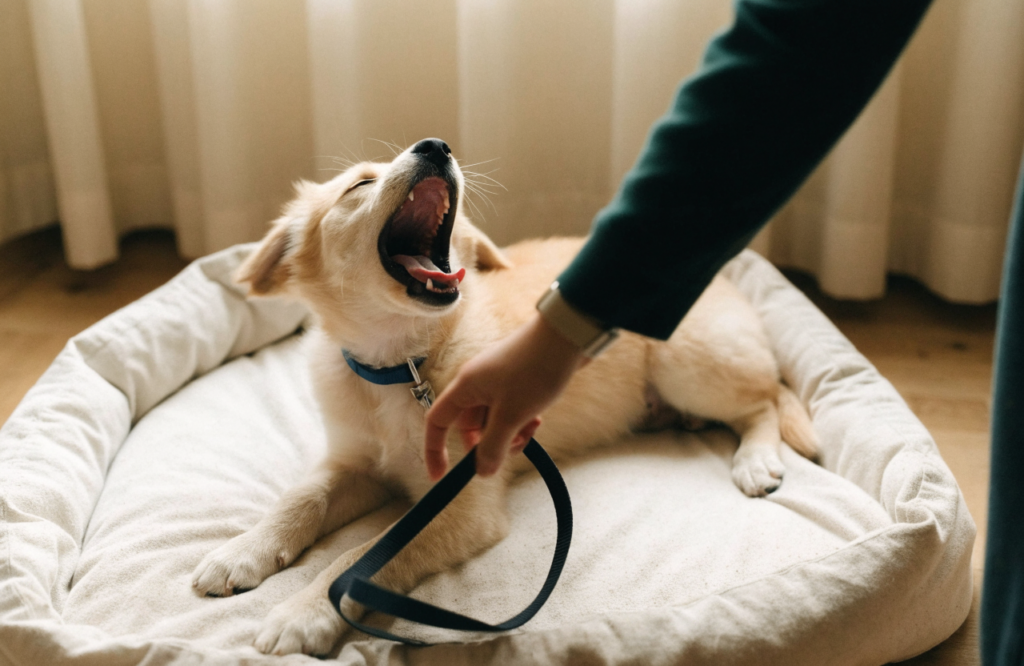
Rule 1: Triggers beat the clock. A puppy is most likely to eliminate right after waking, within about 10 to 30 minutes of eating, after a drink, after play or excitement, and before being confined. These events override whatever interval you wrote down. Feeding on a consistent schedule makes the “after meal” trip predictable, because what goes in on a rhythm tends to come out on a rhythm.
Rule 2: Month-plus-one is a ceiling. Trainers and veterinary sources commonly use this guideline: hours a puppy can hold urine ≈ age in months + 1, and only when calm or asleep. The AKC states that after about 16 weeks, a puppy can typically hold for that long, so a 4-month-old is at about five hours. Overnight holds often stretch a little further because metabolism slows during sleep. Toy and small breeds usually sit at the short end of every range because bladder volume is smaller.
If the puppy is circling, sniffing hard, or leaving play, the interval is already too long.
How often to take a puppy out by age
Use the shorter number when the puppy is awake and moving. Use the longer number only for quiet crate or nap time, and only after several dry successes.
| Age | While awake | Calm or asleep (ceiling) | Overnight trips | What to expect |
|---|---|---|---|---|
| 8–10 weeks | Every 30–60 minutes, plus every trigger | About 2–3 hours | 1–2 | Accidents are normal. Success is your timing. |
| 10–12 weeks | About every 60–90 minutes | About 3–4 hours | Often 1 | First pause-and-sniff signals appear. |
| 3–4 months | About every 1.5–2 hours | About 4–5 hours | Many sleep through | Starts heading toward the door some of the time. |
| 4–6 months | About every 2–4 hours | About 5–6 hours | Usually none | Reliable at home; slips when excited or in new places. |
| 6–12 months | About every 3–4 hours | Approaching 6–8 hours | Full night for most | Adult capacity arrives closer to a year. Occasional slips still happen. |
PetMD’s practical starting point matches this: for a new puppy around 8 weeks, go out every 30–60 minutes for the first week or two, then stretch only as dry days accumulate. Healthy adults still need several outdoor trips a day; 6–8 hours is a long hold, not a routine target.
What a day actually looks like
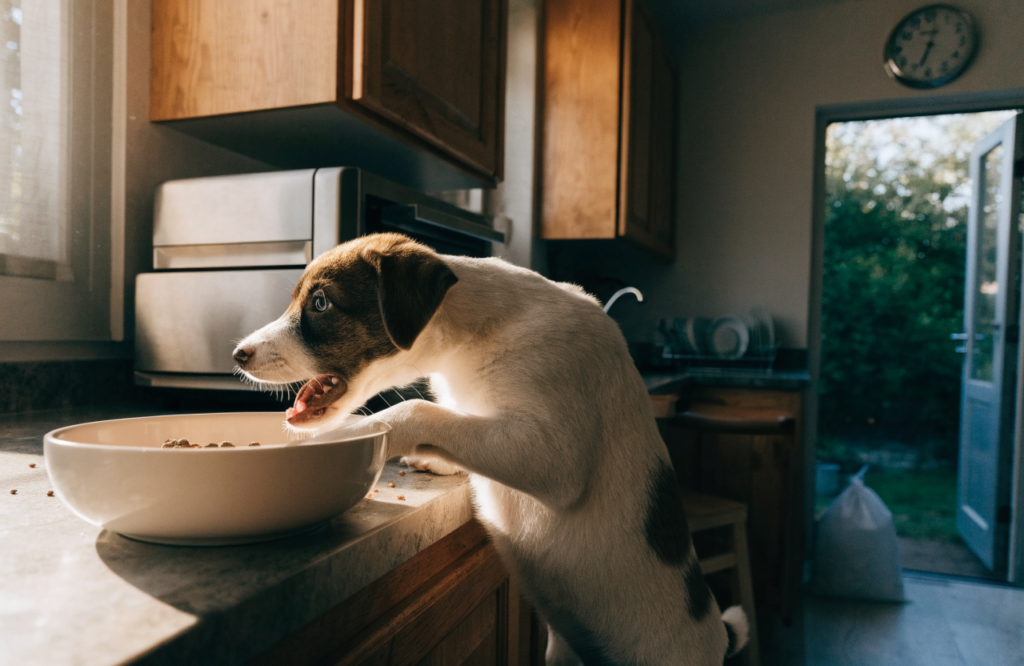
Shift the clock to your household. Keep the gaps and the triggers. This sample fits an 8- to 12-week-old on three meals.
- Wake-up. Carry or leash straight to the same outdoor spot before play, greeting, or breakfast. Stay there a few minutes. Reward the moment elimination finishes, not on the walk back inside.
- Breakfast, then out again in 10–20 minutes. Same door, same patch, same short cue such as “go potty.”
- Supervised play or a short training game, then outside again. Activity and excitement empty the bladder faster than rest.
- Nap or crate. When the puppy wakes, outside immediately. Do not wait to see if they “look fine.”
- Midday meal if you are still on three feedings, then the post-meal trip. Water stays available during the day; do not withhold it to force a longer hold.
- Afternoon repeats the nap–wake–play cycle, with an outdoor trip at the awake interval for that age.
- Dinner earlier than bedtime, then out. A last calm trip right before the crate, after which the water bowl comes up for the night.
If you work away from home, the schedule fails the moment the gap exceeds the ceiling. A midday walker, a neighbor, or a small pen with a separate elimination surface is the honest fix. Pads can cover a long absence, but mixing pads and outdoor toileting gives the puppy two correct answers and usually slows outdoor-only training. Pick one target surface and stay with it.
Go outside with the puppy for the first several weeks. An open door often turns the yard into a play area; the puppy comes back in and eliminates in the hall because nobody marked the right spot.
Nighttime potty schedule
Young puppies cannot do a full human night. Plan on it instead of treating 2 a.m. as a failure.
- Last meal at least 2–3 hours before bed, so the bowel has time to empty on the final trip.
- Water available through the evening, then picked up after the last outdoor trip.
- Crate in the bedroom. You will hear whining that means “I need to go,” and the puppy is less likely to soil a sleeping area next to you.
- One quiet trip for an 8- to 12-week-old, often around the middle of the night. Lights low, no play, back in the crate. If the crate is wet in the morning, set the alarm 30–60 minutes earlier.
- Stretch the overnight gap by 15–30 minutes only after a few dry nights. Many puppies sleep through by 4–5 months; small breeds often need longer.
A crate accident overnight usually means the interval was too long or the crate is large enough to soil one end and sleep in the other. Size it so the puppy can stand, turn, and lie down, not roam.
How to stretch the schedule without causing accidents
Add time only after a run of success, not on a calendar date.
- Wait for several days with no accidents at the current interval.
- Add 15–30 minutes, not a full hour.
- Keep every trigger trip even after the clock interval grows. Post-meal and post-nap trips stay forever; only the “in between” gaps lengthen.
- If accidents return, drop back to the last dry interval for a week. Regression around teething, a schedule change, or a new room is common and usually temporary.
- Expand freedom room by room. A puppy who is reliable in the kitchen is not automatically reliable in the bedroom.
Most puppies are largely reliable between 4 and 6 months with consistent timing. Full adult capacity is closer to 6–12 months, and toy breeds often land later. The AKC’s chief veterinarian has noted that a 6-month-old with early training can usually be depended on most of the time — “most of the time” is the accurate expectation.
Signals, supervision, and the crate
Between trips, the puppy is either watched or confined. Free roam of the house is how schedules collapse.
Watch for a sudden stop in play, intense sniffing, circling, squatting, heading to a previous accident spot, or whining at the door. Interrupt gently and go straight outside. Reward outside. If you only catch the accident after the fact, cleaning is the only useful response. Scolding, even minutes later, teaches the puppy to hide the next one.
The ASPCA recommends enzymatic cleaners so residual odor does not mark the spot as a toilet. Ammonia-based products can smell enough like urine to invite a repeat.
A short confinement after a failed outdoor trip (about 10–15 minutes), then another try, beats standing in the yard for half an hour while the puppy plays. Five focused minutes at the spot is enough; if nothing happens, try again after the next nap or play bout.
Common schedule mistakes
- Treating month-plus-one as the daytime interval. That number is the failure point, not the plan.
- Rewarding on the way inside instead of at the potty spot. The puppy learns that coming back earns the treat.
- Punishing accidents. The puppy does not connect the scolding to the earlier mess and starts eliminating out of sight.
- Inconsistent meal and wake times. Irregular input makes output hard to predict.
- Skipping the overnight trip for an 8-week-old because “they should sleep through.”
- Stretching freedom and the interval in the same week.
- Assuming a small breed will match a large breed’s hold time at the same age.
When accidents mean a vet visit
A schedule problem looks like predictable misses: after naps you skipped, during unsupervised play, in one room you opened too early. A medical problem looks different. Contact a veterinarian if you see straining with little output, blood in the urine, sudden frequent squatting, a big jump in thirst, or accidents in a puppy who had been reliable. Urinary tract infections are a known reason housetraining appears to fail, and training changes will not fix them.
FAQ
How many times a day does an 8-week-old need to go out? Often 10–14 trips once you count every wake-up, meal, play session, and the 30–60 minute awake interval, plus one or two overnight. The number drops as naps lengthen and the interval stretches.
Can I leave a puppy in a crate for the month-plus-one hours? Only if that matches real success, the crate is the right size, and the puppy is calm. An active puppy or a first week home needs shorter stretches. Never leave a young puppy crated so long that soiling the bed becomes the only option.
Should water be limited? Limit only in the last hour or so before bed, after the final trip. Daytime restriction causes dehydration and frantic drinking later, which creates bigger accidents.
How long until the schedule can look like an adult dog’s? Many puppies sleep through the night by 4–5 months and manage 3–4 hour daytime gaps by 6 months if training has been consistent. Plan on three to five daily trips even after that, and longer for small breeds or dogs who drink heavily.