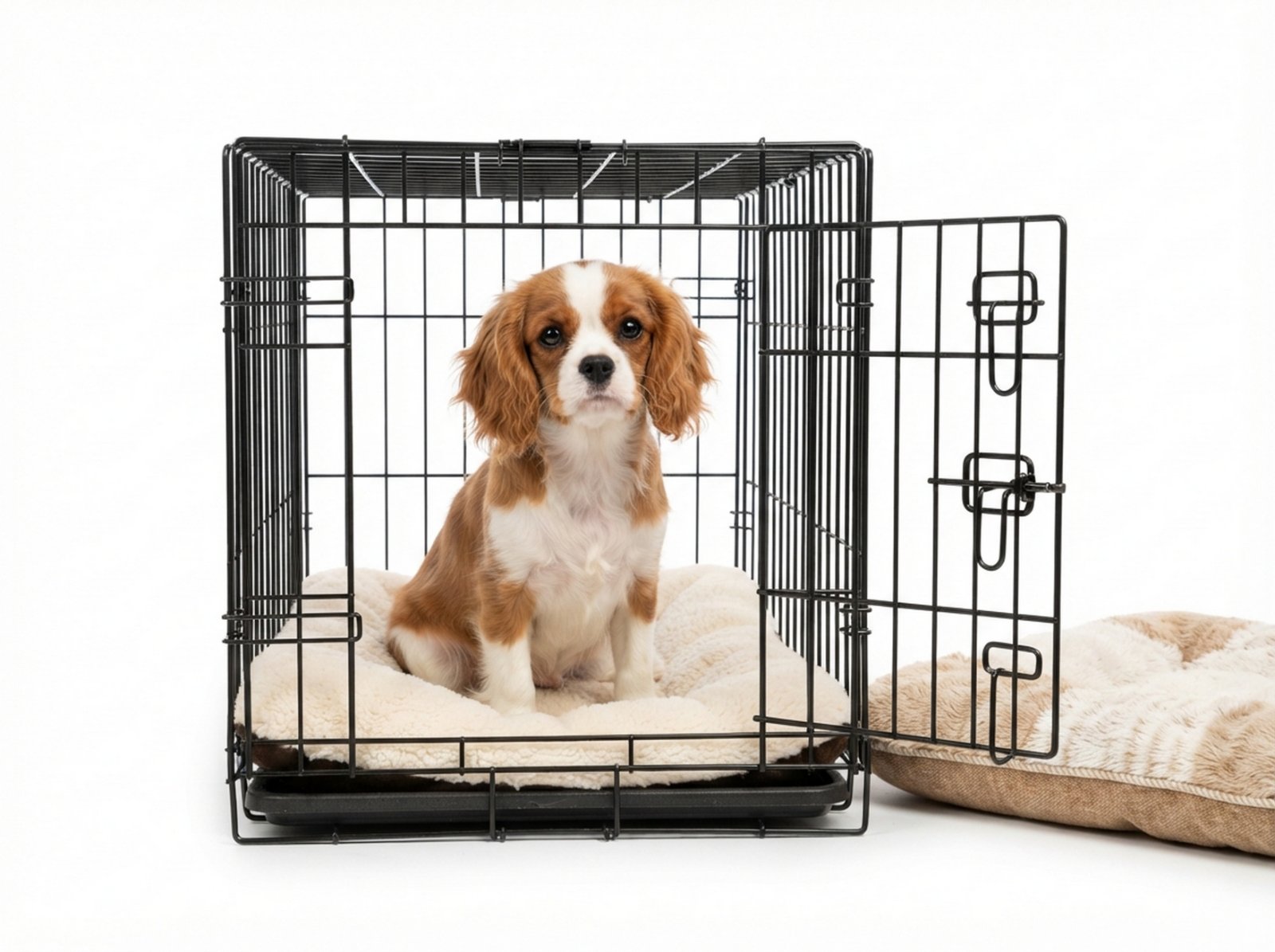

A dog crate bed works only if it covers the usable floor without bunching, sliding, or stealing the space the dog needs to stand and turn. Measure the inside of the tray, then match thickness and toughness to how the dog actually sleeps and chews.
Most people shop by the number printed on the crate. That number is the outside length. The pad has to fit the floor the dog lies on, after door hardware, tray lips, and any divider have already reduced the usable area.
Crate pad, crate mat, or crate bed
The names overlap in product listings. The useful split is construction, not the label.
A crate mat is a thin cover: enough to take the chill off a plastic tray, easy to wash, and low enough that it does not cut headroom. It suits short naps, warm rooms, and dogs that run hot.
A crate pad is a low rectangular cushion sized to a crate floor, usually about 1 to 4 inches thick, with a foam or fiber core and a cover. This is what most overnight crate sleepers need.
A bolstered crate bed adds a raised edge. That edge only helps if the crate still has spare width after the bolsters go in. In a correctly sized crate, bolsters often push the sleeping surface inward or ride up the walls. Flat pads are the safer default unless you have already confirmed the bolsters clear the door and the walls.
A regular living-room dog bed is a poor substitute. It is usually too thick, too wide, and built to sit on open floor rather than inside a tray. Thickness that feels generous in the living room can leave a dog unable to stand fully or can block airflow through the crate walls.
Measure the floor, then check the dog
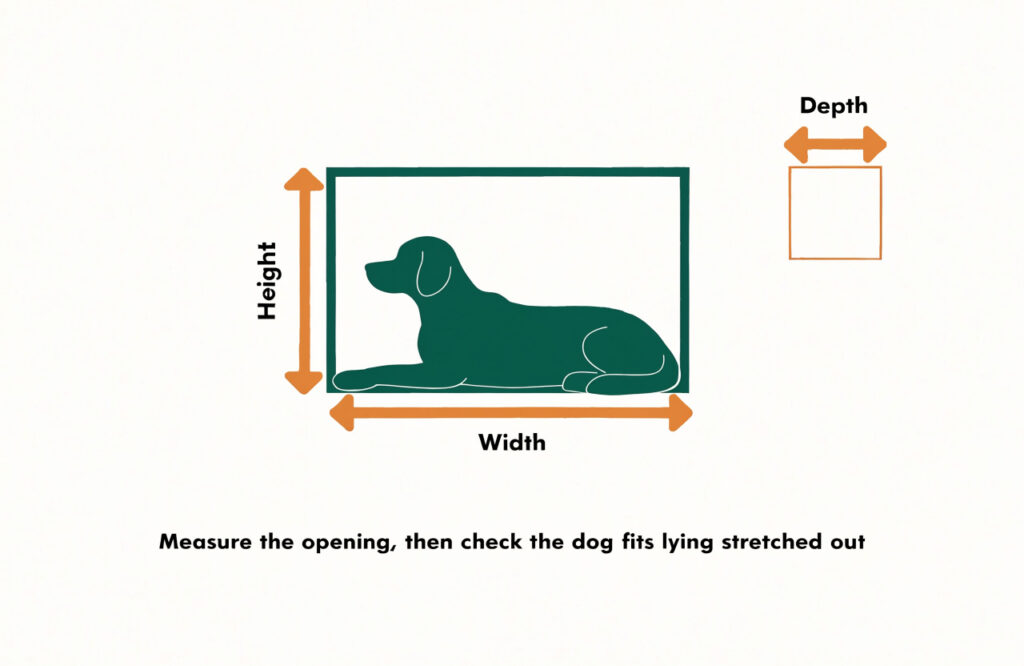
Measure the interior length and width of the tray or floor pan, not the wire frame. Note anything that shrinks the flat area: a raised lip, rounded corners, a divider panel, or the swing of the door. Compare those numbers with the finished size of the pad, not the marketing size name.
The pad should lie flat. If it is larger than the floor, it buckles in the middle or folds up the sides, which defeats the cushion and gives a chewer a loose edge. If it is much smaller, it slides, leaves cold plastic exposed, and creates gaps where paws can catch. A common working rule is to choose a pad about 1 to 2 inches smaller than the measured interior on length and width, then confirm it still covers nearly the whole floor. Some pads are cut to sit edge to edge on a specific crate model; those only work if your tray matches that model.
Standard wire-crate lengths are a starting map, not a measurement. A crate sold as 24, 30, 36, 42, or 48 inches will have a smaller interior, and widths differ by brand. A 36-inch crate is often near 36 by 23 inches inside; a 42-inch crate is often near 42 by 28. Always remeasure your own.
After the pad fits the crate, check the dog. They should still be able to stand, turn, and lie on their side without the pad forcing them against the walls. A crate that was already tight becomes tighter once you add height. If the dog’s ears brush the top only after the pad goes in, the pad is too thick for that crate, not “more orthopedic.”
Dividers change the math. A pad cut for the full crate will not fit a shortened puppy section. Measure the divided floor, or use a towel until the divider comes out.
How thick the pad should be
Thickness is a tradeoff between cushion, headroom, heat, and chew risk.
Thin mats and 1-inch pads are easier to wash, dry faster, and leave more air under the dog. They are a reasonable start for puppies, warm sleepers, and dogs that only rest in the crate for short stretches.
Pads around 2 to 3 inches suit most adult dogs that sleep in the crate overnight, as long as the dog does not bottom out on the tray. Press the center with your hand under roughly the dog’s weight. If you feel the floor immediately, the core is too thin or too soft for that dog.
Thicker orthopedic-style pads, often 4 inches and up, help seniors and heavy dogs that are stiff getting up, but only if the crate still has clearance and the dog can step onto the pad without scrambling. Solid, denser foam holds shape longer under large dogs than a thin egg-crate sheet or loose fiber that packs down. Memory foam contours and can feel warmer; egg-crate foam leaves more air channels and usually sleeps cooler, but cheaper versions compress faster.
Loose fill and pillow-style beds are a weak crate choice. Dogs dig and circle, the fill migrates, and the lump no longer supports the body that needs it.
Covers, liners, and what fails first
Look for a removable cover and a waterproof barrier between the dog and the core. Accidents and drool are normal in a crate. If moisture reaches untreated foam, the pad smells and is hard to dry. A liner that can be wiped, plus a cover that can be washed, is more useful than a plush top alone.
Non-slip backing matters on smooth plastic trays. Dogs circle before they lie down. A pad that migrates every night ends up bunched at one end by morning.
Chew resistance is relative. Ballistic nylon and tight ripstop covers tolerate scratching and light mouthing better than thin microfiber or sherpa. They are not a guarantee. Zippers, piping, and thread still fail, and a determined dog can open a cover and pull out foam. Treat “chew-proof” as a reason to inspect often, not as permission to leave the dog unsupervised with bedding they are already destroying.
Foam certifications such as CertiPUR-US are a reasonable filter when a brand publishes them. They address certain chemical and emissions standards for the foam; they do not speak to how long the pad lasts under a chewer.
When soft bedding makes the crate worse
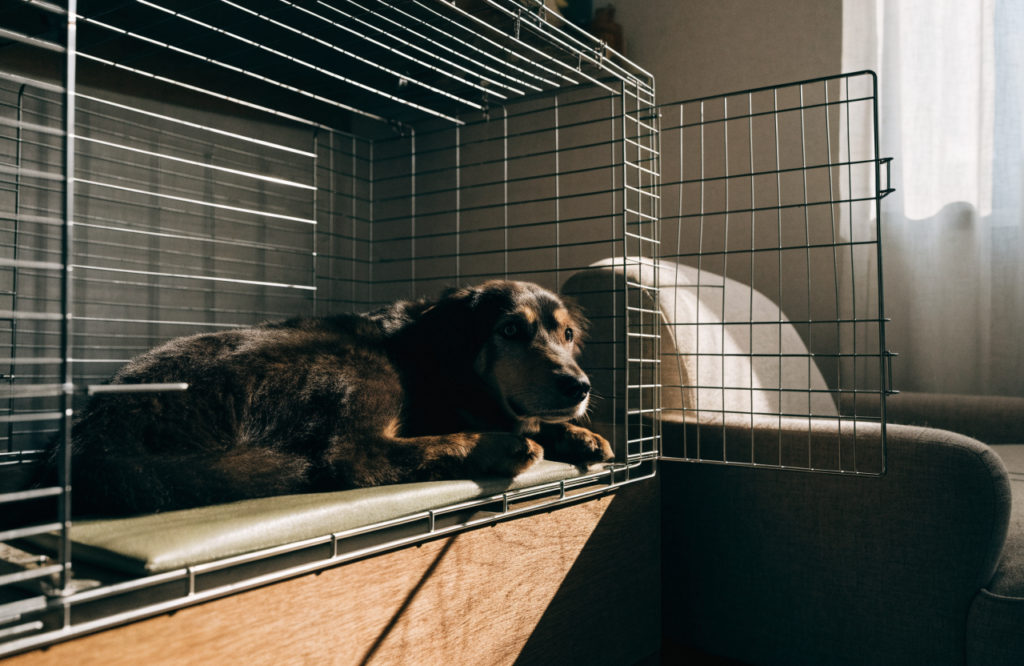
House-trained adults usually settle better on a pad than on bare plastic. The pad defines a sleeping spot and takes pressure off joints during long nights.
Puppies and adolescent chewers are the main exception. Foam and stuffing are an ingestion risk if swallowed, and soft bedding gives a bored dog something to dissect. Many owners do better with towels, an old shirt, or nothing until the dog reliably leaves bedding alone. Put the nicer pad in only for supervised sleep, and take it out when you leave, if chewing has already started.
Absorbent bedding can also restart house-training problems. A pad soaks up urine, so the dog is no longer lying in the mess and may keep using that corner. If accidents begin right after a new bed goes in, remove it, wash the crate, and return to a surface that does not hide the smell until the dog is reliable again. A crate that is too large makes this worse: the dog can toilet at one end and sleep at the other.
Seniors are the other special case. They need stable cushioning and a low step-on height more than a plush nest. A pad that slides, or a bolster they have to climb, is harder on stiff joints than a flat, grippy surface.
Putting the pad in and keeping it usable
Place the pad flat and shut the door fully. The door should not catch the edge. If it does, the pad is too long or too thick at the front.
Wash the cover on the cycle the label allows, and dry it before it goes back over foam so the core does not stay damp. Spot-clean the interior barrier; most foam cores are not meant for the washing machine. Rotate or flip the pad if the construction allows it, so one hip spot does not pack down first.
Check edges weekly on any dog that mouths things. Loose threads and lifted corners are how a small chew becomes a mouthful of fill. Replace a pad once the core stays compressed or the cover can no longer be closed safely.
For travel crates, prefer the thinnest stable layer you can still clean. Movement makes a thick pad bunch, and a bunched pad is both uncomfortable and a chewing target.
Problems that show up after the first week
The pad buckles in the center. It is wider or longer than the tray. Exchange it for the measured size rather than forcing it flat.
The dog shoves it aside and sleeps on plastic. The pad may be too warm, too unstable, or simply not preferred yet. Try a thinner mat, confirm the non-slip side is down, and do not keep adding layers.
Chewing starts only in the crate. Boredom and habit are more likely than a bad fabric. Remove the pad during absences, give a legal chew outside the bedding, and reintroduce a tougher cover only after quiet sessions stay intact.
Odor returns after washing. Urine reached the core. A waterproof liner on the next pad, and faster cover changes, prevent a repeat. Foam that already smells usually needs to be retired.
The dog pants more at night. The crate plus a thick foam pad is holding heat. Drop to a thinner mat, improve room airflow, or skip the cover layer until the weather cools.
Frequently asked questions
Can an ordinary dog bed go in the crate? Only if it lies flat, clears the door, and leaves the dog room to stand and turn. Most do not. A purpose-cut pad is the more reliable fit.
Do crate pads need to be orthopedic? Not for every dog. A young, sound dog sleeping a few hours may be fine on a thin washable mat. Dogs with stiff joints, and heavy dogs that sleep in the crate all night, benefit from a denser core that does not bottom out.
Is a waterproof pad colder? A plastic-feeling waterproof top can sleep cooler and less comfortable. A better setup is a soft washable cover over a hidden waterproof liner, so the dog is not lying directly on the barrier.
How long should a crate pad last? It depends on weight, hours of use, and chewing. A light dog on a covered foam pad may get years. A heavy dog on soft fill, or any dog that opens the cover, will flatten or destroy it much sooner. Inspect the core rather than trusting the purchase date.