
A denim dog bed is a dog bed with an outer cover made from denim or a denim-blend twill, chosen because that weave handles claw friction, nesting, and repeated washing better than most plush covers. The label alone does not guarantee that. Cover weight, seam construction, the closure, and what sits inside decide whether the bed lasts a season or several years.
Shoppers usually land here comparing finished beds from brands such as L.L.Bean, Reddy, and P.L.A.Y. with a cover sewn from old jeans. The useful comparison is not brand against brand. It is how the cover is built, whether the insert is protected from moisture, and how the bed will be cleaned after the first muddy week.
What “denim” means on a dog bed
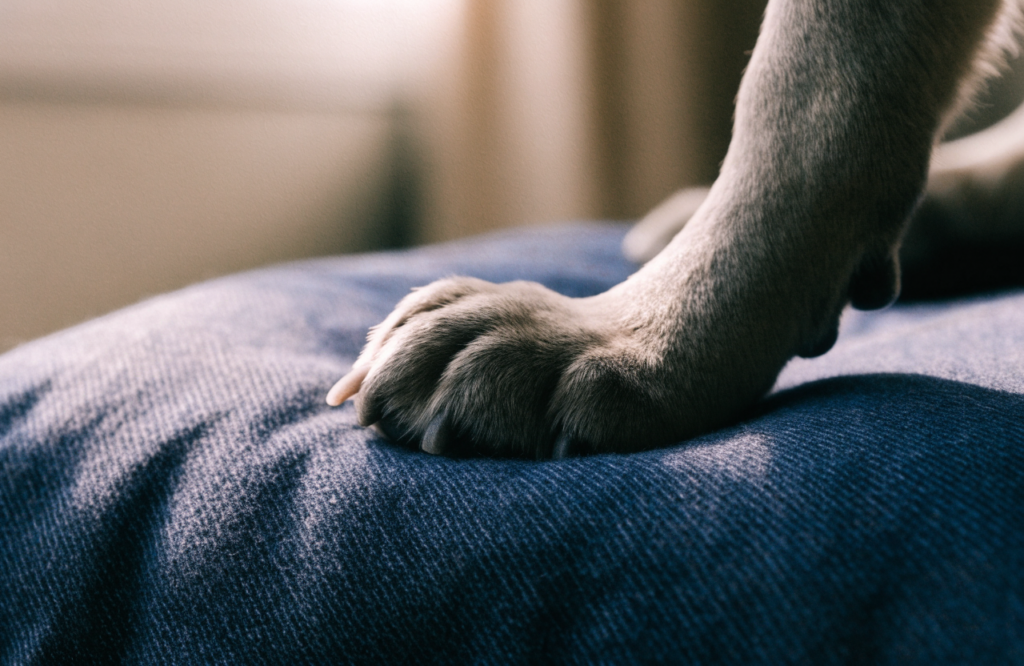
Denim is a cotton twill, traditionally warp-faced so the colored yarns sit on the surface. The diagonal twill line spreads abrasion across more yarn intersections than a plain weave, which is why jeans outlast many lighter cottons and why makers use denim on beds meant for daily use.
Commercial covers are often blends, not rigid 100% cotton. L.L.Bean’s Premium Denim Dog Bed cover is listed as 57% cotton and 43% recycled polyester in a twill weave, with a zip-off cover that can be machine washed and dried. The polyester share can add strength and limit shrinkage compared with pure cotton, but the cloth will not behave exactly like a pair of rigid jeans. Other makers, including Hindquarters, use heavyweight cotton denim and describe covers that fade with washing the way jeans do.
Stretch denim and lightweight fashion denim are poor substitutes. Elastane makes fabric easier to wear and easier for claws to open. For a bed that is sat on every day, rigid or bull denim around 10 ounces per square yard and heavier is the practical floor. Heavier cloth is tougher and harder to sew.
The diagonal twill is what gives denim its abrasion resistance. Weight and seam construction matter as much as the weave.
Why denim covers outlast soft plush
Most dog beds fail at the cover, not the foam. Dogs dig a nest, turn in circles, and push off with their claws. Loose knits and thin plush pill and split under that friction. A tight twill resists it longer, and denim usually softens with washing instead of going shiny and thin the way some synthetics do.
That is a durability advantage, not chew-proofing. P.L.A.Y. states outright that its Urban Denim beds are furniture-grade loungers, not chew toys, and are not chew-resistant. A determined chewer can open denim, canvas, or ballistic nylon. Denim is the right cover for dogs that sleep, nest, and shed. It is the wrong bet if the bed is being destroyed out of boredom or anxiety.
Denim also fits rooms where a faux-fur bed looks out of place. Indigo, grey, sand, and faded blue covers read as ordinary upholstery. Several makers lean on that: Reddy markets a denim bed as something that can sit in a living room, and DEN Dog Beds sells steel, indigo, and sand covers with a Velcro closure instead of a zipper.
How commercial denim dog beds differ
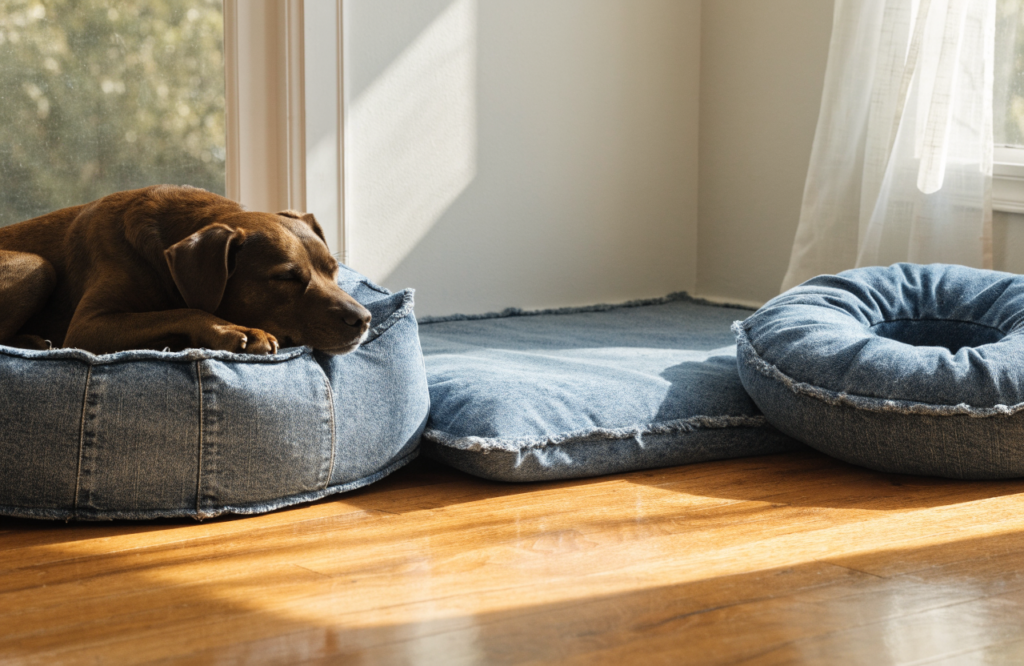
The word “denim” covers several constructions. Matching the shape to how the dog actually sleeps matters more than the fabric color.
| Style | Typical fill | Cleaning | Fits dogs that… |
|---|---|---|---|
| Flat rectangular mattress | Polyester slab or foam, sometimes with a firmer nesting center | Zip-off cover washes; insert is spot-clean only | Sprawl rather than curl |
| Bolster or lounge | Fiberfill bolsters, often recycled bottle fill, plus a center pad | Removable cover; bolsters may come apart for washing | Rest their head on a raised edge |
| Therapeutic denim | Memory foam or denser polyurethane under the same style of cover | Cover washes; foam must stay dry | Need joint support and a low step-in |
| Simple pillow with denim shell | Loose polyfill, sometimes refluffable | Cover washes; fill may be adjustable | Are small or medium and not hard on seams |
L.L.Bean’s rectangular Premium bed uses a supportive polyester insert and a zipper garage that stows the pull so it is harder to chew. Sizes run from small (up to about 25 lb) through extra-large (about 90 lb and over). A separate therapeutic version swaps in memory foam for older dogs. Reddy’s denim bed uses orthopedic foam plus recycled polyfill, a lowered step-in edge, a built-in handle, and skid-resistant grips on the base; the medium is listed around 32 by 24 inches. P.L.A.Y.’s Urban Denim lounge uses raised sides and PlanetFill made from recycled bottles, with a lead-free zipper. DEN Dog Beds skip the zipper entirely and close the cover with Velcro, which removes one common failure point at the cost of a slightly less tailored edge.
Prices on these finished beds commonly sit in the roughly $90 to $140 range depending on size and retailer, and replacement covers are sold separately for some lines. A replaceable cover is often the better long-term buy than a one-piece bed, because the foam usually outlasts the shell.
What to check before buying
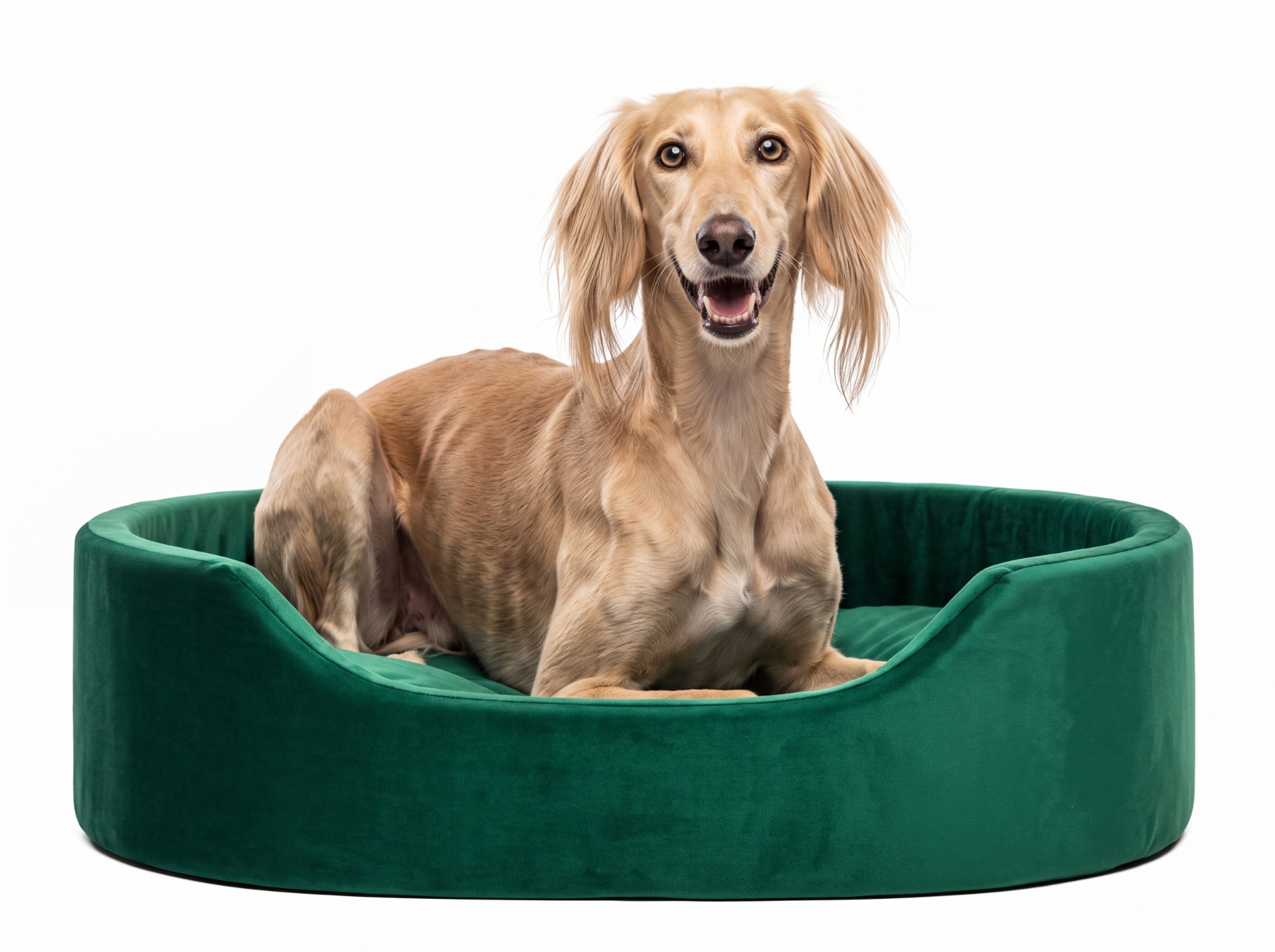
Size by lying position, not by weight alone. A dog should be able to lie in its usual posture with the spine supported and the head on the bed, not hanging off. Weight ranges on labels are a starting point. A 55 lb sighthound that stretches needs more length than a 55 lb bulldog that curls. Measure the dog from nose to base of tail in a side sleep, then add several inches.
Closure and hardware. Zippers fail when thick inserts are forced through them, and zipper pulls are chew targets. A zipper garage, a fabric flange over the zipper, or a Velcro closure all reduce that risk. Metal buttons, rivets, and exposed zipper teeth do not belong on a bed a dog will mouth.
Cover composition and weight. Ask whether the shell is heavyweight cotton denim or a lighter cotton-poly twill. Both can work. A thin fashion denim will not. Double-stitched seams and reinforced corners matter more than a “heavy-duty” claim on the product page.
Insert protection. Cotton and cotton-blend covers absorb drool, mud, and accidents. If the dog is a puppy, a senior with leakage, or a swimmer, the foam needs a waterproof liner or a wrapped core. A washable cover does not save an unprotected insert.
Non-slip base. Denim on a hard floor slides. PVC grips or a textured underside keep the bed in place when the dog gets up.
Replacement parts. Beds with sold-separately covers are easier to keep than beds that must be thrown out when the shell fades or tears.
How to wash a denim dog bed
Follow the label, because instructions differ. As a pattern across current products: the cover is machine washable, and the insert is not.
Remove the insert before washing. Shake or vacuum hair off the cover first so the machine is not packing a felt of undercoat into the seams. Wash the cover alone on a gentle or cold cycle with mild detergent. Skip fabric softener; it coats fibers and holds odor. High heat is the main way cotton-blend covers shrink enough to become hard to put back on, so use low heat or line dry unless the label explicitly allows a hotter cycle. Hindquarters, for example, specifies a gentle wash around 40°C and air drying. L.L.Bean lists its denim cover as machine wash and dry.
Never put memory foam or a solid polyester slab through the washer. Waterlogged foam collapses, smells, and takes days to dry. Spot-clean the insert and dry it fully before the cover goes back on. If accidents are regular, a waterproof liner between cover and foam is cheaper than replacing the core.
Denim holds mud well and releases it in the wash, which is why it suits dogs that come in dirty. It also holds odor if it stays damp. Two covers, rotated, beat one cover that never fully dries.
When denim is the wrong cover
Denim is a poor match in a few specific cases.
Aggressive chewers need a different plan: more exercise and supervision, and often an elevated cot or a bed you expect to replace, not a thicker pair of jeans. No woven cover is indestructible.
Outdoor and soaking-wet use favors solution-dyed acrylic or a mesh cot. Wet denim is heavy, slow to dry, and can mildew if it stays balled up.
Heavy incontinence needs a waterproof core, not just a tough shell. Denim hides stains less honestly than a dark solid, but it does not block liquid.
Very senior dogs with limited mobility may do better on a low-entry orthopedic bed than on a tall bolster lounge, even if both use a denim cover. The step-in height matters more than the fabric.
Making a bed from old jeans
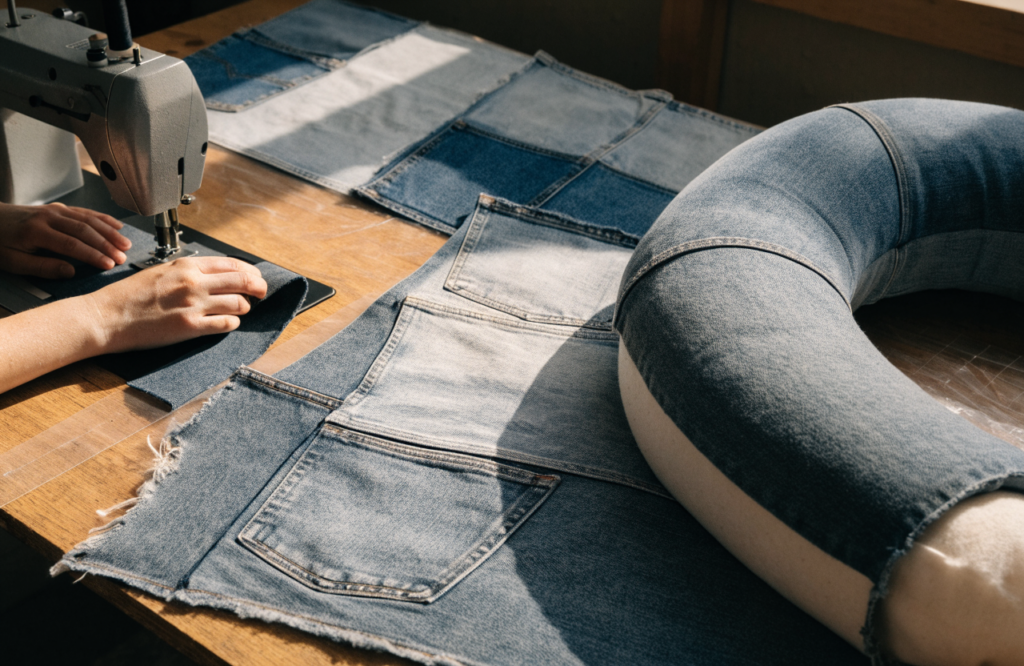
People sew beds from worn jeans because the cloth is already heavy, the cost is low, and the fabric carries household scent. That last point is a common reason on sewing forums, not a proven training method. A homemade bed can work for a small or medium dog that sleeps rather than chews. It is a weak plan for a power chewer.
If you build one, remove every button, rivet, and zipper tooth before the dog sees the bed. Use the heaviest rigid denim you have, double-stitch seams, and box the corners so the fill does not migrate into lumps. An old pillow, a slab of foam inside a waterproof liner, or polyester fiberfill all work as the core; loose scraps of fabric shift and clump. Leave a closure (envelope overlap, Velcro, or a covered zipper) so the shell can be washed without soaking the fill.
A patchwork of jean legs looks good and wastes less cloth, but every extra seam is a place claws can catch. Fewer, stronger seams last longer than a busy quilt top. Budget for the reality that a first homemade cover often needs a repair after a few months.
Frequently asked questions
Is a denim dog bed better than a canvas one? Both are tightly woven cottons and both outlast plush. Canvas is often a plain or basket weave used in outdoor gear; denim is a twill. Either is a sound cover if it is heavy and the seams are reinforced. Choose on weight, closure, and whether you want the bed to fade like jeans.
Will the color crock onto a light-colored dog? Unwashed dark denim can transfer dye, the same way new jeans can mark skin. Prewashed covers and blends are less likely to. A white or cream dog on brand-new raw indigo is the highest-risk combination. Wash a new cover once before first use if the label allows it.
Can the whole bed go in the washing machine? Usually no. On the major denim beds sold now, the cover is washable and the foam or slab insert is spot-clean only. Forcing the insert through a machine is a common way to ruin an otherwise sound bed.
Do denim beds help with shedding? Smooth woven covers release hair to a vacuum more readily than long-pile faux fur. They do not reduce how much the dog sheds. A rubber curry brush and a weekly vacuum still do more than the fabric choice.