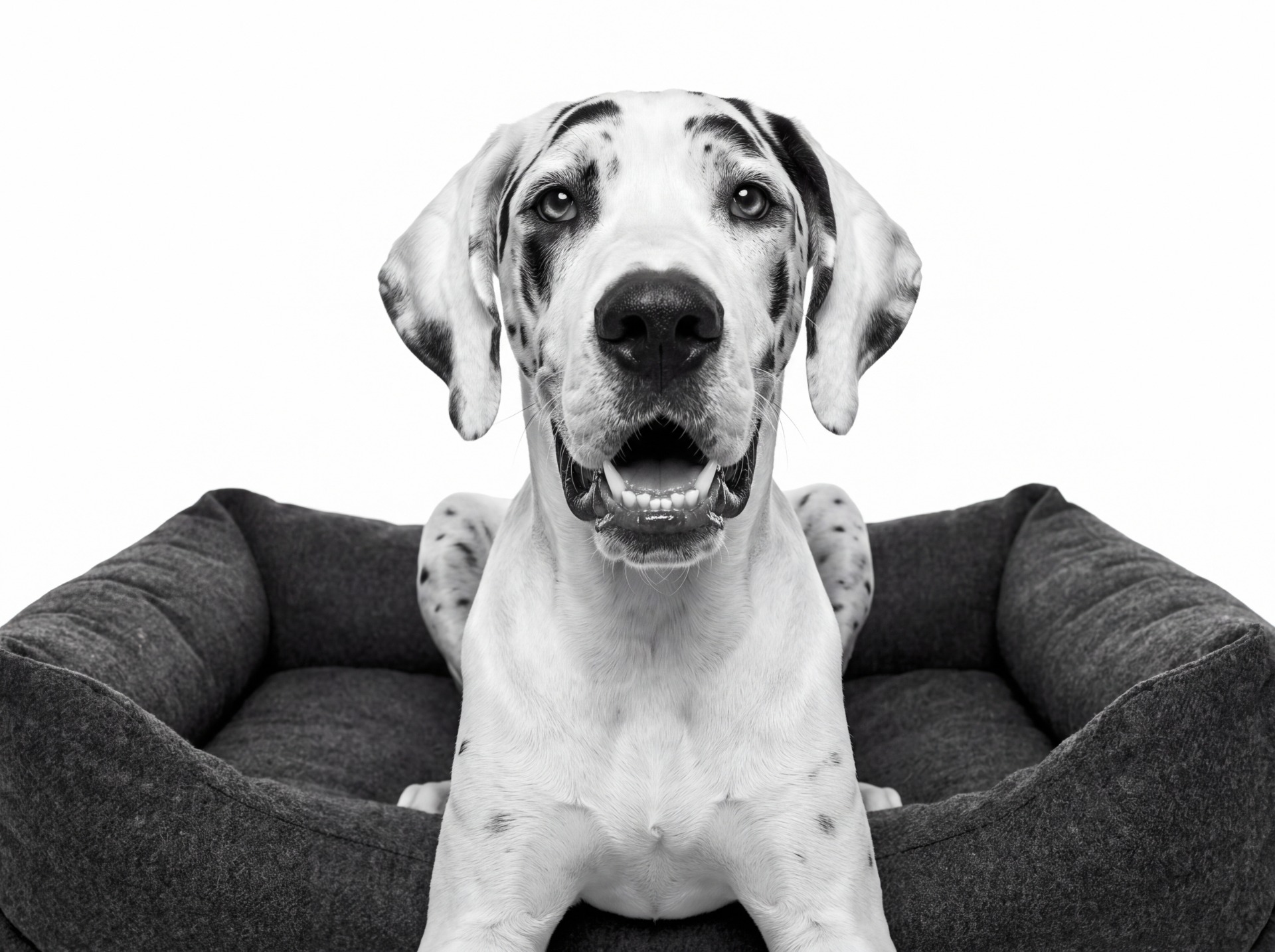

A fluffy dog bed is a high-loft cushion — usually a round nest, a bolstered rectangle, or a flat mattress — covered in sherpa, faux fur, or short plush and filled with polyester fiber, shredded foam, or a foam slab under a soft top. Most people searching for one want a bed a dog will curl into, not a firm orthopedic slab. That preference is reasonable for many dogs, especially smaller ones and dogs that sleep in a ball. The beds that look the fullest in product photos are also the ones that flatten, trap heat, or become hard to wash. The useful decision is which kind of fluff matches your dog’s weight, sleep position, and the room the bed will live in.
What the Filling Is Actually Made Of
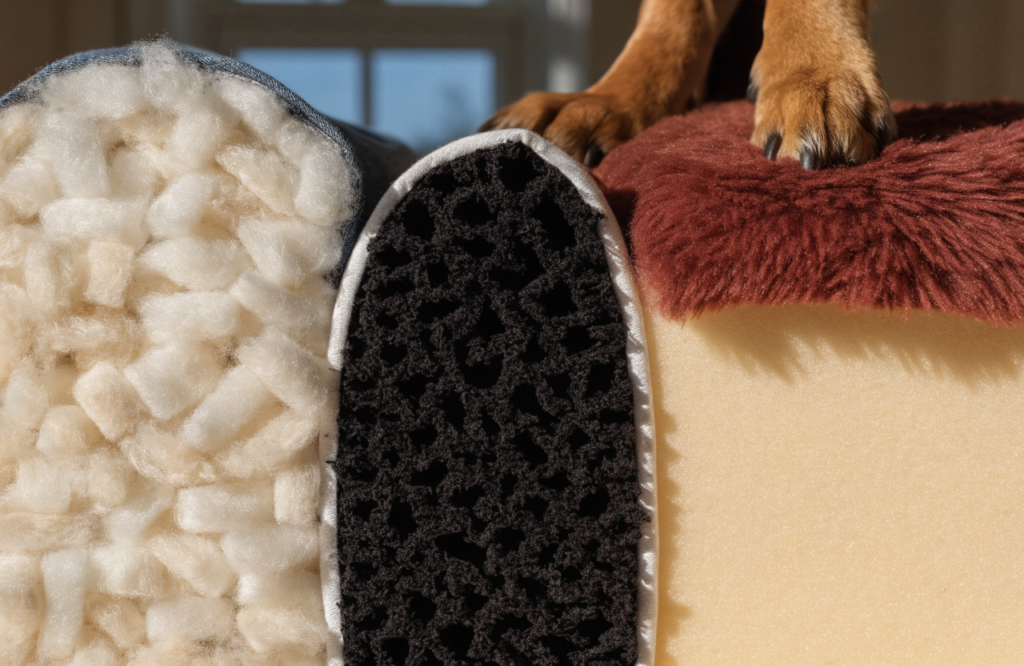
“Fluffy” describes the surface and the loft, not a single material. Three constructions show up again and again, and they fail in different ways.
Polyester fiberfill
This is the classic cloud fill: fine polyester fibers stuffed into a shell. It is light, warm, and inexpensive, and a well-packed bed feels soft the day it arrives. Under repeated pressure the fibers compress and tangle. A small dog that curls in the middle may keep a fiberfill bed pleasant for a long time. A 60-pound dog sleeping in the same spot every night will usually push a cheap fiberfill bed down toward the floor within weeks or months. Moisture makes it worse; damp fibers stick together into clumps.
Shredded foam
Loose pieces of foam, sometimes sold as “shredded memory foam,” can be pushed into a nest. Dogs that dig and circle often prefer this over a flat slab. The pieces also shift. After a few months the center is hollow and the edges are lumpy, which is the opposite of even support. Shredded fill is not the same thing as a solid foam core, even when the label uses the word memory foam.
A foam core with a plush cover
This is the hybrid that usually lasts. A solid foam base keeps the dog off the floor; a fiber or sherpa layer on top supplies the fluff. Egg-crate foam is a cheaper middle step: the peaks spread pressure a little better than a thin flat pad, but a thin egg-crate still bottoms out under a heavy dog. Listings rarely publish foam density. If the brand will not say what is inside, assume the loft in the photo is mostly loose fill.
Orthopedic is a marketing word, not a regulated standard. A veterinarian quoted by Wirecutter has noted that there is no formal category of orthopedic bedding for dogs. What matters is whether the dog can lie down without their hips or shoulders hitting the floor, and whether they can get in and out without a high step.
Match the Shape to How Your Dog Sleeps
Watch the dog for a few nights before you buy. The shape should follow the posture, not the other way around.
Donut and nest beds
A round bed with a raised, stuffed rim gives a dog something to lean against and a sense of a boundary. Curlers, smaller dogs, and many anxious dogs use that rim as a headrest or a windbreak. The rim also steals interior space. A 36-inch donut is not a 36-inch sleeping surface; measure the flat center, not the outer edge. Cheap donuts are one continuous bag of fill, so the stuffing migrates into the middle and the wall collapses. Better ones keep the bolster fill in its own chamber so it can be shaken back into place.
Bolster beds
A rectangle with raised sides on three edges works for dogs that lean but also stretch. One open side makes entry easier for an older dog. The same rule applies: bolsters that are sewn as separate pockets hold their shape longer than a single stuffed sack.
Flat plush mattresses
Sprawlers, side sleepers, and dogs that like to stretch need a large flat surface. A donut rim gets in the way and goes unused. A flat bed with a removable sherpa cover can still feel fluffy without forcing the dog into a nest.
Size the Interior, Not the Label
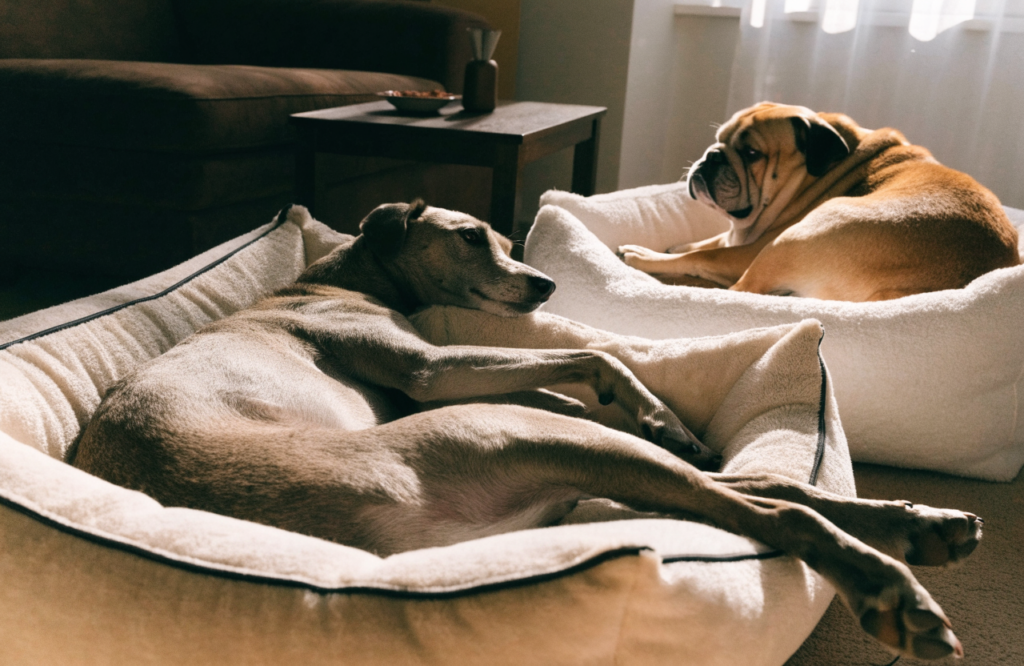
Weight charts are a starting point, not a measurement. A 40-pound sighthound and a 40-pound bulldog do not occupy the same rectangle.
Measure the dog in the position they actually sleep in. For a sprawler, nose to base of tail while stretched, then add roughly 6 to 12 inches so legs are not hanging off. For a curler, the diameter of the curled body plus a few inches of margin is enough, as long as you are measuring inside the bolsters. If the dog is between sizes, go up. A folded blanket can shrink a bed that is a little large; nothing fixes one that is too small.
Typical label ranges, which you should still check against your own tape measure:
| Dog weight | Common label | Rough outer size |
|---|---|---|
| Under 25 lb | Small | about 18 × 24 in to 24 × 30 in |
| 25–50 lb | Medium | about 24 × 30 in to 30 × 36 in |
| 50–75 lb | Large | about 30 × 36 in to 36 × 42 in |
| 75–100 lb | X-large | about 36 × 42 in to 42 × 48 in |
| Over 100 lb | Giant | 48 in and up on the long side |
On a donut, subtract the rim. A large dog on a “large” nest often has less room than the product photo suggests.
When Fluff Is the Wrong Primary Bed
A soft bed is not automatically the kindest bed.
Heavy dogs and sore joints. Fiberfill and loose shreds do not distribute weight the way a thick solid foam slab does. For a large dog, a senior, or a dog with arthritis or hip dysplasia, use fluff as the cover and the headrest, not as the only support. A low entry matters more than a high bolster if the dog is stiff getting up. Memory foam contours, but it also holds heat; some vets and testers note that dogs in warm rooms abandon foam beds in summer.
Hot rooms and dense coats. Faux fur and polyester fill trap warmth. That is useful for a thin-coated dog in a cool house and a poor fit for a husky, malamute, or any heavy-coated dog in a warm climate. Consumer Reports has made the same practical point: a northern breed in a hot climate is unlikely to want a thick faux-fur nest. If the dog already seeks tile, choose a flatter, more breathable surface and keep the fluffy bed for winter.
Chewers and puppies. Loose fibers and long pile are a real ingestion risk if the dog dismantles the bed. Animal-science guidance cited by Consumer Reports is to avoid fabrics and fibers that can be chewed and swallowed, especially for puppies and known chewers. A supervised plush bed is fine; an unsupervised one is not, until you know the dog leaves it alone. More exercise and chew toys do not make a shredded bed safe if the dog is already eating the filling.
Accidents. Puppies and some seniors need a waterproof liner between the cover and the fill. Water-resistant is not the same as waterproof. Once moisture reaches fiberfill, odor and clumping are difficult to reverse.
What to Check on the Product Page
Ignore the word cloud. These details change whether the bed is still usable in three months.
- Removable cover with a working zipper. Non-negotiable. A bed you cannot unzip becomes a hygiene problem. Plush and faux fur hold hair and dander deep in the pile.
- A liner or a washable insert. The cover should come off without exposing loose fill to every wash.
- Bolster construction. Separate chambers beat one shared stuffing cavity.
- Non-slip base. Fluffy beds slide on wood and tile, especially when a dog circles before lying down.
- Cover fiber length. Long faux fur looks fuller and mats, traps hair, and can throw static. Short sherpa is easier to brush and usually survives washing better.
- Care label temperature. If the cover cannot be washed warm, it will be harder to control odor. Follow the label anyway; high dryer heat is what ruins loft.
- Chemical disclosures on foam. Some brands cite CertiPUR-US, a voluntary foam-emissions certification. It is not a promise of joint support, but it is more information than a listing that says nothing about the foam.
A bed that is only fiberfill can still be the right buy for a small, healthy curler in a cool room, if you accept that you will refluff it and eventually replace the insert.
How to Wash a Fluffy Dog Bed Without Flattening It
Fluffy covers collect hair, saliva, skin oils, and outdoor dirt faster than a smooth canvas bed. The American Kennel Club notes that authors of a paper in the Canadian Medical Association Journal, along with CDC guidance, recommend washing dog bedding weekly to reduce the chance of spreading certain parasites, and that EPA guidance on flea control includes deep-cleaning beds every two to three weeks. How often you actually need to wash depends on shedding, mud, accidents, and whether anyone in the house has allergies. A heavy-shedding dog that swims needs more than a short-coated indoor dog.
Practical sequence:
- Vacuum or brush loose hair off the cover and out of the rim before it hits water. Wet hair clumps and can clog a washing machine.
- Unzip the cover and wash only that, on the cycle the label allows. A fragrance-free detergent is the safer default for skin.
- Skip high heat. Hot dryer air is a common reason fiberfill locks into lumps and plush pile mats. Air dry, or use air-fluff if the label allows tumble drying. Clean wool dryer balls can help break up damp fill if the insert itself is labeled washable.
- Do not machine-wash solid foam unless the maker says it is safe. Spot-clean, air it, and keep it dry. Lingering moisture in foam is a mold risk.
- Shake the bolster fill back into the rim while the cover is off, then zip it on and brush the pile in one direction.
If the smell survives a proper wash, the fill is holding oil or moisture and the bed is near the end of its useful life.
How Long the Loft Lasts
There is no single lifespan. A small dog on a dense hybrid bed may get a couple of years of real comfort. A large dog on bargain fiberfill may flatten the center in a season. Replace the bed when the dog is lying on the floor through the middle, when the cover is torn, when odor remains after washing, or when the dog has outgrown the interior. Refluffing helps fiberfill for a while; it does not restore foam that has compressed.
Price tracks construction more than it tracks softness in the listing photo. A cheap round bed can be the right spare for a guest room. It is a weak choice as the only bed for a heavy dog.
Frequently Asked Questions
Are fluffy beds calming? The rim gives some dogs a place to lean and a clearer boundary, which many curly sleepers prefer. The word calming on a label does not change the fill. If the dog is pacing, destructive, or newly anxious, the bed is not a treatment.
Can two dogs share one? Only if both fit in the interior at the same time in the positions they actually use. Donut beds are often sold for “multiple small dogs” and are cramped once both animals stretch.
Why does the bed spark? Long synthetic pile builds static, especially in dry winter air. A shorter pile, a light mist of water on the coat side (not soaking the fill), or a different cover fabric usually reduces it. A visible shock strong enough to startle the dog is a reason to retire that cover.
Is a human pillow or folded blanket enough? As a temporary layer, yes. As the only bed, blankets slide, hold odor, and offer no edge for a dog that wants to lean. They are also easy to chew.
Do I need a waterproof version? If the dog is a puppy, incontinent, or fresh from surgery, yes. For a healthy adult with no accidents, a washable cover is enough, and a waterproof lining can feel clammy in warm weather.