
A built-in dog bed in the living room only earns the floor space if the dog actually uses it. The versions that work are not decorative holes in the cabinetry. They are a quiet, dry, draft-free resting spot with a clear view of the people, sized so the dog can stand, turn, and stretch, and finished so hair and muddy paws do not wreck the room.
That is a different brief from a freestanding bed shoved beside the sofa. Paint color is the last decision. Location and clearance come first. A window-seat cubby, a cabinet bay beside the seating, or an open space under a console can all work. A tight, dark cupboard on the path to the kitchen usually will not.
Place the nook where the dog already settles
Dogs need a comfortable, dry, draught-free, clean, quiet place to rest without being disturbed. In a living room that usually means near the family, off the main walking line.
Watch for a week before you cut anything. Note where the dog lies during ordinary evenings, where they retreat when guests arrive, and which corners they avoid. Spots that usually win:
- The end of the sofa, facing the room rather than a wall
- A fireplace alcove already out of the traffic path
- Under a window seat, if afternoon sun does not bake the floor
- Beside a media console, with the opening turned toward the seating
Skip doorways, the route to the kitchen, the blast from a floor register, and the cold draft off a sliding door. A finished nook in the wrong place gets ignored, and then it becomes storage.
Test the spot with the bed you already own. If the dog walks past it for several evenings and sleeps on the rug, the location is wrong. Moving the cushion later is cheap. Moving a cabinet bay is not.
Six living-room layouts, and who each one suits
Window-seat cubby
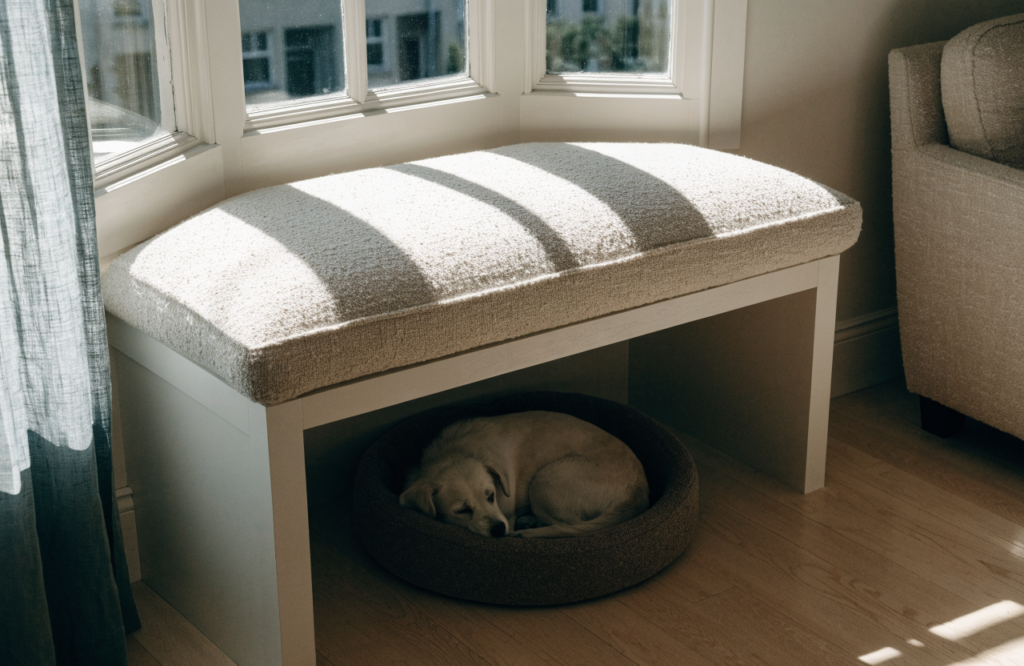
A bench under the window with an arched or rectangular opening underneath keeps the dog low and close to the room without putting them on the seat people use. It suits small and medium dogs, and rooms that already want built-in seating.
Heat and entry height are the usual failures. Afternoon sun can warm a shallow cavity, and a lip or step at the front is a problem for older dogs. Keep the opening the full width of the mattress, and leave the front open rather than fitting a door.
Cabinet bay in a living-room unit
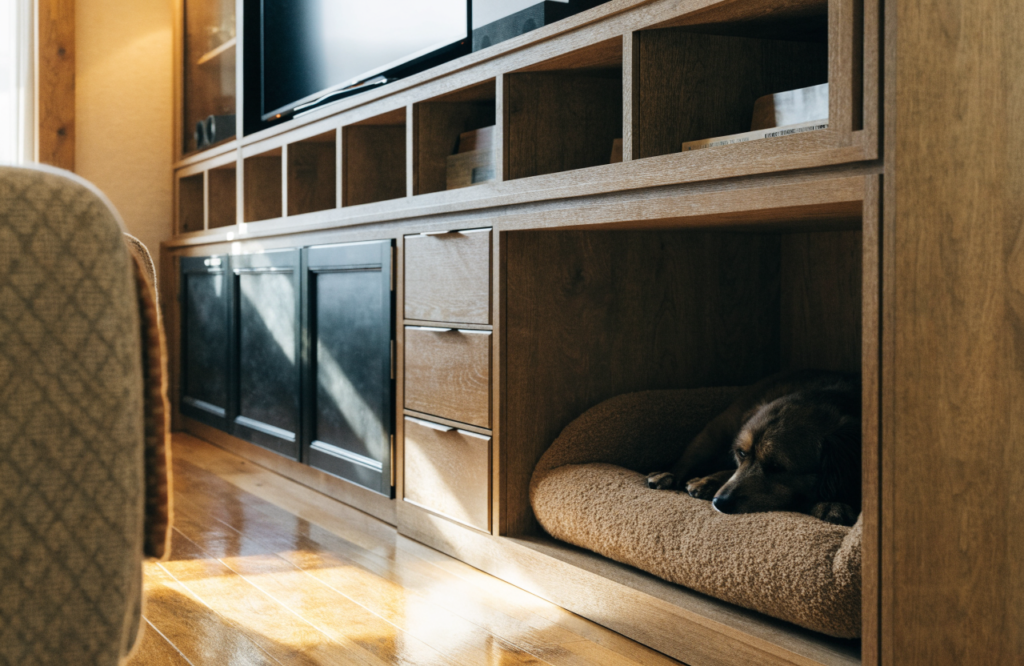
A lower section of bookcases or a media wall, left open and lined, reads as millwork instead of pet gear. Drawers beside it can hold leads, spare covers, and brushes. This is the strongest option when you are already replacing cabinetry, because the dog bay can be framed into work you are paying for anyway.
Size the bay to the dog, then design the shelves around it. The reverse is how a Labrador ends up with a cubby they cannot turn around in.
Open console or sofa-side table
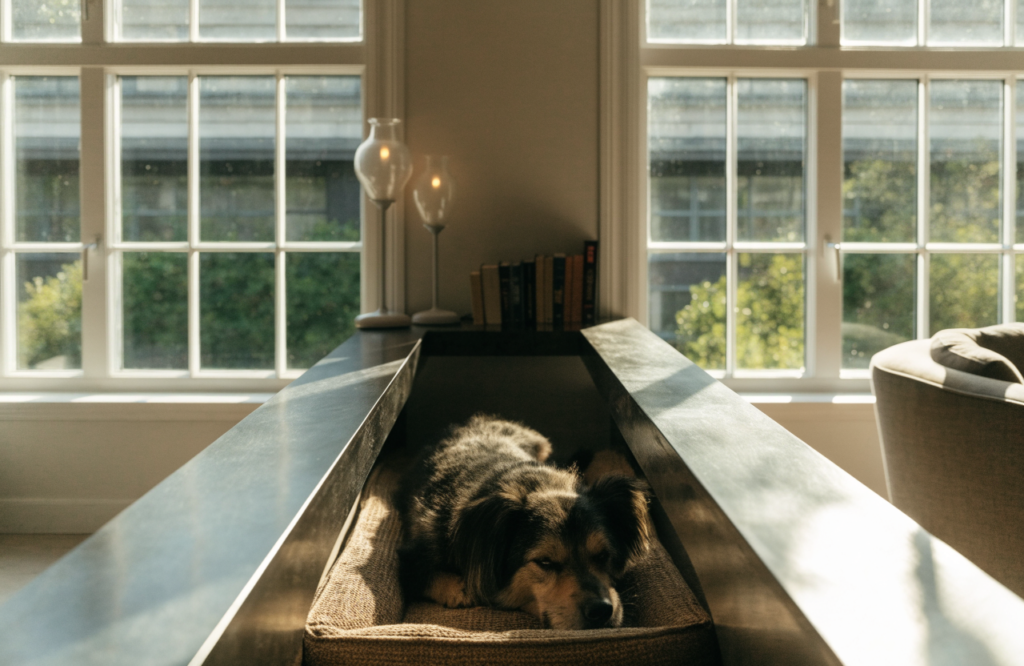
A table with real clearance underneath is the least permanent built-in. In one Williamsburg living room, designer Tara McCauley set the rules this way: the bed had to fit under the console, the console could not be wider than the wall between the windows, and the bed itself stayed the size the dog already used. The two pieces can be separated later.
This suits renters and dogs who like a low ceiling over them. It fails when the tabletop is a dumping ground and the dog gets bumped every time someone reaches for a remote.
Fireplace or chimney alcove
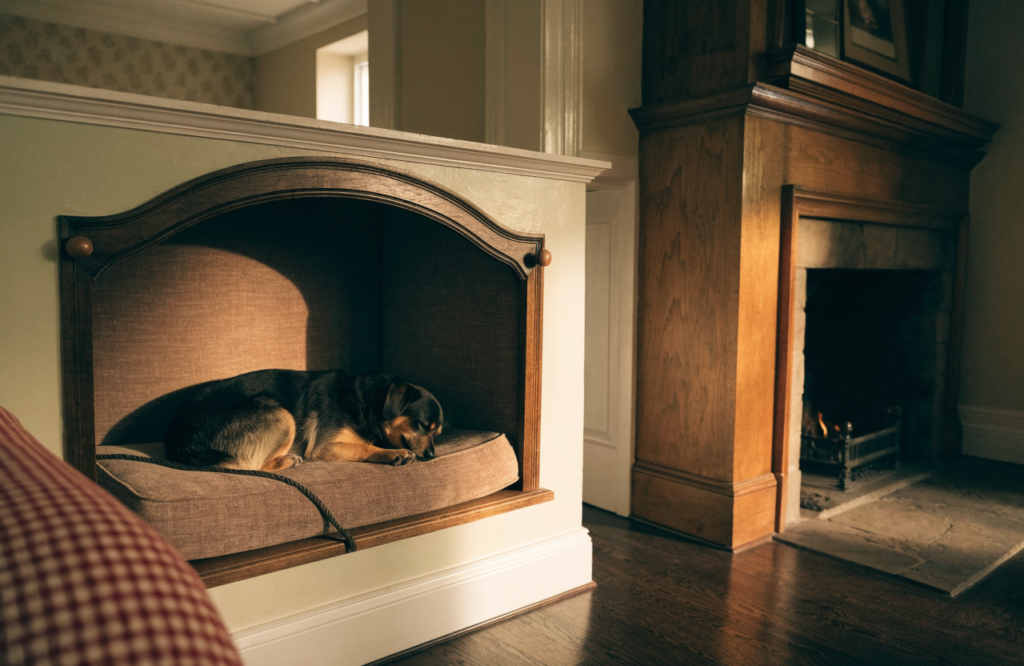
Older rooms often have unused recesses beside the chimney breast. Painting the interior, dropping in a fitted mattress, and framing the opening makes the nook look original to the house. Keep the bed clear of a working fireplace, and do not block a hearth that still needs access for cleaning or screening.
Corner built-in
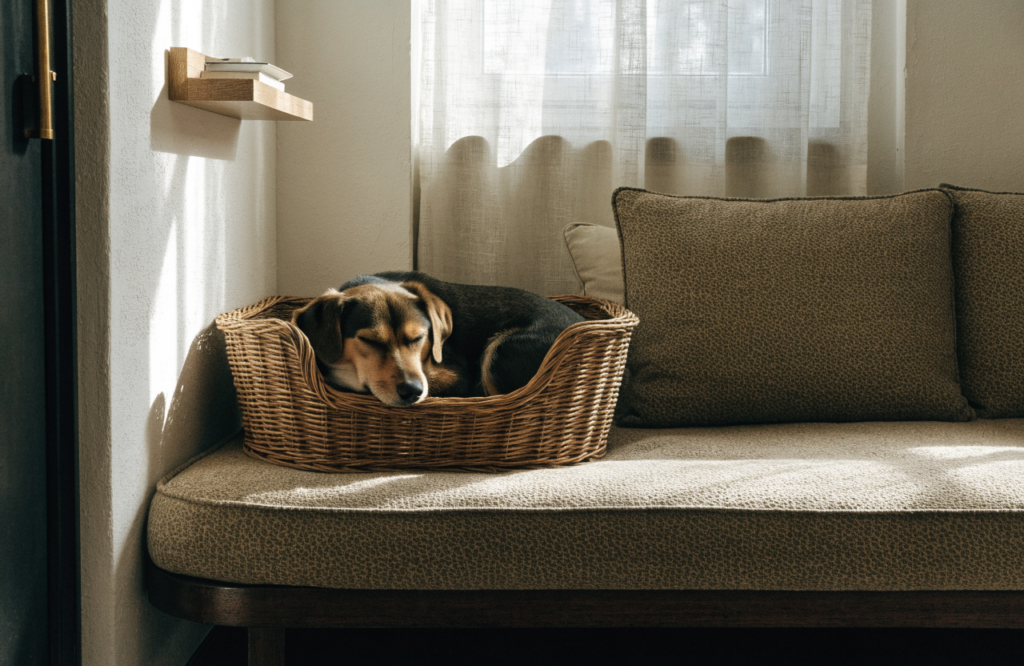
Pulling the sofa a few inches off a dead corner creates a defined recess without new walls. A low platform, a basket, and a small shelf above it is enough. This is the right scale for apartments where full millwork is impossible, and it can leave with you if you are renting.
Under-stair opening that faces the living room
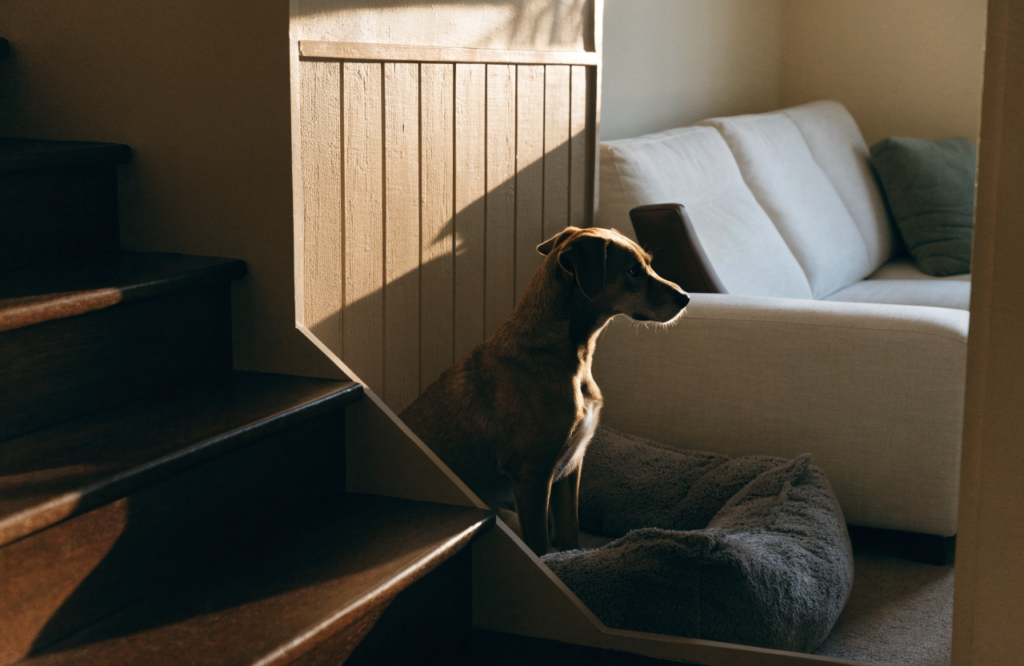
If the stair void opens toward the seating, it can work as a den. It is also the layout most likely to hide problems: wiring, pipes, poor airflow, and fire-safety rules. Many residential codes require enclosed space under interior stairs to be lined with at least 1/2-inch gypsum board, and a solid door needs high and low vents so the cavity does not trap heat. Check the wall for services before you open it. An open sleeping nook and a lockable kennel are different projects.
Size the opening around the dog, not the furniture
A bed should let a dog lie in the positions they actually use, curled or stretched out. The same test used for crates is the right one for a built-in: the dog should be able to stand, turn around, lie down, sit, wag, and stretch fully.
Measure three things, then add clearance.
- Length from nose to the base of the tail while the dog is stretched on their side. Add about 6 to 12 inches (15 to 30 cm) for the mattress. Sprawlers need the top of that range.
- Shoulder height while standing. An enclosed bay should clear that height with several inches to spare so the dog is not ducking to enter. A practical planning figure is about 6 inches above shoulder height.
- Turning circle. Have the dog turn in place and mark the diameter. The opening and the floor inside must allow that turn without scraping the sides.
A mattress big enough only for a curl will be abandoned by a dog who sleeps on their side. Two dogs need two beds, even if they sometimes pile together, so one animal is not blocking the only entrance.
| Dog type | Mattress length to plan for | Entry notes |
|---|---|---|
| Small dog that curls tightly | Nose-to-tail plus about 6 inches | A low lip is fine if they jump easily |
| Medium sprawler | Nose-to-tail plus 8–12 inches | Full-width opening, no center post |
| Large or broad-chested | Nose-to-tail plus about 12 inches, plus hip width | Avoid arches that pinch at shoulder height |
| Senior or stiff joints | Same length, thicker foam | Floor-level entry, no step |
These are planning ranges, not breed charts. A long dachshund and a compact bulldog of similar weight need different floors. Measure the dog you have, and if the dog is still growing, frame the opening for the adult size and use a smaller mattress until then.
Materials that survive hair, drool, and muddy paws
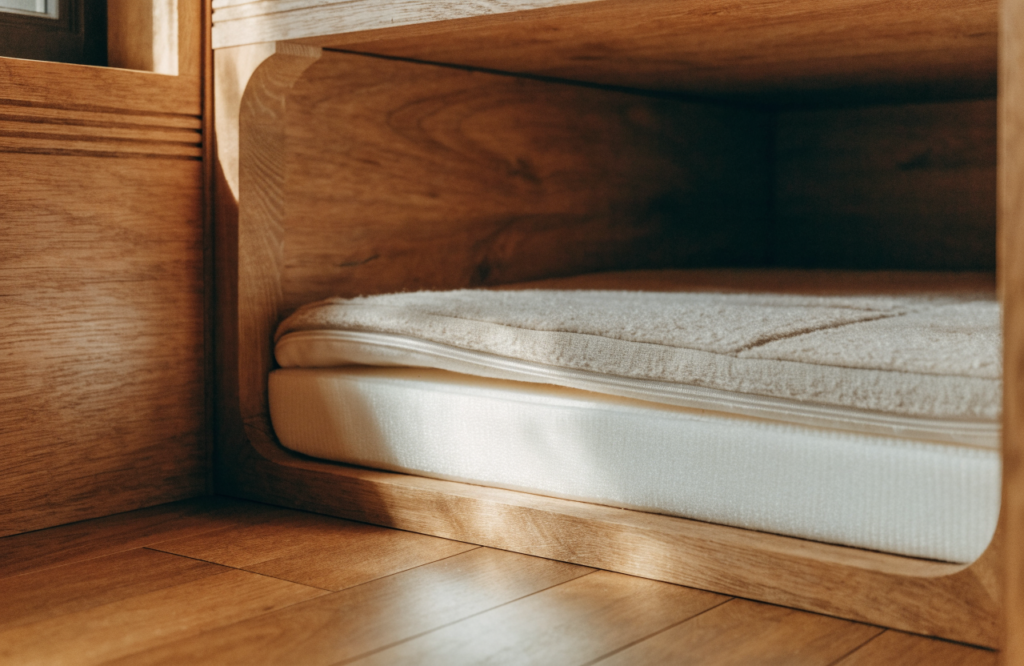
The frame can match the room. The surfaces the dog touches should not.
- Floor of the nook: sealed wood, painted plywood, or another hard washable surface. Carpet inside a cavity holds odor.
- Mattress: a firm foam slab, roughly 3 to 4 inches for most dogs and thicker supportive foam for older joints, with a waterproof liner under a removable cover. Performance or outdoor-grade cloth survives washing better than decorative velvet.
- Edges: no exposed foam, zippers turned away from teeth, no tassels or loose piping. Chewers will find them.
- Finish: fully cured paint, or a finish that is safe once dry. Do not put the dog in a freshly painted cavity.
- Hardware: no dangling cords, bead chains, or narrow slats a paw can catch in. If you want a door, use a wide mesh or slatted panel with a latch the dog cannot work, and keep the vents.
One detail matters more than a monogram: the whole cushion should lift out. Custom niches are easier to live with when the cover and the pad both come out, so the cavity can be wiped and the paint touched up when it scuffs.
Keep the water bowl outside the sleeping bay, on a mat. A bowl inside the nook means a wet mattress and a smell that soaks into the millwork. Food belongs even further away. A sleeping spot and a feeding station solve different problems, and combining them makes both worse.
How to make it look intentional
Match the surrounding wood or paint, and repeat one detail already in the room: the same arch as a doorway, the same hardware finish, the same piping as the sofa. Storage next to the bed matters more than objects inside it. A drawer for spare covers stops the nook from collecting toys.
Lighting is optional. A warm, dog-proof puck on a switch outside the cavity is enough. Do not run a cord across the opening.
If you rent, skip the wall cut. A console with clearance, a cube shelf used as a cubby, or a furniture-style crate in the same finish as the bookcase gives most of the visual result and leaves with you.
Mistakes that make a built-in go unused
- Building to the leftover gap. A 16-inch-deep shelf bay is storage, not a bed for a 40-pound dog.
- Closing it with a solid door. Many dogs want to see the room. An enclosed kennel needs airflow and is a different product from a sleeping nook.
- Putting it on the path to the kitchen. Foot traffic is why dogs abandon otherwise good beds.
- One entrance for two dogs. The more confident dog holds the opening.
- A high step for a senior dog. They will choose the floor.
- Decorative fabric with no liner. One wet walk ends the experiment.
- Sizing it to the puppy. The opening should fit the adult.
An open nook with a good mattress and a washable cover solves the problem for most living rooms. Full custom cabinetry is worth it when a media wall or window seat is already in the plan. A lockable under-stair kennel with lighting and a fire-rated lining is a small construction job, not a weekend cushion project. If the wall may be structural or hide services, that is a contractor question before any cutting.
The test after a week is simple. Is the dog in the nook during ordinary evenings, and can you clean it without dismantling the room? If both are true, the built-in was the right call.
Questions people ask before they build
Can a built-in replace a crate?
Only if you did not need a crate. A sleeping nook is not a secure enclosure. Puppies, dogs who panic when left, and dogs who guard the sofa still need a properly sized crate they cannot open. The nook can sit beside that crate. It does not replace it.
Should the bed be raised?
A low platform helps if the floor is cold or you want a drawer underneath. Keep the step small. Older dogs and short-legged breeds do better at floor level, where getting in does not require a jump.
What if the dog ignores it?
Move the mattress to the spot they already use before you blame the design. If they use the mattress there and ignore it in the nook, the location or the enclosure is the problem. Dark, tight, noisy, and drafty are the usual causes.
Is a window seat a bad idea for a dog who barks at the street?
Often yes. A view is a feature for a calm dog and a trigger for a reactive one. If the dog already patrols that window, put the bed where they can see you, not the pavement.