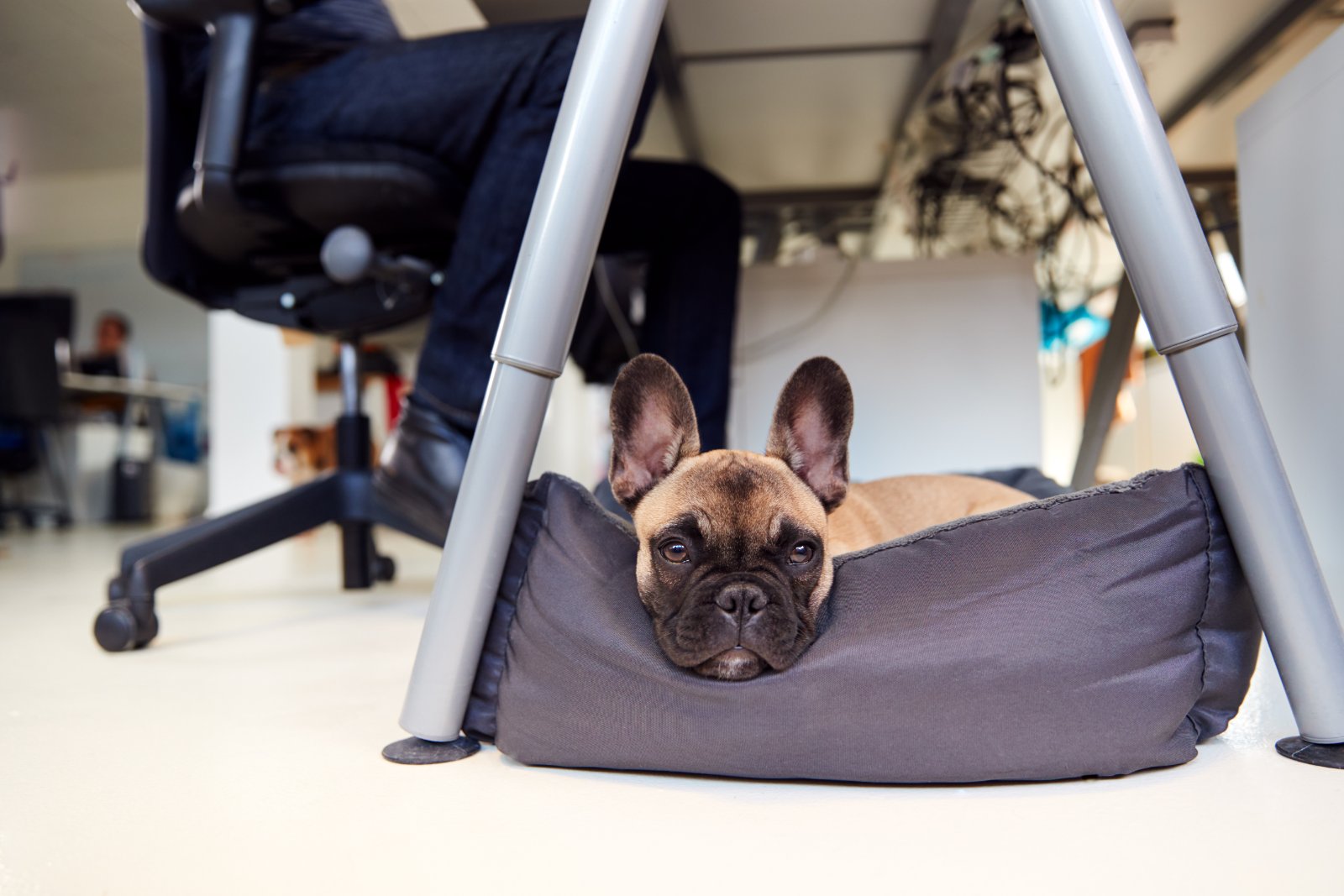

A dog bed under a desk only works if it clears your knees, your chair, and the cables already living there. Measure the empty space first, then match a low bed to how your dog actually sleeps. A thick bolster or a full-size orthopedic sofa will usually lose that contest, even if it looks better on a product page.
Dogs gravitate under desks for the same reason they like under a table or a bed frame: it is enclosed, close to you, and out of foot traffic. That makes the spot useful for work-from-home days, but the usable floor is smaller than it looks. Pedestals, a tower, a power strip, and the path of a rolling chair all shrink it.
Measure the opening before you shop
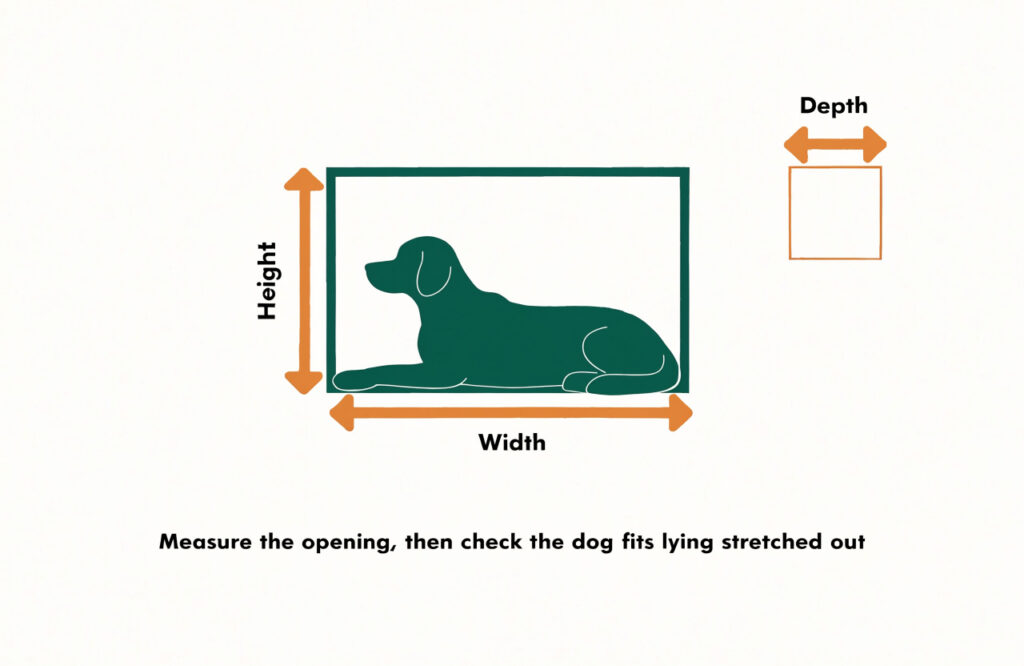
Start with a tape measure and an empty knee well, not a size chart.
Record three numbers:
- Clear height from the floor to the lowest obstruction (desktop underside, drawer, cable tray, or brace).
- Clear width between legs, pedestals, or the wall.
- Clear depth from the front edge of the opening back to the wall or modesty panel, minus the space your feet and chair base need.
A conventional desk surface sits around 28 to 30 inches high. Computer desks are often lower, in the mid-20s. Ergonomic guidance for seated work treats roughly 24 inches of knee height and depth as comfortable for many people; accessible workstation standards call for at least 27 inches of knee clearance height, 30 inches of width, and 19 inches of depth. Those figures are for a person, not a dog. Whatever is left after your legs and chair are accounted for is the real bed zone.
Sit in your normal position and note where your feet land. A bed that forces you to perch on the edge, or that the chair wheels catch every time you roll in, will get moved within a week.
Subtract about 2 inches from the measured height before you compare it with a product’s stated thickness. Covers, bolsters, and a dog who sits up all eat clearance that a flat product photo hides.
Which bed styles actually fit
Height is the filter. Support and washability come second.
| Bed type | Typical fit under a desk | Best when | Main limit |
|---|---|---|---|
| Flat mat or crate pad | Easiest. Often 1–3 inches thick | Tight clearance, any size dog that will lie flat | Little joint support; slides unless it has a non-slip base |
| Low orthopedic mattress | Good if foam is about 3–4 inches | Medium dogs, seniors who need cushioning without a wall | A 7-inch clinical foam bed rarely clears a standard knee well |
| Low bolster, open front | Works if the wall is only a few inches high | Dogs who lean or rest a chin | Raised sides steal width and can block the chair |
| Round donut or cave | Only for small dogs in a wide opening | Anxious dogs who curl | Round shape wastes a rectangular opening and high walls hit the desktop |
| Elevated cot | Rarely | Almost never under a desk | Frame height plus the dog’s head usually exceeds clearance |
A flat or low-profile orthopedic pad is the default for this spot. Sofa-style beds with a high back are built for a corner of the room, not a knee well. If your dog needs serious joint support and the only bed that helps is 6 inches or thicker, put that bed beside the desk and use a thin mat underneath for short naps.
Size the bed to the dog and the opening
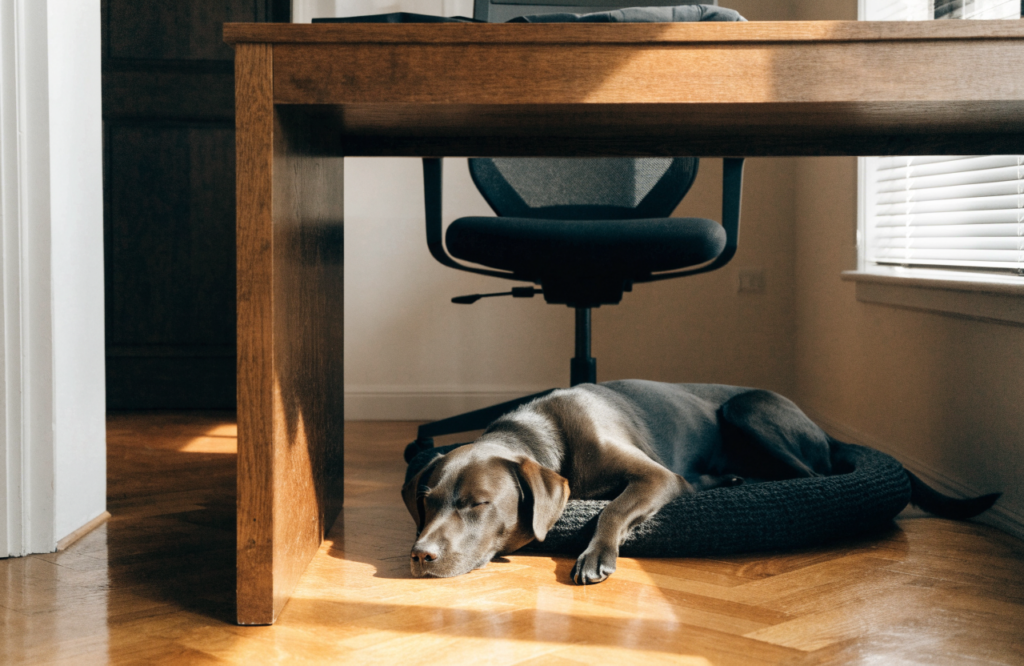
Measure the dog lying in the position they actually use, from nose to the base of the tail, not the tail tip. Add about 6 inches for a dog who curls, and 10 to 12 inches for a dog who sprawls. Width should cover the body when they lie on their side, plus a little room to turn.
Then cut that ideal down to the opening:
- A curler can use a bed shorter than their full stretched length. A sprawler cannot, and will hang off the edge or abandon it.
- Between two sizes that both fit, take the larger one only if it still leaves a path for your feet.
- Labels like “medium” vary by brand. Compare listed length, width, and thickness with your three measurements.
- A growing puppy should be sized for the adult body if you can spare the floor, or treated as a temporary mat you will replace.
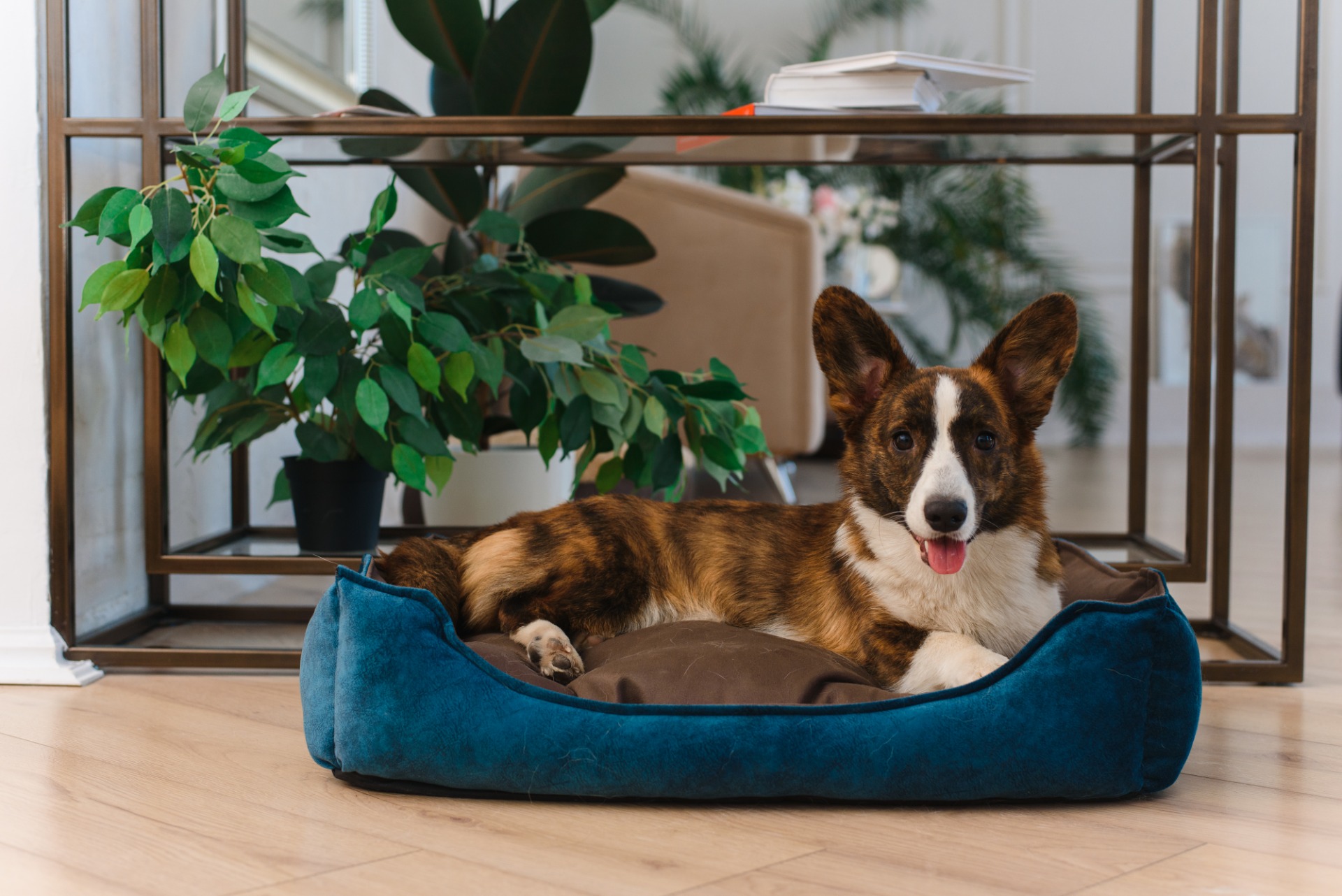
Small dogs are the natural fit: a 20- to 30-inch pad slides under most desks without stealing the chair. A corgi or French bulldog often works if the bed stays flat. A Labrador or larger dog usually needs the bed beside the desk, or only the front half of a long opening, because a bed long enough to stretch on will collide with your legs.
Set it up so the desk still functions
Place the bed against the side or rear of the opening, not in the center of your footwell. The goal is a den next to you, not a cushion under your calves.
Before the dog uses it:
- Lift every cord off the floor. Route power through a tray or sleeve fixed to the underside or a rear leg. Puppies chew; even adult dogs investigate loose cables, and a chewed cord is a burn and shock risk.
- Move the computer tower, dock, and power strip out of the bed zone. Hair pulled into a fan is a common reason office machines overheat.
- Choose a cover that unzips and a base that grips the floor. Desk spots collect crumbs, drool, and shed hair, and a sliding bed ends up under the chair wheels.
- Leave a water bowl outside the knee well. A bowl under the desk gets kicked and wets the foam.
- On a height-adjustable desk, set a sitting preset and do not raise the desk while the dog is underneath. Anti-collision sensors are not a substitute for looking.
If the office runs warm from monitors and a closed door, a thick plush bed can be too hot. A cooler mat, or the same bed with the door open and water nearby, is the more realistic setup for long workdays.
When an under-desk bed is the wrong idea
Skip it if the dog resource-guards the space, startles when the chair moves, or has to climb over a pedestal to get out. A rolling chair is the main injury risk: look before you pull in, and lock the casters if the dog sleeps there while you are away.
It is also a poor primary bed for a senior who needs a thick orthopedic surface, for a dog who overheats easily, or for any dog whose stretched length exceeds the clear depth once your feet are in place. In those cases the better office bed is beside the desk, against a wall, with a short leash or a trained “place” so they stay off the cables.
Two dogs rarely share one under-desk bed successfully. The opening is already a compromise; adding a second body usually means one dog on the floor and both in the way.
Mistakes that make the bed unused
- Buying for the photo of a curled dog, then discovering they sprawl at noon.
- Ignoring bolster height. The listed “4-inch foam” becomes 8 inches once the wall is up.
- Putting the bed where the chair must travel. The dog learns to avoid it.
- Leaving a chewable cord as the border of the bed.
- Using the under-desk spot as the only bed in the house. Dogs who nap there during the day still need a real bed at night, away from the office.
A spare blanket can test the location for a few days before you buy. If the dog will not settle on it, a new cushion will not fix the traffic, the noise, or the heat.
Frequently asked questions
How high should the bed be to fit under a desk? Lower than the clear height you measured, with about 2 inches to spare so the dog can lift their head. Many workable mats are 1 to 4 inches thick. Anything with a tall bolster needs that same check against the underside of the desktop.
Can a large dog have a bed under the desk? Only if the opening is wide and deep enough for their body without blocking your feet. Most standard desks fit a mat for a nap, not a full sprawl bed for a 60-pound dog. Beside the desk is usually the honest answer.
Is an orthopedic bed worth it in this spot? Only a low one. Joint support comes from foam thickness and density, and the thick beds that help large seniors often will not clear the desk. Use the thin pad for proximity and keep the supportive bed where height does not matter.
Will the dog overheat under there? They can. Electronics and poor airflow raise the temperature in a closed knee well. A breathable cover, water outside the opening, and a cooler room matter more than a thicker bed.