
A suitcase dog bed is one of two different things. It is either an old hard-shell case turned into a shallow nest with a washable cushion inside, or a travel bed that zips or folds into luggage so the bed and a few supplies travel as one piece. They solve different problems. A thrift-store case with a pillow is living-room furniture for a small or medium dog that likes a defined edge. A packable suitcase-style bed is gear for hotels, car trips, and campgrounds. One will not do the other’s job.
Most people using this phrase want the vintage project. A smaller group wants something that packs like a suitcase instead of a full-size cushion riding loose in the trunk. The decision that matters is which job you are solving, then shell, interior size, and whether the sleeping surface can be washed. Get those wrong and the bed becomes décor the dog ignores, or luggage too bulky to bring.
Two kinds of suitcase dog beds
A repurposed case used as furniture
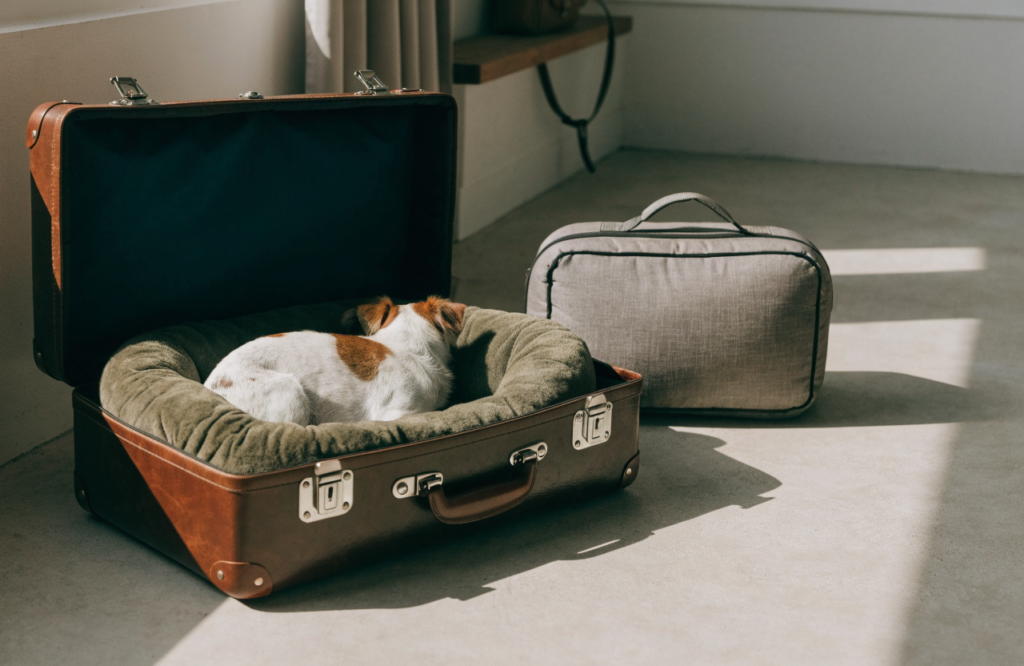
Hard-shell vintage suitcases, small trunks, and some straight-sided shipping cases become a low box. You clean the shell, decide what to do with the lid, drop in a cushion with its own cover, and sometimes bolt on furniture legs. Published versions keep the build simple: a pillow in a pillowcase, or foam cut to the base. One widely shared method removes the lid entirely and uses only the bottom as a tray. Martha Stewart’s version keeps the case whole and raises it on four furniture legs attached with lag screws, then finishes the feet with rubber pads so the bed does not skate on a smooth floor.
The walls are the point. They give a small dog a boundary, which many dogs prefer to an open pad in the middle of a room. The case also hides a plain cushion inside something that can match the furniture.
A bed that packs as luggage
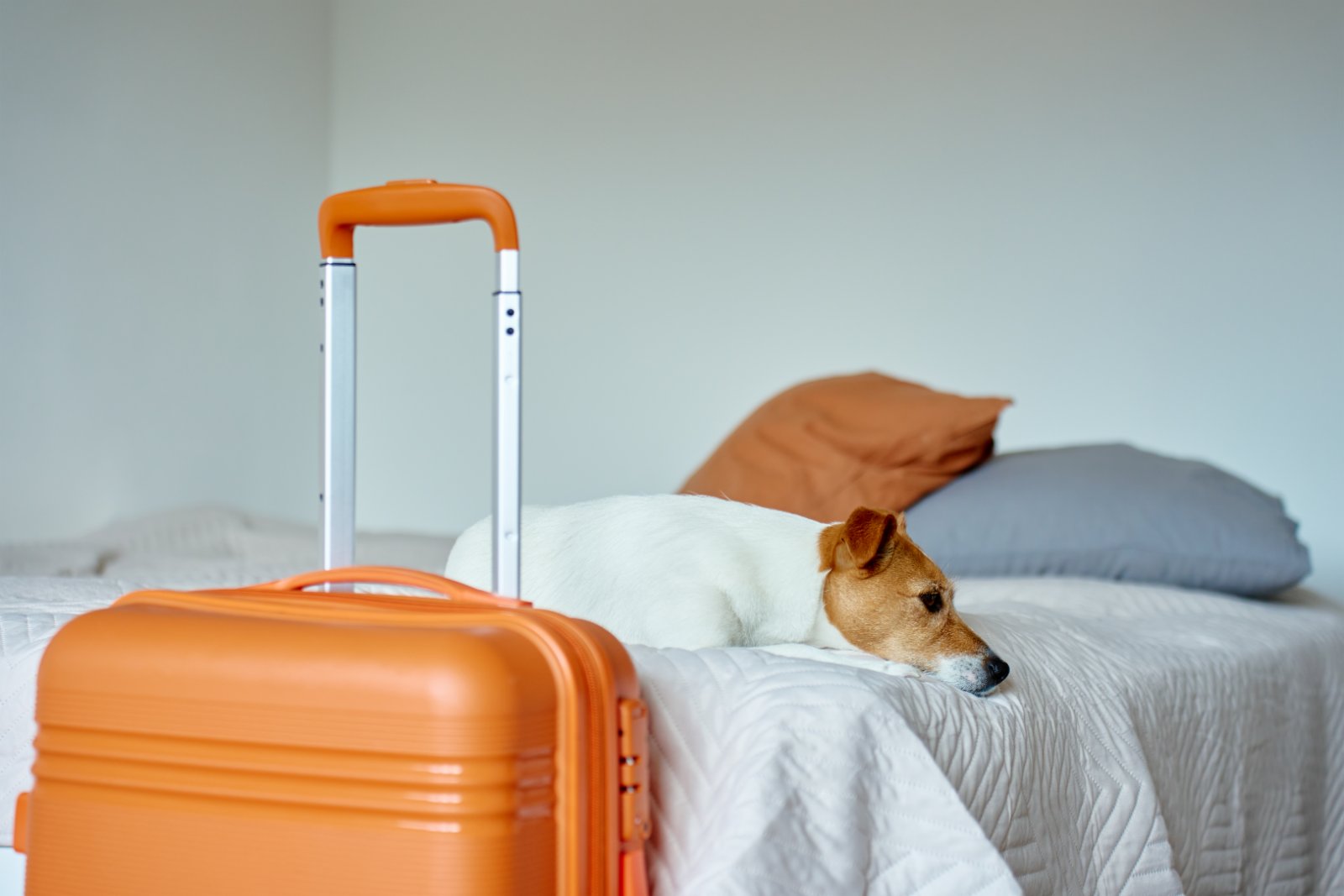
Commercial versions reverse the idea. The bed is the product; the suitcase shape is how it travels. Snoozer’s Plush Bed in a Bag is a folding plush bed that packs into a ripstop carry case with handles, in sizes such as a large with an outside measurement around 30 by 40 inches. Timberdog’s RuffRest is built more like luggage: it zips around a hanging organizer with pockets, uses a shoulder strap, and opens into a sherpa bed with a blanket that can convert into a three-season sleeping bag. Review measurements put the large near 42 by 30 inches and a little under 11 pounds empty.
These are travel tools. They will not read as vintage décor, and a vintage case will not compress into a carry-on.
Which dogs a suitcase bed actually fits
Measure the sleeping area, not the outside of the case. A dog should be able to lie in its usual posture without hips or shoulders resting on the rim. Curled sleepers need less length than dogs that sprawl. A carry-on is a cat or toy-dog project. A medium dog usually needs a full-size suitcase or a small trunk. A large or giant dog will not fit a typical vintage case, and the shell is not a weight-bearing platform for a heavy animal climbing in and out all day.
Chewing changes the decision. Exposed foam, pillow corners, peeling vinyl, and loose hardware are easy to destroy and unsafe if pieces are swallowed. No soft bed is chew-proof. A harder shell does not fix a dog that already shreds bedding. Supervise, and do not leave that dog alone with a bed it is actively tearing.
Older dogs and dogs with sore joints need an easy entry. High walls and tall legs can make the bed harder to use than a flat pad. A lower case, or no legs at all, is often the better call. Puppies can use one only with supervision, because they mouth edges while teething.
How to turn a suitcase into a dog bed
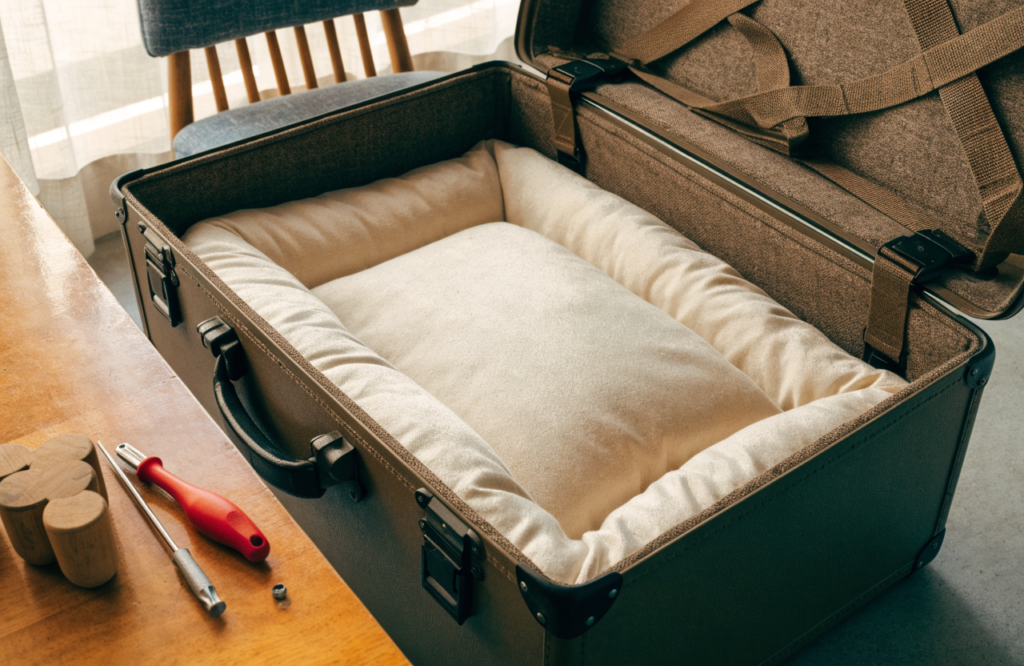
Pick the case before you buy hardware
Look for a hard shell: molded plastic, wood, fiberboard, or metal. Soft fabric cases collapse under a dog and will not hold furniture legs. Skip wheeled cases if you want a stable base, or remove the wheels. Open the hinge and see how the lid is attached. Some lids unscrew. Others are riveted and take real force to separate. Several DIY guides simply discard the lid and use the bottom. You can also leave the lid on and prop it open if the hinge is sound and cannot slam.
Pass on anything that smells of mildew, mothballs, or old solvents. Odor lives in the lining. Sun and baking soda can take the edge off a mild musty smell. A strong chemical or mold smell is a reason to choose another case.
Clean it as if the dog will lick the rim
Wipe the shell and lining with a mild cleaner and dry it fully. Vacuum grit out of the corners. If you paint or refinish, use a product meant for that material and let it cure completely before the dog uses the bed. Pets chew edges, so a fully cured, low-toxicity finish matters more than a perfect color.
Build the cushion so it can be washed
A pillow in a king pillowcase is the fastest working version. The extra fabric folds under, so the case is less likely to pop off when the dog circles. Better is foam or a pillow cut to the interior, inside a cover you can remove. A cover sewn permanently to the foam looks neat until the first accident.
Do not treat the original suitcase lining as the sleeping surface. Old fabric holds dust and is hard to wash. A snug separate cushion also stops the dog from sliding into the hard corners.
Legs are optional
Elevation keeps the cushion off a cold or damp floor and makes the bed read as furniture. The usual method is to mark four corners on the underside, pre-drill, run lag screws with washers from the inside, thread on the legs, and add rubber pads. This needs a rigid bottom. A thin or cracked base will flex and pull the screws loose.
If drilling is not appealing, skip the legs. A case on the floor is still a usable bed, and it is easier for small or older dogs to step into.
Check it before the dog moves in
Screws should be tight. Hinge pins and exposed metal should not sit where a paw lands. The cushion should not shift enough to uncover a hard edge. Put the bed where you want the dog to sleep, out of a draft and out of a main walkway. Some dogs claim it the same day. Others need a familiar blanket on top for a few nights before they treat it as theirs.
Travel beds that pack like a suitcase
Choose this type when the problem is luggage, not the living room.
Compare four things before the style.
Packed size and weight have to match how you travel. A large suitcase-style bed near 11 pounds is reasonable in a car and awkward on a hike. Ultralight camp pads measured in ounces exist, but they are thin mats, not suitcase beds. If the bed never leaves the trunk, bulk matters less than cushion.
Open dimensions should match the dog’s curled length, plus a few inches. Travel beds are often sized a bit smaller than home beds because dogs curl tighter away from home and because bulk is the constraint. A bed the dog spills off is not a savings.
The bottom has to match the floor it will touch. Hotels forgive fabric. Camping and cargo areas do not. A water-resistant or waterproof base matters if the bed meets ground, dew, or a dirty car floor. Foam that cannot be dried fully is a mold risk after a wet weekend.
Storage should not ruin the sleep surface. Organizer pockets are useful for a leash, bags, and a bowl. Packing hard items inside the bed can make the sleeping surface lumpy, which is a known complaint when a luggage-style bed is used as both bag and bed on the same day. Empty the organizer before the dog lies down.
A three-season sleeping-bag feature, as on the RuffRest, is for cool conditions, not deep cold. The maker states those bags are not meant for temperatures colder than about 55°F (13°C) without extra layers such as a liner or a coat.
Airline reality is separate from the product name. A full suitcase dog bed is checked luggage or a car item, not an under-seat bed. A dog in the cabin needs a pad that fits the carrier, which is a different product.
Mistakes that get these beds ignored
A soft-sided bag will not hold a dog’s weight or a set of legs. A cushion smaller than the base leaves the dog on the rim. A cover that cannot come off ends the project at the first accident. Legs on a weak bottom, or no grip pads on a wood floor, make the bed wobble or slide. Buying the travel version for looks fails in the other direction: nylon luggage will not read as a vintage suitcase, and a vintage case will not pack into a carry-on. The shell can be tougher than fabric. The pillow is not.
Cleaning and what wears out first
Wash the cover on a gentle cycle with a mild detergent. An enzyme cleaner is the right first step for urine odor, because detergent alone often leaves the smell and it returns. Dry the cover completely. Spot-clean foam, never submerge it, and never store it damp. Damp stuffing can grow mold within a day or two. Air the shell if it picks up dog smell. Recheck leg screws after the first few weeks. Movement loosens them.
On a vintage build, hinges, peeling vinyl, and wobbly feet fail before the idea does. On a travel bed, zippers, straps, and compressed fill fail first. In both cases the replaceable part should be the cushion or the cover, not the whole setup.
Frequently asked questions
Can the lid stay on?
Yes, if it stays open and cannot fall. Many builds remove the lid so the bed is a low tray. A propped lid can make a cave some dogs like, but only if the hinge is secure.
Is this a good puppy bed?
Only with supervision. Puppies mouth edges. A washable cover and no loose trim matter more than the vintage look.
Will a suitcase bed work for a large dog?
Rarely as a DIY case. Trunk-sized pieces are the only candidates, and the interior still has to be measured. For travel, a large packable bed or a folding pad with real thickness is the more realistic category.
Does the cushion have to be custom?
No. A standard pillow or a foam slab cut to the interior works if the cover is washable and the fill stays dry. Match thickness to the dog: a thin pad is fine for a short stay, and a thicker insert is the better choice for a senior dog using the bed every night.