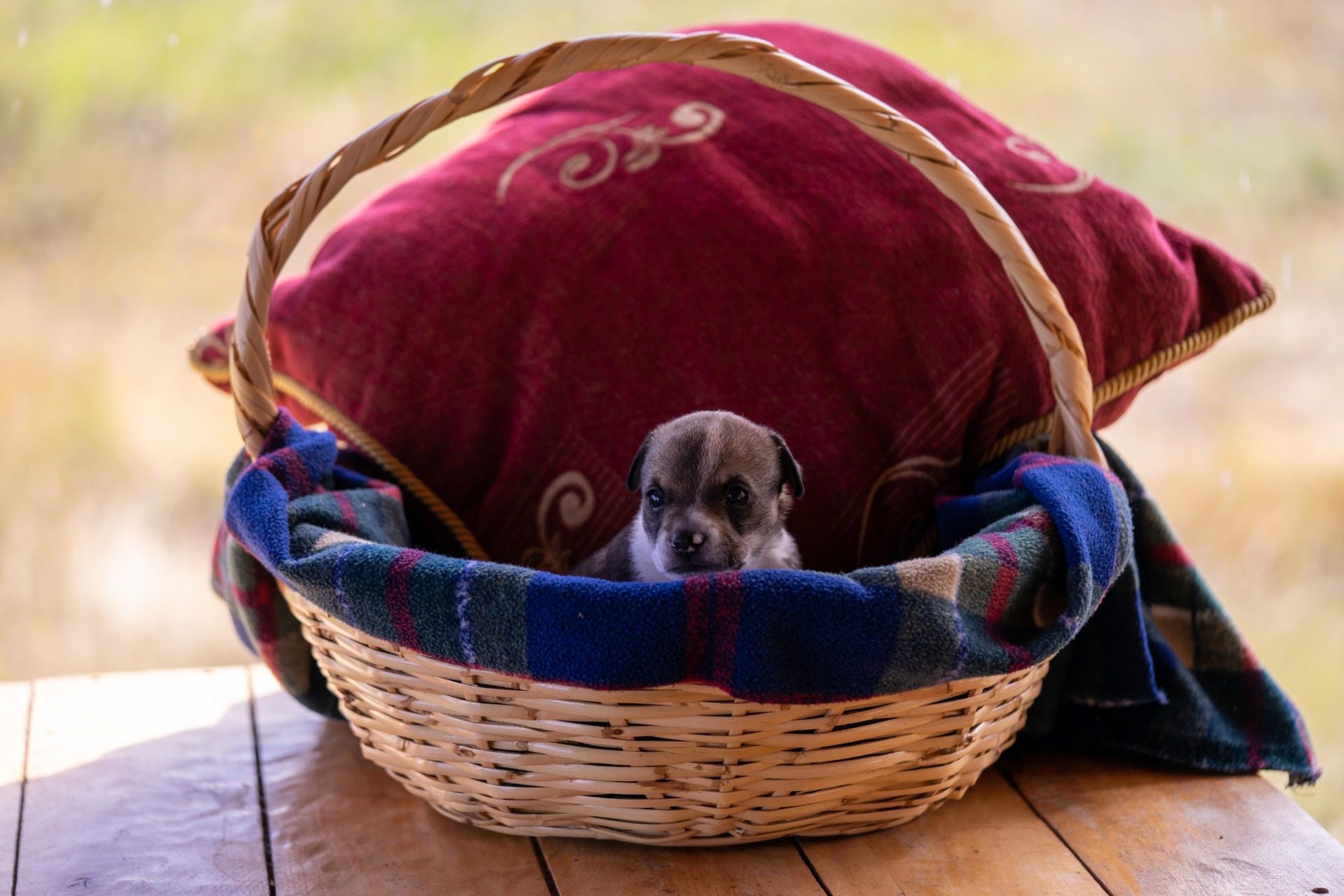

A unique dog bed fails when the shape fights how the dog already sleeps. Donut walls, cave hoods, and miniature sofas look distinctive, but a sprawler pushed into a nest, or a hot-coated dog sealed into faux fur, will sleep on the floor beside it. Dogs spend roughly 12 to 18 hours a day asleep, depending on age, so the bed that gets used is the one that matches posture, temperature, and how often you can wash it.
What “unique” usually means in a dog bed
Most beds sold as unique are ordinary cushions in a less common shell. The useful differences are structural, not decorative.
A donut or cuddler raises a bolster all the way around so a dog can curl and rest a chin. A cave or burrow bed adds a hood or tunnel. Furniture-style beds copy a sofa, daybed, or low platform, sometimes in boucle, velvet, or wood. Elevated cots lift a mesh or vinyl surface off the floor. Stuff-your-own covers, such as the Molly Mutt system, are a canvas shell and a mesh sack you fill with old pillows or blankets. Personalized beds add a name, a custom fabric, or made-to-measure sizing. At the far end, fashion-house pieces use the same basic cushion idea at a very different price: Elle Decor has listed a Hermès dog tent at $3,175 and a Louis Vuitton trunk bed at $14,900.
None of those labels tells you whether the dog will lie on it. The American Kennel Club groups beds by function instead: orthopedic foam, pillow-style, elevated cots, covered dens, and warming beds. That split is more useful than “luxury” versus “basic,” because the function decides comfort and the fabric mostly decides whether the bed survives the living room.
Match the shape to the sleeping posture
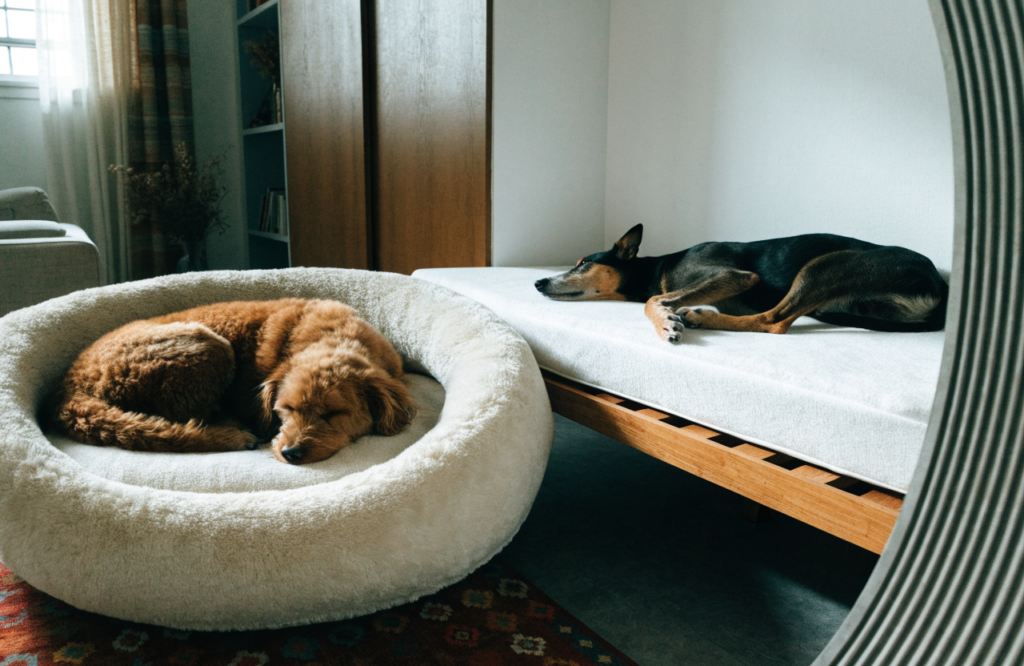
Watch the dog for a few nights before you buy. The pose is the filter that product galleries skip.
Curlers tuck nose to tail and often lean. A donut or high bolster gives them a rim to press against. Burrowers dig and tunnel; the AKC notes that covered beds suit dogs that want the snug feeling of a den, and some of that behavior may be leftover from sleeping in a secure hollow. Sprawlers and side sleepers need a flat rectangle with no walls in the way. A dog that sleeps half on and half off the current bed is telling you the surface is too small, not that it needs a prettier cover.
Measure in the posture the dog actually uses. Length is nose to the base of the tail, not including the tail. Width is the widest point across shoulders or hips while lying down. Add several inches so they can turn. Bolster and sofa beds shrink the usable interior: a listed 36-by-42-inch exterior can leave only the low 30s inside once the walls take their share. Check interior dimensions, and size up if the dog stretches.
Seniors and dogs with hip or elbow pain need a low step-in. A tall bolster they have to climb is a design feature that becomes a barrier. Wirecutter’s testing notes that there is no single “orthopedic” standard for dogs; what matters is easy access, enough cushion that bony points are not pressed into the floor, and a surface that does not trap heat. The AKC still recommends supportive foam, including memory foam or egg-crate fill, for dogs with arthritis or hip dysplasia and as a reasonable surface for growing puppies.
Hot sleepers are the clearest mismatch with plush unique beds. Owners of huskies and chows often report that the dog ignores every cushion and lies on tile. An elevated cot with an open weave moves air under the body. Wirecutter found Kuranda-style aluminum cots useful for dogs that run warm and for dogs that destroy conventional beds; vinyl cleans with a wipe, mesh breathes better but holds mud until you hose and brush it.
Support, heat, and washing before the fabric
Foam depth and density matter more than the pattern. Light dogs compress foam less, so a few inches can be enough. Heavy dogs bottom out thin, soft fill and end up sleeping on the floor through the cover. Look for a dense base rather than a single layer of budget memory foam that feels plush in the store and flat in a month. A waterproof liner between cover and fill is the difference between a wash and a replacement after one accident. The AKC advises removable covers you can wash often, especially for puppies still training and older dogs with weak bladders.
Washability is where many statement beds quietly fail. Faux fur, velvet, and boucle look considered and hold hair, saliva, and odor. If the cover is not removable and machine-washable, assume you will spot-clean forever. Leather is the exception Wirecutter liked for people who do not want a laundromat trip: a full-grain cover wiped clean of mud with a sponge, though exposed zipper pulls can invite chewing and the surface can slide on bare floors. Stuff-your-own covers solve a different problem. Molly Mutt’s cotton canvas shell and mesh sack are designed so you fill them with linens you already own, wash the cover alone for muddy paws, and wash the stuffing only after an accident. The tradeoff is weight once filled, longer drying, and no chew-proof claim.
Chewers change the shortlist. Loose piping, dangling zippers, and plush lips are demolition targets. Redirecting with a chew toy works for some goldens; it does not work for a determined shredder. For those dogs, a tough elevated cot or a bed with a ballistic cover is the unique option that still exists next month. A crib or toddler mattress in a washable cover is the plain version of the same idea: firm, cool, and easy to strip.
Placement belongs in the same decision. A beautiful bed in a spare room loses to a worn cushion near the people. Dogs are den animals in the AKC’s framing, but the den they want is usually in the room where the household sits. A 2017 study in Mayo Clinic Proceedings, cited by the AKC, found that a dog in the bedroom but not in the human bed was compatible with better human sleep than sharing the mattress. That is an argument for a good bed in the bedroom, not for hiding it.
When a statement bed is worth the money
Pay for construction you can verify, not for a logo.
A fair price for a well-made foam bed with a washable cover often lands in the low hundreds of dollars. Casper’s dog bed, repeatedly picked in editor tests by Forbes Vetted and others, sits in that band: memory foam, a removable cover, and a shape quiet enough to leave in the room. UK makers such as Unique Dog Beds Ltd sell personalized boucle and teddy beds from about £75 for a donut to £150 for a haven-style bed and £260 to £385 for a chenille sofa. Those prices buy fabric, sizing, and a name, not medical support, unless the fill is specified.
Designer pieces are decor. A walnut platform or a printed daybed can be the right buy if the cushion underneath is thick enough, the cover cleans, and the dog already likes that shape. They are the wrong buy if you are trying to solve arthritis, chewing, or a dog that sleeps on stone. Warming beds split into two kinds. Self-warming styles reflect body heat and need no cord, which the AKC describes as suitable for small dogs and single-coated dogs that get cold. Electric heated beds are a chew and cord risk; skip them for puppies and known chewers unless the element is fully enclosed and you can supervise.
Return windows matter more on unusual shapes. A cave that is too warm, or a sofa the dog will not step into, is only a good experiment if you can send it back.
Why dogs ignore a new bed
Refusal is common, including with beds someone sewed by hand. The usual causes are fixable.
The spot is wrong. Move the bed to where the dog already naps, then shift it a little at a time if you need it elsewhere. The smell is new. Wash the cover and add a blanket that already smells like the household. The surface is the wrong temperature or the wrong firmness. A dog that chooses tile wants airflow or a harder feel, not more stuffing. The bed is too small or the walls block the stretch. Pain is the reason to rule out last: if the dog circles, stands up again, or avoids lying on one hip, ask a vet before you buy a fifth style. The AKC’s chief veterinary officer has pointed to arthritis discomfort as a reason an older dog stops settling the way it used to.
Introduction helps when the bed itself is fine. Feed a chew or a meal on the bed, sit beside it, and do not turn the new purchase into a battle. Some dogs never prefer a cushion. For them, the useful “unique” bed is a cool cot in the sunny lookout spot, or nothing at all.
Which style fits this dog
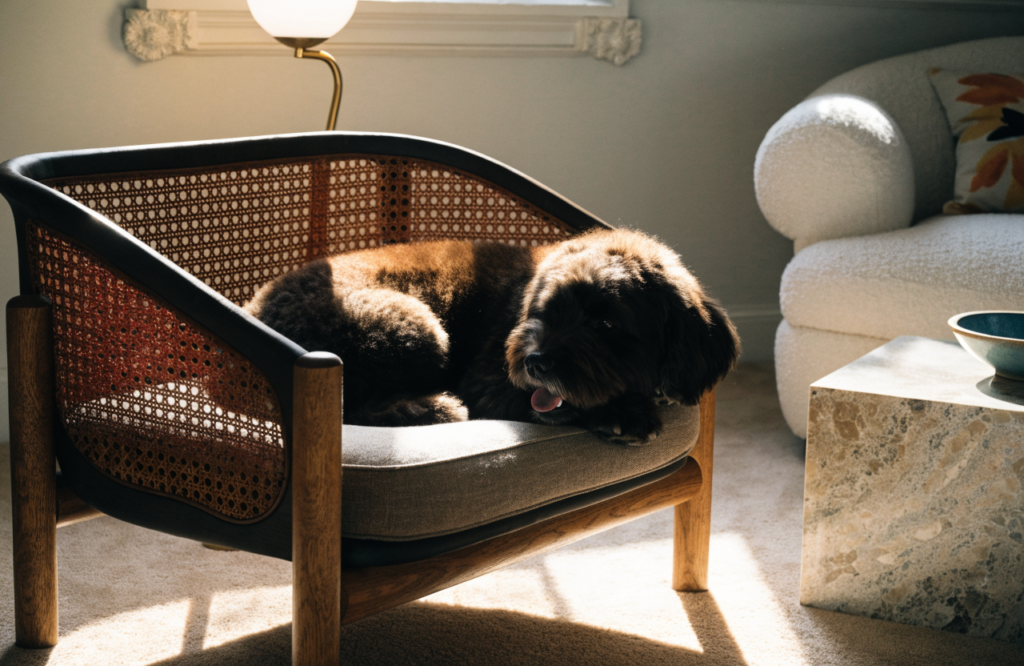
Choose a donut or cave if the dog curls or burrows and does not overheat. Choose a flat, dense foam mattress if the dog sprawls, is large, or has sore joints, and keep the entry low. Choose an elevated cot if the dog sleeps on tile, chews fabric, or lives somewhere hot. Choose a stuff-your-own cover if you want a one-off fabric and a wash routine you will actually do. Skip a named or designer shell until the shape, the fill, and the cleaning plan are already right.
Questions people ask before they buy
Why won’t my dog use the bed I bought?
Usually the location, the temperature, or the shape is wrong, not the dog’s gratitude. Move it to the spot they already use, add a familiar blanket, and compare the bed with how they lie on the floor. Persistent avoidance plus stiffness is a reason to talk to a vet.
Are luxury or personalized dog beds worth it?
They are worth it when the cover is removable, the fill matches the dog’s weight, and you like seeing the bed in the room. A name embroidery does not change sleep. A four-figure fashion bed is a furniture purchase, and it still needs a liner and a washing plan.
How big should a unique dog bed be?
Big enough for the sleeping pose, with extra inches to turn, and judged by the interior if the bed has bolsters. A curled small dog can use a round nest. A stretched large dog needs a rectangle longer than nose-to-tail base. When in doubt, size up.
Are smart or heated beds a good idea?
Self-warming beds that use the dog’s own heat are the simpler option for small, cold dogs. App-controlled or plugged-in beds add cords and failure points. They are a poor match for chewers, and they do not fix a bed that is the wrong shape.