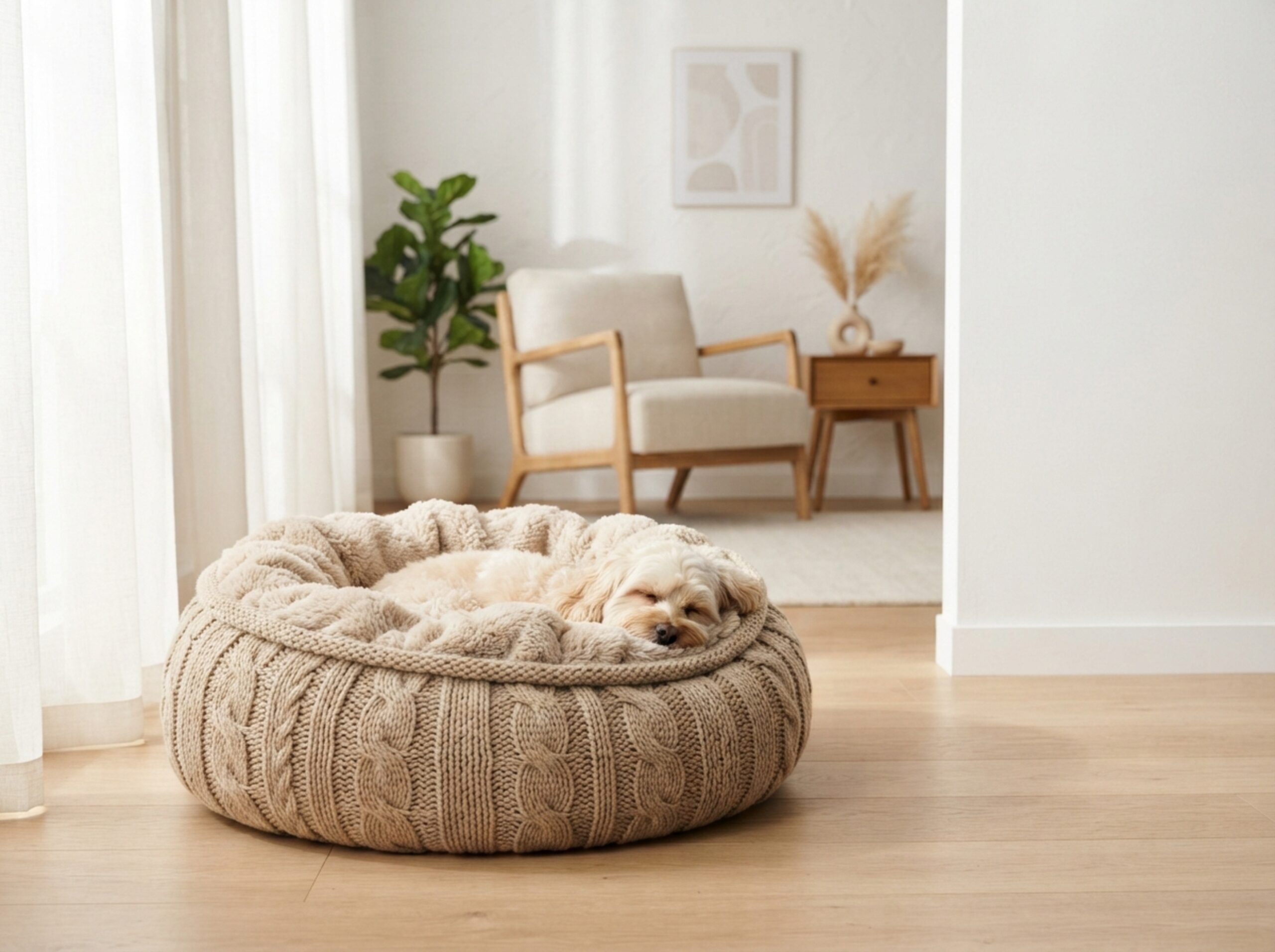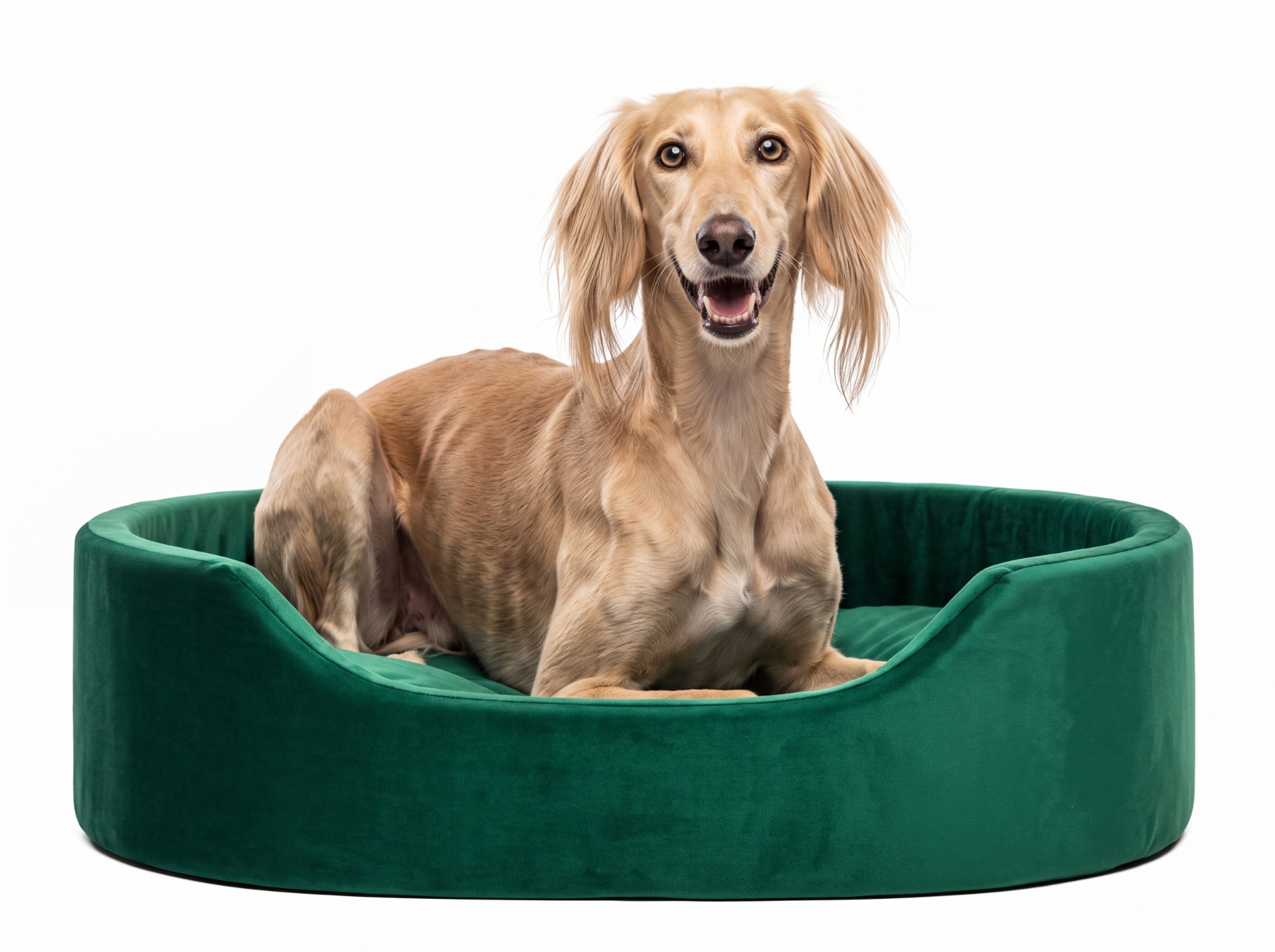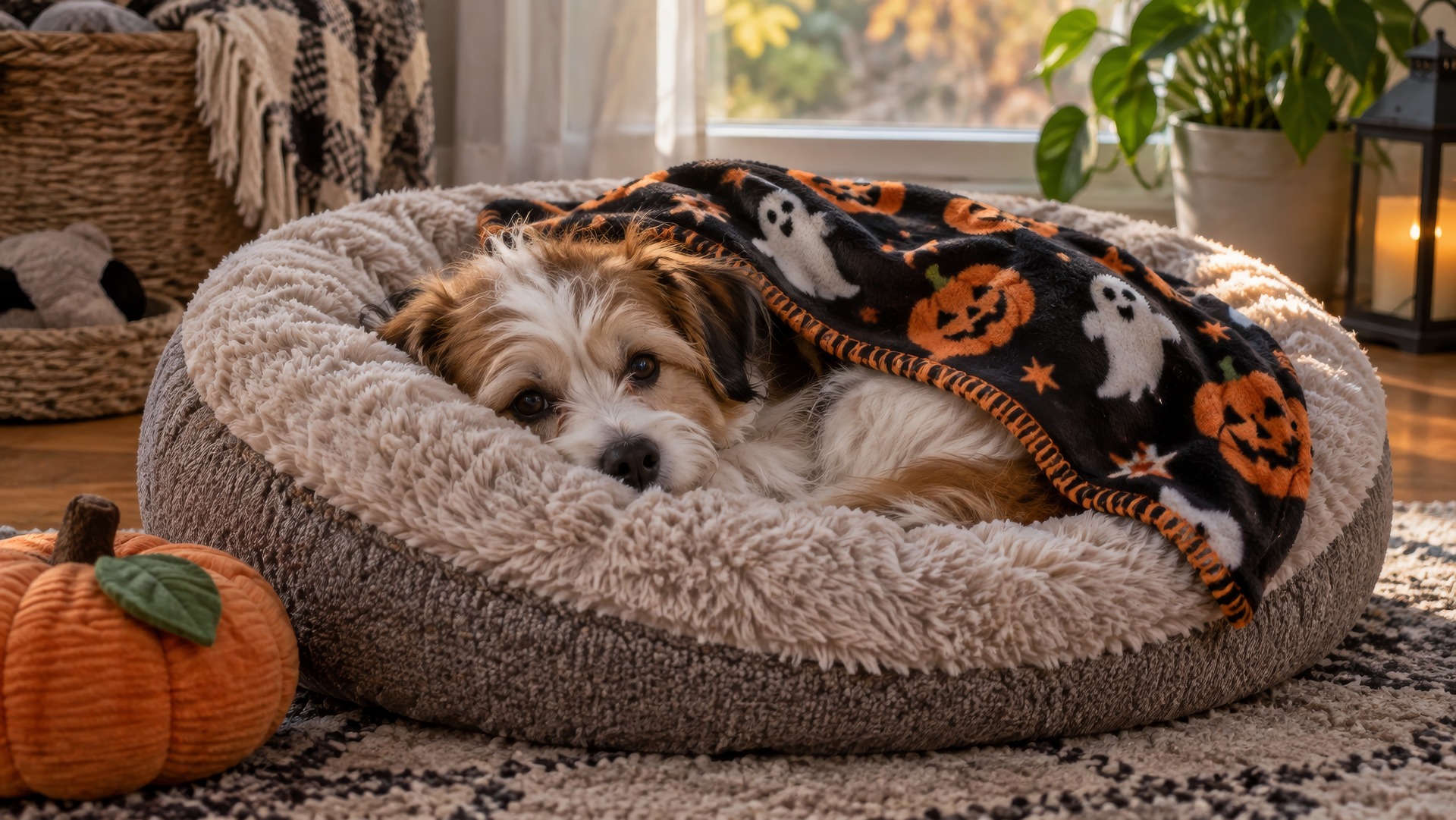

A boucle dog bed is a cover choice sitting on top of ordinary pet-bed construction, not a different kind of support. The looped yarn looks like furniture and feels soft, but it also holds hair, snags on claws, and usually cannot be washed as hot as vets prefer for bedding. The foam, the liner, and whether the cover comes off are what decide whether the bed still works after the first muddy week.
What the fabric is doing on the bed
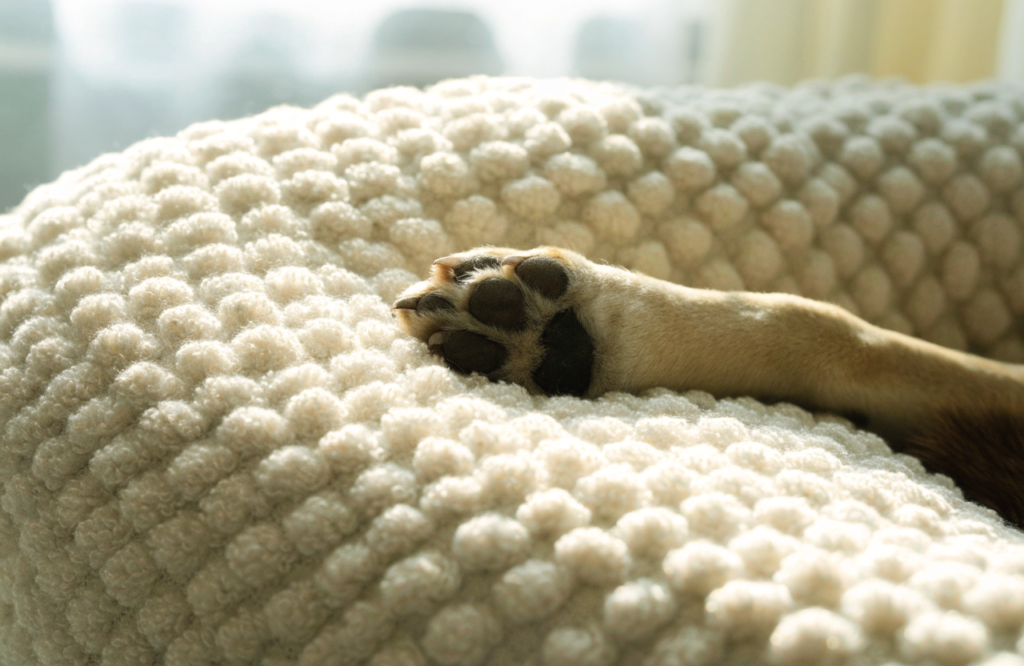
Bouclé takes its name from the French for “loop” or “curly.” Makers form it by spinning two yarns at different tensions so one buckles into small loops, which is the nubby surface you see on sofas as well as dog beds. Lords & Labradors’ fabric notes describe that construction and call the result hard-wearing and soft, with a low liquid-absorption claim that is worth treating cautiously. Furniture-care guides aimed at the same textile say the opposite in practice: liquids go in quickly, and stains are hard to lift if you rub them.
On dog beds the yarn is often polyester, not wool. Teddy London states that its boucle covers are 100% polyester. That matters because polyester bouclé generally holds pills more stubbornly than wool once they form, and it is the fiber most pet-bed brands can machine-wash. The loops are the cover. They do not replace a foam slab, a fiber cushion, or a bolster stuffed with fill. A cheap boucle shell over flat polyfill will still collapse under a 60-pound dog. A plain canvas cover over dense foam will still support joints. Buy the inside first.
Some premium covers carry an OEKO-TEX STANDARD 100 label. The OEKO-TEX program tests textiles for a long list of harmful substances, with stricter limits when skin contact is higher. It is a chemical-safety check on the fabric, not a promise about pilling, chew resistance, or how the bed feels. Foam certifications are separate. CertiPUR-US, cited on several orthopedic boucle beds, applies only to polyurethane foam. It limits certain flame retardants, heavy metals, formaldehyde, regulated phthalates, and total VOC emissions (under 0.5 mg/m³ in the program’s chamber test). It does not grade firmness, cover fabric, or how the bed was assembled.
What the price is actually buying
Street prices split into two bands. UK roundups list everyday boucle box and donut beds from about £45 to £150, with Scruffs-style box beds near £45–£70 and Lords & Labradors box beds near £80–£120. Design-led bolster beds sit higher: The Stylish Dog Company lists a cream boucle bolster at £179, and Ruggable’s Luma boucle bolster pet bed is $199. Bluewater’s orthopedic boucle bolsters run from $199 in small to $467 in extra large.
That spread is mostly construction, not the word “boucle.”
Worth paying for:
- A fully removable cover with a zipper that is covered or set back from teeth. YKK is a common spec on pricier beds; the brand name matters less than whether the zipper survives weekly use.
- A waterproof or water-resistant liner between cover and foam. Ruggable encases its inserts in water-resistant fabric; Bluewater uses a waterproof liner under the boucle. Without that layer, drool and accidents reach the foam, and foam does not go in the washer.
- Foam density described in specifics, not “orthopedic” as a slogan. Bluewater’s beds use about 6 inches of layered CertiPUR-US memory foam and publish a 10-year no-sag warranty. A warranty is only useful if the company is still around and the terms cover flattening, not just seams.
- A spare cover. Teddy London recommends one so the dog is not on a bare insert while the boucle is drying. Cream and oatmeal, the colors that photograph best, are also the colors that show every mark.
Abrasion numbers are rare. The Stylish Dog Company quotes more than 80,000 Martindale cycles on its polyester boucle and REACH compliance on the outer fabric. Most listings skip that figure. If a page only says “luxury boucle” and will not name fiber content or wash temperature, assume the cover is the weak part.
Hair, claws, and stains are the real cost
The loop that makes boucle look expensive is the same loop that keeps pet hair. Knowing Fabric’s pet-fabric review notes that hair nests inside the texture, so it does not blow around the room as easily as it does on a smooth cover, but it also does not lift with a quick brush of the hand. A vacuum with a soft brush attachment, on low suction, plus a lint roller, is the realistic routine. High suction can pull loops.
Claws are the other failure mode. Sleep expert Martin Seeley, quoted by The Mirror on the bouclé furniture trend, said the fabric “often piles and snags extremely easily,” and that nails or jewellery can spoil the surface almost at once. He was talking about human beds. Dog nails do the same job, only more often. Seeley also said the texture collects dirt and recommended weekly cleaning. On a dog bed that schedule is a floor, not a ceiling, if the dog is a heavy shedder or comes in wet.
Pilling is normal in the first weeks on looped yarn, then should slow if the weave is tight. Ongoing bald patches, long pulled threads, or pills that leave the surface thin are a quality problem, not a break-in phase. Trim nails before the bed arrives. A fabric shaver can take pills off; it cannot rebuild a snagged loop.
Stains are where color choice matters more than brand. A Reddit owner who bought a cream boucle dog bed advertised as easy to wash reported that a gentle machine cycle did not move dark spots. Blot, do not rub. Rubbing works loose fibers into a fuzzy patch and drives the mark deeper. Light colors hide hair and show dirt. Charcoal and navy hide dirt and show every pale hair. Neither is maintenance-free.
Heat is the quiet mismatch. Seeley described bouclé as a heavy, wool-like fabric and a poor choice for people who sleep hot. Double-coated dogs and brachycephalic breeds already run warm. A thick boucle bolster in a sunny room can be the bed they avoid in July and the only one they use in January. If the house has no cool floor alternative, a smoother, lighter cover is the safer default.
Shape and size matter more than the texture

Boucle shows up on the same three shapes as every other dog bed.
| Shape | What the dog gets | Where it fails |
|---|---|---|
| Bolster or box | A rim for a head and a sense of a wall | Rim steals lying area; diggers pull loops at the corners |
| Donut or calming bed | A nest for curling and some noise buffer | Too small for stretchers; raised rim traps heat |
| Flat cushion or crate pad | Room to sprawl; easier to wash | No head support; looks less “finished” in a living room |
Size by the dog’s sleeping posture, not by breed charts alone. Bluewater’s guide measures neck-to-tail base and then publishes internal dimensions that are much smaller than the outside. Its small bolster is 29 by 23 inches outside and only 18.5 by 13 inches inside, rated under 20 inches or up to 25 pounds. Ruggable’s small is 28 by 22.5 by 6.5 inches, also up to 25 pounds, with a sherpa mattress of 18 by 12.5 inches. A French bulldog that sleeps on its side can outgrow that inner rectangle even if the weight limit looks fine.
If the dog stretches, add several inches beyond nose-to-tail in the position they actually use. If they only curl, a donut whose inner diameter fits the curl is enough. Giant breeds are where boucle pricing gets hard to justify: Bluewater’s extra-large orthopedic bolster is $467, and the cover still faces the same claw and wash limits as the small.
Washing without flattening the loops
Follow the cover’s label, not a generic “hot wash kills everything” rule. Teddy London’s boucle covers are delicate 30°C, gentle detergent, no fabric conditioner, and no tumble dry, iron, or dry clean. Lords & Labradors also specifies 30 degrees. Conditioner coats loops and holds more hair next time. High heat can shrink polyester and damage any waterproof backing.
That conflicts with hygiene advice. The Vet Desk notes that 60–90°C is the range often cited for bacteria and parasites on pet bedding, and that many covers cannot take it. If the label caps you at 30°C, do not override it to feel thorough. Compensate with frequency: vacuum, wash the cover on the allowed cycle, extra rinse so detergent does not sit on skin, and dry fully before the foam goes back in. Teddy London says its polyester boucle comes out nearly dry and only needs airing. Thicker blends may not.
Never machine-wash the foam. Spot-clean the liner, air it, and keep a second cover if accidents are common. Shake hair off outdoors before the washer, or the pump filter clogs. A front-loader on gentle, not an overloaded top-loader, is kinder to zippers.
When to skip boucle
Skip it if the dog chews beds. Loops invite pulling, and swallowed yarn is a worse problem than an ugly cover. Skip it for a heavy shedder if you will not vacuum the bed most days; a smooth microfiber or tight canvas cover releases hair in the wash. Skip light colors if the dog has tear staining, outdoor access, or a habit of carrying toys to bed. Skip a thick boucle donut for a dog that already pants at rest.
It earns a place when the bed sits in a room you also use, the dog is past the chewing stage, nails stay short, and you can buy a second cover. In that case the fabric is a finish, and the purchase is still won or lost on foam, liner, and internal size.
Choose boucle if the bed has to look like the sofa and you will clean it on a schedule. Choose a smooth, removable orthopedic cover if the priority is joints, shedding, or washing at the highest temperature the label allows. The texture does not make the sleep better. The inside and the upkeep do.
Questions buyers ask after the first week
Does boucle shed fluff onto the dog?
Polyester boucle should not shed like cut-pile chenille, but loose fibers from a new cover and from pilling can cling to coats for the first washes. A lint roller on the bed, and a damp cloth on the dog, usually clears it. Ongoing clouds of fiber mean a loose weave, not normal break-in.
Can I put a waterproof throw over it and keep the look?
A smooth throw protects the loops and makes hair easier, and it also hides the boucle. If the point of the purchase was the texture, a liner under the cover does the protective job without covering the face of the bed.
Is a boucle bed better for anxious dogs?
The donut or high-wall shape is what some dogs use as a nest. The fabric does not add a calming effect of its own. A cheaper fleece donut tests the shape before you spend on a textured cover.
Why do cream beds look dirty so fast?
Light loops show mud, saliva, and oxidized stains, and those marks often survive a 30°C cycle if they sat overnight. Darker boucle ages more quietly. A spare light cover only helps if you wash the soiled one before the mark sets.
Are the loops safe if a puppy mouths them?
Not reliably. A pulled loop can unravel, and yarn is an ingestion risk. Use a chew-resistant flat bed until mouthing stops, then switch covers if you still want the texture.