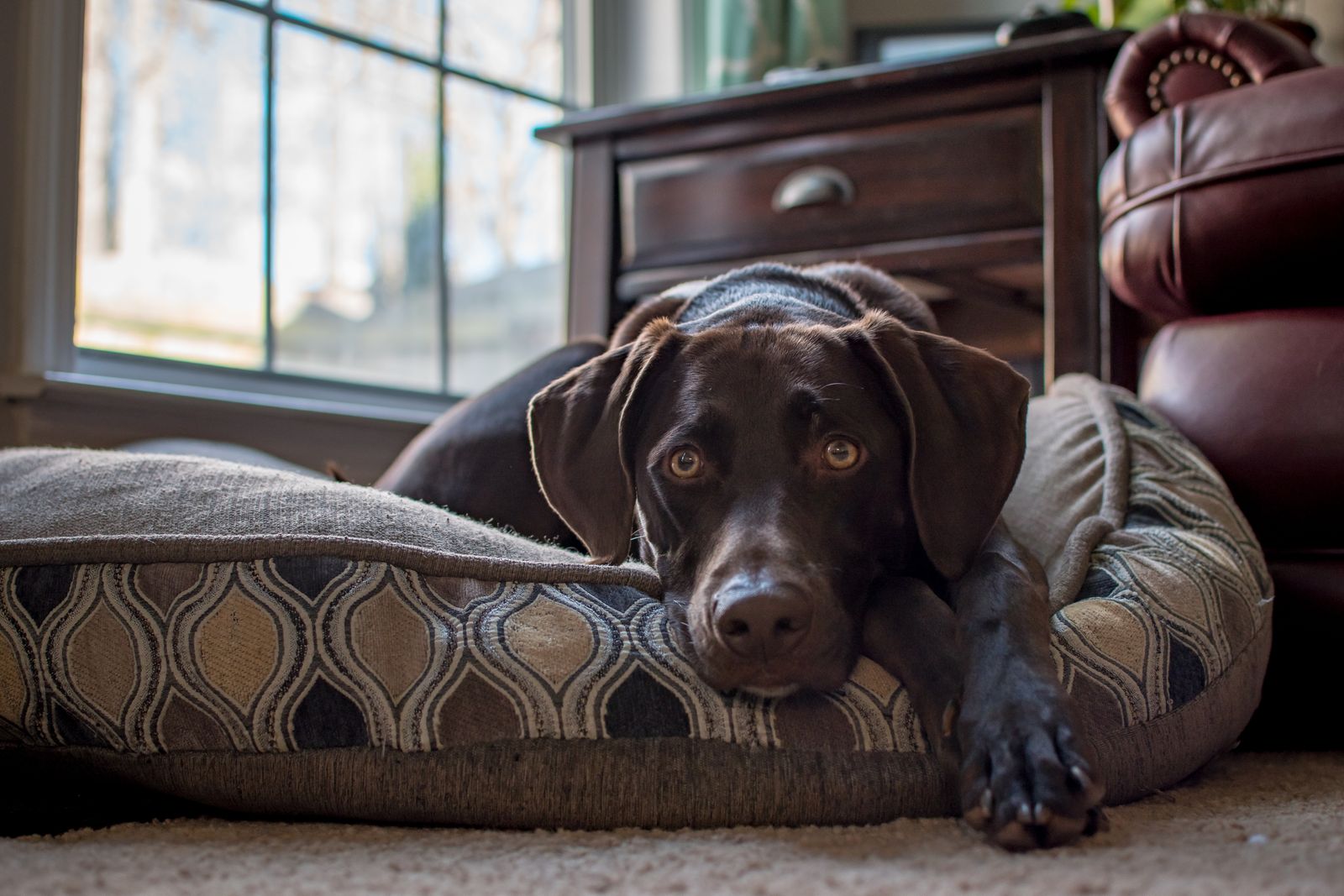

A window dog bed only works if the dog can lie down at eye level with the glass and the mount can take a landing, not just a still weight. Most products sold as window beds were built for cats. A dog that launches onto the seat, shifts to one hip, or simply weighs more than the rating turns a suction perch into a fall risk. For a dog under about 15 pounds on smooth, clean glass, a suction bed can be reasonable if the drop is short. For anything heavier, or any dog that jumps on, the safer window dog bed is a floor-supported platform or a cushion on a wide sill.
Dogs use windows for the same reason they park on the back of a sofa: scent, movement, and a clear line of sight to the street. The bed is there to stop the scratching, the hind-leg standing, and the repeated jumps onto furniture that was never meant to be a lookout.
What counts as a window dog bed
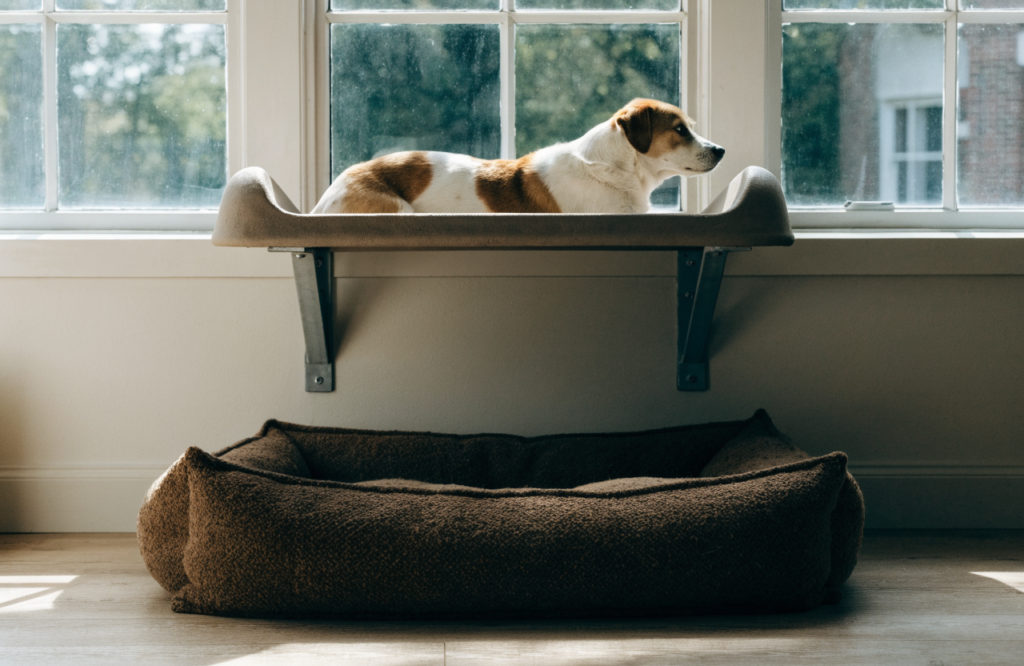
Not every bed near a window is a window bed. The useful distinction is how the weight is carried.
A true window-mounted bed hangs from the glass, usually with suction cups, sometimes with a wire or fabric hammock between them. It uses no floor space. It also puts the entire load on a seal that can fail without warning.
A sill bed sits on the ledge itself. It only works when the sill is deep, solid, and clear of the sash, crank, or lock. Many modern windows have a sill only a few inches deep, which is why so many dogs end up balanced half on the trim.
A floor-supported window perch is a low table, bench, or stepped platform pushed against the window, with a cushion on top. The floor carries the dog. The window is only the view. This is the version that actually fits most dogs.
A floor bed placed under the window is the simplest option. It does not raise a short dog to the glass, but it removes every mounting failure.
Match the mount to the dog and the window
Start with two facts: the dog’s weight plus how they get on the bed, and the surface the bed has to grip.
Suction beds only suit small, calm dogs on the right glass
Suction cups need a continuous seal on smooth, clean, dry glass. Textured, frosted, etched, or filmed glass usually will not hold. A film edge, a chip, condensation, or a slightly recessed pane inside a double-glazed unit can break the seal even when the cup looks stuck. Cold stiffens many PVC cups; heat, dust, and temperature swings loosen them later. Manufacturer ratings assume a still load on a compatible surface, not a dog jumping from the floor.
Customer reviews of suction window perches, even for cats, repeatedly describe cups that hold for days or weeks and then release. A dog makes that worse. Body weight is only the static number. A hop onto the edge loads one or two cups, not all of them, and for a moment that load is higher than the dog’s weight.
Use a suction window dog bed only if all of these are true:
- The dog is well under the stated limit, with a large margin. Treat cat-style ratings of 20 to 40 pounds as a ceiling for marketing, not a target for a dog.
- The dog steps or is lifted on, rather than launching from the floor.
- The glass is smooth, intact, and free of film.
- The fall is short, and the landing is clear of table corners, heaters, and hard edges.
- You can check the cups often, including after cold nights and sunny afternoons.
If any of those fail, do not “make it work” with extra tape. Move to a floor-supported bed.
A wide sill is a bed only if the dog fits on it
Measure the usable depth, not the decorative trim. The dog’s hips and elbows need to sit on the cushion, not hang over the edge onto the wall. A sill bed also has to clear the window hardware. A crank, a sliding sash, or a lock that the cushion blocks means the window cannot be used safely, and the cushion will get shoved aside every time someone opens it.
Bolsters help a curler stay put. They get in the way of a dog that sprawls sideways. On a narrow sill, a flat pad with a non-slip underside is usually better than a thick nest that tips.
Floor-supported perches are the default for most dogs
A platform with stairs or a ramp puts the cushion at sill height and sends the load into the floor. That is the right structure for dogs much above toy size, for seniors, for short-legged breeds that cannot see out while standing, and for any dog that treats the window as a launch pad.
Look for a frame that does not rack when you push a corner, a non-slip top and feet, and steps deep enough for the whole paw. Open-riser stairs look lighter and snag toenails. A gentle ramp is kinder for stiff hips, arthritis, and long-backed dogs than a steep two-step box. Check the listed capacity against the dog’s weight and against how hard they land. A rating that barely matches the dog is not enough if they hop the last step.
Renters usually prefer this type. It leaves no marks on glass or trim and moves when the light changes or the household rearranges.
Size the sleeping surface, not the label
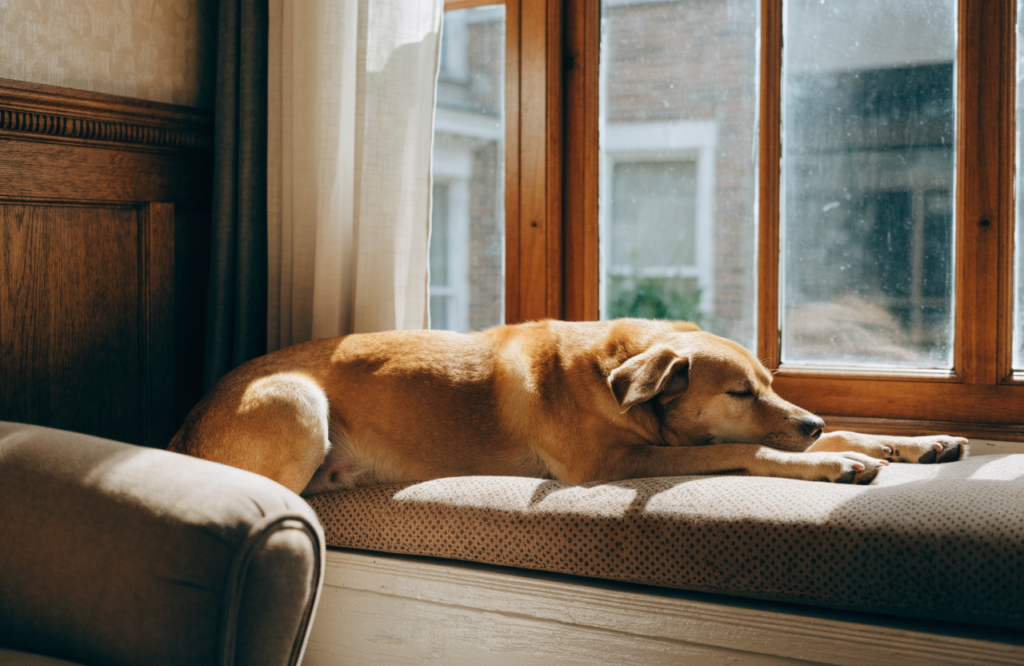
Weight charts on pet beds are a rough filter. Sleeping shape decides whether the dog stays.
Measure from nose to the base of the tail while the dog is lying in the position they actually use, not standing. Add several inches so they can shift. A curler can live on a shorter platform than a dog that sleeps on one side with legs extended. If hips or paws hang off in the position they choose, the bed is too small even if the weight rating is fine.
Width matters as much as length on a window bed, because the dog faces the glass and then rolls. A platform that is only as wide as the dog’s chest becomes a balance beam the moment they turn around. They should be able to resettle without a back foot stepping into open air.
For a growing puppy, size toward the expected adult length if the frame can take the future weight. Replacing a cushion is cheap. Replacing a tipped platform is not.
Safety checks before the first nap
Do these in order. Skipping the load test is the usual reason a new bed fails on day one.
- Clear the landing. Move cords, plant stands, and anything with a sharp corner out from under the bed. A short fall onto carpet is a different event from a fall onto a radiator.
- Confirm the glass or frame. For suction, clean with a residue-free wipe, dry fully, and warm stiff cups in warm water before pressing. Press from the center outward and hold. Then tug each cup. If one lifts, that pane is not a candidate.
- Load it yourself. Press down on the edge, not only the middle, with more force than the dog’s weight. Rock it. A bed that creaks, walks, or tilts under your hand will do the same under a dog.
- Watch the first sessions. Stay in the room until the dog has gotten on, turned around, and gotten off several times. Re-check suction cups after the first hour and again the next morning.
- Set a re-check habit. Cups harden, fabric sags, and screw fittings loosen. A weekly tug on a suction bed, and a glance at step joints on a platform, catches the failure before the dog does.
Heat is the other quiet risk. South- and west-facing glass can make a dark cushion much hotter than the room. A dog that loves the spot may stay too long. Offer water nearby, leave a path off the bed, and close blinds or move the bed when the glass is hot to the touch. In winter, the same window can be a cold draft; a washable cover over a thin pad is easier to manage than a thick bed you cannot dry.
Why some dogs ignore a perfectly good bed
The view is not always the reward you think it is. A dog that already watches from the sofa may see no reason to move. One that is unsure of stairs may refuse the platform even if they want the window.
Useful fixes are small:
- Put the bed where they already stand and whine, not in the sunniest corner of a room they do not use.
- Feed a meal or a chew on the platform for a few days so the location pays off before it is a bed.
- For stairs, reward one step at a time. Do not place the dog on top and expect them to invent the way down.
- Keep the first cushion familiar. A brand-new smell on a new height is two changes at once.
A better view can also increase barking. If the dog already alerts at every passerby, a higher perch may sharpen that habit rather than settle it. In that case a floor bed set back from the glass, or curtains drawn during peak foot traffic, is the more peaceful setup.
Problems that show up after the first week
The suction bed holds, then drops. Reclean the glass, replace glazed or cracked cups, and try a different pane. If it releases again with no dog on it, retire the mount. Reviews of popular suction perches show this pattern often enough that a second failure is information, not bad luck.
The dog hangs off one side. The platform is too narrow, or the cushion slides. A non-slip pad under the cover, and a wider top, fix this more reliably than a higher bolster.
Steps scuff the wall or the bed walks. Felt or rubber on contact points, and a slight angle so the frame cannot creep, usually stop it. Recheck after the dog’s heaviest landings.
The cover smells or mats. Window beds collect nose prints, drool, and outdoor pollen that drifts in when the sash is open. A removable, washable cover matters more here than on a bed in a quiet corner.
Claws catch in mesh hammocks. Open-weave seats that suit cats can snag a dog’s nails during a turn. A solid panel with a pad is easier on feet.
When a window dog bed is the wrong project
Skip the mount and use a floor bed if the only available glass is filmed or textured, the sill is too high for a safe step-down, or the dog is a determined jumper heavier than a small terrier. Also skip it if the dog’s real problem is boredom during long absences. A view helps some dogs settle. It does not replace a walk, a chew, or someone coming home.
For a large dog that only needs a better angle on the street, a sturdy ottoman or bench already in the room, topped with a washable pad and pushed to the glass, often beats a specialty perch. The label matters less than a surface that stays put when they lie down.