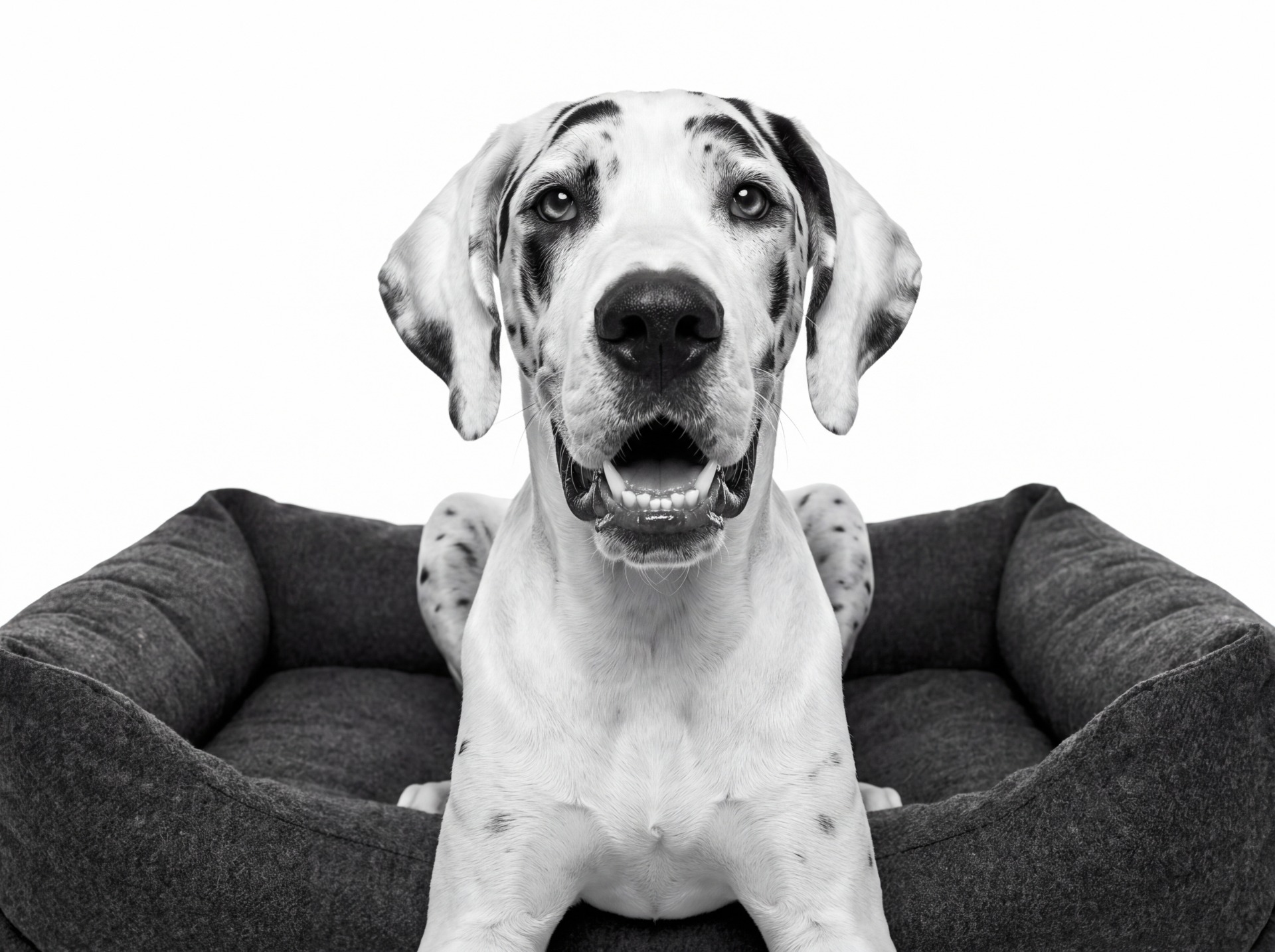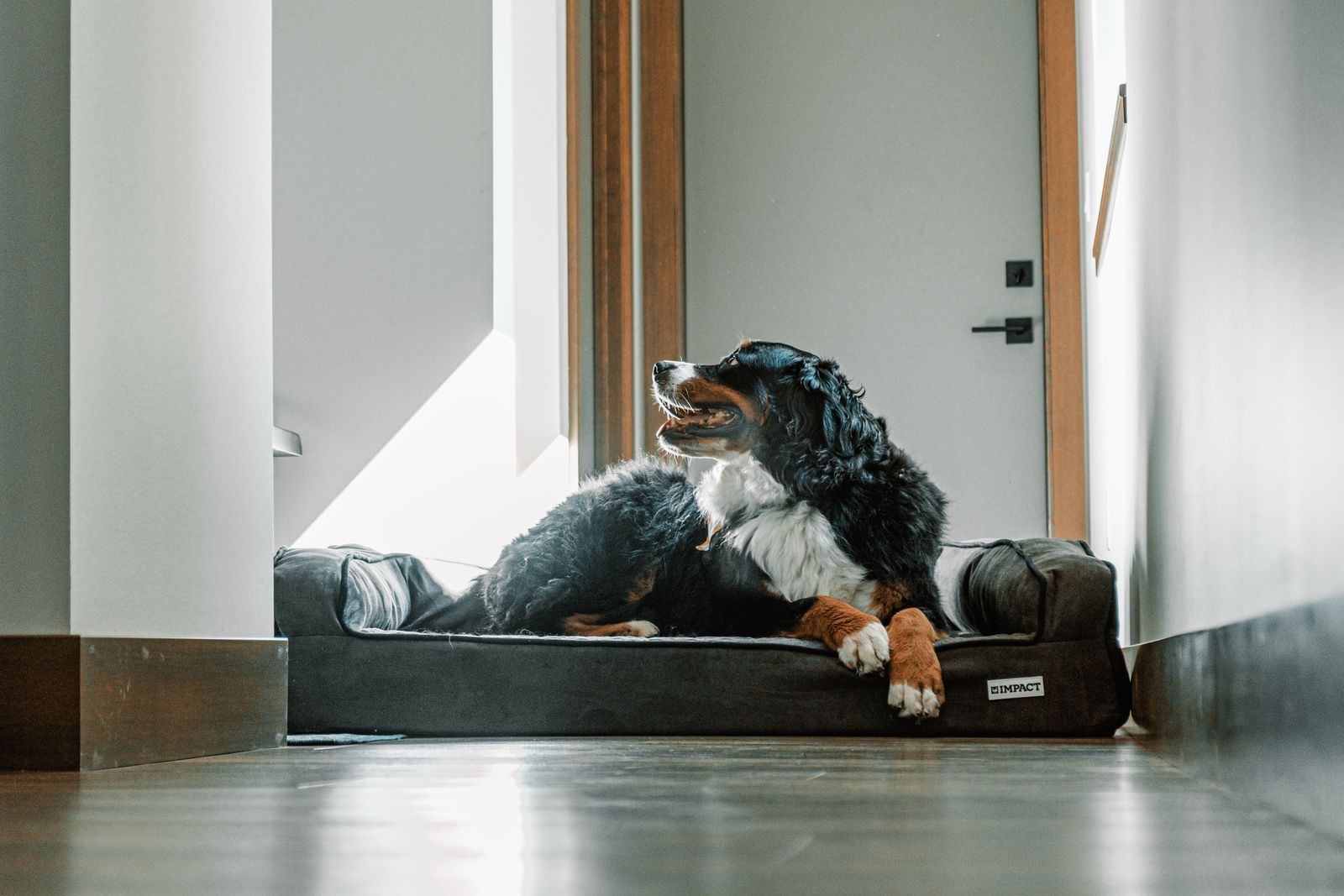

A large dog bed only works if the sleeping surface is longer than the dog stretched out and the fill does not collapse under the dog’s weight. Most products labeled “large” fail one of those tests. A 70-pound Labrador and a 140-pound Mastiff are often sold the same size name, then one of them spends the night half on the floor.
These 15 ideas cover the styles that actually solve that problem: orthopedic rectangles, elevated cots, chew-resistant frames, crate pads, and a few household alternatives that cost less than a specialty giant bed. Each one is matched to a sleep style, a weight range, and the drawback that usually gets left off the product page.
Measure the dog before you trust the size label

Size names are not standardized. One brand’s extra-large is another brand’s large, and the outer dimensions of a bolster bed include walls the dog cannot lie on.
Measure nose to the base of the tail while the dog is stretched out, then add about 6 to 12 inches. That number is the minimum length of the inner sleeping surface, not the outside of the bed. Between two sizes, size up. A dog that can fully extend gets more joint relief than one curled to fit the mattress. Width matters for sprawlers: shoulder-to-shoulder, plus room for the hind legs to kick out.
| Dog | Typical weight | Practical minimum inner size | What fails first |
|---|---|---|---|
| Labrador, Golden, Husky | 50–80 lb | About 36–44 in long | Thin foam flattens; bolsters steal length |
| German Shepherd, Rottweiler, Bernese | 70–115 lb | About 42–52 in long | Too-short beds; soft memory foam bottoms out |
| Great Dane, Mastiff, Irish Wolfhound | 100–180+ lb | About 52–60+ in long | Length for Danes and Wolfhounds; support for Mastiffs |
Giant-breed guides commonly put Great Danes and Wolfhounds in the 52-inch-and-up range because length is the limiting factor, and Mastiffs in a similar footprint with thicker support because weight is. Treat those as starting points, then check the dog in front of you.
Why a bigger version of a cheap bed still fails
Standard foam in the 3- to 4-inch range can be fine for a 50-pound dog and useless under 120 pounds. Heavy dogs compress soft fill until hips and elbows meet the floor. Memory foam alone is the usual trap: it feels plush in the store, then a heavy dog sinks through it. Supportive orthopedic foam, or a suspended frame that carries weight in the rails instead of the fill, is what holds up.
Bolsters create a second sizing problem. A four-sided wall looks secure and shortens the usable surface by several inches on every side. Senior dogs also have to step over that wall. If the dog is arthritic, a high bolster can turn a supportive bed into a bed they stop using.
15 large dog bed ideas
1. Orthopedic bolster rectangle
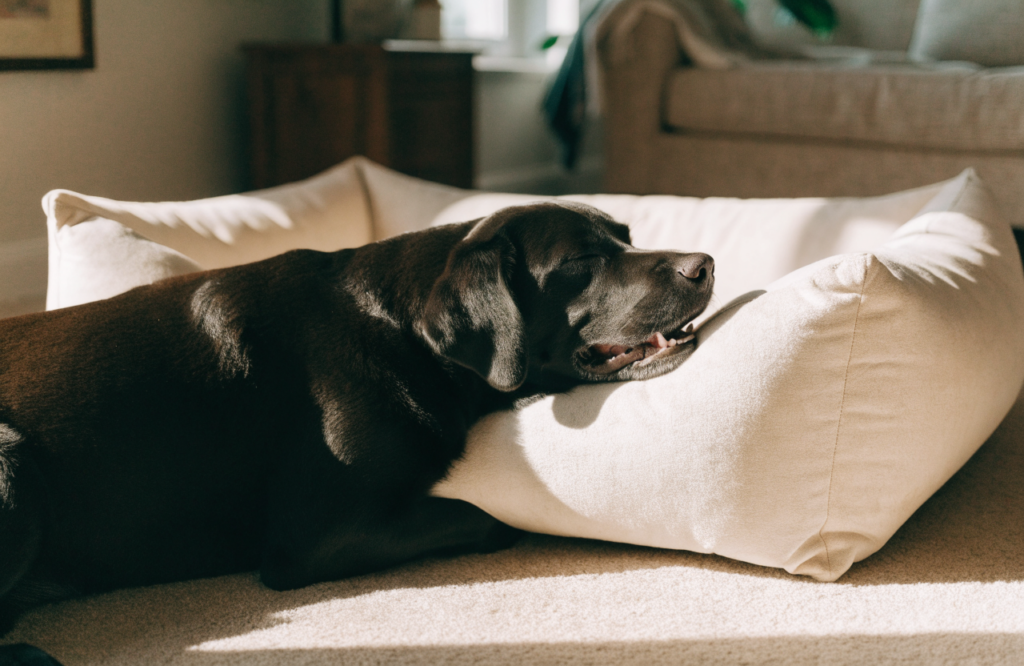
A thick foam slab with a raised rim on three or four sides. This is the default indoor bed for Labs, Shepherds, and other large dogs that like a headrest and a bit of enclosure.
Look for a real support core, not a thin comfort layer over cheap foam. Guides aimed at dogs over 100 pounds commonly recommend on the order of 5 to 7 inches of denser foam, because thinner beds bottom out. A waterproof inner liner plus a removable cover matters more than the outer fabric. The limitation is floor space and entry height: the bolsters eat room, and an older dog may refuse to climb in.
2. Flat orthopedic mattress for sprawlers

No walls. Just a rectangle big enough for a full stretch. Great Danes, Wolfhounds, and any dog that sleeps on its side with legs extended do better here than in a nest.
The inner surface has to be the full advertised size, which is the point of skipping bolsters. Pair it with a nonskid bottom so a 100-pound shift does not send the bed across the floor. The tradeoff is less “den” feel and a cover that shows every hair. Dogs that lean on edges for security often ignore a totally flat pad unless you push it against a wall.
3. Low-entry bed for seniors
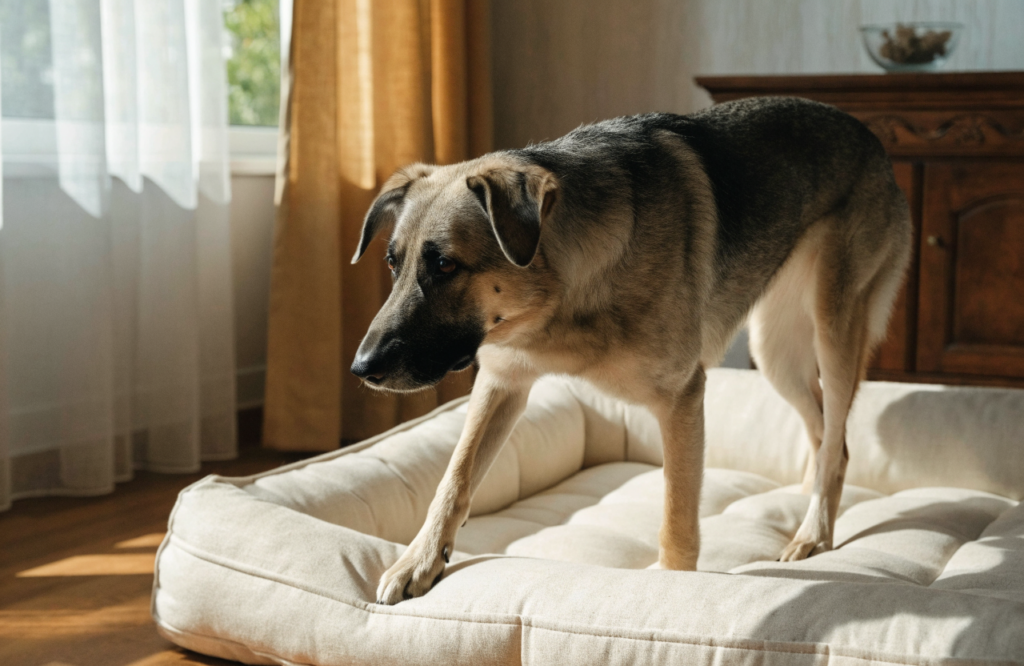
Same support idea as an orthopedic rectangle, with a front edge low enough to step onto rather than climb over. Hip, elbow, and arthritis problems are common in large breeds, and a 6- to 8-inch bolster can be the reason a good bed sits empty.
Prioritize loft under the body and a gentle front lip. A very deep pillow-top can still be hard to mount if the whole bed sits high. If the dog already struggles to stand from the floor, ask a vet whether a slightly raised frame is easier than a floor mattress. Do not assume thicker is always kinder.
4. Elevated cooling cot
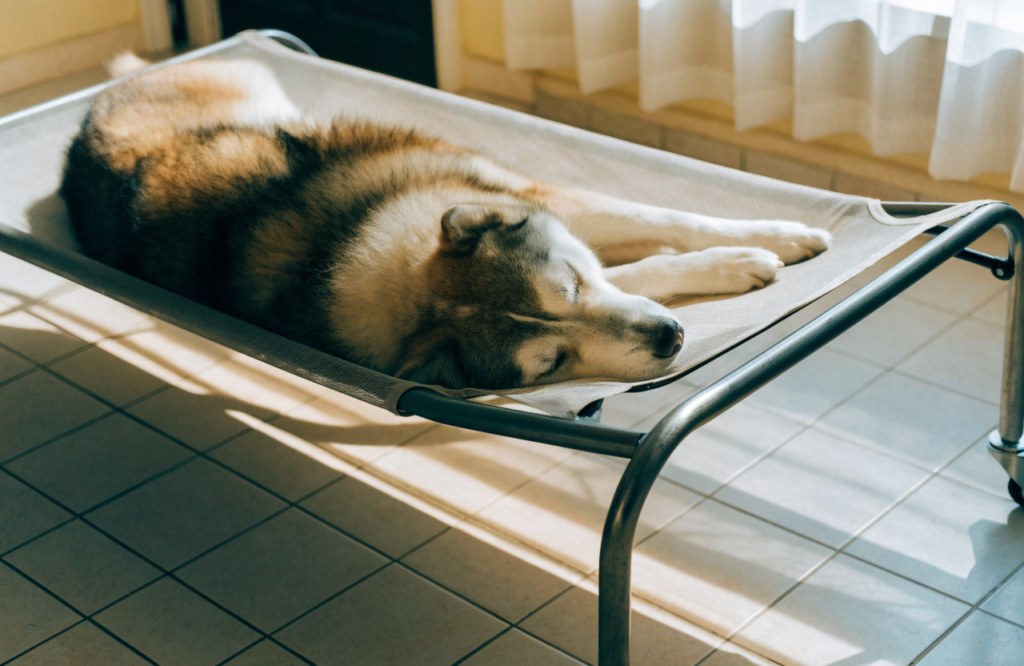
A mesh or fabric sling on a metal or resin frame, raised a few inches off the ground. Air moves under the dog, which helps double-coated breeds, summer sleepers, and dogs that overheat on foam.
Weight is carried by the frame and the tension of the sling, so there is no foam to flatten. Quality cots are often rated around 150 to 250 pounds. Check that rating against the dog, not the size name. The limitation is joint comfort: a taut cot does not cushion elbows the way dense foam does, and some seniors find the step up awkward. It is a strong day bed and a weak only-bed for an arthritic Mastiff.
5. Chew-proof elevated frame
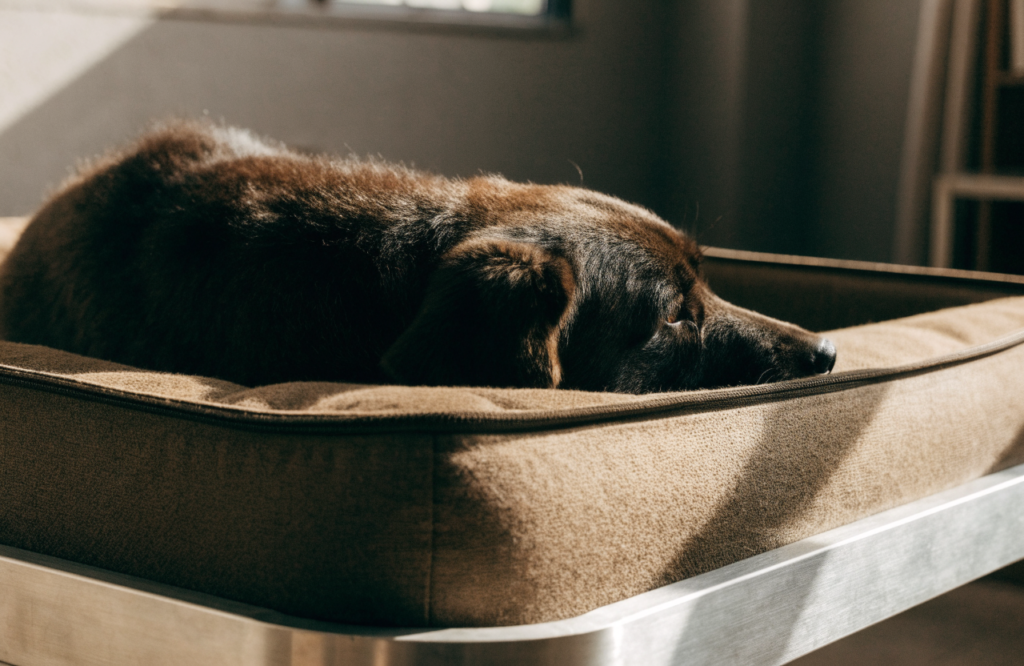
Same raised idea, built so the dog cannot get a tooth on the fabric edge. Kuranda-style beds tuck the fabric into a channel in an aluminum or PVC frame. K9 Ballistics armored cots use a heavy sling and rate many models to about 250 pounds, with XXL rectangles in the 50-inch range and some styles closer to twin-mattress length.
This is the practical answer when a large dog has already destroyed stuffed beds. It is not a substitute for training, and vinyl can still scar from digging. Indoor chewers who also need joint support may need this cot for unsupervised hours and a separate orthopedic bed when someone is home.
6. Crate pad cut to the crate, not the catalog
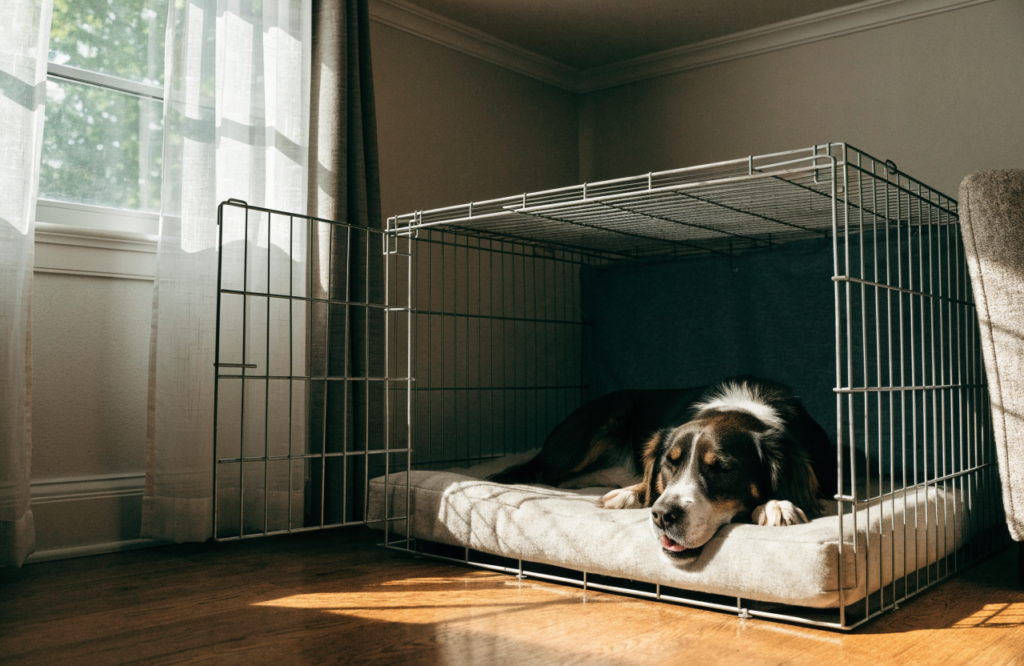
Inside a crate, the bed cannot be larger than the pan. A 54-inch wire crate, a common Great Dane size, needs a pad that fills that footprint without buckling. Owners often buy a “giant” bed that will not lie flat in the crate, then the dog sleeps on the plastic.
Measure the interior length and width. A chew-resistant pad or a fitted crib mattress is usually more realistic than a bolster bed. Foam in a crate also traps heat and odor, so a waterproof layer is not optional if the dog is still having accidents.
7. Crib or twin foam mattress with real sheets
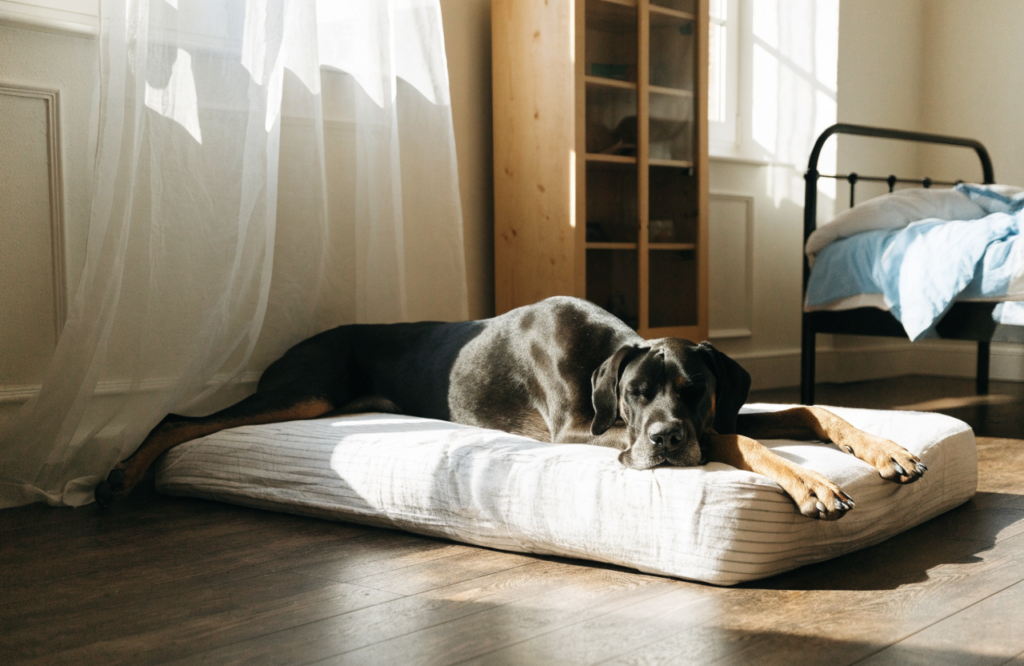
A foam crib mattress or an inexpensive foam twin, zipped into a waterproof protector and covered with a washable sheet. Giant-breed owners use this constantly because the sleeping surface is longer than most dog beds and the covers are cheap to replace.
It works when the dog will actually lie on it. Some refuse anything that does not look like a dog bed, and some chew the corners. A spring mattress is a poor version of this idea: it is heavier, harder to protect from drool, and more likely to sag in the middle. Stick to foam, and plan on washing the sheet far more often than a dog-bed cover.
8. Mattress topper on a low platform
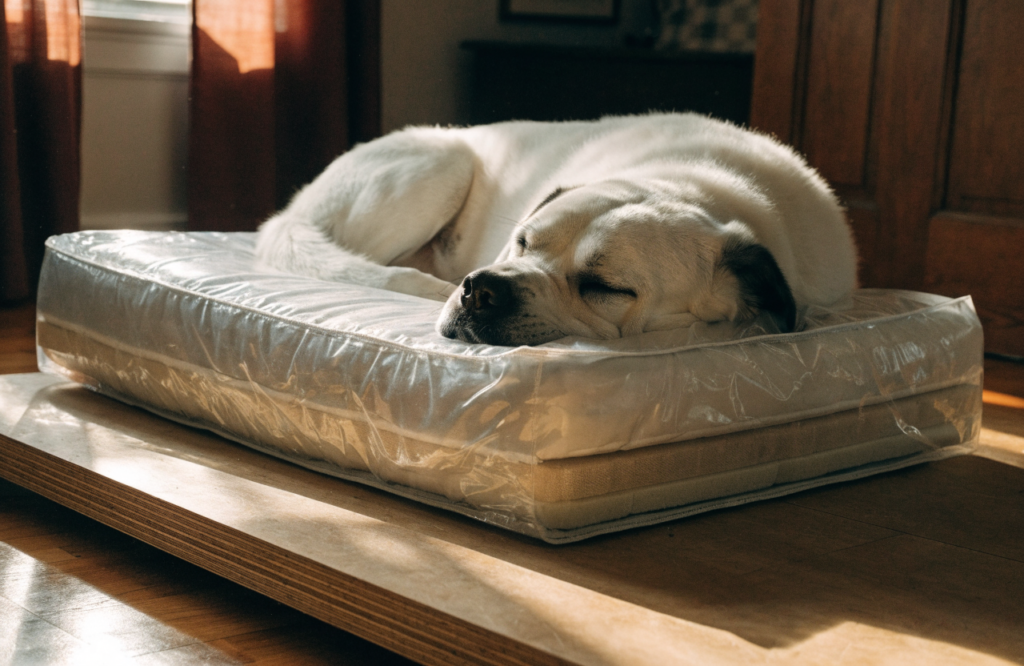
A human mattress topper, 3 inches or thicker, on a plywood platform or a low bed frame with a waterproof encasement. This is the household version of a giant orthopedic pad, useful when even XXL dog beds are short.
The platform has to be bigger than the topper so edges do not curl, and the topper still needs enough density that the dog does not feel the board. Soft guest-bed toppers fail here. The upside is sheet sizes you can buy anywhere. The downside is bulk: a twin platform is furniture, not a cushion you slide under the sofa.
9. Sofa or chaise lounger
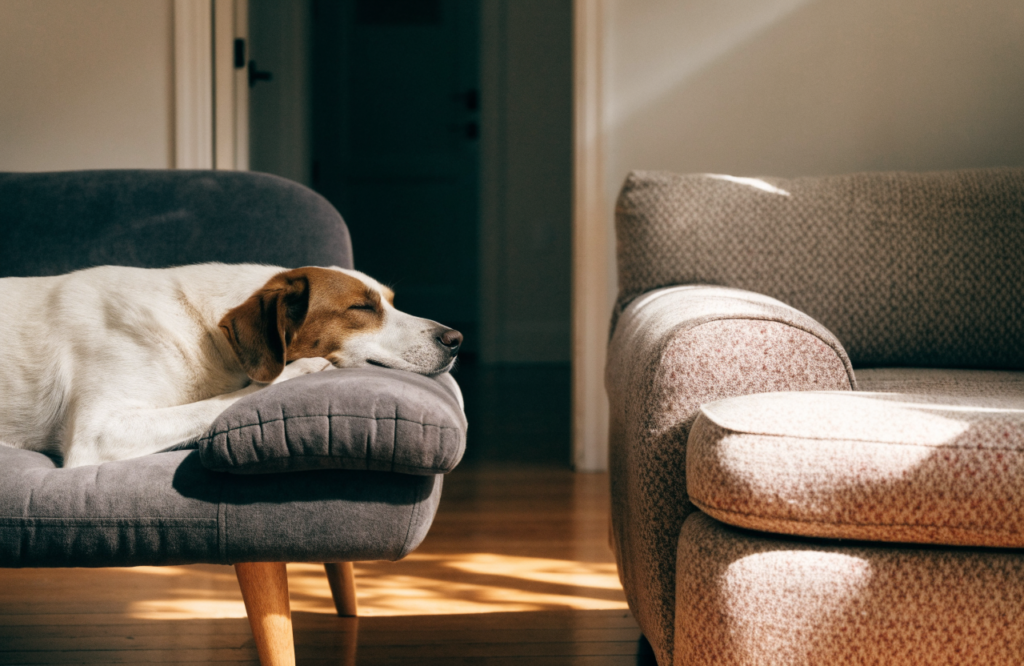
A raised dog sofa with a backrest and short legs, or a sleigh-style lounger with foam that rises at the ends. Large dogs that already claim the human couch often accept this because it has a back to lean on and a defined head end.
Check the weight rating and the height. A stylish lounger on thin legs can wobble under a Rottweiler, and a high seat is a bad idea for a senior who cannot hop. Faux leather wipes clean, which helps with drool, but it also runs hot. A washable cover beats a pretty shell you cannot launder.
10. Waterproof system for droolers and wet dogs
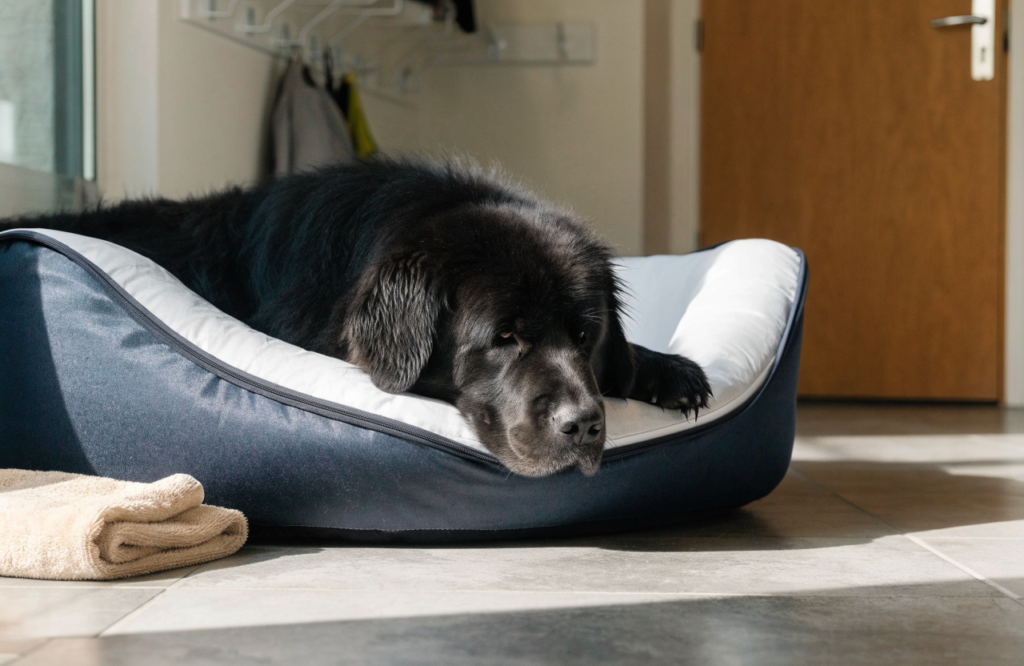
Not a shape so much as a build: orthopedic core, waterproof liner that fully wraps the foam, and a cover that comes off without a fight. Newfoundlands, Saint Bernards, Mastiffs, and any dog that comes in from the rain will soak an unprotected bed in weeks.
The liner has to sit between dog and foam. A “water-resistant” cover alone still lets moisture through seams. Replace the liner when it cracks. This idea pairs with almost any of the foam beds above. It does not fix a bed that is too small.
11. Cooling cover or gel layer for heavy coats
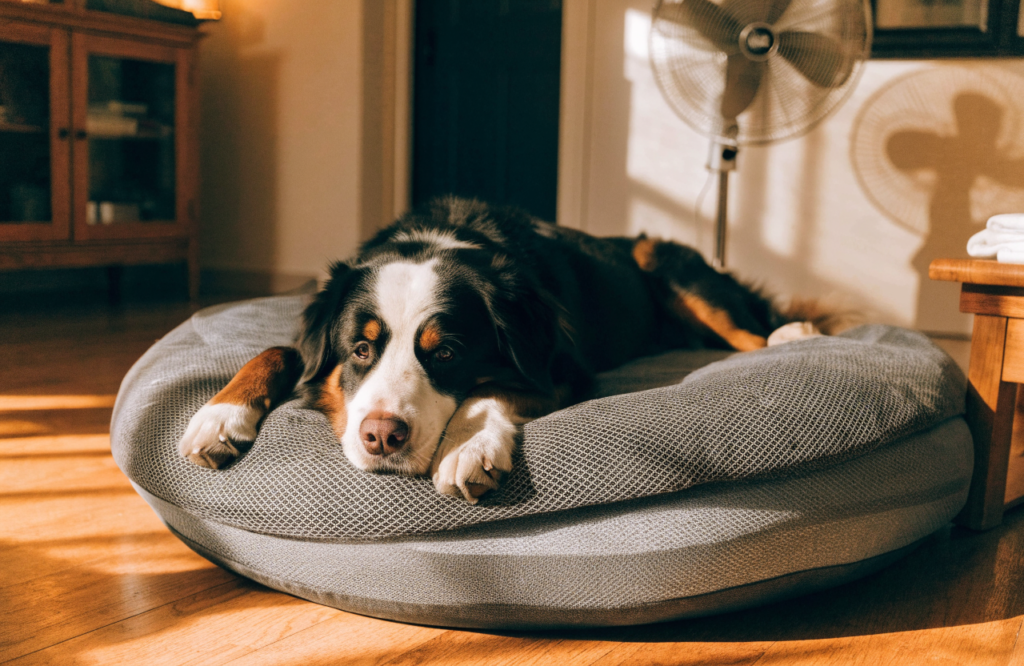
A gel-infused topper, a breathable mesh cover, or an elevated cot used as the warm-weather bed. Thick-coated breeds trap heat against memory foam, then get up and lie on the tile.
Gel is a comfort layer, not a support layer. If the base is soft, the dog still bottoms out, only now the top feels cool for the first few minutes. For a Newfoundland or a Husky in summer, an elevated cot in the daytime and a foam bed at night is usually more effective than one “cooling” foam bed used around the clock.
12. Outdoor raised bed
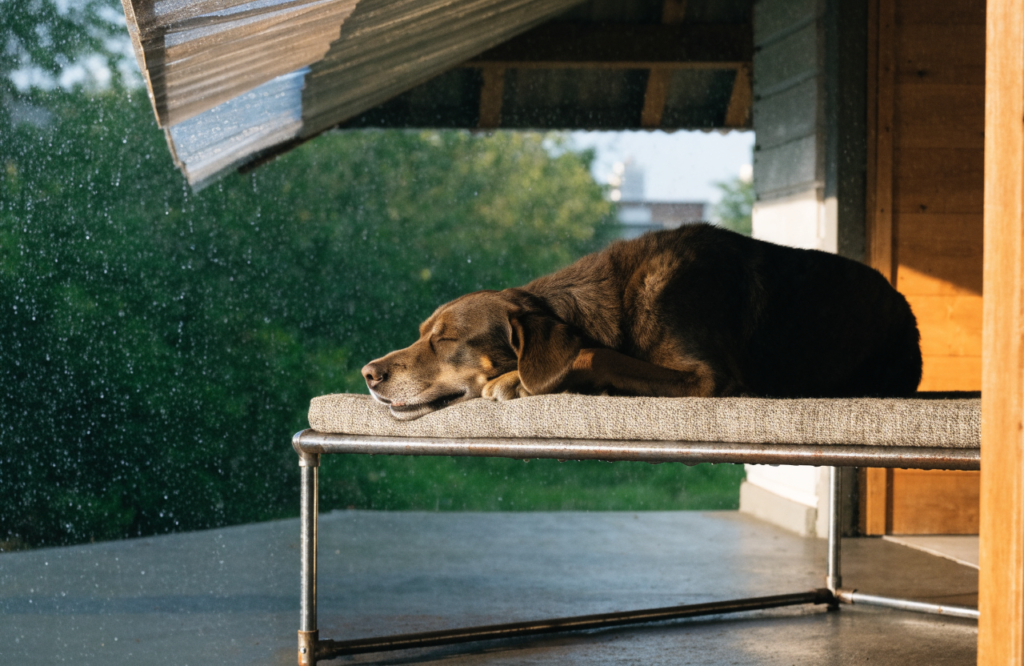
An elevated cot with a rust-resistant frame, left on a covered porch. It keeps the dog off damp concrete, dries fast, and does not become a sponge the way an outdoor cushion does.
Do not leave a foam dog bed outside. Even with a waterproof cover it holds moisture, mildew, and insects. Shade matters more than the fabric brand: a cot in full afternoon sun is not a cooling bed. Bring lightweight frames in during high wind. They are easy for a large dog to flip.
13. Shared XXL floor bed for multi-dog homes

One very large rectangle, sometimes close to twin size, instead of three beds that migrate into a pile. Some armored and orthopedic lines offer footprints around 60 by 48 inches, and a few household options run longer.
This only works if the dogs already share space peacefully. A shared bed does not create enough room for a dog that guards sleeping spots. Two properly sized beds in different corners are safer than one showpiece they fight over. If you do buy one large floor bed, a waterproof liner is mandatory, because one muddy dog ruins the foam for everyone.
14. Wall-backed bolster for edge leaners
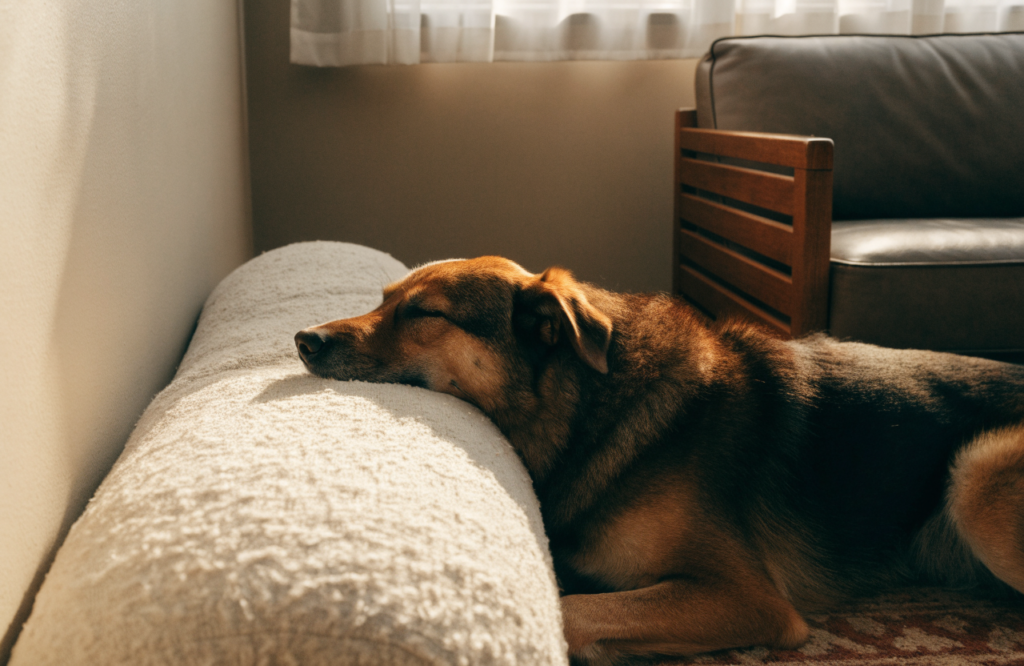
A bed with a solid bolster on one or two sides, pushed into a corner or against a sofa. Many large dogs sleep with their back against something. A free-standing bed in the middle of the room gets ignored for that reason.
You can get the same effect with a flat orthopedic pad and the back of a couch, which saves the cost of a four-wall bed and keeps the full surface usable. The mistake is buying a round bolster bed that is wide but short. Length still wins for a Shepherd or a Dane.
15. Two beds with different jobs
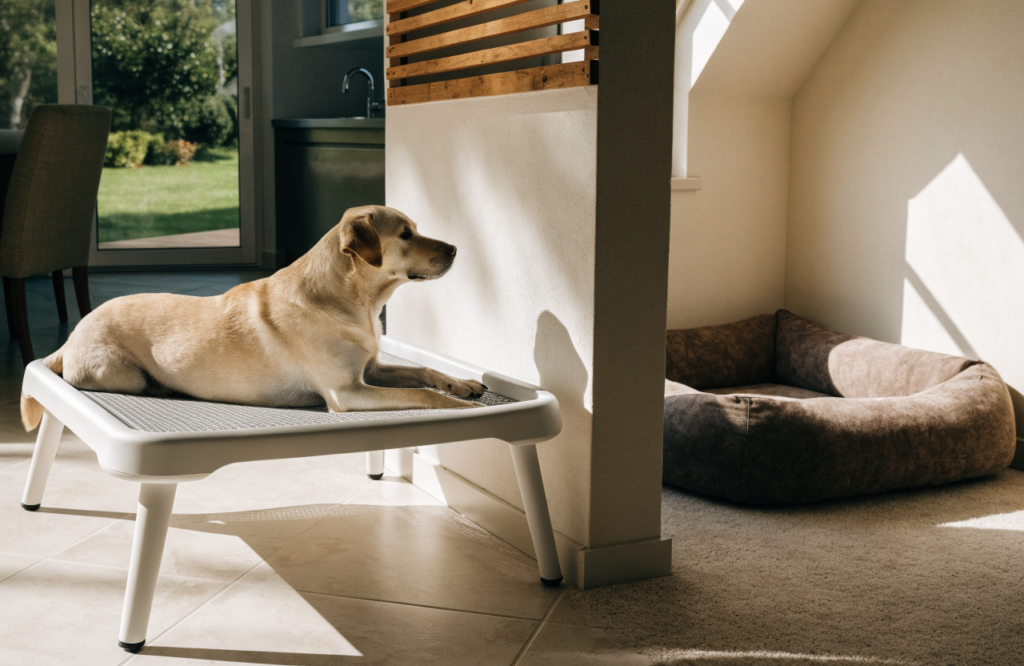
A cooling or chew-proof cot for the day, and a thick orthopedic bed for the night. Large dogs rarely have one sleep mode. They sprawl when it is hot, curl when it is cold, and destroy the nice bed when they are unsupervised.
This is often cheaper than replacing a single premium bed every few months. Put the indestructible option where the dog spends alone time, and the supportive option where you can see chewing start. The limitation is space. In a small apartment, one low orthopedic rectangle against a wall is the better compromise.
Match the idea to the dog in front of you
| If the dog… | Start with | Skip |
|---|---|---|
| Stretches fully on its side | Flat orthopedic rectangle or twin foam mattress | Four-sided bolster, round nest |
| Leans on walls or people | Bolster bed in a corner, or a chaise | A pad floating in the middle of the room |
| Is senior or slow to stand | Low-entry orthopedic bed | High bolsters, tall cots |
| Runs hot or has a double coat | Elevated cot, especially in warm months | Thick memory foam as the only bed |
| Chews fillings | Chew-proof frame bed | Any stuffed bolster |
| Sleeps in a crate | Pad or crib mattress cut to the crate floor | Oversized living-room bed forced into the pan |
| Drools or comes in wet | Waterproof liner under a washable cover | Bare foam or a “spot clean only” shell |
Weight decides the fill. Length decides the size. Sleep position decides the shape. A bed that gets two of those right and misses the third still ends up empty.
Mistakes that make a new bed useless in a month
Buying by the word “large.” Open the specification and read inches. If the listing will not give inner dimensions, assume the bolsters are included in the number on the front of the box.
Choosing memory foam because it sounds orthopedic. Contouring is not the same as support. A heavy dog needs a dense base that does not pack down, with any softer layer only on top.
Ignoring the cover. A bed you cannot wash becomes a smell problem long before the foam dies. Large dogs shed, drool, and track dirt. A zipper that actually goes around the cover, and a spare cover, matters more than the color.
Putting a foam bed in a sunny window or on a damp porch. Heat and moisture break foam down faster than body weight alone.
Assuming one bed fixes joint pain. A supportive surface can make lying down more comfortable. It does not replace a vet visit for limping, stiffness, or a dog that suddenly refuses to get up.
Keeping a large bed usable
Wash the cover on the schedule the dog forces, not the schedule you hoped for. Air the foam while the cover is in the machine. Rotate the mattress every few weeks so the same hip hollow does not become permanent.
Trim nails. Long nails are what tear microsuede and ripstop from the inside, even when the dog is not chewing. A waterproof liner should be rinsed, not ignored until it smells.
Replace the bed when the dog’s elbows consistently meet the floor in the middle, not when the cover looks tired. A flattened core cannot be fluffed back into support.
Frequently asked questions
How big should a bed be for a 100-pound dog?
Long enough for a full stretch plus several inches, which for many dogs in this range means an inner surface around 48 inches or more. A stocky 100-pound dog may fit a shorter bed than a lanky 90-pound dog. Measure, then size up if you are between labels.
Is an elevated cot enough for a giant breed?
It can be, if the frame is rated for the weight and the dog is comfortable on a firm sling. It will not cushion arthritic joints the way a thick supportive foam bed does. Many owners use a cot for cooling and a foam bed for sleep.
Are human mattresses safe for large dogs?
A foam crib or twin mattress inside a waterproof protector is a common, practical option. Bare mattresses absorb drool and dander and are hard to clean. Spring mattresses sag and are a poorer fit than foam.
Do large dogs need memory foam?
They need support that does not bottom out. A dense orthopedic base with a thinner comfort layer is more reliable than a thick block of soft memory foam. If the brand will not say anything about thickness or density, treat that as a warning.
What if the dog will only sleep on the human bed?
A floor bed will not compete with the couch unless it is as easy to get onto and at least as long as the spot they already use. Some households solve this with a bigger human bed. Others use a low orthopedic mattress beside the bed so the dog is close without taking the pillows. Neither works if the dog has simply learned that the sofa is allowed.