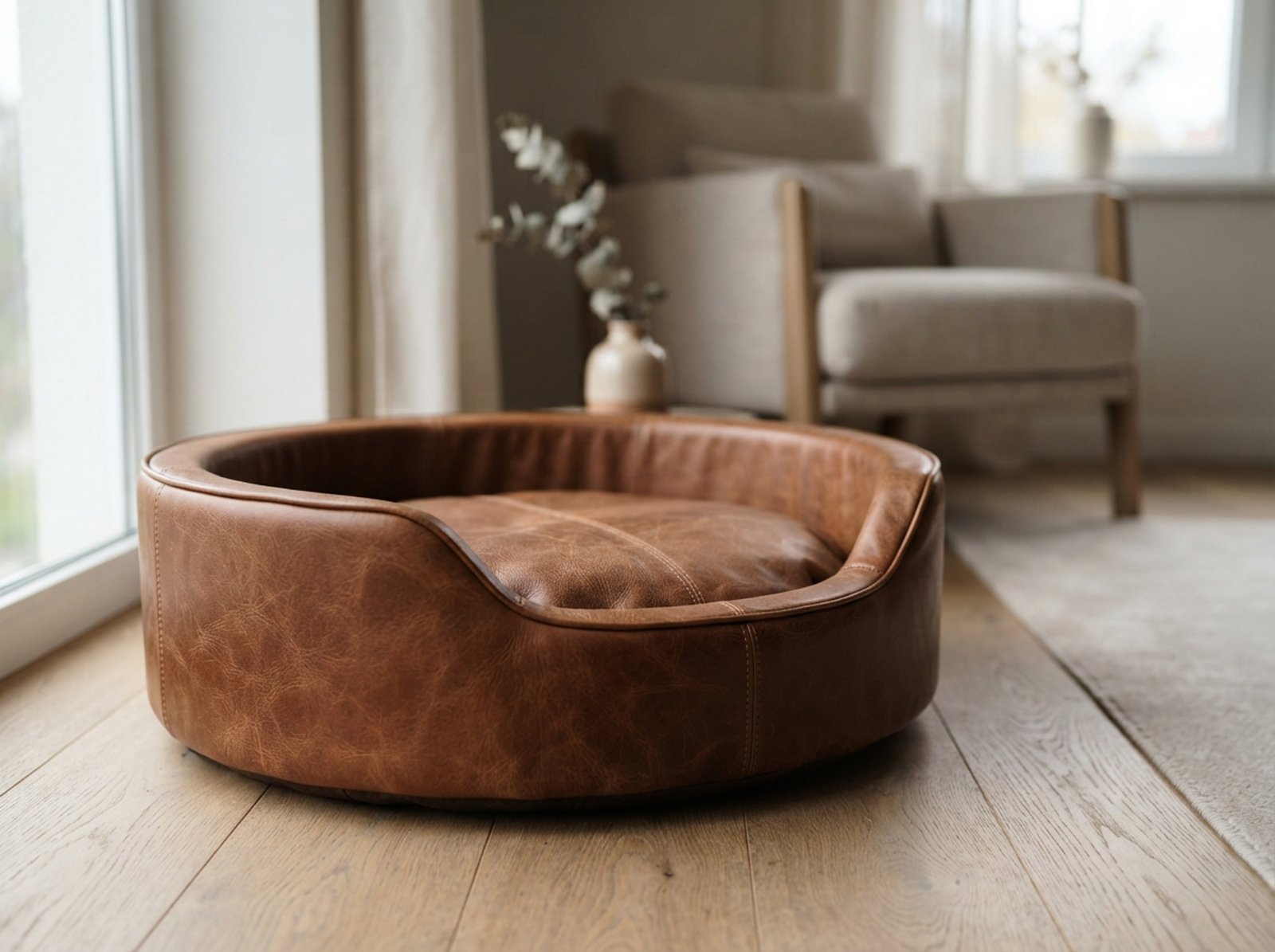

A wine barrel dog bed is a half of a retired oak wine or whiskey barrel, cut into a cradle or low nest, sanded, finished, and fitted with a cushion. Most finished versions are built for dogs that curl, not for dogs that sprawl. Sellers commonly rate them for small dogs around 25 to 30 pounds, with an interior that accepts a round cushion about 24 to 26 inches across. The oak shell can outlast a fabric bolster bed, but only if the cut edges are smooth, the hoops stay fixed, and the cushion is the part the dog actually lies on.
The appeal is partly furniture and partly den. Steel hoops and stained staves read as rustic indoor decor, and the curved walls give some dogs the enclosed feeling they look for in a cave bed. That same curve is the constraint. A standard Bordeaux barrique is roughly 59 gallons, about 37 inches tall, with a belly near 27 inches across and a narrower head. Cut in half, it does not become a large-dog bed.
What the Barrel Shape Does for a Sleeping Dog

Wine and whiskey barrels are coopered from oak staves held by tension and metal hoops, not by glue. French oak and American white oak are the usual species. Once the barrel is retired from a winery or distillery, makers cut it and turn the curve into a wall.
Two cuts show up most often.
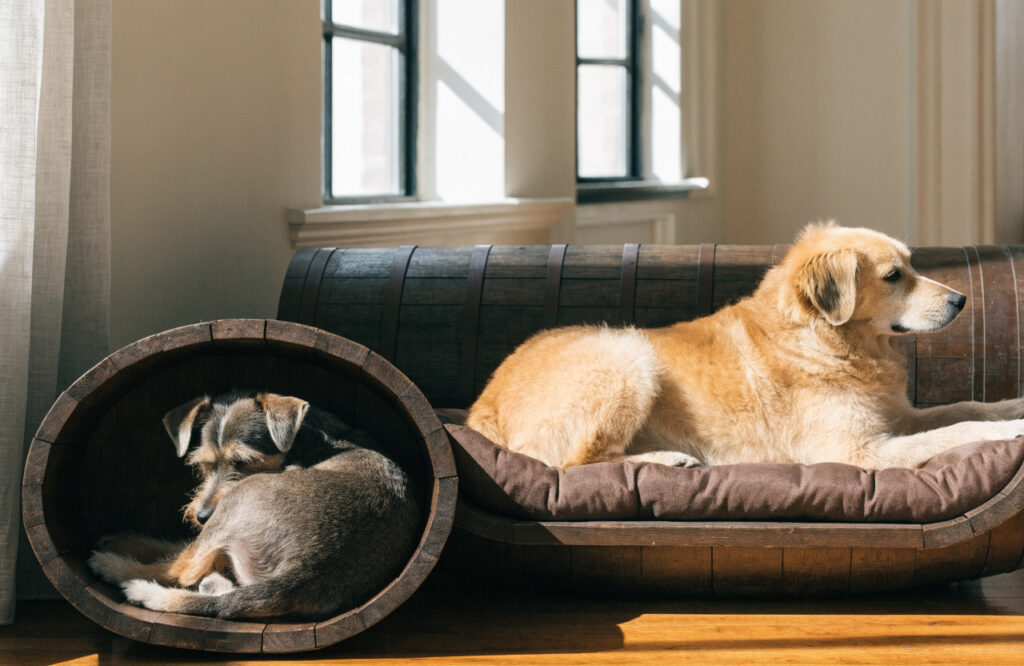
A lengthwise half creates a trough. The long sides rise like bolsters, and a lowered front edge becomes the entrance. This is the shape in most commercial pet beds. One maker’s round version sits 7 to 10 inches high at the back and about 3 to 5 inches at the cushion line, sized for a 24- to 26-inch round or oval insert, and is sold for small and medium dogs. Another half-barrel bed is listed at about 26 inches wide by 14 inches high, for dogs up to roughly 30 pounds, sometimes with a fitted pillow included.
A low horizontal cut, taken near the bottom of the barrel, makes a round bowl. It is easier for a stiff dog to step into, but the usable floor is a circle closer to the barrel’s head diameter, often in the low 20-inch range, so sprawling legs hang over the rim.
The walls matter more than the wood species. Dogs that sleep curled, with the nose tucked and the back against something, tend to settle in a barrel bed. Side sleepers and sprawlers need body length plus several extra inches, and a half barrel rarely supplies that. A Labrador-length dog will not fit a 24-inch nest even if the oak looks sturdy in a photo.
How to Match the Bed to the Dog
Measure the dog lying down, nose to the base of the tail, not to the tail tip. Add about 6 inches if the dog curls tightly, and 10 to 12 inches if it stretches. Then compare that number with the interior floor of the bed, not the outside hoop-to-hoop width.
A practical fit looks like this:
- Toy and small breeds under about 25 pounds, especially those that curl: a standard half-barrel nest is often enough.
- Compact medium dogs around 25 to 40 pounds that sleep in a ball: possible if the maker publishes an interior length over 30 inches, which usually means a longer trough cut rather than a round bowl.
- Broad-chested dogs, seniors who need to stretch a sore hip, or any dog over roughly 40 to 50 pounds: a half of a 59-gallon barrel is usually the wrong product. Larger casks exist, including hogsheads and puncheons, but pet beds made from them are uncommon and much heavier.
Weight limits printed by sellers are a useful ceiling, not a target. One recycled Napa barrel bed is listed at 26 by 24 by 13 inches with a 25-pound recommendation. Another is sold for dogs up to about 30 pounds. Those numbers reflect the floor area and the chance a heavier dog will lever the shell or crush a thin cushion, not a tested structural failure point.
Entry height is the other fit check. A back wall of 10 to 14 inches feels cozy to a small dog and awkward to an arthritic one. If the dog already hesitates at a sofa, choose the lower front lip, or skip the barrel for a flat orthopedic bed.
Buying a Finished Bed vs Building One
Finished wine barrel dog beds from small makers commonly land around $200 to $275 before shipping, sometimes with a custom pillow, sometimes as a shell only. Heavier barrel pet houses and dens on marketplaces run higher, into the $400 to $550 range. Shipping is not trivial: solid oak halves are dense, and some listings add a substantial freight charge on top of the bed price.
A used barrel from a winery, brewery, or salvage seller is the cheaper path. Empty barriques are often sold in the tens to low hundreds of dollars depending on condition and region; hobby builds have started from barrels picked up for roughly the cost of a basic dog bed. The other half can become a planter, which is why many people cut one barrel into two projects.
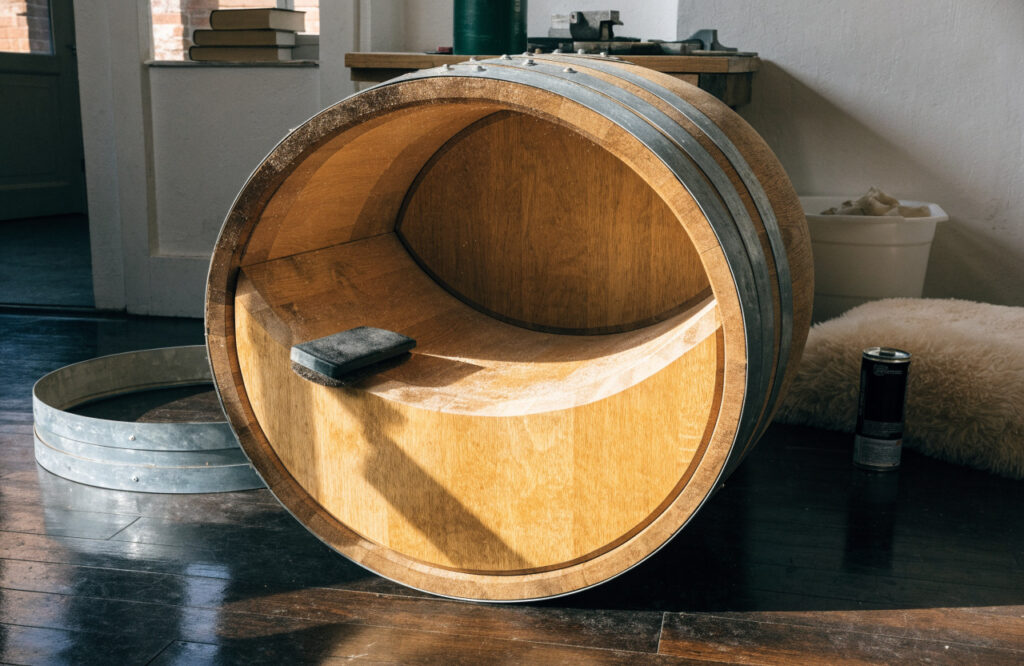
Building one is straightforward only if the hoops are secured before the staves can spring. Once the tension is cut, unfastened hoops loosen and the curve opens. Typical shop steps, in order:
- Confirm the barrel was used for wine, beer, or spirits, not for unknown chemicals, and wash the interior.
- Mark the cut, then screw or bolt every hoop to the staves so the shape holds.
- Cut with a saw suited to oak, then sand every edge until a hand finds no splinters.
- Add a flat floor panel if the curve leaves the cushion rocking.
- Finish the wood, let it cure fully, and only then add the bed.
The cushion is not optional. Oak is hard. Makers who sell the shell alone expect a 24- to 26-inch round or oval insert. A removable, washable cover matters more than the wood tone, because that cover is what meets spills and shedding.
Safety Checks Before a Dog Sleeps in It
Retired barrels are not automatically pet-safe just because they once held wine.
Wash the interior before any finish goes on. Used barrels can hold tartaric crystals, sulfite residue, and traces of alcohol. A scrub with warm water and a fragrance-free oxygen cleaner, followed by a full rinse and dry, is the usual first step. Skip barrels with a chemical odor, blue-green crystalline deposits, or labels mentioning fumigation. Those residues are not a cosmetic issue.
Sand cut edges and the rim the dog will rub. Stave ends splinter more easily than the face of the wood. Check that hoop fasteners sit outside the sleeping area or are covered, so a paw cannot catch a screw head.
Finish is a judgment call, and makers disagree in practice. Commercial beds are often sealed with several coats of water-based varnish so the wood can live indoors or on a covered porch. Fully cured, low-VOC water-based coatings are the common retail choice. Bare or oil-only interiors breathe more but stain, absorb urine, and weather faster. Whatever goes on the wood should be applied in thin coats and left to cure for the full time on the can before a dog is allowed to lie in it or chew an edge. Do not use deck stain, oil-based polyurethane with a strong solvent smell, or leftover paint from another project.
Chewing is the remaining limit. Dense oak and residual tannin put some dogs off, which is why barrel beds sometimes survive dogs that shred fabric bolsters. That is not a guarantee. A determined chewer can still work a stave edge. Bitter apple on the rim, a thick cushion that covers the wood, and supervision in the first weeks are more reliable than assuming the dog will dislike the taste.
Where It Works, and Where the Wood Fails
Indoors, on a hard floor, a finished barrel bed is mostly a cleaning problem: wipe the staves and hoops with a damp cloth, avoid harsh solvents, and wash the cushion cover. Rust on the hoops is worth watching. Light surface rust can be cleaned; flaking rust near the entrance can scratch skin.
Covered outdoor use is possible if the maker used a water-resistant finish and you keep the bed off bare soil. One workshop that uses three coats of a water-based marine varnish still tells buyers to add a coat yearly if the bed stays outside, and to keep it under cover. Direct rain, sprinklers, and ground contact wick into the end grain and rot the bottom staves. A half barrel is also a poor winter shelter on its own: the wood conducts cold, and an open cradle does not hold heat the way an enclosed dog house does.
The weight that keeps the bed from sliding across a kitchen floor is the same weight that makes it a bad choice for apartments where you rearrange rooms often. Plan the spot before it arrives.
Problems That Show Up After the First Week
The dog ignores it. Barrel beds photograph well and still lose to the couch. Put it where the dog already naps, not in a corner you want to decorate, and use the same blanket the dog already likes for the first few nights.
The cushion bottoms out. A 2-inch pad on oak feels fine for a 12-pound dog and hard for a 30-pound dog. If you can feel the floor panel through the cushion when you press with a fist, the fill is too thin.
Hoops loosen or the shape opens. This happens when a DIY cut was made before the bands were fastened to the staves. A finished bed with hoops screwed through the bands into the wood is the version that stays round.
Urine reaches the wood. Covers leak at the seams. A waterproof liner under the cushion, and a quick wipe of the oak, matters more than the stain color. Wine-dark interior streaks that some makers leave visible are cosmetic leftover from red wine; they are not a seal against pet mess.
The entrance is too high. If a small or older dog has to hop, the bed will be used less within a month. A lowered front cut is the fix, not a thicker pillow.
Frequently Asked Questions
Do wine barrel dog beds come with a cushion? Often no. Several makers sell the oak shell only and expect a 24- to 26-inch round or oval cushion. Others include a fitted pillow with a washable cover. Check the listing before comparing prices.
Can a wine barrel dog bed go on a patio? Only in a covered spot, and only if the wood has a cured water-resistant finish. Annual recoating is a reasonable expectation outdoors. Bare oak on soil will not last a wet season.
Will it still smell like wine or whiskey? A raw barrel can. Sanding and a full finish usually remove the odor that dogs would lick. If a finished bed still smells sharply of alcohol or sulfur, it was not cleaned or cured enough to use yet.
Are whiskey barrels different from wine barrels for this project? The build is the same: oak staves and metal hoops. American whiskey barrels are often a bit smaller than a 59-gallon wine barrique and may have a charred interior, which should be sanded back on any surface the dog will touch. Size the sleeping floor either way; the previous contents do not change the fit.