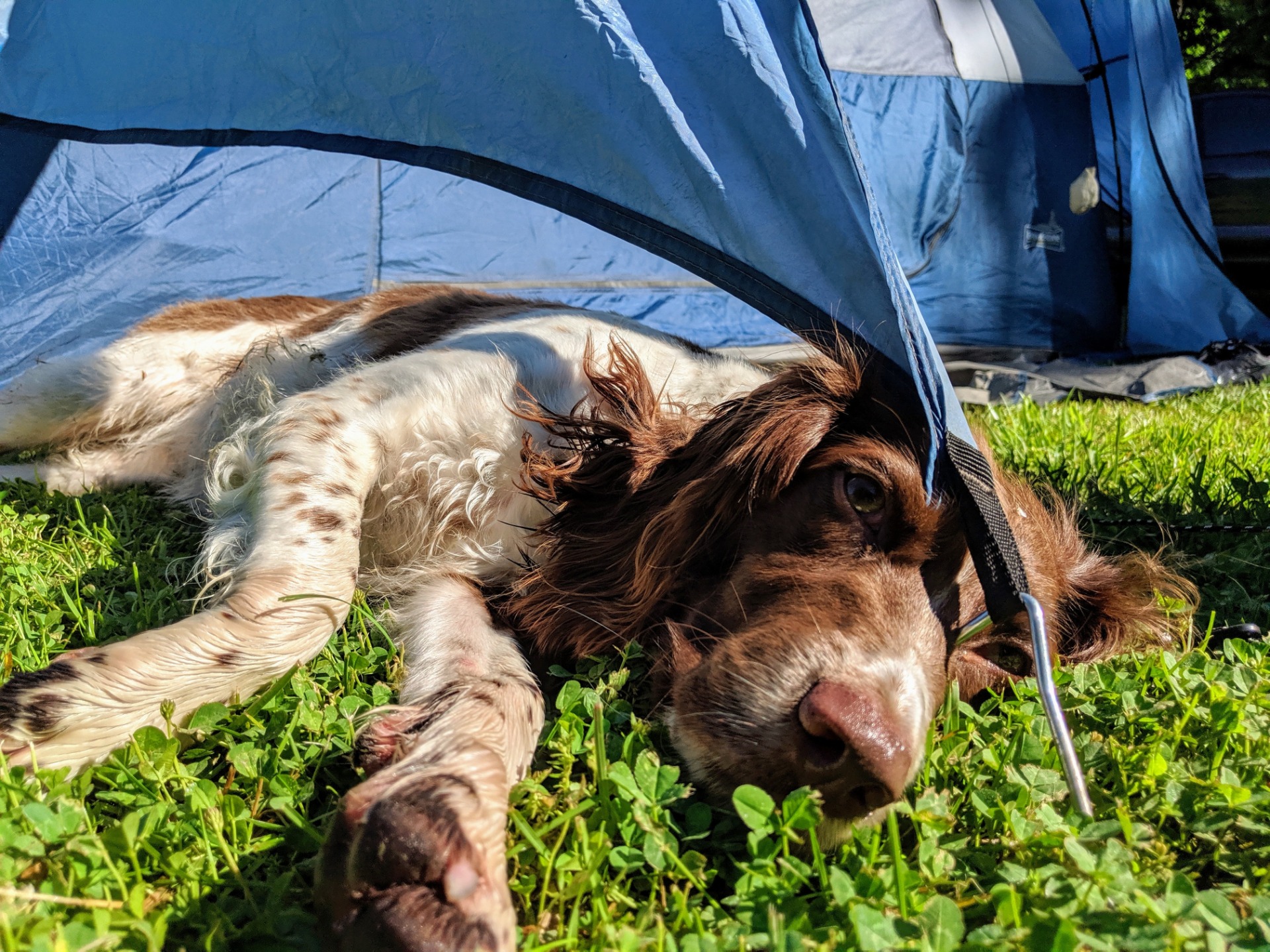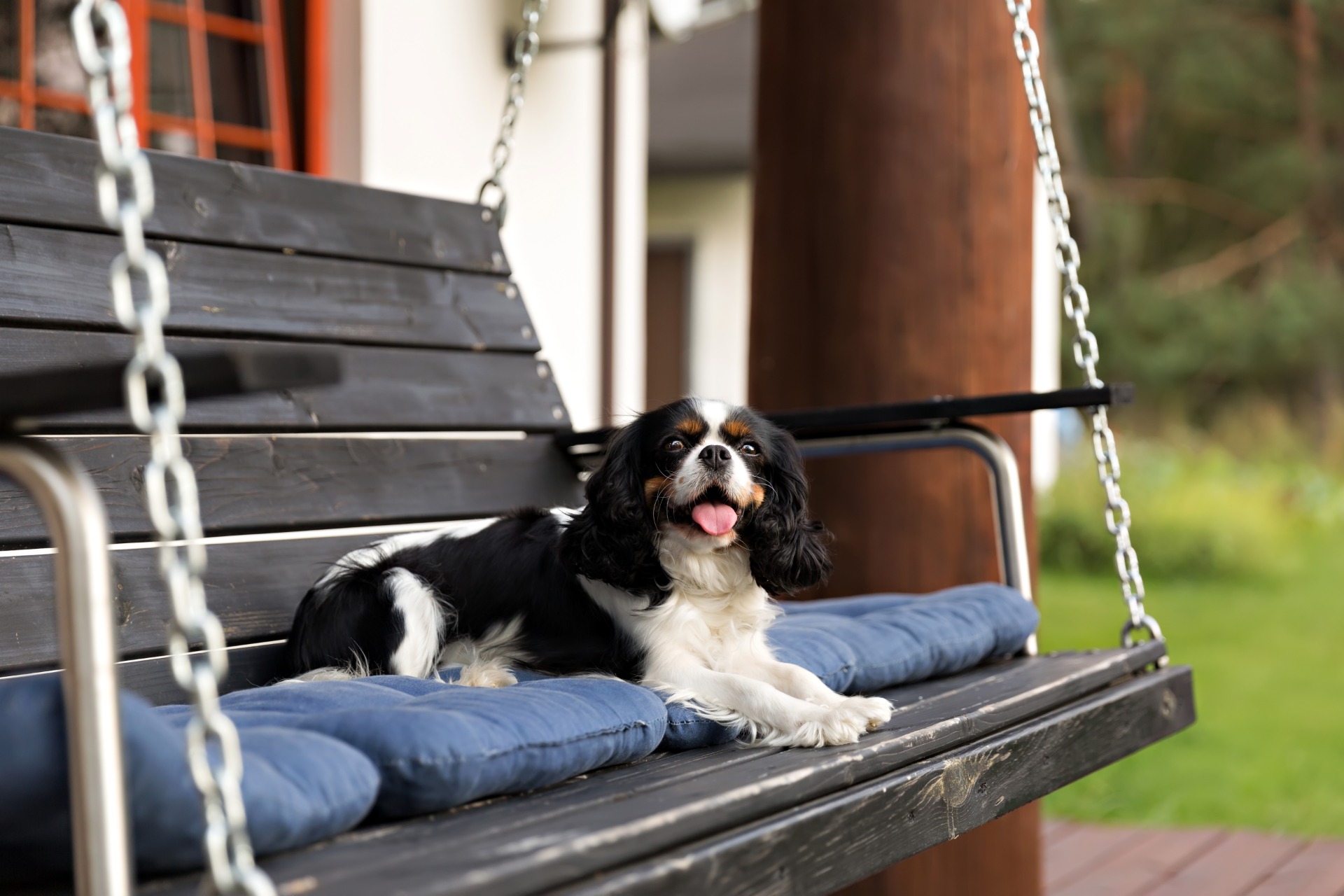

An outdoor dog bed only works if it matches the ground, the weather, and the way your dog actually sleeps. A plush indoor cushion left on open patio stone will soak up rain, hold odor, and flatten within a season. A taut mesh cot in full sun can still leave a short-coated dog overheating if nothing blocks the sun. These 12 outdoor dog bed ideas are grouped by the problem they solve — heat, wet ground, stiff joints, chewing, and covered-patio style — so the bed stays usable instead of becoming another ruined cushion.
Match the bed to the yard before you match it to the photo
Three checks decide more than fabric color.
Size comes from the stretched-out dog, not the label. Measure from nose to the base of the tail while the dog is lying fully extended, then add about 6 to 12 inches. Curlers can live with a tighter fit. Side-sleepers and dogs over about 75 pounds usually need the next size up, because cheap “large” cots often stop around 42 to 48 inches.
Climate decides the construction. Hot, dry patios favor open mesh and shade. Wet grass and open kennels favor surfaces that drain or wipe clean. Cold, exposed yards need insulation and a wind break, not a summer cot alone.
Behavior decides the frame. A dog that digs, scratches before lying down, or mouths edges will ruin stitched bolsters and thin mesh. Chewers need a bed where the fabric is hard to grab, or a surface you expect to replace.
Place any outdoor bed in shade for the hours the dog actually uses it. Elevation cools the body by keeping it off hot concrete and letting air move underneath. It does not replace shade. Brachycephalic breeds, thick double coats, seniors, and puppies overheat faster and should not be left on an uncovered bed in direct sun.
12 outdoor dog bed ideas
1. Classic elevated mesh cot
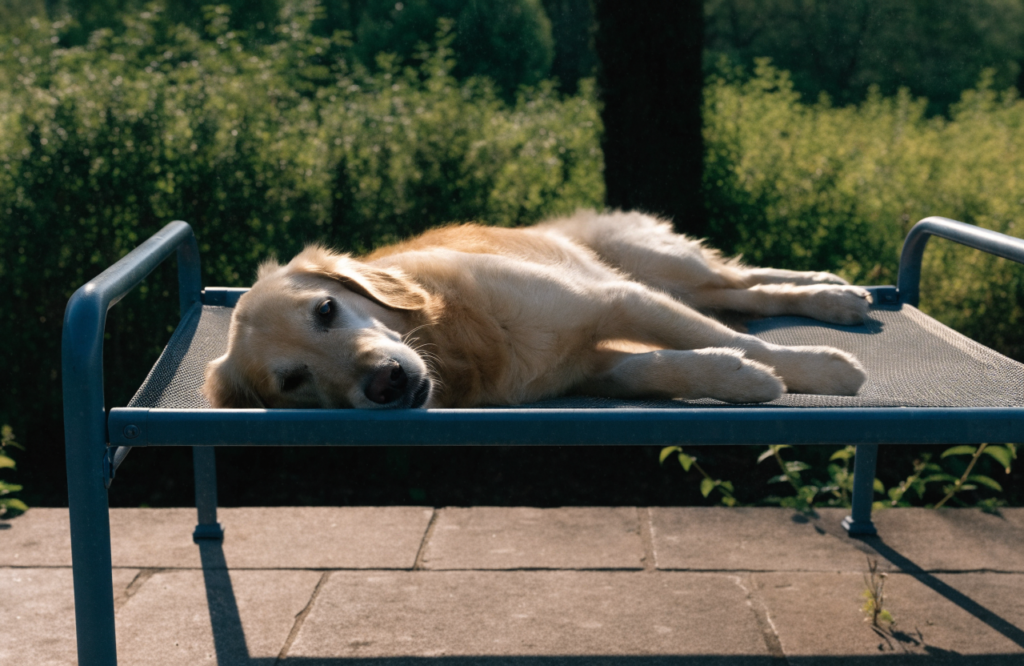
A powder-coated steel or aluminum frame with a taut mesh sling is the default outdoor bed for a reason. The dog sits several inches off concrete, decking, or damp grass. Air moves through the fabric and under the body, so the surface stays cooler than a cushion sitting on stone.
Look for HDPE or textilene-style mesh rather than a thin polyester sheet. HDPE weaves used on long-running outdoor cots are built to block a large share of UV, dry fast, and resist mildew better than indoor fabric. Powder-coated steel is fine on a covered porch. Aluminum or a UV-stable resin frame holds up better if the bed stays out in rain.
Skip this style if the dog needs deep cushioning for sore elbows and will not tolerate a firm sling, or if the dog is a determined chewer. Mesh sags and tears at the corners once claws and teeth get a grip.
2. Raised cot with a removable canopy
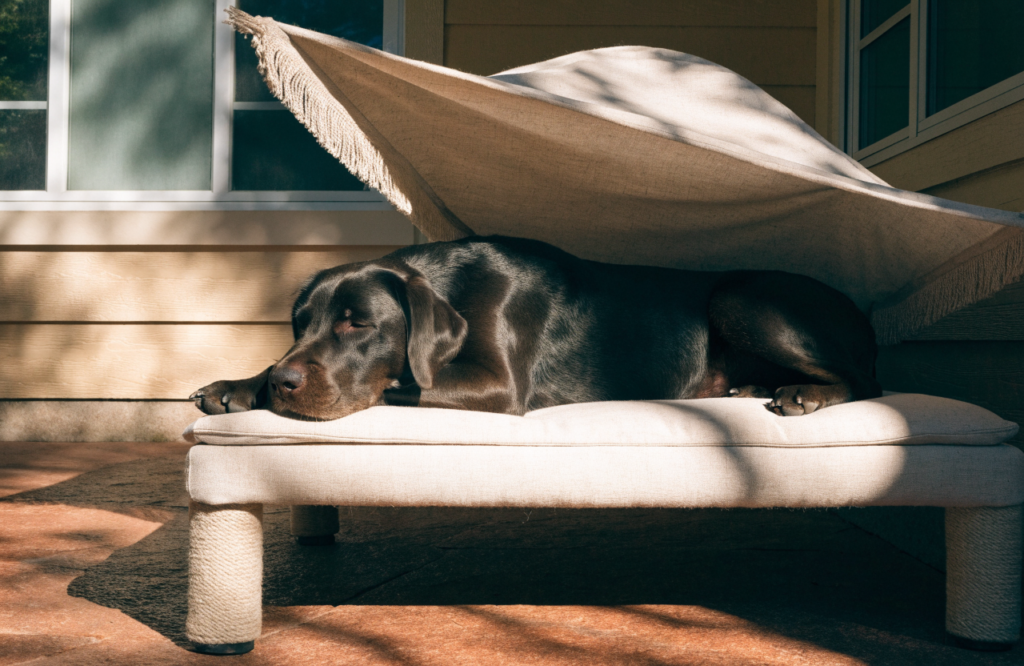
A canopy cot adds a shade roof to the same elevated frame. That matters on south-facing patios and in yards with little tree cover. The useful versions have a canopy you can take off, because a fixed tent traps heat on still days and turns into a sail in wind.
Use it when afternoon sun hits the only flat spot the dog will settle. Do not treat the canopy as rainproof housing. Most are water-resistant shade cloth, not a sealed kennel. In a storm, water still blows in from the sides, and a cheap canopy frame can flip.
3. Bolstered outdoor cot
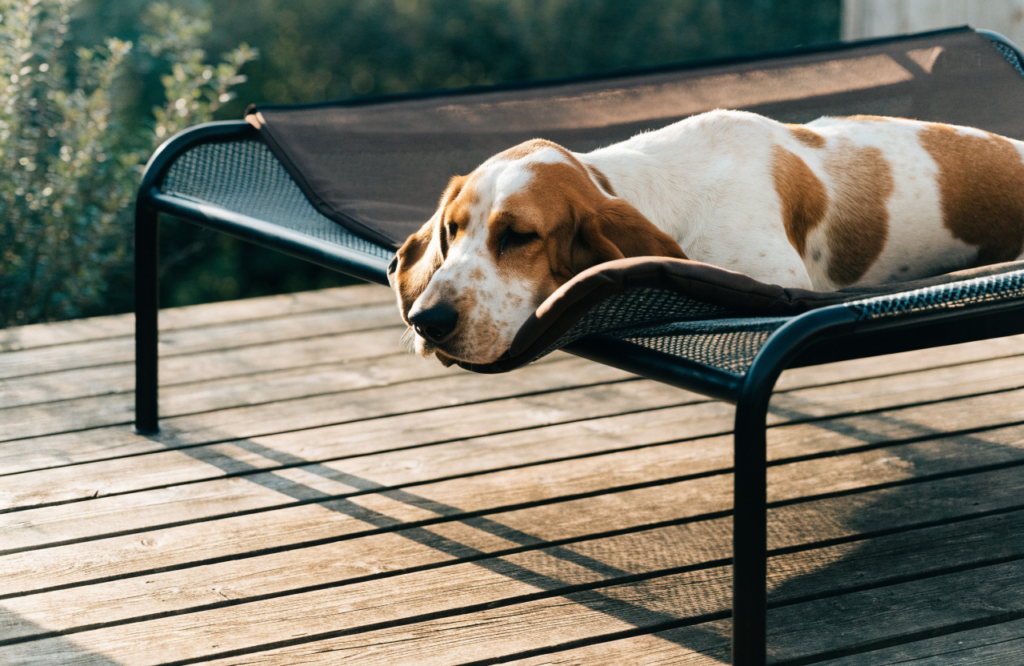
A raised bed with a padded rim on three sides gives head support without putting the whole body on foam. It suits dogs that like to hook a chin over an edge while still needing airflow underneath.
The weak point is the bolster itself. If the cover is only lightly water-resistant, dew and spilled water sit in the filling. Choose a bolster with a removable, washable cover, and bring it in during long wet spells. A bolster also gives chewers a convenient corner to start on.
4. Chew-resistant cot with a solid frame
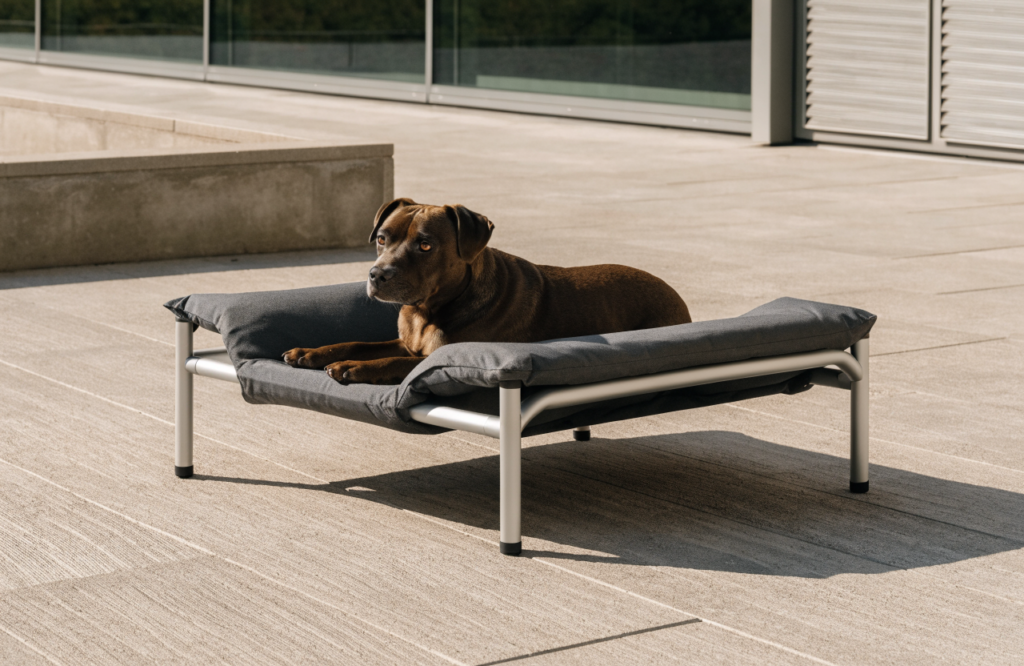
For dogs that destroy mesh, the better idea is a bed built like outdoor furniture: a rigid PVC or aluminum frame, fabric stretched so it cannot be pulled into the mouth, and a heavy weave such as ballistic nylon, Cordura, or a vinyl mesh sold with a chew warranty.
These cost more than a big-box cot and are worth it only if replacement mesh is available or the brand actually covers chewed fabric. Read that line carefully. Some “chew-proof” guarantees exclude the open-weave cooling fabric and only cover the tighter canvas.
This is also the right category for shelter-style or working-dog beds that live outside year-round. Joint support comes from even tension, not from memory foam.
5. Waterproof vinyl or PVC mattress
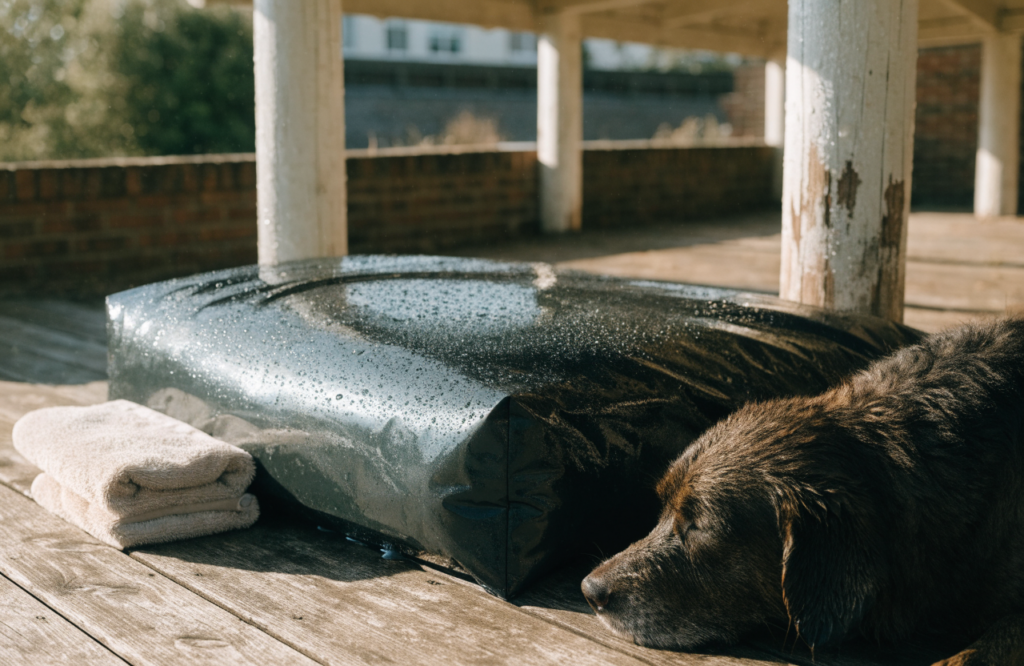
A solid foam core inside a welded or heavy PVC-coated cover is the practical bed for muddy runs, porches that get driving rain, and dogs that come in wet. Water beads and wipes off. Odor does not soak into fiber fill the way it does in a stitched cushion.
The tradeoff is heat and breathability. A non-porous cover does not cool the way mesh does, so this bed belongs in shade or under a kennel roof, not on open concrete at midday. Seams and zippers are the failure points. A fully enclosed, hose-clean cover lasts longer than a waterproof liner hiding under a pretty outdoor fabric.
6. Orthopedic cushion reserved for a covered porch
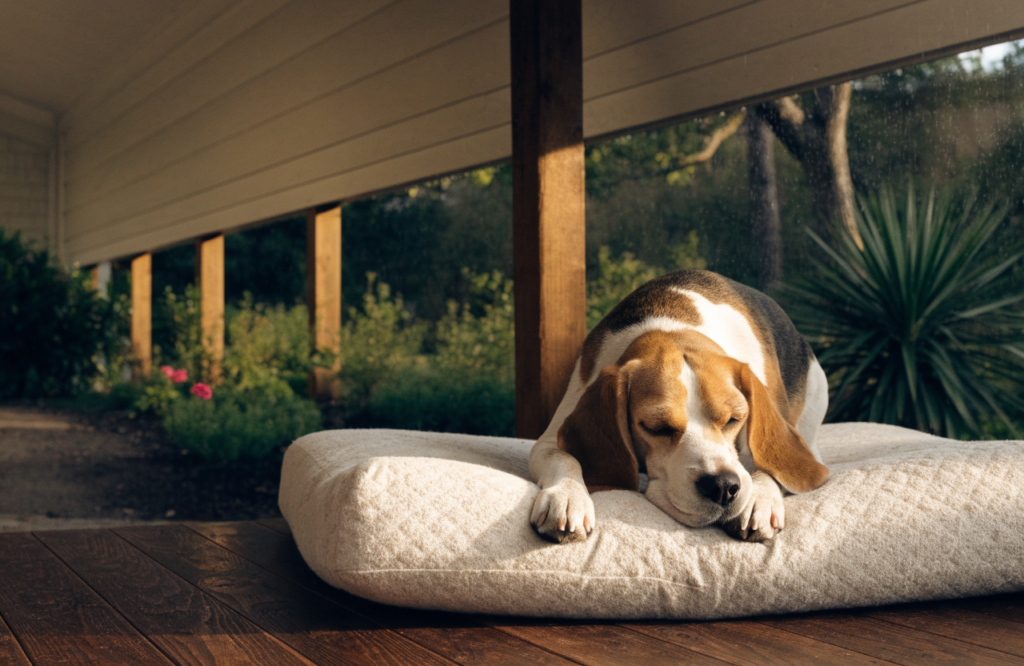
Memory foam and egg-crate pads help seniors and dogs with arthritis because they spread pressure across elbows and hips. They are a poor open-yard bed. Foam holds water, dries slowly, and grows mildew once the cover is breached.
Use this idea only where the bed stays dry: a screened porch, a deep covered patio, or a spot you can move under cover before rain. Pair a waterproof liner with a removable outdoor cover, and air the foam if it ever gets damp. A low entry matters more than a tall bolster. Stiff dogs should not have to climb over a high rim.
7. Low cedar or hardwood platform with a separate cushion
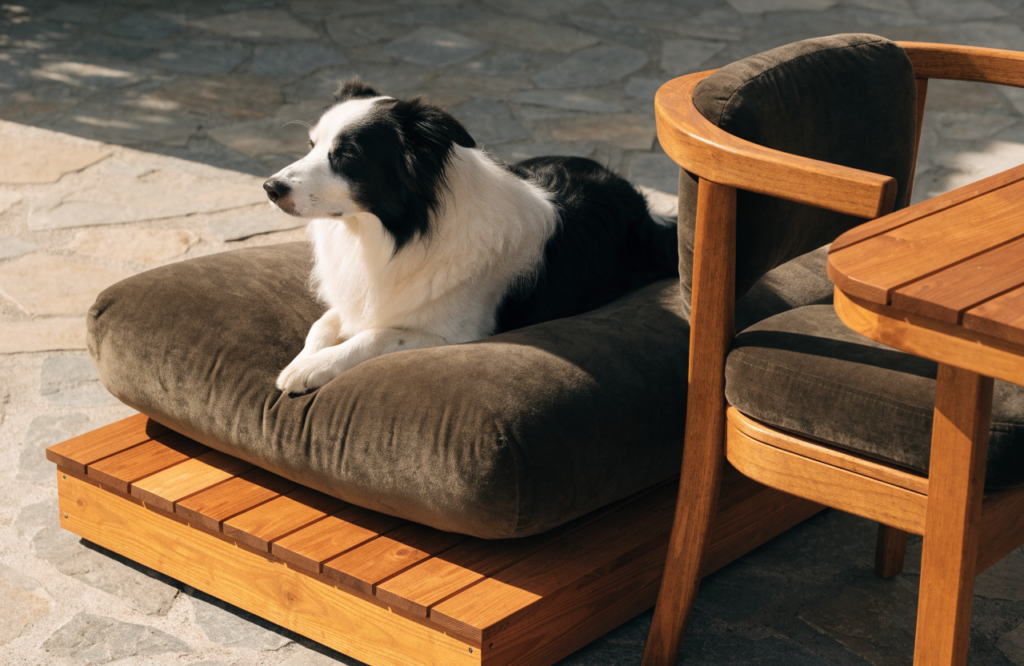
A simple raised wooden deck, a few inches off the patio, keeps a cushion out of puddles and gives the bed a finished look next to outdoor furniture. Cedar is a common choice because it handles weather better than untreated pine.
The platform is the durable part. The cushion is the consumable. Plan on a cover you can remove and a pad you can replace, rather than a permanently attached pillow. Leave gaps or drainage so water does not sit under the wood. This is a style upgrade for a covered patio, not a substitute for a cot in full sun.
8. Wicker or rattan daybed for a dry lounge area
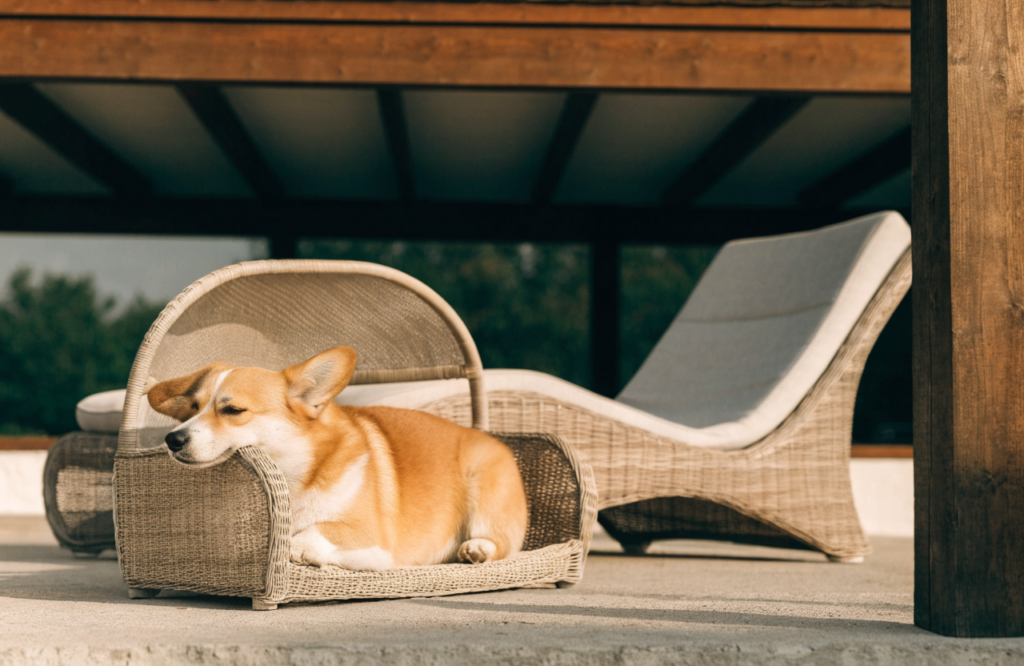
A miniature version of patio lounge furniture works when the dog spends time beside people on a covered terrace. A fold-back hood can add shade on bright mornings.
Resin wicker handles damp air better than natural rattan or untreated wicker, which swell and mildew. Even then, the cushion should come inside or under cover in prolonged rain. These beds are for dogs that nap nearby, not for dogs left in a yard all day.
9. Cooling mat used only in shade
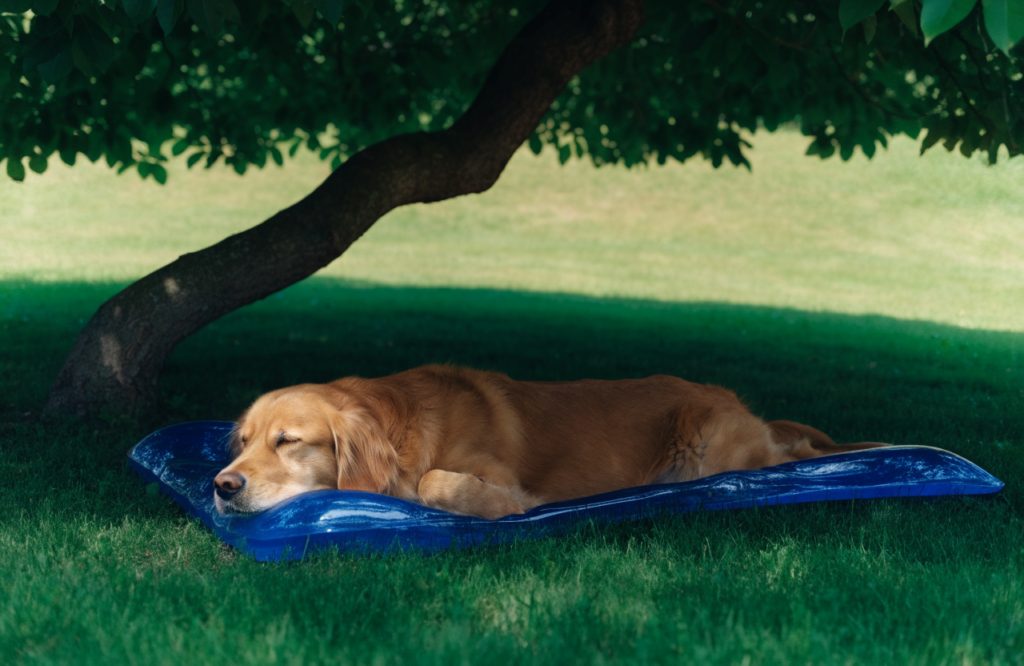
Gel mats and water-filled pads lower surface temperature when the dog lies on them. They are an add-on, not a full outdoor bed. Gel packs warm up as they absorb body heat, and a water mat left in the sun can become a warm water bottle.
Put the mat on a raised cot or a shaded pad, never directly on hot stone as the only resting place. Check for punctures if you have a nail-trimmer or a chewer. Most are indoor-outdoor only in the sense that they wipe clean, not that they should live in the weather.
10. Folding travel cot for the yard and the car
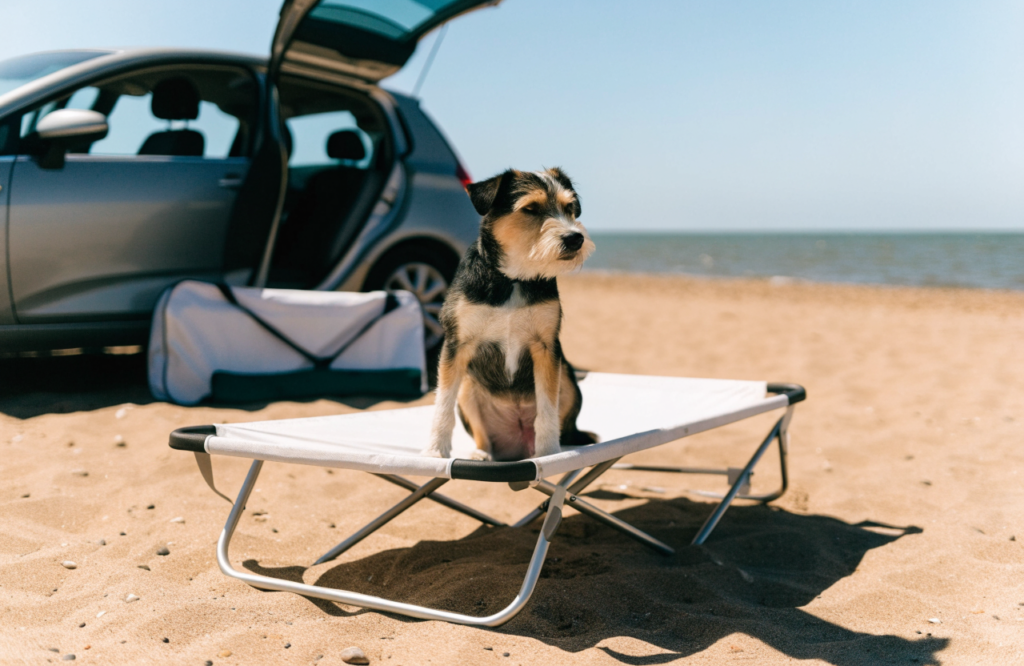
A pop-up or scissor-frame cot earns a place if the dog moves between patio, beach, campsite, and a friend’s deck. Weight and packed size matter more than bolster style.
Expect a shorter life than a stationary steel cot. Hinges and thin mesh are the parts that fail. A travel cot is the right second bed, not the only bed for a 90-pound dog that launches onto it from a run.
11. DIY platform you can actually hose off
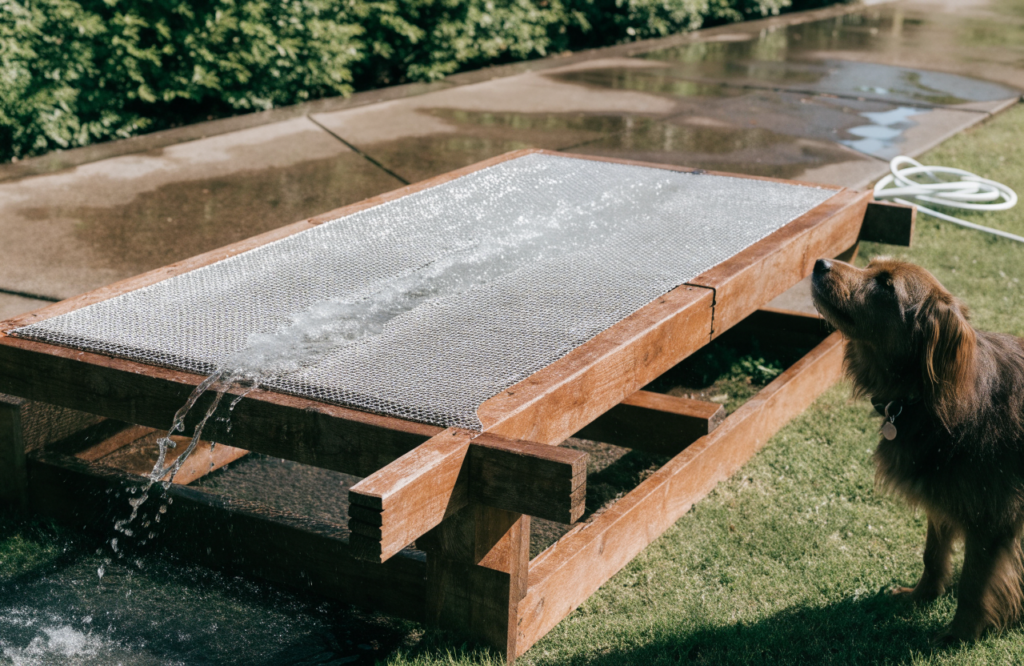
A sturdy DIY version is a low frame of exterior-grade lumber or a reinforced pallet, sanded, sealed, and topped with a replaceable outdoor cushion or a stretched mesh panel. The advantage is repair: you can swap the sleeping surface without buying a new frame.
Keep the sleeping surface smooth, with no exposed staples or splinters. Do not enclose foam in a non-breathing cover and leave it on soil. That combination traps moisture against both the dog and the wood. If you are not set up to build a stable frame, a basic manufactured cot is safer than a wobbly homemade one.
12. Insulated kennel pad for cold weather
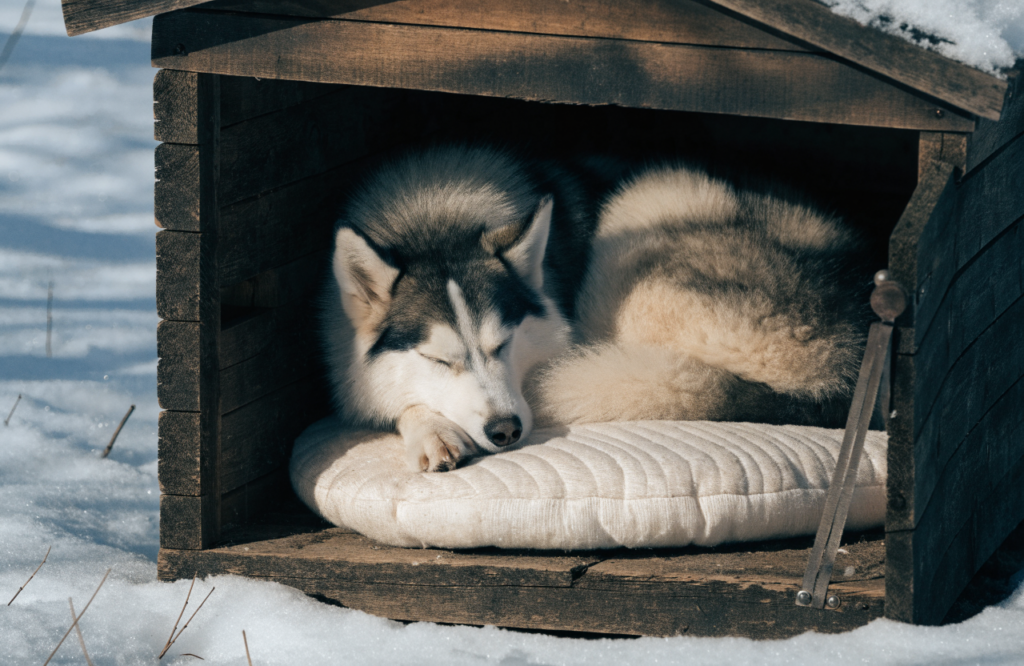
Summer cots are the wrong only-bed in freezing weather. A dog sleeping outdoors in the cold needs a dry, insulated pad inside a draft-blocked shelter, sized so the dog can curl without lying in a puddle. Straw is still used in working kennels because it drains and insulates. A fitted, water-resistant pad is the cleaner option if you will change it when it gets wet.
Heated pads exist for barns and sheltered runs. They belong on a grounded outdoor-rated product, never on a household heating pad run through an extension cord into the weather. Elevation still helps in winter by keeping the body off frozen ground, but mesh alone does not keep a short-coated dog warm after dark.
What actually holds up outside
| Idea | Best for | Weak point |
|---|---|---|
| Mesh cot | Heat, wet grass, easy cleaning | Chewers, dogs that need deep foam |
| Canopy cot | Afternoon sun, little natural shade | Wind, blowing rain |
| Bolster cot | Dogs that rest a head on an edge | Wet filling, chewed corners |
| Chew-resistant frame | Heavy chewers, year-round yards | Price, excluded fabrics in warranties |
| PVC or vinyl mattress | Mud, rain, hose-clean routines | Heat buildup in full sun |
| Orthopedic cushion | Seniors on a dry, covered porch | Mold if it stays wet |
| Wood platform | Style on a covered patio | Cushion still wears out |
| Rattan daybed | Lounge areas next to people | Natural fibers in damp climates |
| Cooling mat | Extra relief in shade | Punctures, heat if left in sun |
| Folding travel cot | Trips and temporary spots | Hinges and thin mesh |
| DIY platform | Repairable custom size | Build quality and splinters |
| Insulated kennel pad | Cold, sheltered outdoor sleep | Useless if it stays damp |
Fabric labels are easy to over-read. “Waterproof” on a stitched cushion usually means the shell sheds a light shower. Water still enters seams, zippers, and chewed spots. Mesh that drains is often more useful in real rain than a coated cushion that looks dry on top and stays wet underneath.
Frames fail at the joints. A cot that collapses after a year of jumping on and off is usually a thin hinge or a plastic connector, not the mesh. If a brand sells replacement fabric, that is a better sign of a bed meant to be kept than a one-piece cot with no parts.
Where to put it
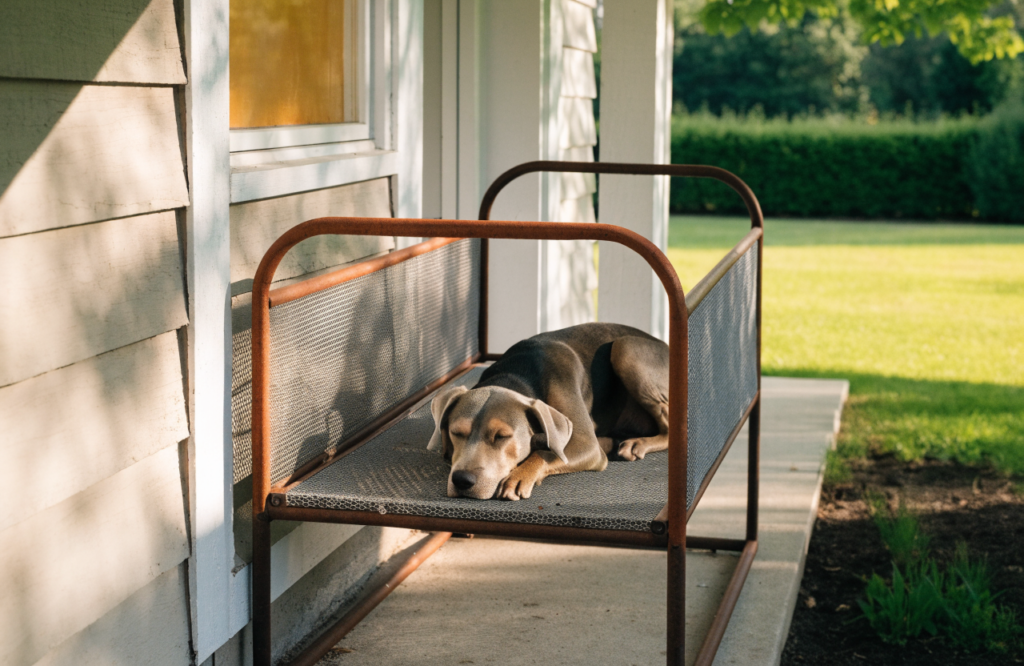
A good bed in the wrong spot gets ignored or ruined.
- Put cooling beds where breeze can move under the frame. Against a solid wall with no gap, the airflow advantage shrinks.
- Keep at least one resting spot in shade from late morning through late afternoon.
- On decks, use non-slip feet. Mesh cots slide when a dog jumps off.
- In tick or ant country, elevation helps, but it is not pest control. Check the ground under the bed.
- Bring foam cushions in before multi-day rain. Mesh cots can stay out if the frame is rated for weather.
Dogs often reject a bed that is too small, too exposed, or placed where people never sit. If the dog already naps on a particular corner of the patio, start there instead of styling a bed into a spot the dog does not use.
Mistakes that shorten the life of an outdoor bed
Using an indoor bed and hoping the cover is enough. Indoor foam and fiber fill are not outdoor materials. Once water gets in, the bed smells and the foam collapses.
Buying for the photo instead of the sleeper. A round hooded daybed looks finished and fails a sprawling Labrador that needs length.
Ignoring chew history. A dog that destroys leashes will start on the nearest stitched corner. Spend on a chew-resistant frame, or accept that mesh is a replaceable part.
Leaving a canopy up in wind. Shade cloth catches gusts. Remove it when you are not outside, or weight and stake a freestanding shade separately.
Assuming elevation fixes overheating. Off-the-ground mesh helps. Shade, water, and not leaving vulnerable dogs out in peak heat matter more.
Frequently asked questions
Are elevated dog beds better for arthritis? They keep the dog off hard, uneven ground and spread weight across a firm sling, which many stiff dogs tolerate well. They are not a medical treatment. A senior who needs sink-in support may do better on an orthopedic pad kept on a dry, covered porch, with a low step-up if the porch is raised.
Can an outdoor dog bed stay out all year? Mesh cots with coated metal or resin frames often can, if you accept fading and occasional fabric replacement. Foam cushions should not. In freezing weather, a summer cot is not enough bedding on its own.
What size outdoor bed does a large dog need? Measure the dog stretched out and add several inches. Many large-breed cots are about 48 to 55 inches long. A 42-inch “large” is often too short for a sprawling retriever or shepherd.
Is a cooling mat enough for summer? No. It can lower the surface under the dog in shade. It does not replace water, airflow, or a place out of direct sun.
What if the dog will not use the bed? Check size, surface feel, and location. Some dogs dislike the sway of a loose sling and settle better on a tighter canvas. Others want to be next to people and ignore a bed placed at the far end of the yard. Move it to the spot they already choose before replacing the whole setup.