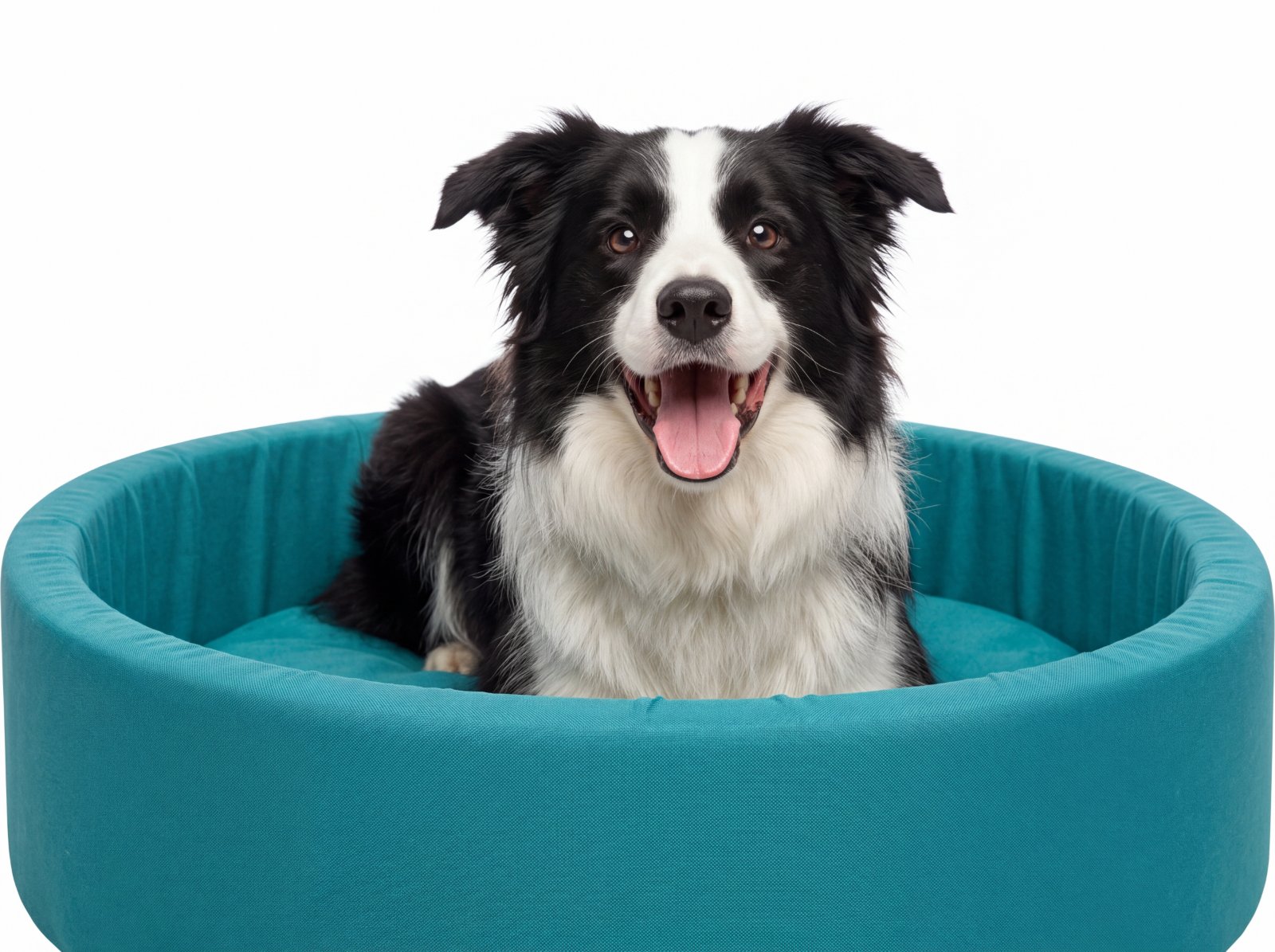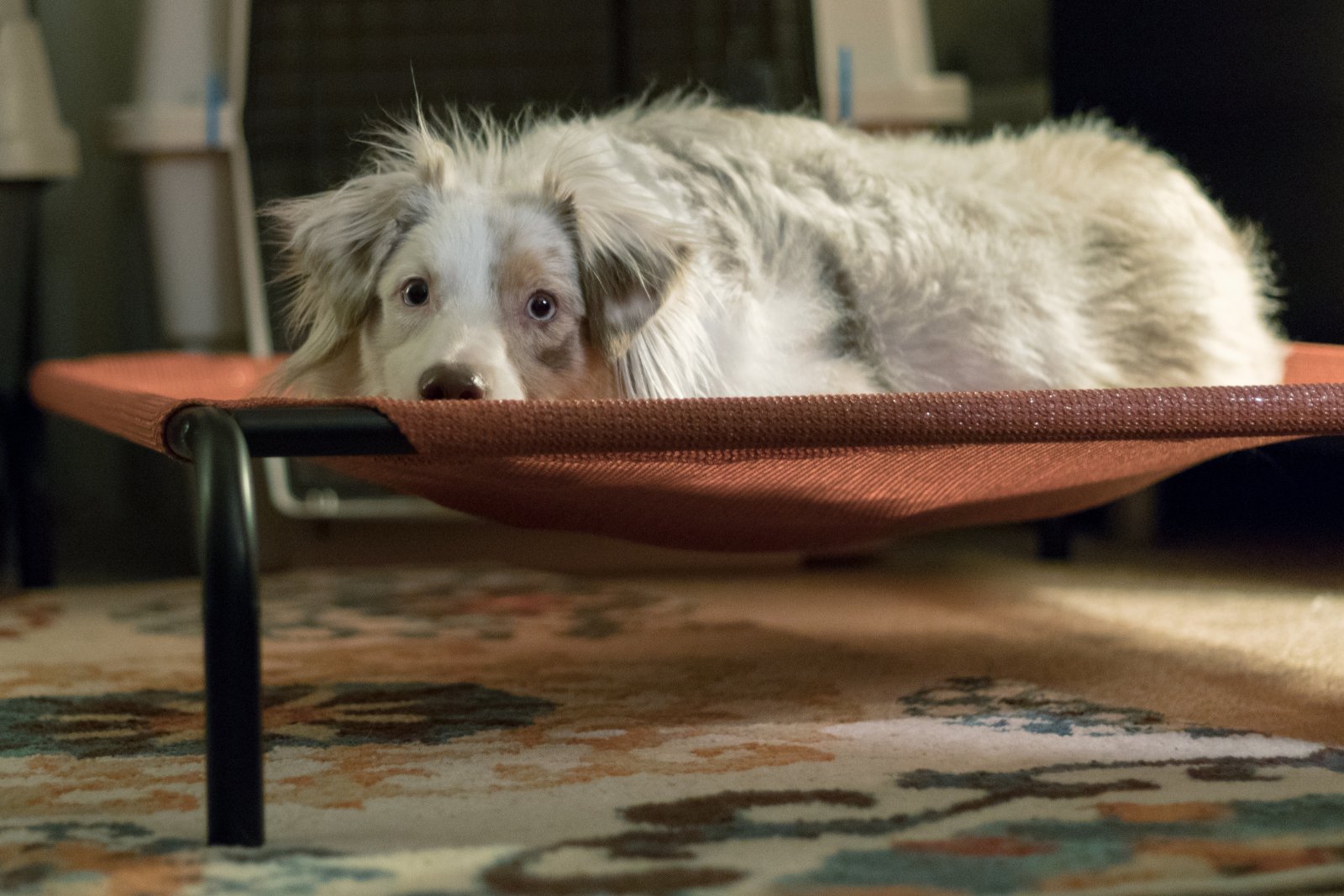

An elevated dog bed is a raised cot: a rigid frame with a taut fabric or mesh surface and no stuffing underneath. It lifts a dog off hot, damp, or dirty ground and lets air move under the body, which is why many dogs that abandon thick mattresses for tile will settle on one. It is a good match for a healthy adult that runs warm, sleeps outside or on hard floors, or destroys padded beds by pulling out the fill. It is a poor default for a stiff senior, a tiny puppy, or a thin dog that needs cushioning under bony hips. The useful question is not whether elevated beds are good in general. It is whether this design matches how your dog actually sleeps.
What an elevated dog bed is, and what it is not
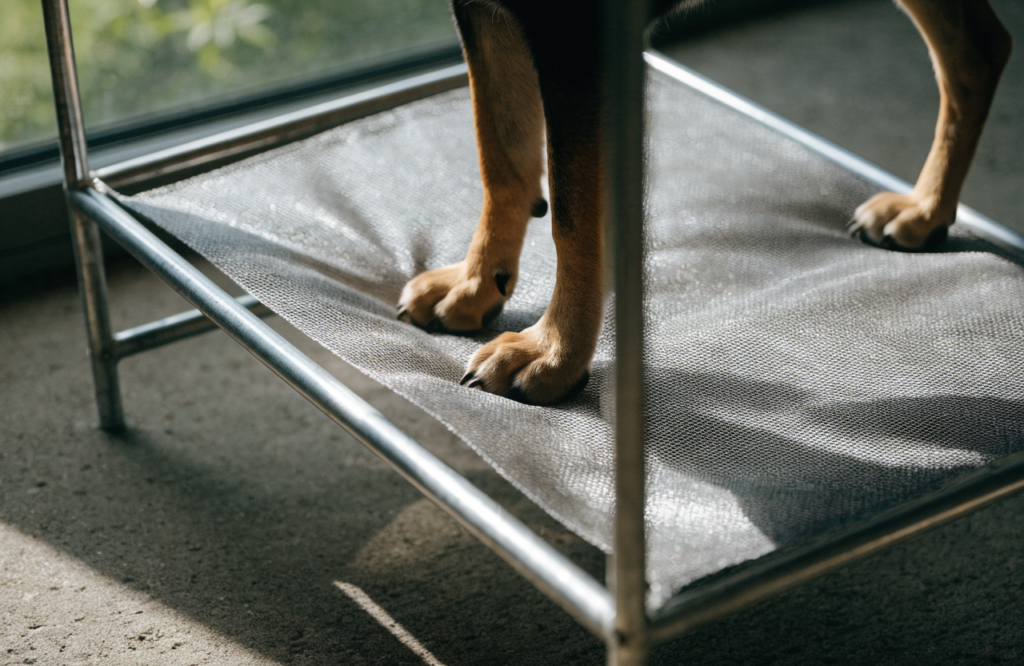
Most elevated beds are a rectangle of steel, aluminum, or molded plastic with a single sheet of mesh or heavy fabric stretched across it. Typical finished heights sit somewhere around the height of a low step, often in the range of about 6 to 9 inches, though camping-style cots and some indoor models sit lower or higher. There is no foam core, no bolster fill, and nothing for a dog to gut.
That construction creates three properties at once. The surface stays firm instead of collapsing into a bowl. Air passes through the fabric and under the frame. Water, mud, and shed hair do not soak into a pad, so the bed can be hosed or wiped and left to dry.
It does not do what a memory-foam bed does. A taut mesh spreads weight across the body and avoids the sink of a cheap, flattened cushion. It does not mold around elbows and hips or unload pressure from bony points. Marketing that treats “raised” as the same thing as “orthopedic” is mixing two different jobs.
The problems an elevated bed is built to solve
Airflow is the main reason people buy one. A thick bed traps heat against the coat. A cot does the opposite: moving air under the belly and through the mesh keeps the sleeping surface closer to room temperature. Dogs that pant at night, double-coated breeds, and dogs in warm rooms often choose the cooler option on their own. Elevation is not a cooling system, though. In direct sun the frame and fabric still heat up, and a dog left outside still needs shade and water.
The second job is separation from the ground. On a patio, deck, or kennel run, the cot keeps the dog off concrete that holds heat, grass that stays damp, and floors that collect dust. That also helps dogs that come in wet or muddy. A mesh surface sheds water instead of holding it the way foam does.
Cleaning follows from the same design. No fill means hair shakes off, and a hose or wipe is usually enough. Covers on better beds come off for a wash. For heavy shedders and dogs that drool or have occasional accidents, that is often more practical than a zip cover over a foam slab you cannot fully submerge.
Chewing is the third case. Dogs tear cushioned beds partly because stuffing is a reward: once a corner opens, there is material to pull. A cot has no fill. Many moderate chewers lose interest. Determined chewers still puncture ordinary polyester mesh, especially if a loose edge or seam gives them a start. Designs that tuck the fabric edge inside the rail remove that handhold. “Chew-proof” is a materials claim, not a guarantee.
Firm support is real, within limits. A tightly tensioned surface holds a level plane, which some dogs prefer to a bed that bottoms out. Large, muscular adults with healthy joints often sleep well on that kind of platform. The support comes from even tension, not from cushioning.
When an elevated dog bed is the wrong choice
Height is the first filter. A puppy, a toy breed, or a senior that hesitates on stairs may not step up cleanly, and a miss can mean a fall. If the frame sits above elbow height, or the dog has to hop rather than step, the bed is too tall for that dog. Low-profile frames exist for this reason. A dog that cannot get on and off without effort will not use the bed, or will use it unsafely.
Joint disease changes the calculation. A dog with osteoarthritis, hip dysplasia, or thin muscle over the hips needs pressure relief, not just a flat surface. Hours on firm mesh can irritate elbows, hocks, and hips on a bony dog. A healthy older dog that still moves well and runs warm can do fine on a low cot. A stiff dog that struggles to stand is usually better on a dense foam bed with a low or open entry side. Elevation is not a treatment for arthritis, and the step up can add strain on the way in and out.
Cold is the seasonal failure. The same airflow that helps in summer pulls heat away when the room or the night air is cold. Below roughly the point where you would want a blanket yourself, a cot can leave a short-coated or small dog chilled. In winter, many owners move the cot indoors only if the room is warm, add a washable mat on top, or switch to a floored bed until the weather changes. A mat reduces airflow, so it is a trade, not a free upgrade.
Some dogs simply refuse a raised surface. If the footing feels unstable, or the dog is wary of heights, they will sleep on the floor beside the bed. That is useful information. Forcing the issue does not fix it.
Elevated bed or orthopedic bed
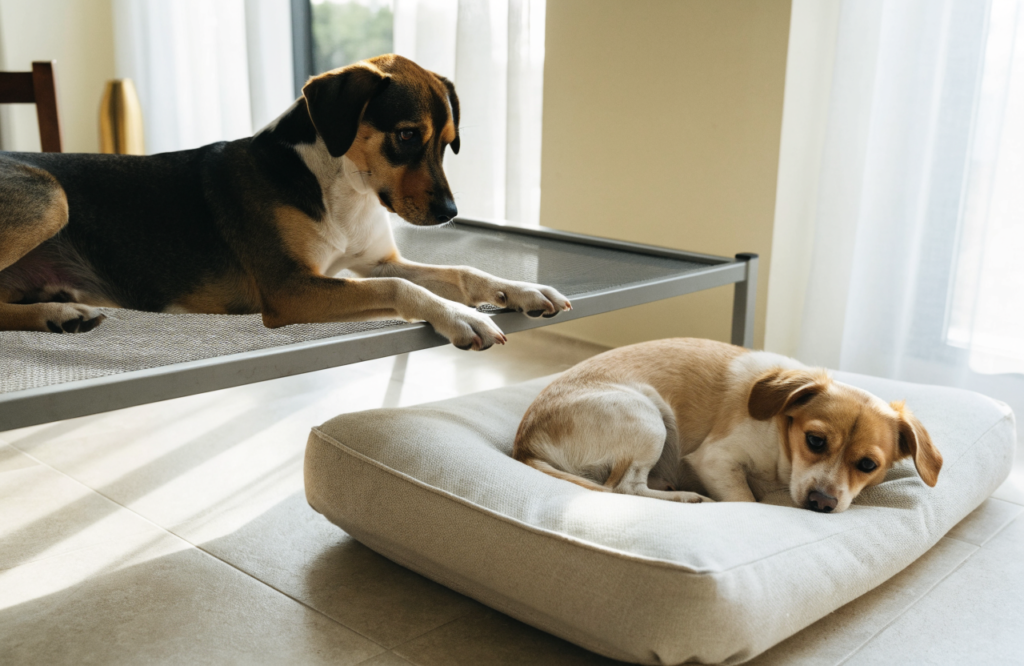
These solve different problems. Choosing by price or by what looks more “supportive” in a photo is how people end up with a bed the dog avoids.
| Need | Elevated cot | Orthopedic foam bed |
|---|---|---|
| Cooling and airflow | Strong. Air moves under and through the surface. | Weak. Foam holds heat. Gel or egg-crate tops help only a little. |
| Pressure relief for sore or bony joints | Limited. Even tension, no cushioning of bony points. | Strong, if the foam is dense enough not to bottom out. |
| Getting in and out | Depends on frame height. A tall cot is a step. | Easy if the entry side is low. Tall bolsters can still block a stiff dog. |
| Chewing and outdoor mess | Often better. No fill, hoses clean, dries fast. | Weaker. Covers tear, foam gets wet and stays wet. |
| Cold rooms | Can feel chilly because of the open base. | Warmer. Can be too warm for hot sleepers. |
| Best match | Warm sleeper, patio dog, moderate chewer, healthy adult that likes a firm surface. | Arthritis, hip or elbow pain, thin seniors, dogs that curl into padding. |
A few dogs need both jobs. A common setup is a cot on the patio for daytime heat and a foam bed indoors at night. A thin mat on a cot is a compromise for a dog that wants airflow but bottoms out on bare mesh. It will not replace a proper orthopedic bed for a dog in real joint pain.
How to choose an elevated dog bed
Measure the dog, not the breed label. Have the dog lie in a full stretch and note nose-to-tail length and shoulder width, then add several inches each way. A bed that only fits a curled posture will be abandoned the first hot afternoon. Weight ratings should clear the dog’s current weight with margin. A rating that matches the dog exactly leaves no room for a lean on the corner or a second dog hopping up.
Height should let the dog step on, not jump. Elbow height or lower is a practical ceiling for most adults. Seniors and short-legged breeds need the lower end of the range. Check that the feet will not catch a doorway or sit in a traffic path where a person can trip on the frame.
Frame material matters more outdoors than indoors. Powder-coated steel is sturdy and common, and it holds up on a covered patio if it stays dry. Left on damp grass or in rain, the coating eventually chips and the legs rust. Aluminum does not rust and is lighter to move, which is why it shows up on chew-resistant and outdoor models. Plastic frames avoid rust but can flex or crack under a heavy dog. Whatever the metal, the assembled bed should stay square when the dog steps onto a corner. A frame that racks or walks across the floor will not get used.
Fabric should be tight on day one. A little give is normal. A hammock sag in the middle is not. Sag changes how the spine sits and is the usual wear point on heavy dogs. Replaceable covers are worth paying for, because the fabric fails before a decent frame does. For chewers, look for the edge fully captured in the rail, reinforced corners, and a heavy weave. Ordinary “breathable mesh” is fine for a dog that does not mouth bedding. It is not fine for a dog that has already destroyed two beds.
Feet need grip. Rubber or plastic caps keep the bed from skating on tile and hardwood when the dog jumps on. Outdoors, narrow feet sink into soft ground and tilt the cot. Wider feet, or a board under the legs, fix that.
Match the rating to the place it will live. Indoor-only fabric and an untreated steel frame are a bad patio plan. A dark fabric in full sun stays hotter than a light one. A canopy cot adds shade, but only if the dog will lie under it and the frame does not turn into a chew toy.
Failures that show up after the first month
Sag is the quiet one. Heavy dogs and UV on outdoor fabric stretch the center until the bed bowls. A replaceable, re-tensionable cover is the fix. A permanently bowed surface is a worn-out bed, not a broken-in one.
Chew damage usually starts at a corner, a seam, or a leg the dog can get its mouth around. If your dog is a persistent chewer, do not buy on airflow alone. Buy the edge-enclosed frame, and still do not leave a new chewer unsupervised with it until you know they ignore it.
Rust is a season-two problem, not a week-one problem. Wipe steel legs after rain, keep the bed on a hard surface rather than sitting in wet grass, and expect touch-up or replacement if it lives outside year-round. Aluminum avoids this.
Noise and wobble come from loose hinges on folding cots and from feet on uneven ground. A camping cot that rocks when the dog turns will teach the dog to avoid it. Locking joints and a level patch of ground matter more than packed weight.
Winter chill is the failure owners misread as “the dog stopped liking the bed.” If use drops when the heat drops, the airflow is doing what it was designed to do. Move it, cover it, or switch beds for the season.
Getting a dog to use it
Put the cot where the dog already rests, not in a new corner as a test. A familiar mat or an unwashed blanket on the surface for a few days gives a scent bridge. Treats on the bed, not a forced placement, work better. Take the blanket off once the dog steps up on its own, or the airflow benefit never starts.
If the dog sniffs the bed and lies beside it for a week, the height, the wobble, or the texture is wrong. Lower the choice or return it. A bed the dog will not voluntarily use has no cooling or support benefit.
Questions people ask after they buy one
Are elevated beds better for a dog’s joints? They give firm, even support and avoid the collapse of a thin mattress. They do not cushion bony points the way dense foam does. For a sound adult, that firmness is often enough. For arthritis or a thin senior, foam is the better primary bed.
Can an elevated bed stay outside all year? Only if the frame and fabric are actually outdoor-rated, the bed is in shade, and steel is kept from standing water. Aluminum frames and a hose-clean surface handle weather better. Winter airflow can chill the dog even when the bed itself survives.
Will it stop my dog from chewing beds? It removes the stuffing reward, which stops a lot of dogs. It does not stop a dog that chews rails, corners, or mesh for its own sake. Edge-enclosed, heavy-fabric designs last longer. None of them are indestructible.
What size should I get? Long enough for a full stretch with extra room at both ends, wide enough to turn without hanging off, and rated above the dog’s weight. Breed size charts are a starting point, not a measurement.
Is a cot safe for a puppy? Usually not until the puppy can step on and off without hopping and will not chew the mesh. A low floor bed is the safer default until growth and chewing settle.