
A dog house bed is a soft, enclosed indoor bed shaped like a small house, tent, or cave, not a wooden kennel and not a pad meant for one. It works when a dog already curls up, burrows, or seeks a wall to lean on. It fails when the opening is too small, the hood collapses, or the dog prefers to sprawl.
The useful decision is not which listing looks coziest. It is whether the interior floor, doorway, and roof match how that dog actually sleeps, and whether the cover can be washed without the bed falling apart.
What a dog house bed is, and what it is not
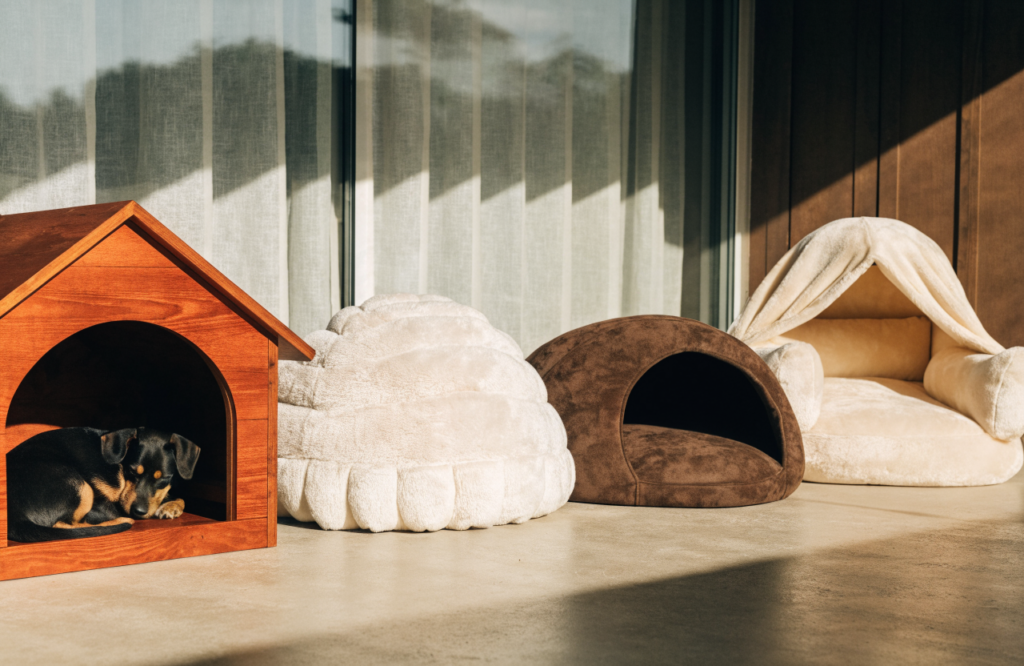
Shop listings use “dog house bed,” “igloo bed,” “cave bed,” and “hooded bed” for several different products. They are not interchangeable.
A typical indoor dog house bed has a raised roof or hood, a round or arched opening, and a cushion on the floor. Some stand up on foam walls. Others use a plastic rod or a light frame so the ceiling does not drop onto the dog. A few are sold as 2-in-1 designs: the roof folds down and the same piece becomes an open sofa-style bed.
That is different from three nearby products:
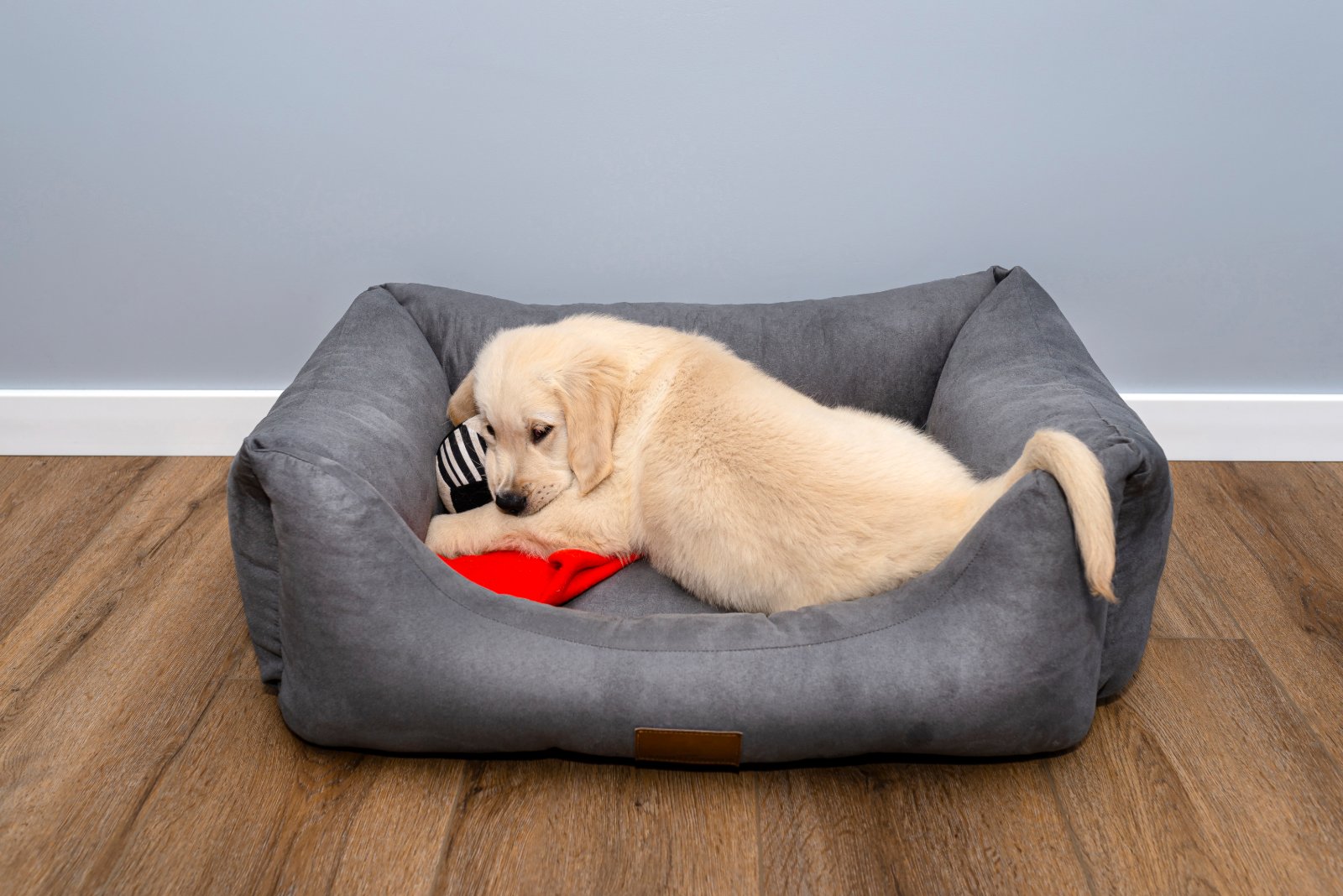
- A bolster or donut bed has raised sides but no roof. The dog can see out in every direction.
- A hooded cave is close to a house bed, but the opening is often a wide draped blanket rather than a house-shaped doorway. Some, such as rod-supported cozy caves, can be used with the hood up or flattened into a blanket.
- An outdoor dog house is a rigid shelter, usually plastic or wood, meant to block rain and wind. Bedding for that shelter has to handle damp paws, blown-in rain, and temperature swings. A plush indoor house bed is the wrong tool for that job.
If the search started from “bedding for the kennel outside,” skip the plush house and look for a raised cot or a thin, waterproof pad that fits the floor and can dry. Floor-level fabric in a damp house holds moisture underneath even when the top feels dry.
Which dogs tend to use one
Sleep posture predicts this better than breed labels. Veterinary behaviorists interviewed by Wirecutter make the same point about dog beds in general: match the shape to how the dog already settles, rather than to a style you prefer.
A house bed is a reasonable try if the dog:
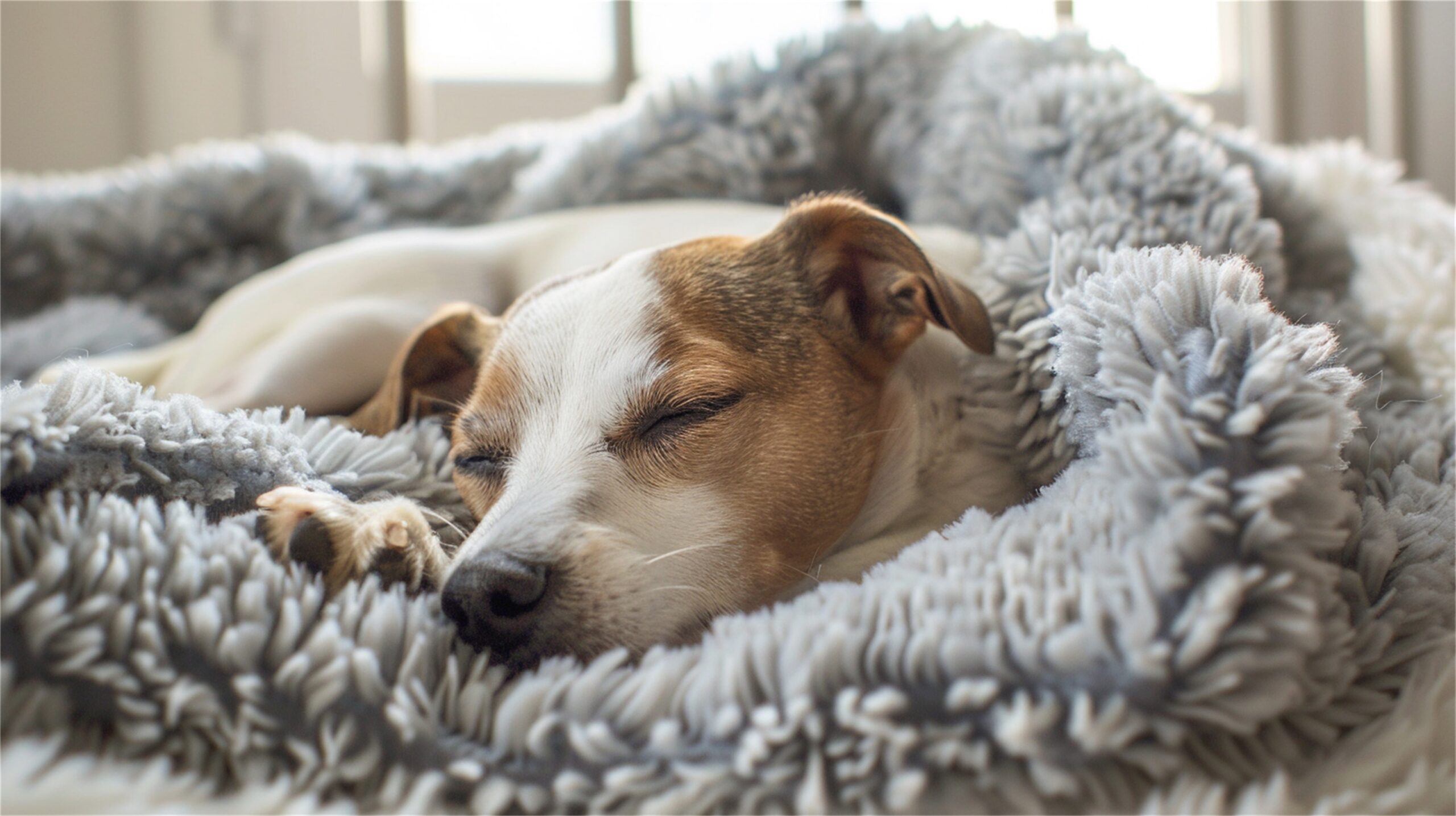
- Sleeps in a tight curl, nose tucked, back against a sofa or wall
- Pushes under blankets, beds, or tables
- Chooses small enclosed spots over open floor space
- Has a short coat and gets cold in a drafty room
It is a poor first buy if the dog stretches flat, sleeps on their back, or only uses half of any bed because they want open floor around them. Enclosed beds also run warmer than open mattresses. A hood cuts airflow, so the same bed that feels useful in a cool room can be uncomfortable beside a radiator, in direct sun, or for a thick-coated dog. Leaving the bed, restlessness, or panting while inside is a signal to offer an open surface and reassess, not to add another blanket over the door.
A private corner can feel settling for some dogs. It is not a treatment for separation anxiety, noise fear, or aggression. If distress is persistent, a veterinarian or a qualified behavior professional is the right next step. Keep an ordinary mat available so the enclosed bed is a choice, not the only place the dog is allowed to rest.
Seniors need an extra check. A high lip, slippery cushion, or low doorway that forces a crouch can make getting in and out harder than lying on a low orthopedic pad. Puppies and heavy chewers are another mismatch: no soft house bed is chew-proof, and foam, rods, and zippers are a swallowing risk once the cover is torn.
House, cave, tent, and outdoor shelter compared
| Type | What the dog gets | Best fit | Main limit |
|---|---|---|---|
| House-shaped indoor bed | Roof, doorway, cushioned floor | Curlers and small-to-medium burrowers | Usable floor is smaller than the outside measurement |
| Hooded cave with a removable rod | Covered nest that can flatten into a blanket | Dogs who switch between burrowing and open sleep | Hood sags if the rod is lost or the fill collapses |
| Convertible 2-in-1 | Closed house in cool weather, open sofa when the roof is pressed down | Households with a real seasonal swing | Frames and hinges wear; cheap foam roofs lose shape |
| Donut or bolster | Raised rim, open top | Dogs who want a nest but overheat under a roof | Less den-like; round donuts can be too tight for sprawlers |
| Flat mattress | Open stretch space | Confident side-sleepers and large dogs | No enclosure for burrowers |
| Outdoor dog house plus bedding | Weather shelter | Dogs who spend time outside in suitable conditions | Indoor plush beds mold and hold damp; not a substitute for shade, water, and supervision |
Large-dog house beds exist, but the catalog thins out above medium sizes. A 70-pound dog who burrows may still be better served by an extra-large cave with a wide opening than by a cute house whose door only clears a cat.
How to size it so the dog can turn around
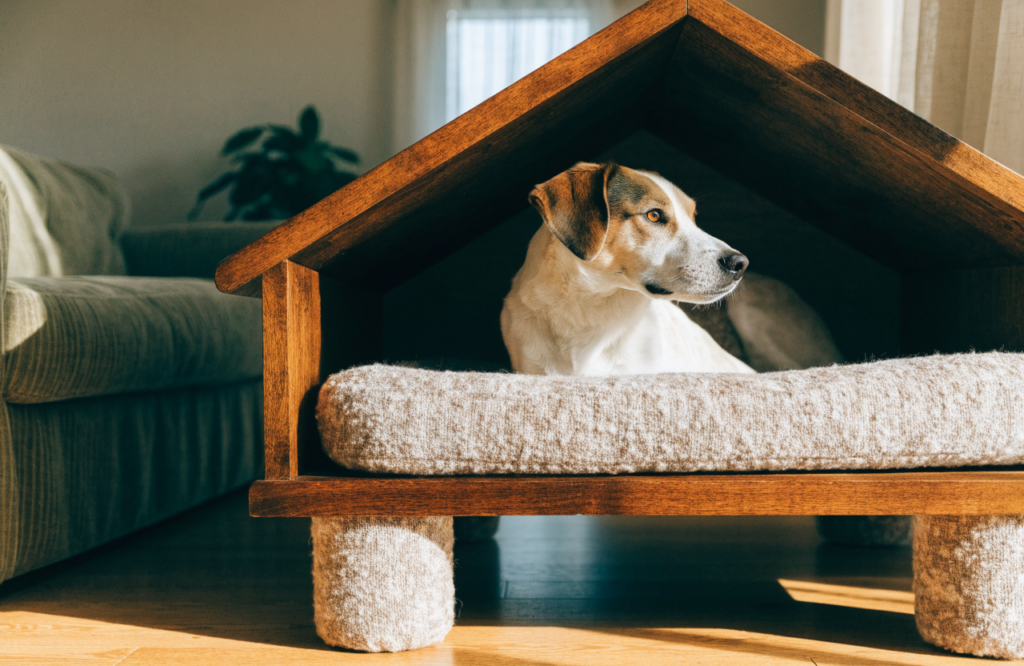
The number on the label is usually the outside of the product. Thick walls, a sloping roof, and a deep bolster shrink the floor the dog actually lies on. Ask for interior floor length and width, and for doorway width and height, before comparing two beds that both say “large.”
Measure the dog, not the breed standard:
- Length from nose to the base of the tail while the dog is lying in a normal curl, then again stretched on their side.
- Shoulder height from floor to the top of the shoulder, standing.
- Width across the chest.
For a house bed, the interior floor should let the dog lie in their usual curl, turn, and stand up enough to leave without wedging under the roof. A common practical allowance is several inches beyond nose-to-tail length so the curved walls do not pinch the shoulders. Guides that size open beds often add about 15 to 30 cm (roughly 6 to 12 inches) to a stretched length; on an enclosed bed, apply that allowance to the inside floor, not the outer shell.
Doorway rules that prevent returns:
- Shoulders and back clear the opening without a forced crouch.
- The lip is low enough for a stiff dog to step over.
- The dog can exit forward. Do not add a loose blanket over the door.
A snug fit is part of the appeal for a curler. Too snug is the usual reason a new house bed is ignored. If the dog only fits by lying perfectly still, size up or switch to an open bolster.
What to check before buying
Roof that stays up. Polyfill-only hoods droop after a short time and shrink the interior. Look for a removable support rod, a light internal frame, or dense foam walls. A convertible roof is useful only if it still holds a shape after it has been folded a few times.
Cushion, not just a shell. Many house beds are a tent with a thin pillow. That is fine for a small dog who mostly wants a hide. It is a weak choice for a heavier dog or an older dog with stiff joints. Egg-crate or a denser foam pad holds shape longer than loose polyester fill, which flattens. Memory foam contours more but holds heat, so it is a tradeoff inside an already warm enclosure.
Cover you can actually wash. “Washable” may mean the whole bed, the outer shell, or only a small inner pad. Prefer a removable cover and, if accidents are likely, a moisture barrier that does not turn the floor into a non-breathing plastic sheet. Zippers should be covered so they are not a chew target.
Base that stays put. Silicone dots or a non-slip bottom matter on wood and tile. A light tent that slides every time the dog enters gets abandoned.
Materials against coat and claws. Long faux fur looks warm and catches nails, especially on tiny or senior dogs. A tighter woven lining is easier to dry and less likely to shed in the machine. Outdoor-facing oxford cloth is easier to wipe than sherpa, but it is not weatherproofing. An indoor house bed still belongs indoors.
Hardware. Plastic rods and thin wire frames are a hazard if chewed. If the dog already destroys soft beds, do not leave a house bed unsupervised. Remove it at the first tear, exposed fill, or loose part.
Price mostly tracks fill density, whether the cover is truly removable, and whether the roof hardware survives washing. A low price with a non-removable cushion is often more expensive after the first accident.
Where to put it and how to introduce it
Place the bed where the dog already rests: a quiet corner, not a hallway or directly in front of a heater or sunny window. The opening should face the room so the dog can watch the household without being underfoot.
A simple introduction works better than pushing the dog inside:
- Leave the roof open or folded down for the first day if the design allows it.
- Put a familiar blanket or a worn T-shirt on the cushion.
- Toss a few treats just inside the door, then farther in, and leave. Do not close the dog in.
- If the dog uses it, keep the hood available but do not block the exit.
- If the dog flattens the hood, scratches to get out, or only sleeps beside it, that is information. Offer the open configuration or a different bed.
Two resting spots in the home is normal. One house bed does not have to replace the crate pad or the living-room mattress.
Cleaning, odor, and when to replace it
Enclosed plush holds hair, saliva, and damp. That is why beds start to smell even when they still look intact. Wash the removable cover on the cycle the label allows, and dry it fully before it goes back on. Stuffing that stays damp grows musty faster inside a hood than on an open pad.
A practical rhythm for most homes is a cover wash every one to two weeks if the dog is on the bed daily, sooner after mud, vomit, or urine. Rotate or flip the cushion so one spot does not compress first. If only the inner pad is washable, budget for a spare so the bed is not out of use for a day.
Replace the bed when filling is exposed, the doorway no longer holds its shape, the cushion bottoms out under the dog’s weight, or a rod or zipper can be chewed. A cave shape does not make a bed waterproof. Urine that reaches the core is a replacement problem, not a spray-and-flip problem.
Mistakes that leave the bed unused
Buying the outside size. A “medium” house can have a cat-sized floor once the walls are counted. Compare interior floor and door measurements to the dog in front of you.
Treating it as an anxiety fix. Some dogs rest more readily in a den-like spot. That does not replace training, management, or veterinary care for fear or separation problems.
Using an indoor plush bed in an outdoor house. Rain, wet coats, and ground moisture wreck polyester fill. Outdoor shelter bedding needs to shed water and dry; elevated mesh cots often handle that better than a floor pad that traps humidity.
Covering the door for extra warmth. Extra blankets over the entrance block the way out and cut the little airflow the hood still has.
Leaving it with a chewer. Torn foam and support rods are not a durability issue only. They are a foreign-body risk. Supervise, and remove damage immediately.
Skipping the open alternative. Dogs change posture through the night. A house bed plus a flat mat covers both the curl and the stretch.
Frequently asked questions
Is a dog house bed the same as a dog house?
No. A dog house bed is soft furniture for indoor rest. A dog house is a shelter. The bed does not keep a dog safe outdoors in heat, cold, or storms.
Can a large dog use one?
Only if the interior floor and doorway fit that dog’s curl and exit. Many house-shaped beds stop at small and medium sizes. A large hooded cave with published interior dimensions is often the closer match.
Do house beds help anxious dogs?
They can give a dog who already seeks enclosed spots a clearer place to settle. They are not a treatment. If the dog pants, tries to escape, or only rests when the hood is down, the format does not suit them. Ongoing fear or separation distress needs professional advice.
Are they safe to leave on all day?
For a dog who can enter and leave freely, in a cool room, with no chewed parts, yes as a resting option. Do not close the dog inside, drape the door, or use one as the only bed in hot weather. Short-nosed, overweight, very young, elderly, and thick-coated dogs have less margin in heat and need a cooler open surface available.
What if my dog will not go in?
Check the door height, the lip, and whether the hood touches their back. Try the open configuration, a familiar-smelling cloth, and treats left inside with you out of the way. If they still sleep beside it, they wanted a cushion, not a house.