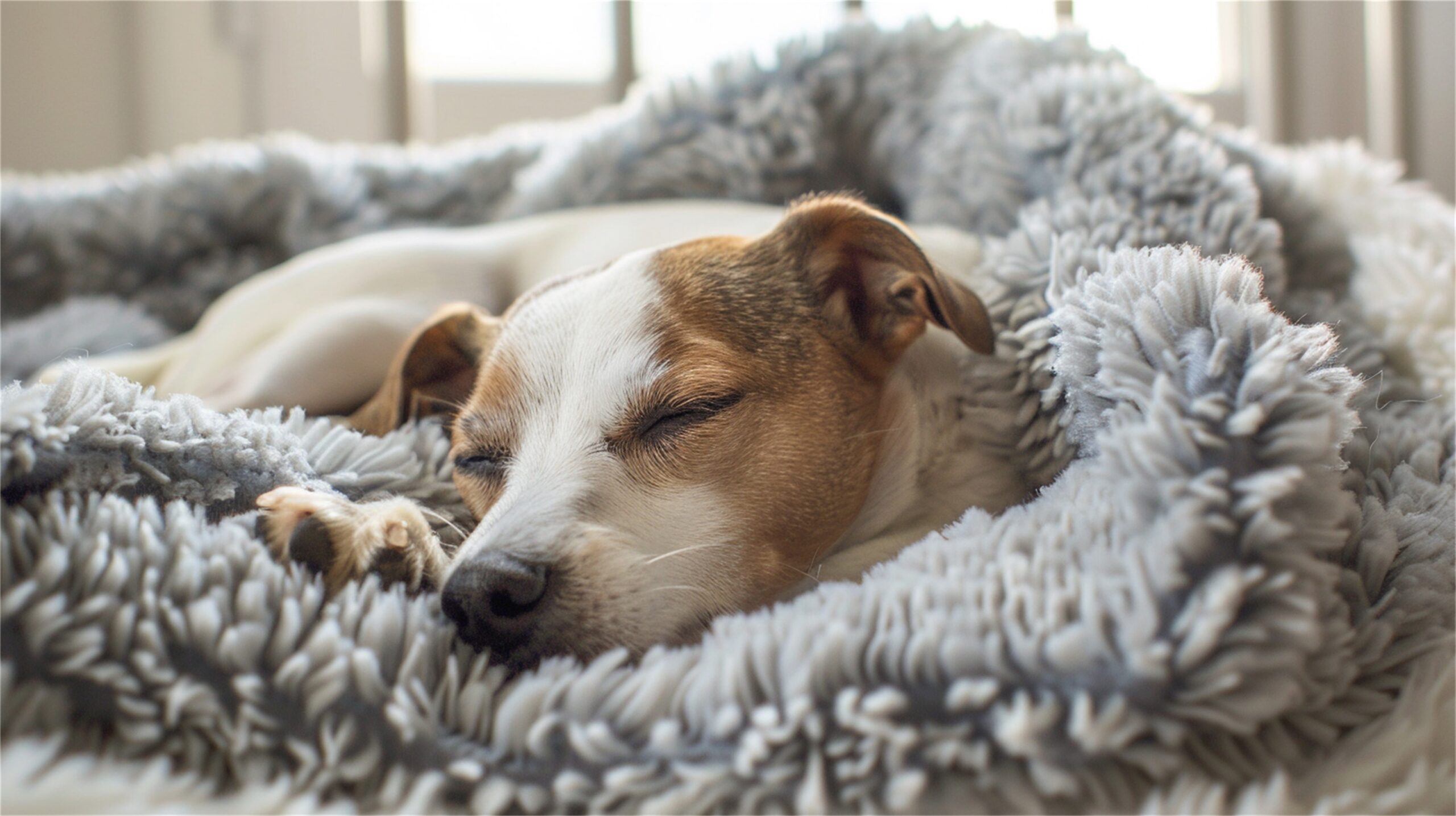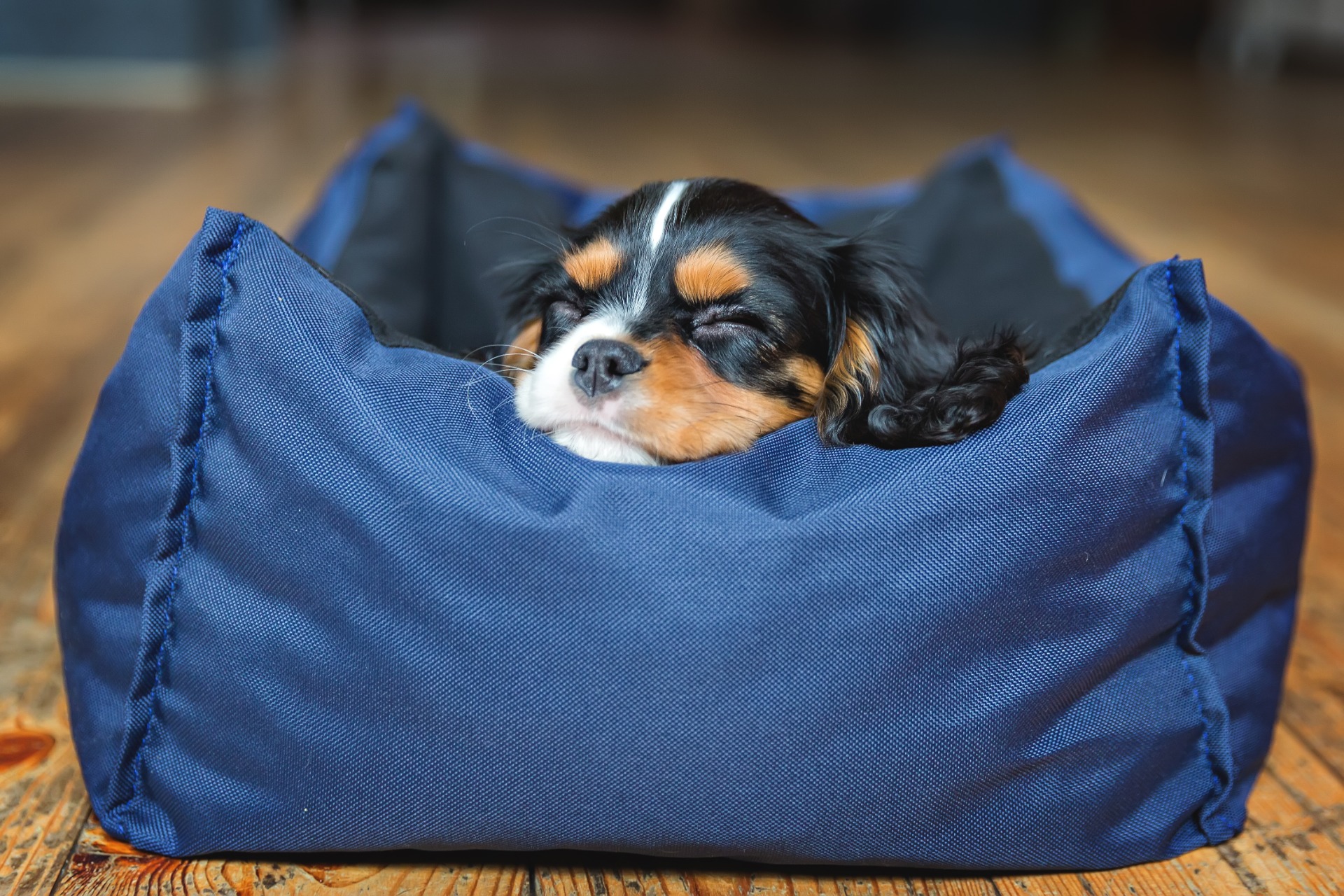

A DIY dog cave bed only works if the opening stays open and the dog can walk out without dragging the roof down on its face. Flat blankets and collapsed hoods feel cozy for a minute, then trap heat and make the bed something the dog avoids or chews open. The useful version is a small den with a stable entrance, a cushion sized for a curl rather than a sprawl, and a cover you can actually wash.
Match the build to the dog, not the photo
Dogs that tunnel under duvets, wedge behind the sofa, or sleep in a tight ball are the ones a cave is for. Dr. Ellen Russell, a veterinarian quoted by Rover, notes that covered beds are especially popular with burrowing breeds such as Dachshunds, Beagles, Border Collies, Malamutes, and Huskies, and that anxious or draft-sensitive dogs often use the extra walls for warmth and a sense of cover. Sprawlers who sleep on their side with legs flung out usually need an open bed. A cave forces them into a curl they did not choose.
Chewing changes the plan more than sewing skill does. Dogster’s cave-bed roundup flags most covered beds as a poor fit for heavy chewers and for puppies, who treat stuffing as a toy. A cardboard-reinforced cone, a plastic hoop, or a loose poly-fill hood is a teardown project for that dog. Skip the cave until the chewing phase eases, or build only a flat washable cushion and drape a blanket the dog already ignores.
Skill and cleanup decide the rest.
- No-sew fleece burrow: one evening, no machine, best for a small curler that does not shred fringe.
- Sewn hood with a removable cover: the version worth making if you want it to last past the first muddy week.
- Cardboard cone: a small-dog craft from Instructables, only if the dog does not mouth the walls.
A UK owner who sewed a cave from a scrap duvet reported that shop versions started at about £90. Premium covered beds such as the Snoozer Cozy Cave are commonly listed around $141 to $155 in extra-large. A fleece no-sew uses scrap or a couple of yards of fabric. The savings only hold if the bed survives washing and teeth.
Size the floor and the doorway, not the outer shell
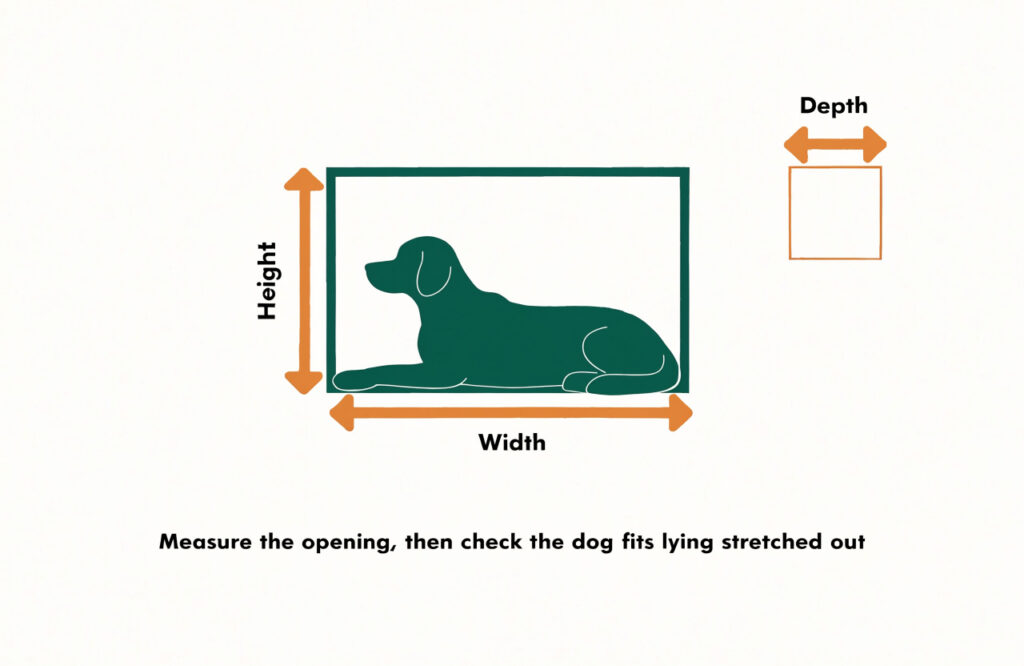
Measure the dog lying down, nose to the base of the tail, not the tail tip. Dogster’s sizing note for cave beds is to add 8 to 12 inches to that length and treat the result as the comfortable diameter. A 12-inch dog is looking at roughly a 20- to 24-inch interior. Other bed guides use a similar 6- to 12-inch add-on and tell curlers to take the low end. For a cave, use the low end on the floor and do not add a sprawl allowance the walls will steal anyway.
Width is the missed measurement. With the dog on its side, measure from the backbone to the outstretched paw, then keep the interior at least that wide. A round cave that looks huge from the outside can have a 14-inch pocket once bolsters and a hood eat the edges. Store listings often give outer dimensions. Armarkat’s small cave, for example, is listed at 18 by 14 by 12 inches and is aimed at toy breeds. If you are copying a shape, measure the hole the dog will occupy, not the cushion you will stuff.
The doorway should clear the shoulders with the head up, and the dog should be able to back out without folding an ear. Instructables’ small cone uses a 10-inch entrance on a 19-inch bed circle, which suits a tiny dog and is tight for anything with a broad chest. Scale the hole with the dog in front of you: if the shoulders brush both sides, widen it. A second exit is not required for dogs the way prey animals sometimes want one, but a single door that collapses shut is the failure mode to design against.
Puppies outgrow the first size. Build the cushion to the expected adult curl, or plan on a second cover. Giant breeds are a poor DIY cave project unless you already sew heavy canvas. The hood volume, the stuffing weight, and the wash load all scale badly.
A no-sew fleece burrow for a small curler
This is a cushion plus a loose hood, not a structured tent. The Connecticut Humane Society’s no-sew pattern is the reliable fringe method: two layers of fleece, corners cut out, strips tied in double knots. Their fabric guide is 2 yards for a small dog, 3 for medium, and 4 for large. Anti-pill fleece hides uneven cuts. Thin cotton jersey frays and pills into threads a dog can swallow.
For a small cave, cut two rectangles about 8 to 12 inches longer and wider than the nose-to-tail-base measurement. Stack them, cut 4- to 5-inch squares from each corner so the sides can meet, then cut 1-inch strips about 4 to 5 inches deep around the border, stopping at the corner cutouts. Tie top strip to bottom strip with a double knot. Leave one side open, stuff with an old pillow or poly fill, then knot it closed. Single knots walk open the first time the bed is shaken.
The hood is a third fleece piece, about the width of the bed and long enough to fold over the entrance without sealing it. Stitch or safety-pin it along the back edge only, so the front lip stays free. Do not knot a full roof onto the fringe. That turns the bed into a sack. A lip the dog can nose up is the whole point.
Skip tassels, buttons, and long fringe inside the sleeping area. Loose ends are chew targets. If the dog already unpicks blankets, this build will not hold. Move to a sewn cover with an enclosed zipper and no exposed ties.
A washable hooded cave if you sew
The bed that gets used daily needs a cover that leaves the house. The American Kennel Club’s cleaning guidance is blunt about why: dog beds collect fur, dander, and the odd flea, and a cover you can remove is the practical fix. Outer microsuede or cotton canvas, inner fleece or sherpa, and a zipper that stops short of the stuffing are the features worth copying from shop caves.
A simple layout is a boxed cushion plus a three-sided hood.
- Cut two floor panels to your interior size plus 1 inch seam allowance, and a gusset strip as wide as you want the cushion tall (3 to 4 inches is enough for a curl; seniors often need a separate foam slab under the cover).
- Sew the gusset around three sides, leave a zipper on the fourth, turn, and insert a pillow or a foam slab wrapped in an old pillowcase so the foam never hits the washer.
- Cut a hood panel about 1.5 times the bed width and tall enough to drape to the front edge. Line it with the soft fabric, wrong sides together, and topstitch so it does not flap into a tube.
- Attach the hood only along the back seam and a few inches down each side. Leave the front open and unweighted. A light plastic boning or a short length of flexible tubing in a fabric channel keeps the mouth from folding shut. Do not use wire a dog can bend and chew.
- Add a non-slip patch or silicone dots on the bottom so the cave does not skate across the floor when the dog enters.
Stuffing should be something you can replace. Poly fill clumps after washing unless it is in a tied liner. A thrift-store pillow is easier to swap than a bed you have to unpick. Egg-crate foam helps an older dog stand up, but it belongs under a removable cover, not sewn in.
The Instructables cone is a different shape: two 42-by-21-inch fabric rectangles sandwich a 41-by-20-inch cardboard half-circle with a 10-inch entrance, then the cone is sewn to a stuffed 19-inch round. It holds its shape because of the cardboard. That is also why it fails on a chewer, and why it cannot go in the washing machine. Treat it as a small-dog prototype, not the default.
Keep the air moving and the chewing low
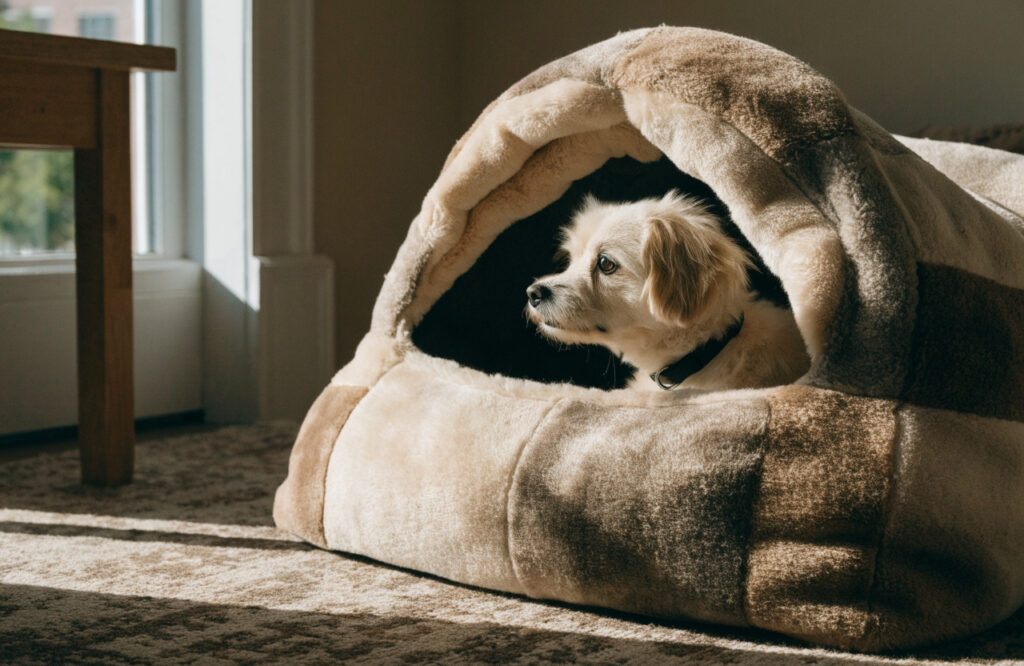
Covered beds are not automatically unsafe. A collapsed hood is. Russell’s practical test, via Rover, is enough space, an easy entry and exit, and breathable fabric so the dog is not crammed, sealed in, or overheating. A structured lip beats a blanket pulled tight over the head.
Heat is the condition that changes the build. The ASPCA lists excessive panting, labored breathing, drooling, weakness, and collapse as overheating signs, with severe cases running a body temperature over 104°F. A cave in a sunny window, a closed crate in a warm room, or a thick sherpa hood on a double-coated dog can cross that line even if the same bed is fine in winter. Use a lighter lining in summer, keep the door fully open, and put the bed where air moves. Short-haired and older dogs often want the extra warmth. Huskies and other heavy-coated dogs may only use the cave in a cool room.
Do not hide cooling gel packs or headache wraps inside the cushion. ASPCA Poison Control has warned that some of those gels contain acrylamide and can cause tremors, seizures, and worse if a pet punctures them. Plain foam or fiber is the fill.
Cardboard, plastic boning, and zippers all need a watch period. If the dog mouths the rim, remove the stiffener and switch to a soft hood. Cedar chips sold inside some shop liners smell nice and are not required. A washable cover does more for odor.
Placement matters as much as construction. A corner, against a wall, or inside a wire crate gives the “back to a solid surface” feeling without sealing the door. In a crate, the cushion has to match the floor exactly so it does not bunch into a step. That crate-plus-cave setup is what one owner used when a whippet mix kept kicking blankets off at night. It is optional, not a training requirement.
Get the dog to sleep in it
A new cave often becomes a clubhouse. One owner’s covered bed turned into a play den for two dogs and never became the night bed, which is a common outcome if the first association is wrestling. Sleep use comes from calm entries, not from dropping the bed in the middle of the room.
Put an unwashed T-shirt or the dog’s current blanket inside so it smells occupied. Feed a few meals at the entrance, then just inside, with the hood up so the dog can see out. Do not push the dog in or close a door behind it. If the dog only stands on the roof, that is still contact. Move the bed to the corner where the dog already naps and leave the old bed nearby for a week. Remove the old bed only after you see repeated, voluntary naps in the cave.
Night one is a bad test. Some dogs need several days of the bed smelling like the person before they lie down. If a week of quiet access produces no curling, the size or the sleeper type is wrong. A sprawler will not convert. A chewer needs a different bed, not a sterner introduction.
Questions people ask after the first build
Can the dog overheat in a cave bed? Yes, if the hood seals and the room is warm. A lip that stays open, a breathable lining, and a spot out of direct sun are the controls. Watch for heavy panting or weakness and move the dog to a cooler surface if you see them. Thick sherpa is a winter lining, not a year-round one for a double coat.
Is a cave better than a crate for an anxious dog? It is a different tool. A crate is a closed boundary. A cave is a choice: the dog can leave. Some anxious dogs want both, with the cave inside the crate. Others want only the cave in a quiet corner. Neither replaces training if the dog panics when left alone.
What if the dog eats the stuffing? Stop using that bed. Poly fill and foam are not meals, and a torn liner will be torn again. Switch to a flat, tight-weave cover over a mattress you can replace, and skip hoods until mouthing stops. Puppies are the usual offenders.
How often should it be washed? Vacuum hair off between washes so it does not clog the machine, and wash the cover on the cycle the fabric allows when it smells or after muddy weeks. AKC’s cleaning notes are the right baseline: hair out first, then wash what the cover can survive. A zipper you can actually open is what makes that realistic.
Which build to start with

Build the no-sew fleece burrow if the dog is small, curls, and does not shred fabric, and you want a bed this weekend. Sew the hooded cover with a removable cushion if the dog will use it daily and you can run a machine. Use the cardboard cone only as a small, supervised craft for a dog that does not chew. If the dog sprawls, chews hard, or pants in a light blanket, skip the cave and make a flat washable bed instead. The test that it worked is simple: the door is still open in the morning, and the dog chose to be inside it.