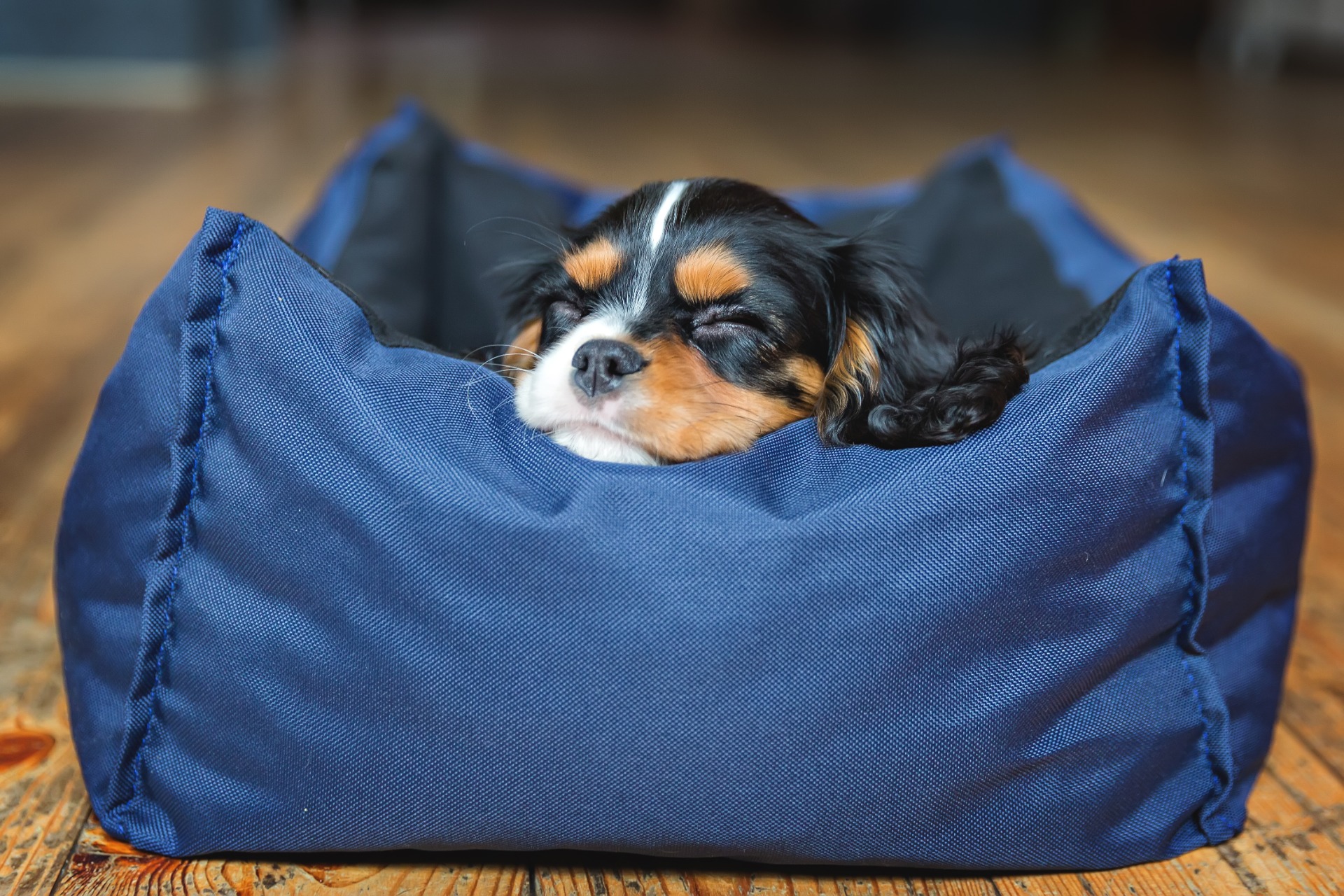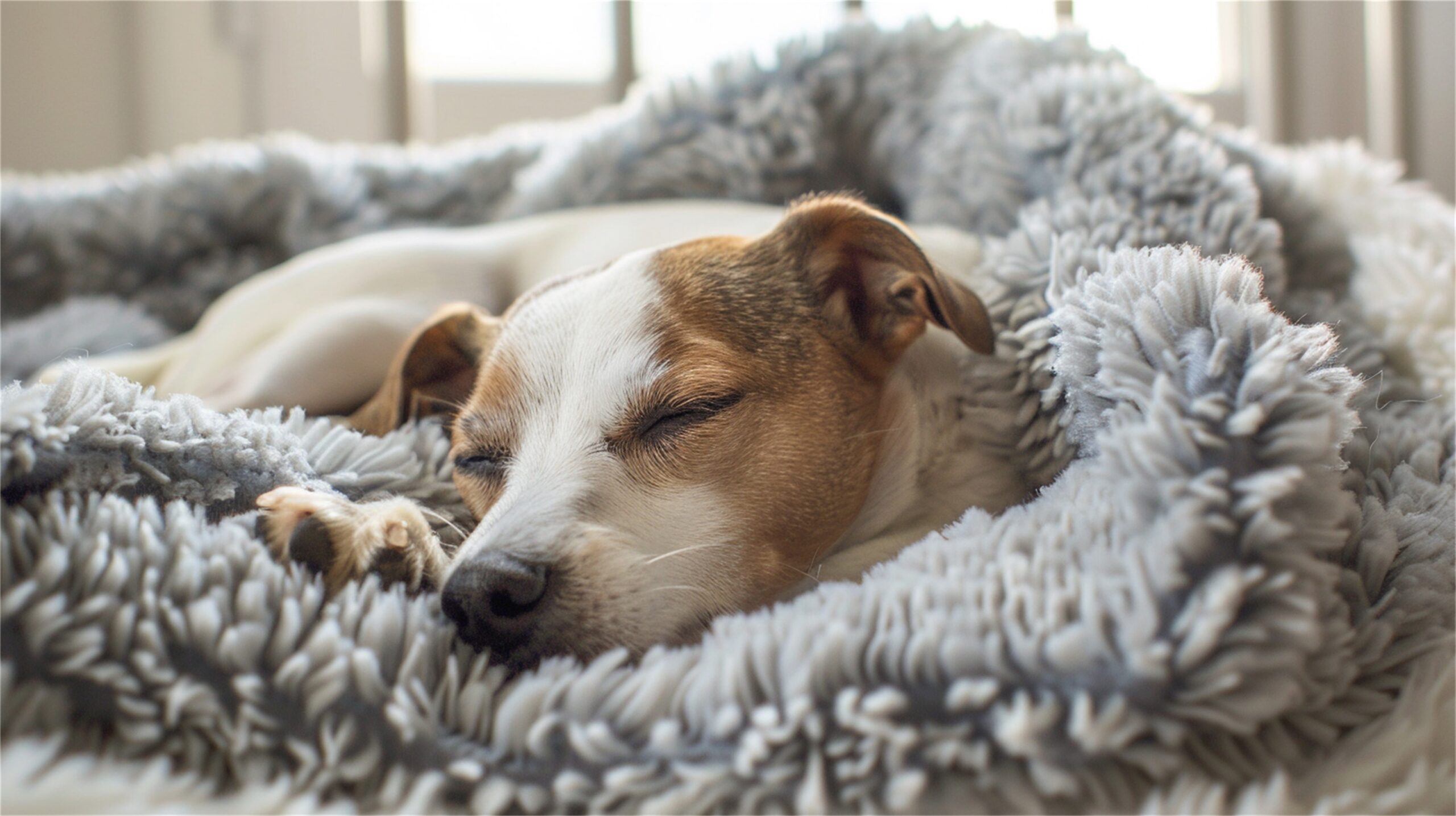

A dog bed with a blanket only helps if the cover matches how that dog already sleeps. Tunnelers often settle in a hooded cave; sprawlers and flat-faced breeds do better on an open bed with a loose throw they can kick off. A dog’s normal temperature is about 100–102.5°F, and panting is the main way they dump heat, so a thick attached hood can hold warmth they cannot easily leave. The right buy is the one with a clear exit.
Three products share the same name
Search results lump three different things under “dog bed with blanket.” They solve different problems.
A donut or cuddler with a hooded blanket is a round bolster with a flap sewn to one edge. The dog curls inside the ring and pulls the flap over its back. Most of these are sized for cats and small dogs. Listings often cite a 23- or 26-inch diameter and a weight cap around 25–30 pounds. The hood is soft, not structured, so it collapses onto the dog.
A convertible cave, sometimes sold as a snuggery, uses a round or rectangular cushion plus an attached cover. A removable plastic tube props the cover into a tent; pull the tube and the same cover lies flat as a blanket. That conversion is the useful part. One bed can be a den in January and an open pad in July. Covers on these models are usually removable and machine-washable. The foam core is not.
A separate throw on an ordinary bed is the third option, and it is the one most ranking pages ignore. A fleece or sherpa blanket sized to the sleeping surface gives the same nest-building material without locking the dog under a fixed hood. It is also the only setup that survives a serious chewer, because you replace a $20 throw instead of the whole bed.
Waterproof furniture protectors show up in the same searches. Those shield a couch or human bed from hair and accidents. They are not a sleep system for the dog.
Match the cover to the sleep you already see
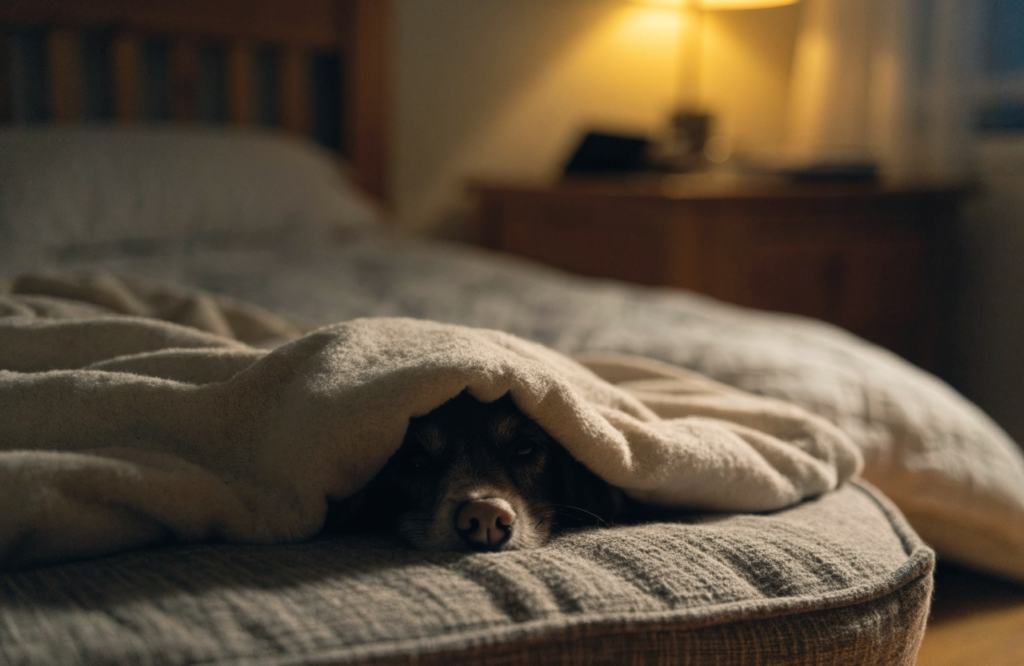
Certified applied animal behaviorist Mary Burch, Ph.D., director of the AKC Family Dog program, lists several reasons dogs crawl under covers: a leftover denning instinct, warmth, feeling hidden, and the scent of a person or littermates. She notes that earthdogs bred to enter burrows — terriers and dachshunds — often seek that pocket, and that a thin-coated dog such as a whippet may want the heat in cold weather. Northern breeds sometimes burrow too, which she links to digging into snow rather than to being cold. The AKC’s explanation of dogs under the covers is the clearest mainstream account of the behavior.
That is a reason to offer a cover, not a reason to buy the smallest hooded bed on the page. Watch the dog for a week before you order.
- Already tunnels. If the dog noses under your duvet, digs a nest in a throw, and sleeps with only a nose out, an attached hood or a convertible cave matches the habit. Digging at bedding is normal nest-making, not a flaw in the bed.
- Sprawls. A dog that sleeps on its side with legs extended will treat a donut hood as a pillow or ignore it. An open orthopedic bed plus a loose blanket at one end lets them cover a chest and leave the legs free.
- Thin coat, small body, or a senior who shivers at rest. Short-haired dogs lose heat faster. A light fleece they can burrow into is reasonable in a cool room. A sherpa cave in a 75°F apartment is not.
- Storm-reactive or newly adopted. A covered space can feel safer because it blocks some light and noise. It does not treat separation anxiety. If the dog is panting, pacing, or destroying the bed when left alone, the next step is a behavior plan, not a thicker hood. Burch’s guidance is to build confidence and, if the hiding is fear-driven, get professional help rather than only adding bedding.
Owners of Italian greyhounds and other thin-coated sighthounds often report that a burrow bed is the only bed the dog will use alone. That pattern fits the warmth-and-den account. It does not mean every small dog needs the same product.
Heat is the risk, not running out of air
Healthy dogs rarely suffocate under ordinary blankets. Woven fabric is porous, and a dog that feels stuffy usually shifts until its nose is in open air. The realistic problem is heat. Dogs do not sweat through the skin the way people do. Sweat glands in the paw pads and ear canals play a minor role. They cool by panting: air picks up moisture in the nose and leaves through the mouth, carrying heat with it. The AKC’s note on home temperature puts average body temperature at 101.5°F and says most dogs start to show overheating signs when the air is about 81–85°F.
VCA Animal Hospitals sets the normal range at 100.0–102.5°F (37.7–39.2°C). Above 104°F (40°C) or below 99°F (37.2°C) is an emergency on that page. The AKC fever guide calls 103°F a fever and says 106°F can damage organs. The two sources use slightly different cutoffs; both agree that a dog panting hard under bedding, with dark red gums, is not “just cozy.”
The ASPCA’s hot-weather guidance lists excessive panting, fast breathing, drooling, weakness, collapse, and a temperature over 104°F as overheating signs. Flat-faced dogs — pugs, French bulldogs, English bulldogs, Boston terriers — pant less effectively and are more vulnerable, as are seniors, overweight dogs, and dogs with heart or lung disease. A hood that sits on the face of a brachycephalic dog is a bad default, even in winter.
PetMD veterinarian Barri J. Morrison, DVM, writing in the blanket-safety overview (October 26, 2023), is blunt about two products people borrow from their own bed:
- Never use a human weighted blanket. Dogs are smaller, and the weight can trap them.
- Never leave a dog unsupervised on a heated blanket or heating pad. Cords invite chewing, and prolonged contact can burn. VCA specifically warns that heating pads can burn when used to warm a cold pet. A dog-specific heated bed with a thermostat and a chew-resistant cord is a different product, and even those need a working shutoff and a dog that is not a cord-chewer. Reports of cheap heated mats failing or scorching are common enough that an electrical heat source should not be the first fix for a cold room.
Practical rules that follow from those sources:
- Leave an exit. The dog should be able to back out without fighting a tucked edge.
- In warm weather, use cotton or a light fleece, or fold the hood all the way back. PetMD notes that dogs do not need a blanket in summer if the room is already comfortable.
- Skip heavy duvets, sherpa caves, and any cover the dog cannot lift with its head.
- Puppies under about four months and stiff seniors should not be shut under a collapsing hood. Puppies chew; seniors may not move away when they overheat.
- Keep water in the room. A covered bed does not replace it.
If you see heavy panting, drooling, bright red gums, or weakness, get the dog into cooler air, offer water, and call a vet. Do not wait to see if the hood was the cause.
Size the sleeping surface, not the weight on the box

The most common failure is a bed that fits the curled weight and not the sleeping dog. A 20-pound terrier can still be 30 inches from nose to tail when it stretches. A 23-inch donut then becomes a pillow.
Measure two ways, on the floor, with a tape:
- Nose to base of tail while the dog is standing.
- The same line while the dog is curled, plus the width across the shoulders when it is on its side.
The bed’s interior, not the outside diameter, needs to hold the curl with a few inches spare. The hood opening needs to clear the shoulders. If the dog sleeps stretched, the open surface should be at least as long as the standing measurement. When a listing gives only a weight limit, assume it was written for a curled toy breed.
Round cave beds are commonly sold around 26, 35, and 44 inches across. A 26-inch round is a small-dog bed. Two medium dogs sharing, or one large dog that likes to extend its legs, needs the largest diameter you can fit in the room, and even then a rectangle with a loose blanket is often a better shape. Donut hoods with high bolsters also block the sprawl. That is a feature for a dog that wants contact on all sides and a defect for a dog with arthritis that needs to shift.
Depth matters for seniors. A very high bolster can be hard to step over. An orthopedic foam base helps only if the dog can get onto it and change position. Egg-crate or memory foam under a non-breathable cover also holds heat; in a warm house, a thinner flat pad plus a blanket the dog can shove aside is cooler than a plush cave.
Washing fails at the foam, not the blanket
Attached-blanket beds are marketed as machine-washable. Read the second sentence. On most convertible caves the cover comes off and goes in the washer; the foam is spot-clean only. Urine and saliva soak through a plush cover into the core. Once the foam holds odor, washing the blanket does not fix the bed.
A waterproof liner between cover and foam prevents most of that. It also makes the surface less breathable, so use it for dogs that leak or drool, not as a default in summer. Wash covers on cold and dry low, or air-dry if the label says the waterproof layer degrades in heat. High heat is a common way these beds lose their shape.
Chewing is the other early failure. Manufacturer labels on hooded beds routinely say they are not for teething puppies or destructive chewers. PetMD warns against fringe, tassels, loose threads, and fuzzy fibers a dog can pull free and swallow. A dog that “flosses” the blanket edge is practicing the habit that unravels the hood. If that is your dog, give it a separate, boring fleece with no binding, and keep the expensive bed for later. Strings and stuffing are an obstruction risk, not a quirk.
Expect the hood seam to be the first place to thin. Check it monthly. A loose thread is easier to cut and seal than a swallowed strip of plush.
When a separate blanket is the better buy
An attached hood wins in a narrow set of cases: a burrower, a cool room, a dog that does not chew fabric, and a bed large enough to exit. Outside that set, a separate throw is the more honest product.
Choose the separate blanket if:
- The house stays above the mid-70s, or the dog is brachycephalic, overweight, or a senior with poor mobility.
- The dog rearranges bedding every night. A fixed hood fights that. A throw lets them build the nest and still leave.
- More than one dog uses the spot. Shared hoods become a fight over the pocket.
- You need something for the crate. PetMD notes that a blanket draped over a crate can calm some dogs and can also be pulled inside and eaten. A flat mat that cannot be dragged in is safer than a hooded bed in a closed crate.
- The dog sleeps on your bed and steals the duvet. A dog-sized throw at the foot, or a covered bed on the floor within arm’s reach, ends the nightly negotiation without putting your weighted comforter over the dog.
Material is secondary to airflow and escape. Fleece is the practical year-round choice: warm enough, light, and washable. Sherpa is for cold rooms and dogs that already burrow. Cotton is the summer layer. Wool can irritate skin, which is why PetMD does not favor it. Skip anything with long fringe.
For the human bed, a waterproof throw under the dog’s blanket protects the mattress. That is a different job from the dog’s cover, and mixing them — one thick waterproof hood the dog must sleep under — is how beds get hot and smelly.
How to tell the setup is working
Give a new bed a few nights in the place the dog already sleeps, with an unwashed corner of an old blanket tucked in so the scent is familiar. A working setup looks ordinary: the dog goes in on its own, can reverse out, and is not panting once the room is cool. Some dogs use the hood only as a wall and sleep against it. That still counts. Fold the hood back or remove the support tube rather than insisting on the catalog pose.
Stop and change the bed if the dog chews the seam, cannot turn around, or rests with its head buried and breathing hard. A cave that only gets used as a pillow was the wrong shape, not a training failure.
Questions owners ask before buying
Is it safe for a dog to sleep under a blanket? For a healthy adult under a light, loose cover, yes. Air passes through woven fabric, and dogs usually move when they get warm. Take more care with puppies, seniors, flat-faced breeds, and any cover that is heavy, weighted, heated, or tucked tight. Heat, not lack of oxygen, is the problem vets flag.
Will a hooded bed fix anxiety? It can make a secure sleeper more willing to settle, because a den-like space blocks some light and feels hidden. It will not fix panic, separation distress, or noise phobia. If the dog is destroying bedding or cannot be left, talk to a trainer or veterinary behaviorist. Adding a thicker cave on top of that fear often gives the dog something to shred.
Can I wash the whole bed? Usually only the cover. Zip it off, wash cold, and dry low or air-dry. Spot-clean foam. A waterproof liner under the cover saves the foam from the first accident. If the core already smells after a wash cycle, the foam is the part that has to go.
Are heated blankets a good add-on? Not as an unsupervised extra. Human heating pads and electric blankets can burn, and cords are a chew hazard. VCA says to avoid heating pads even when warming a chilled pet. A warm room, a light blanket the dog can leave, or a dog bed with a listed thermostat and chew protection is the safer order of operations.
Which setup fits your dog
Choose an attached hood or convertible cave if the dog already tunnels, the room runs cool, the interior fits a curl with room to turn, and the dog does not chew fabric. Pick a model whose cover can lie flat once the weather changes. Choose a separate throw on an open bed if the dog sprawls, runs hot, is flat-faced, is a puppy or a stiff senior, or shares the bed. In both cases the test is the same: the dog can get out without help, and it is not panting once it has settled. A blanket the dog can refuse is doing more for sleep than a cave it is stuck inside.