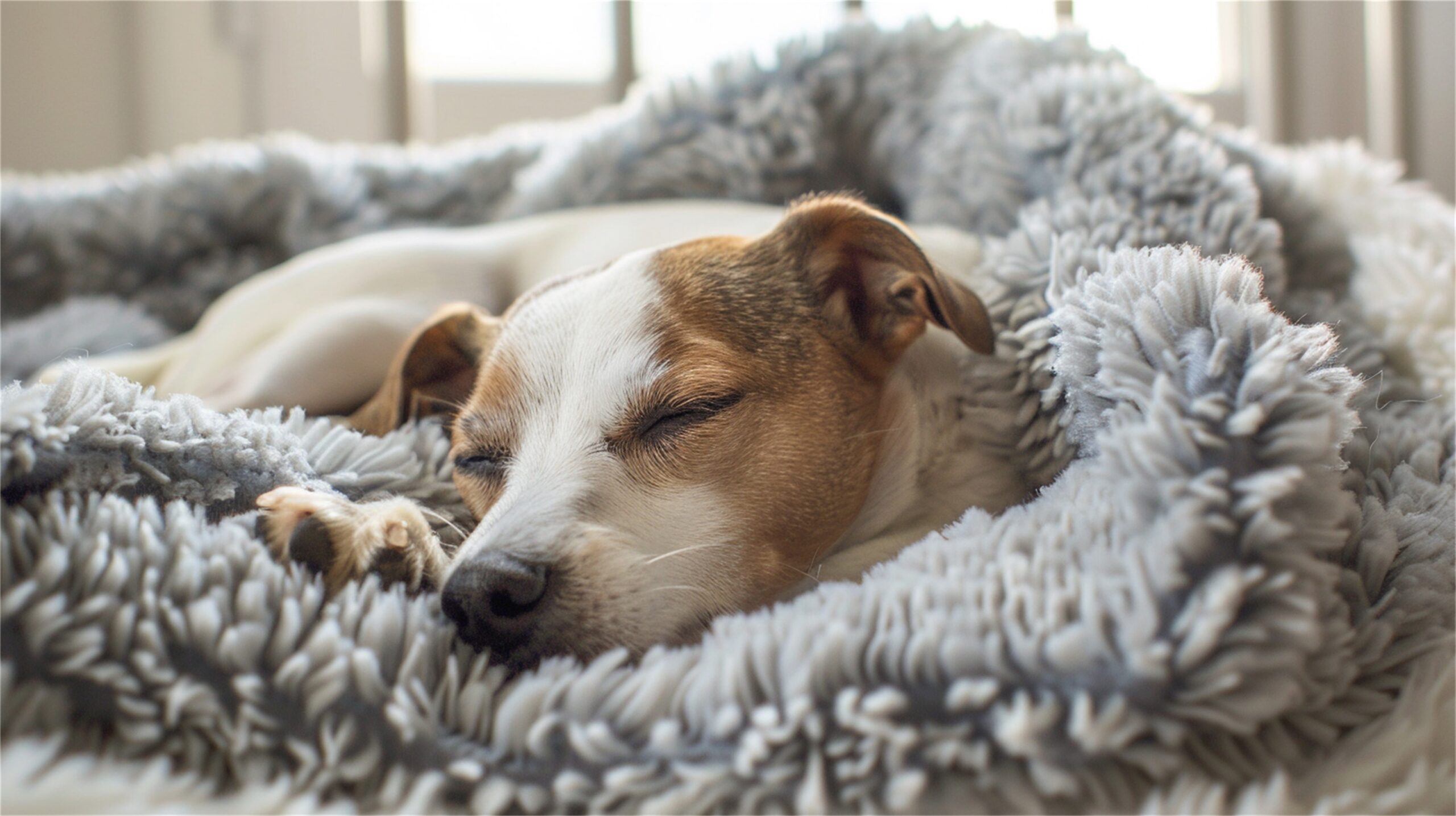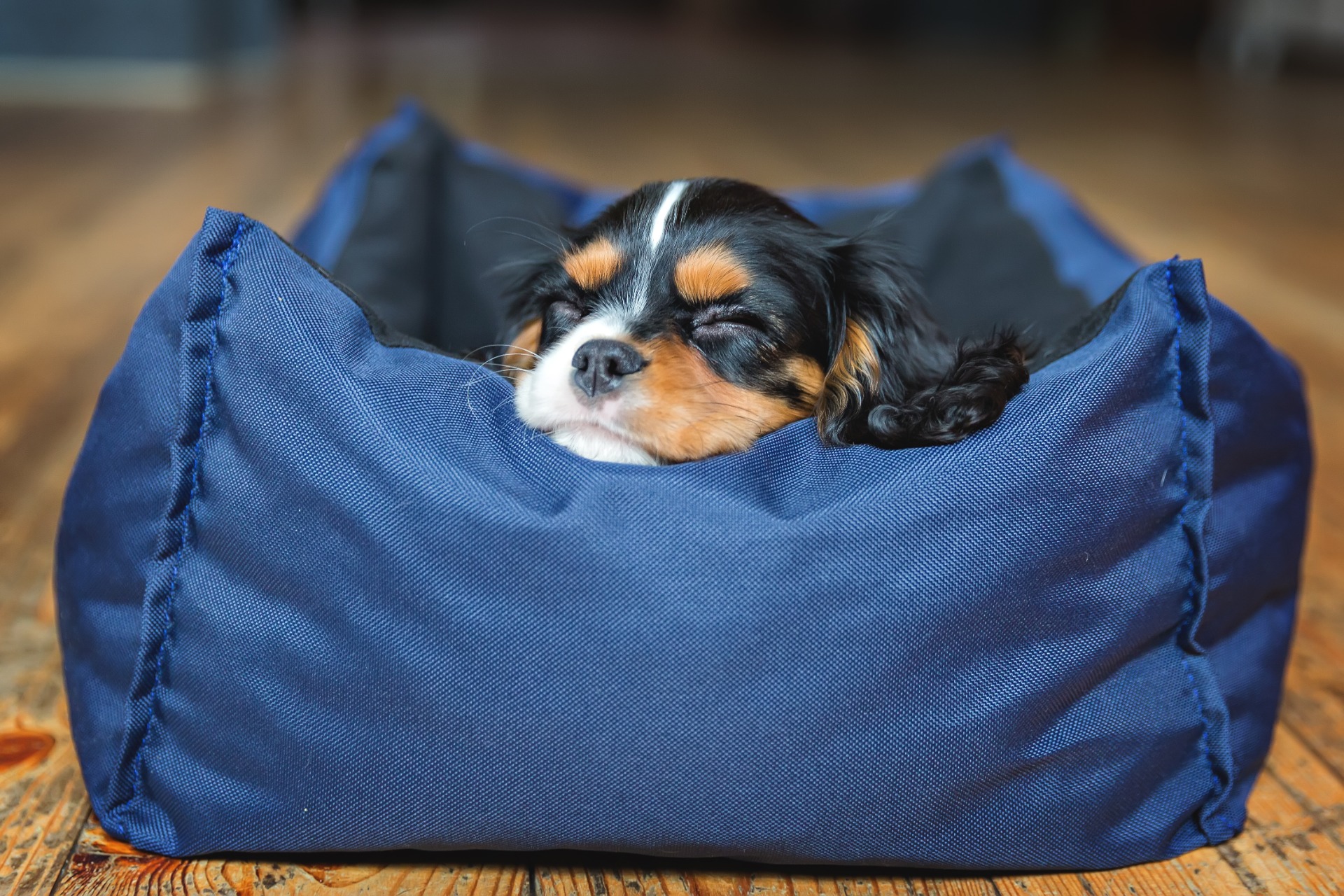

An enclosed dog bed holds body heat and cuts the dog’s view of the room, which suits a dog that already tunnels under blankets and is a poor fit for a dog that sprawls, pants, or has a short muzzle. The RSPCA notes that a shy or nervous dog may benefit from an igloo-style bed, while also saying dogs should have more than one resting option because preferences differ. The useful test is whether your dog already seeks covered spots, and whether they can walk out of this one without help.
What an enclosed dog bed actually is
Retailers use “enclosed dog bed,” “cave bed,” “hooded bed,” and “igloo bed” for several different products. The shared idea is a soft sleeping surface with fabric over or around the dog, meant to feel like a den rather than an open mattress.
Three shapes turn up most often. A hooded cave uses a flexible cover, often held open by a plastic rod, so the dog pushes in and the hood drops partly closed. A fixed igloo or tent has a structured dome and a defined entrance hole. A snuggle sack or burrow bag is a loose fabric tunnel the dog crawls under, with no rigid opening at all.
None of these is a crate. A crate can be closed. An enclosed bed has no latch, and the dog is supposed to enter and leave on their own. The PDSA’s noise-phobia advice says to make a den if the dog wants one — cover a crate, or offer a comfortable enclosed space if they dislike crates — and never force a den on a dog that is not keen. That distinction matters if you are shopping because of fireworks, visitors, or time alone. A covered bed can be one quiet option. It does not replace training, a vet check, or medication when those are needed.
Which dogs tend to use one
Dogs that already burrow are the clearest candidates. If yours digs at the sofa, wedges behind cushions, or sleeps under a throw, a hood gives that same contact without you losing the blanket. Thin-coated or small dogs in a cool, draught-free room often stay in longer because the cover traps body heat. The RSPCA also points to igloo beds for shy or nervous dogs that want to hide when the house gets busy.
Skip the enclosed format, or keep the hood fully open, in a few common cases:
- The dog sleeps stretched out, on their back, or half off every bed. Walls and a roof get in the way of that position.
- Entry is a struggle. Older dogs, stiff joints, and very short legs do better with a low front lip. The RSPCA suggests orthopaedic or memory-foam beds that are easy to get in and out of for dogs with aches or joint problems.
- The dog chews fabric, foam, or plastic. A hood rod, zipper, and poly fill are swallowing hazards if they come apart. No plush bed is chew-proof.
- The dog panics in tight spaces. Covering a crate helps some dogs and makes others rip the cover and panic. The same split shows up with cave beds. A dog that flattens the hood and sleeps on top of it is telling you the enclosure is the problem.
A second, open bed should stay available. The RSPCA recommends a quiet spot where the dog will not be disturbed and another bed where the family spends time, so the dog can choose company or privacy.
Hood, igloo, or sack: they do not behave the same
Product photos make these look interchangeable. In use they are not.
A rod-supported hood is the most adjustable. The dog can rest with their head out, pull the cover down, or, on many models, have the rod removed so the cover becomes a loose blanket. Check that the rod sits in a stitched channel, has no exposed sharp end, and can be replaced if it cracks. This style fails when the opening collapses onto the dog’s shoulders or the rod is easy to pull out and chew.
A self-supporting igloo keeps a stable entrance and a more complete enclosure. That is what some small, nervous dogs want. The tradeoffs are a fixed opening, less airflow, and walls that can slump after washing. Ask for the entrance height and the internal floor size, not just the outside diameter. Thick bolsters eat space a photo does not show.
A snuggle sack gives the strongest “under the covers” feeling and the weakest structure. Dogs that like pressure often prefer it. The risk is a dog twisting inside a loose layer, or a heavy dog collapsing the tunnel so the exit is no longer obvious. It should be light enough to push aside.
| Construction | Best match | Main failure |
|---|---|---|
| Hood with a removable rod | Burrowers who sometimes want their head out | Rod chew, collapsed opening |
| Fixed igloo or tent | Small dogs that choose a full hide | Tight entrance, poor airflow, slumped walls |
| Snuggle sack | Dogs that already sleep under blankets | Twisting, hidden exit, flattened by larger dogs |
Donut and bolster beds are a middle step. Raised sides give chin support and a nest feeling with an open top, so the dog can still watch the room and shed heat. They are the better first buy if you are unsure whether your dog wants a roof.
Size the sleeping floor, not the label

The most common miss is buying from a weight band. A 25-pound dachshund and a 25-pound French bulldog do not need the same opening. Measure your dog from nose to the base of the tail while they are lying down, then watch how they actually sleep. A curled sleeper needs a floor wide enough to turn around. A side sleeper needs length for the spine, not just a circle that looks right in a listing.
Manufacturer dimensions are a useful reality check. Snoozer, the brand most often cited for hooded caves, lists its round Cozy Cave at 25, 35, and 45 inches in diameter, with a sidewall about 4 inches and a hood height around 8 inches on the luxury version. The rectangular version runs from 30 by 20 inches up to 40 by 30 inches. Those are outside figures. The usable floor is smaller once the hood and bolsters take their share. If a seller only publishes an external size, ask for the internal floor, the entrance width, and the clearance at the opening.
Two sizing errors are easy to make. Too small, and the dog cannot turn or gets stuck on the lip. Too large, and the den effect disappears: the dog does not feel the walls, and a small animal may ignore the bed. For a true burrower, a snug fit is the point. For a dog that only sometimes covers up, size to the stretched position and accept that the hood will sit loosely.
Large dogs are the awkward case. Many cave beds stop at a size that suits a medium dog curled up, not a Labrador stretched out. A 45-inch round bed can work for a large dog that curls. A large dog that sprawls usually needs a rectangular open mattress, with a blanket they can pull over themselves, rather than a dome they cannot enter cleanly.
Heat, airflow, and short-muzzled dogs
The warmth that sells these beds is also the main reason to refuse one. A hood reduces moving air and holds heat against the body. That is welcome in a cool room and a bad idea next to a radiator, in full sun, or in a house that already runs warm. Offer a cooler open surface in the same room, and leave the entrance clear. If the dog pants, shifts constantly, or leaves after a few minutes, the microclimate is wrong.
Flat-faced breeds need extra caution. Veterinarian Karyn Kanowski, writing for Dogster, notes that brachycephalic dogs — including bulldogs, pugs, and French bulldogs — are twice as likely to suffer the effects of heat exhaustion as longer-nosed dogs, because narrowed airways make panting a poor cooling system. A thick coat makes this worse. A covered bed is not a closed box, but it is still a warmer pocket of air. For these dogs, keep the hood retracted or choose an open bed, and do not add extra blankets over the opening. Watch for heavy panting, restlessness, or reluctance to settle.
Summer use is simple: many dogs self-select. They use the cave on cool mornings and abandon it when the room warms. That is a success, not a failed purchase, as long as another bed is there.
Cleaning before the cover traps the smell
Enclosed shapes collect hair and odor faster than a flat mat because the dog is rubbing the same plush walls every night. The American Kennel Club, summarizing CDC guidance and a Canadian Medical Association Journal paper, recommends washing dog bedding weekly to reduce the chance of spreading parasites or diseases that can pass from pets to people. The AKC also cites EPA guidance to deep-clean every two to three weeks to help control fleas, and notes one study that found fleas in 14 percent of pets’ sleeping places even outside peak flea season. Fleas lay most of their eggs at night, so a bed is a logical place for them to build up.
“Machine washable” on a cave bed usually means the cover, not the whole product. On the Snoozer Cozy Cave, the cover unzips and is machine washable; the cedar-poly pillow is meant to be spot-cleaned and dried fully before it goes back in. Cedar in the fill is there for odor, not as a substitute for washing. Before you buy, confirm three things: the cover comes off without destroying the hood channel, the pillow can be aired until it is dry through the center, and the washed size still fits your dog. Thick fill that stays damp will mildew, and a shrunken cover makes the opening tighter than the one you measured.
A waterproof liner helps puppies and seniors that leak. Water-resistant fabric is not the same thing. If the listing does not say the inner bag blocks liquid, assume an accident reaches the fill.
How to introduce it, and when to take it away
Put the bed in a quiet corner with the entrance facing the room, not a wall. Let the dog investigate. Do not lift them in, hold the hood over them, or block the exit to “help them settle.” The PDSA line is the right rule: never force a den on a dog that is not keen.
A dog that already burrows often claims the bed the same day if you lift the cover once and drop a familiar blanket inside. A dog that has never used a covered space may need the rod out for a week so the hood lies flat, then a partial arch. Treats near the entrance are enough. Pushing them through the opening teaches the wrong lesson.
Stop using it if you see any of these:
- Panting, scratching to get out, or freezing at the entrance
- Sleeping only after the hood is flattened or the bed is flipped
- Chewing the rod, zipper, or inner fill
- Difficulty turning or backing out
- The bed sliding across hard floors every time they enter, which means the base has no grip
Chewed pieces should end the trial. Fabric, foam, and plastic supports are not safe once they are coming apart.
Which setup fits your dog

Choose a hooded cave if your dog already sleeps under blankets, the room stays cool, and you can buy a model with a removable cover and a rod you can take out. Choose a small igloo only if the dog is little, voluntarily hides, and the entrance is tall enough for an easy exit. Choose an open bolster or flat mattress if the dog sprawls, runs hot, is flat-faced, or is stiff getting up. Keep that open bed even if the cave is a hit. The enclosed bed is working when the dog uses it by choice and can leave it without help.
Questions owners ask before buying
Are enclosed dog beds good for anxious dogs? They can be one safe option for a dog that already seeks cover. The RSPCA says shy or nervous dogs may benefit from an igloo bed. The PDSA tells owners to offer an enclosed space during noise events and never force it. A bed does not treat separation anxiety or a noise phobia on its own. If distress is ongoing, talk to a vet.
Is a cave bed better than a crate? They do different jobs. A crate can contain a dog and support house-training. A cave bed cannot be shut. For sleep, some dogs want the den feeling of either. The dog should be able to leave a bed, and a crate used as a safe space should not be a surprise lock-in during a scary event.
Will it be too hot in summer? Often, yes, if it is the only bed. Hoods hold heat. Pair it with a cooler open surface and watch for panting. Flat-faced dogs are a special case because they overheat more easily than longer-nosed dogs.
How do I know the size is right? The dog can enter without scraping their shoulders, turn around, and lie in their usual position with the exit still clear. External diameters such as 25, 35, and 45 inches are a starting point only. Compare the internal floor and opening with your own measurements before you rely on a weight chart.