
A wicker dog bed is a woven basket or raised sofa with a cushion inside, not a single material. The weave can be natural rattan, willow, seagrass, or water hyacinth, or it can be synthetic polyethylene resin over a metal frame. The useful version has a lowered front edge, a base that will not sag, tucked fiber ends, and a cushion you can remove and wash. The wrong version is a storage basket with a pillow dropped in, or a natural weave left with a dog that still chews. The choice that holds up depends on three things: whether your dog mouths furniture, whether the bed will stay indoors or on a covered porch, and whether the dog can step in without clearing a high wall.
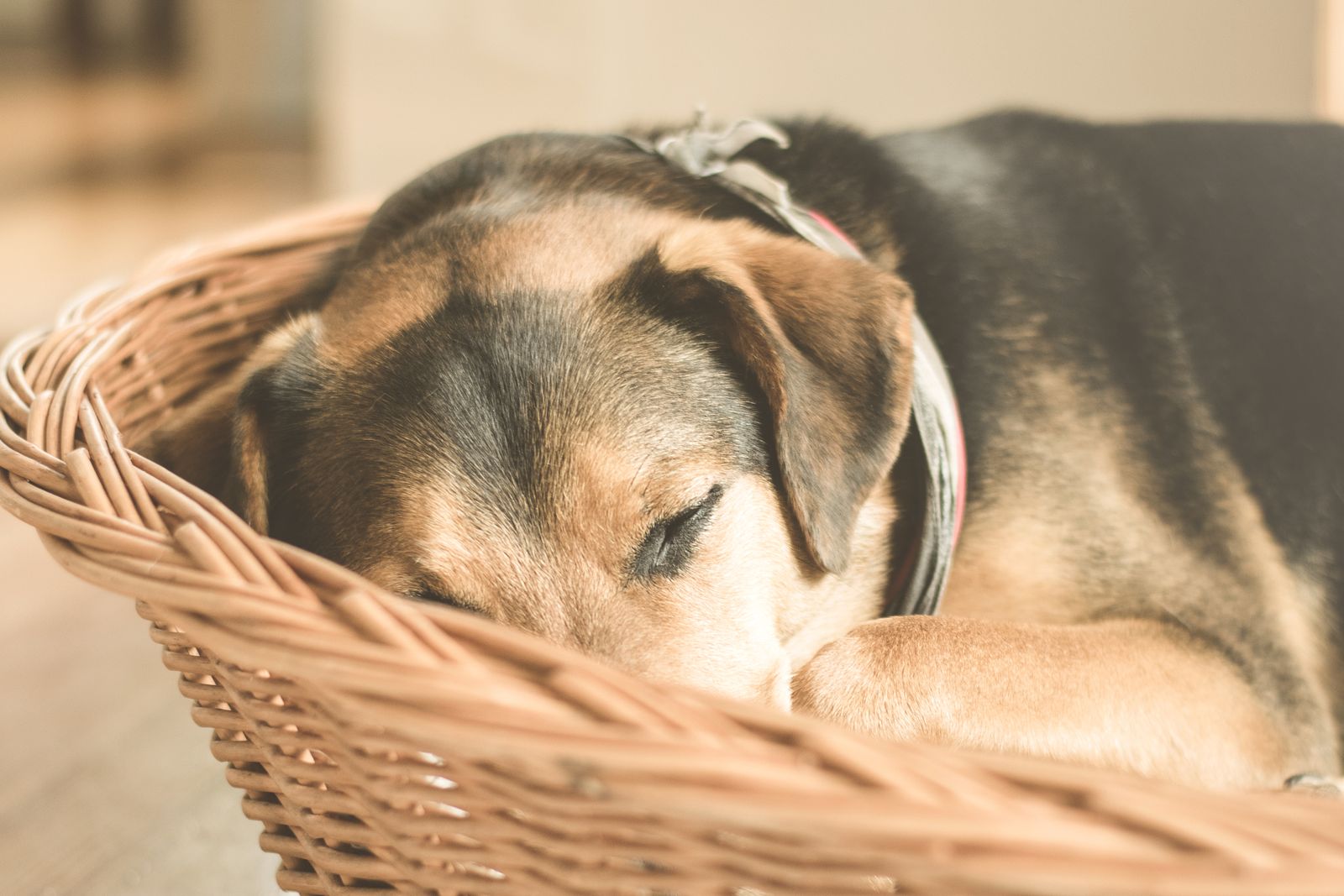
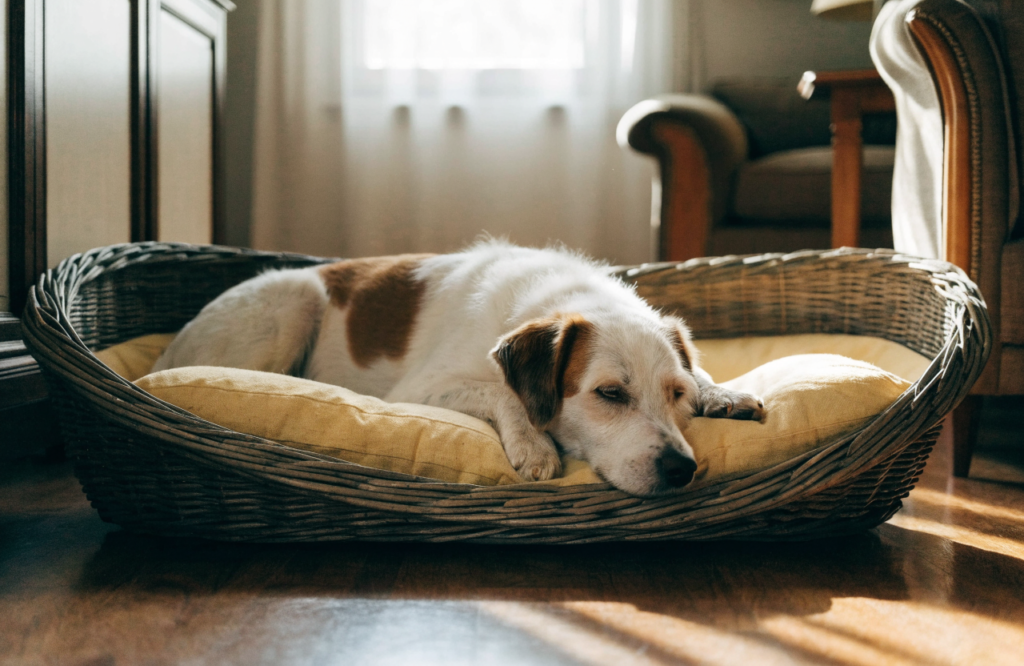
A traditional basket bed is the indoor version most people picture: raised sides, a dip at the front, and a pad that sits inside the weave.
Raised resin-wicker sofas are the other common form. They sit on a metal frame, keep the dog off the floor, and are built for covered outdoor use as well as living rooms.
What “wicker” means on a dog bed
Wicker is the weaving method, not the plant. A label that only says “wicker” does not tell you whether the strands are natural or plastic, or whether the base is wood, metal, or more weave.
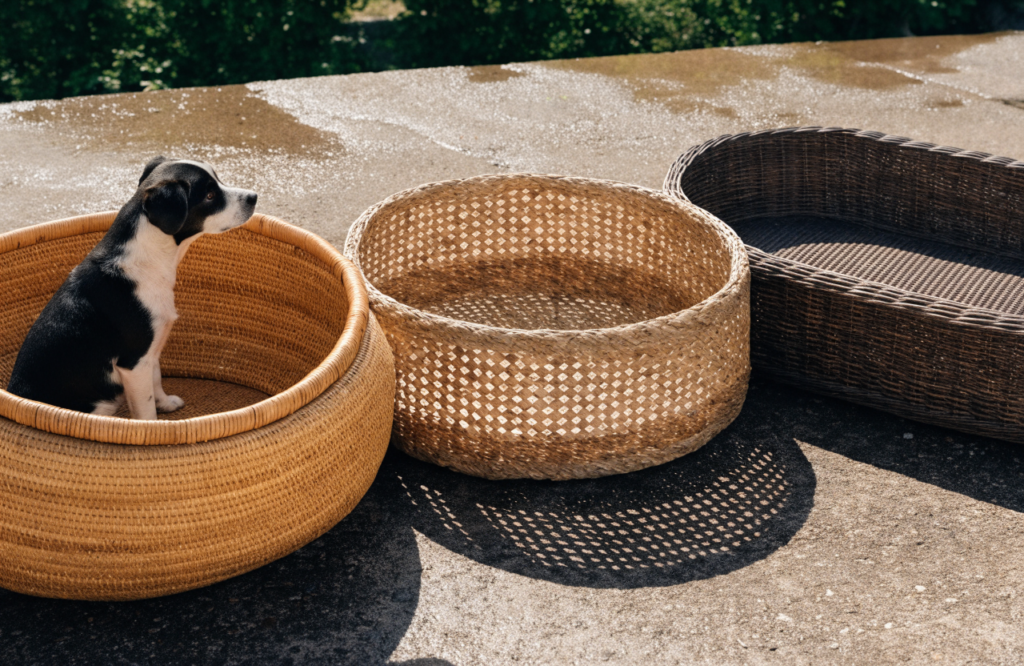
Quality dog-specific baskets are usually woven from rattan reed over hardwood posts, with a solid wood bottom and a front lip cut lower so the dog can step in rather than hop. Handwoven versions from craft makers often include a fitted cushion, sometimes sherpa or fleece, cut slightly smaller than the basket so it settles rather than rides up. Cheap craft-store baskets are a different product: thin staples at the rim, loose ends, and a base not rated for a dog’s weight. Those staples can work free, and loose ends snag fur or poke skin.
Synthetic “wicker,” also sold as PE rattan, HDPE rattan, or resin wicker, is plastic strip woven over a powder-coated steel or aluminum frame. It does not splinter the way dried plant fiber does, shrugs off light rain, and is the material used on most elevated patio dog sofas. It will not feel or age like natural rattan.
Basket beds and elevated sofas solve different problems
Indoor basket beds give a dog a defined den. Sides to lean against suit dogs that curl or circle before they settle. A solid bottom keeps the cushion off a cold floor. These beds belong in dry rooms. Natural fiber absorbs water; a soaked weave can warp and grow mildew if it stays damp.
Elevated wicker sofas raise the sleeping surface a few inches on a metal frame, with a flat or lightly bolstered cushion. Air can move under the bed, which helps in warm rooms and on covered porches after rain. Typical small-to-medium models are rated around 30 kg (about 66 lb); some larger frames are listed up to roughly 75 kg (about 166 lb). Check the specific listing. Elevation only helps if the step-in height is low enough for that dog.
House-shaped wicker beds, with a roof and a front opening, are mostly for small dogs and cats. They look enclosed, but the opening and interior still have to fit the dog stretched out, not just curled.
Shape follows how the dog sleeps. An oval or round basket fits a dog that curls. A rectangle fits a dog that stretches. Neither shape fixes a size that is too small.
Which material holds up
| Material | Where it belongs | Main strength | Main limit |
|---|---|---|---|
| Rattan | Indoor basket beds | Strong solid-core vine; takes nesting and circling better than softer grasses | Swells and can mold if soaked or kept in high humidity |
| Willow | Decorative indoor baskets | Flexible traditional weave | More brittle; a chew can leave sharp shards |
| Seagrass or water hyacinth | Light indoor use | Warm texture, lower price | Softer and more absorbent; faster fray at contact points |
| PE / HDPE resin wicker | Indoor or covered porch | Waterproof, UV-resistant, no wood splinters | Can still be chewed through; plastic pieces are still a foreign-body risk |
Rattan is the stronger natural choice for a bed that is used every day. Seagrass and water hyacinth photograph well and work for trays and light baskets; they are a weaker structural choice where a dog climbs in and out constantly. Synthetic resin is the practical pick if the bed will see a porch, spills, or a dog that mouths edges.
Who a wicker dog bed suits, and who should skip it
A wicker bed is a reasonable buy for an adult dog that has stopped destroying bedding, wants a bordered place to settle, and lives mostly indoors. The raised sides give a nest without the heat trap of a fully enclosed plush cave. The open weave also lets air move, which matters for thick-coated dogs and warm rooms.
Skip natural wicker if the dog is still teething, or if it shreds baskets, shoes, or bed edges when left alone. Puppies and determined chewers treat the rim as a chew toy. Dried plant fiber can break into sharp pieces. Swallowed wood and sticks are a known foreign-body risk: fragments can lodge in the gut, and wood often does not show clearly on ordinary X-rays. Plastic resin is harder to splinter, but a dog that is already destroying furniture can still pull strips free and swallow them. For that dog, a flat elevated cot with a tight fabric skin, or a bare crate pad, removes the thing they want to chew.
Also skip a high-sided basket for a senior dog, a dog with hip dysplasia, or any dog that hesitates at a curb. A front wall of several inches is a small jump every time they enter or leave. A lowered lip, or a flat elevated sofa, is the version that matches reduced mobility. Vets commonly favor low or recessed beds for dogs that should not have to climb.
Weight matters as much as length. A bed listed for “medium dogs” can still fail if the base is only woven reed and the dog is 25 kg. Look for a stated weight limit and a solid wood bottom or a metal frame, not an open weave under the cushion.
How to size it
Measure the dog from nose to base of tail while it is lying stretched, then add several inches so it is not wedged against the rim. For a dog that only curls, measure the circle it makes asleep and add room to turn. The cushion should sit inside the frame, not balloon over the edge where claws catch it.
Check the entry height against the dog’s ability, not the product photo. A young terrier can clear a lip that a 10-year-old Lab will avoid. If the dog already struggles onto the sofa, do not add another step at bedtime.
What to check before you buy
- Fiber ends tucked into the weave, not cut flush at the rim.
- No exposed staples or pins along the entry, where paws and chests rub.
- A base that is solid wood or a metal frame, not a loose mat of reed.
- A front edge lower than the sides.
- A cushion with a removable, washable cover and a hidden zipper. Seams and piping are where chewing starts.
- A stated weight capacity above the dog’s actual weight.
- Feet or glides if the bed will sit on hardwood; some makers sell these separately.
- For porch use, a resin weave and a covered location. Natural rattan is not an all-weather outdoor bed. A light coat of clear polyurethane is sometimes suggested for wood bottoms on a covered porch, but the weave itself should not sit in rain.
A storage basket plus a pillow fails most of these checks. It is built to hold linens, not a dog climbing in and out.
How to clean it without wrecking the weave
Natural and synthetic wicker are cleaned differently.
Natural rattan, willow, seagrass, and water hyacinth should be dusted with a soft brush or a vacuum brush attachment, working along the weave. Spot-clean with a barely damp cloth and mild soap, then dry fully in open air, out of direct sun. Do not hose them, soak them, or put them in a washing machine. Plant fiber acts like a sponge; trapped moisture warps the weave and feeds mildew. In a humid house, keep the bed off exterior walls and away from a constantly damp mat.
Synthetic resin wicker can be wiped, lightly hosed, and scrubbed with mild soap, then left to dry. It still should not sit in standing water, and the cushion should come off before any rinse.
Wash the cushion cover on the cycle the maker allows, usually gentle, and dry the insert completely before it goes back in. A foam pad that stays damp will smell long before the basket does. Hair collects in the weave; a weekly brush pass prevents that mat from holding moisture.
Problems that show up after the first month
Chewing the rim. Stop using the bed unsupervised. Loose strands and swallowed pieces are the actual hazard, not the look of the basket. Replace it with a bed that has nothing woven to grab.
Sagging center. The base was underbuilt for the dog’s weight. A solid bottom or metal frame is the fix, not a thicker pillow.
Mildew smell. The weave or the cushion stayed damp. Dry both fully, move the bed to a ventilated spot, and do not hose natural fiber again.
Dog will not get in. The lip is too high, the bed is too small, or the dog prefers an open surface. Forcing a high-sided basket on a stiff dog trades a nicer living room for a bed they avoid.
Snagged fur or a poke. An end was not tucked. Trim only if you can turn the end back into the weave; a fresh cut tip is sharper.
Cushion sliding. It is larger than the interior. A pad cut about an inch smaller than the basket stays put better than one that overhangs.
Frequently asked questions
Can a wicker dog bed go outside? Resin wicker on a metal frame can live on a covered porch. Natural rattan, willow, seagrass, and water hyacinth should stay indoors. Uncovered rain will swell natural fiber and can rust a cheap frame.
Are wicker dog beds safe for puppies? Not as a leave-alone bed. Teething dogs chew the rim, and broken natural strands can splinter. Use towels or a chew-resistant pad until the dog reliably leaves bedding alone, and supervise any woven basket.
Do they help dogs that overheat? The open weave and, on raised models, air under the frame move more air than a thick plush donut. The cushion still matters: a deep memory-foam pad holds heat. A thinner, washable pad on a raised frame runs cooler.
Can cats use them? Yes. The same sizing and chewing rules apply. A house-shaped bed is often bought for cats and small dogs; confirm the opening is large enough for an easy exit.
How long should one last? Indoors, a tight rattan basket with a solid base can last for years if it stays dry and is not chewed. Seagrass and water hyacinth wear faster at the rim. Resin outdoor frames last as long as the weave stays intact and the metal does not rust; the cushion is usually the first part to replace.