
A washable dog bed is only as useful as the part you can actually clean. On most beds, that means a removable cover — not the foam inside. Solid orthopedic foam is usually spot-cleaned, while fiberfill and some shredded-foam inserts can go through a machine if the label allows it. The bed that stays fresh is the one whose dirty layer comes off, dries fully, and can be replaced without throwing out the support underneath.
That distinction matters more than the word “washable” on the product page. Dogs bring in mud, saliva, coat oil, and the occasional accident. A cover that cannot be removed, or a core that stays damp for days, turns a new bed into a smell problem within weeks.
What “washable” usually means
Product labels use one word for three different designs.
A cover-washable bed has a zip-off outer shell. You wash that shell and leave the core alone unless something soaks through. This is the standard design on better orthopedic beds, and it is the setup cleaning guides and veterinarians tend to recommend, because a removable cover is far easier to maintain than a bed labeled spot-clean only.
A fully washable bed lets the insert go in the machine as well. That is realistic for many polyester fiberfill cushions and some shredded-foam fills, especially in a front-loader or a top-loader without a center agitator. It is not realistic for a solid slab of memory foam. Agitation can tear foam, and a soaked core often never dries in the middle.
A wipe-clean bed skips laundry. Plastic beds and elevated cots with a taut fabric or mesh sling can be hosed, wiped, or scrubbed. The American Kennel Club notes that these styles harbor less hair, odor, and parasites than fluffy filled beds, though many dogs still want a washable blanket on top for comfort.
Waterproof is a separate claim. A water-resistant cover slows spills. A waterproof liner between the cover and the foam is what keeps urine and drool off the core. Neither feature means the whole bed belongs in the washer.
Match the bed to the mess
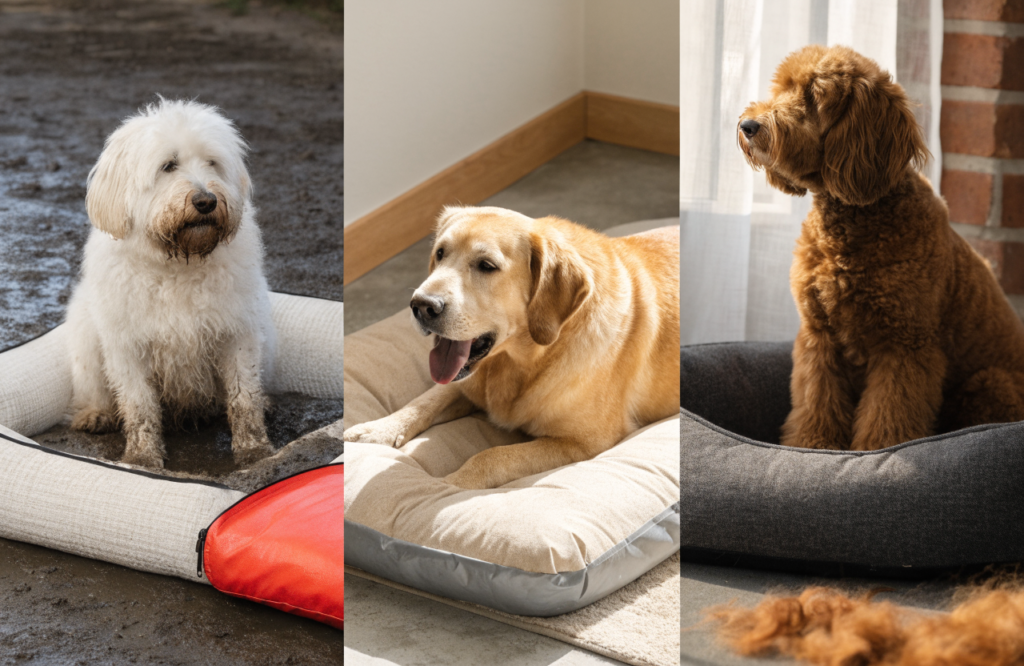
The right design depends on what actually lands on the bed, not on a generic “best washable” list.
| Household problem | Design that holds up | Why |
|---|---|---|
| Muddy paws, light dirt | Removable cover in a smooth fabric | Surface mess comes off in one wash; smooth cloth releases hair better than plush |
| Puppy accidents or senior leakage | Cover plus a waterproof liner around the foam | The liner takes the hit; the foam stays dry if the barrier is intact |
| Heavy shedding or oily coat | Spare cover and a low-pile shell | One cover can be in the wash while the dog still has a bed |
| Dogs that dig or chew edges | Tight zipper, boxed edges, durable upholstery fabric | Weak zippers and thin covers fail before the fill does |
| Outdoor or swimming dogs | Elevated cot, or a fast-drying cover over a protected core | Standing water and slow-drying fill are what create mildew |
| Joint pain plus accidents | Orthopedic foam with a liner, not a fully soaked foam bed | Support and washability are solved in layers, not by washing the foam |
If accidents are frequent, a human waterproof mattress pad sized to the bed is a practical backup. Pet owners often use crib or nursing pads this way because they wash easily and cost less than a second orthopedic bed. They do not replace a proper liner, but they keep the first accident from becoming a foam replacement.
Features worth checking before you buy
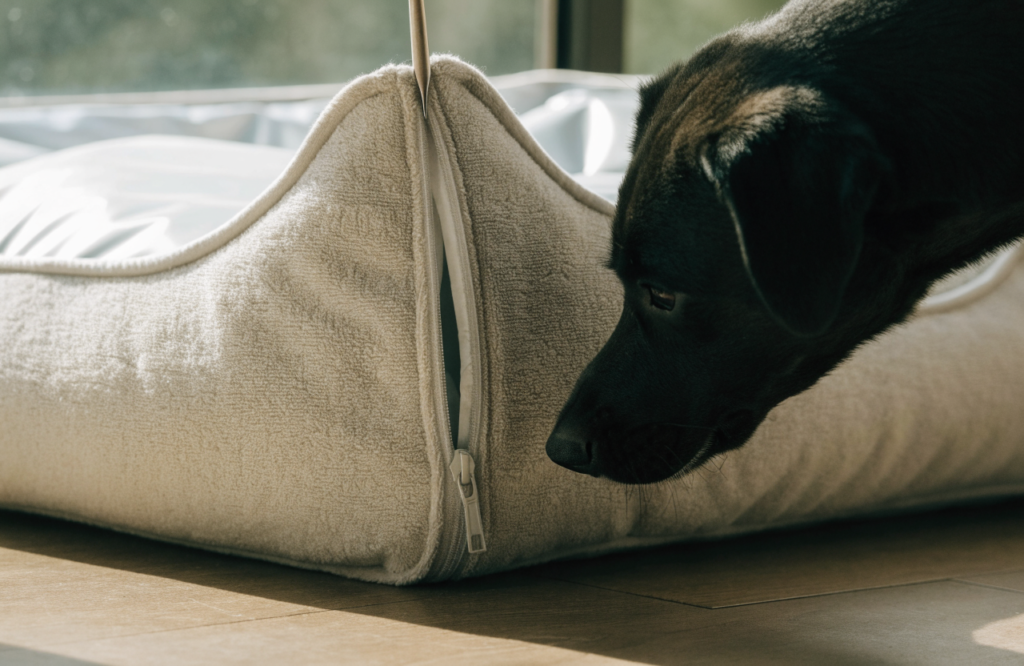
A washable dog bed fails in ordinary ways: the zipper jams, the cover shrinks, the liner leaks at a seam, or the insert will not fit back inside. These details are more predictive than color or brand.
A zipper that goes around most of the bed. A short zipper makes it hard to remove a thick insert and easy to tear the tape. Metal or heavy coil zippers last longer than fine ones on a bed that is unpacked every week. Close the zipper before washing so it does not snag other laundry.
A liner that is separate from the pretty cover. The outer cover handles hair and dirt. The inner liner handles liquid. If both jobs sit on one thin shell, the first real accident reaches the foam. Check that the liner has its own care instructions. Some coated liners are wipe-only even when the outer cover is machine washable.
A second cover, or a brand that sells replacements. Washing takes hours once drying is included. A spare cover means the dog is not sleeping on the bare foam, or on the floor, while the first cover air-dries. Replacement covers also matter later, when the shell wears out and the foam is still sound.
Fabric you can live with. Canvas, denim-weight cotton, and upholstery-grade polyester tend to survive nails and repeated washes better than thin microsuede. Plush feels softer on day one and holds hair. Fleece can pill. If the dog digs, favor a tight weave over a soft face.
A size that fits your machine, or a plan for the parts that do not. A large cover may need a laundromat washer. The foam should not be forced into a home machine to “make it fit.” Measure the cover flat, not just the bed’s listed dimensions.
Certifications on the foam, if you want them. CertiPUR-US is a foam-emissions and content standard, not a wash rating. It does not mean the core is machine washable. Use it as a materials check, then read the care label for cleaning.
Skip any bed whose only instruction is spot-clean if the dog is a puppy, a heavy shedder, or prone to accidents. Those beds are difficult to keep free of odor once moisture gets into the fill.
How the filling changes the wash
Treat each layer as its own job.
Solid memory foam or orthopedic foam. Remove the cover and wash only what the label allows. Vacuum the dry foam. Blot fresh spills. Spot-clean with a small amount of water and a fragrance-free cleaner, then press dry towels against the area. Do not wring foam, and do not put it in a washer or dryer unless that exact model’s instructions say to. Heat can warp it. A cool center after a day of air-drying means it is not ready.
Shredded foam. Some inserts can be machine washed if the care tag says so, usually on a gentle cycle in a machine without an agitator. They still need complete drying. Clumps can be broken up by hand once the fill is dry. If the tag is missing, spot-clean rather than guessing.
Polyester fiberfill. This is the fill most likely to be fully washable. Wash in cold or warm water on a gentle cycle with a mild, dye-free detergent. Dry on low or air-dry, and pull the filling apart so it does not dry into a lump. Wool dryer balls can help redistribute fill when the label allows machine drying.
Bolsters. A bolster may be part of the cover or a separate stuffed piece. Check for a second label. Loose filling that a dog can pull out is a chewing hazard, so repair open seams before the bed goes back into use.
How to wash it without wrecking it
Follow the care label when you have it. If the label and a general tip disagree, the label wins. When the tag is gone, use the more cautious method and contact the maker before soaking the core.
- Take the bed outside or into a tub area and shake off loose dirt. Vacuum hair from the cover, seams, and crevices before it hits water. Wet hair clumps and clogs washer filters.
- Unzip the cover. Close the zipper. Wash the cover alone unless the insert is explicitly machine washable.
- Use a fragrance-free, dye-free detergent. Added scent is a common reason a dog avoids a freshly washed bed, and it can irritate skin. Skip fabric softener, which coats fibers and holds odor. A small amount of white vinegar in the rinse can help with smell if the label does not forbid it.
- Pretreat stains with a cleaner that suits the fabric. Enzyme detergents help with organic messes. Do not use bleach unless the label allows it.
- Wash on the gentlest cycle the label permits. Hot water kills more bacteria, but it also shrinks covers and can damage coatings. If the tag caps the temperature, stay under that cap.
- Dry the cover flat or on low heat, whichever the label allows. High heat is the usual cause of a cover that no longer fits.
- Dry the core completely before reassembly. Sun and moving air work better than a closed room. A damp bed grows mildew, and the smell returns within a day even if the cover is clean.
Large one-piece beds that cannot be taken apart are a laundromat job only if the filling is washable. Otherwise hand-wash the shell in a tub, rinse until the water runs clear, and press out water with towels. Do not leave any bed in a crate while it is still cool or heavy in the middle.
How often to wash depends on the dog. A short-coated dog that stays indoors may need a cover wash every few weeks. An oily, heavy-shedding dog that swims or rolls in mud may need the cover washed weekly, with the core checked each time. The American Kennel Club points out that frequency should track coat type, outdoor habits, and whether anyone in the home has allergies, and that thick filled beds should be fully dry before the dog uses them again.
Mistakes that ruin an otherwise good bed
Washing the foam “just in case” is the expensive one. A support core that stays wet in the center will smell worse than the cover ever did, and repeated soaking breaks down the foam.
Drying on high to save time shrinks covers and melts or clumps fill. If a cover comes out tight, air-dry the next one. A badly shrunk cover is rarely stretched back into shape.
Skipping the vacuum step pushes hair into the pump and leaves a film on the fabric. Hair that is still stuck after washing usually means the cover was not cleaned dry first, or the fabric is too textured to release it.
Reassembling over a damp liner traps moisture against the foam. Check seams and the underside, not just the top surface.
Using a scented detergent, then wondering why the dog sleeps on the hard floor, is common. Wash again with a fragrance-free detergent and an extra rinse if the label allows.
Ignoring a small seam rip before a wash turns one loose thread into a machine full of filling.
When washing is no longer enough
Replace the bed, or at least the core, if odor remains after the cover and liner are clean and the foam is fully dry. That smell is in the fill. Also replace it if the foam has compressed into a permanent dip, the liner is cracked, or the dog is chewing out stuffing.
A worn cover over sound foam is a cover problem. Buy a replacement if the maker sells one, or have a heavy fabric cover made to the insert’s measurements with a long zipper and a simple waterproof inner layer. That is often cheaper than a new orthopedic bed.
Elevated beds and plastic beds still need inspection. Mesh sags, frames rust, and chewed plastic edges can cut a dog. Easy cleaning does not mean indefinite use.
Questions people ask after the first wash
Does machine washable mean the whole bed can go in the washer? No. It often means the cover only. Read the tag on the cover, the liner, and the insert separately.
Can a memory foam dog bed go in the dryer? Not unless that model’s instructions say so. Heat and tumbling are hard on solid foam. Air-dry the core and use low heat only on covers that allow it.
Why does the bed smell again the next day? The usual causes are a damp core, detergent left in the fabric, a damaged liner, or odor already in the foam. Rewash only what the label permits, rinse well, and dry every layer. If the foam still smells when dry, it needs replacement.
Is a waterproof liner enough without a washable cover? No. The liner blocks liquid. The cover is what you wash to remove hair, dander, and surface dirt. You want both if accidents are likely.
What if the bed I already own cannot be unzipped? Add a washable waterproof cover sized to the bed, and wash that instead of soaking the whole cushion. It will not fix a core that is already contaminated, but it prevents the next mess from reaching the fill.