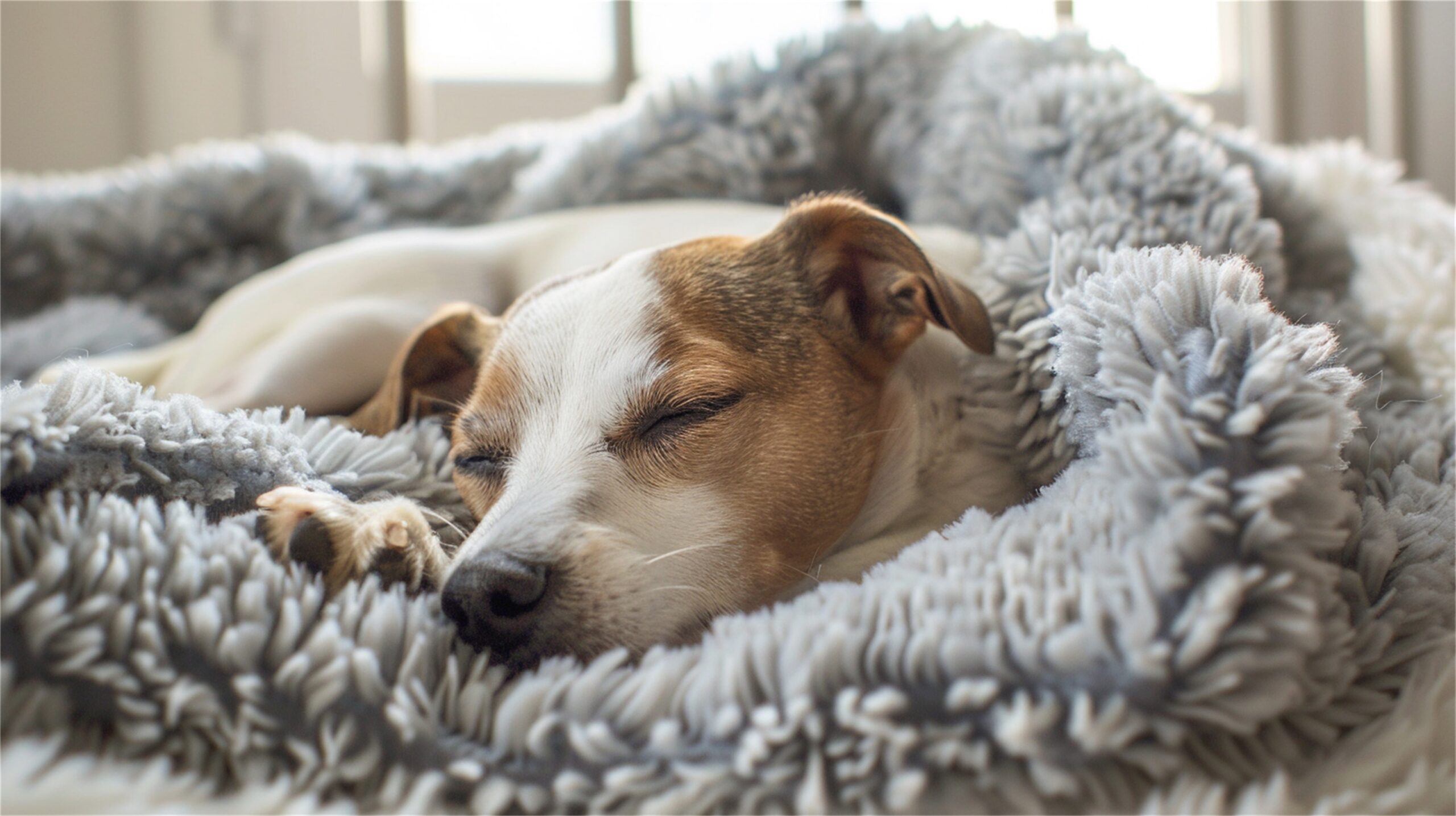

A covered dog bed is a cushion with a roof, hood, or attached blanket that turns a sleeping spot into a small den. Dogs that already crawl under blankets, hide during storms, or sleep curled in a tight ball often settle more readily in one than on an open pad. The cover cuts some light and household movement, holds body heat, and gives the dog something to lean into. It is not the right bed for every dog. Flat-faced breeds, heavy chewers, and dogs that sprawl on their backs can be worse off in a closed design. The useful choice is matching the cover style, size, and construction to how your dog actually sleeps.
What a covered dog bed is, and what it is not
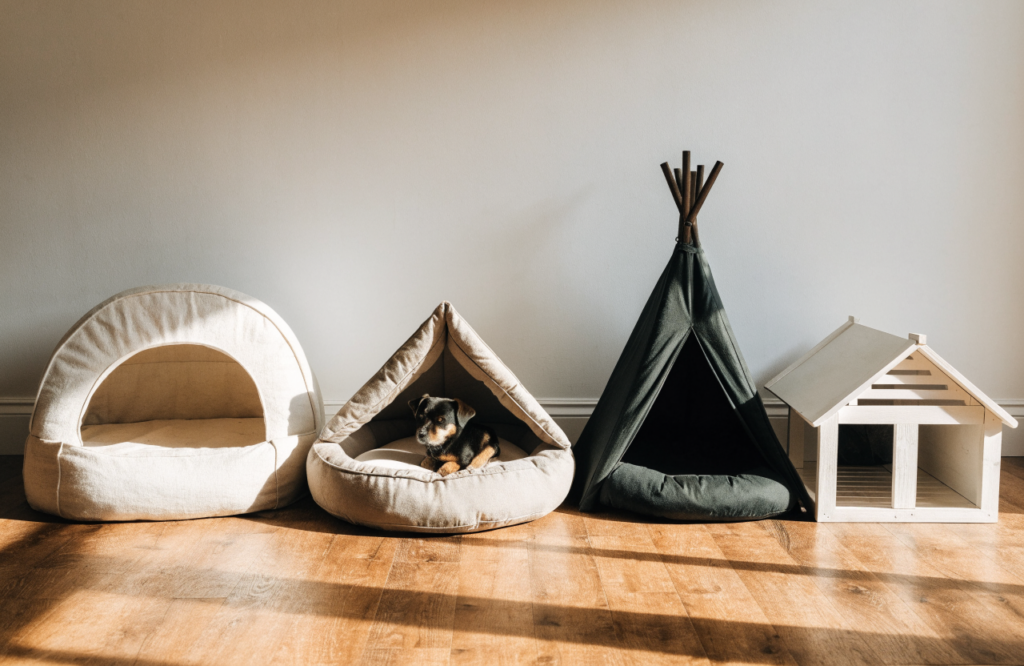
“Covered” is a category, not a single product. Retailers use the same label for soft caves, hooded donuts, pole tents, and framed indoor houses. They share an enclosed feel. They do not share structure, airflow, or durability.
A soft cave or hooded bed has a fabric roof over a padded base. Some hold the roof up with an internal rod or stiff foam walls. Others are a loose flap the dog has to push under, more blanket than room. A hooded donut adds a cover or pocket to a round bolster bed, so the dog curls inside raised walls and can also pull fabric over its back. A tent or teepee uses poles and a canopy, which reads more like a small house and usually leaves more headroom. A framed cave uses a rigid or semi-rigid shell so the entrance stays open when the dog leans on the walls.
None of these is a crate. A dog can walk in and out. That distinction matters for dogs that already dislike confinement. A covered bed works as a choice-based den only if the opening stays usable and the dog is never shut inside.
The appeal tracks a real canine habit. Many dogs seek enclosed spaces when they rest, the same denning pattern that shows up when they dig a nest in bedding or disappear under a sofa. Veterinary commentary on cave-style beds points to that security and warmth as the practical benefit, especially for burrowers and dogs that startle easily. It is an environmental aid, not a treatment for clinical anxiety.
Which dogs tend to use one, and which should skip it
A covered bed earns its place when the dog already shows the behavior the design supports.
Dogs that burrow under blankets, towels, or laundry are the clearest match. Breeds often described this way include dachshunds, terriers, beagles, and some northern and herding breeds, though the habit matters more than the breed label. Small and short-coated dogs that seek heat also do well, because the hood traps body warmth that an open pad loses. In a busy house, the cover gives a dog a place to step out of foot traffic, other pets, and visual noise without leaving the room.
Skip or modify the design in these cases:
- Dogs that overheat. Thick coats, high activity, and warm rooms make a hood a liability. If your dog pants on an ordinary bed, a cover will not help.
- Flat-faced breeds. Bulldogs, pugs, French bulldogs, and similar dogs already cool themselves less efficiently. Extra heat and restricted airflow around the face are a poor combination. If you still want raised edges for joint support, use an open bolster bed or keep any hood fully retracted.
- Sprawlers. A dog that sleeps on its back with legs extended needs a flat surface larger than its body. A snug cave fights that posture.
- Determined chewers. Soft hoods and faux-fur linings are easy to destroy. A chewed cover is also a swallowing risk.
- Dogs that panic in tight spaces. Some anxious dogs want a wall to lean on, not a ceiling. A donut or bolster bed without a hood is the better test.
A covered bed will not fix separation anxiety, noise phobia, or pain. It can be one calm option in the house. If fear is severe, a veterinarian or veterinary behaviorist should guide the plan. The bed is furniture, not therapy.
The main styles, and how the cover changes the sleep

Match the roof to the posture, not the photo.
Soft cave with a standing hood
The hood is propped by a rod, boning, or thick foam so the dog can walk in without fighting fabric. Rectangular versions suit dogs that curl and also stretch a little. Round versions suit tight curlers. Look for an entrance that stays open when the dog leans on a side wall. A hood that collapses onto the face is the main failure mode of cheap caves.
Hooded donut or cuddler
Raised bolsters form a nest. An attached blanket or pocket lets the dog burrow without a rigid roof. This is often the easier introduction, because the dog can use the bolster and ignore the cover. It is less of a true den and more of a nest with optional darkness. Plush versions hold heat and hair. They are a weak choice for heavy shedders unless the cover comes off easily.
Tent, teepee, or framed house
Poles or a frame create headroom. Dogs that want a room of their own, rather than a blanket on their back, use these more readily. The tradeoff is bulk and, on pole tents, a structure a large dog can knock over. Framed indoor houses hold their shape better but take more floor space and are harder to wash as a single piece.
Elevated cot with a canopy
This is a shade and weather cover, not a burrow bed. Air moves under the sleeping surface, so it suits hot sleepers and outdoor rest better than anxious indoor dogs looking for a den.
| Style | Best match | Main limit |
|---|---|---|
| Standing hood cave | Burrowers who still want to turn around | Hood can collapse if unsupported |
| Hooded donut | Curlers; dogs unsure about full enclosure | Less darkness and less structure |
| Pole tent or teepee | Small dogs that want a house feel | Tips easily; limited sizes |
| Framed cave | Dogs that lean hard on walls | Bulk; cleaning access varies |
| Canopy cot | Heat, outdoors, shade | Not a den |
How to size a covered bed so it still feels like a den

Open beds are sized for stretch room. Covered beds are sized for contact. Too much empty space and the dog never feels the walls, the hood does not hold heat, and the “cave” effect disappears. Too little space and the dog cannot turn, the spine stays flexed, and older dogs struggle to stand up.
Measure the dog in the posture it actually uses for sleep, usually curled, from nose to the base of the tail. Add about 4 to 8 inches for a curler. Add closer to 8 to 12 inches if the dog also stretches inside the bed. The hood should clear the head when the dog turns, and sit close enough that a lying dog can feel fabric along the back. If product dimensions are exterior only, subtract the wall thickness. Bolster and hood walls often eat 3 to 6 inches of interior space.
Large and giant breeds are poorly served by most soft caves. Weight collapses polyfill, and a dog over about 50 to 70 pounds needs a base that does not bottom out. If you want enclosure for a big dog, prioritize a firm foam base and a frame that keeps the entrance open, and confirm the interior length against the curled measurement before buying.
Construction details that decide whether the bed lasts
The cover is the product. Everything else is support.
A fully removable, machine-washable shell is the minimum. Enclosed beds trap drool, dander, and damp more than open beds. Odor shows up late because you cannot see the interior. The zipper should release the hood and the base cover in one or two simple pieces. Separate tiny liners get lost. Check the care label before you buy: some plush covers are wash-only on cold and must air dry, which is a real constraint in a small home.
A waterproof or water-resistant liner between cover and fill protects the core. Accidents inside a cave are easy to miss until the foam smells. Foam that gets wet is difficult to dry and often has to be replaced.
Fill should match the dog’s weight. Loose polyester fiber is soft and warm, and it flattens under a medium or large dog within months. A denser fiber pad or a foam core of roughly 3 to 4 inches for small dogs, and 4 inches or more for heavier dogs, keeps the sleeper off the floor. Memory foam adds pressure relief for seniors and dogs with stiff joints, but it holds heat. In a covered bed that already runs warm, that combination needs a cool room and a dog that does not pant at rest. CertiPUR-US certification is a useful screen for foam that has been tested for certain harmful chemicals; it is not a promise of durability.
The hood needs structure. A rod you can remove lets you lower the cover on warm days. Foam walls that stand without a rod avoid a hard piece inside the bed, which some chewers target. Either is better than a floppy blanket sewn to a cushion.
Fabric is a tradeoff, not a ranking. Faux fur and deep plush feel cozy and suit anxious nesters, but they trap hair, generate static on some cheap synthetics, and take longer to dry. Smooth woven covers release hair and survive washing better, and they feel less “den-like.” Heavy chewers need a tight weave or a tougher nylon shell, and even then a covered bed is often the wrong category. Non-slip backing matters on hard floors, because a dog pushing into a hood can walk the whole bed across the room.
Problems owners run into, and how to avoid them
Most returns come from a mismatch, not from a bad idea.
The dog ignores it. Put the bed where the dog already rests. Leave the hood open or rolled back for several days. Place a familiar blanket or a worn shirt inside so the smell is known. Do not drag the dog in. If there is no interest after a week of free access, a bolster bed without a roof is the more honest fit.
The hood collapses. This is a build problem. Choose a rod, boning, or framed entrance, and avoid beds whose only “roof” is a thin flap. A collapsed hood over a small or brachycephalic dog is the safety issue worth refusing at the product page.
It runs hot. Use it in the cooler months, in an air-conditioned room, or with the hood retracted. Do not add a heavy blanket on top of an already covered bed. Short sessions of panting, restlessness, or leaving the bed to lie on tile are signs to open or remove the cover.
Smell builds up. Wash the cover on the schedule the label allows, vacuum or brush plush between washes, and air the insert. If the core is foam, keep the liner intact. A bed you cannot disassemble will be discarded sooner than a simpler one you can actually clean.
Chewing and digging. Digging before sleep is normal nesting. Shredding fabric is not. Supervise early use. If the dog targets seams or the hood edge, retire the covered bed rather than patching it.
Static and shedding from bargain plush. Very cheap faux-fur shells can throw static and hold debris. A higher-quality woven outer with a softer inner panel avoids that, at a higher price.
How to introduce a covered bed without turning it into a struggle
Set it up assembled, hood open, in a quiet corner the dog already uses. Feed a meal or a chew beside it, then just inside the entrance, then farther in, across a few days. Leave the exit obvious. During storms or fireworks, do not close the dog in. Available is the point. Some dogs use the bed only for those events and sleep elsewhere the rest of the time. That is a successful outcome.
If you also crate the dog, keep the two separate at first. A cave bed inside a covered crate stacks two enclosures and can feel smaller than either piece alone.
Care that keeps the den usable
Shake out hair before every wash so the machine does not grind it into the fabric. Wash the cover alone or with similar items, skip high heat on coated linings, and dry plush on low or by air so the pile does not mat. Fluff fiber fill by hand after washing. Spot-clean foam and let it air fully before the cover goes back on. Replace the bed when the base stays compressed under the dog’s weight, the zipper fails, or the hood no longer holds an opening. A flat cave is just a heavy blanket with extra steps.
Frequently asked questions
Will a covered dog bed make anxiety worse? Usually no, if the dog can enter and leave freely and the hood does not collapse. Dogs that already hide tend to use it as a retreat. Dogs that freeze or panic in small spaces may avoid it. Offer it as an option next to an open bed and let the dog choose.
Are cave beds safe to sleep in all night? For a healthy dog, a structured bed with an open entrance and breathable fabric is generally used as ordinary bedding. The risks to plan for are heat, a collapsing hood, and chewing. Flat-faced dogs and dogs that overheat need extra caution or an open design.
Can I use a covered bed in a crate? Only if the interior still lets the dog stand, turn, and lie naturally after the bed’s walls are counted. Many covered beds are too tall for standard crates. A low bolster pad is usually the better crate insert.
What if my dog only sleeps with the hood off? Use it that way. The bolsters and mattress are still doing the job. A removable hood is a feature in that case, not a failed purchase.
Do puppies need a covered bed? Not specifically. Puppies need a washable bed with a protected core, because accidents are likely. A hood is optional and should be introduced only if the puppy seeks enclosed spaces on its own.