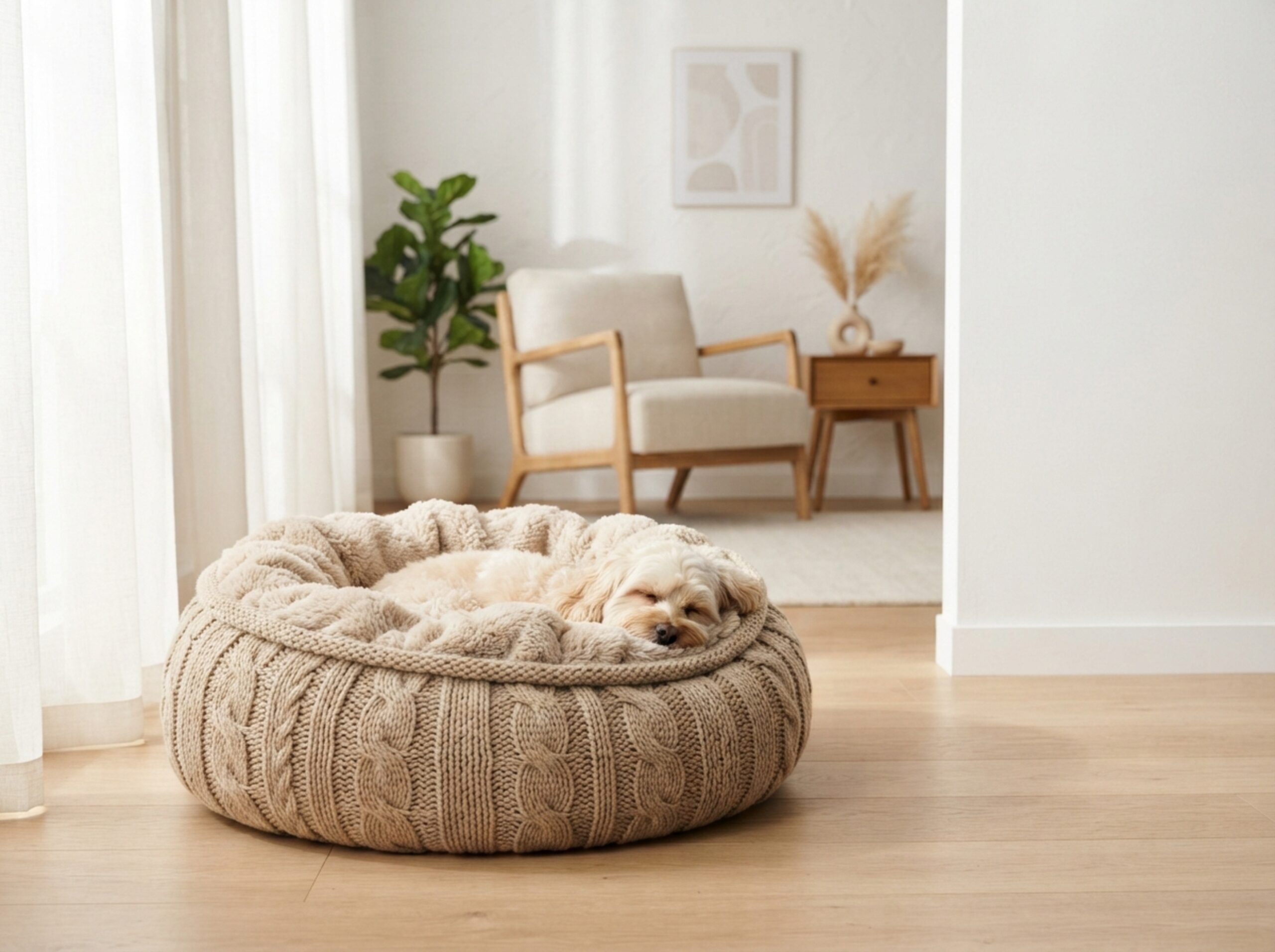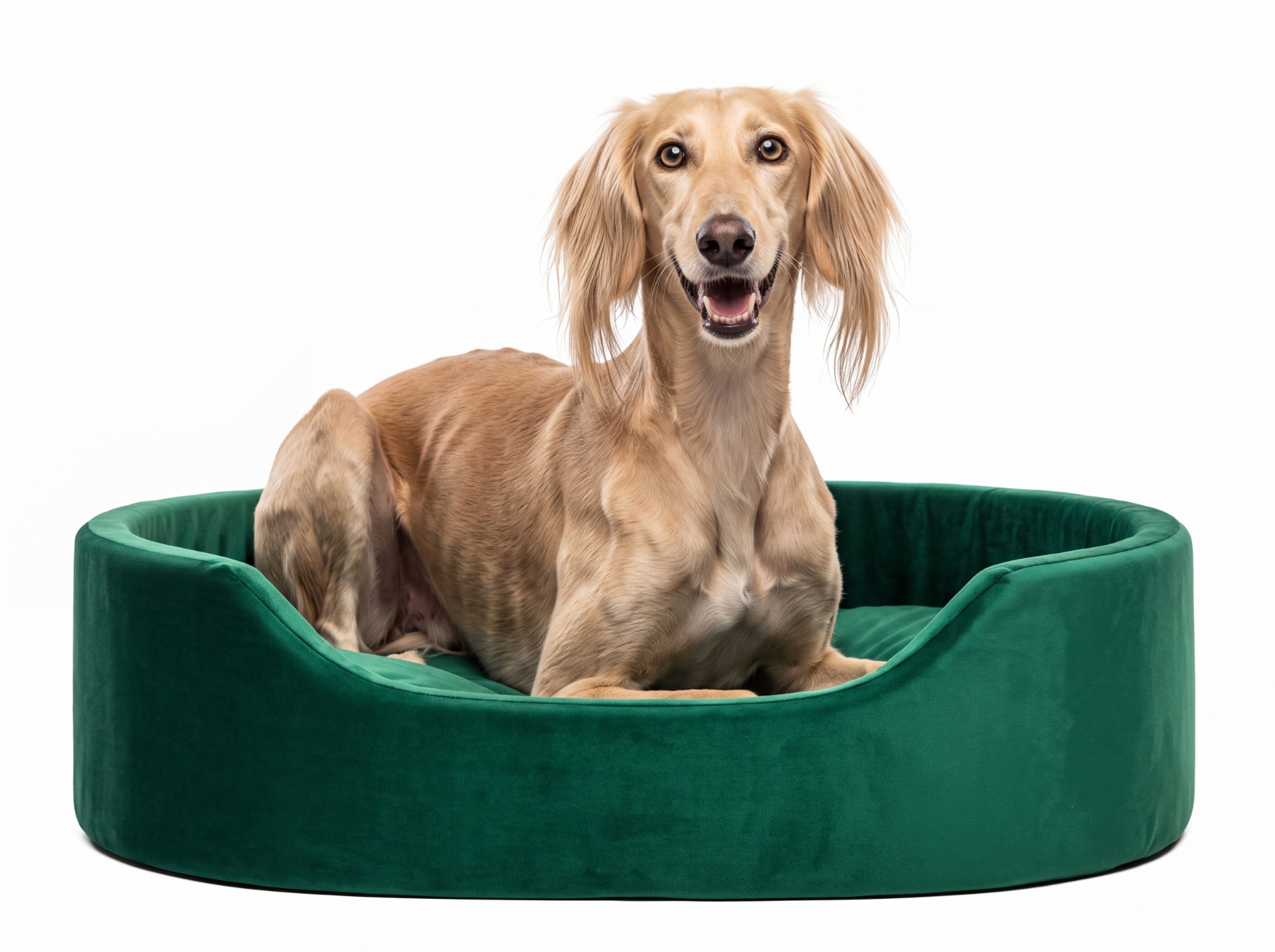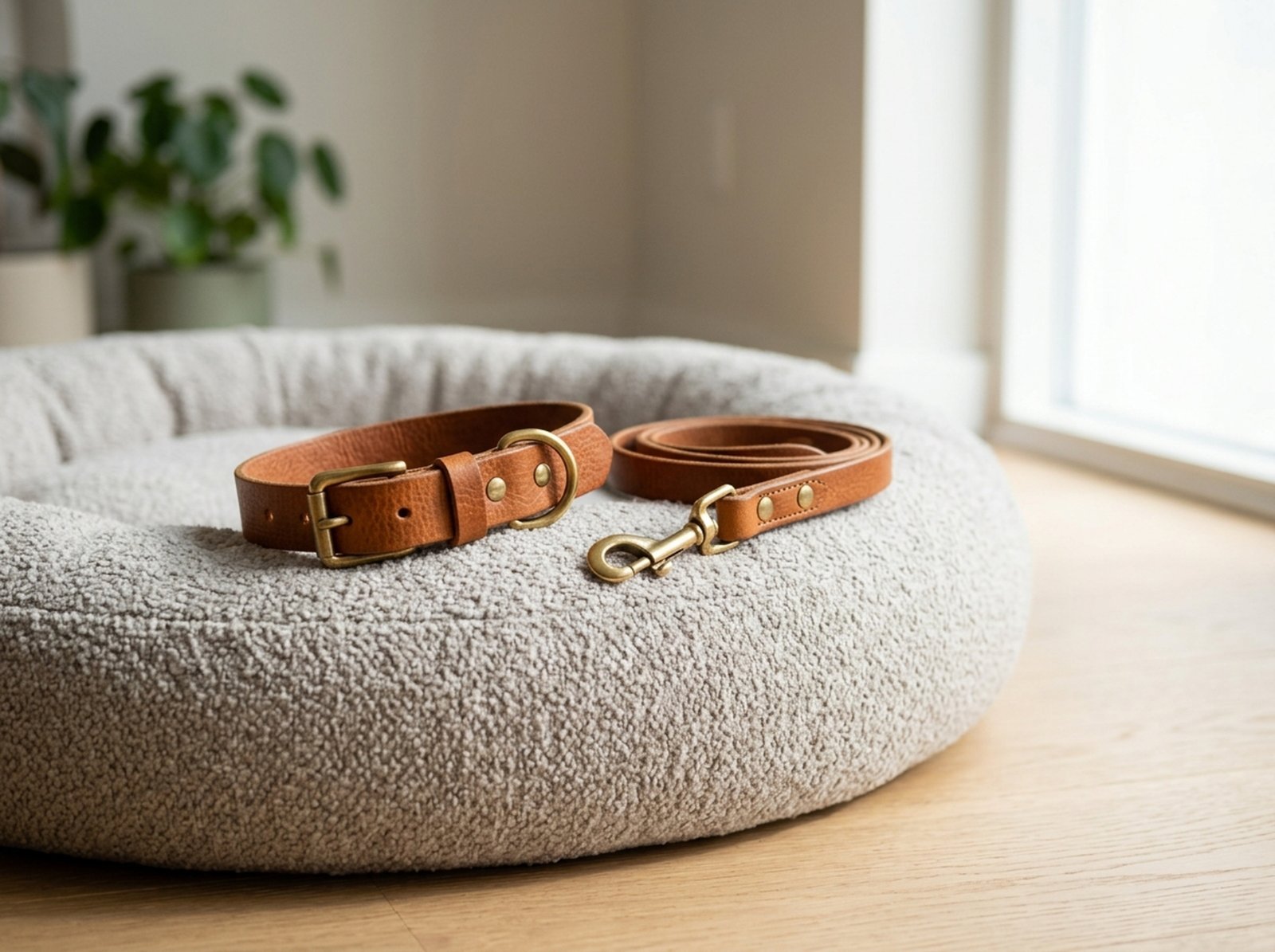

A leather dog bed is bought for a surface that does not swallow hair, drool, and dirt the way fleece and canvas do. Loose fur sits on top and brushes off. Mud and light messes wipe away instead of soaking in. In a Wirecutter cleaning test of a full-grain leather bed, mud and a simulated vomit came off with a paper towel and a wet sponge, and clawing left only faint marks.
That convenience has hard limits. Genuine leather is wipe-only. A smooth cover does not stop liquid from running into seams and foam. Nothing in this category is chew-proof. Some dogs also reject the cooler, slicker feel and sleep on the floor beside the bed. The useful choice is not “leather or not.” It is which leather, what sits under it, and whether the dog’s habits match the material.
When a leather dog bed earns its place
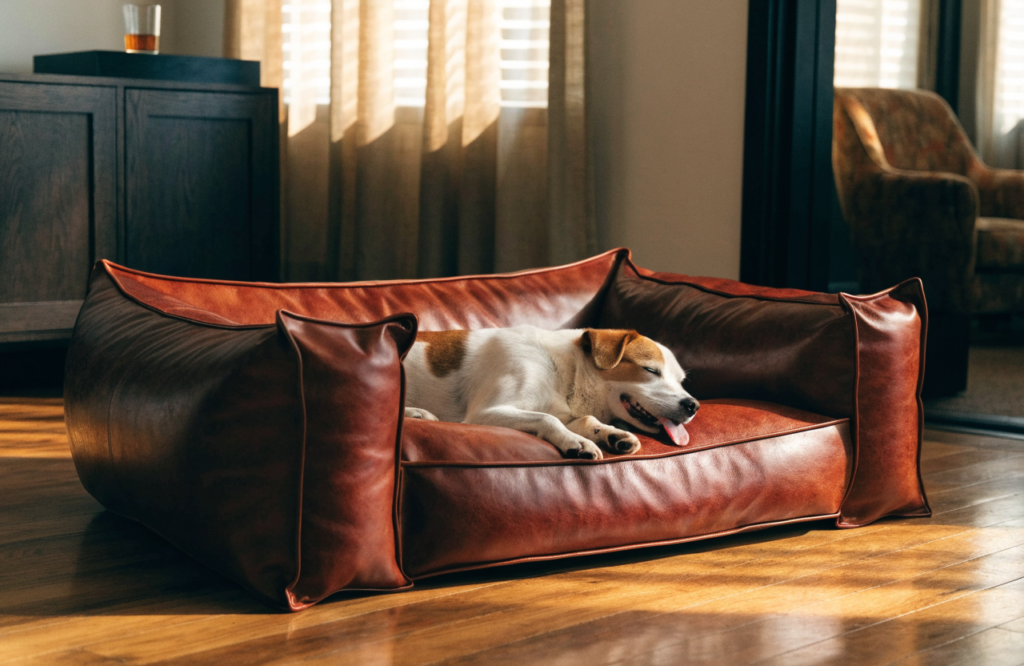
Leather and leather-like covers make the most sense in rooms where the bed stays visible and the mess is mostly hair, drool, muddy paws, or the occasional spill. Short-coated heavy shedders leave fur on every fabric they touch. On a smooth cover that fur lifts with a cloth or a vacuum brush instead of working into the weave. The same surface is easier to disinfect after a small accident than a plush cover, provided the liquid never reaches the fill.
The material is a weaker fit in three common situations.
Puppies and determined chewers destroy seams, zipper pulls, and corners before the leather’s surface toughness matters. A puncture in coated faux leather can then split along the tear, because there is no woven structure to stop it. Genuine leather may keep a small puncture more localized, but it will not survive a dog that treats the bed as a toy.
Dogs that want a warm nest often ignore a bare leather mattress. Wirecutter noted that a leather bed is a poor match for dogs that prefer plush or furry fabric at night. Owner reports line up with that: some dogs have to be coaxed onto an expensive leather bed and still choose the couch.
Senior or incontinent dogs need more than a wipeable top. If urine can reach the foam, the bed smells no matter how clean the leather looks.
Genuine leather, faux leather, and “tech” leather are different products
Listings use “leather” for three materials that age and clean differently.
Genuine leather is tanned animal hide, often full-grain or milled. It feels closer to furniture, marks and darkens with use rather than peeling, and is the option people choose when the bed sits in a living room. It is water-resistant, not waterproof. Machine washing strips the finish and stiffens the hide, so care is a damp cloth, a leather-safe cleaner if the maker allows it, and occasional conditioning. Prices for a well-made genuine leather mattress often run into the hundreds. Wirecutter’s tested example was about $360 for the small size.
Faux or vegan leather is usually polyurethane (PU) or a similar coating on a fabric backing. It wipes the same way, sheds hair the same way, and is far cheaper. Many covers are removable and, if the label says so, machine-washable. The failure mode is different: cheaper PU can crack, peel, or delaminate after a few years of heat, sunlight, claws, and flexing. A single bite that breaks the coating can open a long split.
Tech fabric (sometimes sold as Leathaire or a “leather-look” knit) is a synthetic textile engineered to look like leather while staying more breathable than a plastic-coated sheet. Microscopic pores let more air through than standard PU or PVC, which matters for dogs that overheat on slick covers. Durability is moderate: it handles scratching better than velvet, not determined chewing.
| Material | Cleaning | How it fails | Best match |
|---|---|---|---|
| Genuine leather | Wipe only; condition occasionally | Scratches, stiffens if soaked or washed | Clean adult dog, visible room, long-term look |
| Faux / PU leather | Wipe; some covers are machine-washable | Peels, cracks, tears from a puncture | Practical households that may need a full wash |
| Tech / microporous leather-look | Wipe; check the label before washing | Surface wear, not a chew barrier | Dogs that sleep hot on coated faux leather |
For a tidy adult dog in a clean house, genuine leather is the material that still looks intentional after years of use. For a dog that comes in wet, has occasional accidents, or lives with people who want a cover they can launder, faux or a washable leather-look cover is the more rational buy.
The cover is only half the bed
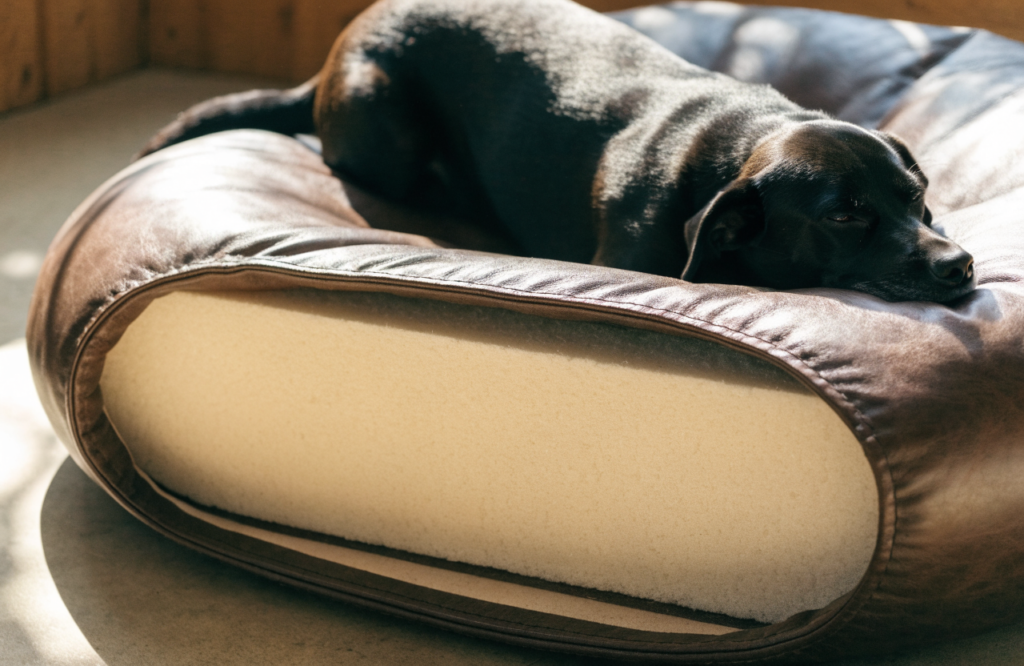
A leather exterior does not make the bed supportive. Comfort comes from the fill, and lifespan comes from whether liquid can reach that fill.
Mattress-style beds with a dense support layer under a softer top are the usual choice for large dogs and seniors. The Wirecutter-tested leather bed used roughly 3.5 inches of support foam under about 2 inches of cooling gel memory foam, and testers rated the slow spring among the more comfortable beds they tried. A thin 2- to 3-inch pad is a crate liner, not a lounge for a heavy or arthritic dog. Bolster and sofa styles suit dogs that lean or rest a head on a raised edge. Those bolsters also steal several inches of sleeping width, so the outside measurement is not the usable one.
Two waterproofing claims get mixed together. A wipeable surface sheds liquid sideways. That liquid then runs off the edge, down the seam, and into the foam. A bed can look spotless on top and still smell because the core is wet. A waterproof inner liner or pouch around the foam is what actually protects the fill. For an older dog, a puppy in house training, or a bed by the back door, the liner matters more than the leather.
Foam that has been soaked is difficult to save. Enzyme cleaners can break down urine on the surface and in light contamination if the product label allows the material. Once odor is inside a memory-foam core and the foam stays damp, replacement of the insert is often more realistic than repeated soaking. Never machine-wash or tumble-dry the foam unless the maker explicitly allows it. Waterlogged foam takes days to dry and can grow mold.
How to size it so the dog uses it
Measure the dog stretched out, from the base of the neck to the base of the tail, then add at least 4 inches. Some guides measure nose to tail and add more. Either way, compare that number with the interior sleeping area, not the outer footprint. A bolstered “large” can have a usable center smaller than a flat mattress labeled the same size.
The dog should be able to lie on its side with legs extended and still be fully on the bed. If the only way to fit is a tight curl, many dogs will abandon it for the floor or the sofa. Small dogs can use a larger bed if the step-in height is low. A medium or large dog cannot use an undersized one. Weight ratings are a ceiling for the foam, not a sizing method.
Check three construction details before the color:
- A non-slip base. Leather is slick. Wirecutter found a leather bed could slide on bare floors when a dog jumped on or off.
- Zipper placement. Exposed, dangly pulls are easy to mouth. A zipper that performed well in testing was still a risk because the pulls hung free.
- Handles, if you move the bed. A heavy leather mattress without a grip is awkward to relocate for cleaning.
Cleaning without ruining the surface
Day-to-day care is simple, which is the point of the material. Brush or vacuum hair off the dry surface. Wipe drool, mud, and paw prints with a damp microfiber cloth. For genuine leather, use a cleaner made for that finish and condition a few times a year so the hide does not dry and crack. For PU and tech fabric, skip leather conditioner unless the maker asks for it. Do not soak either type, and do not use bleach, ammonia, or all-purpose degreasers.
New faux leather sometimes has a chemical smell. Air the bed in a ventilated room for a day or two before the dog sleeps on it. If the odor is strong after that, the coating quality is a reason to return it rather than “air it out for a week and hope.”
After an accident, blot immediately. Do not rub liquid deeper. Clean the cover as the label allows, then check seams, the liner, the underside, and the floor under the bed. A faint smell that remains only in stitching can sometimes be neutralized with an enzymatic pet cleaner used exactly as directed. Nature’s Miracle cleared a faint seam odor in Wirecutter’s leather-bed test. If the foam itself is wet, separate it, blot, spot-treat only as the insert’s instructions allow, and dry it fully with airflow. Heat guns and dryers can damage memory foam.
Who should buy something else
Skip leather if the dog already shreds beds. Ballistic nylon, heavy canvas, or a chew-specific bed is a more honest match, and even those are not indestructible. Skip a expensive genuine-leather bed for a puppy. Mouthing and house-training accidents are normal, and the material cannot be laundered. Skip a bare leather mattress for a dog that sleeps cold or burrows. A reversible bed with faux leather on one side and flannel or fleece on the other, or a washable blanket on top of the leather, solves that without giving up the wipeable layer.
Also look past the leather if the only problem is odor in the current bed. Smell usually lives in the foam and the seams, not in the cover fiber. A new leather shell over an unprotected foam core will end up in the same place.
Frequently asked questions
Are leather dog beds chew-proof?
No. A smooth surface can survive the scratching and light digging some dogs do before they lie down. A dog that bites corners, works zippers, or punctures the cover will ruin it. Coated faux leather is especially prone to splitting once the surface is broken.
Do leather dog beds hold less odor?
On the surface, yes. Hair and light soil do not embed the way they do in fleece, so everyday smell is easier to remove. Urine or vomit that reaches stitching or foam smells the same as it would in any other bed.
Is faux leather good enough?
For most households, yes, and sometimes better. It wipes clean, costs less, and may be machine-washable. It will not develop the same patina as hide, and lower-grade PU peels sooner. Buy it for cleaning, not as a ten-year heirloom.
Can leather dog beds go outdoors?
Only short term, and not in standing weather. Sun and heat age both genuine leather and PU. A leather bed is a better fit for an entryway or boot room than for a covered patio left out all summer.
Why won’t my dog sleep on it?
The surface is cooler and slicker than the couch or an old plush bed. Try a familiar blanket on top for a few nights, confirm the bed is large enough to sprawl on, and check that it is not sliding when the dog steps on. If the dog still refuses it, the material is the mismatch, not the training.