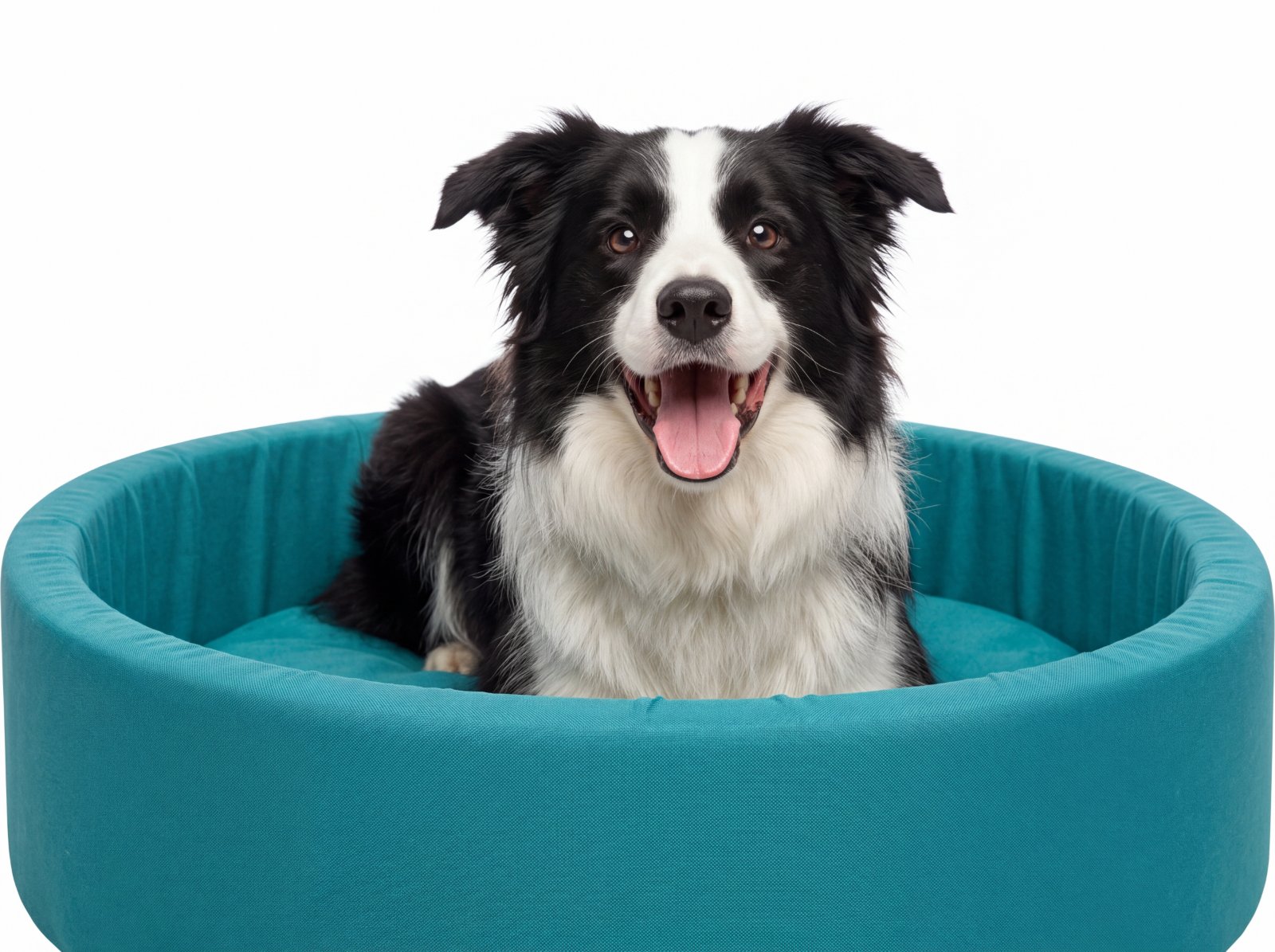

A dog platform bed is a raised sleeping surface on a rigid frame, not a cushion that sits flat on the floor. The useful version is the one that matches how your dog actually sleeps, how easily they get up, and where the bed will live. A mesh cot, a wood frame with a mattress, and a training platform solve different problems, and buying the wrong one is the most common reason these beds get ignored.
What “dog platform bed” usually means
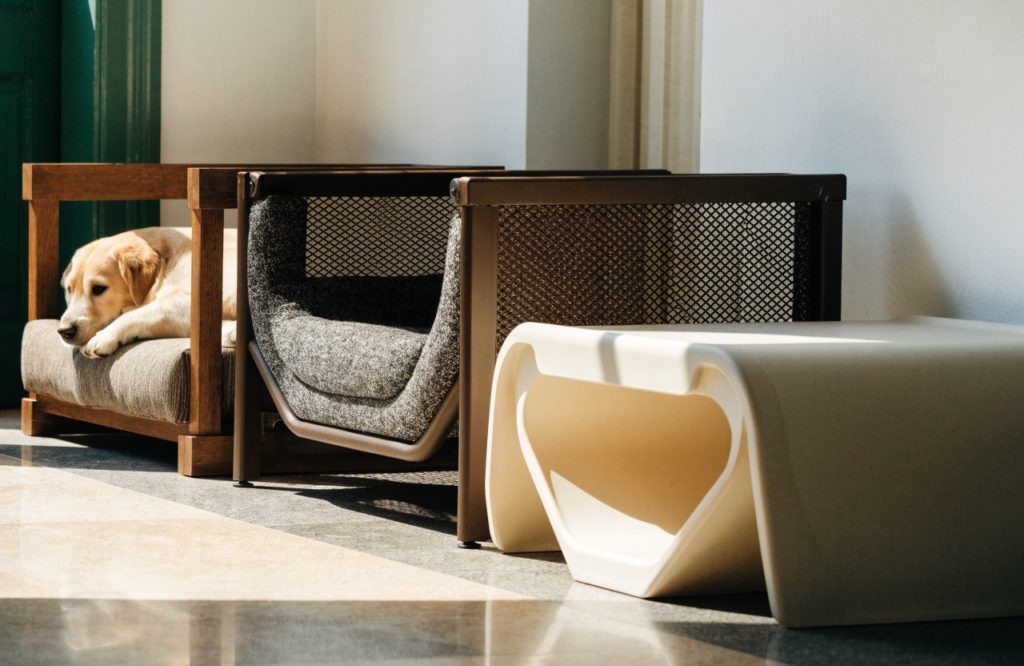
Retailers use the phrase for three related products. They look similar in a search result and behave very differently under a dog.
Mesh cot platforms
An elevated cot, sometimes called a raised bed or dog cot, stretches mesh, canvas, or vinyl-coated fabric across a steel, aluminum, or resin frame. There is no foam. The dog lies on a taut surface with open air underneath. Most sit roughly 4 to 9 inches off the ground. That design is built for airflow, drainage, and quick cleaning, not for sinking into padding.
Solid frames with a mattress
Furniture-style platform beds use a wood or metal base, often with short legs and a low lip, and a separate cushion on top. The frame keeps the mattress off cold or dirty flooring and can look like ordinary furniture. Support comes from the cushion, not from the frame. A thin pad on a handsome wooden base will still bottom out under a heavy dog.
Training platforms
A place bed or training platform is a firm, clearly bounded surface used to teach “place” and impulse control. Elevation and a defined edge make “all four paws on the platform” easier to mark than a soft donut bed. These are training tools first. Some dogs nap on them; many do not treat them as an overnight bed.
If the listing does not say whether the sleeping surface is suspended mesh or a removable cushion, the product is underspecified. That single detail decides cooling, joint support, and how you clean it.
When a raised platform helps
The main advantage of any platform is separation from the floor. Air can move underneath a mesh cot, so body heat does not pool the way it does in dense foam. Dogs that abandon stuffed beds for tile in warm weather, double-coated dogs, and dogs that sleep on a patio or in a kennel are the clearest match for an open cot. Fluids and mud also fall through or wipe off instead of soaking into fill, which matters for outdoor dogs, heavy shedders, and dogs with occasional accidents.
A solid platform with a real mattress is a different bargain. It keeps bedding off a hard floor, gives a stable place to stand up from, and can take a washable cover without looking like kennel equipment. Short legs, often only a few inches, can make getting on and off easier than climbing onto a sofa, provided the dog does not have to step over a tall rail.
Neither design replaces veterinary care. A firm mesh surface spreads weight more evenly than a lumpy fiber bed, but it does not offload bony points the way a foam mattress that does not bottom out can. “Orthopedic” on a label is unregulated. What matters is whether hips and elbows stay supported after the dog has been lying there for hours.
Who should skip a bare platform
Skip an unpadded cot, or use it only as a daytime lounger, if the dog is:
- Senior or stiff, and hesitates at a curb or a single step
- Thin or bony, such as many sighthounds, where a hard surface can create pressure on elbows, hips, and sternum
- Recovering from surgery or being managed for significant joint disease
- Cold-sensitive, thin-coated, or living in a drafty room in winter
- A burrower who only settles when they can dig into soft sides
A low wood platform with a thick, dense cushion is often the better indoor compromise for those dogs. A tall mesh cot is usually the wrong one. If entry already looks difficult, elevation will not fix it.
Platform beds next to foam and bolster beds
| Need | Mesh platform cot | Solid platform with cushion | Floor foam or bolster bed |
|---|---|---|---|
| Cooling | Strong, if the fabric stays open | Modest; the cushion still holds heat | Weak unless the cover is genuinely breathable |
| Pressure relief | Limited; firm and even, no give | Depends entirely on cushion density and thickness | Strong when the foam does not collapse |
| Outdoor or wet use | Usually the right tool | Poor unless the cushion is fully protected | Poor; foam holds moisture |
| Chew and gut risk | No stuffing to pull out; edges, mesh, and hardware still fail | Cushion can be destroyed; frame may survive | Fill is easy to gut |
| Getting on and off | A step of several inches | Often a low step, if the rail is low | Easiest, if the edge is open |
| Defined “place” for training | Clear boundary | Clear if the frame is obvious | Soft beds blur the edge |
A practical setup in a warm house is often two surfaces: a mesh cot for hot afternoons or the porch, and a supportive floor bed for overnight. One bed rarely covers both jobs.
How to size it
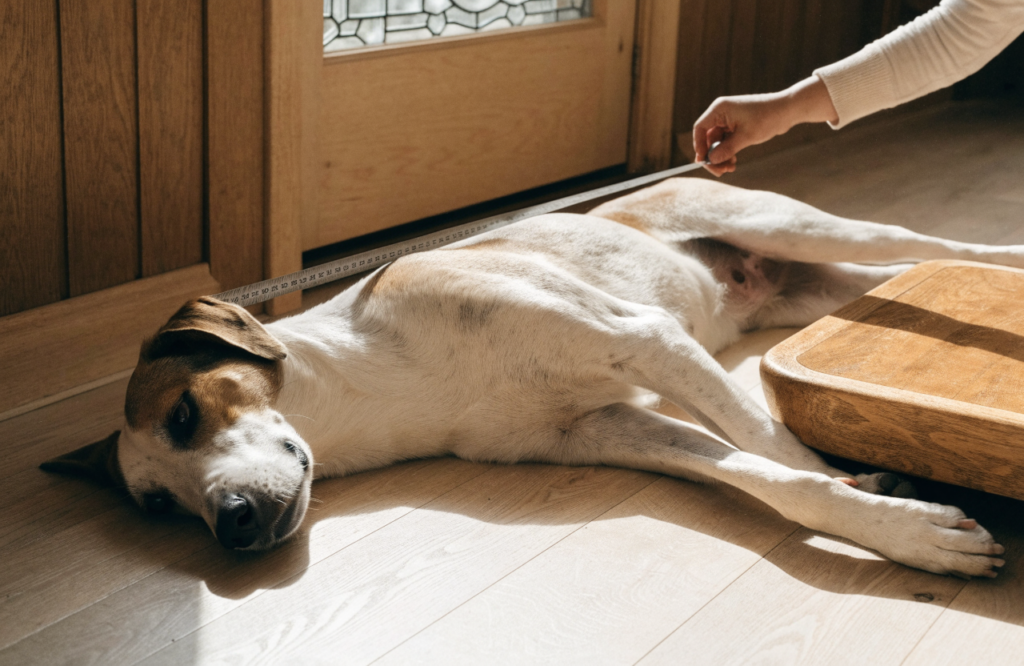
Brand labels are not standardized. “Large” on one cot is a medium on another. Measure the dog, then compare that number with the usable sleeping surface, not the outer frame.
- Wait until the dog is stretched on their side in a real sleep, not a posed sit.
- Measure from the tip of the nose to the base of the tail, where the tail meets the body.
- Add about 6 inches for a dog that stays curled, and 10 to 12 inches for a sprawler. Long-backed dogs need the extra length more than the weight chart suggests.
- Check width against the shoulders and against how far the hind legs kick out. A hip or elbow that spends the night hanging off the surface is unsupported.
- For a cushioned platform with raised rails, subtract the rail thickness from the listed length and width. The number on the box is often the outside of the wood.
Too small is the worse error: limbs off the edge get no support. Too large is mostly a space and cost problem, though some anxious dogs settle better with a boundary than on a wide open deck. Weight limits are a ceiling, not a fit guide. A dog who jumps on at speed loads the frame harder than the same dog lying still, so a limit that only barely covers body weight is thin.
Frame, height, and surface
Height is the decision most listings bury. A higher cot moves more air and clears wet ground. It also becomes a jump. For a short-legged dog, a dachshund, or any dog that is stiff in the morning, stay at the low end of the range and watch the first few entries. If they scramble, pause with a hind foot still on the floor, or refuse, the bed is too high for them regardless of the airflow claim.
Frame material changes durability more than looks.
- Powder-coated steel is the usual rigid choice for heavier dogs. Check that all feet sit flat; a rocking frame teaches the dog not to trust the bed.
- Aluminum is lighter and useful for travel, but thin tube without cross-bracing flexes and wobbles.
- Wood and poly-resin frames, common on chew-resistant indoor cots, stay put and can take a chewing mouth better than exposed tube ends. They are bulky.
- Plastic connector cots are fine for a calm small dog. Bolts and corner joints are a known failure point in kennels and with determined chewers.
On the surface, open polyester mesh cools well and punctures under nails. Tighter vinyl-coated weaves, often sold as Textilene-style fabric, resist claws and teeth better and still drain, at some cost in softness. A solid platform needs a cushion with a waterproof liner if the dog is a puppy or incontinent, a removable cover, and enough thickness that you cannot feel the boards when you press where the hip will lie. Non-slip feet matter on wood and tile. A sliding bed is a joint problem on the way off, not just an annoyance.
Outdoor use needs a shade check the product page will not do for you. A metal frame in direct sun can get hot enough to burn pads. Elevation does not replace shade or water.
Cleaning without wrecking the bed
Mesh cots are the easy case: brush off hair, wipe or hose only if the maker allows it, and dry fully before the dog lies back down. Trapped water at the frame joints is what smells, not the mesh itself.
Cushioned platforms follow ordinary bed rules. Wash the cover on the cycle the label allows, skip fabric softener, and never machine-wash the foam unless the manufacturer explicitly says it is safe. Spot-clean the core and air-dry it completely. Damp foam is a mold problem within a day or two. Urine needs an enzymatic cleaner; detergent alone leaves the odor source in place. A spare cover is the difference between a usable bed and a bed in the laundry.
Replace a cushion when it stays compressed after you press it, when the dog’s hip reaches the frame, or when odor survives a proper wash. Mesh is done when it sags into a hammock, tears at a claw line, or the frame no longer holds tension.
Problems owners actually run into
The dog will not use it. New footing, a wobble, a noisy joint, or a surface that feels too tight are the usual causes. Put it where the dog already rests, leave the old bed nearby, and reward voluntary contact. Forcing a nap on it rarely sticks.
The center sags. Fabric has stretched or the frame is under-braced. A hammock is harder to stand up from than a flat platform. Retension if the design allows it; otherwise the surface, not the dog, is the problem.
Nails or teeth open an edge. Elevated does not mean chew-proof. Corners, binding, and loose bolts go first. Supervise known chewers, tighten hardware, and do not leave a failing cot where a dog can swallow a connector.
Winter refusal. The same airflow that helps in July is a draft in January. A blanket on a mesh cot, or a switch to the cushioned bed, is the normal seasonal fix. Do not expect one surface to work year-round for a cold-sensitive dog.
Assembly that never quite squares. Tube cots often flop until every joint is seated, then get tightened together. If it still rocks, the floor or a bent leg is the issue. A bed that moves will be abandoned.
A simple way to choose
Match the bed to the constraint that actually shows up in your house.
- Hot room, patio, mud, or a dog who guts stuffing: mesh platform, sized to the stretched body, lowest height they can step onto calmly.
- Indoor dog who needs support and a floor that stays clean: low solid platform plus a dense cushion with a washable, waterproof-lined cover.
- Stiff, bony, or post-operative dog: prioritize a supportive mattress with an open, low entry. Use a platform only if the step is trivial and the cushion does not bottom out. Ask the clinic managing their joints before you retire the current bed.
- Training goal: a stable, firm place platform with a clear edge, separate from the overnight bed if the overnight bed is soft and nest-like.
Keep the previous bed for a couple of weeks. Voluntary use is the only review that counts.
Frequently asked questions
Is a dog platform bed better for arthritis?
Not by itself. A low, stable surface can make standing up easier than a deep nest, and a cushion that does not collapse can reduce pressure compared with a flattened pad. A bare mesh cot does not provide that cushioning and can be a poor overnight choice for a sore, bony dog. Bedding is comfort management, not treatment.
Can I put a mat on a mesh cot?
Yes, if the frame still supports the extra weight and the mat cannot slide. You give up some cooling and some of the “nothing to chew” advantage. It is a reasonable cool-night compromise, not a fix for a dog who needs real pressure relief.
Are platform beds good for puppies?
Only with supervision. Puppies chew edges, miss the step, and have accidents. A low profile, a washable surface, and no small hardware they can pull free matter more than the style. Plan to resize once the adult body length is obvious.
How high should the platform be?
High enough to clear the floor problem you are solving, and low enough that the dog steps on rather than jumps. If they already struggle with one stair, stay as low as the product line allows and watch the first entries.
Do platform beds work for place training?
A firm raised edge makes the boundary clearer than a soft bed, which is why trainers use platforms for “place.” The training bed does not have to be the sleeping bed. Soft overnight bedding and a firm place platform can coexist.