
A useful small dog bed is sized to the space a dog actually curls or stretches into, with an entry short legs can step over and a fill that still yields under a light body. The 12 ideas below are built around those three checks, not around product photos.
Most “small” labels hide the number that matters: the flat inner resting area after bolsters are subtracted. A bed sold for dogs up to 25 pounds can still leave a 6-pound Chihuahua perched on the rim, or a long-backed Dachshund hanging off the end. Measure from the tip of the nose to the base of the tail while the dog is stretched on its side, then add about 6 inches for a tight curler and 10 to 12 inches for a sprawler. For round nests, also measure the diameter of the curl. When a listing only gives outer dimensions, assume raised sides eat several inches of usable floor.
12 small dog bed ideas, matched to how the dog actually sleeps
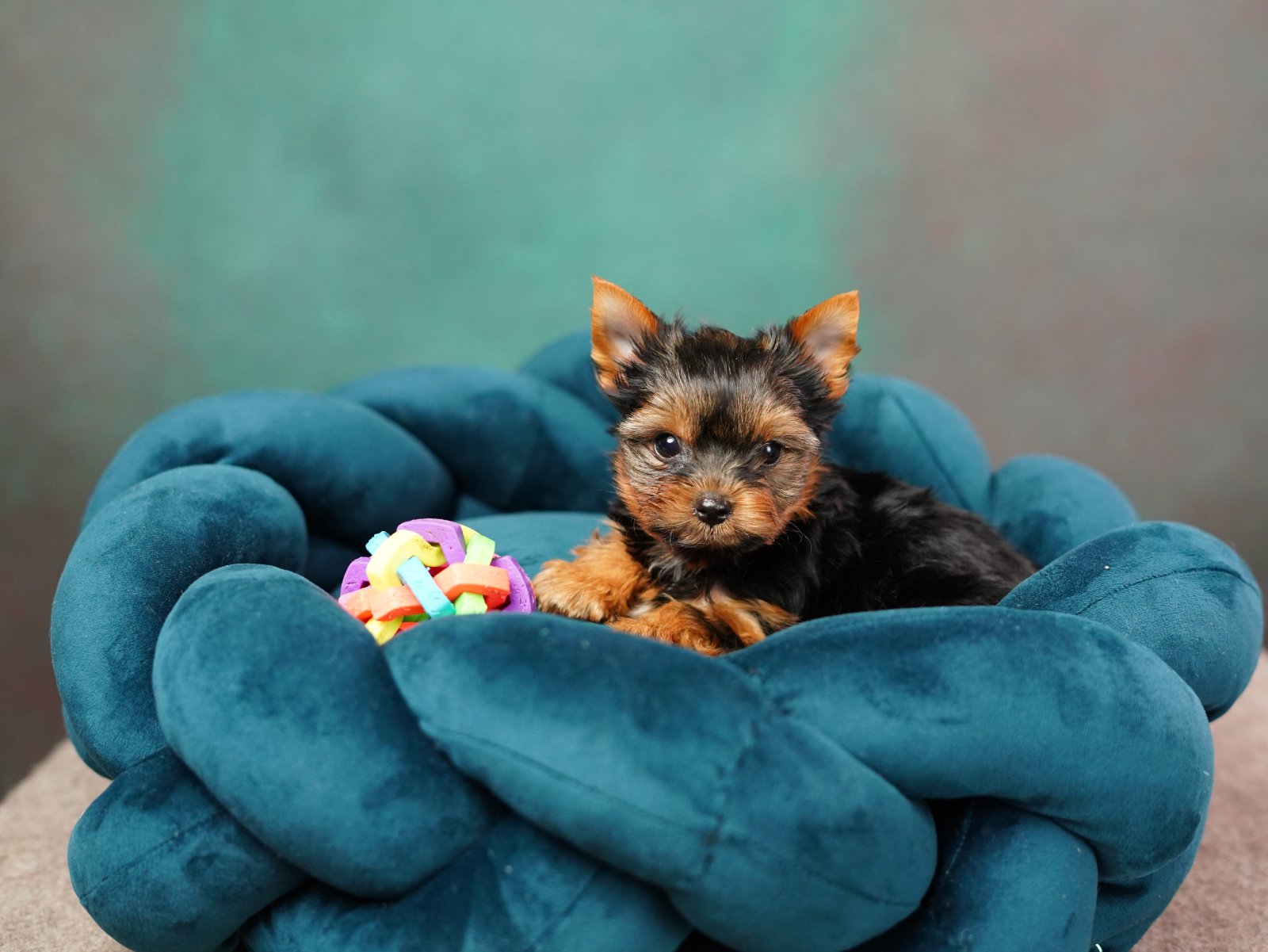
1. A round donut nest for dogs that sleep in a ball

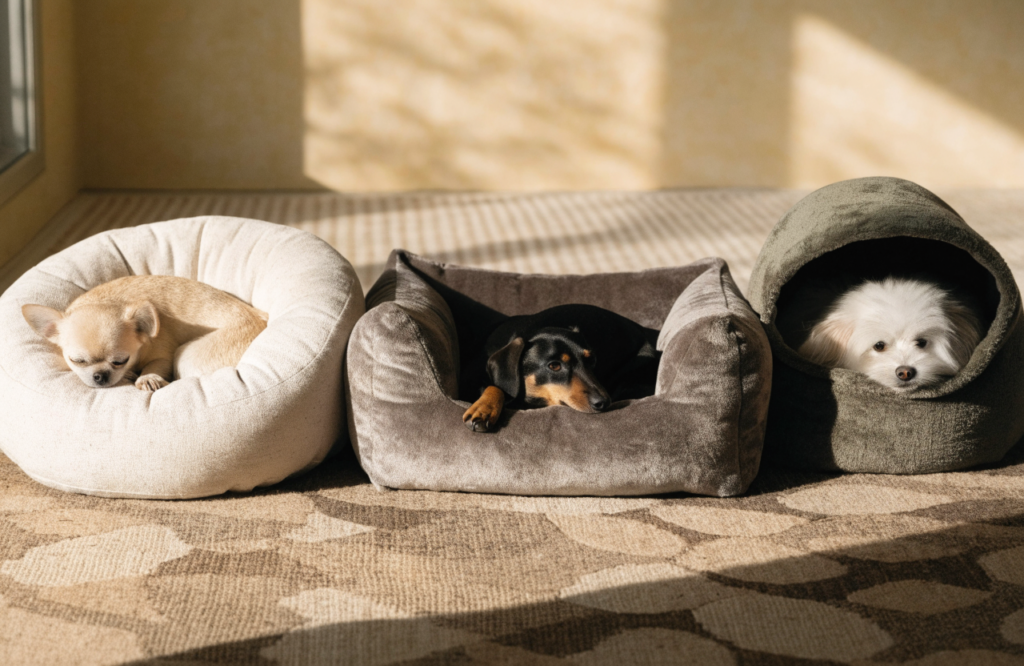
Chihuahuas, Yorkies, Pomeranians, Maltese, and many toy mixes tuck nose to tail. A raised circular rim gives them a wall to press against and holds some of their own warmth in the center. An inner resting area around 12 inches suits many dogs under about 12 pounds; closer to 15 inches is a safer start up to the mid-20s, provided the rim is not so thick that the center disappears.
Skip this shape if the dog sprawls on its side or back. A donut that looks generous in a photo is often too small once the bolster is subtracted.
2. A low-front bolster sofa for dogs that want a headrest
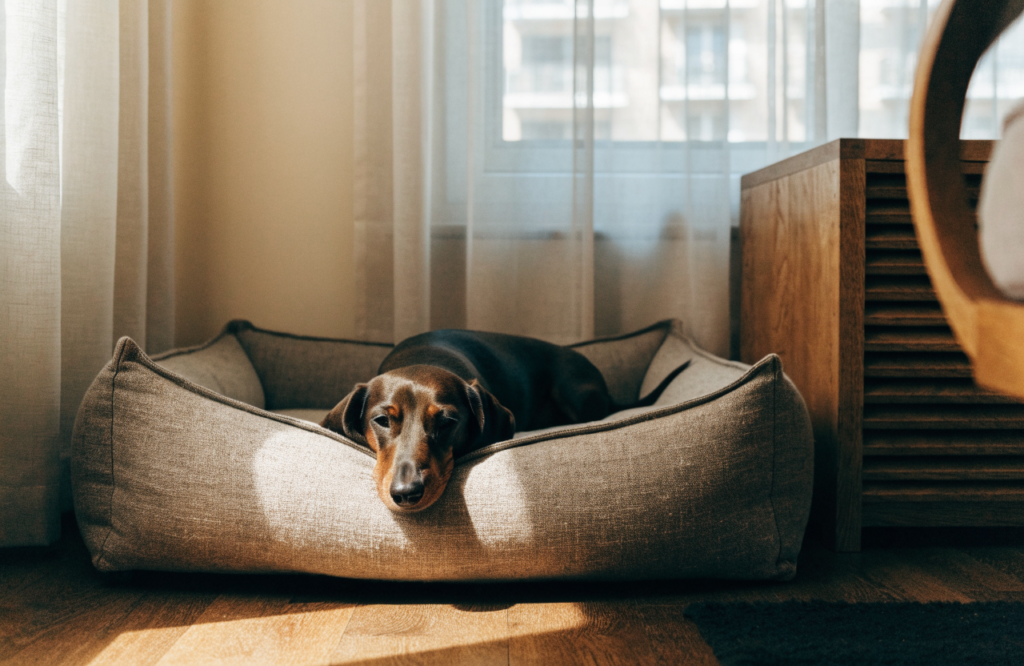
A three-sided or dipped-front sofa bed lets a small dog lean a chin on the rim without climbing a wall. That matters for Dachshunds, Corgis, and older dogs whose shoulder height is only a few inches off the floor. Look for a front edge they can step over, not a continuous bolster they have to scramble across.
This is the better default for mixed sleepers who sometimes curl and sometimes stretch. Check the interior length against the stretched measurement, not the outer sofa length.
3. A hooded cave for burrowers
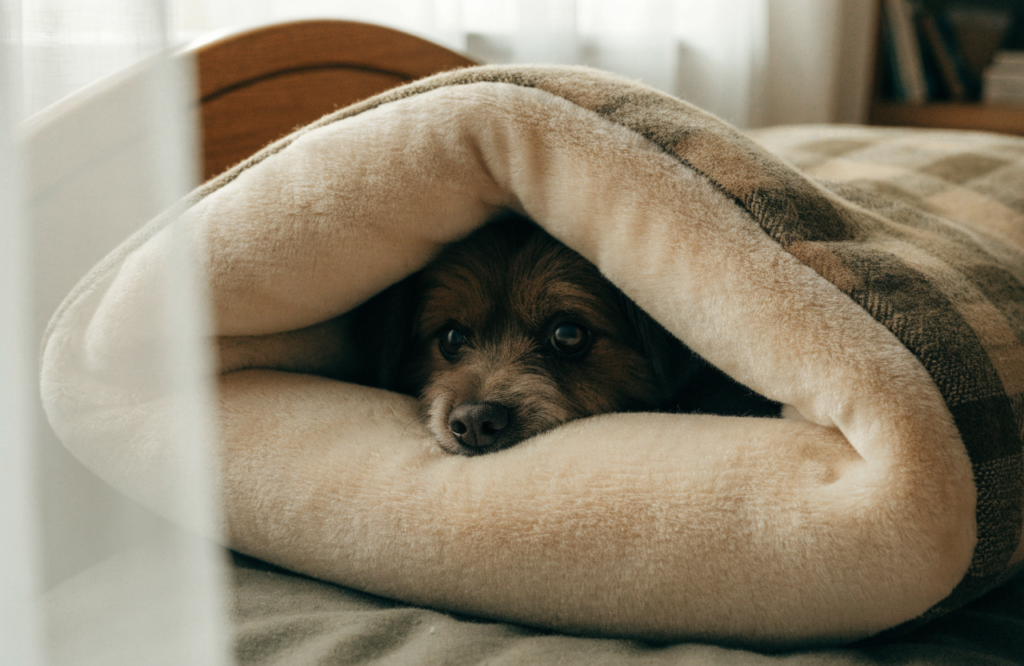
Dogs that disappear under blankets, between couch cushions, or into laundry baskets are asking for a covered nest. A cave or cozy-cave bed adds a roof and a soft interior so they can burrow without chewing a household throw. The opening should be wide enough that they can turn around, and the cover should come off for washing. Long faux fur looks cozy and traps hair, dander, and damp; a shorter pile is easier to keep clean if the dog sheds or drools.
Hoods are a poor fit for dogs that overheat easily or panic in enclosed spaces. Offer the cave as a choice, not the only bed in the room.
4. An orthopedic base with a soft topper for seniors and stiff joints
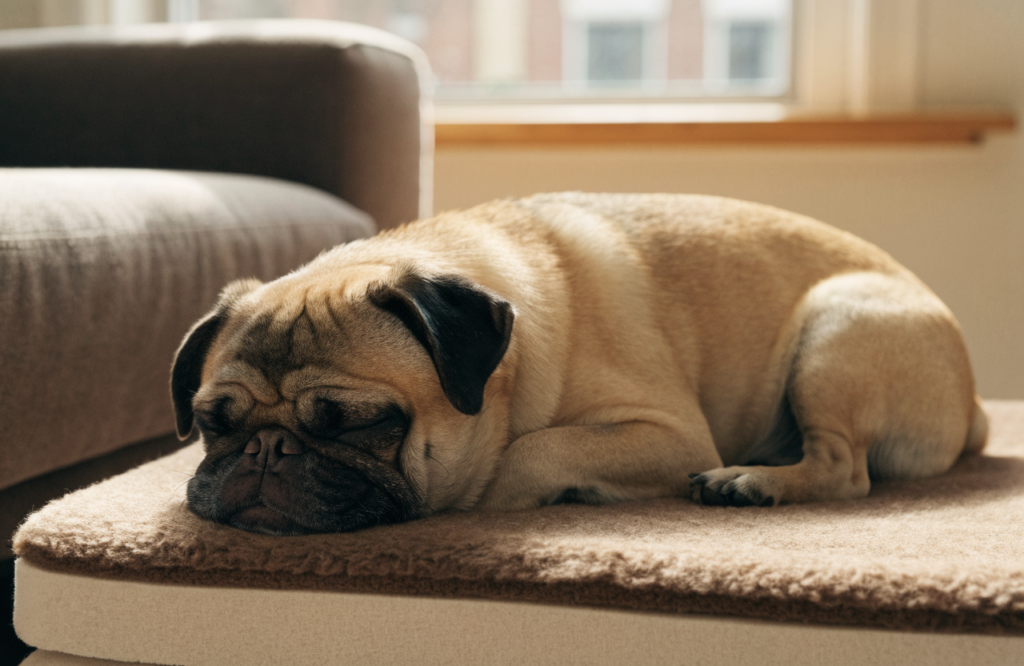
Light dogs do not compress firm foam the way a 60-pound dog does. A slab meant for a large breed can feel like a board to a 10-pound terrier. A practical setup for an older small dog is a supportive base a few inches thick, topped with a softer layer that still gives under little weight, plus a lowered front so getting in does not require a jump.
Solid foam holds shape longer than loose shredded fill, which collapses into lumps. Pair it with a waterproof inner liner if the dog is incontinent. Foam itself is rarely machine-washable; the cover has to come off completely.
5. A crate pad that fills the crate, not a bed dropped inside it
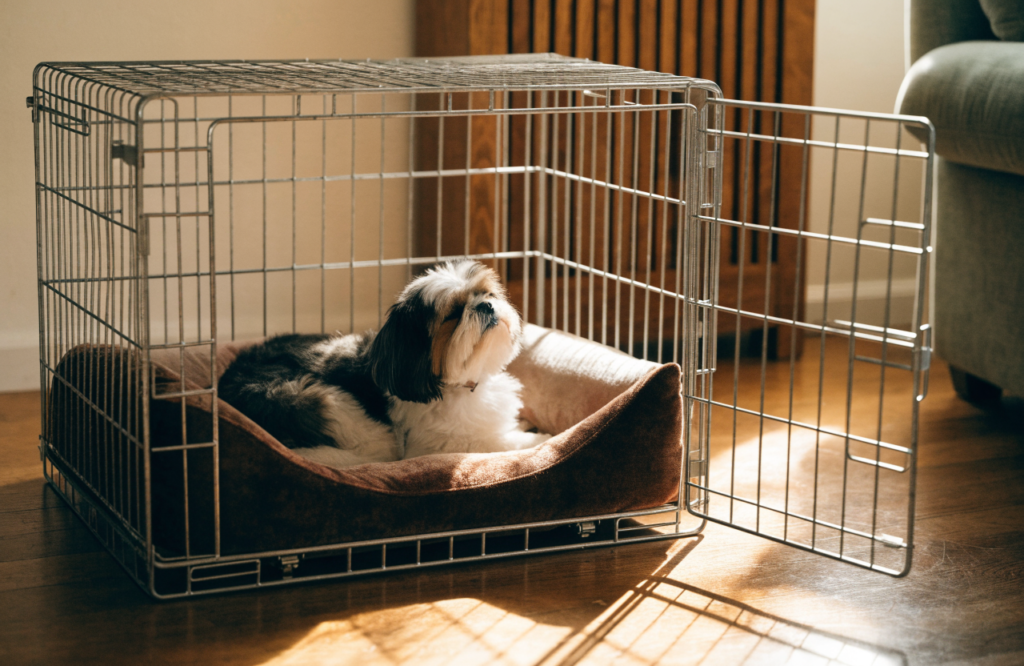
If the dog already sleeps in a crate, the best bed is often a bolster mat cut to the crate floor. A donut or sofa bed shoved into a crate steals floor space and can block the door swing. Measure the interior pan, then choose a pad an inch or so smaller so it does not buckle. A removable, washable cover matters more here than anywhere else, because crate accidents and muddy paws land in a closed box.
6. A raised cot for warm rooms, patios, and messy sleepers
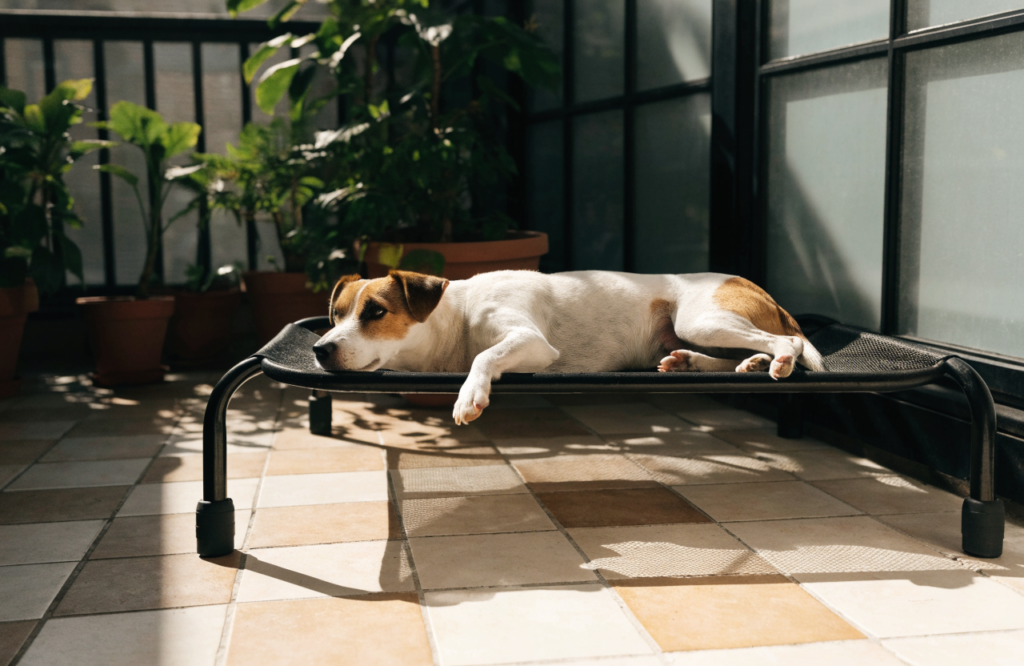
An elevated mesh cot keeps air moving under the body and lifts the dog off damp tile, concrete, or a hot balcony floor. A small frame around 24 by 18 inches is a common starting size for dogs under 25 pounds, with short legs so the step up stays easy. Mesh also shrugs off dirt better than plush.
Cots do not suit dogs that need to burrow, or toy breeds that shiver in a cool house. In summer they are often the bed a small dog chooses over a thick nest.
7. A window or furniture nook instead of another freestanding bed
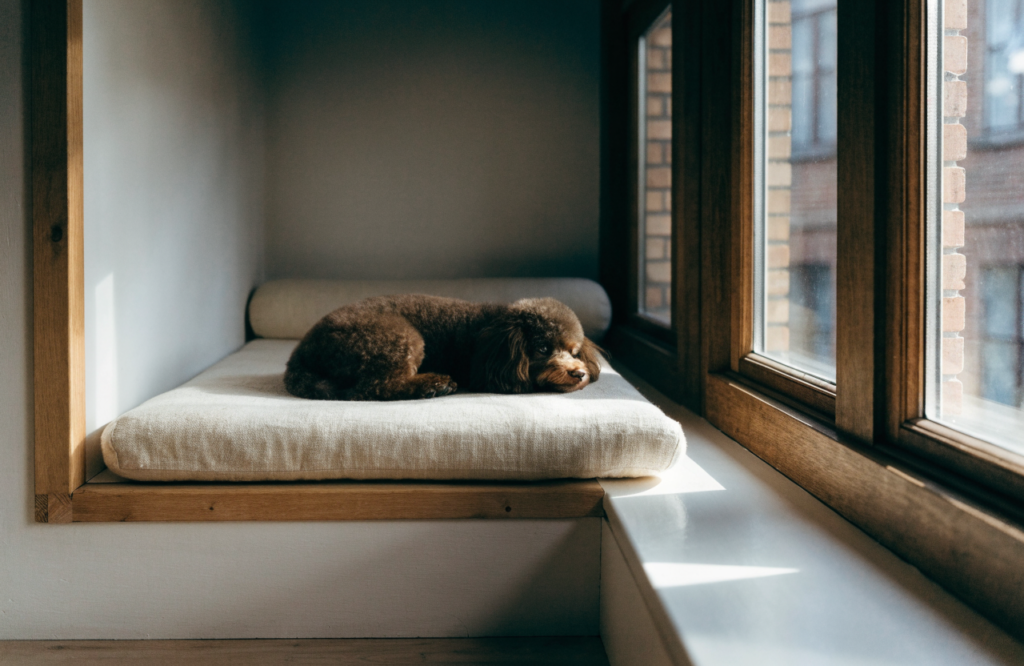
In a small apartment, the unused strip beside a window, under a desk, or in an open shelf can become the bed. Cut or buy a thin mattress to the nook, cover it with a washable linen or fleece case, and add one back bolster if the dog likes to lean. The win is location: many small dogs rest more if they can watch the room.
Keep the spot clear of blind cords, space heaters, and afternoon sun that turns the nook into a hot box. A non-slip pad underneath stops the mattress from skating on hardwood.
8. A self-warming or low-watt heated pad for cold-sensitive toy dogs
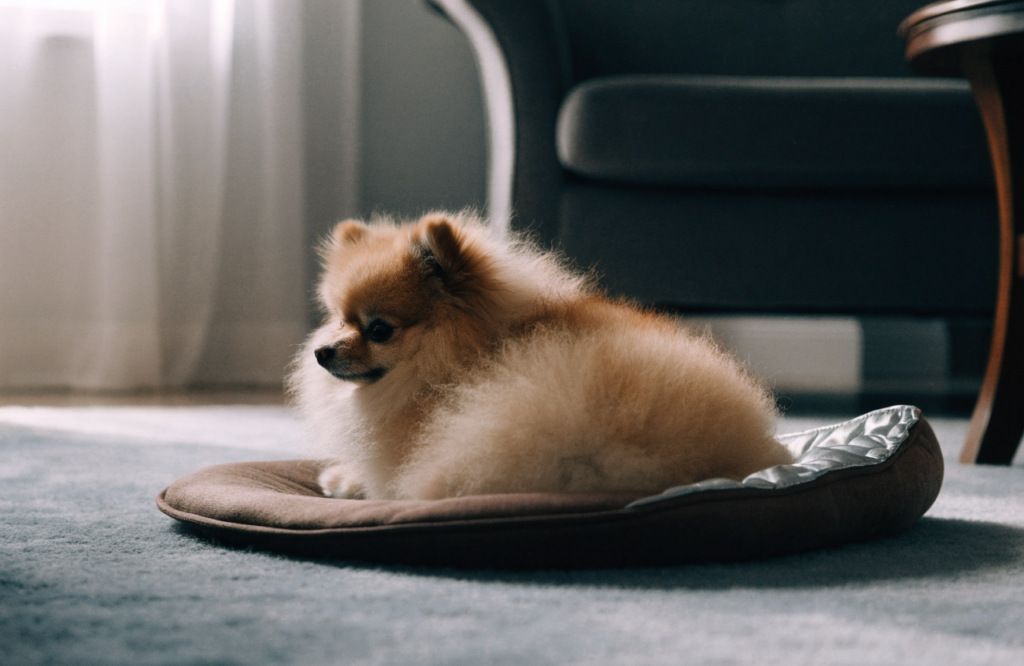
Toy breeds often seek laps, sun patches, and piles of laundry because they chill faster in a cool room. A self-warming pad reflects body heat and needs no cord. A heated bed is the stronger option in a cold house, but only with a chew-resistant cord, an automatic shutoff, and placement where the dog cannot drag it into water. Never leave a chewed cord in use.
Heated beds are the wrong idea for brachycephalic dogs that already run hot, or for any dog left in a closed car or sunroom.
9. A waterproof puppy or senior bed you can strip in one minute

Housetraining and aging both mean the bed will get wet. The useful version has three layers: a soft outer cover, a waterproof liner that actually contains liquid, and a foam or fiber core you can air out. Zippers should be covered or recessed so teeth do not find them. Budget for a second cover. One cover in the wash means the dog is back on the bare floor.
10. A travel bolster that becomes the second bed at home
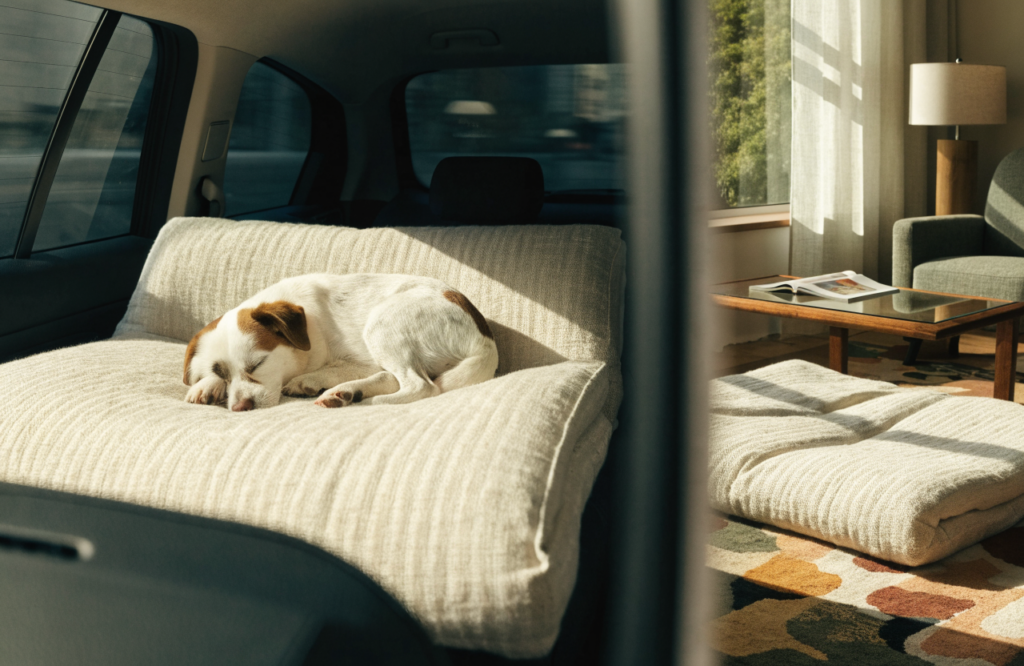
Small dogs often sleep in more than one room. A fold-flat bolster or airline-crate pad gives them the same smell and shape in the living room, the bedroom, and the car. This works best as the extra bed, not the only orthopedic bed, because travel pads are usually thinner. Put it where the dog already naps, not where you wish they would nap.
11. A furniture-height pet ottoman for dogs that want to be in the conversation
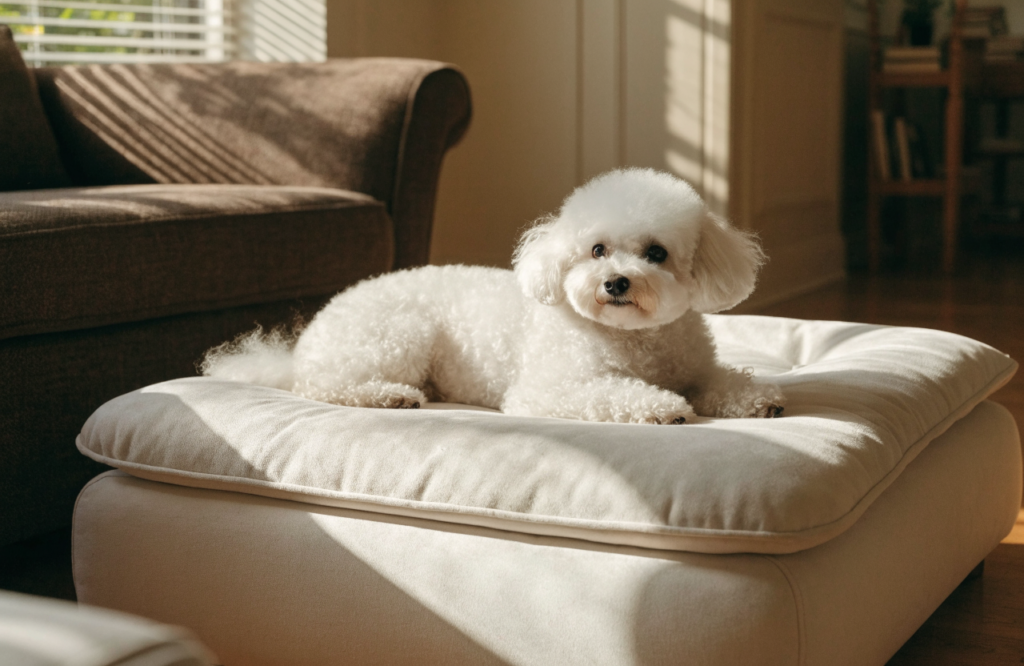
A low ottoman or end-table bed puts a small dog at seated-human height without a jump onto the sofa. Useful if you are trying to keep them off cushions, and only if the top is wide enough for their stretched length and has a raised lip or non-slip surface. Short-legged and senior dogs still need a ramp or a lower option. An unstable stool is not a bed.
12. A simple DIY nest when you need a bed this week
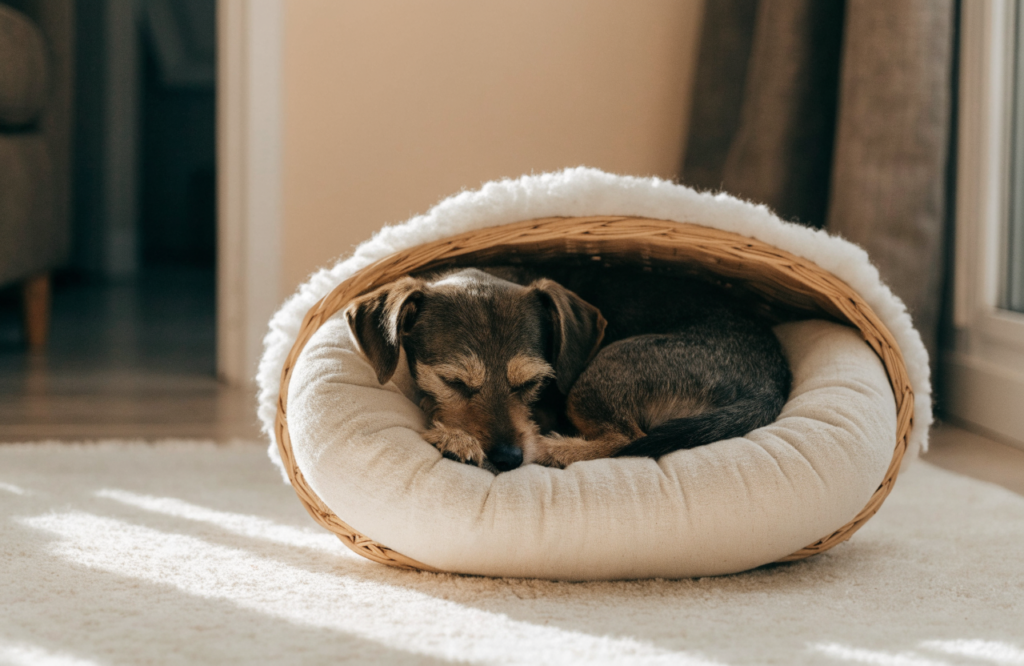
A clean, unworn fleece, an old pillowcase stuffed with towels, or a round cushion inside a shallow basket can work as a temporary nest if every opening is closed and there are no loose buttons, strings, or foam beads to swallow. For a longer-term DIY, a foam slab in a zip cover with one low bolster along the back is more useful than a decorative project. Raised PVC or wood frames are reasonable for a cot, but only if joints are secure and the fabric cannot sag enough for a paw to slip through.
Do not use a tire, a beanbag with loose beads, or anything the dog can shred into pieces.
Match the idea to the dog, not the room style
| What you notice | Start with | Skip |
|---|---|---|
| Sleeps in a tight ball, seeks corners | Donut or cave | Wide, flat cot |
| Stretches on the side, rolls over | Low-front bolster or flat orthopedic pad | Small donut |
| Short legs or trouble standing up | Dipped entry, thin cot, or floor-level foam | High four-sided bolsters |
| Shivers, burrows into blankets | Cave, donut, or self-warming pad | Bare mesh in a cool room |
| Pants, seeks tile | Elevated cot or cooling pad | Thick faux-fur hood |
| Puppy or leaking senior | Waterproof liner and spare cover | Uncovered foam |
| Already crate-trained | Crate-sized bolster mat | Oversized sofa bed in the crate |
If you are between sizes, size up on a flat or sofa bed and stay snug on a donut. A curler in a huge open bed can feel less settled; a sprawler in a tiny nest simply will not use it.
Why a new bed gets ignored
The usual failure is fit, not brand. The inner floor is shorter than the dog. The bolster is a hurdle. The fill is either a flat board or a lump of shredded foam. Or the bed was placed in a quiet corner while the dog’s real nap spot is the hallway rug by the kitchen.
Move the new bed to the place they already choose, and leave an old blanket on it for a few nights so it smells familiar. Wash covers on a gentle cycle and dry on low or air-dry; high heat flattens fiber fill and can warp waterproof films. Replace a bed when the center stays compressed after the dog gets up, the zipper fails, or the waterproof layer leaks into the core.
Questions that come up after the bed is home
Is a bigger bed always better for a small dog? No. Sprawlers need extra length. Curlers and anxious dogs often settle better in a nest close to the size of their curl. Extra unused space is fine on a flat pad; it works against a donut.
Do small dogs need memory foam? Only if the foam still compresses under their weight and they have sore joints or a long back. A plush, high-loft fiber nest is often more comfortable for a healthy toy dog than a firm orthopedic slab.
How many beds does a small dog need? One good bed in the main sleeping spot, plus a thin spare if they split time between rooms or ride in the car. Two competing plush beds in the same room rarely get used equally.
Can a cat bed work? Yes, if the inner area fits the dog’s curl or stretch and the sides are low enough to enter. Many round cat nests are the right scale for dogs under 10 pounds.