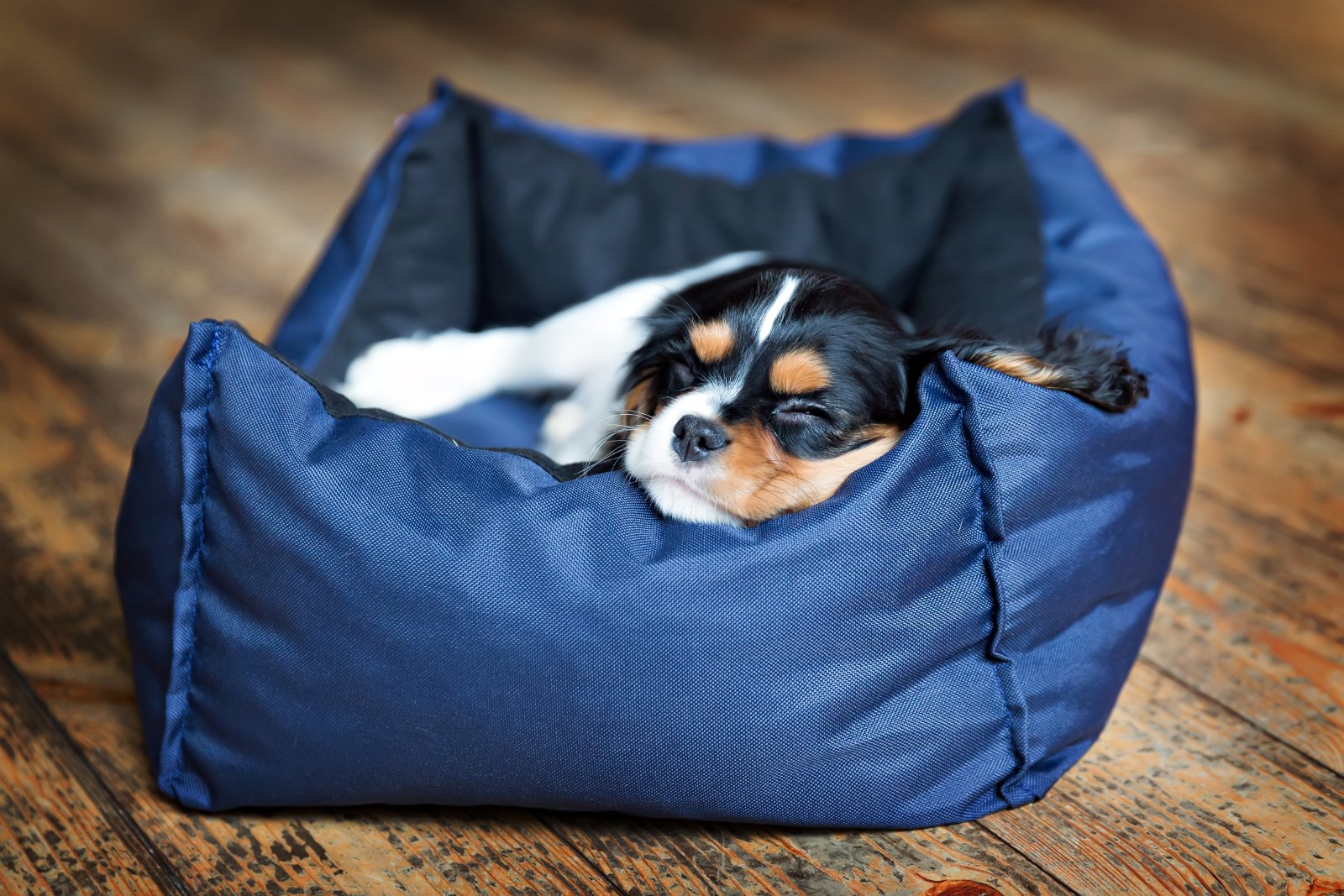
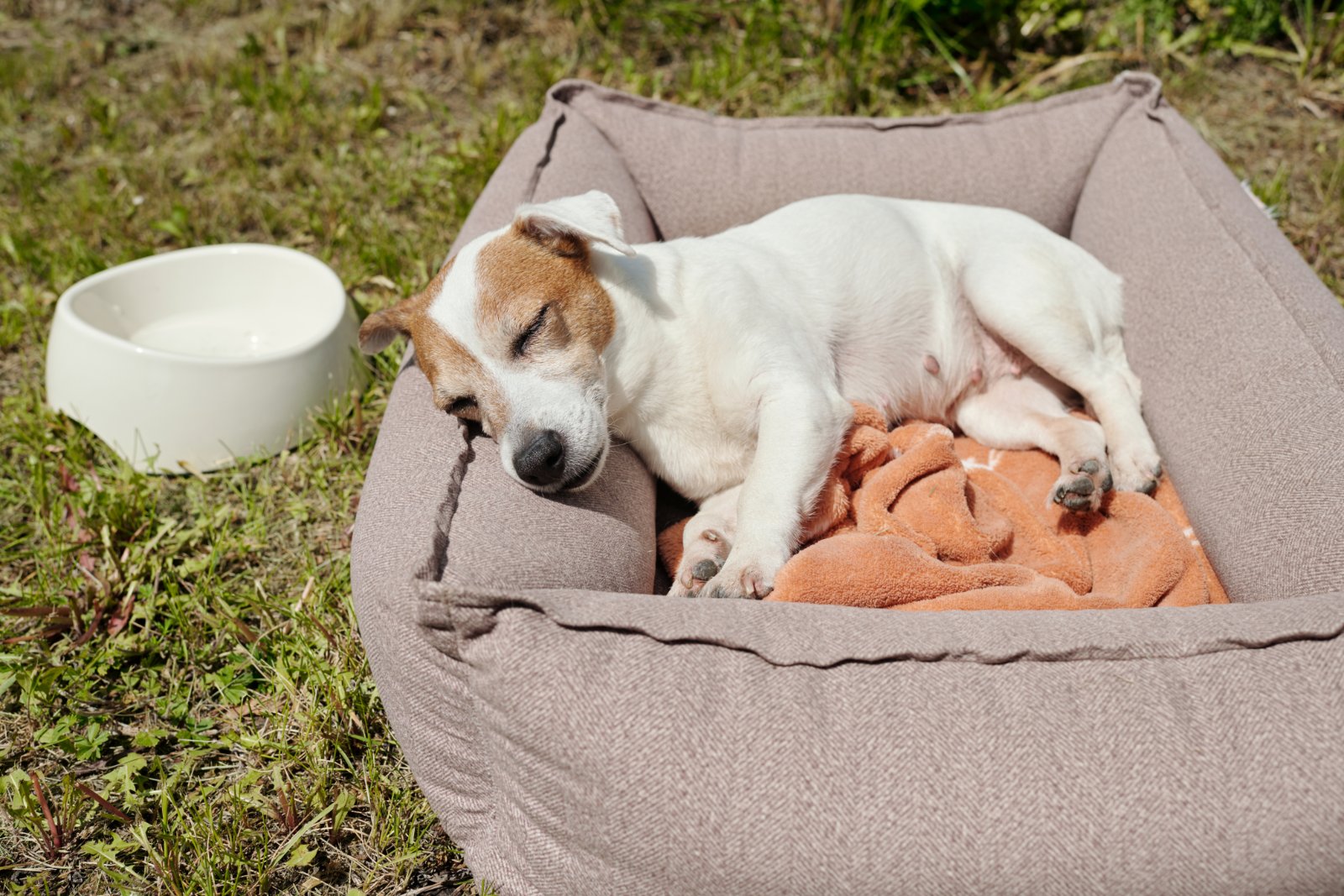
A waterproof dog bed only works if liquid never reaches the part you cannot wash. Marketing labels rarely tell you whether that is true. The useful distinction is where the barrier sits, what kind of mess it has to stop, and whether every layer can dry before the dog lies down again.
Most beds sold as waterproof are water-resistant covers over ordinary foam. A treated fabric can bead off damp paws. It will not hold a full bladder accident once the dog’s weight presses liquid through the weave, the zipper, or a seam. The beds that last are built so urine, drool, or rain stops at a continuous non-porous layer, while the outer cover stays removable and washable.
That difference decides whether you are buying a bed or a temporary cover for a foam block you will throw out later.
What “waterproof” means on a dog bed
Water-resistant, waterproof, and urine-resistant are different claims
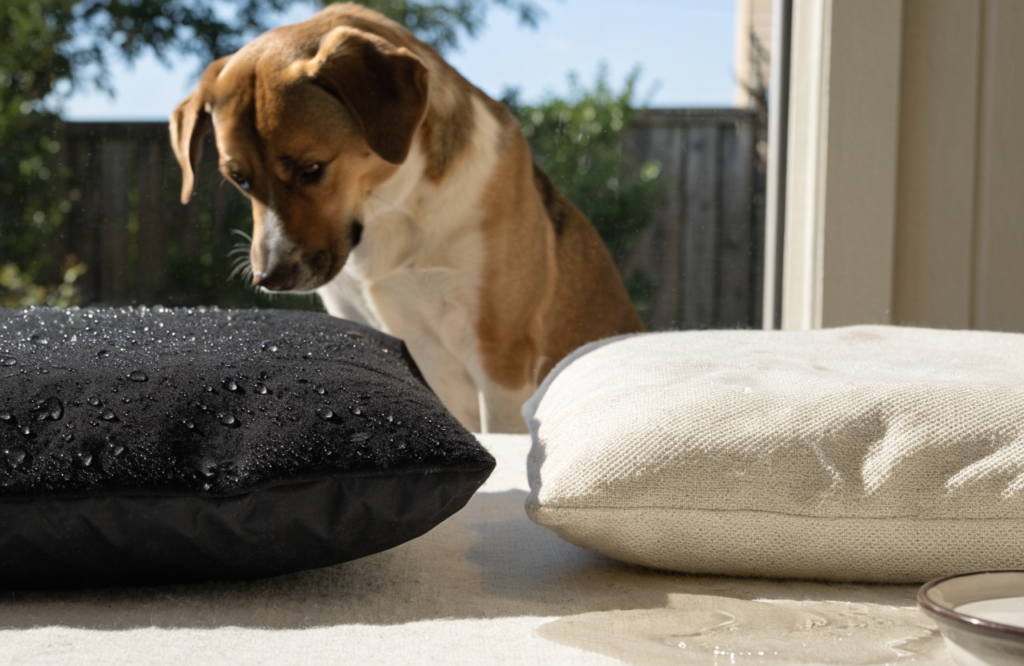
Water-resistant fabric slows moisture. A tight weave or a durable water-repellent finish can handle a splash, muddy paws, or a damp coat if the dog does not stay on the wet spot. Those finishes also wear off with washing.
Waterproof construction uses a continuous barrier that liquid should not pass through. On dog beds that barrier is usually a polyurethane (PU) or thermoplastic polyurethane (TPU) laminate, a coated nylon or Oxford shell, or a vinyl-like surface. The material name matters less than whether the barrier is unbroken around the sleeping surface, sides, and closures.
Urine-resistant is the vaguest of the three. It may mean a stain-resistant cover, a washable top, or an actual barrier. Treat it as a prompt to read the construction, not as proof the foam is protected.
The layer that matters is the one around the foam
A waterproof outer cover with an unprotected insert still fails. Liquid follows the easiest path: zipper tape, stitching holes, piping, bolster seams, and any gap where the cover does not fully enclose the core. Once urine or standing water reaches memory foam or fiberfill, washing the cover does not fix the smell. Foam is not a machine-washable part. Saturated foam dries slowly, holds odor, and can grow mold if it stays damp.
A useful bed puts the barrier between the dog and the core, ideally as a separate liner or a coated inner shell that fully wraps the foam, with the soft cover outside it. The cover handles fur, oils, and routine washing. The liner handles accidents. If the listing only says the cover is waterproof and the zipper opens straight onto bare foam, the bed is not waterproof in the way most buyers need.
Match the bed to the mess
More barrier is not automatically better. A sealed vinyl shell is easy to wipe and unpleasant to sleep on for a dog that only tracks in wet grass. A plush orthopedic bed with no liner is comfortable until the first accident, then it is often done.
| The problem | What actually needs to stay dry | A construction that fits | What usually fails |
|---|---|---|---|
| Occasional wet paws or light drool | The cover, not the core | Removable washable cover; water-resistant fabric is enough | Cover left damp, then put back on foam |
| Puppy accidents or the odd stomach upset | The foam | Soft cover plus a continuous internal liner, plus a spare cover | Zipper and seams, or a liner sold separately that never gets used |
| Senior incontinence or frequent urine | Surface and core | Wipeable coated surface, or a lined orthopedic bed with a spare top layer you can swap immediately | Soft fabric that must be washed after every accident |
| Swimming, rain, or a wet kennel floor | Everything, including the underside | Elevated mesh cot with no fill, or a sealed pad you can remove and dry | Foam left on concrete; non-slip backing trapping water underneath |
| Chewing plus moisture | The barrier itself | Tough woven cover over a protected core, or a cot with no stuffing to gut | Thin coated fabric that punctures, then leaks into foam |
If accidents are rare, a washable cover may be enough and a fully sealed bed is unnecessary. If accidents are weekly, comfort features that cannot be cleaned the same day are a poor trade.
Four constructions worth comparing
Soft cover with an internal waterproof liner
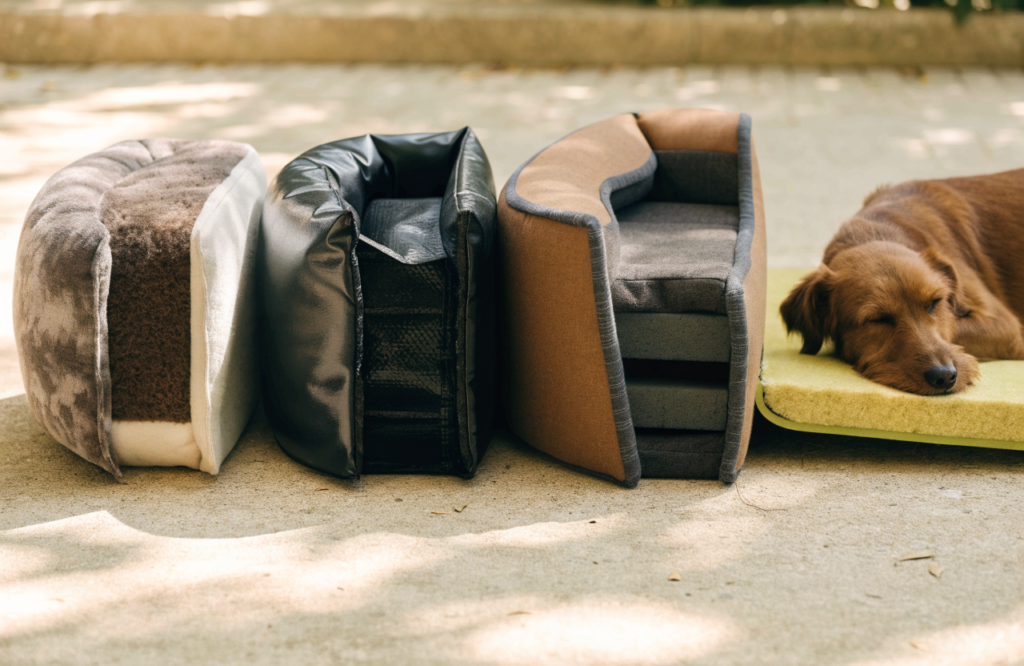
This is the best default for indoor dogs who still want a normal bed. A plush, fleece, or canvas cover zips off for the wash. Under it, a TPU or PU liner surrounds the foam. The dog feels fabric, not plastic, and the core stays dry if the liner is intact and continuous.
Check three things. The liner should cover the top and sides, not stop at a thin bottom sheet. The zipper should not be an open path to foam; some better designs hide the zipper or use a flap. Bolsters need the same protection as the mattress, because dogs lean and drool into them. A second cover is worth more than a thicker foam slab. Accidents happen while the first cover is in the machine.
Orthopedic foam still matters for seniors and large dogs, but only if it stays dry. A four-inch foam bed with a failed liner is less useful than a thinner bed you can keep clean. Low entry edges help dogs that struggle to step up. Thick bolsters look supportive and are harder to dry.
Wipeable coated or vinyl surface
For frequent incontinence, a non-absorbent surface is often more practical than a textile you must launder after every incident. Coated nylon, faux leather, and vinyl wipe with a cloth and mild detergent. They do not soak urine into fibers.
The tradeoffs are real. These surfaces can feel slick, hot, or noisy. Some dogs avoid them. Seams and stitching can still wick liquid if the coating does not cover them. Claws and teeth puncture thin coatings, and a pinhole ends the waterproofing. Use this style when speed of cleaning matters more than nest-like softness, and keep a blanket only if you are willing to wash that blanket instead of the bed.
Elevated cot with no fill
Outdoor and kennel use breaks foam beds for a simple reason: there is often nowhere for the pad to dry. A mesh cot has no core to saturate. Water passes through, air moves underneath, and odor has less material to live in. That is the genuinely weatherproof option for a wet run, patio, or muddy dog that lies down before it is fully dry.
A cot is a poor substitute when the dog needs deep cushioning, warmth, or a burrow. Thin-coated seniors and dogs with painful joints often do better on foam indoors. Many households use both: a lined orthopedic bed inside, a cot where the floor stays wet.
A washable pad over the bed you already own
A full replacement is not always the first move. Waterproof crib-mattress covers, human washable underpads, and pet accident blankets are a common workaround because they are sized for pooled liquid and made to be washed repeatedly. The pad has to be larger than the sleep surface so it does not shift and expose foam. Elastic, straps, or a cover that holds it in place matter; a loose pad just bunches.
This approach protects a good orthopedic bed while you test whether the dog will tolerate the texture. It fails if the pad is smaller than the dog, if urine runs off the edge into the bolster, or if the pad itself stays damp between uses.
What to check before you buy
Read the product page for the liquid path, not the headline.
- Barrier location. Look for “waterproof liner,” “internal waterproof cover,” or a coated shell around the insert. “Water-resistant cover” alone is a different product.
- Closures. A zipper that opens onto bare foam is a leak. Overlapping flaps and fully wrapped liners are better.
- Seams and corners. Stitching is a line of holes unless it is sealed, taped, or covered by the barrier. Corners take the most wear.
- Bolsters and pillows. If they are stuffed and unprotected, they become the smelly part even when the mattress survives.
- Size against the dog, not the crate label. The dog should be able to lie fully on the protected surface. Measure the crate interior if the bed goes in one; thick foam also steals headroom.
- Foam you can inspect. A zip that lets you see the core is useful, as long as the liner still separates that core from liquid. Replaceable inserts outlast glued-together beds.
- Care label. Coatings and laminates often fail under high dryer heat. If the only way to dry it is a hot cycle, expect the barrier to crack sooner.
- Chew risk. A waterproof liner inside a shredded cover does nothing. Determined chewers need a tough outer fabric or a cot, not a thin coated shell.
Price is a weak guide. Basic pads start around the low tens of dollars; lined orthopedic beds commonly run higher, sometimes well past $200 for large sizes. A cheap liner that fully wraps the foam can outlast an expensive plush bed with no barrier. A cheap vinyl pad can also split at the seams in a month. Construction beats the tag.
How waterproofing fails in real use
The usual end is not a dramatic tear. It is a small path for liquid, then a smell that survives every wash.
Zippers and piping are the first gaps. Dogs lie on the edge, and urine follows the tape. A liner that stops short of the sidewalls does the same thing. Heat from dryers and repeated hot washes can delaminate coatings, so a bed that was waterproof in month one leaks in month six. Claws make pinholes that are hard to see until you hold the liner up to a light.
Non-slip bottoms create a second problem outdoors and in crates. The top stays dry while moisture trapped under the bed never evaporates. Foam then smells from the underside even if the cover was fine.
Chewing ends the system immediately. Once the barrier is punctured or the dog can pull out foam, the bed is a hazard as well as a leak. Exposed foam is not something a dog should be eating.
The maintenance mistake is reassembling too soon. A cover can feel dry on the face while seams and the waterproof backing are still damp. That damp layer sits on the foam all night.
Cleaning without wrecking the barrier
Act before urine dries into stitching.
- Blot the surface. Do not rub liquid deeper into seams.
- Remove the cover and, if it is separate, the liner. Photograph how the pieces fit if the bed is complicated.
- Wash the textile cover on cold or as the label allows, with an enzyme cleaner suited to pet urine if the fabric instructions permit it. Heat can set odor and damage coatings.
- Clean a wipeable surface with mild detergent and rinse the residue off. Do not soak a coated bed and leave it folded.
- Do not machine-wash memory foam or ordinary foam inserts. If the core got wet, the realistic options are a full dry with airflow, or replacement if it stays musty, crumbles, or smells after drying.
- Air-dry covers and liners completely. Low dryer heat only if the label allows it. Check zipper tape, corners, and the coated side by touch before the dog uses the bed again.
A spare cover or pad is the practical half of this routine. The bed stays in service while one layer is drying. If the liner has pinholes, split seams, or a cracked coating, replace that layer. Patching a tiny hole may buy time; it is not a new barrier.
Frequent accidents are also a medical question, not only a bedding question. Sudden incontinence, straining, or increased thirst deserves a veterinary check rather than another bed.
When a waterproof bed is the wrong tool
Skip the sealed foam bed if the dog destroys every soft surface. A cot or a bed you can afford to replace is safer than a liner the dog can shred and swallow.
Skip a fully waterproof shell for a healthy adult dog with no accidents and a dry indoor routine. A washable cover is easier to live with, and the dog may actually use it.
Skip outdoor foam if you cannot bring the bed in to dry. Mesh that drains beats any coated pad left on wet concrete.
And do not expect the bed to replace a diaper, belly band, or potty plan for a dog that floods a sleeping area every night. A barrier protects the foam. It does not limit how much liquid hits the floor around the bed.
Frequently asked questions
Can I make a normal dog bed waterproof? You can protect it. A continuous liner, waterproof mattress cover, or washable underpad between the dog and the foam stops most accidents if it covers the whole sleep surface and stays in place. It will not fix bolsters the pad does not cover, and it will not survive chewing.
Do waterproof dog beds stop odor? They stop the usual cause, which is liquid in the foam. Fur oils and dander still collect in the cover, so the outside still needs washing. If the bed already smells after the cover is clean, the core has likely been contaminated.
Are waterproof beds hotter? A non-breathable barrier can trap heat, especially under a thick plush cover. Dogs that run hot often do better with a lighter fabric over the liner, a cooling-style surface, or a cot. The liner does not have to be the layer the dog touches.
How long should one last? There is no reliable calendar. Replace the bed or the insert when the liner is breached, the foam is permanently flattened or musty, seams have opened, or the dog can reach the filling. A spare cover and an intact liner extend life more than a higher price by itself.
Is an elevated cot a waterproof dog bed? It solves the water problem differently. With no fill, there is nothing to soak. It is the better outdoor choice and a weaker choice for dogs that need thick cushioning or warmth.