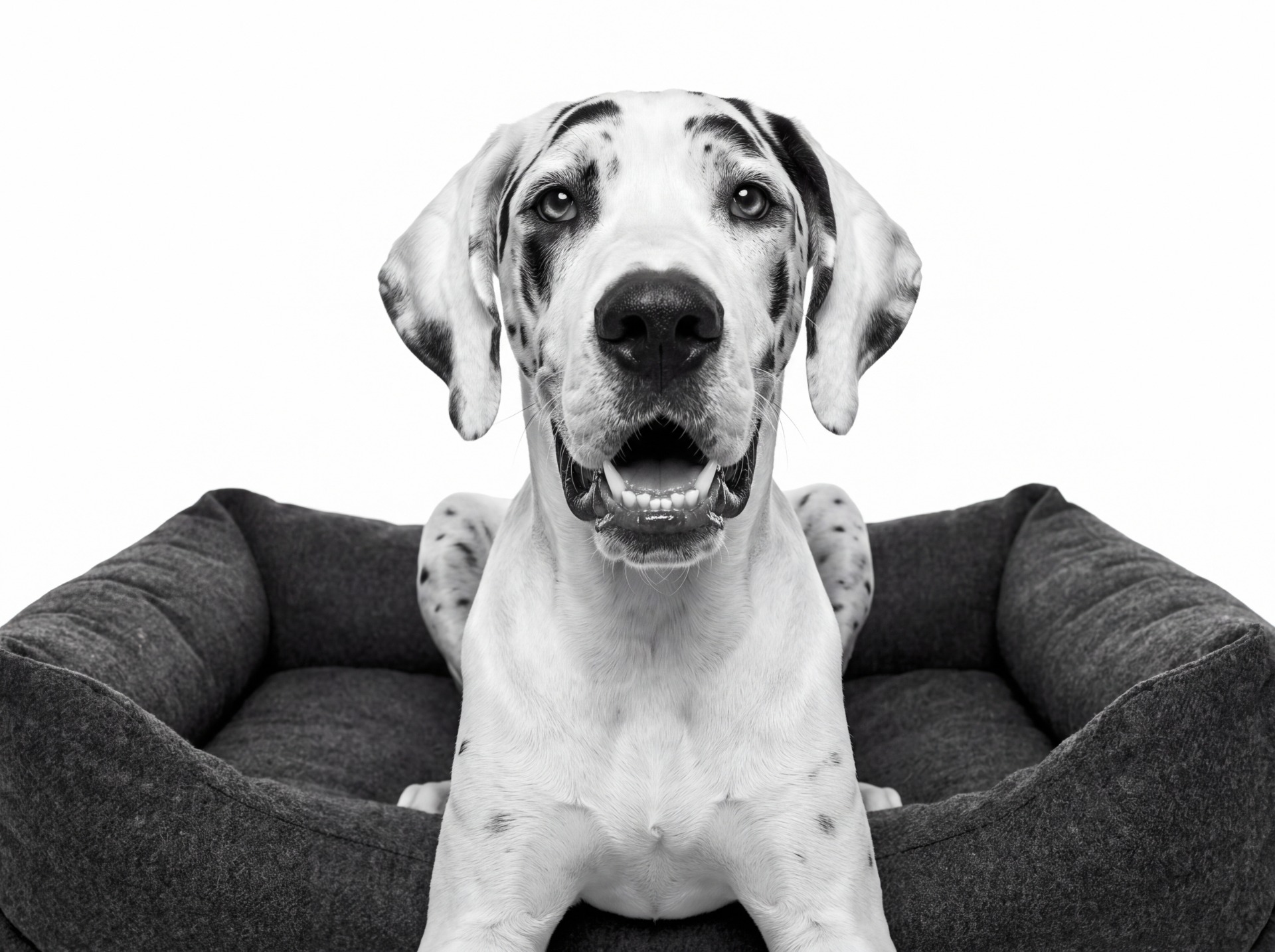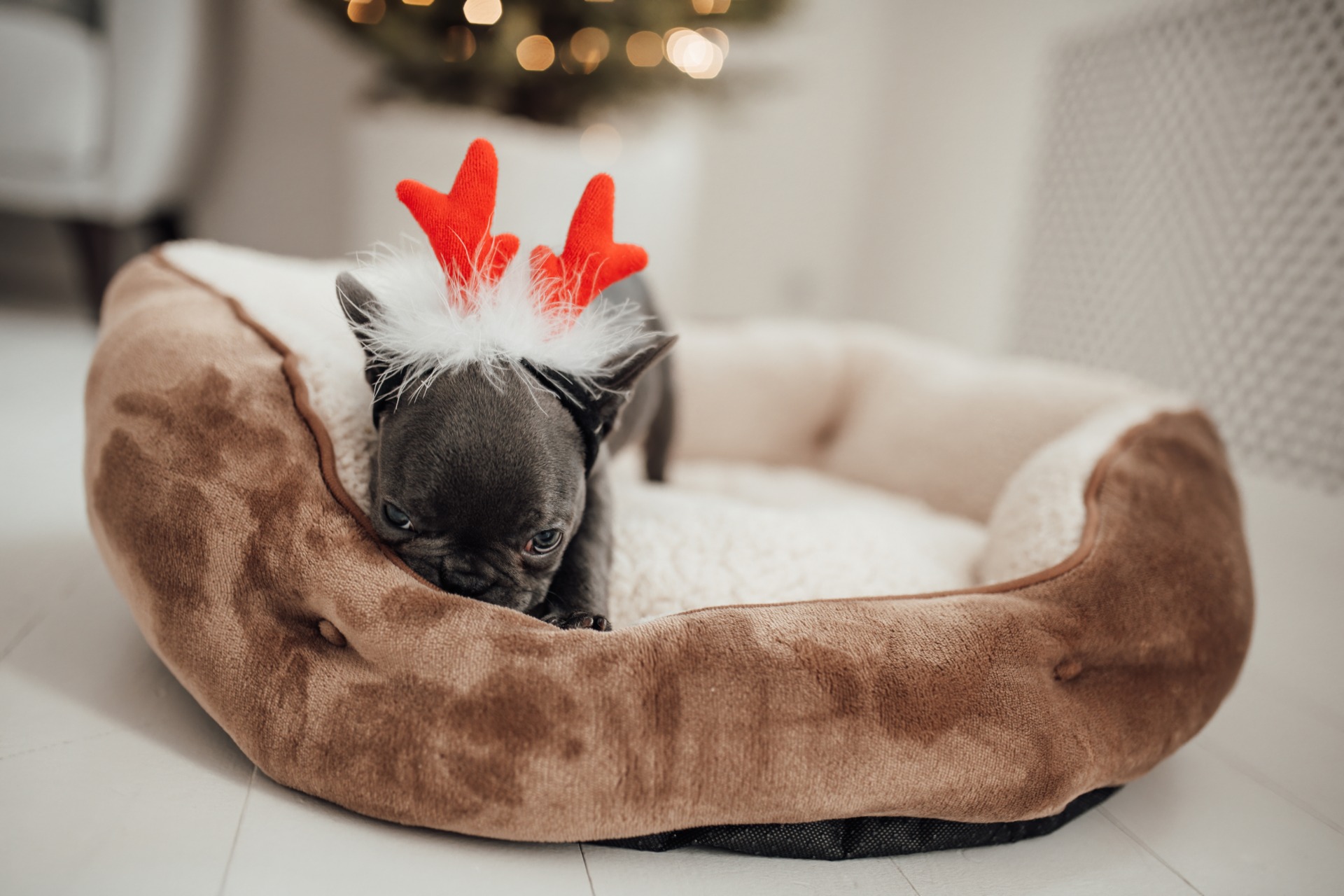

A snuggle dog bed is a nest-style bed with raised sides, a round donut rim, or a hood, built so a dog can curl, lean, or tuck in rather than stretch flat. It works when it matches how the dog already sleeps. It fails when the usable center is smaller than the label, the walls are too high to step over, or the dog prefers to sprawl.
The useful decision is not “calming” versus ordinary. It is sleep style, interior size, entry height, and whether the cover can be washed without destroying the fill.
What “snuggle” actually describes
Retailers use snuggle, cuddler, donut, bolster, and cave for related but different shapes.
- A donut or round cuddler has a continuous raised rim and a sunken center. Dogs that curl and rest a chin on the edge tend to use these.
- A bolster bed has raised sides on one, two, or three edges and an open side to step through. It gives something to lean on without full enclosure.
- A cave or hooded bed adds a cover or tunnel so the dog can burrow. It suits dogs that already crawl under blankets or choose cupboards and the space behind a sofa.
PetSmart’s buying guidance groups cuddler and donut beds with dogs that nestle and rest their head on a raised edge, and flat mattresses with dogs that stretch out. The same distinction shows up across sizing guides: curled sleepers fit a nest; sprawlers need open floor space. A raised rim also shrinks the sleeping area. A bed labeled 36 by 42 inches may leave only about 32 by 38 inches once the bolsters are subtracted, so interior dimensions matter more than the outer size on the box.
A snuggle bed does not treat anxiety, noise phobia, or separation distress. Dogs that already curl against furniture or hide under covers may prefer the shape. That preference is not evidence the bed lowers stress, and it is not a substitute for training or veterinary care when the behavior is new, intense, or paired with destruction, panting, or refusal to settle.
Match the shape to the sleep you already see
Watch the dog for a few nights before buying. The position they choose on the floor, a sofa, or an old blanket is more reliable than breed stereotypes.
Curlers and chin-resters
A round or oval cuddler fits a dog that sleeps in a ball and props the head on an edge. The rim should be high enough to lean on and firm enough not to collapse when the dog pushes into it. Soft fiberfill rims feel plush at first and often flatten, so the dog ends up sleeping in a shallow dish with no support.
For this style, slightly snug is often better than oversized. Flat mattresses are rarely too big. Enclosed snugglers can be: part of the point is the feeling of being held by the sides, and a donut much wider than the curl can feel less secure.
Nestlers who rearrange bedding
Dogs that circle, dig, and push fabric into a pile do better with a plush surface they can shift, and with a bed that still has structure after that digging. A donut with a stable base usually survives this better than a loose hood that collapses over the face.
Burrowers
A cave or hooded bed is the closer match for a dog that already goes under blankets. The design only works if the entrance stays open, the dog can turn and leave without getting stuck, and air can move through the cover. Soft blanket-style hoods that fold shut are a poor fit for deep burrowers. Structured cave beds are sold with an open entry and, in some designs, a rear vent specifically so a dog under the cover still has airflow.
Skip a hood if the dog panics in small spaces, overheats, or has trouble backing out.
Sprawlers
A dog that sleeps on its side with legs extended will usually ignore a snuggle bed or hang off it. High walls also block the turn they need. A flat or low-bolster mattress, sized to the stretched length, is the better default.
Size the sleeping well, not the outer label

Measure the dog in the position they actually use.
For a curler, measure the diameter of the curl, from one side of the body to the other, and add roughly 4 to 6 inches (10 to 15 cm). That figure should fit inside the raised rim, not inside the outer footprint.
For a dog that sometimes stretches, also measure nose to the base of the tail while lying on the side. General dog-bed guidance adds about 6 to 12 inches (15 to 30 cm) for a flat bed. On a snuggle bed, use that length only as a check that they can unroll without hanging off. If the two measurements disagree, prioritize the curl for a donut and the stretch for a bolster with an open side.
Weight charts are a rough filter, not a fit. Labels vary by brand, and a “medium” cave is not the same object as a “medium” donut. One cave brand, for example, lists a small for cats and dogs up to about 18 lb with a center mattress around 22 by 18 inches, a medium up to about 40 lb with a larger well, and a large beyond that, and also flags opening height for taller dogs. Another brand’s rectangular snuggle lists different footprints entirely. Read the interior length, width, and entry height for the specific product.
| What you measured | Better snuggle fit | Usually the wrong shape |
|---|---|---|
| Tight curl, chin on an edge | Donut or round cuddler sized to the curl plus a small margin | Giant flat mattress, or a donut much wider than the curl |
| Curl plus occasional stretch | Bolster with one open side; interior longer than the curl | Full hood with a low opening |
| Crawls under blankets | Structured cave with a stable opening and room to turn | Collapsible blanket hood, or any cave the dog cannot exit easily |
| Side sprawl, legs extended | Low bolster or flat bed sized to nose-to-tail plus extra length | Deep donut or cave |
| Stiff rising, short stride | Low entry, firm base, non-slip bottom | High rim, deep sink, slick floor |
When a size is borderline, size up on a flat bed. On a donut, do not automatically size up. Extra empty rim often goes unused, and the dog may abandon the middle.
Materials that survive washing, weight, and chewing
Most snuggle beds are polyester plush or faux fur over polyester fiberfill, sometimes with a foam disc or pad in the base. That combination feels soft and holds warmth. It is also the combination that mats, holds odor, and shreds if the dog digs hard.
Look for four practical features:
- A removable cover with a zipper that can be machine-washed. The American Kennel Club’s bed guidance is often summarized as choosing a cover you can wash about weekly; dogs that swim, drool, or have accidents need more frequent washing, with the inner core protected by a liner.
- A waterproof or water-resistant liner between cover and fill if the dog is a puppy, a senior with incontinence, or prone to accidents. New urinary or bowel changes still need a veterinary check rather than a liner alone.
- A base that matches the dog’s weight. Fiberfill flattens under heavier dogs. A foam insert holds shape longer if it is dense enough not to bottom out and is wrapped so it cannot be chewed open. Orthopedic and memory-foam bases are widely recommended for many dogs, not only seniors, because they spread weight. For a stiff dog, the more important detail is a low step-in so they do not have to climb a wall to lie down. Veterinary sources such as VCA describe recessed, easy-entry beds as part of a more comfortable setup for mobility-limited dogs.
- A non-slip bottom if the bed sits on hard flooring. A light donut slides when a dog steps on the rim.
Optional certifications are worth using as a filter, not a guarantee of comfort. CertiPUR-US applies to polyurethane foam and limits certain chemicals in the foam itself. OEKO-TEX Standard 100 is a fabric label you can check by certificate number. Neither one tells you whether the bed will fit.
Plush faux fur can throw static in dry rooms, and long synthetic pile mats if it is overheated in a dryer. Follow the care label. If the bed has a hidden disc in the base, confirm it is plastic and washable before you soak it. Novelty plush beds sometimes hide a stiff insert that does not survive a full wash cycle.
When a snuggle bed is the wrong purchase
Skip it, or choose a different shape, in these cases:
- The dog runs hot. Thick pile and hoods trap heat. Short-muzzled breeds, thick coats, overweight dogs, and any dog that already seeks tile are poor candidates for a deep cave. Panting is a dog’s main way of cooling; restricted airflow makes a warm bed a worse idea, not a cozier one.
- Chewing is a habit. Loose plush and exposed fill are easy to shred and swallow. A tough, tight weave or an elevated bed with no loose stuffing is safer until chewing stops. A snuggle bed is not a behavior fix.
- Mobility is limited. High bolsters, deep centers, and hoods that require a crawl can turn a nap spot into an obstacle. If the dog hesitates at the edge, struggles to stand, or avoids stairs as well, talk to a veterinarian and prioritize a low, firm surface with traction.
- The bed is meant to solve separation distress or storm panic by itself. Offer a familiar covered spot if the dog already seeks one. Do not expect the purchase to change the underlying response.
- It will live in a crate that is already tight. Bolsters and hoods consume height and length. Measure the crate interior after the bed is in it, with enough room for the dog to stand, turn, and lie down.
How to place it so it gets used
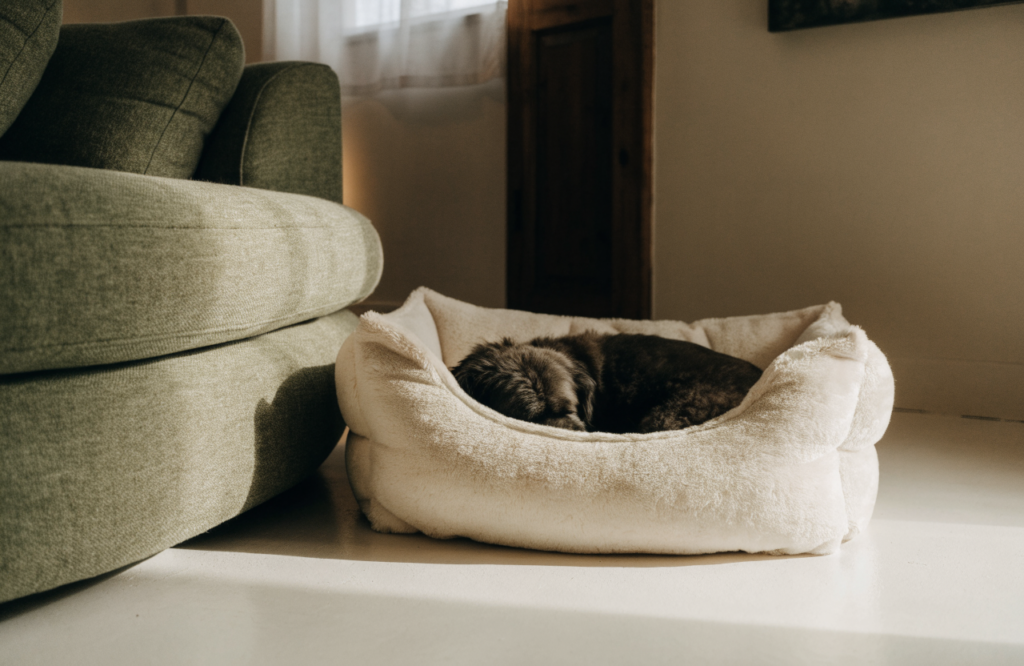
Put the bed where the dog already rests: a quiet corner, against a wall, or beside the sofa, not in a draft or a doorway. A wall on one side adds the enclosure a low bolster does not.
Keep the old bed or a blanket available for a few days. Some dogs move over immediately. Others investigate and leave. Forcing a dog into a hood usually backfires. If they use the rim as a pillow and ignore the center, the center may be too firm, too small, or simply not their preference. A folded blanket in the well sometimes bridges that gap.
For puppies, assume the first bed will be chewed and soiled. A simple washable pad is often the better first buy. Move to a plush snuggle bed once mouthing eases.
Problems that show up after the first week
The dog sleeps beside the bed. The interior is usually too small, the rim is in the way, or the surface is warmer than they want. Check the sleeping well against the curl. Offer a cooler flat pad in the same spot as a comparison.
The dog will not step in. Entry height, a slick approach, or a bed that slides are the common causes. A rug under the bed and a lower opening fix more refusals than a different color of plush.
The rim goes flat. Fiberfill compresses. Restuffing helps short term. A bed with a stitched, channeled bolster or a foam-edged rim holds the lean longer.
Odor returns right after washing. The cover was washed and the fill was not, or a liner is missing. Wash the cover on the cycle the label allows, dry thoroughly so the pile does not mat, and replace fill that stays damp.
The dog pants in the cave. Remove the hood or switch to an open bolster. Heat stress is a medical emergency if panting is heavy, gums look abnormal, or the dog is weak or unsteady. Move the dog to a cooler area and contact a veterinarian.
Frequently asked questions
Is a snuggle dog bed the same as a calming bed? In most listings, yes. “Calming” usually means a bolster, donut, or hood. The shape can suit a dog that curls or burrows. It is not a treatment.
Can a snuggle bed be too big? Yes, more often than a flat bed. If the raised sides sit far outside the curl, the dog may not feel held by them and may stop using the center.
Are cave beds safe? They can be, if the opening stays open, the dog can leave unaided, and the cover does not seal heat in. They are a poor fit for dogs with mobility limits, dogs that overheat, and dogs that chew fabric.
Do senior dogs need a snuggle bed? Only if they already curl into edges and can step in and stand up without effort. Many older dogs do better on a low orthopedic mattress with a washable, water-resistant cover. Joint pain, sudden reluctance to lie down, or new incontinence should be checked by a veterinarian rather than solved with a different bed.
How often should the cover be washed? About weekly is a reasonable default for a dog that uses the bed daily, and sooner after dirt, drool, or an accident. Confirm the fill and any foam insert are protected or removable before the first wash.