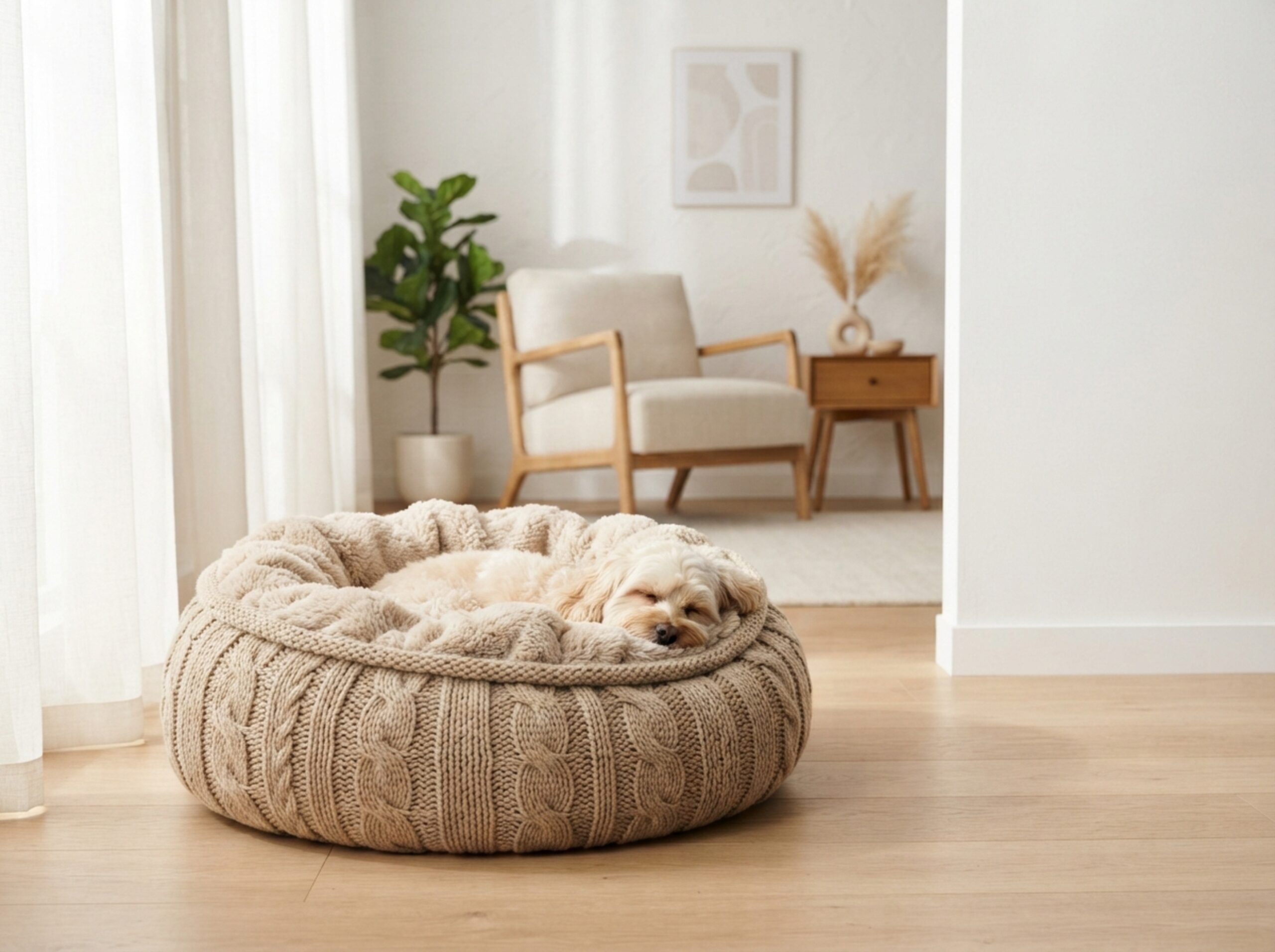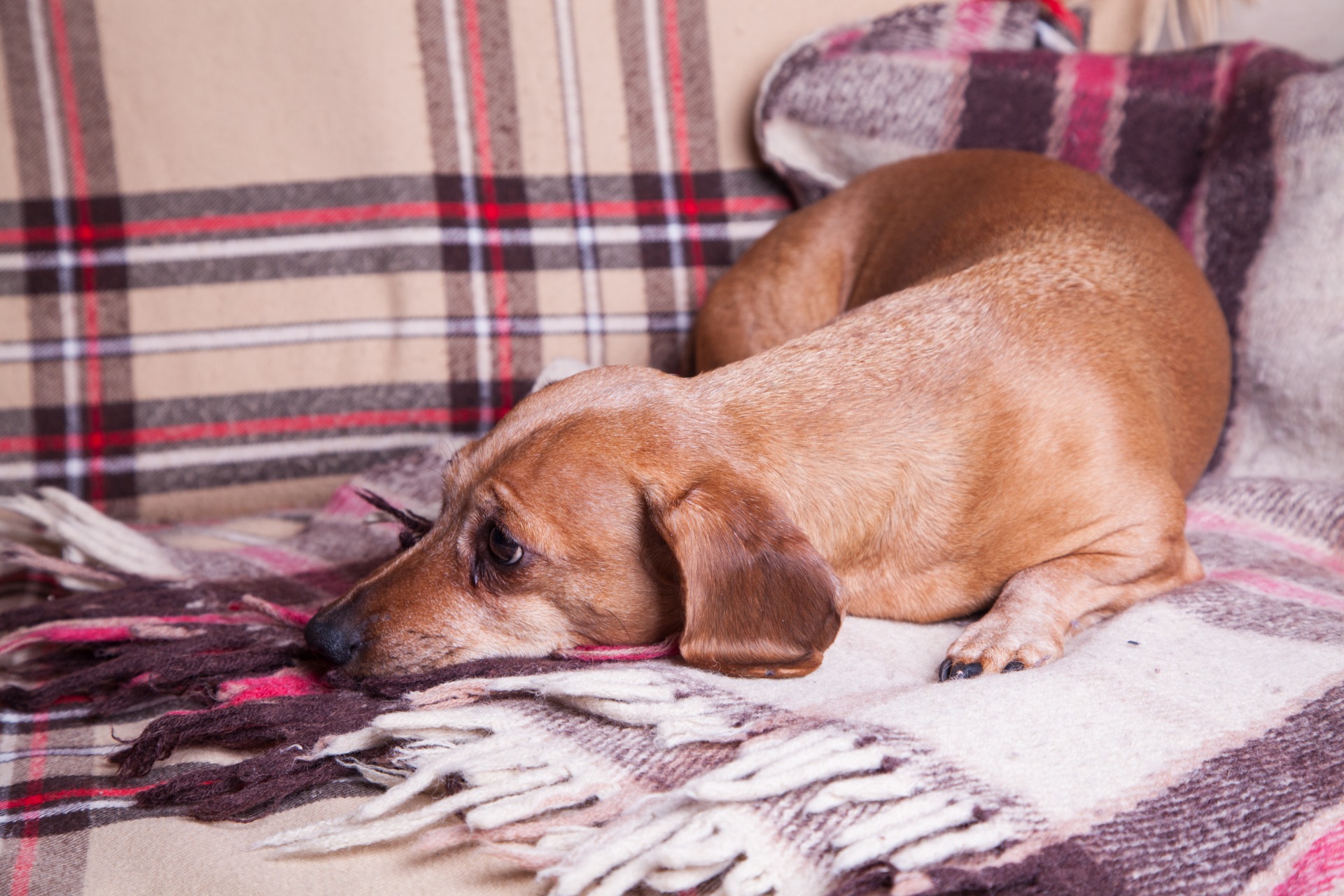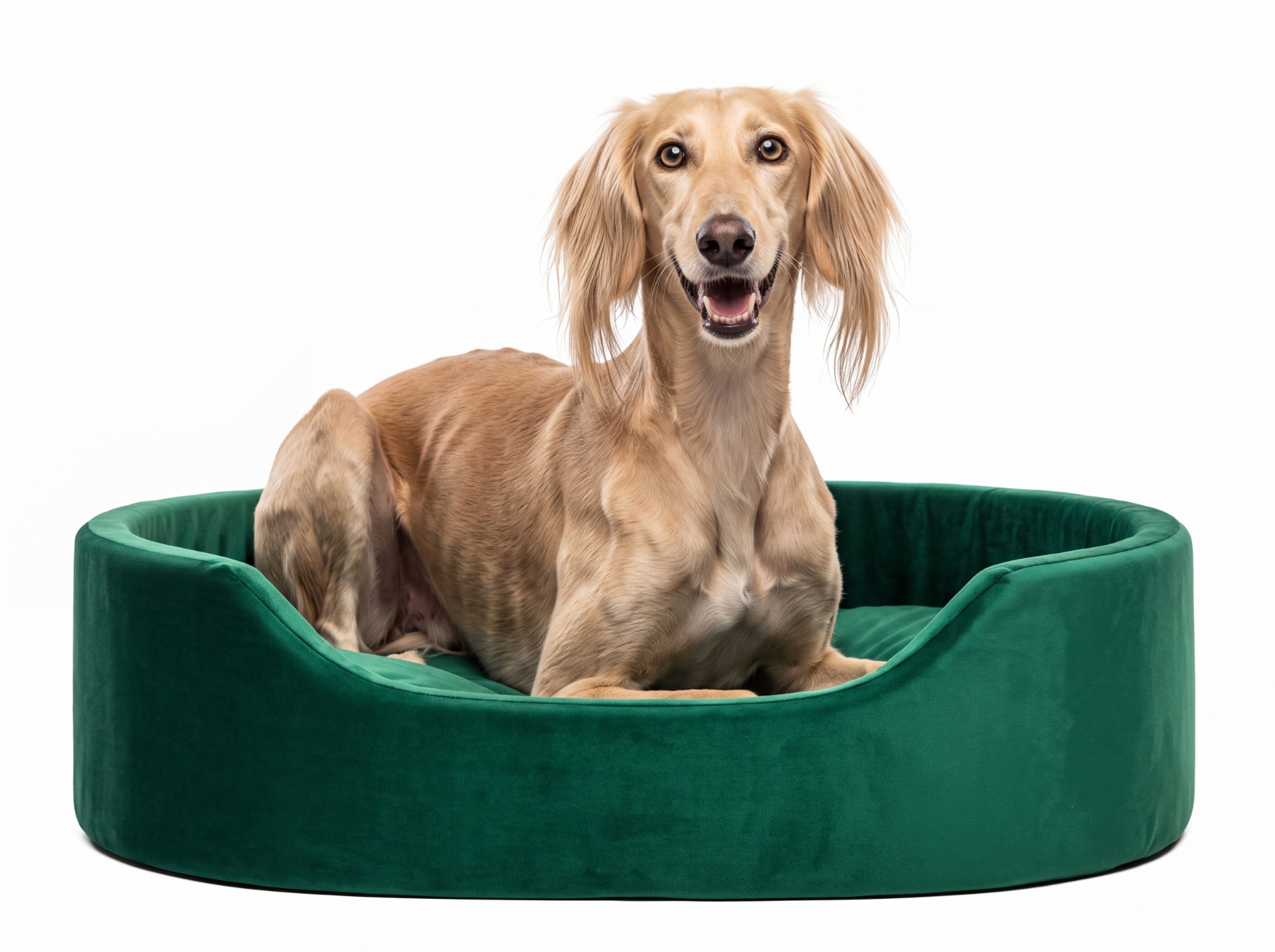

A basket dog bed is a woven frame with raised sides, a lowered front, and a separate cushion. It works when the interior floor fits how the dog actually sleeps and the rim is low enough to step over. It fails when the usable space is smaller than the listing photo suggests, the cushion is too thin, or the dog chews the weave.
The frame is furniture. The cushion is the bed. Most buying mistakes come from treating those as the same decision.
What separates a basket dog bed from a storage basket with a pillow
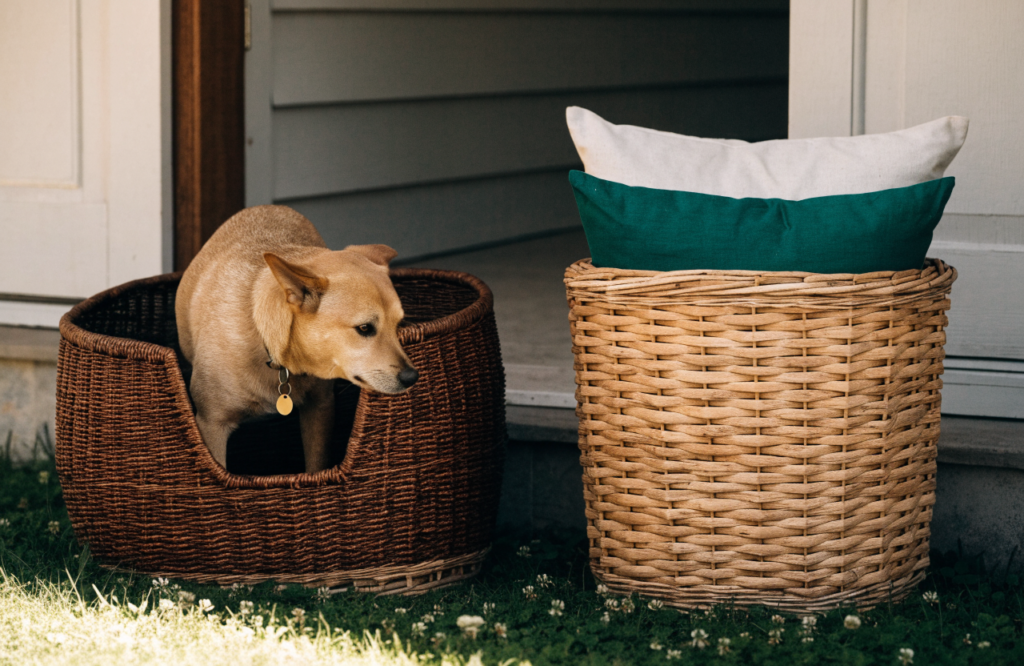
A purpose-made basket dog bed has three features a household basket usually does not.
The front lip is cut down so the dog can step in rather than jump a full wall. The base is woven tightly enough, or built over a solid board, to hold weight without sagging through. The cushion is cut to the interior, not stuffed in as an afterthought.
Wicker is the weave, not a plant. The fiber is usually willow, rattan, seagrass, water hyacinth, or a plastic imitation sold as PE rattan or resin wicker. That difference decides whether the bed belongs indoors only, can sit on a covered patio, and what happens if a tooth gets into the rim.
Raised sides give a den-like edge to lean against, which suits dogs that curl or rest their head on a bolster. The open weave also lets air move under and around the cushion, which helps in warm rooms and after a damp walk. That airflow is not the same as a waterproof bed. Moisture still sits in the cushion if the cover cannot be washed and the foam has no barrier.
A round or oval basket with high walls is a different product from a rectangular sofa-style basket on short legs. The first is a nest. The second is closer to a low dog sofa, and the entry cutout matters more than the overall height.
Which dogs a basket dog bed suits
This style is a good match for an adult dog that already sleeps in one place, prefers a defined edge, and does not chew furniture.
Small and medium dogs are the realistic market. Handwoven willow and rattan beds are commonly built for dogs up to roughly 20 pounds in a small, about 15 to 35 pounds in a medium, and about 30 to 65 pounds in a large, with interiors on the order of 23 by 17 inches, 29 by 20 inches, and 35 by 23 inches. Giant breeds and heavy sprawlers often outgrow what basket makers actually sell. A Labrador that stretches flat may need an interior near 40 inches; many decorative baskets never reach that.
Short-legged and older dogs need the lowered front. A full six-inch wall is a small step for a young terrier and a real obstacle for a dachshund, a French bulldog, or a dog with hip pain. Veterinary guidance for mobility-limited dogs favors beds that do not require climbing.
When to skip natural wicker
Puppies and determined chewers are the wrong audience for willow, rattan, or seagrass. Chewing is normal dog behavior, and dogs will work on whatever is available if they have not learned which objects are off limits. A woven rim has a texture that invites mouthing. Split willow can break into sharp pieces. Owners reacting to mass-market wicker dog beds have repeatedly described puppies taking them apart in days.
Synthetic PE rattan on a metal frame is harder to splinter and handles weather better, but it is not chew-proof. A dog that shreds beds still needs a tough fabric or elevated cot, not a prettier basket.
Also skip a deep basket if the dog is incontinent and you cannot remove and wash the cushion the same day, or if two large dogs are meant to share it. The walls that make a basket feel secure also limit how bodies can rearrange.
Size the interior floor, not the outside of the basket
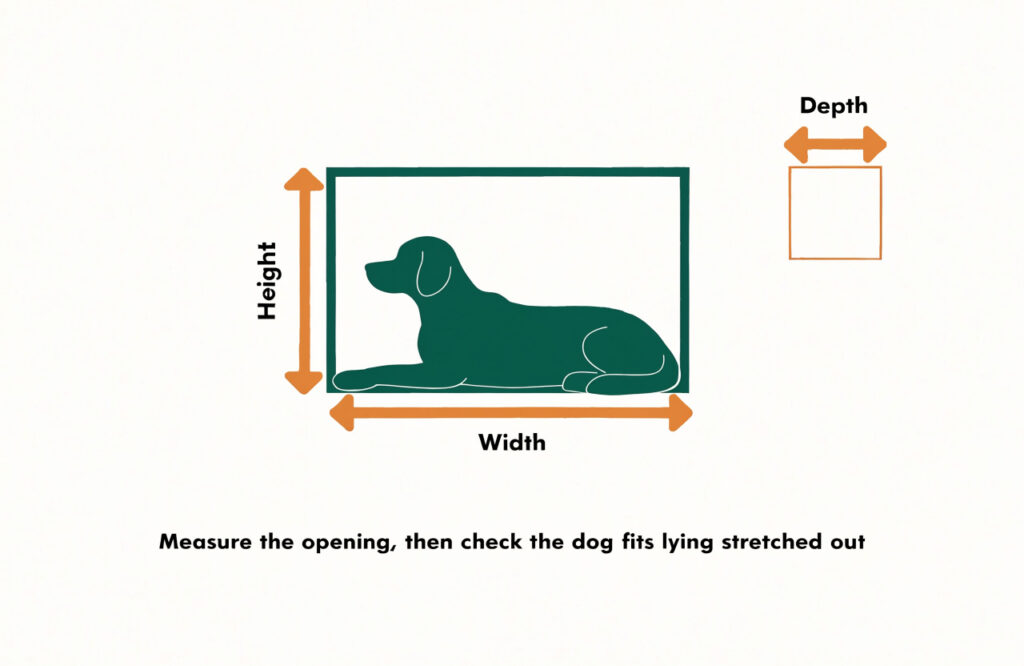
Listings usually print the outer dimensions. The weave and rim can eat several inches, so a basket that measures 30 inches across the outside may leave closer to 24 inches of sleeping floor. Ask for interior length, interior width, and the height of the front lip. If the seller only gives one number, assume it is the outside and size up.
Measure the dog in the position they actually sleep in, not standing.
- Length: tip of the nose to the base of the tail, not the tail tip. Add about 6 inches (15 cm) for a dog that stays curled, and 8 to 12 inches (20 to 30 cm) for a dog that stretches.
- Width: shoulder to shoulder, or hip to hip if they sleep on their side. Add a few inches so they are not pinned against both walls.
- Entry: the front lip should be low enough that the dog steps in without a hop. For seniors and short legs, a lip around 4 inches is easier than a uniform high wall.
Sleep style changes the shape more than breed charts do. A curler can use a round basket whose diameter is a bit larger than their tucked body. A side sleeper or sprawler needs a rectangle long enough for full extension. If the dog is between two sizes, take the larger interior. A folded blanket can shrink a roomy basket. Nothing fixes one they hang out of.
| Dog | Useful interior starting point | What usually goes wrong |
|---|---|---|
| Toy dog, under about 10 lb, curls | Roughly 18–24 in long | Basket looks cute and the cushion is an afterthought |
| Small dog, about 10–20 lb | About 23–28 in interior | Outer size used instead of floor size |
| Medium curler, about 20–35 lb | About 28–32 in interior | Walls too high at the front |
| Medium sprawler or 30–50 lb | 34 in or longer | Forced into a permanent ball |
| Large stretcher, 50 lb and up | 40 in interior if you can find it | Most woven baskets simply are not made this big |
Those ranges are buying checks, not a breed standard. Weight limits on the product page matter because the base, not the look, carries the dog.
Willow, rattan, seagrass, or a plastic weave
| Material | Where it belongs | Strength | Limit |
|---|---|---|---|
| Willow | Dry indoor rooms | Light, traditional weave, easy to spot damage | Splinters if chewed; swells and mildews if kept wet |
| Rattan | Indoor, light use | Stronger cane, better for dogs over about 15 lb if the frame is solid | Still a chew risk; not an outdoor bed |
| Seagrass or water hyacinth | Indoor accent beds | Stiff, decorative | Brittle when dry; poor choice for chewers |
| PE rattan / resin wicker on a metal frame | Covered patio and indoor | Waterproof weave, UV-stable, no wood splinters | Can fade, creak, or be chewed through; cushion still needs washing |
| Household storage basket | Not a bed | Cheap | Base not rated for a dog, no lowered entry, sharp or loose ends |
Press the rim and the base in the store or on arrival. A bed should not twist in your hands. Loose strand ends at dog-mouth height are a snag and a chew starter. Small feet or a solid board under the weave keep the bottom off a wet floor and stop the basket scratching wood. A chemical varnish smell is a reason to air the basket out before a dog lies in it, especially if they lick the rim.
For a covered porch, synthetic weave with a removable cushion is the practical version. Natural rattan left in rain cracks and grows mold. Even a “weather-resistant” outdoor basket still needs the cushion brought in when it is soaked.
The cushion does the sleeping
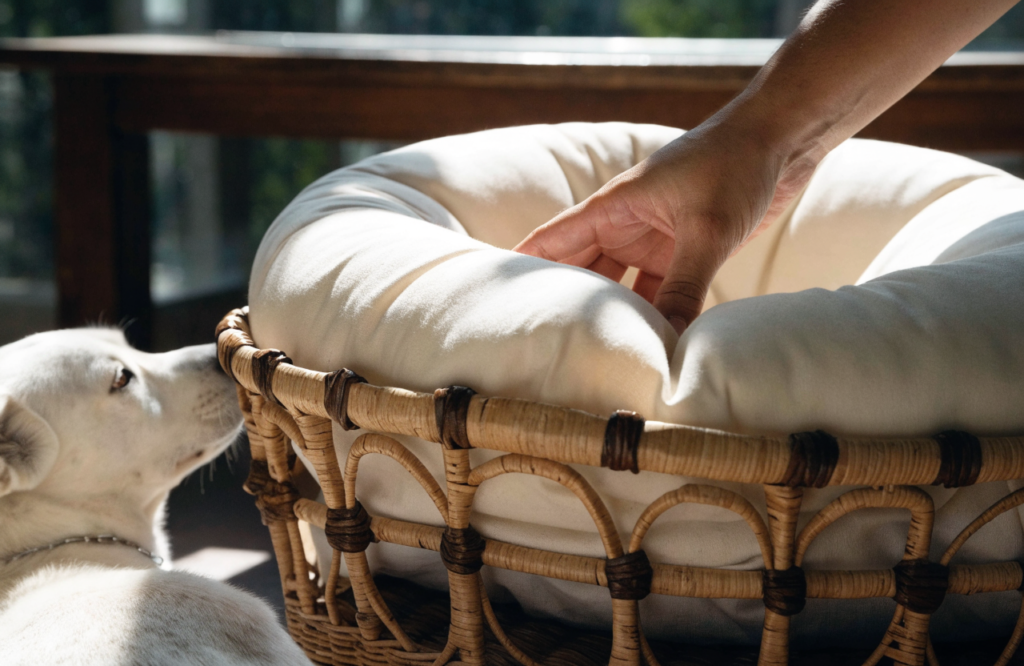
A bare weave is not a sleeping surface. If you can press a palm through the pad and feel the basket floor, the dog will feel it too, and heavier dogs will bottom out.
Match the insert to the dog, not the catalog photo.
- Adult small dogs with no joint issues can use a dense fiber or foam pad of a few inches, as long as it does not slide.
- Older dogs, large dogs, and dogs with arthritis need a thicker supportive foam that still has loft under their weight. A recessed or bolstered top is useful only if the front of the basket is already low. Stacking a high bolster inside a high wall makes entry worse.
- Puppies, wet dogs, and dogs that leak need a waterproof liner between the cover and the foam. Once moisture reaches an uncovered foam core, washing the cover does not fix the smell.
The cover should zip off and go in the machine. The foam should not. Dry every layer before you put the bed back together, or the basket will hold a damp smell even though the weave itself can be vacuumed or hosed. Cut or buy the cushion about an inch smaller than the interior so it sits flat instead of buckling up the sides.
If the included pad is thin, replace it. The basket can stay. That is the advantage of this design over a one-piece plush bed: the part that wears out is the part you can swap.
Where to put it so the dog uses it
Place the basket where the dog already rests, not in a hallway they only pass through. A corner reads as sheltered. A spot in full afternoon sun plus a foam pad will be abandoned in warm weather, because foam holds heat even when the weave breathes.
Keep the basket off a direct heater vent. Natural fiber dries out and cracks. Do not use it as a crate. It has no door, no chew-proof panels, and no safe way to close a dog inside.
Introduce it with the cushion only at first if the dog is unsure. Feed a chew on the pad, then leave the room. Dragging a reluctant dog in and praising the basket teaches the opposite of what you want.
Hair collects in the weave. A vacuum crevice tool weekly, and a wipe of the rim, matters more than occasional deep cleaning. Check for broken strands. One loose end becomes the thing the dog pulls.
Mistakes that make a good-looking basket fail
Buying on the outer measurement. The dog sleeps on the inside floor. Confirm that number before you order.
Using a craft-store basket. Those are built to hold blankets, not a 40-pound dog stepping on the rim twice a day.
Ignoring the front height. High walls look cozy in photos and stop stiff dogs from getting in. The dog then sleeps beside the basket, and the bed gets blamed.
Leaving a teething puppy alone with natural wicker. The failure mode is not a messy room. It is swallowed fiber and a ruined frame. Use a washable mat until the chewing phase passes.
Trusting the included cushion without pressing it. Many baskets are sold at a frame price, with the pad extra or token-thin. Budget for a real insert.
Assuming “handmade” means strong. Handmade describes the labor. Density of the weave, a reinforced rim, and a base that does not flex are what hold weight.
Frequently asked questions
Can a cat use a basket dog bed? Yes. Cats often prefer the smaller sizes with a low front and a soft pad. The same chewing rule applies to kittens that mouth furniture.
Is a basket dog bed orthopedic? Only if the cushion is. The basket supplies walls and a stable base. Joint support comes from foam thickness and density that do not collapse under that dog’s weight.
How do I clean the frame? Remove the cushion. Vacuum the weave. Wipe with a barely damp cloth and dry fully. Synthetic outdoor frames can be rinsed and dried in the shade. Do not soak willow or seagrass.
Will the raised sides help an anxious dog? Some dogs settle faster with a clear edge around them than on a flat mat. That is a preference, not a treatment. If the dog pants, paces, or will not lie down, the basket is not solving the problem.
What should I buy instead if my dog chews? A tough-fabric bolster bed, a crate pad, or an elevated cot with a replaceable cover. Save the woven basket for a dog that has already stopped destroying household objects.