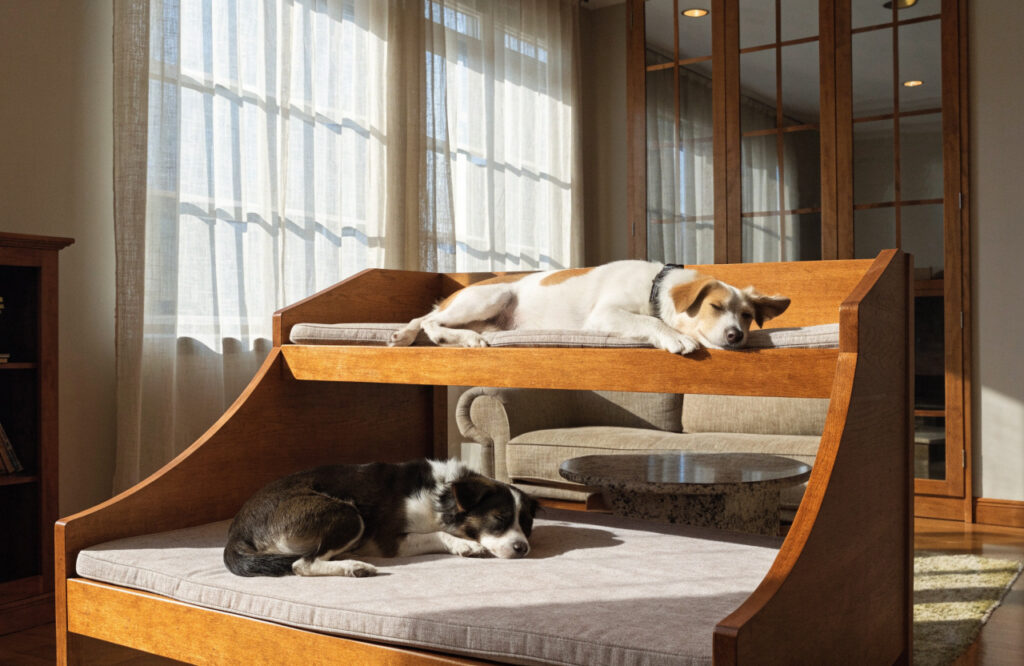
A DIY dog bunk bed is a pair of framed sleeping platforms stacked on four posts, sized to two dogs (or a dog and a cat) and built so the top level cannot tip, sag, or dump a sleeping animal onto the floor. It earns its footprint only when both animals are small or medium, both can reach the height you choose, and the frame is joined and braced like furniture rather than a weekend crate.
Most store bunks and many photo projects skip that last part. Commercial PVC bunks are often rated around 100 pounds total, not per dog. A homemade frame can be stronger than that, but only if the platforms, posts, and joints are chosen for the actual animals and the way they jump.
When a bunk is the right project
A two-level bed solves a floor-space problem: two cushions that used to sit side by side now occupy one rectangle. It also gives a dog who likes height a perch without surrendering the sofa.
It is a poor fit in a few common households.
- Either dog is over about 50–60 pounds, or both together approach the weight you are willing to put on four posts and a top deck. Large dogs load a corner when they jump; that is a different problem from a 20-pound dog curling up.
- One dog is a senior, a dachshund, a French bulldog, or any breed with a known back or joint issue. Elevation turns every nap into a climb.
- The dogs guard beds, toys, or space. A narrow ladder and a high platform can turn a mild disagreement into a fall.
- The only open wall is a hallway. A bunk plus a ramp needs more floor than two flat beds.
If one of those applies, two low single frames, or one raised bed and one floor bed, are usually safer and cheaper.
Size the platforms to the dogs

Measure each dog stretched out, nose to the base of the tail, then add 6 to 12 inches for length. Measure across the body in a side-lying position and add several inches for width. A curler can live with the smaller number. A sprawler needs the larger one, and a bolster cushion eats into the usable area, so measure the cushion interior, not the outer frame.
Worked example for two medium dogs, each about 35–45 pounds and roughly 30 inches nose to tail base: platforms of about 36 inches long by 27 inches deep, which is a common cushion size. That is an example, not a universal cut list. Change every horizontal piece if your cushions differ.
Vertical dimensions matter as much as the deck size.
- Lower platform: 4 to 8 inches off the floor is enough to keep bedding out of drafts and spills. Taller lower beds make the whole stack higher for little gain.
- Clearance between decks: the lower dog should be able to sit and stand without hitting the upper frame. For most small and medium dogs, 16 to 20 inches of open space between the top of the lower cushion and the underside of the upper deck is a practical starting point. Measure the taller of the two dogs sitting.
- Top deck height: keep it low enough that a missed jump is a step, not a drop. Many useful builds land the upper sleeping surface around 18 to 24 inches off the floor. Going much higher mainly helps a cat, and then the top level should be treated as a perch with a rail, not a dog bed.
Leave a few inches of frame outside the cushion so the dog is not sleeping against a bare edge.
Materials that survive jumping
Pine dimensional lumber is the usual choice because it is cheap, light, and easy to cut. It dents and shows chew marks. Hardwood such as oak or maple resists teeth better if a dog is a known chewer, at a higher cost and weight.
A sound small-to-medium build typically uses:
- Four posts of 2×2 or 2×3 lumber, long enough for both decks plus the top rail.
- Aprons or side rails of 1×3 or 1×4 around each platform, so the cushion cannot slide off.
- A deck of 1/2-inch or 3/4-inch plywood, or a cleat-supported panel. Thin OSB works for light dogs if it is fully supported at the edges and across the middle; it sags sooner under repeated jumping.
- Wood glue plus screws at every joint. Pocket-hole screws or a simple butt joint with glue and two screws beat nails alone. Nails work loose when a dog launches off a corner.
- Optional diagonal braces or a plywood back panel if the frame rocks when you push the top corner.
Skip pallet wood unless you know its source. Some pallets are heat-treated (marked HT); others were chemically treated, and splinters are common either way.
A build sequence that stays square
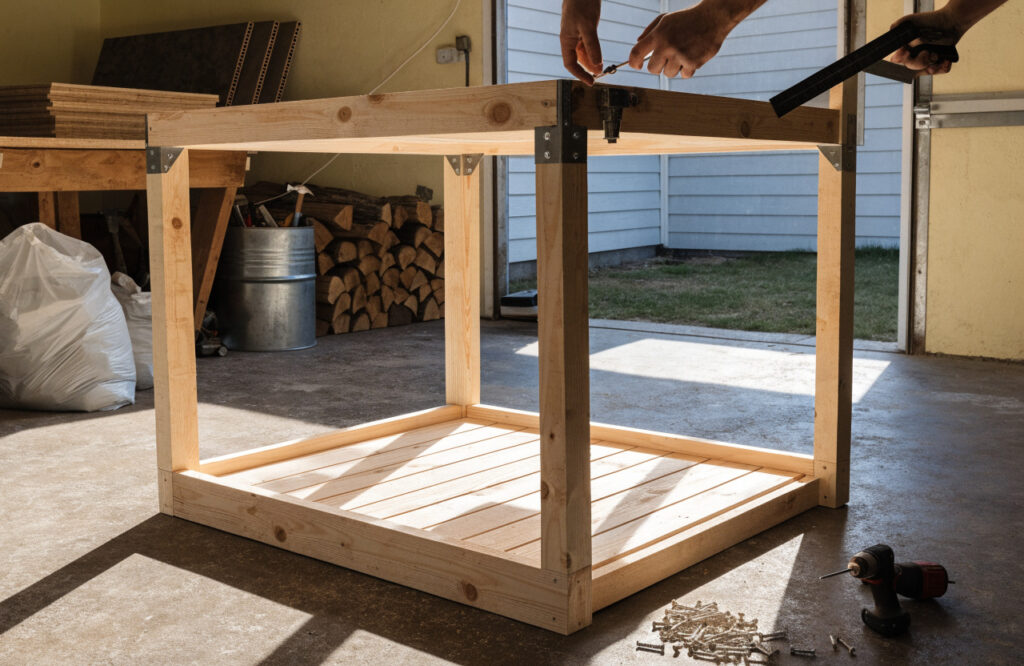
Tools that are enough: a circular saw or miter saw, a drill, a tape measure, a square, clamps, and sandpaper. A pocket-hole jig makes the rails faster and stronger, but it is not required.
- Cut both decks and all four rails for one platform before assembling anything. Label the pieces. If the two cushions differ in size, build two different frames rather than forcing a match.
- Glue and screw the side and back rails to the deck, with the rail rising above the deck enough to retain the cushion (about 2 to 3 inches is typical). Leave the front rail lower, or omit it, so the dog can step in.
- Add a center cleat under each deck if the span is over about 24 inches or either dog is on the heavier side of medium. The cleat stops the panel from bouncing.
- Stand the four posts and attach the lower platform first, all four corners, checking that the frame is square before the glue sets. Then attach the upper platform at the marked height.
- Rack the frame: push the top corner sideways. If it moves, add a plywood back or two diagonal braces before anyone sleeps on it.
- Sand every edge the dog will brush past. Fill screw holes only if you are painting; dogs do not care about a furniture finish, and filler can chip.
Do not finish the wood until the dry assembly is stable and both cushions sit flat.
Getting the top dog up and down
Jumping is the default, and it is acceptable only for a young, sound, small or medium dog and a low upper deck. For anyone else, build access into the plan before you cut the posts.
A ramp is kinder on shoulders and backs than steep steps. A useful incline sits around 18 to 25 degrees; closer to 18–20 degrees is better for small or older dogs. On a 20-inch rise, that means a ramp on the order of 4 feet long. Carpet remnant or a rubber shelf liner, stapled on the underside of the edges so no staples face the paws, keeps the surface from becoming a slide.
Steps need treads deep enough for the whole paw, not a ladder rung. A 6-inch rise and an 8- to 10-inch tread is easier to use than a doll-house ladder copied from a human bunk.
If you will not build a ramp or steps, keep the top level for a cat or leave it empty.
Rails, feet, and the ways these beds fail
The upper deck needs a raised edge on the back and both sides. A rail around 4 to 6 inches above the cushion stops a small dog from rolling off in sleep. It will not stop a determined jump, which is why the deck should stay low. Leave the entry side open.
Other failure points show up after the first week, not in the workshop.
- Tipping. A tall, narrow frame walks when a dog hits the ramp. Rubber feet or non-slip pads help. If the top deck is much above 24 inches, or the dogs are energetic, anchor the back posts to a wall stud with a furniture strap.
- Corner loading. Dogs rarely land in the center. Glue and at least two screws at each post connection matter more than a thick stain.
- Pinch points. Gaps between the cushion and the rail can catch a paw. Fit the cushion so it fills the frame.
- Chewing. Smooth edges and a cured finish reduce splinters. They do not stop a determined chewer; those dogs need a harder wood or a different bed.
There is no federal standard written for pet bunks. The practical bar is the same one you would use for a stool a child might climb: it should not rack, the top should not release a sleeping animal, and nothing sharp or freshly solvent-smelling should be in reach of a mouth.
Finish and bedding
Common clear finishes, including water-based polyurethane, are widely treated as safe for food-contact surfaces once fully cured. Cured is not the same as dry to the touch. Oil-based polyurethane can take weeks to stop smelling; water-based versions usually cure faster and put less odor in the room. Do not return the bed to the dogs while it still smells of solvent. Skip “boiled” linseed oil if the label lists metal driers and a dog is likely to lick the frame.
Paint is fine if it is fully cured and not chalking. Dogs chew edges, so a film finish will eventually show wear there. Plan on touching up rather than treating the first tooth mark as a failure.
Use cushions with removable, washable covers. A fixed foam slab inside a wooden box looks tidy and becomes a smell problem after the first accident. A flat mat or a standard pet bed that lifts out is easier to live with than upholstery stapled to the deck.
What the project actually costs
A pine-and-plywood bunk for two medium cushions is often a lumber-and-hardware purchase in the $70–150 range if you already own a saw and a drill, plus the cost of two beds or cushions. Hardwood, a long carpeted ramp, and new orthopedic cushions can push it past $250. Time for a first build is usually a weekend: a few hours of cutting and assembly, then drying time for glue and finish before the dogs use it.
Buying a finished bunk is reasonable if you do not want to own the joints. Building is reasonable if you need an odd size, already have the tools, and will add the rail, the ramp, and the wall strap that catalog photos leave out.
Frequently asked questions
Can two large dogs share a DIY bunk? Only with a heavier design than a pine 2×2 frame: thicker posts, a 3/4-inch deck with a center support, bolted or well-glued joints, and a low top deck. Many manufactured bunks are not rated for that use. Two separate raised beds are usually the better answer.
Do I need a rail if my dog never rolls? Yes on the back and sides of the top deck. Dogs shift in their sleep, and the first fall is the test you do not want to run.
Is the lower level usable as a feeding station? Yes, if you build it as a solid shelf and accept that food and a bed are a bad mix on the same level. Bowls on the lower deck and a bed on the upper deck work for one dog. Two dogs and one food shelf can create guarding.
How do I know the frame is strong enough? Before the dogs use it, load the top deck with sandbags, water jugs, or other dead weight at least equal to the heavier dog, press down on a front corner, and rack the top sideways. Movement, creaking joints, or a deck that stays bowed means add a cleat, more screws, or a brace before anyone sleeps there.