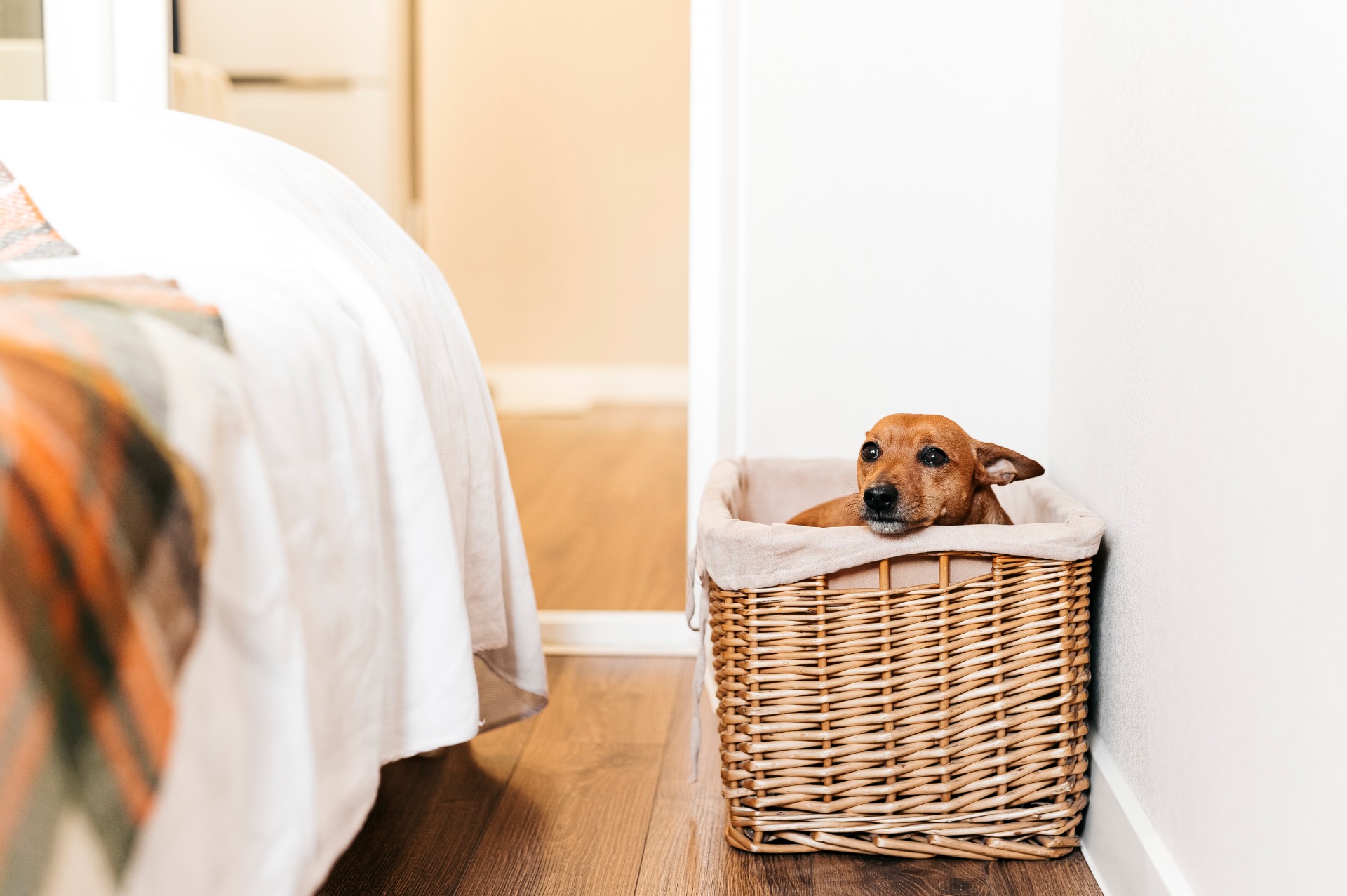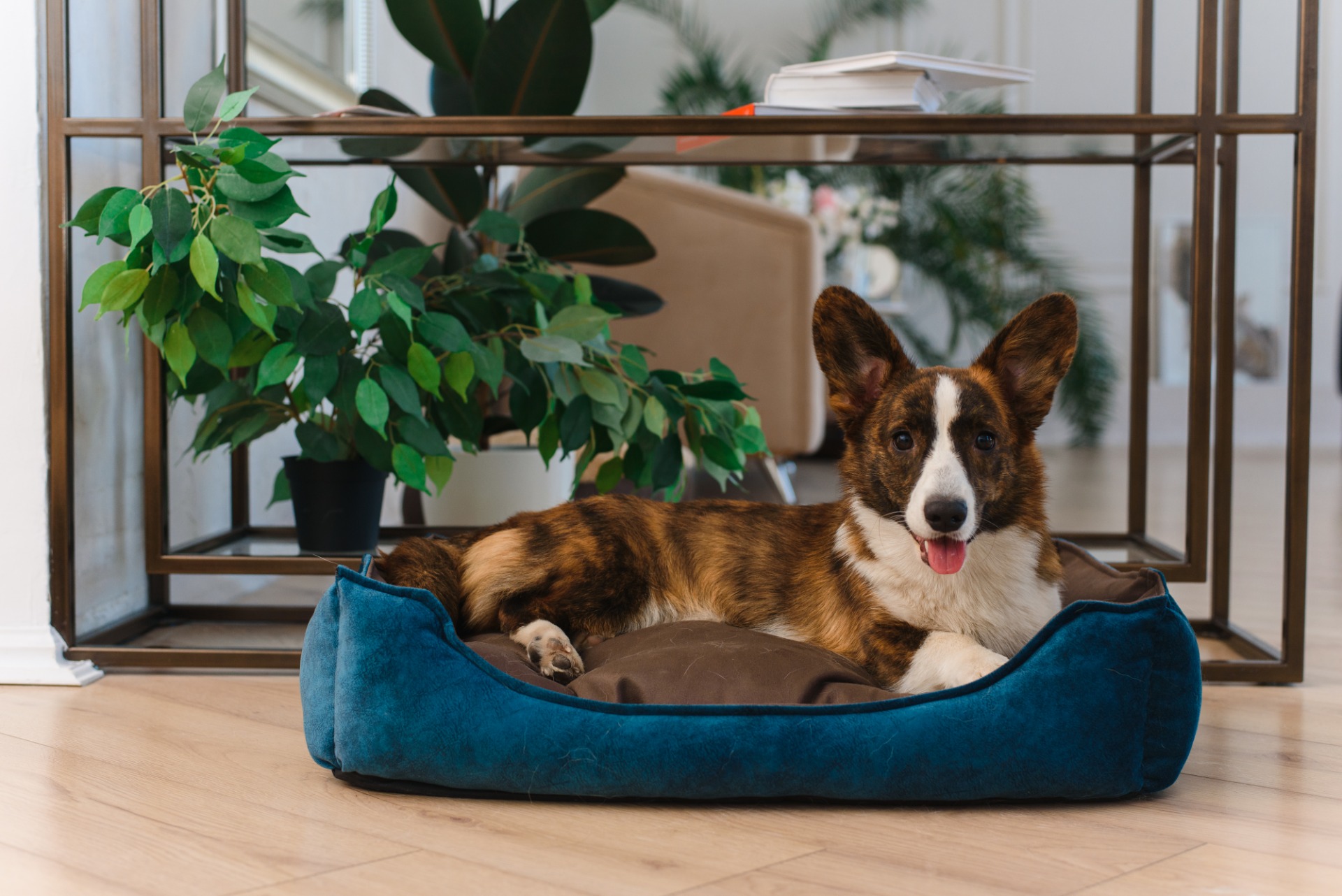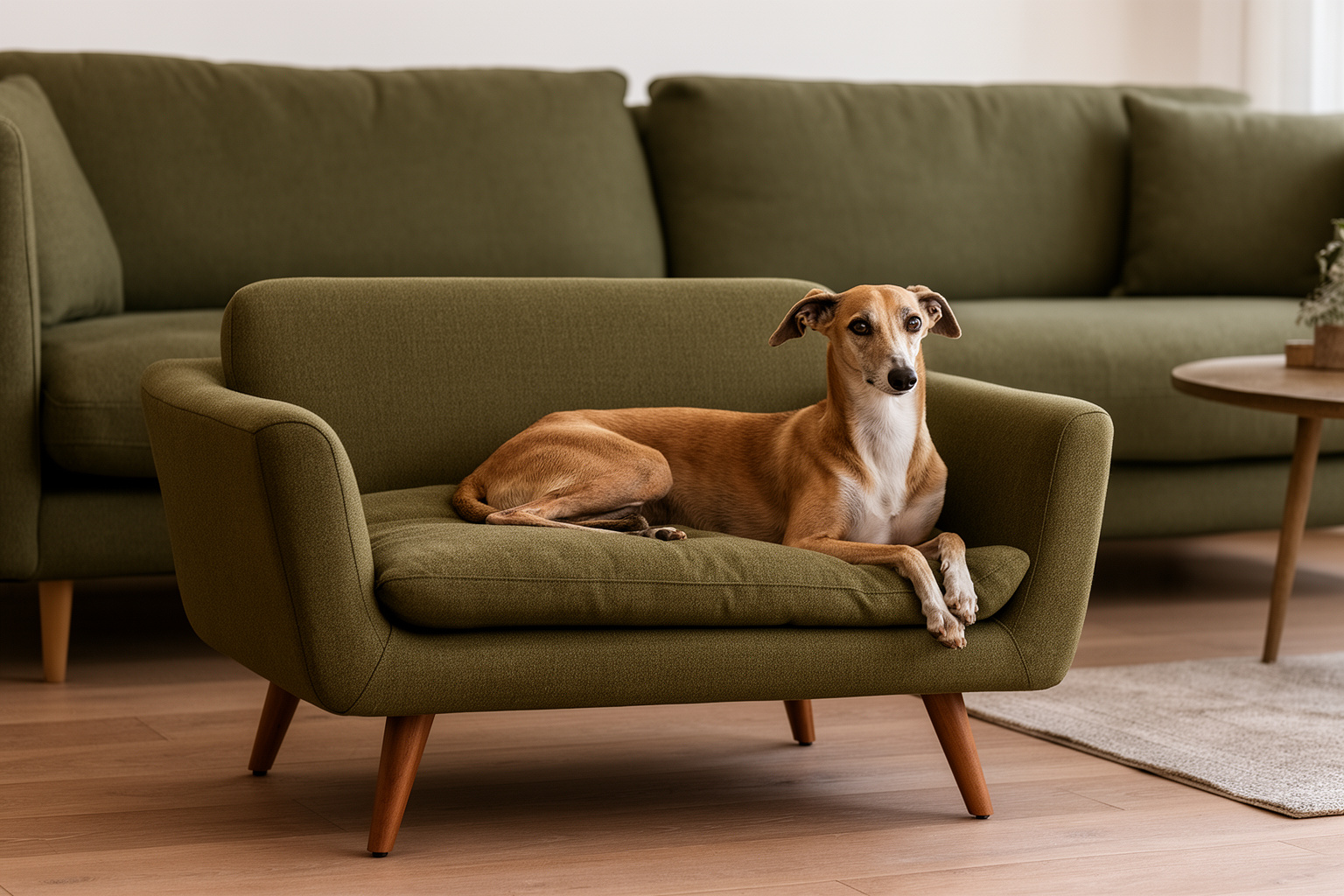

Dog bed furniture is a sleeping place built to look like a small sofa, chaise, or framed piece of room furniture, not a plain mat on the floor. The useful versions do two jobs at once: they give the dog a defined rest spot with real support, and they sit in a living room without reading as pet gear. The wrong ones fail on the measurement that product photos hide — the flat area inside the bolsters — or on materials that look upholstered but flatten, stain, or get chewed open within a season.
The decision is not “which bed photographs best.” It is which construction matches how that dog lies down, how heavy they are, and where the bed has to live.
What counts as dog bed furniture
Three constructions show up under this search. They are not interchangeable.
Sofa and chaise beds are the closest match to human furniture. They use a padded base, a back, and one or two arms, often with a removable cover in a fabric meant to sit next to a couch. Retailers describe them as scaled-down sofas, couches, and chaises. Dogs that already claim the human sofa often settle on these because the raised edges give something to lean against. The tradeoff is footprint and entry height: arms and a back eat interior space, and a tall front edge is a problem for short-legged or stiff dogs.
Framed elevated beds are the other furniture form. A rigid frame — wood-look PVC, aluminum, or solid wood — holds a taut fabric or a foam mattress off the floor. Kuranda’s raised beds, made since the late 1980s, are the long-running example of this category: weight spread across a suspended surface, air moving underneath, and no stuffing to hold odor. Solid-wood frames with a foam mattress sit closer to a low bench. These read as furniture when the frame finish matches the room, but a bare mesh cot does not feel like a sofa and will not suit every sleeper.
Decorator beds with furniture-grade covers are ordinary bolster or mattress beds dressed in upholstery fabric, performance cloth, or a wood-toned base. They blend in, but the “furniture” part is mostly the cover. Support still depends on the fill.
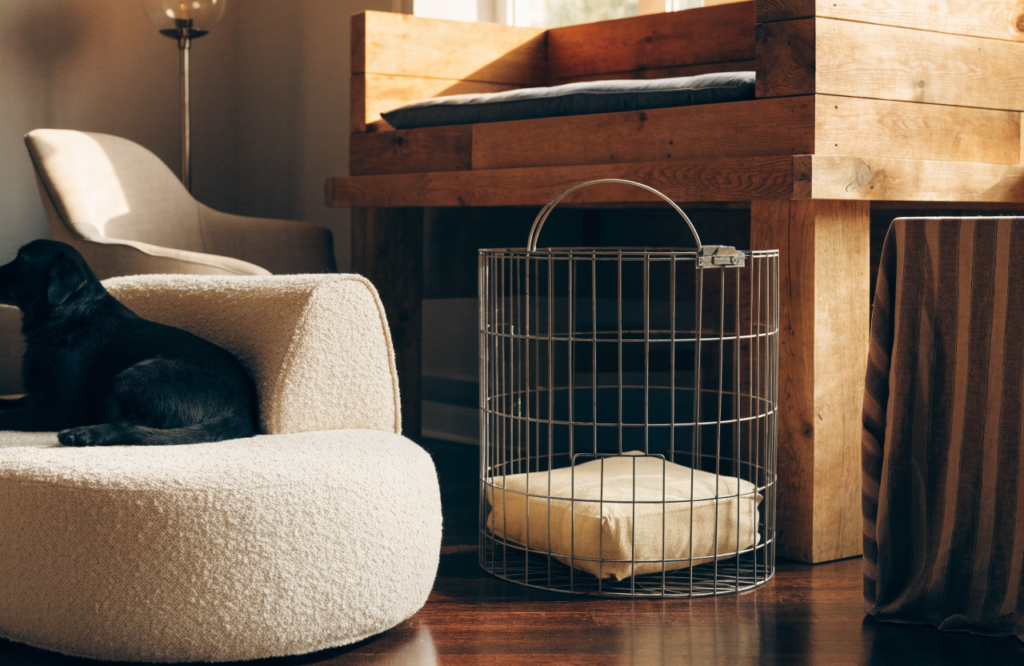
Crate furniture — end tables and consoles with a kennel inside — is a related product, not a bed. It solves a different problem and should not be sized as a sleeping surface.
Match the style to how the dog sleeps
Sleep posture decides the shape more reliably than breed labels.
| How the dog rests | Furniture form that fits | Why | Poor match |
|---|---|---|---|
| Curls and leans on an edge | Sofa or three-sided bolster | Raised sides act like a burrow wall and a headrest | Flat open cot |
| Stretches fully on the side | Low chaise or wide mattress on a frame | Needs length, not walls | Deep-armed mini sofa |
| Runs hot or sleeps outdoors | Elevated mesh or breathable cot | Air under the body | Thick memory foam |
| Senior, bony, or stiff after naps | Orthopedic foam in a low sofa or flat frame | Even pressure, easy step-in | Firm mesh with no pad |
| Chews or digs the bed | Elevated ballistic or chew-resistant frame | No fill to gut; replaceable surface | Plush faux-fur sofa |
A sofa bed is a comfort and nesting product. An elevated cot is mainly a cooling and durability product. Orthopedic foam is a pressure-relief product. Buying the stylish one for the wrong job is the usual failure: a mesh cot under a thin senior, or a heat-trapping foam sofa for a thick-coated dog in a warm room.
Bolster height is functional, not decorative. Dogs that press against something use the arm as a pillow. Dogs that sprawl treat the same arm as a wall that shortens the bed.
Size the sleeping surface, not the outer frame

This is the measurement most listing photos skip. A sofa bed’s advertised width and length include the arms and back. The flat cushion the body actually lies on is smaller. Guides that compare outer and interior dimensions note that a bed sold as 36 inches can leave roughly 28 to 30 inches of flat sleep area once bolsters are subtracted. Brands that publish a separate “sleep area” show the same gap: a large soft-walled box listed around 90 by 70 centimeters outside can have an interior closer to 66 by 53 centimeters.
Measure the dog, not the product label.
- Have the dog lie in the posture they actually use at night — stretched, not standing.
- Measure nose to base of tail, then the width across shoulders or hips in that position, whichever is larger.
- Add about 6 to 12 inches (15 to 30 centimeters) so they can turn without hanging off.
- Compare that number to the interior cushion, not the outer frame. If the page only lists overall size, subtract roughly 4 to 6 inches per bolstered side, and size up one category from the flat-mat size you would have bought.
Weight ratings matter on frames. Elevated beds are sold with limits — commonly in the 100 to 250 pound range depending on the model — and a frame rated under the dog is a wobble and a warranty problem, not a style choice. Foam beds fail differently: thin slabs bottom out under heavy dogs, so depth and density matter more than the word “orthopedic” on the cover.
Entry height is the other hidden dimension. A 7-inch foam mattress with a headrest can be excellent support and still be awkward for a dog that hesitates at the couch. Seniors and dogs with hip issues usually do better with a low front edge or a cut-down bolster on the entry side.
Support, covers, and frames that survive a living room
Fill. Solid high-density foam holds a flat surface and resists the “hammock sag” that fiber fill develops. Memory foam contours and recovers slowly, which helps dogs that settle in one position, but it holds heat. Egg-crate foam is a middle path: some airflow through the peaks, less contour than memory foam. Shredded foam can be shaken back into shape and is easier to live with if the dog digs a nest. Fiberfill is fine for light dogs and fails faster under large ones. Whatever the core, a waterproof liner between cover and foam is what keeps one accident from retiring the bed.
Cover. Removable and machine-washable is the baseline for anything in a shared room. Performance fabrics and tighter weaves release hair and wipe clean; faux fur and teddy cloth feel softer and trap hair, dander, and heat. Canvas, corduroy, and ballistic ripstop tolerate diggers better than velvet. If the dog has destroyed covers before, a furniture look in a delicate weave will not last — the frame-and-mesh route, or a ballistic cover with a separate pad, is the honest option. Replacement covers and mattresses exist for some lines, which is the practical version of “buy it for life.”
Frame. Wood-look PVC and aluminum elevated beds are built to come apart and to have rails or fabric replaced. Dark frames left in direct sun can soften; some makers mark darker finishes for indoor use only for that reason. A solid wood frame with a foam top looks most like a bench and needs the same check any wood furniture needs: stable joinery, non-slip feet, and a finish that tolerates drool. Legs that sit proud of the cushion are a trip point in a walkway.
CertiPUR-US is the certification shoppers use when they want foam screened for certain chemicals. It is a materials check, not proof the bed will support a particular dog.
Where it belongs, and what to keep off it
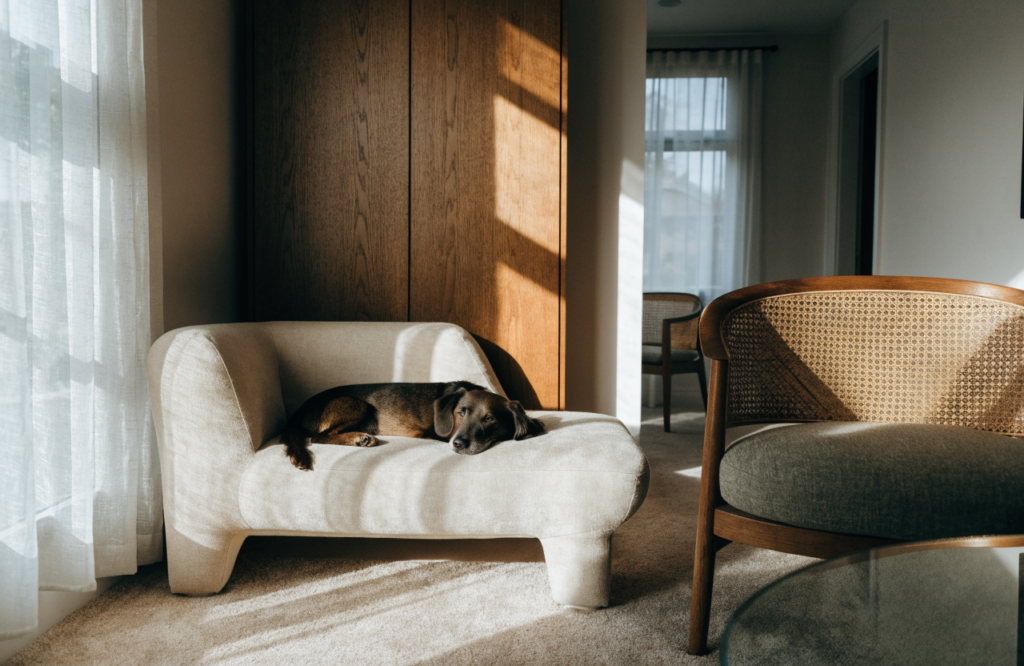
Place the bed where the dog already rests, not where the styling looks best in a photo. A sofa bed against a wall uses the backrest and keeps the front open. An elevated frame needs clearance underneath so air can move; pushing it tight to a baseboard heater or a cold exterior wall cancels that. Keep it out of the main traffic line if the dog startles when people pass.
Do not put a foam furniture bed on a covered porch unless the maker rates it for wet use. Foam holds moisture. Mesh cots drain and dry. Indoor wood-tone frames are not automatic outdoor furniture.
If the goal is also to save the human couch, the dog bed has to be at least as easy to get onto and as supportive as the cushion they are stealing. A bed that is too small, too high, or parked in a spare room will lose that contest.
Mistakes that make furniture-style beds fail
- Buying by the outer dimension. The arms are not sleeping space.
- Treating “sofa” as a support claim. The shape can sit on egg-crate foam, memory foam, or loose fiber. Read the fill, not the silhouette.
- Choosing plush upholstery for a chewer. Furniture fabric does not stop a dog that unzips beds.
- Ignoring heat. A deep foam sofa in a sunny room is a warm bed. A mesh cot in a cold house is a cool one.
- Skipping the waterproof layer. Living-room placement means more visible stains, not fewer accidents.
- One bed for two very different dogs. A curled small dog and a sprawling large dog rarely share a furniture piece successfully. Two simpler beds usually work better than one oversized sofa.
A bed the dog refuses is not a decor piece. If they lie beside it for a week, the size, the surface, or the location is wrong. Moving it to their current spot, or laying a familiar blanket on the new cushion, is a fair test before replacing it.
Frequently asked questions
Do dogs prefer sofa-style beds? Some do, especially dogs that already sleep against the back of a human couch or curl with their head on an edge. Sprawl sleepers often ignore the arms and need a longer flat surface. Preference follows posture, not the furniture look.
Is an elevated bed better for joints than a foam sofa? They solve different problems. A taut elevated surface keeps the dog off hard floors and spreads weight evenly, which makers of raised beds cite as joint relief, and it runs cooler. It does not contour around bony points the way a thick foam mattress does. Seniors with arthritis usually need the foam; hot or destructive dogs usually do better on the frame.
Can dog bed furniture go in a crate? Only if the interior crate dimensions clear the frame or the bolsters. Many elevated beds have crate-specific sizes for that reason. A full sofa bed rarely fits a standard crate.
How often should the cover be washed? When it smells, mats, or is visibly dirty — weekly is reasonable in a home with shedding or muddy paws, less often if a waterproof liner is doing its job. Foam itself should not be soaked. Zip the cover off and wash on the cycle the maker lists.
What if the dog still sleeps on the couch? Check three things before buying a second bed: interior length versus their stretched length, step-in height versus the couch they prefer, and whether the bed is in the same room. A correct bed in the wrong room loses.