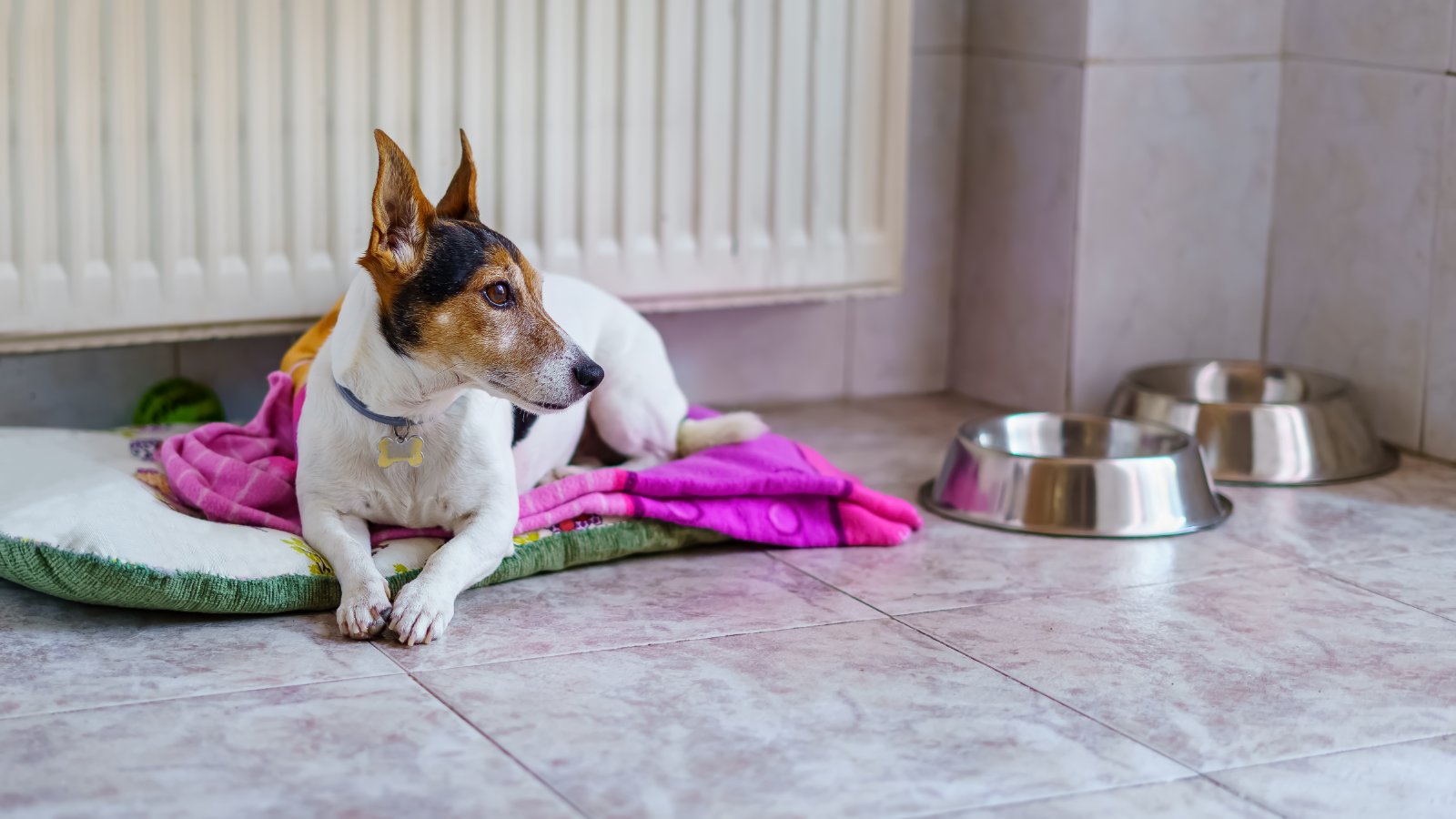

A dog bed in the kitchen works when the dog is there for company, not because the kitchen is the only quiet room in the house. Kitchens are social, often warm, and usually floored in something you can mop. They are also full of foot traffic, hot appliances, dropped food, and cleaning products. The bed only pays off if it sits outside the cooking path and can be cleaned without a fight.
Most dogs drift toward the kitchen because that is where people spend time and where food smells gather. A bed there can stop a dog from lying in the walkway or under your feet at the stove. It is a poor choice as the only sleep spot if the room stays noisy, cold at night, or busy from early morning until after dinner.
When a kitchen bed helps, and when it does not
A kitchen bed is useful for dogs who follow you room to room and settle once they have a clear spot that is theirs. Seniors who cannot jump onto furniture, and dogs who get anxious when shut out of the room you are in, often do better with a low bed at the edge of the kitchen than with a closed door.
It is a weaker fit in a few common cases:
- The kitchen is the main route between rooms, so the bed sits in constant traffic.
- You cook with open pans, hot oil, or kids running through the space.
- The dog guards food, bowls, or the bed itself when people walk past.
- Night sleep matters more than daytime company. Appliance noise, early alarms, and cold tile make poor overnight conditions.
- The only available floor is next to the oven, dishwasher, or a cleaning cupboard.
If the dog already has a quieter bed in a living room or bedroom, a second, simpler bed in the kitchen is often the better compromise. Many households end up with more than one bed because the dog moves with the people, not because one bed failed.
Where to put the bed so it stays out of the way
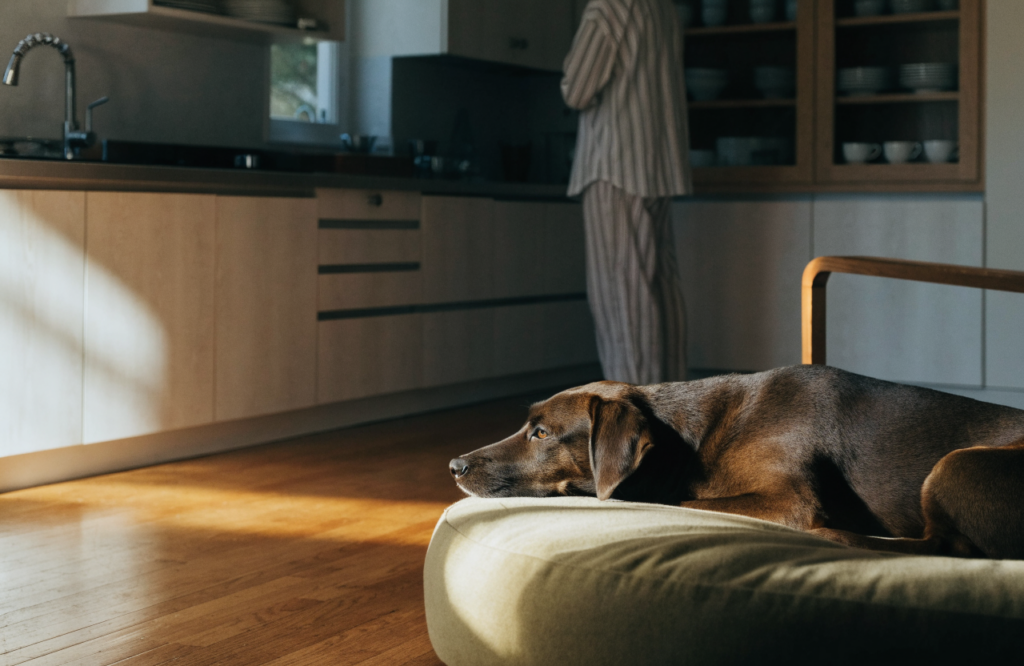
Place the bed where the dog can see you and leave the spot without crossing the stove, sink, or fridge door. Designers who plan pet nooks in kitchens usually recommend the end of a cabinet run or the far side of an island, not the prep triangle between sink, stove, and fridge.
Good spots share a few traits:
- At least a step or two away from the oven and stovetop, so heat and steam do not land on the bed.
- Out of the swing of the dishwasher, oven door, and any lower cabinet you open while cooking.
- Against a wall or island side, not in the middle of a walkway or in a doorway.
- On a flat, dry patch of floor, not over a floor vent or in a draft from an exterior door.
- Far enough from the trash, recycling, and cleaning supplies that a bored dog cannot reach them from the bed.
Under-island space can work if the dog can stand up and turn without scraping the underside, and if you are not constantly kicking the bed while you work at the counter. A corner nook at the quiet end of the room is usually safer than a spot directly beside the person cooking.
Avoid the landing in front of the back door if that is also the mud path from the yard. Wet paws and outdoor dirt end up in the bed every trip outside. If garden access is the reason you like the kitchen, put a towel or mat at the door and the bed a few feet inside.
Safety problems that are easy to miss
Heat is the clearest risk. Ovens, ranges, dishwashers, and dryers warm the air and the floor around them. A thick bed traps that heat against the dog. Move the bed, or close the dog out of the kitchen, while those appliances are running and until nearby surfaces have cooled.
Other hazards are more ordinary:
- Spills of oil, sauce, or boiling water land where the dog is lying if the bed is next to the stove.
- Dropped food teaches counter-surfing and scavenging if the reward is available from the bed.
- Cords, slow-cooker cables, and knife blocks should be out of reach from a lying position.
- A bed on slick tile can slide when the dog gets up. A non-slip bottom, or a rubber mat underneath, matters more here than on carpet.
- Low beds reduce trip risk for people; very tall bolsters in a narrow galley kitchen do the opposite.
If you use a baby gate during cooking, put it where the dog can still reach water, or move the water bowl outside the gated zone. Do not leave a dog shut in a hot kitchen with the oven on.
What kind of bed holds up in a kitchen
Kitchen floors are hard, often cool, and get wet. The bed should be easy to wash and stable under a dog who gets up and down often.
| Need | What to look for | Why it matters here |
|---|---|---|
| Spills and crumbs | Removable, machine-washable cover plus a waterproof liner around the foam | Sauce and muddy paws ruin unprotected foam |
| Hard floors | Non-slip base; orthopedic foam if the dog is older or large | Tile is cold and unforgiving on joints |
| Trip risk | Low profile, or a flat mat, in tight kitchens | Bolsters catch feet in narrow walkways |
| Heat | Breathable cover, or an elevated cot the dog can leave | Thick plush holds heat near appliances |
| Chewers | Simple mat or sturdy cot instead of stuffed bolsters | Kitchen boredom plus a soft bed is a bad mix |
A flat orthopedic pad with a washable cover is the most practical default. Elevated cots suit dogs who run hot or who already prefer bare floor, because air moves underneath. Donut beds and heavy shag collect hair and food smells and are harder to keep acceptable next to food prep.
Size the bed so the dog can lie on their side without hanging off. On a hard floor, a bed that is slightly larger is more useful than one that looks neat but forces the dog half onto the tile. If the dog ignores the bed and sleeps on the bare floor beside it, try moving the bed to that exact spot before buying a different style.
Keep the food and water bowls off the bed. A feeding station at the other end of the cabinet run, or in a pull-out, keeps sleep and meals separate and limits the mess that ends up in the cushion.
How to keep a kitchen bed reasonably clean
Wash the cover on a regular schedule, not only after an obvious accident. Kitchens add grease film and food dust that you will not always see. A waterproof liner only works if liquid never sits on the zipper; dry the bed fully before putting the cover back on, or the foam smells within a few days.
A few habits matter more than the brand of bed:
- Wipe paws when the dog comes in from outside, especially in wet weather.
- Shake the bed out and vacuum under it weekly. Crumbs collect underneath and attract ants.
- Move the bed while you mop so dirty water does not wick into the base.
- Replace the foam if it stays damp, flattens in the middle, or smells after washing. Covers do not fix a soaked core.
- Do not use the bed as a landing pad for grocery bags, sinks you are replacing, or anything else heavy. Foam does not recover from that.
If someone in the house has a weakened immune system, or a young child spends time on the kitchen floor, keep the dog bed out of the food-prep zone and wash it more often. Dog beds pick up outdoor dirt, saliva, and whatever was on the dog’s coat. That is manageable with cleaning; it is not the same as a bed kept in a low-traffic bedroom.
A simple setup that usually works
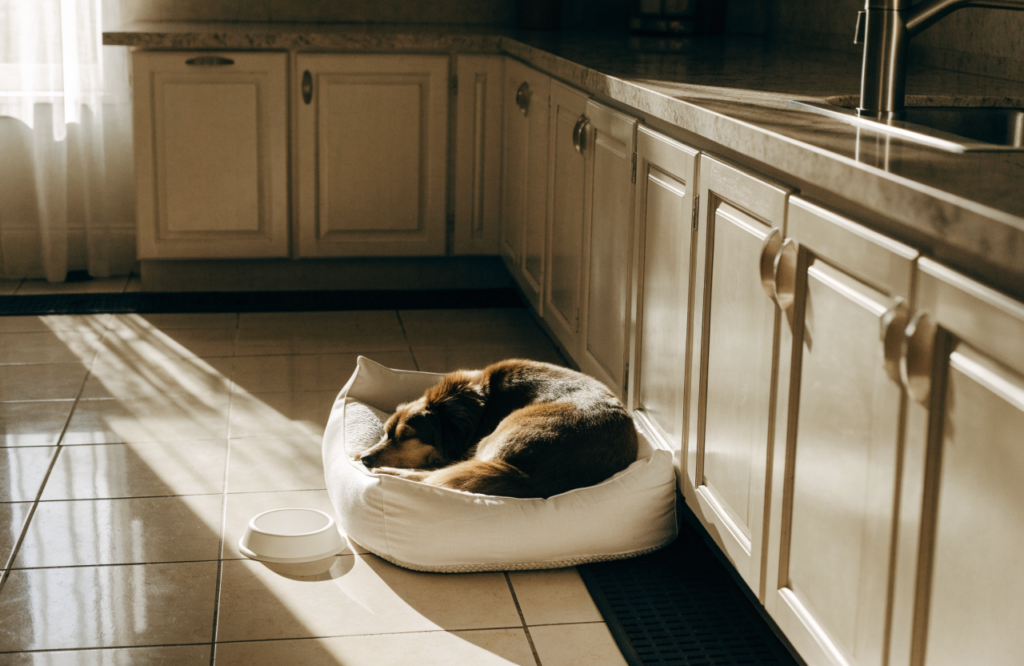
- Pick the quietest edge of the kitchen that is still in sight of the main work area, away from the oven and the main path.
- Put down a non-slip pad if the floor is tile or laminate, then the bed.
- Show the dog the spot with a familiar blanket or a treat, then leave them alone. Dragging a dog onto a new bed rarely sticks.
- During active cooking, either move the bed back or use a gate so the dog is not underfoot.
- Keep a second, quieter bed for overnight if the kitchen is cold or busy in the morning.
Watch the dog for a week. If they use the bed and people stop tripping over them, the spot is right. If they only lie there when food is out, or if they pant next to the oven, move the bed or drop the idea and use a living-room corner instead.
Frequently asked questions
Is a dog bed in the kitchen unhygienic? It is messier than a bedroom bed, not automatically unsafe. Grease, crumbs, and outdoor dirt collect faster. A washable cover, a liner, and a spot away from the counters keep it acceptable for most homes. It is a weaker idea if the dog has frequent accidents or if the bed cannot be washed.
Should the bed stay in the kitchen at night? Only if the room stays quiet, warm enough, and free of early traffic. Many dogs do better with the kitchen bed for daytime company and a separate bed in a calmer room overnight.
Can the bed go next to the dog’s food bowls? Better not. Bowls splash, and some dogs guard the feeding area. A nearby but separate station is easier to clean and less likely to turn the bed into a contested spot.
What if my dog prefers the bare kitchen floor? That is common on warm days or after exercise. Offer the bed and leave the floor available. Forcing the dog onto a thick bed next to a hot appliance is less comfortable than letting them choose cool tile away from the stove.