
A free dog bed pattern is only useful if the finished sleeping surface is larger than your dog when they actually sleep, and if the cover can come off for washing. Most free patterns online are either a simple rectangle you draft from measurements, a boxed cushion with low sides, or a bolster bed with a raised rim. The best match depends on your dog’s size, whether they curl or sprawl, and how much sewing you want to do.
Store-bought beds fail for predictable reasons: the interior is smaller than the label suggests, the cover is not removable, and cheap fill flattens under a large dog. A free pattern avoids those problems only if you size it yourself and choose the fill before you cut fabric.
Size the bed from the dog, not from the pattern label
Measure your dog lying down, not standing. From the tip of the nose to the base of the tail while stretched out is the length that matters. Across the shoulders or the widest point of the body is the width. Add 6 inches for a dog that curls tightly, and 10 to 12 inches for a dog that sprawls. That total is the minimum sleeping surface, not the outer edge of the bed.
A bolster or raised side eats into that surface. If the pattern’s finished size includes a 4-inch rim on each side, an “extra-large” bed can leave a medium sleeping area. Check the interior dimensions, or size up one step from a flat mat.
Weight is only a rough starting point:
| Dog | Typical weight | Useful sleeping surface |
|---|---|---|
| Small | Under 25 lb | About 24 × 18 in |
| Medium | 25–50 lb | About 30 × 24 to 36 × 28 in |
| Large | 50–75 lb | About 38 × 30 to 44 × 34 in |
| Giant | Over 100 lb | 48 in or longer, and deeper support |
A 20-pound French bulldog that sleeps on its side needs more width than a 20-pound terrier that curls into a ball. Crate beds are the exception: the pattern should match the crate floor, not the dog’s stretch measurement, or the bed will buckle when the door closes.
Match the pattern type to how the dog sleeps
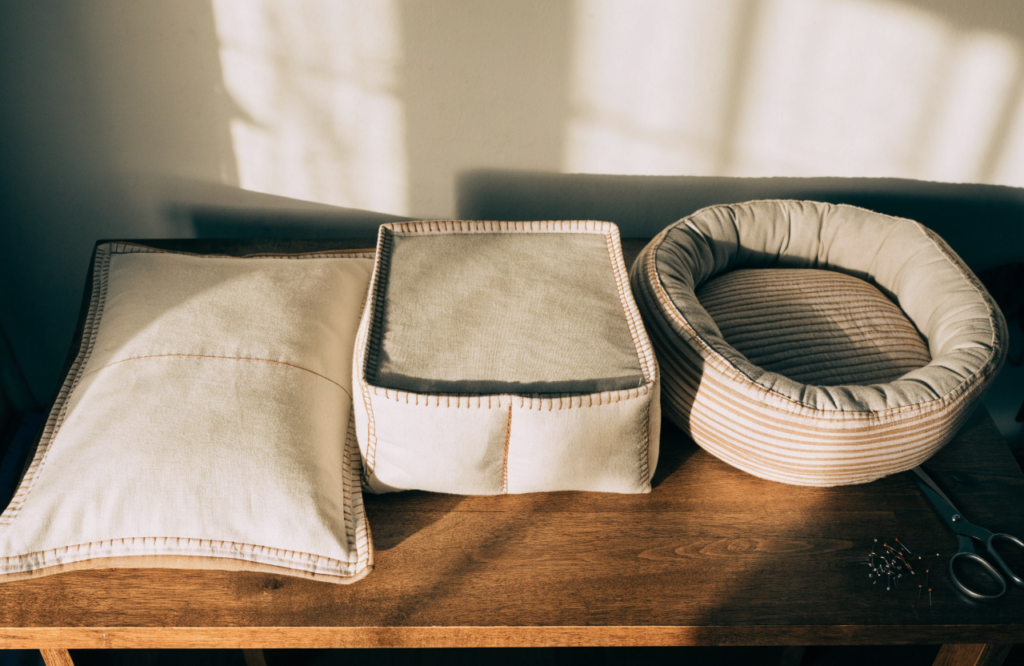
Flat mat or pillow cover. Two rectangles, a zipper or envelope opening, and a pillow or foam slab inside. Fastest option, and the one most beginners finish in an afternoon. Best for dogs that stretch out or already have a favorite pillow. LoveToKnow’s envelope-style instructions scale directly from standard pillow sizes: a standard pillow (20 × 26 in) uses a cover cut about 21 × 32 in, a queen pillow uses about 21 × 36 in, and a king pillow uses about 21 × 42 in.
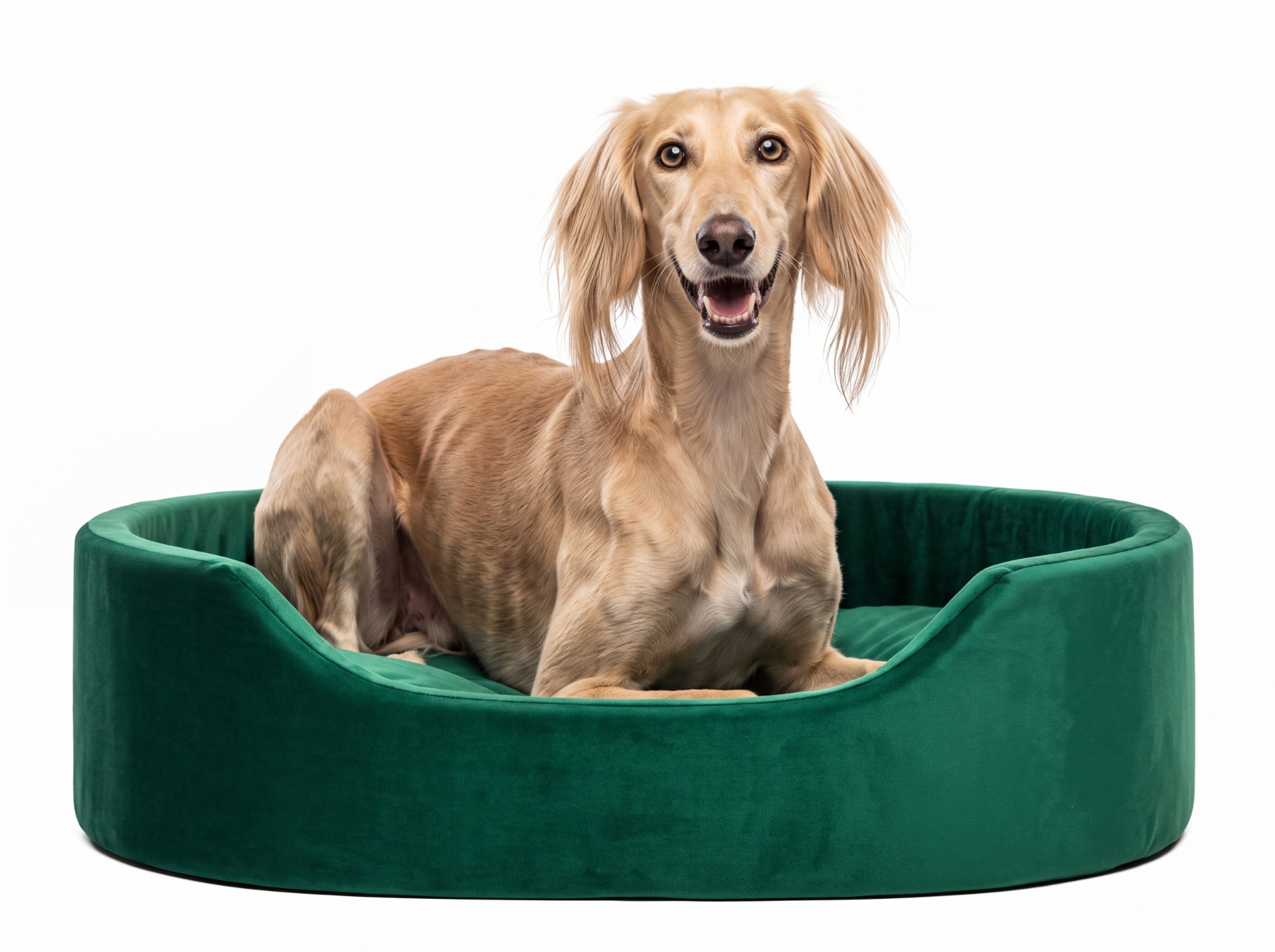
Boxed cushion with low sides. A top, a bottom, and a gusset (the side band). This is the style in the American Patchwork & Quilting free PDF: small finishes at 20 × 15 × 3 in, medium at 24 × 18 × 4 in, large at 36 × 27 × 5 in. The height keeps fill from migrating to the edges. Sweet Red Poppy’s free printable comes in five sizes meant to sit inside standard crates, which is useful if the bed has to stay put.
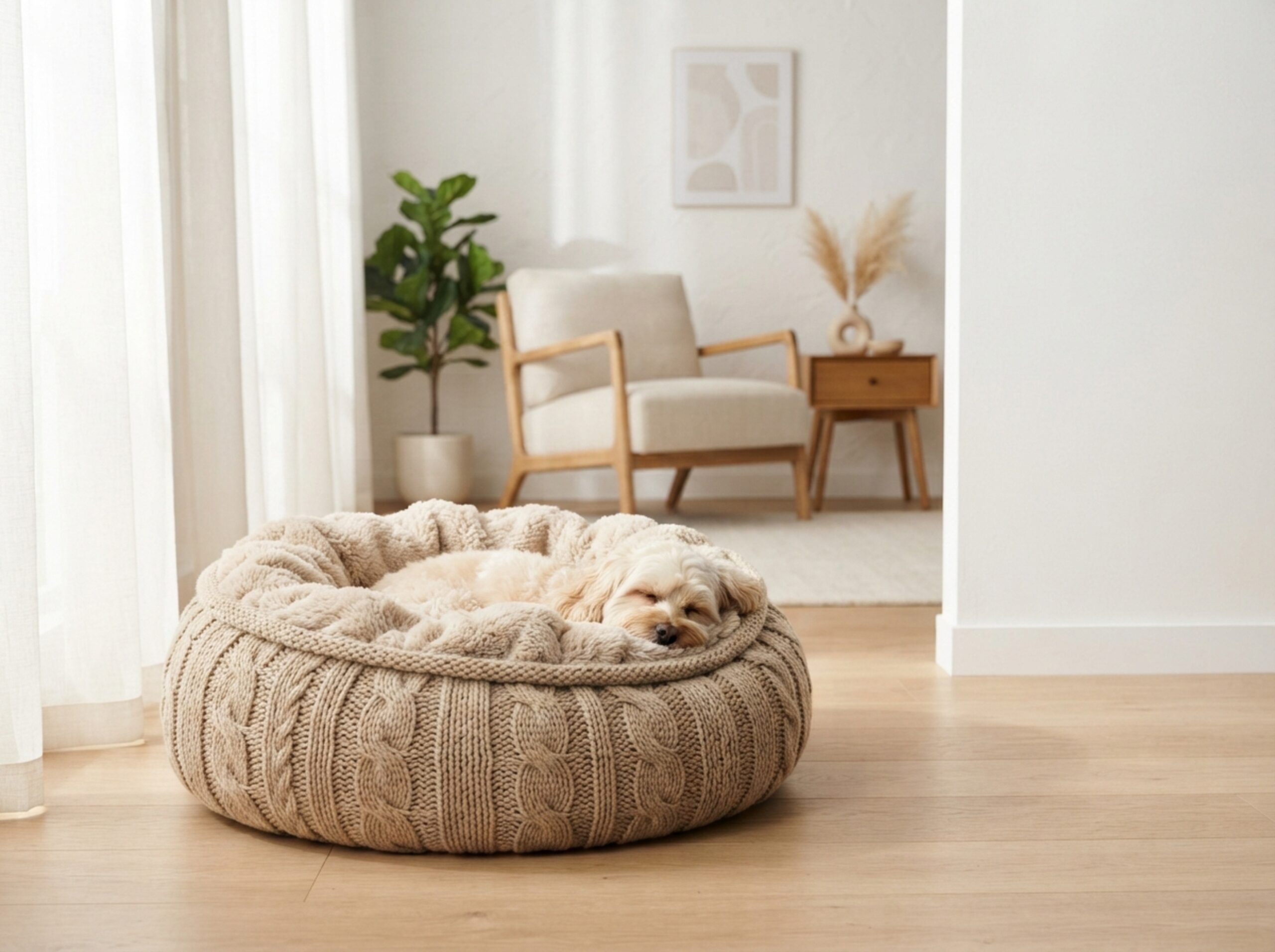
Bolster or donut. A raised rim the dog can lean against. See Kate Sew’s newsletter-gated pattern runs from extra-small (about 16 × 20 in) to extra-large (about 34 × 43 in), with side bands from 5 in to 7 in wide. Sew4Home and similar tutorials use the same idea with a stuffed tube sewn around three sides. Bolsters suit curl-up sleepers and dogs that like a headrest. They are a poor first project if you have never sewn a curve or stuffed a tube evenly.
No-pattern upcycled beds. A sweatshirt with the sleeves stuffed into a ring, or old jeans and sherpa with polyfill in the border, appear often in free roundups. They work for small dogs and cost almost nothing. They do not hold shape under a Labrador, and the stuffing is hard to wash unless you plan a separate liner.
Where the free patterns actually are
“Free” usually means one of three things: a public PDF, a tutorial you draft from written measurements, or a file unlocked after an email signup. All three can be legitimate. The signup versions are still free, but print a test page and check the 1-inch square before you cut fabric.
Reliable starting points:
- American Patchwork & Quilting publishes a free PDF for the three boxed sizes above, with cutting lists for 44/45-inch cotton and a 1/2-inch seam allowance. The medium size adds piping.
- See Kate Sew offers a five-size cushion pattern after a newsletter signup. Yardage runs from 1 yard for extra-small to 3 yards for extra-large. The instructions specify woven fabric such as canvas or quilting cotton, fused interfacing, and optional quilted batting. Fleece is called out as a poor choice for this construction because it stretches and the bed loses its shape.
- Sweet Red Poppy has a free printable PDF and a video, in five crate-oriented sizes.
- Spotlight’s flannelette dog bed is a simple project that beginners have scaled down for small dogs using charity-shop duvet covers and old fleece.
- Sewing.org still hosts an older pieced flannel bed with a bone appliqué and piping, sized around an 18 × 22 in base. Useful if you want a quilt-block top, less useful if you want a large orthopedic bed.
Roundup pages that list 10 or 20 patterns are indexes, not patterns. Open the original tutorial and confirm the file or the measurements are still there before you buy fabric. Several older links now point to Internet Archive copies.
Draft a rectangle if you do not want a printed pattern
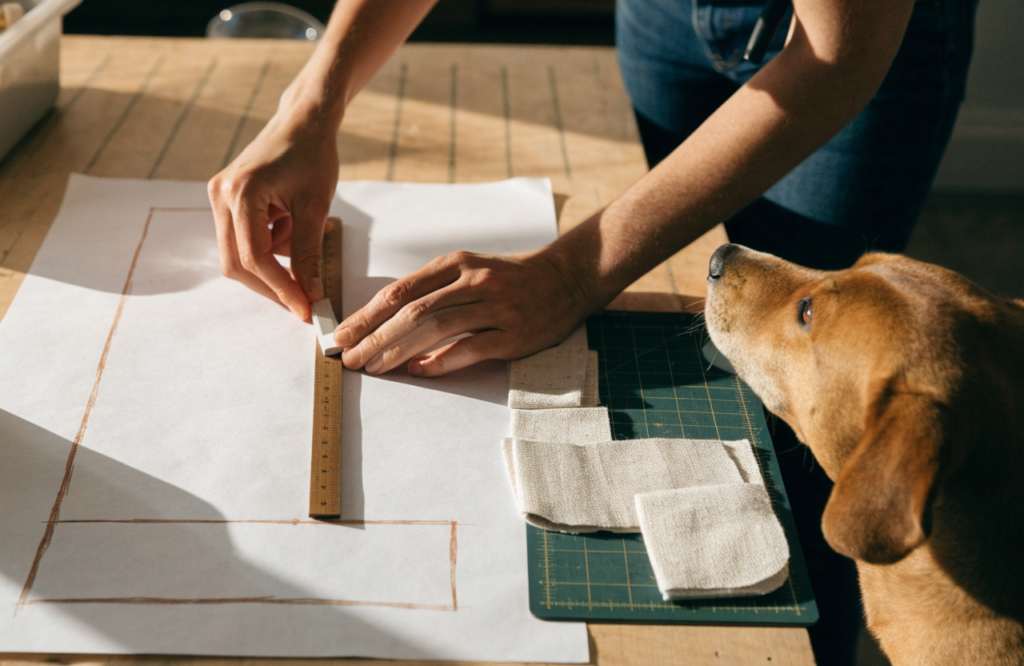
A boxed bed does not require a PDF. This is the sequence that matches the free tutorials that actually get finished.
- Decide the finished sleeping surface from the measurement above. Add 1 inch to length and width for 1/2-inch seams.
- Cut two panels that size for the top and bottom. Cut a side band whose width is the finished height plus 1 inch, and whose length is the perimeter of the panel plus 1 inch for the joining seam. A 30 × 24 in bed with 4-inch sides needs a band about 5 in wide and about 109 in long, pieced if your fabric is not long enough.
- Sew the band into a loop. Pin it to the top panel, clipping the seam allowance at the corners so the band can turn. Sew with a 1/2-inch allowance. Repeat for the bottom, leaving a gap wide enough for the insert, or install a zipper in one long side of the band before you close the box.
- Turn right side out. Insert foam or a stuffed pillow. Close the gap.
A zipper on the long side is worth the extra step. Hand-stitching the opening shut means you cannot wash the cover without picking the stitches out. Fiberfill stuffed directly into the shell also clumps and is miserable to dry.
Fabric and fill decide whether the bed lasts
Outer fabric. Canvas, denim, corduroy, or a sturdy home-decor cotton on the bottom resists floor grit and nails. Fleece, minky, or flannel on the top feels better and is what most dogs lie on. Prewash everything. Dog beds get washed often, and cotton shrinks enough to make a foam slab impossible to reinsert.
Avoid on the sleeping surface: loose trims, buttons, beads, and anything a chewer can pull off. Piping looks finished and is optional. If your dog destroys toys, skip it.
Fill. Polyester fiberfill and old pillows are fine for small dogs and for dogs that nest. They compress under a 60-pound dog within months and need fluffing. High-density foam or a mattress topper cut to size stays flatter and is the better choice for large, senior, or stiff dogs. Foam is usually spot-clean only, so it needs a waterproof liner or a zip cover. Memory foam offcuts from a human topper are a common scrap-bin solution; seal the cut edges in a muslin or old pillowcase so crumbs do not shed into the cover.
Depth is easy to underbuild. About 3 inches is enough for a small dog. Medium dogs do better at 4 inches, large dogs at 5 inches or more. A giant breed on a 2-inch fiberfill pad is sleeping on the floor with extra steps.
Mistakes that ruin an otherwise good free pattern
Printing at “fit to page.” Multi-page PDFs must print at 100 percent. The 1-inch test square on the first page is there because browser print dialogs scale by default.
Sizing to the outer measurement of a bolster. The dog lies in the well. If the well is smaller than the nose-to-tail figure, the dog will sleep beside the bed.
Fleece with no stabilizer on a structured pattern. Soft and stretchy fabric plus a shaped side band sags. Use it as the top layer, or choose a tutorial written for fleece, not a canvas one.
No removal plan for the fill. Stuffing the shell and sewing it shut is faster and makes the bed unusable after the first muddy walk.
Ignoring the crate. A bed that fits the dog and not the crate gets chewed at the corners or shoved into a ridge against the door.
One bed for two sleep styles. A sprawling young dog and a curled senior do not share a pattern well. Two simple rectangles cost less fabric than one elaborate bolster neither of them uses.
What free patterns will not do
A free sewing pattern will not replace a veterinary orthopedic bed for a dog with diagnosed joint disease. It also will not survive a determined chewer unless the outer fabric is something like canvas and the fill is a solid foam slab rather than loose polyfill. Outdoor or porch beds need a different cover, usually marine vinyl or a treated canvas, which most pet-bed tutorials do not include.
If the goal is a washable bed in the right size, a drafted rectangle with a zipper and a foam or pillow insert solves it with no download at all. Printed dog bed patterns free of charge are worth using when you want graded sizes, a bolster shape, or a crate fit you would rather not calculate.
Questions people ask after they find a pattern
Can I enlarge a small free pattern for a big dog? Yes for a simple rectangle or boxed cushion: scale the panel and lengthen the side band. Do not just photocopy a shaped bolster at a larger percentage. Curves and stuffing amounts stop matching, and the rim collapses. Redraft from the finished interior size you measured.
Is an email-gated PDF still free? Yes, if the download itself has no charge. Print the test square, and keep a copy of the file. Some of these pages later replace the pattern with a paid version.
What if I do not have a sewing machine? An envelope cover around an existing pillow can be closed by hand with a backstitch, or left as a folded overlap like a pillowcase. Bolsters and boxed sides are tedious by hand and rarely worth it.
How do I wash it? Zip cover off, wash cold, and air dry or tumble low if the fabric allows. Foam should come out first and stay out of the machine. Fiberfill left inside a closed cover takes a long time to dry and mildews if it stays damp.