
Most beds sold as a velvet dog bed are covered in polyester microvelvet, not the cotton or silk velvet used on upholstery, and that difference shows up after the first wash. The fabric is what you notice beside the sofa. The filling is what decides whether a 60-pound dog is still off the floor six months later. Short pile releases hair more easily than long faux fur, but it shows crushed nap and muddy prints, and a hot cycle flattens it. Match the cover to how the dog sleeps and sheds, then check the label’s wash temperature before the product photo.
What “velvet” means on a dog bed
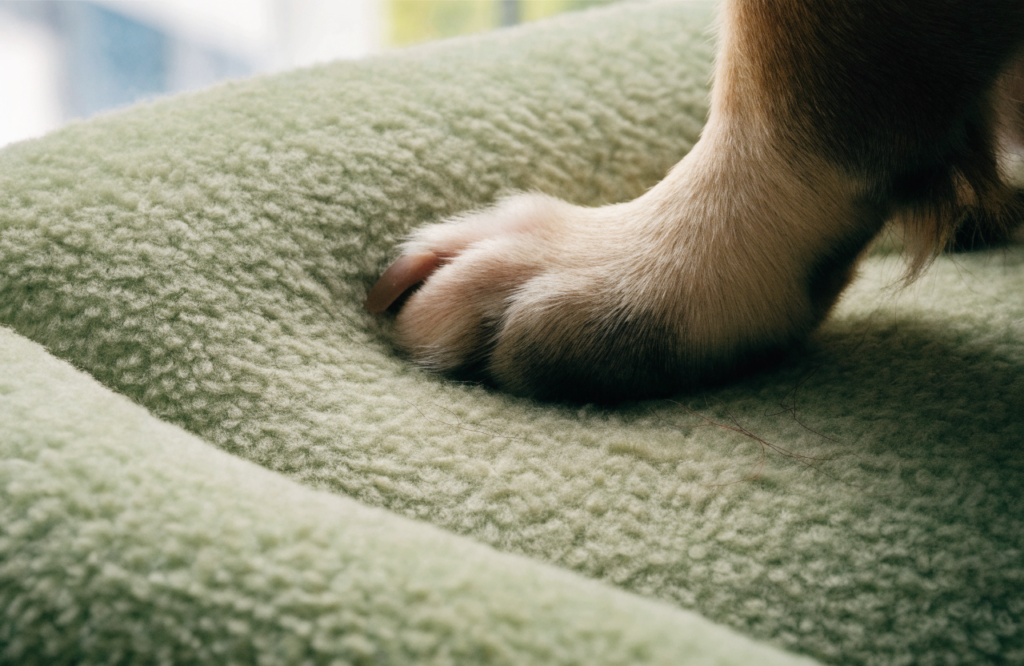
On a pet-bed label, velvet almost always means a synthetic pile fabric: polyester or a polyester blend with a short, dense nap, often called microvelvet. It is cut to look like velvet and feel smooth under a paw. It is not the same cloth as a silk-velvet jacket or a heavy cotton-velvet sofa.
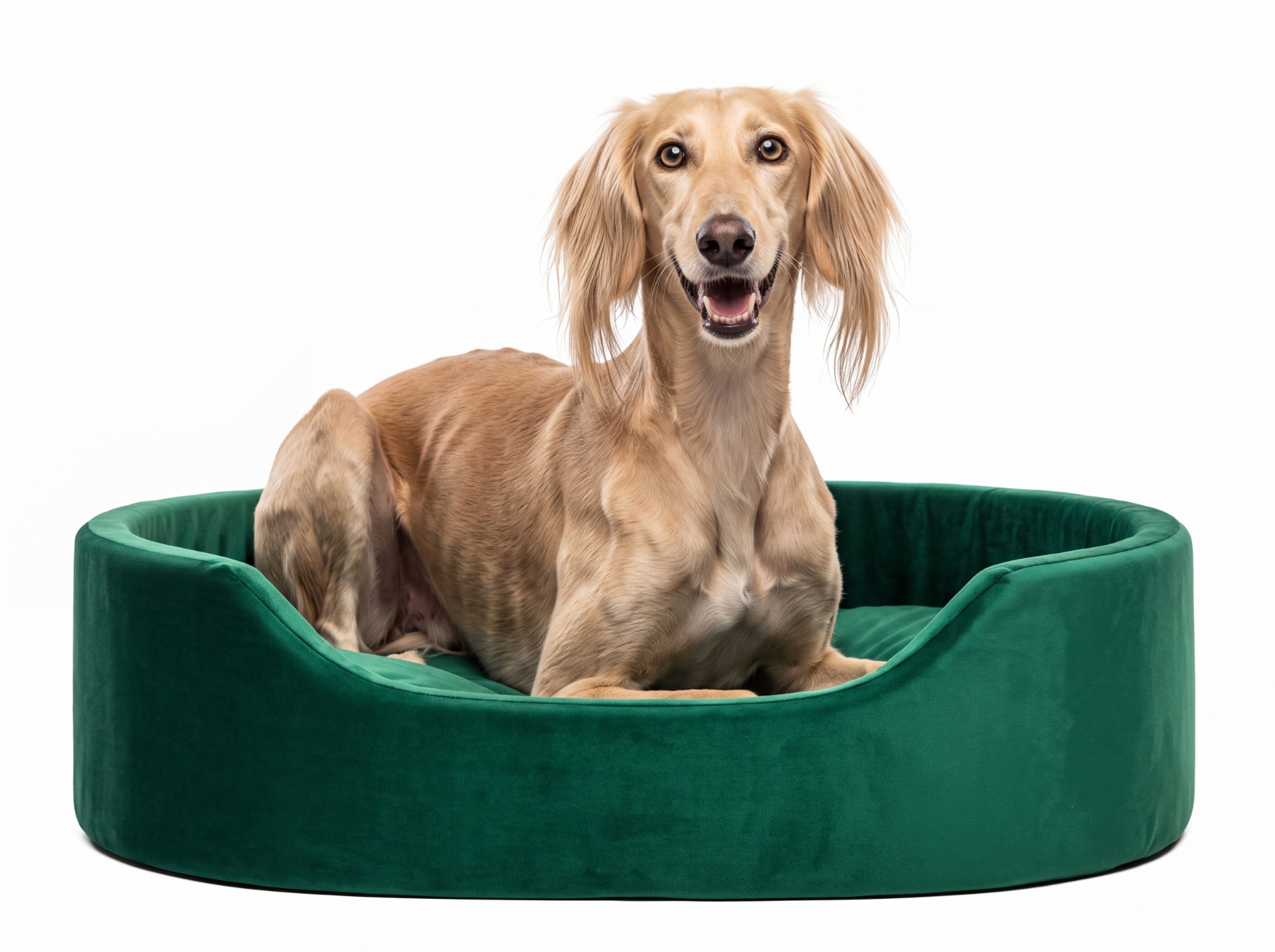
That split matters for care. A UK maker, Hindquarters, uses heavy-weight cotton velvet on its oval bolster beds and tells owners to wash the covers inside out at 40°C and air-dry them. The pile is short and brushed, which the company says lifts hair, mud, and dirt. Most mass-market “velvet” beds are polyester microvelvet instead. Polyester pile is more heat-sensitive than cotton. Garment guidance for velvet, such as Speed Queen’s laundry notes, puts a practical ceiling around 30°C on a delicate cycle with a low spin, because a fast spin presses the pile flat against the drum and leaves a shiny crush mark.
Crushed velvet is a third case. The nap is already flattened on purpose, so it hides new crush marks better than upright pile, but it can look mottled once drool and dirt sit in the pressed fibers. None of these covers is chew-proof. A tight weave resists fraying better than long faux fur, which pulls out in tufts, but nails and teeth still snag pile.
Who it suits, and who should skip it
A velvet cover earns its place when the bed lives in a room you also use. The short nap reads as upholstery, not a kennel blanket, and mid-tone colors (navy, olive, warm gray, brown) hide light dirt better than cream. Calm indoor dogs who curl or sprawl without digging are the best match. Short-coated dogs and low shedders leave less hair sitting on the surface.
Skip it, or at least do not make it the only bed, in four situations:
- Determined chewers and diggers. Soft pile is an invitation. Product warnings on bolster beds routinely say they are not for excessive chewing. A canvas or ballistic-nylon cover lasts longer if the dog treats the edge as a toy.
- Heavy shedders if you hate daily cleanup. Hair usually sits on short pile rather than burying itself the way it does in long faux fur, so a lint roller or a rubber glove lifts it. It still collects. Reviews of round velvet bolsters split: some owners say short hair brushes off, others say the fabric traps it.
- Dogs with frequent accidents. Velvet is not a moisture barrier. In Wirecutter’s dog-bed tests, updated in September 2026, fluids and fur passed through polyester covers onto the foam even when the surface wiped clean. Without a waterproof liner, the pretty cover is only the first layer.
- Dogs who overheat. Short velvet is only moderately warm, warmer than canvas and cooler than thick sherpa, but a bolster nest still holds heat. Wirecutter’s veterinarians noted that heavily coated dogs used to cold weather often dislike a thick warm cover, while thin-coated dogs may want the extra insulation.
Judge the fill before you judge the fabric
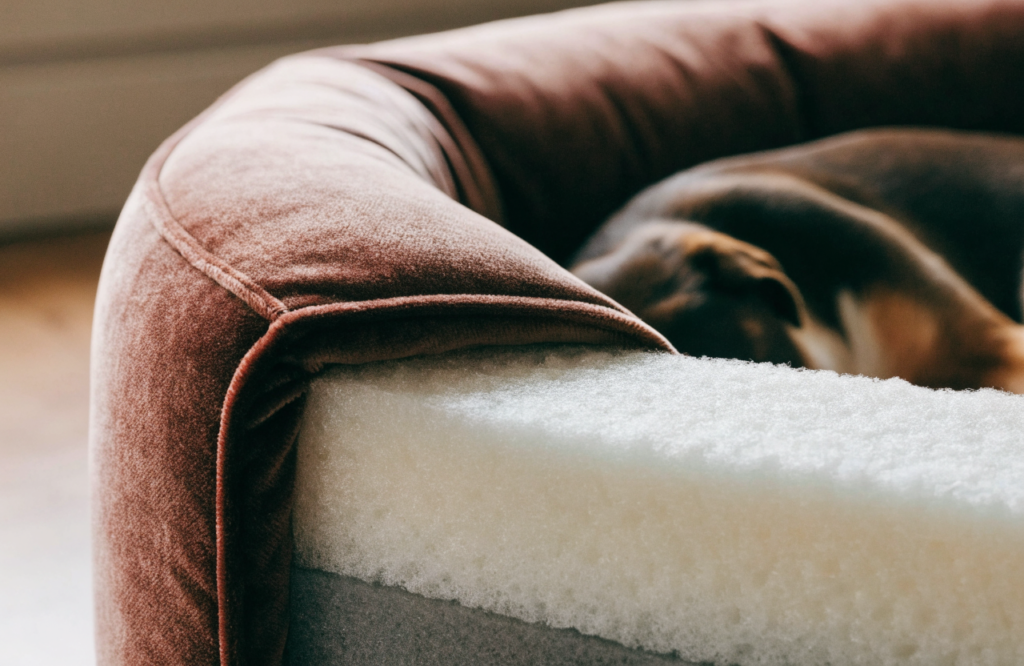
The word orthopedic on a hang tag does not mean a medical device. Dr. Leticia Fanucchi, a veterinarian Wirecutter interviewed, put it directly: there is no such thing as orthopedic bedding, specifically. What matters is whether the dog bottoms out.
For a dog with arthritis or another joint problem, the useful checks are practical. The bed should be easy to step into and out of, support the body so hips and elbows are not pressed against the floor, and avoid hard ridges at bony points. Dr. Barbro Filliquist, also quoted by Wirecutter, described those points as places with little soft tissue over bone, such as the elbow or hip, where sores can form. Dogs without joint disease are at much lower risk from pressure points.
Filling types behave differently under that test:
- Loose polyester fiber feels plush on day one and migrates. Round bolster beds often flatten in the center after repeated washing. One Chewy reviewer of a velvet round bed stopped machine-washing the insert because it would not return to shape, and switched to vacuuming and spot cleaning.
- Egg-crate foam adds airflow and some give. It is lighter than a solid slab and can feel less supportive under a heavy dog once the peaks compress.
- Solid or memory foam resists shifting. Memory foam softens with heat and body weight, then recovers slowly. Thickness has to match weight: a thin pad under a large dog is a mat, not a mattress.
A University of Pennsylvania School of Veterinary Medicine pilot study of the Big Barker mattress followed 40 dogs with osteoarthritis, each over 3 years old and over 70 pounds. It was open-label and single-arm, so it cannot prove the bed caused the change, and it tested a thick layered foam mattress, not a velvet cover. Owners reported less pain and stiffness and better joint function; collar monitors showed that half the dogs had at least a 13 percent drop in nighttime activity. The useful takeaway is narrow: support comes from the foam, not the fabric name.
Size the sleeping surface to a stretched-out dog, not a curled one. A bolster eats interior space. Hindquarters’ medium, for example, is 100 by 75 cm including a 15 cm bolster, aimed at spaniels and similar dogs, while the extra-large is 120 by 90 cm for a German shepherd or greyhound. A donut bed sold for “medium” dogs can have an inner well much smaller than the outer diameter. If the dog sleeps on its side with legs extended, measure that length and add a few inches.
Bolsters suit dogs who lean and nest. A low front or a flat mattress suits stiff seniors who struggle to step over a wall. The American Animal Hospital Association’s senior-care guidance treats increased padding and easier flooring as part of mobility care, alongside veterinary treatment, not as a substitute for it.
Hair, dirt, and heat
Short pile is the practical advantage over faux fur. Long synthetic fur mats, holds dander, and comes apart if the dog pulls at it. Microvelvet and similar short piles let most hair rest on top. Owners of Majestic Pet micro-velvet donut beds often report that fur collects, then shakes or brushes off rather than locking into the fibers. That is convenient for the floor and annoying if the bed is a light color.
The downside is visibility. Paw prints, drool rings, and crushed paths show on upright velvet because the nap changes direction. A darker color and a removable cover matter more here than on canvas, which hides abrasion and fades instead of shining. Performance velvet used on furniture is a tighter, flatter weave chosen partly because claws snag it less than loose loops, according to Wirecutter’s fabric reporting. Pet-bed microvelvet is usually a lighter version of that idea. It will not survive the same abrasion as upholstery cloth.
Heat sits in the middle. Velvet does not insulate like sherpa. A velvet exterior with a sherpa center, a common donut-bed construction, gives the dog a warmer nest and a smoother outer face. That combination is a poor fit for a thick-coated dog in a warm room.
How to wash it without crushing the pile
Cleaning schedule and fabric limits pull in opposite directions. The American Kennel Club, citing authors of a study in the Canadian Medical Association Journal and CDC guidance, notes a weekly wash as a way to cut the risk of spreading parasites or zoonotic germs. EPA guidance referenced by the AKC is a deep clean every two to three weeks to help control fleas. Velvet often cannot take the hot cycle that would do that job best.
Follow the care label, then use the stricter of the label and these steps:
- Vacuum the surface, seams, and bolster crease first. The AKC warns that hair plus water clumps and clogs a machine. A rubber glove or lint roller lifts what the vacuum misses.
- Unzip and wash only the cover unless the label says the insert is washable. Turn the cover inside out so the pile is not rubbed against the drum.
- Use a gentle cycle, mild liquid detergent, and no fabric softener. Fragrance-free detergent is the AKC’s preference, because residue can irritate skin. Cotton velvet may be labeled for 40°C. Polyester microvelvet is safer at cold or 30°C. A high spin is what flattens pile; garment advice for velvet keeps spin around 400 to 600 rpm.
- Air-dry. The AKC prefers air-drying because fiber fill clumps in a dryer, and a damp bed grows mold and mildew. Dry the cover flat or over a rack, then brush the nap in one direction once it is fully dry. Steam can lift a fresh crush mark; it will not fix a cover that was cooked on high heat.
Do not machine-wash solid foam. Spot-clean it and let it dry completely. If the dog has accidents, a waterproof liner between cover and foam is the part that keeps the bed usable. Wirecutter found that even covers which wiped clean still let dirt through. A heavily flea-infested bed is a discard, not a project: the EPA guidance cited by the AKC says to throw those out.
What to check before you pay
Price tracks construction more than the word velvet. A USA-made velvet-and-sherpa donut from the Majestic Pet line sold around $75 in smaller sizes. A made-to-order microvelvet donut from Canine Styles was listed at $150. Hindquarters’ cotton-velvet oval was $169, with a water-resistant inner casing and a repair service for chews and tears. A higher price does not guarantee denser foam. Read the fill, not the adjective.
Before ordering, confirm five things:
- A removable cover with a zipper that reaches most of the way around. Short zippers make the cover a fight to reassemble, which means it gets washed less often.
- A stated fill. “Plush” is not a material. Fiber, shredded foam, egg crate, and solid foam wear out on different clocks.
- A liner or a water-resistant inner cover if the dog is a puppy, a senior, or a drooler.
- A non-slip base on hard floors. A velvet top is slick under paws when the dog stands up to turn.
- A return window measured in weeks, not days. Some dogs ignore a new bed. Wirecutter’s buying advice is to offer it and accept a refusal rather than force the shape.
Also check the inner dimensions against the dog’s stretched length, and pick a color close to the coat if hair bothers you. Light velvet looks clean in the listing photo and marked by day three.
Which bed to buy for this dog
Choose a velvet dog bed if the dog is an indoor sleeper, does not chew the edges, and you want the bed to sit in a living room without looking like equipment. Get a short-pile cover in a mid or dark color, a fully removable cover, and foam thick enough that you cannot feel the floor when you press with a closed fist under the dog’s expected weight. Add a liner if accidents are likely.
Choose something else if the dog digs, chews, sheds enough to need a daily strip-down, or runs hot. Canvas or a tight microfiber cover will be easier to live with, and the same foam rules still apply. A velvet throw on a tougher bed is a reasonable compromise when you want the look without betting the whole cover on it.
Questions people ask before buying
Does a velvet dog bed attract hair?
Short pile collects hair on the surface more than it embeds it. That is easier than faux fur, which tangles shed coat into the fibers, and worse than leather or tight canvas, where hair wipes off in one pass. Darker colors and a quick vacuum between washes keep it tolerable. Long, fine undercoat still clings more than short, stiff hair.
Can you machine-wash a velvet dog bed?
Usually the cover, not the whole bed. Wash inside out on a gentle cycle at the temperature on the label, skip softener, and air-dry. Hot water and a fast spin crush polyester pile and can shrink cotton velvet. Fiber inserts often come out lumpy; foam should stay out of the machine unless the maker says otherwise.
Is velvet better than faux fur?
For cleaning and chewing risk, short velvet is the better cover. Hair stays on top, and the weave does not pull out in tufts as easily. Faux fur wins on warmth and on the nest feeling some dogs seek. It mats after washing and holds dander. Neither replaces a supportive fill.
Is a velvet bed a good choice for a senior dog?
Only if the base supports weight and the dog can get in. A low entrance, a non-slip bottom, and enough foam to prevent bottoming out matter more than the nap. Increased padding is one environmental change in senior care, not a treatment. Stiffness that does not ease after rest needs a veterinary check, whatever the bed is called.