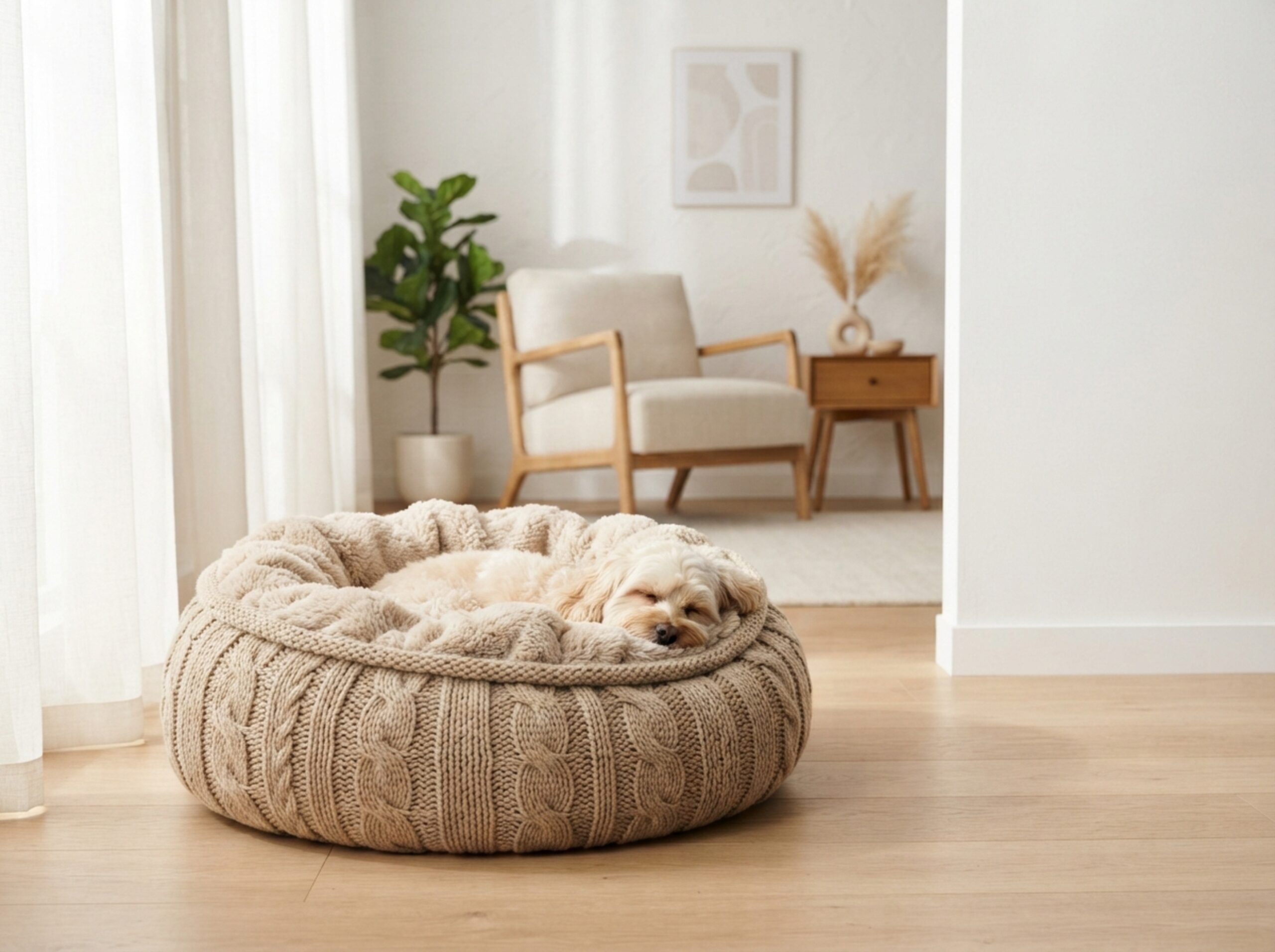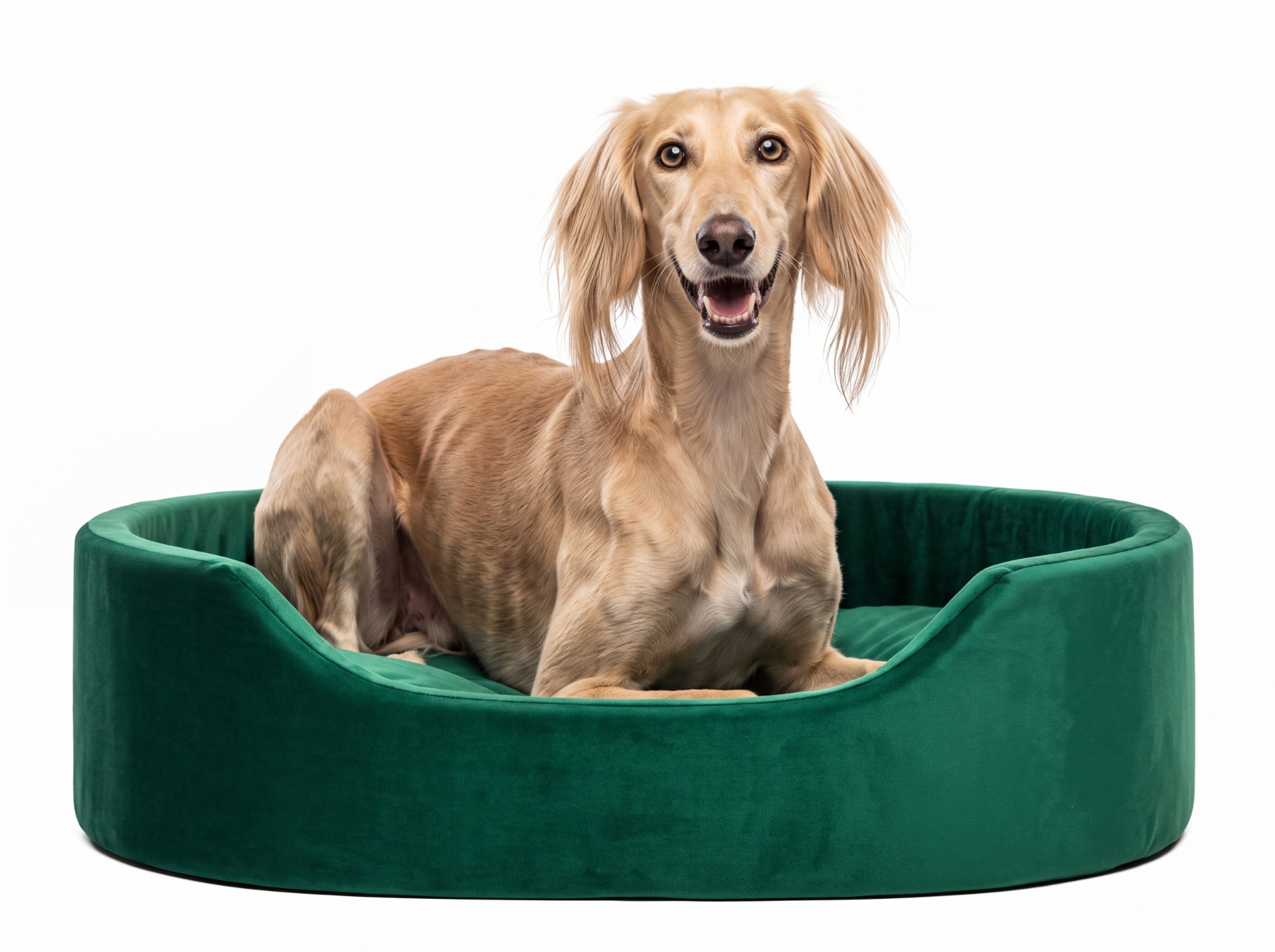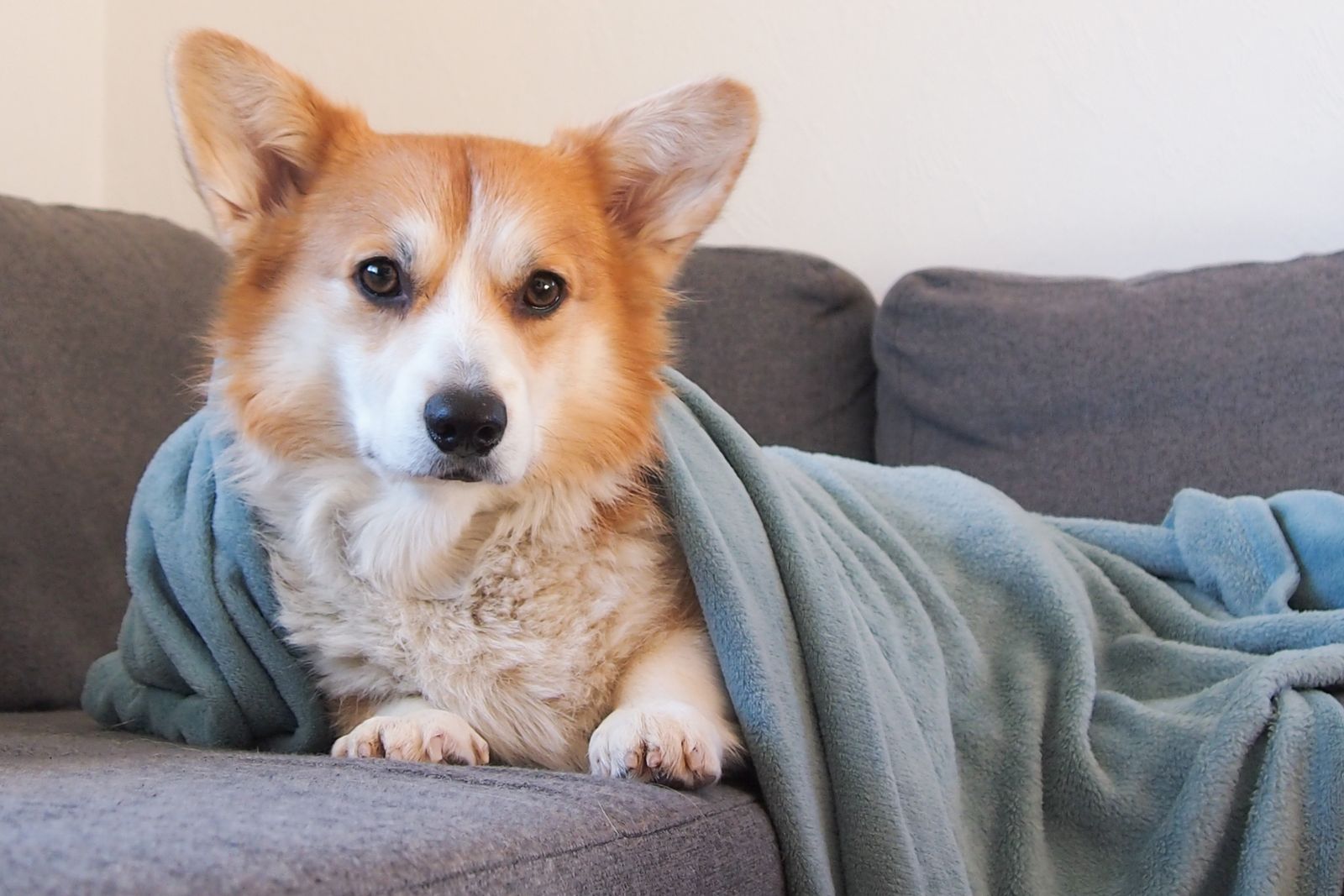

A fleece dog bed is a soft, warm sleep surface, usually polyester fleece or sherpa over a cushion or foam core. It suits dogs that get cold, curl up, or like a plush feel. It is a poor default if your dog runs hot, sheds heavily, drools a lot, or still has accidents, because the pile holds heat, hair, and moisture against the body.
The cover is only half the product. Softness comes from the fleece. Support, odor control, and how long the bed lasts come from the fill, the zipper, and whether moisture can reach the core.
What “fleece” means on a dog bed
Most beds sold as fleece are made from polar fleece or sherpa, both usually polyester. Polar fleece is a knitted, brushed fabric that feels light and warm. Sherpa is a denser, bumpy pile meant to feel more like sheepskin. Product photos often use the words interchangeably.
Fleece is not the same as the stuffing. A cheap “fleece dog bed” may be a thin cover over polyester fiberfill that compresses within weeks. A better one uses the same soft surface over a foam slab or a thick, stable cushion, with a cover that comes off.
Veterinary bedding, sometimes called vet bed, is a different construction. The pile is designed to let liquid pass through to a waterproof backing so the top stays drier. Ordinary fleece does the opposite: it absorbs drool, damp coats, and accidents and holds them near the dog. That difference matters more than the marketing word “plush.”
When a fleece dog bed is a good fit
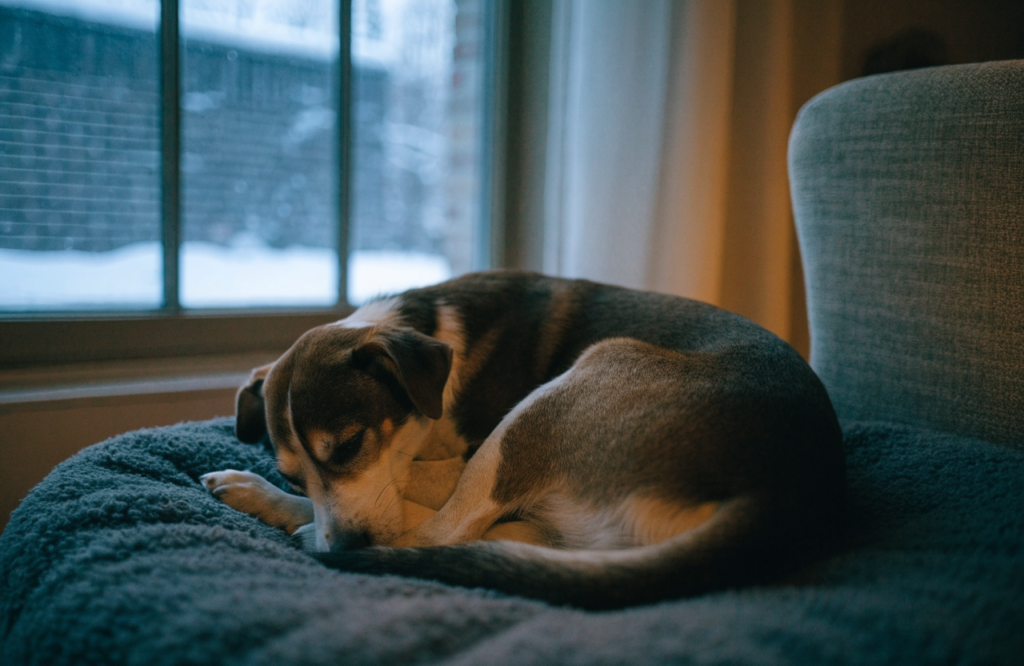
Fleece earns its place when warmth and a soft contact surface are the main need.
It tends to work well for short-coated dogs, small breeds, seniors who chill easily, and dogs that curl against a bolster. A fleece crate pad or a bolstered cuddler is also a reasonable everyday bed in a cool room, as long as the cover can be washed.
Skip a thick fleece surface, or use it only in winter, if the dog has a heavy double coat, pants after walks, or already abandons soft beds for tile. Fleece and solid memory foam both hold heat. Stacking a plush cover on a solid foam slab makes that worse. Dogs that migrate to the floor at night are often too warm, not “stubborn.”
Also skip unlined fleece if the dog is a puppy in house training, a senior with incontinence, or a heavy drooler. Without a waterproof barrier between the cover and the fill, one soaked night can ruin the core. Water-resistant and waterproof are not the same claim. Only a liner that actually blocks liquid protects the foam or stuffing.
Heavy chewers are a separate problem. Fleece and sherpa tear easily, and loose threads are a swallowing risk. A chew-resistant canvas or ballistic nylon shell is the safer surface, with a fleece blanket used only when you are watching.
How to choose one that will still be used in three months
Start with how the dog sleeps, then check construction.
Match the shape to the sleep style. Curlers and anxious dogs usually prefer a donut or a bolstered bed they can lean into. Sprawlers need a flat rectangle long enough to stretch. A bolster bed that is only big enough for a curl will sit empty if the dog likes to lie on its side with legs extended. Measure from nose to the base of the tail while the dog is stretched out, then add roughly 6 to 12 inches (about 15 to 30 cm). When you are between sizes, size up for a sprawler. For a crate, measure the interior and choose a pad about 1 to 2 inches smaller so edges are not sticking up to be chewed.
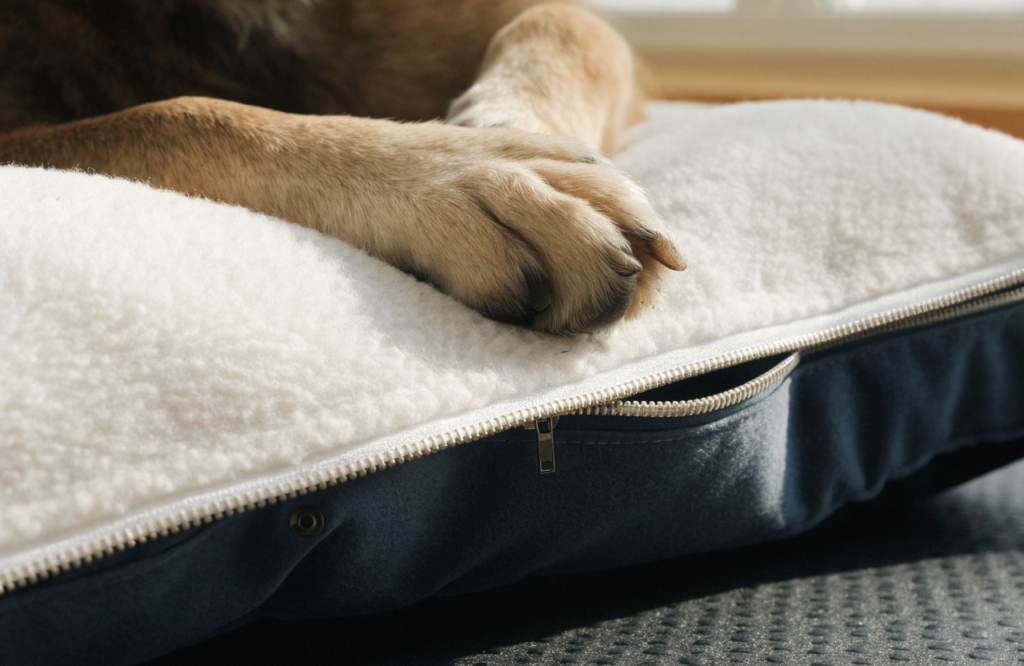
Treat the cover as a maintenance part, not a luxury. The zipper should run most of the way around so the cover actually comes off. A hidden or partial zip that you cannot open is how beds become odor traps. Look for a washable cover plus a separate waterproof liner around the foam or fill. If the listing only says the cover is “easy to spot clean,” assume accidents will reach the inside.
Judge support by what is underneath, not by the word orthopedic. Orthopedic is a marketing claim, not a regulated standard. Press the center hard. If you feel the floor, a large or senior dog will too. Fiberfill and loose shredded fill feel soft on day one and shift or flatten. A solid foam slab gives more even support but holds more heat. Shredded foam is usually cooler and more nestable, with less consistent support. For a young, healthy small dog, a simple cushion is often enough. For a heavy dog or one with joint pain, fleece should be the top layer on a thick, dense foam core, not the whole bed.
Check the edges. Reinforced seams, a non-slip bottom, and no loose threads matter more than a novelty print. A raised front edge looks cozy and makes it harder for a stiff senior to step in. An open front or a low bolster is easier for dogs with mobility trouble.
| Priority | Better choice | Why |
|---|---|---|
| Warmth for a short-coated dog | Fleece or sherpa cover, bolster optional | Holds body heat at the surface |
| Joint support | Fleece cover over thick solid or layered foam | Softness does not replace a core that will not bottom out |
| Accidents or heavy drool | Waterproof liner, or vet bedding instead of plain fleece | Plain fleece keeps moisture against the coat |
| Heavy shedding | Smoother woven cover, fleece only as a washable topper | Pile traps hair deep in the fibers |
| Hot sleeper or thick coat | Cooling mat, elevated mesh bed, or a thin cover | Fleece and solid foam both retain heat |
| Chewing | Canvas or ballistic nylon, supervised fleece blanket only | Fleece shreds and leaves threads |
How to wash it without flattening the pile
Follow the care label first. If the label is missing, treat polyester fleece as heat-sensitive.
Remove hair with a rubber brush or a damp hand before it goes in the machine. Wash the cover alone on cold or cool water, gentle cycle, with a mild unscented liquid detergent. Skip bleach, powder that does not dissolve, and fabric softener. Softener coats the fibers, reduces breathability, and can hold odor. An extra rinse helps if your dog is sensitive to residue. Some dogs avoid a freshly washed bed because of leftover fragrance, not because the bed is “wrong.”
Dry on low or no heat, or air-dry flat. High heat can melt polyester fibers, leave shiny spots, and permanently flatten the pile. Pull the cover out promptly. If the fill is removable and the label allows washing, dry it completely before it goes back in the cover. Damp stuffing is the usual reason a bed smells again two days later.
Do not put solid foam in the washer. Spot-clean it and let it air out. If odor has already soaked into the foam, washing the cover will not fix it. Replace the insert.
Enzyme cleaner, left to sit before the wash, is the practical fix for urine. Ordinary detergent does not break down the crystals that keep a bed smelling after it looks clean. Keep a second cover or a spare pad so the dog is not moved to the bare floor while one piece dries.
Problems that show up after the first month
The dog ignores the bed. It is often too small, too warm, or newly scented. Offer it in the place the dog already sleeps, without forcing the issue. In warm weather, flip to a smoother side if the bed is reversible, or switch to a lighter pad.
The pile mats or pills. Friction from washing, rough fabrics in the same load, and body weight do this. Wash inside out on gentle, avoid high heat, and use a fabric shaver on pills. Matting cannot be fully reversed.
Hair will not come out. Looped and high-pile surfaces grab fur. A fleece topper you can wash weekly is easier to live with than a one-piece bed you cannot open.
The bed smells after washing. Separate cover and fill. If only the core smells, moisture reached it. That is a liner problem, or a reason to replace the insert, not a reason to wash hotter.
Stuffing clumps. Fiberfill shifts in the wash and in use. Redistribute it by hand while damp, then dry fully. If it keeps collapsing under the dog’s weight, the bed was never supportive enough.
Questions people ask before buying
Is a fleece dog bed warm enough for winter? For most indoor dogs in a heated home, yes. A bolstered fleece bed holds more warmth than a flat pad because the sides block drafts. In a very cold room, a sherpa surface or a double layer is warmer than thin polar fleece. It is still not a substitute for a proper ambient temperature for a short-coated or tiny dog.
Can fleece go in the dryer? Only on low or air fluff, and only if the label agrees. High heat is what ruins the texture. Air-drying takes longer and is gentler.
Is fleece safe for puppies? The fabric itself is a common pet textile, but supervision matters. Puppies chew. Loose threads and pulled fill are the risk. A puppy bed also needs a waterproof liner, because plain fleece will hold accidents against the skin.
Fleece bed or orthopedic bed? They solve different problems. Fleece is the surface. Orthopedic support is the core. A senior dog can have both: a washable fleece cover over a thick foam mattress with a liner. A fleece-only cushion is fine for a healthy small dog and inadequate for a heavy dog that sinks to the floor.
How often should it be washed? A daily-use cover is typically washed about once a week, sooner after mud, drool, or an accident. Hair and skin oils build up in the pile even when the bed looks acceptable. A spare cover makes that schedule realistic.