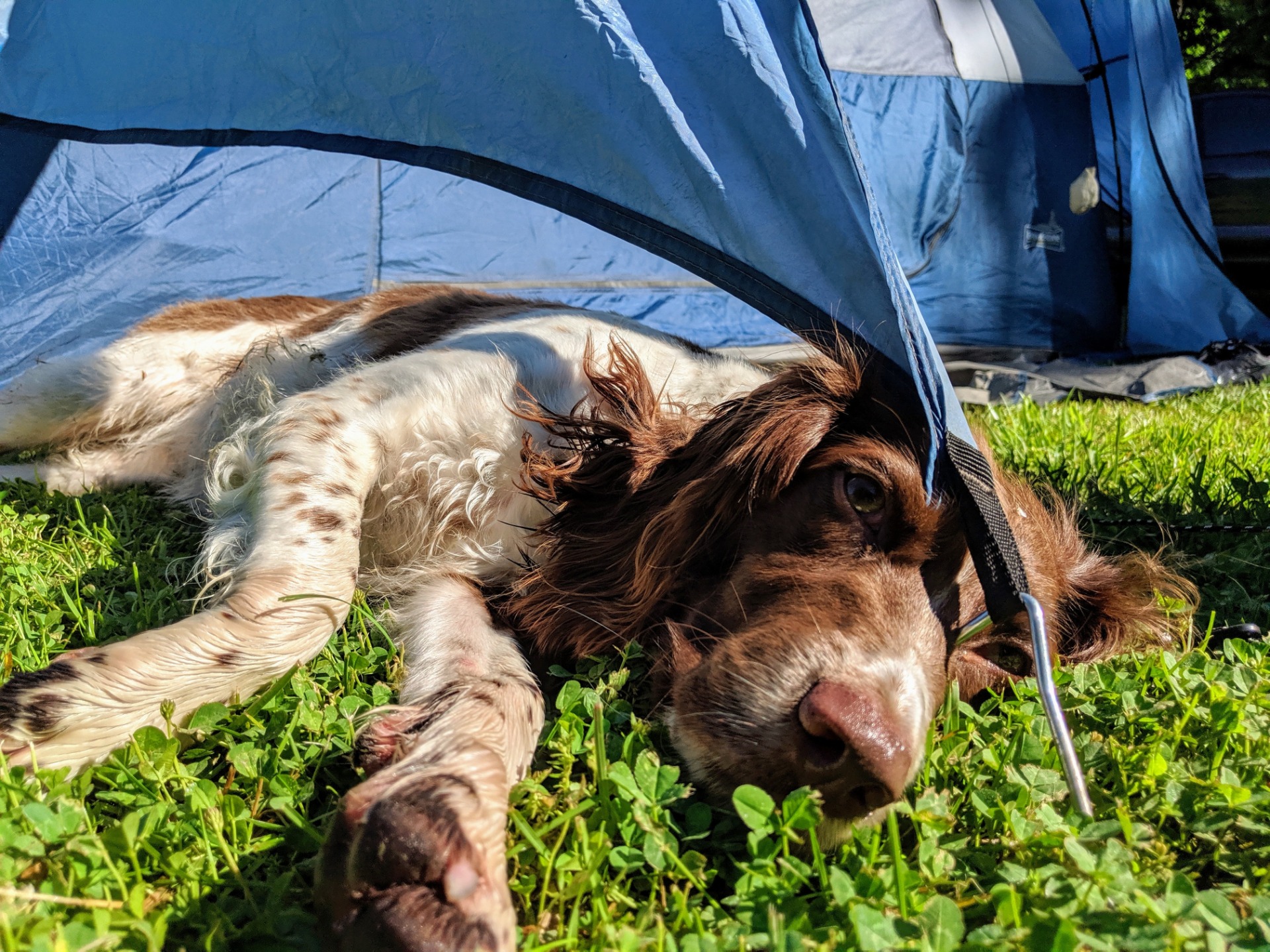
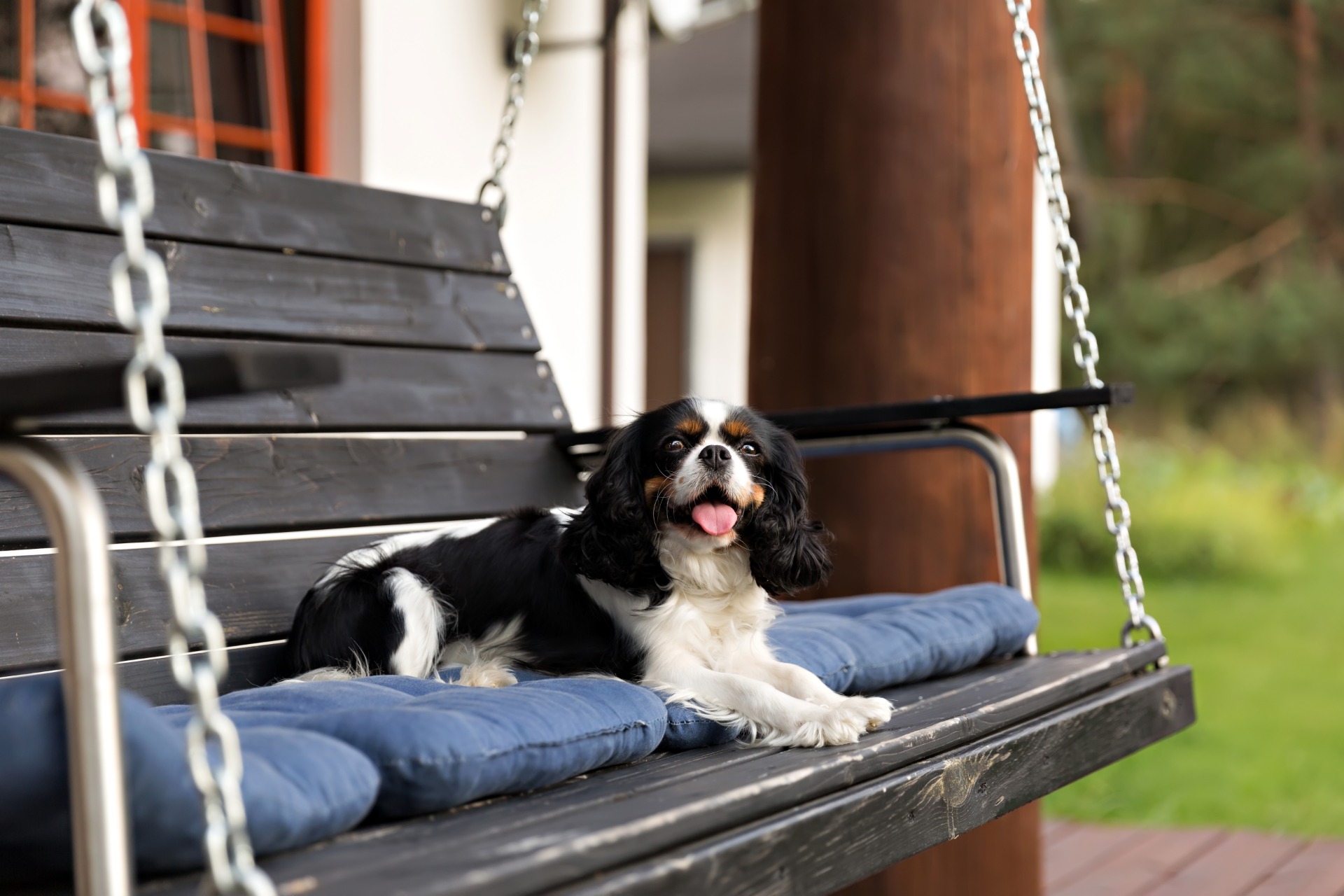
A dog travel bed is a portable sleeping surface chosen for a specific trip, not a smaller version of the bed at home. The useful choice depends on where the dog will lie, how far the bed has to be carried, and whether the ground or seat underneath is hard, cold, or damp. A fold-flat pad solves a hotel floor and a backpack. A thicker foam mattress solves car camping. A raised cot solves hot or wet ground. None of them replaces a proper car restraint.
Match the bed to the trip first
Product labels such as “travel,” “outdoor,” and “camping” describe a category, not a job. The same dog can need three different beds across a year.
| Trip | What actually matters | What usually fails |
|---|---|---|
| Hotel, rental, or friend’s house | Packs small, has a familiar cover, does not slide on hard floors | A bulky home bed that will not fit in the car |
| Day drives and seat time | Stays put, wipes clean, does not block the seatbelt | A loose cushion that slides under braking |
| Car camping or a van | Cushion depth, a stable base, a cover you can wash | Buying by breed name instead of usable sleep area |
| Tent on damp or cold ground | A dry underside and some insulation from the ground | A plush bolster bed that soaks up dew |
| Hiking where you carry the bed | Published weight and packed size | Calling a bed packable because it has a stuff sack |
Weight only becomes the deciding factor when someone has to carry the bed. In a car, a few extra pounds of cushion are usually worth it. On a trail, they are not.
Measure the dog, then measure the space
Listed weight ranges are a weak guide. A long, lean dog and a short, stocky dog of the same weight need different footprints.
Measure nose to base of tail while the dog is in the position it actually sleeps in, then add roughly 6 inches (about 15 cm) so it can stretch without hanging off. Curled sleepers can get away with less margin. Sprawlers and dogs that sleep on their side need the full length plus width for the legs. Bolsters, zippers, and raised edges shrink the usable area, so compare the dog’s measurements with the sleeping surface inside the walls, not the outside dimensions on the box.
Then measure the place the bed has to live:
- Back-seat width, including the hump in the middle
- Cargo-floor length in front of a crate
- Tent floor space that is not already taken by sleeping pads
- The packed size, if it has to share a bag or a small trunk
A bed that is perfect at the destination and will not fit in the car never makes the trip.
The four jobs a travel bed can do
A good travel bed is easier to judge if you separate the problems it is supposed to solve. Most products only do one or two of these well.
A defined place. Dogs settle faster on a familiar surface than on a strange hotel carpet or tent floor. Bringing the cover or blanket the dog already sleeps on often matters more than extra padding.
Cushion. Hard plastic crate trays, cargo floors, and packed ground are uncomfortable for bony, older, or arthritic dogs. Thin pads take the edge off. They do not replace a deep orthopedic bed.
Insulation from the ground. A dog loses heat into cold ground or a metal floor even if the air feels mild. Closed-cell foam and a light insulating fill block that loss better than a soft fleece blanket alone.
A moisture barrier. Wet grass, a damp tent floor, and muddy paws ruin fill. A coated or waterproof base helps. A “waterproof” top that is only water-resistant will still soak through in real rain.
If the trip is warm and dry and the dog is young, a defined place may be enough. If the nights are cold, insulation matters more than plush. If the dog has joint pain and you are driving to the site, cushion is the feature worth the bulk.
Which style fits which use
Fold-flat pads
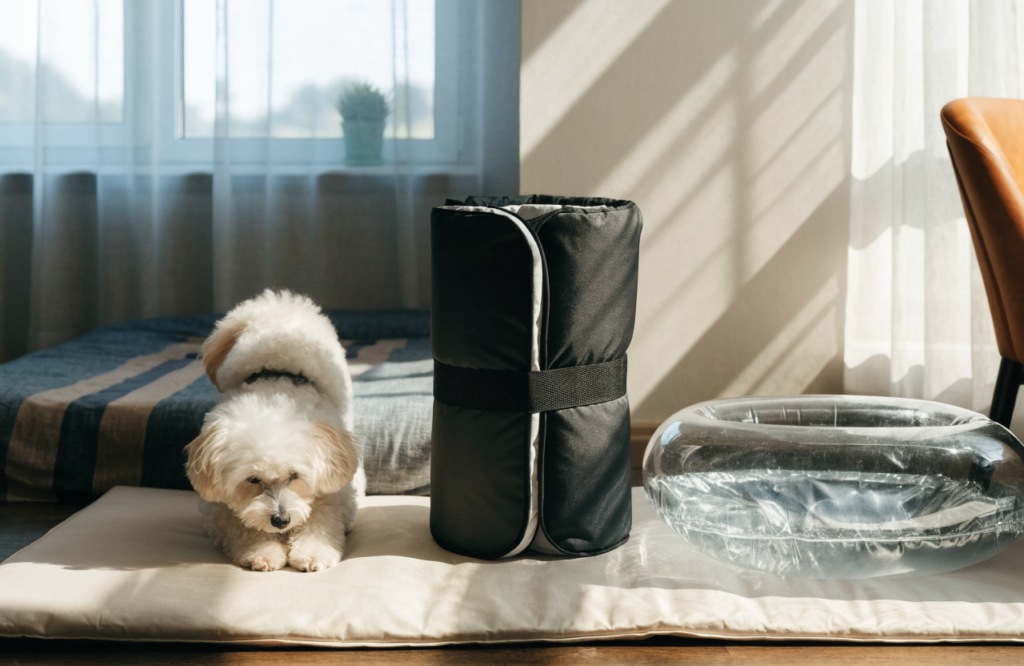
These are the default for hotels, day trips, and dogs that already sleep well on a thin surface. They roll or fold, often weigh 1 to 3 pounds, and pack into a corner of the trunk. Look for a non-slip underside and a cover that can be shaken out or washed. The limitation is support: a senior dog with hip pain will still feel the floor through a thin pad.
Foam travel mattresses
A 2- to 4-inch foam pad is the practical car-camping bed. It rolls with straps, gives elbows and hips something to rest on, and can live in a crate or on a tent floor. Memory foam feels supportive at first, but it holds heat and dries slowly if it gets wet. A water-resistant base and a removable cover matter more than the foam marketing. Do not machine-wash a memory-foam core unless the label explicitly allows it. Saturated foam can smell and mildew long after the cover looks clean.
Bolster and booster beds for the car
Raised edges give nervous dogs a place to lean and can stop a small dog from sliding sideways. They also steal sleep space and can make entry harder for a stiff dog. A booster that lifts a small dog to window height is a comfort product. In a 2015 pilot study, the Center for Pet Safety described pet travel seats as portable seats that do not offer full containment, and the seats it tested showed strap, buckle, and rotation failures. The tests used weighted simulants, not live dogs.
Treat the bed as a place to lie. Restrain the dog separately.
Elevated cots
A cot keeps the dog off hot, wet, or rocky ground and lets air move underneath. That is useful at a warm campsite or on a patio. It is a poor cold-weather bed unless you add a pad, and the frame is awkward for backpacking. Check the weight rating, the height the dog has to step onto, and whether the fabric sags enough for a heavy dog to hit the ground. Seniors and short-legged dogs often do better on a low pad than on a tall cot.
Insulated backpacking pads
Purpose-built pads such as the Ruffwear Highlands use closed-cell foam and a light synthetic fill, with a waterproof non-slip base. Ruffwear lists the medium at 0.75 lb and the large at 1.05 lb, and the pad folds accordion-style. It can be used alone or inside the matching sleeping bag. That is the right tool when you are carrying the bed. It is not a substitute for a thick mattress on a week of car camping.
A travel bed is not a car restraint
A strap that holds the bed to a headrest keeps the cushion from sliding. A short tether sewn into the bed only limits how far the dog can move. Neither is crash protection.
Independent crash testing of pet restraints is uncommon, and a collar or everyday walking harness is not designed to take crash loads. If the dog rides loose on a bed, the bed does not make that safer. For the drive, use a crash-tested harness attached as the manufacturer specifies, or a secured crate rated for the dog’s size. The Center for Pet Safety is the independent body that publishes this kind of testing; a brand’s own “crash tested” claim is not the same thing.
Also keep the bed clear of seatbelt buckles and airbag zones. In a cargo area, a pad inside a secured crate is a better setup than a loose bed on the load floor.
Materials that survive the trip
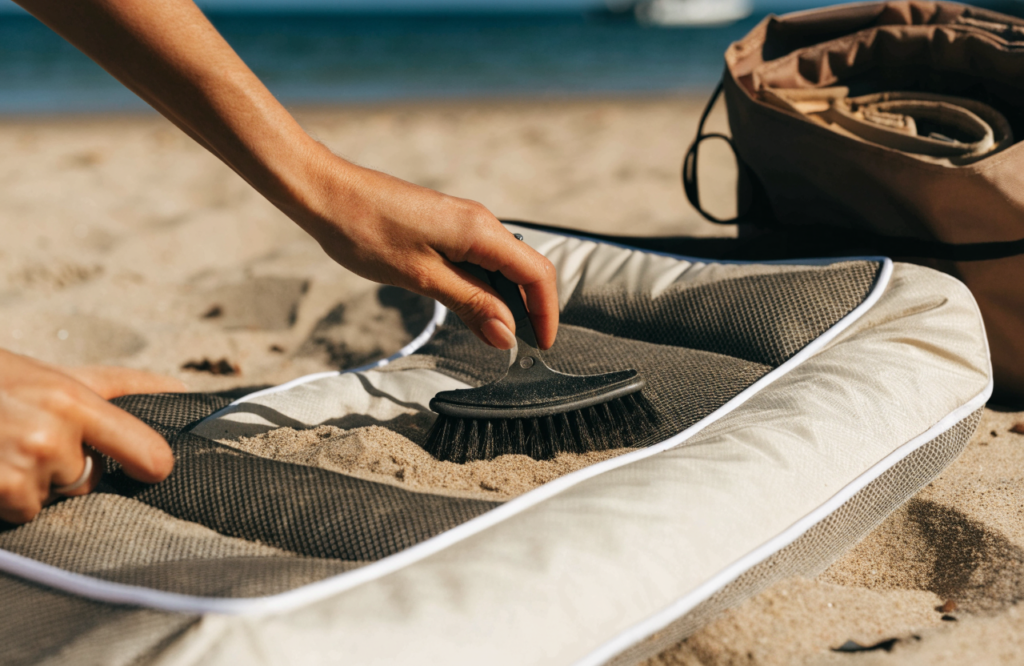
Travel beds fail from grit, moisture, and being stuffed into a bag, not only from a dog lying on them.
- A removable, machine-washable cover is the feature that decides whether you keep the bed. Mud, drool, and the occasional car-sick episode are normal travel, not exceptions.
- A coated base blocks ground moisture. It does not make the top waterproof.
- Fleece and sherpa feel familiar and warm. They also hold hair and dry slowly. A smoother woven top is easier to wipe in the car.
- Non-slip dots help on wood and tile. They do little on a leather seat during a stop, which is why the bed still needs straps if it lives on a seat.
- Chew-prone dogs should not have loose fill, long fringe, or exposed foam. A torn liner turns a bed into an ingestion hazard. Flat canvas or a crate pad with a tough cover is the safer shape.
- Heat is its own problem. Foam left in a closed car can get very hot and hold odor. Air the bed out before the dog lies on it, and never leave a dog in a parked car with the bed as if the bedding changed the temperature risk.
Shake the bed out after each trip. Dry every layer before you roll it. A damp pad packed into a stuff sack is the usual reason a travel bed starts to smell.
Sizing without the breed chart
Breed charts assume an average body and an average sleep style. Use them only as a starting point.
- A 40-pound sprawler often needs the footprint sold for a heavier dog.
- A dog that curls tightly can use a shorter bed, which is an advantage when packing.
- If the dog is between sizes, go up, then add a folded blanket if the extra space feels bare.
- For a crate, the pad should cover the floor without bunching. A bunched edge becomes something to chew.
- For a booster, measure the seat cushion as well as the dog. A bed that overhangs the seat will not stay stable.
Older dogs need a low front edge more than they need high bolsters. Puppies need a cover you can wash tomorrow, not a thick foam core that will be outgrown and soiled.
Mismatches that waste the purchase
Buying the home bed in a travel size. A donut bed is comforting in the living room and a poor fit on a narrow back seat or a wet tent floor.
Trusting “orthopedic” on a 1-inch pad. Support needs depth and a foam that does not flatten immediately. A thin travel pad can still be the right product. It is just not joint support.
Ignoring entry height. A cot or deep bolster that a young dog hops onto can be the reason an older dog sleeps on the ground beside it.
One bed for every season. A dark, thick foam bed that is pleasant in October can be too warm on summer tarmac. A mesh cot that is ideal in July does not insulate a dog from a cold groundsheet.
No plan for washing. If the cover does not come off, or the foam cannot be protected from spills, the bed has a short life on the road.
Getting the dog to use it
Put the bed out at home for a few days before the trip, with the dog’s usual blanket on top. Feed a meal or two beside it so the surface is ordinary, not a new object that appears only in the car. On the first night away, place it where the dog can see you, not in a closed room or against the far wall of the tent.
If the dog ignores it, check the basics before swapping products: too small, too high to step onto, sliding around, or parked on a slope. Some dogs prefer the floor no matter what you buy. A washable blanket they already know is then a better travel layer than a bed they will not lie on.
FAQ
Can a travel bed go in the crate? Yes, if it lies flat, does not block the door, and has no loose pieces to chew. A thin crate pad or fold-flat mattress is usually a better fit than a bolster bed.
Do I need a separate bed for the car and the tent? Often one foam pad covers both, with a towel on top for muddy days. Add a lighter pad only if you also hike with the dog and have to carry the bed.
Is memory foam worth it for travel? For car camping with a senior or heavy dog, a few inches of supportive foam is worth the bulk. For backpacking, hotels, and dogs that run hot, a thinner insulated or fold-flat pad is easier to live with.
How do I clean it on the road? Shake out sand, wipe the base, and wash the cover when you can. Keep a spare cover or a towel so the dog is not put back on a damp bed. Dry the insert fully before packing it.
What if my dog chews beds? Skip exposed foam, fringe, and soft bolsters. Use a flat, tough pad, and do not leave the dog unsupervised with it until you know it will be left alone.