

A dog canopy bed is not one product. Retail listings use the same phrase for two different designs: a raised outdoor cot with a sun roof, and an indoor cushioned bed with a fabric hood or four-poster canopy. The outdoor version is built to keep a dog off hot or damp ground and out of direct sun. The indoor version is built to give a soft, partly enclosed resting spot that looks more like furniture than camping gear. Buying the wrong one is the usual reason these beds get ignored. The useful decision is where the bed will sit, how your dog gets on and off, and whether the canopy is there for shade, for a den-like feel, or for both.
The name covers two different beds
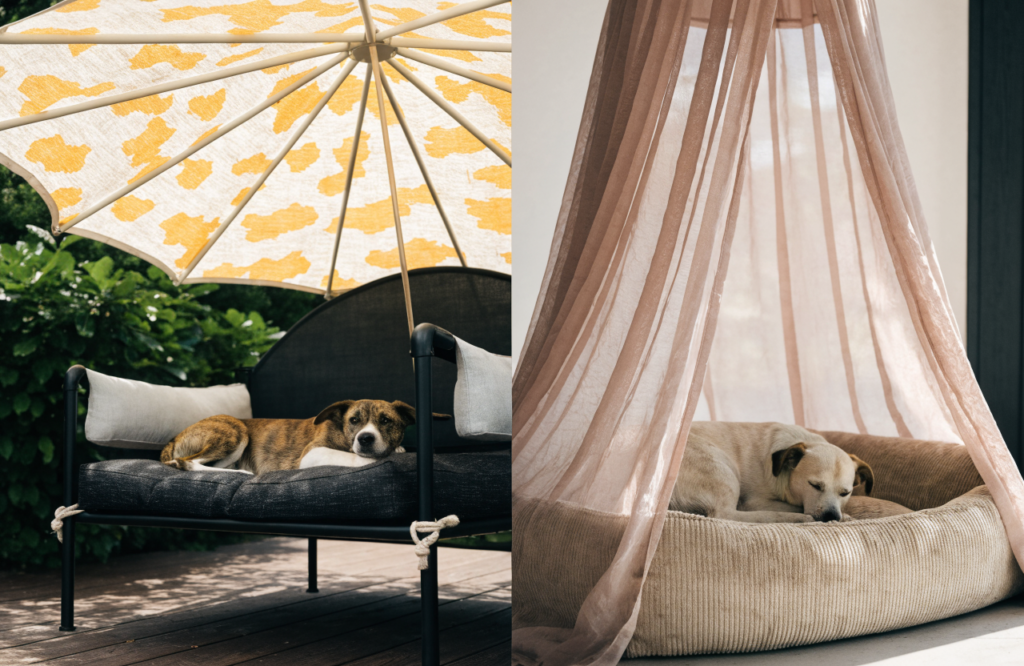
Outdoor elevated cot with a sun canopy
This is a steel or aluminum frame with a taut mesh or coated-fabric sleep surface, usually several inches off the ground, plus a removable fabric roof on poles. It is meant for patios, yards, porches, camping, and beach days. Air moves under the dog and through the mesh, so the surface stays cooler and dries faster than a foam pad left on concrete or grass. The canopy blocks direct sun and light rain. It does not seal the bed against weather.
Indoor canopy or hooded dog bed
This sits on the floor. A cushion or bolster base holds the dog, and fabric over short posts or a sewn hood creates a partial enclosure. The point is softness and a smaller visual space, not airflow or ground clearance. Some are upholstered pieces meant to stay in a living room. Others are simpler cave-style beds with a roof. They wash and wear like ordinary indoor beds, not like outdoor gear.
If a listing photo shows mesh, tubular legs, and a peaked roof, it is the outdoor type. If it shows plush fabric, bolsters, and a low canopy over a cushion, it is the indoor type. Mixing those expectations is how people end up with a bed that is either too firm for nightly indoor sleep or too soft and absorbent for a wet patio.
Match the bed to where the dog actually rests
| Situation | Better fit | Why |
|---|---|---|
| Patio, yard, or covered porch in warm weather | Outdoor elevated canopy cot | Shade plus airflow under the body; mesh does not hold rain the way foam does |
| Camping, beach, or travel | Folding outdoor cot with a removable canopy | Packs down; canopy comes off when shade is not needed |
| Indoor dog that likes a tucked, quieter spot | Indoor canopy or hooded bed | Soft base, partial cover, no step-up |
| Senior or joint-sore dog that sleeps inside | Low cushioned bed, canopy optional | Entry height and padding matter more than a roof |
| Heavy chewer left alone with the bed | Neither, unless the fabric and frame are built to be chewed | Canopy poles, ties, and mesh edges are easy targets |
| Dog that already sleeps on cool hard floors | Low elevated cot, canopy only if the spot is sunny | The raised mesh is the feature; the roof may be irrelevant |
A raised bed focuses on airflow, durability, and separation from the ground. A floor bed focuses on cushioning and warmth. Those are different jobs, and a canopy does not turn one into the other.
Size the sleep surface, not the product label
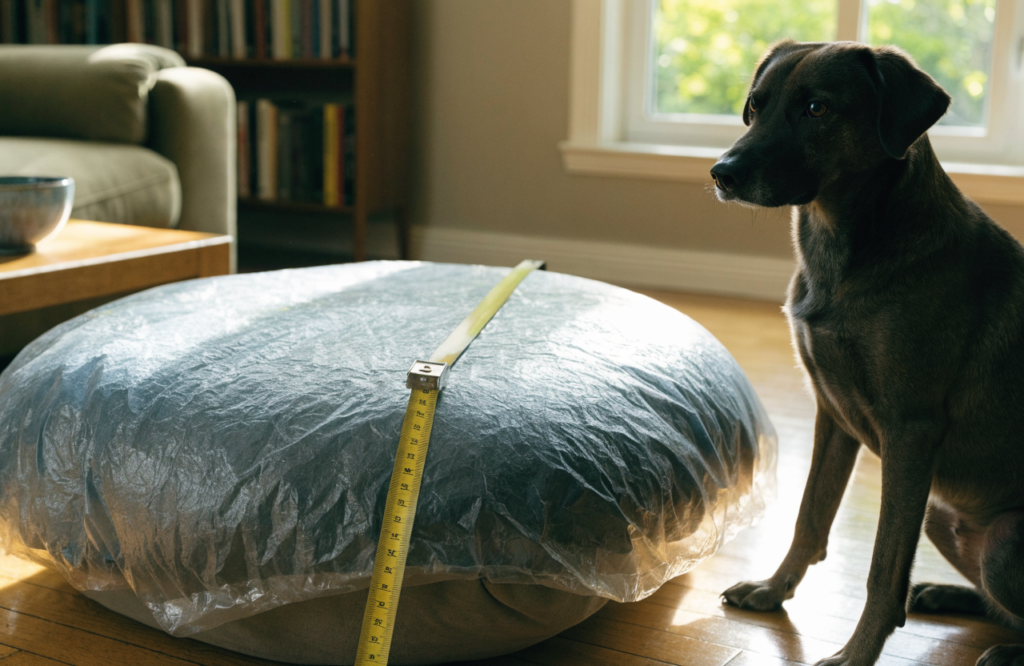
“Small,” “medium,” and “large” are not comparable across brands. One small covered bed can be barely wider than a dinner tray. Another medium cot can fit a sprawling adult dog. Use the interior resting area, the opening, and the stated weight capacity.
- Have the dog lie down the way they actually rest, not stand.
- Measure from the front of the chest to the rear point of the body, then across the widest part of the body while settled.
- Add several inches on length and width so they can turn without hips or shoulders hanging off the edge. A common working margin is about 6 to 10 inches (15 to 25 cm) beyond the resting body.
- For a covered bed, also check interior height and the door opening. The dog should be able to stand, turn, and leave without scraping the roof or squeezing through a low flap.
- Compare that usable area with the listing’s interior dimensions, not the outer frame size. Canopy poles and bolsters steal space.
Round up if the dog stretches out, shares the bed, or is still growing. A blanket can make a slightly large bed cozier. Nothing fixes a bed that is too small.
Weight capacity is a ceiling, not a fit guide. A cot rated for 100 pounds can still be too narrow for a 70-pound dog that sprawls, and a fabric panel that sags will let elbows meet the frame tubing underneath long before the weight limit is reached.
What actually matters on an outdoor canopy cot
Frame, feet, and step height
Powder-coated steel resists moisture better than bare metal for ordinary patio use. Aluminum is lighter for travel and less prone to rust, but thin tubing and weak corner joints still twist. Press each corner before first use. The frame should stay level and quiet when the dog steps on from the front and from the side.
Rubber or wide feet matter on two surfaces. On floors they reduce sliding. On grass, sand, or campsite soil, narrow legs sink, and a canopy sitting above the frame makes that tilt worse because the fabric catches wind. Wide feet or a broader stance help. On soft ground in sustained wind, the safer move is to take the canopy off or stake the bed rather than treat the roof as a shelter.
Typical cots sit roughly 6 to 8 inches off the ground. That clearance is useful against splash and hot surfaces. It is also a step. Seniors, short-legged dogs, and dogs recovering from injury may hesitate, scramble, or land awkwardly. Watch the exit, not just whether they eventually lie down. The lowest stable height that still clears the ground is usually the better choice for those dogs.
Sleep surface
Textilene, Teslin, and heavier Oxford weaves are the usual outdoor surfaces. Taut fabric spreads weight and lets air through. Open, uncoated mesh breathes well and dries fast, but it stretches sooner and offers less cushion. Coated fabrics hold tension longer and shed water better, at the cost of a slightly warmer, less open feel.
A slight give is normal. A hammock sag is not. If a palm press in the center meets the frame bars, hips and elbows will too. Replacement covers exist on better cots and are worth more than a cheap frame you cannot re-cover.
These beds are firm. Dogs that like cool floors often take to them. Dogs that need pressure relief for sore joints usually still need a cushioned bed for long sleep, with the cot as a daytime outdoor option.
Canopy fabric, poles, and real weather limits
A useful canopy covers the resting zone when the sun is high, not only at one flattering angle in the product photo. Overhang or side panels help. A narrow roof leaves half the bed in sun by early afternoon. Removable canopies are the practical design: shade in summer, open cot in milder weather or wind.
UPF is the useful rating. UPF 50 means about 1/50th of ultraviolet radiation passes through, which is strong fabric protection, not a guarantee the space under it stays cool. Solid, poorly vented roofs can trap heat. Mesh side panels or open sides keep air moving. A canopy that lists no UV resistance often fades and weakens after a season in full sun.
Fiberglass poles flex. Thin wire frames kink. Neither is a storm shelter. The roof blocks direct sun and light rain. In heavier rain, water pools on a flat pitch and can collapse a light frame. In wind, the canopy acts as a sail and transfers force into the legs. Treat it as shade gear, and bring the dog inside for heat, storms, or cold.
What actually matters on an indoor canopy bed
Opening, exit, and airflow
The dog must be able to leave without fighting a flap or backing into a bolster. Covered beds are reasonable for healthy dogs when the fabric breathes and the exit stays clear. They are a poor idea if the dog can get tangled in ties, pull the canopy down, or cannot turn around inside.
Flat-faced breeds and dogs that overheat need extra caution. A hood reduces airflow compared with an open bed. On warm days, leave the canopy off or choose a design with large open sides. Do not add a heavy blanket over a canopy to “make it darker.” That is how a breathable cover becomes a closed pocket.
Washable parts
Canopy tubing, bolsters, and cushion covers should come apart. If the cover does not unzip, the bed is harder to keep than it looks. Pet hair, dust, and drool collect on overhead fabric the same way they collect on any textile near the floor. A cool wash and low-heat dry, or the maker’s stated cycle, matters more than a soft hand-feel on day one. Water-resistant is not waterproof. Only a real liner protects foam from a soaked accident.
Den comfort is not anxiety treatment
Some dogs prefer a smaller visual space and settle faster in a bolstered or hooded bed. That is a comfort preference, useful for mild situational fuss such as a busy room. It is not evidence that the bed treats fear, separation distress, or storm panic. Published research has not shown that “calming” beds reduce clinical anxiety. If the problem is destruction, prolonged vocalizing, or panic, the bed is a resting place, not a fix.
Dogs that often do poorly on a canopy bed
- Determined chewers. Poles, Velcro, mesh binding, and canopy ties are shreddable. Swallowed fabric and broken pole ends are the risk, not just a ruined bed. A chew-resistant elevated cot with protected edges is a different product from a standard canopy cot.
- Mobility-limited dogs on tall cots. Entry and exit matter more than shade. A low orthopedic bed, sometimes with a ramp if a raised surface is still wanted, is the safer default.
- Dogs that only sleep stretched on their side in warm rooms. A full indoor canopy can feel stuffy. A bolster they can lean on, without a roof, often matches the habit better.
- Unsupervised outdoor use. A canopy cot is not a doghouse. It does not hold heat in winter, stop a determined escape, or replace supervision in high heat.
Setup and care that decide whether it lasts
Place an outdoor cot where afternoon sun actually falls, then stand where the dog will lie and check the shadow at the hottest part of the day. A bed against a wall or under a deep eave may not need a canopy at all. Leave open sides clear so air still moves. After rain, look under the frame. Elevation only helps if the ground beneath can dry instead of staying muddy.
Hose mesh after dirty use and let it dry fully before storage. Do not fold a wet canopy into a carry bag. Check pole pockets, corner joints, and feet every few weeks. Rust at a chipped coating, a leg that rocks, or a canopy that will not tension are replacement signals, not quirks to ignore.
For an indoor bed, remove the canopy tubes before washing if the instructions say so, and do not machine-wash foam. Shake overhead fabric on the same schedule as the cover. If the dog climbs the canopy or chews the ties, take the roof off and use the base alone.
Frequently asked questions
Is a dog canopy bed cooler than a normal dog bed?
The raised mesh cot usually is, because air moves under the body and the surface does not hold heat the way thick foam does. The canopy adds shade, which matters in direct sun. A solid indoor canopy does not cool a room and can feel warmer if the sides are closed.
Can it stay outside all year?
Only if the materials are rated for weather and you accept sun, moisture, and wind limits. Removable canopies help across seasons. Foam beds left on open ground soak and stay damp. Neither style replaces indoor shelter in freezing weather or dangerous heat.
Do dogs like the enclosed feel?
Some do, especially dogs that already curl in corners or crates. Others ignore the roof and use the cushion, or avoid the bed until the canopy comes off. Offer the bed open first if you can. Preference is visible in a few days. It does not need to be trained.
Are canopy beds safe for puppies?
A supervised, open, washable bed is fine. Loose ties, lightweight poles, and chewable mesh are not a good unsupervised setup during teething. Size for the puppy you will have in a few months, not only the puppy you have this week, if you want the bed to last.