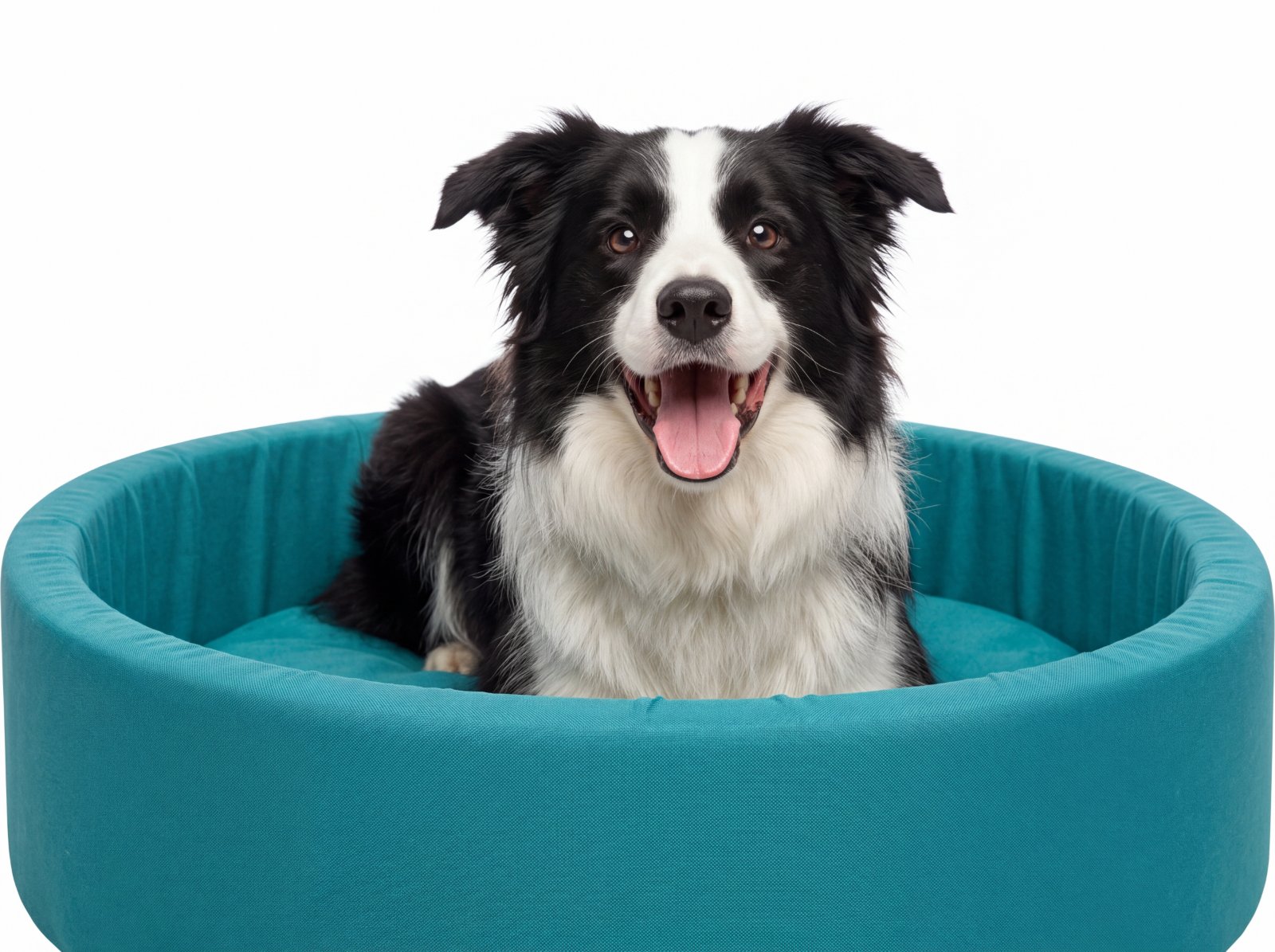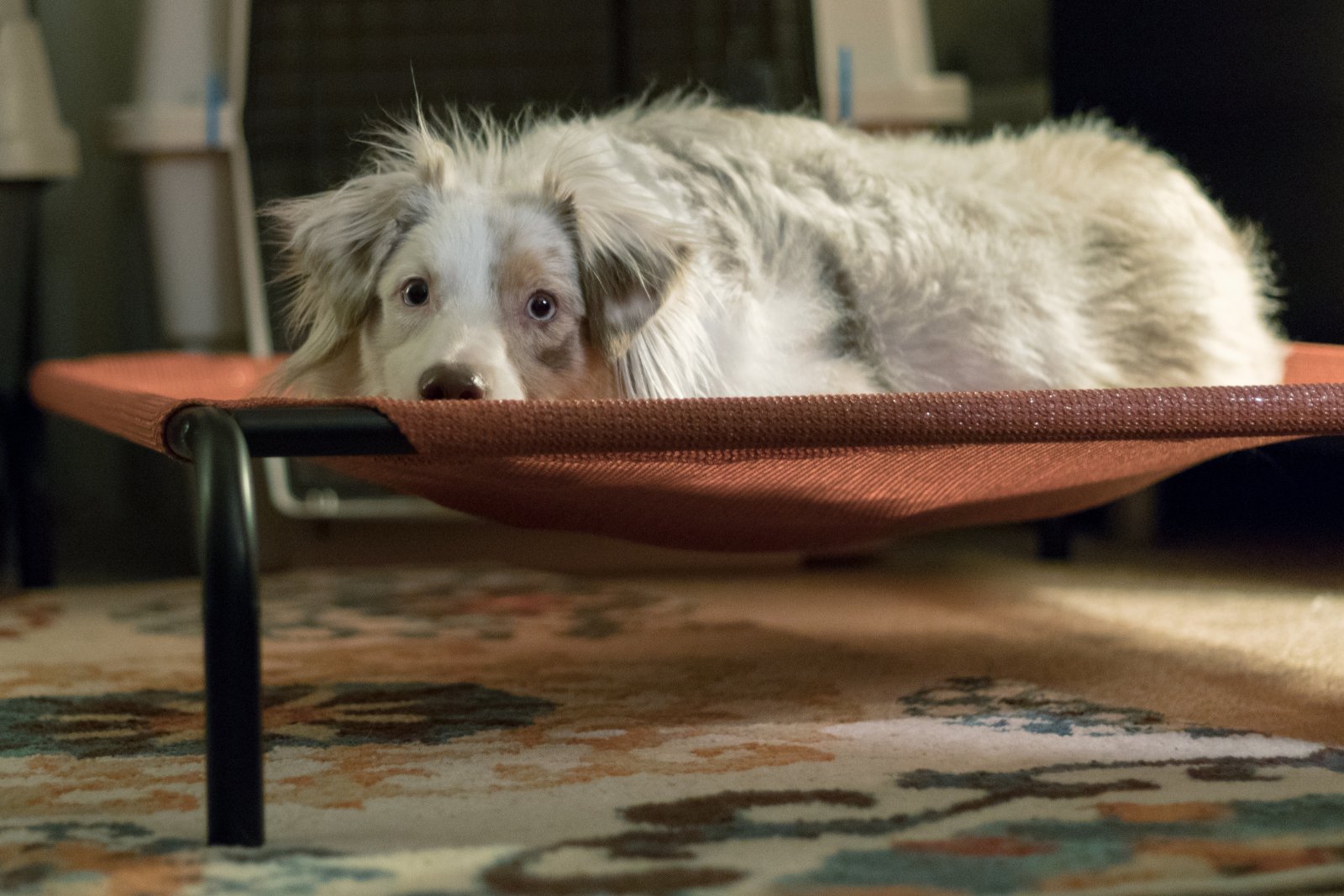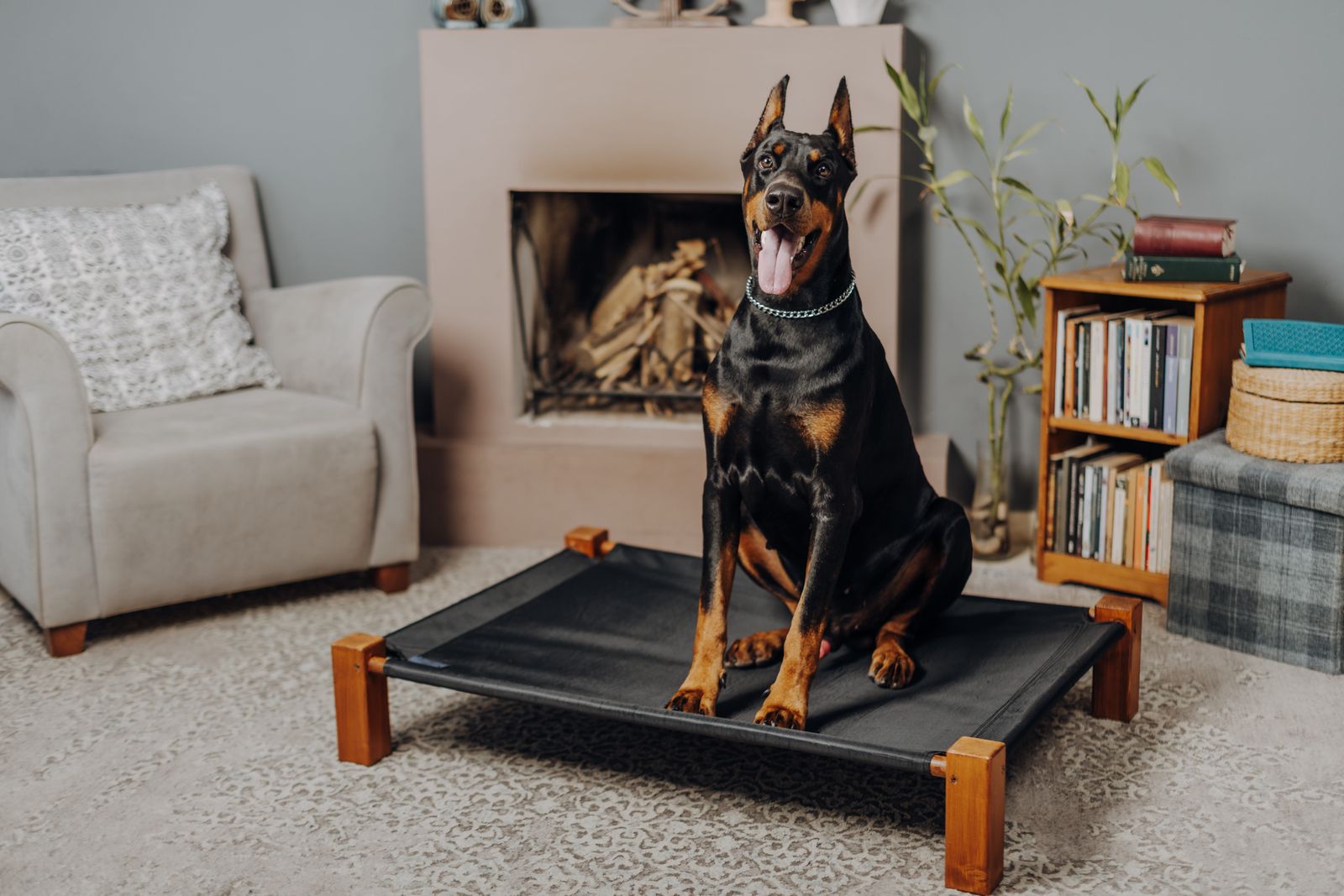

A DIY raised dog bed is a simple frame that holds a taut fabric or a solid platform a few inches off the floor. Most people build one to get a dog off hot, cold, or damp surfaces, to replace a cot that costs $60–$100, or to make a bed that fits a dog who chews through stuffed cushions. A basic PVC cot usually lands between $25 and $50 and takes about an hour once the pipe is cut.
The useful version is not the tallest one. Height, surface tension, and whether your dog can step on and off without a jump matter more than the frame material.
When a Raised Bed Helps, and When It Does Not
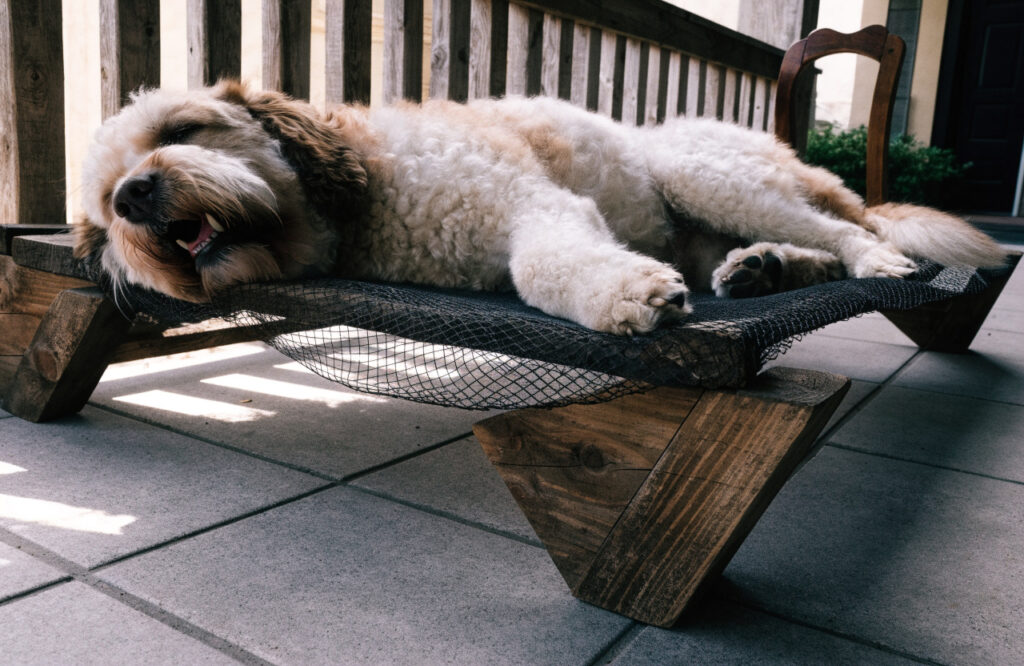
A raised bed separates the dog from the ground. On a patio or concrete floor, that breaks contact with a surface that can hold heat in summer and chill in winter. Air moving under a mesh deck also carries body heat away, which is why shelter-style cots are popular for thick-coated dogs in warm weather.
On a taut fabric deck, weight spreads across the surface instead of sinking into one soft spot. That even support is why some owners prefer cots for elbows and hips. It is not the same thing as an orthopedic foam bed. A cot has no fill. A dog that needs deep cushioning, or that runs cold, often does better with a firm foam bed on the floor, or with a thin pad laid on a low wooden platform.
A low cot can also make standing easier for some stiff dogs, because they are not pushing up out of a deep cushion. The step has to stay small. Commercial cots usually sit about 4 to 9 inches off the floor. For seniors, small dogs, and dogs with joint pain, 4 to 6 inches is the safer target. If the dog hesitates, slips, or has to hop, the bed is too high.
Skip a raised cot, or keep it very low and stable, if the dog is visually impaired, recovering from surgery, extremely clumsy, or unable to step up without strain. A fall off the edge is a real risk in those cases. A raised bed also will not fix chewing: a determined chewer will still shred mesh.
Choose the Build That Matches the Dog
Three builds cover almost every DIY raised dog bed. Pick by weight, location, and how destructive the dog is.
| Build | Typical cost | Best for | Main weakness |
|---|---|---|---|
| PVC pipe cot with mesh | $25–$50 | Beginners, outdoor use, warm-weather sleep | Fabric sags or tears if under-tensioned or chewed |
| Wood frame with plywood and a cushion | $30–$60 | Indoor use, chewers who ignore wood, dogs who want a pad | Less airflow; cushion still needs washing |
| Pallet or scrap-wood platform | Often under $20 if wood is free | Garage, porch, temporary bed | Splinters, unknown wood treatments, rough edges |
PVC is the default for a first build. It does not rust, shrugs off rain, and needs only a saw or pipe cutter, a drill, and a mallet. Wood looks better indoors and holds a real mattress. Pallets only make sense after you confirm the wood is safe to reuse.
Size the Bed to the Dog, Not the Frame

Measure the dog stretched out, nose to the base of the tail, and across the widest part of the body. Add at least 4 to 6 inches in each direction so paws and head stay on the deck, not on the pipe. Curl-up sleepers can use a shorter bed. Sprawlers and long-legged dogs need the extra length or they hang off the ends and shift all night.
Working sizes that fit most dogs:
- Small dogs: about 24 by 18 inches
- Medium dogs: about 36 by 24 inches
- Large dogs: about 42 to 48 inches by 30 to 36 inches
- Giant breeds: 54 inches or longer
Those numbers are the sleeping surface, not the outside of the frame. Pipe and fittings eat a little of the listed cut length. If you already own a cushion, build the frame to that cushion and add an inch of clearance so the pad does not ride up on the rails.
Leg length is separate from bed size. Cut legs so the finished sleeping surface sits 4 to 6 inches up for seniors and small dogs, and no more than about 8 to 9 inches for a healthy large dog. Taller looks sturdier and cools a bit better, but it turns entry into a jump.
Build a PVC Cot
This is the standard shelter-style cot: a rectangle of schedule 40 PVC, a leg at each corner, and outdoor fabric screwed to the top rails.
Materials for a medium cot (finished deck roughly 28 by 24 inches)
- One 10-foot stick of 1-inch schedule 40 PVC
- Four 1-inch 3-way corner fittings (furniture-grade side-outlet elbows). Big-box stores often stock plumbing elbows, not these. The furniture-grade 3-way fitting is the part most plans tell you to order online.
- Outdoor mesh or marine fabric about 4 inches larger than the frame on every side. Textilene-style mesh breathes and dries. Heavy canvas lasts but holds heat.
- About 32 washer-head lath screws, #8 by 1/2 inch. The washer stops the screw head from pulling through the fabric.
- Four optional rubber feet or PVC end caps if the fittings do not already close the leg bottoms
- PVC cutter or hacksaw, drill, scissors, tape measure, rubber mallet, marker, safety glasses
Cuts from the 10-foot stick: two 28-inch rails, two 24-inch rails, four 4-inch legs. That uses the full stick. Scale the rails for your dog and keep the legs short. For a heavier dog, step up to 1-1/4-inch pipe so the long rails do not bow.
Assembly
- Mark and cut the pipe. Deburr the ends so they seat fully in the fittings.
- Dry-fit the rectangle: long rail, 3-way fitting, short rail, fitting, and so on. Tap each joint home with a mallet. Opposite sides must match or the frame twists.
- Seat a leg in the downward socket of each fitting. Check that all four feet touch the floor before you commit.
- For a dog over about 40 pounds, glue the joints with PVC cement after the dry fit looks square. Cement is permanent. Leave joints unglued only if you want to knock the bed apart later and the dog is light.
- Lay the frame on the fabric, centered, with overhang on all sides. Fold the edge under so the cut hem is hidden.
- Screw through the folded fabric into the top of the pipe, starting at the midpoints of each side, then the corners. Pull the fabric tight as you go. A loose deck sags to the floor and stops working as a raised bed. Do not overtighten or the washer will cut the mesh.
- Flip the bed, press on the center, and rock the corners. Add caps or grip pads if it slides on hard floors.
A medium cot built this way is a weekend-afternoon project, not a woodworking job. The fitting, not the pipe, is what usually delays people.
Build a Wood Platform If the Dog Needs a Cushion
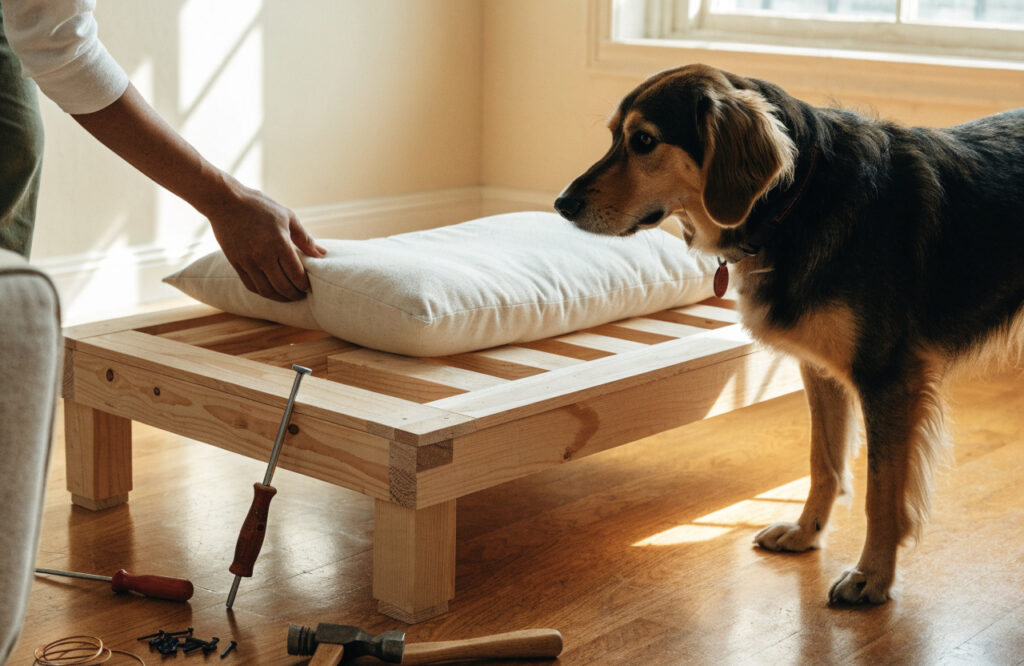
Use this when you want a real pad on top, or when mesh will not survive the dog.
A simple indoor frame uses 2×2 or 2×4 lumber for the rectangle, four legs of 4 to 8 inches, and a piece of 1/2-inch or 3/4-inch plywood for the deck. Screw the rails into a rectangle, attach the legs at the corners with two screws each after drilling pilot holes, then screw the plywood down. Sand every edge. Felt pads on the feet protect floors and stop sliding.
Put the cushion on after the frame is done, not before. People who buy the pad first avoid the common miss of a platform that does not match the bed they already own. A thin crib mattress or a cheap bolster bed from a discount store is enough. The plywood, not the cushion, is what keeps the dog off the floor.
Avoid pressure-treated lumber if the dog chews. Older treated wood and some pallet stock were processed with chemicals you do not want in a mouth. For pallets, look for an IPPC stamp and skip any board marked MB (methyl bromide). KD (kiln-dried) or HT (heat-treated) is the safer reuse. Sand, fill nail holes, and seal with a finish labeled for indoor use if the bed lives in the house.
Mistakes That Make the Bed Useless
Legs cut too long. A 12-inch leg feels sturdy in the shop and becomes a hurdle for an older dog. Shorten before you glue or screw.
Fabric attached loose. If you can push the center to the floor, there is no airflow and no support. Re-screw from the middle of each rail outward while pulling the mesh.
Wrong fittings. Standard 90-degree plumbing elbows do not give you a downward leg socket. You need a 3-way fitting, or a tee plus an elbow, which is clumsier and weaker.
No weight check. Sit on the frame before the dog does. A long 1-inch PVC rail can bow under a large breed. Thicker pipe, a center support, or a wood build is the fix.
Ignoring chewers and sharp edges. Pipe ends, screw tips, and pallet splinters are the parts that cause injuries. Cap or sand them. If the dog already destroys beds, a wood platform with a replaceable cheap pad survives longer than mesh.
Using the cot as a medical bed. A taut deck can be comfortable. It does not replace a vet-recommended orthopedic bed, medication, or a ramp for a dog that cannot step up. If the dog is stiff, painful, or reluctant to lie down, ask a vet before changing the sleep setup.
Care and Small Upgrades
Hose outdoor mesh and let it dry on the frame. Indoor fabric can be unscrewed and washed if you used a removable canvas rather than mesh. Check screws every few months. Mesh relaxes, and a seasonal tighten is normal.
Useful add-ons, in order of value: rubber feet, a second layer of mesh if the first starts to stretch, and a low mat beside the bed for dogs who need a halfway step. A bolted-on ramp is only worth building if the dog cannot manage a 4-inch rise.
Store-bought replacement mesh exists for commercial cots, and the same screw-on method works on a DIY frame when the original fabric wears out. The pipe usually outlasts several covers.
Questions People Ask Before Building
Is a DIY raised dog bed strong enough for a large breed? Yes, if the pipe is at least 1-1/4 inch schedule 40, the joints are cemented, and the span is not extreme. For dogs over about 80 pounds, a wood frame with a plywood deck is more predictable than a long unsupported PVC rail.
Can the bed live outside? PVC and outdoor mesh can. Wood needs a deck or covered porch unless you use exterior-rated lumber and accept that it will weather. Do not leave a foam cushion in the rain.
What if the dog will not use it? Put it where the dog already rests, keep the height low, and leave a familiar blanket on top for a few nights. Some dogs prefer a side against a wall. A cot in the middle of a room gets ignored more often than one with a back edge blocked.
Do raised beds stay cooler than foam beds? On a mesh deck, usually yes, because air moves under the body and the dog is off hot pavement or sun-warmed decking. A canvas top or a thick pad on plywood cools less. In winter, the same airflow is a drawback unless you add a blanket.
How high is too high? If the dog has to jump, it is too high. For most seniors that line sits around 6 inches. Healthy medium and large dogs handle 8 or 9 inches. Higher than that is a platform, not a bed, and needs a step.