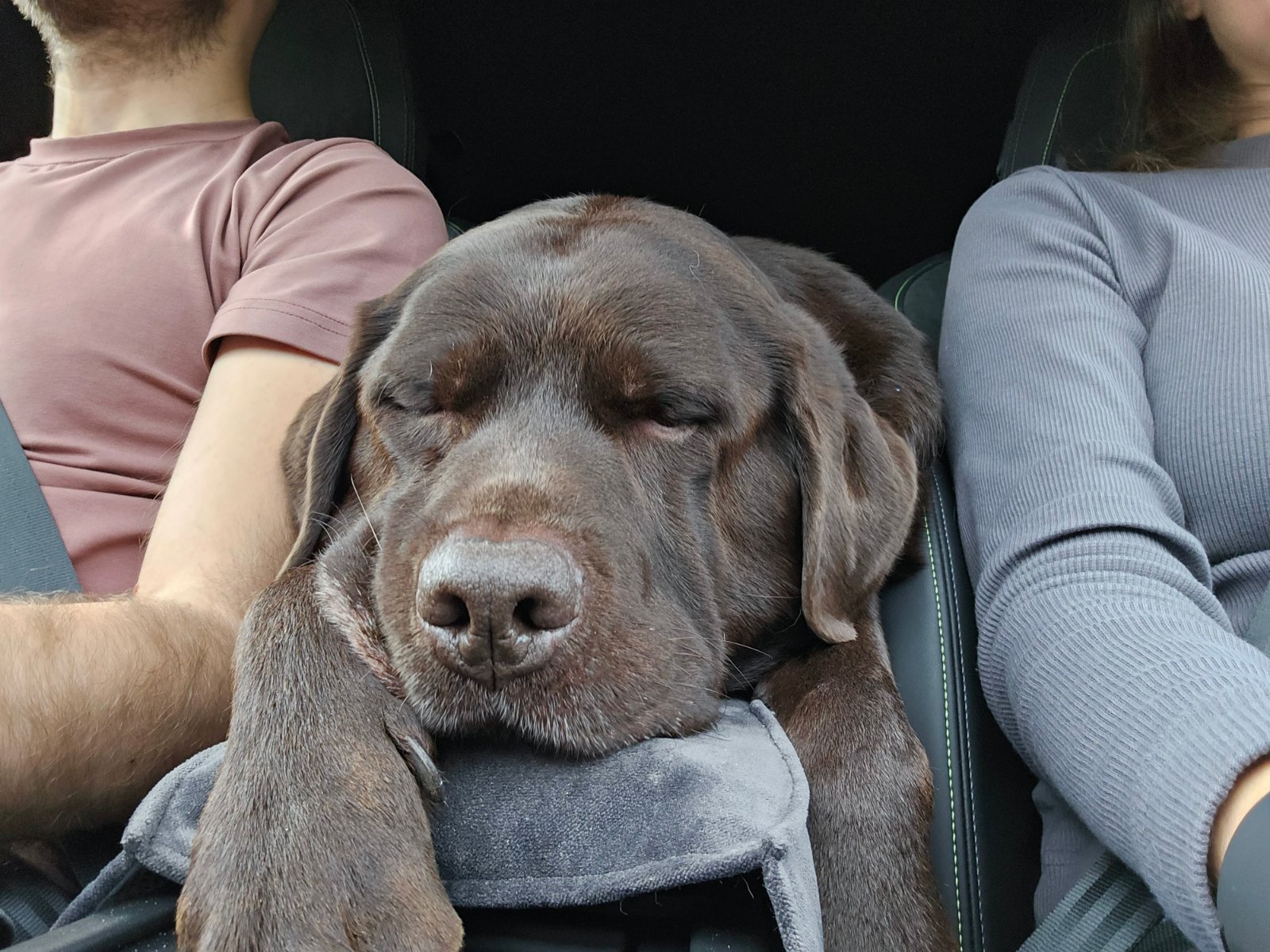

A dog car seat bed is a padded booster that sits on the rear bench, lifts a small dog toward window height, and gives them a bordered place to lie down. It is a comfort and containment product. In a crash, the protection comes from a strength-rated harness clipped to the vehicle’s seat belt or LATCH anchors, not from the foam bed or the short tether sewn into most of these seats. Treating the bed as the restraint is the mistake that makes an otherwise useful product look safer than it is.
What a dog car seat bed is, and what it is not
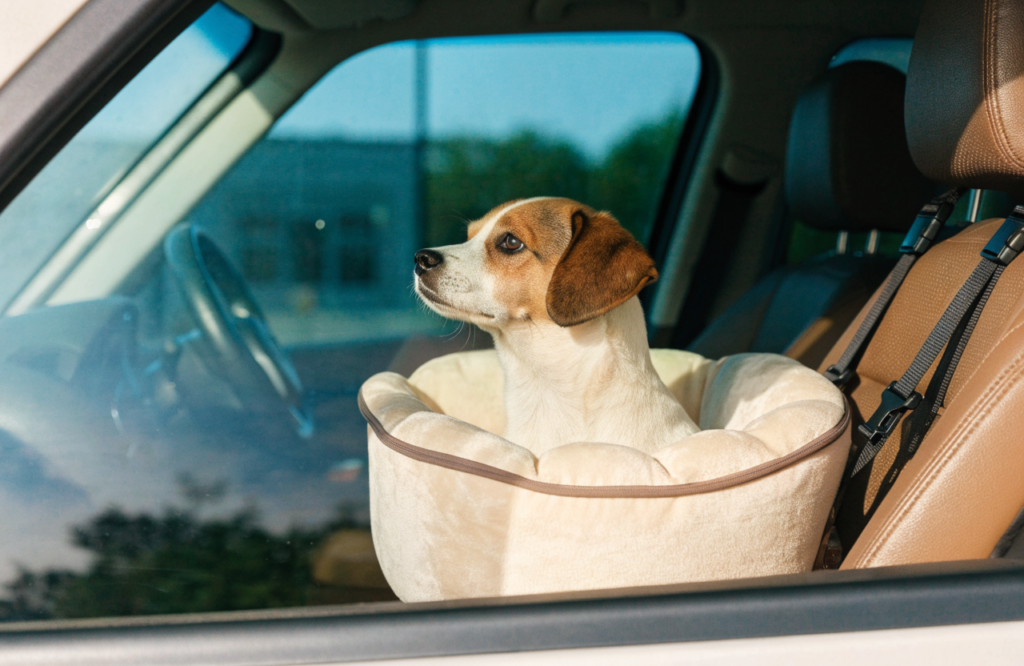
Most products sold under this name are soft-sided boosters: a firm base, raised bolsters, a washable cover, straps that loop the headrest or seat back, and a clip for the dog. Some unzip and flatten into a travel bed at a hotel. A few are closer to enclosed carriers.
That design solves three everyday problems. A dog who cannot see out often stands on the seat, paces, or climbs toward the driver. A slick leather bench lets a bed slide in ordinary braking. Bare upholstery collects hair, mud, and the occasional accident. A secured bed with sides reduces those issues on normal drives.
It does not solve crash protection by itself. In 2015 the Center for Pet Safety ran a pilot study on popular pet travel seats, using instrumented dog simulants of about 25 to 30 pounds. Across the seats tested, anchor straps released, connection hardware deformed, seats rotated, and in several cases the test dog became fully unrestrained. The center’s founder, Lindsey Wolko, has described typical dog car seats as distraction-prevention tools and advised against securing the dog to the seat itself, because those connections are usually not strength-rated.
There is also no U.S. federal standard that a “crash-tested” label on a dog seat has to meet. A manufacturer can commission a test, publish a favorable clip, and still fail the kind of sled protocol an independent lab uses. Look for a named protocol and an independent result, not the phrase alone.
When a car seat bed is the right product
Match the product to the dog and the trip, not to the photo on the listing.
| Situation | Better choice | Why |
|---|---|---|
| Dog under about 20–25 lb who wants to see out, mostly short trips | Booster-style car seat bed plus a crash-rated harness on the seat belt | Height and a place to settle, with the harness doing the restraint work |
| Very small dog or cat, and crash performance is the priority | CPS-certified carrier such as the Sleepypod Mobile Pet Bed, used as directed | One of the few pet carriers publicly cited as CPS crash-test certified; weight limit is low, around 15 lb |
| Dog over about 25–30 lb | Crash-tested harness on the bench, or a hard-sided crate anchored in the cargo area | Soft boosters are rarely built or tested for that mass |
| Anxious dog that pants, climbs, or chews the rim | Enclosed carrier or crate, not an open bed | Bolsters do not stop a determined escape |
| Long highway days in an SUV | Anchored hard crate in cargo, or harness plus a flat seat hammock | Space to lie down matters more than window height |
The ASPCA’s travel guidance still puts a secured, well-ventilated crate first: large enough to stand, sit, lie down, and turn around, and strapped so it cannot shift. If you skip the crate, the back seat and a harness on the seat belt are the fallback, never the front seat.
A car seat bed earns its place when the dog is small, the trips are frequent, and the alternative is an unrestrained dog on the seat. An unrestrained dog is a distraction and, in a stop, a loose mass in the cabin. Containment is worth buying. Crash certification is a separate purchase.
Safety limits the product page usually skips
Three rules matter more than bolster height or pocket size.
Clip the dog to the car, not only to the bed. Wolko’s published advice is to connect a CPS-certified harness to the vehicle seat belt and use the seat as a riser. She has said pet owners should not secure the pet directly to the travel seat because of inferior connection strength. Coverage of CPS-certified harnesses has named the Sleepypod Clickit Sport Plus, the Sleepypod Clickit Range, and the Saker Bomber. A seat that blocks the belt path cannot be used this way.
Never use the collar. A tether on a neck collar loads the throat in a sudden stop. Ordinary walking harnesses are also the wrong part: they are built for leash pressure, not crash loads. The harness has to be the crash-rated piece, used with the tether that came with it.
Skip extension tethers and the front seat. Wolko has called extension tethers extraordinarily dangerous; CPS disqualifies products that include them from its testing program. Front-seat placement puts a dog in the airbag zone. Airbags are designed for adult humans and can injure or kill a pet. Rear bench, or a properly anchored crate in cargo, is the placement both ASPCA guidance and independent testers point to.
Head-out-the-window looks harmless and is not. Debris, insects, and a sudden stop can injure eyes, ears, and the neck. If the bed’s height makes that easy, lower the window only partway or choose a seat that does not line the dog’s head up with the opening.
How to size it before you buy

Listings that say “small and medium, up to 35 pounds” are a weight ceiling, not a fit. A 22-pound French bulldog and a 22-pound whippet need different floors.
Measure the dog, then the car.
- Length from nose to base of tail, plus a few inches if they sleep stretched out.
- Shoulder width, then enough floor to turn around if that is how they settle. A dog who only curls can use a shorter bed; a dog who sprawls cannot.
- Shoulder height against bolster height. Bolsters near shoulder height contain a small dog without blocking the view. Bolsters well above the shoulder can feel enclosing; bolsters at chest height do not stop standing.
- Weight rating at least the dog’s current weight, with room if the dog is still growing. A rating is not a crash rating.
Then measure the rear cushion: width between the seat belt buckles, depth from seat back to the front edge, and clearance under the front seats if the bed has a rigid base. Headrest-hung seats fail in cars with fixed or widely spaced headrests. A pass-through for the seat belt is useless if the buckle sits outside the bed’s footprint.
If the dog cannot lie down without hanging over the bolster, the bed is too small even if the weight number matches. Returned “large” beds are often large in the listing and small on the tape measure.
Features that change the drive, not just the photo
Attachment of the bed. Two points beat one. A headrest strap alone can let the whole seat pitch forward in a hard stop. Look for a seat-belt path or a strap around the seat back plus a non-slip base. LATCH connection, where the vehicle has it, is the more stable anchor and is what CPS has pointed to for an ideal travel seat. Elastic loops over the headrest are a storage solution, not a restraint.
Structure under the cushion. A thin foam pad on a floppy sack compresses and lets the dog roll off the side. A semi-rigid base and stuffed bolsters keep the shape. Thick padding helps on long rides; it does not absorb crash energy the way a tested carrier shell does.
Cover and clean-up. A removable, machine-washable cover matters more than color. Dogs shed, drool, and sometimes get carsick. Waterproofing on the base protects the car seat; a fully sealed bed that cannot breathe is hot in summer. Storage pockets are useful only if they do not sit where the seat belt needs to pass.
Convertibility. A bed that unzips flat is practical if you already need a travel bed at the destination. It is not a reason to accept a weak car attachment. Check that the conversion does not remove the straps you rely on in the car.
Chew and escape resistance. Open beds assume a dog who stays put once clipped. Power chewers destroy zipper pulls and foam corners. A dog who has already jumped out of a booster needs a zippered carrier or a crate, not a higher bolster.
Installing it so it stays a seat
- Put the bed on the rear seat, not the front. Center it so the dog is not against a door that will open at a stop.
- Fasten every strap the design uses: headrest, seat-back, and the vehicle seat belt through the labeled path if there is one. The bed should not slide when you shove the base forward and sideways.
- Fit the harness on the dog at home, using the two-finger check at the chest. Clip the crash tether to the harness and to the seat belt or the tether hardware specified for that harness. Leave little slack. A long tether lets the dog reach the driver and increases the distance they travel before the belt stops them.
- Confirm the dog can lie down and sit without the tether pulling the harness up into the armpits. If the only comfortable length lets them stand on the center console, the bed is in the wrong spot or the dog is too big for it.
- Start with parked-car sessions, then short trips, then longer ones. Feed a light meal a few hours before a long drive, not in a moving car, and stop for water and a walk every few hours. Never leave the dog in a parked car; heat builds fast even with the windows cracked.
Motion sickness is common and is not fixed by a softer bed. A veterinarian can discuss options such as maropitant if drooling and vomiting show up on ordinary routes. Covering part of the view sometimes helps dogs who get sick from watching the road rush past; a full window view is not mandatory.
Problems that show up after the first week
The bed creeps forward. The base is smooth, the straps are loose, or only the headrest is holding it. Add the seat-belt path, tighten until the base does not shift under a firm push, and do not rely on a non-slip dot pattern alone.
The dog climbs out. The tether is on a collar, the tether is too long, or the dog is anxious rather than merely short. Shorten the connection, switch to a proper harness, and if climbing continues, move to a zippered carrier.
It was sold as a booster and barely lifts the dog. Some “seat beds” are a one-inch pad inside a wall of fabric. If the goal was a view, check the listed base height before buying. If the goal was a bed, that low profile may be fine.
Zippers, foam, and stitching fail early. This category is crowded with identical private-label seats. A one-year warranty and a cover you can actually remove are more useful signals than a long feature list. Inspect seams and buckle hardware on arrival.
It does not fit the car you drive most. Bucket seats, deep bolsters, and fold-flat benches all change the strap geometry. If you use two cars, measure both. A bed that only works in the SUV is not a daily solution for the sedan.
Frequently asked questions
Are dog car seat beds crash tested? Almost none of the soft booster beds are. CPS testing of this category has shown strap and connection failures, and the center does not treat an open booster as a crash seat. A certified harness on the vehicle belt, or a certified carrier or crate, is the tested path.
Can a medium or large dog use one? Only if the interior dimensions let them lie down and the weight rating covers them, and even then the bed is a mat, not a restraint. Past roughly 25 to 30 pounds, a harness or an anchored hard crate is the more honest setup. Soft walls and plastic side buckles are a poor match for that mass.
Is the included safety strap enough? Enough to keep a small dog from wandering on a calm drive, if it is short and clipped to a harness. Not enough as crash equipment. Use it as a secondary limit if you want, and put the real connection on the seat belt with a rated harness. Do not add an extension.
Do these replace a crate for travel? No. A crate remains the option veterinary and welfare groups describe as safest in a collision, provided it is the right size and is anchored. A car seat bed is the practical middle step for small dogs on ordinary trips when a crate does not fit the car or the routine.
Can it double as the dog’s only bed? A convertible model can work overnight if the filling stays flat and the cover is washable. It will not ventilate or support like a bed chosen only for sleeping, and the straps and base make it clumsier in the house. Buy the conversion if you travel; do not buy it to avoid owning a normal bed.